Every electronics project begins with the same tiny lie: this will only take five minutes, I definitely remember where the jumper wires are, and nothing on this desk is about to become a permanent archaeological layer.
Then reality enters wearing safety glasses. The breadboard wanders away. The multimeter is in a drawer with three dead batteries. The oscilloscope exists only as a tab you bookmarked in 2019. And now your innocent little LED circuit has turned into a full-blown cable spaghetti dinner with a side of regret.
The nLab is a tiny all-in-one electronics lab that tries to shrink that whole starter-bench situation into one pocketable board that plugs into a solderless breadboard. It is built for makers, students, tinkerers, STEM classrooms, and anyone who likes the phrase “let’s just test one thing” right before losing an entire Saturday to a blinking diode.
The project, officially called nLab: The World’s Smallest All-in-One Electronics Lab, launched on Kickstarter and successfully funded on July 2, 2026. Current product facts are drawn from the nLab manufacturer site, campaign materials, BackerKit, and PledgeBox references.
A Pocket Lab For Breadboard Mischief
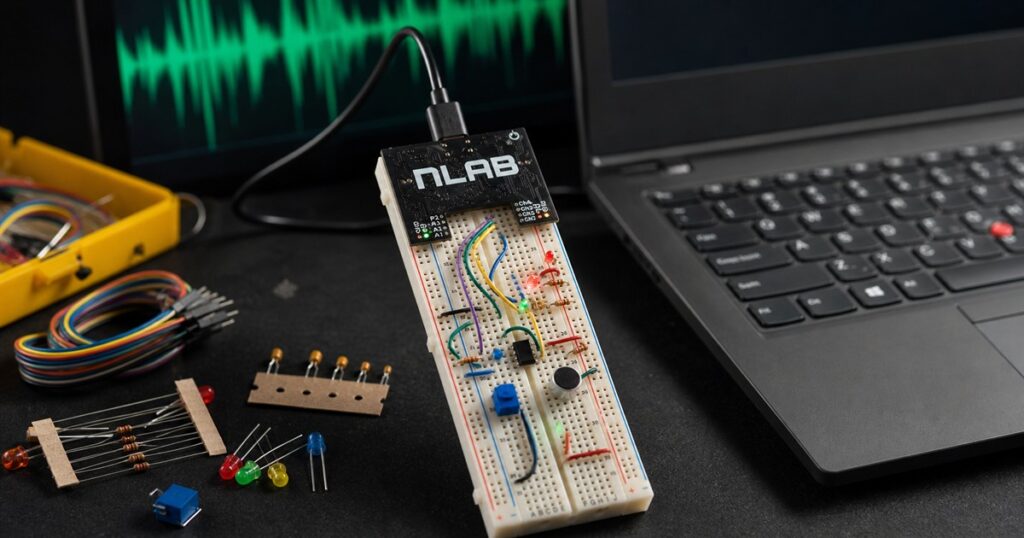
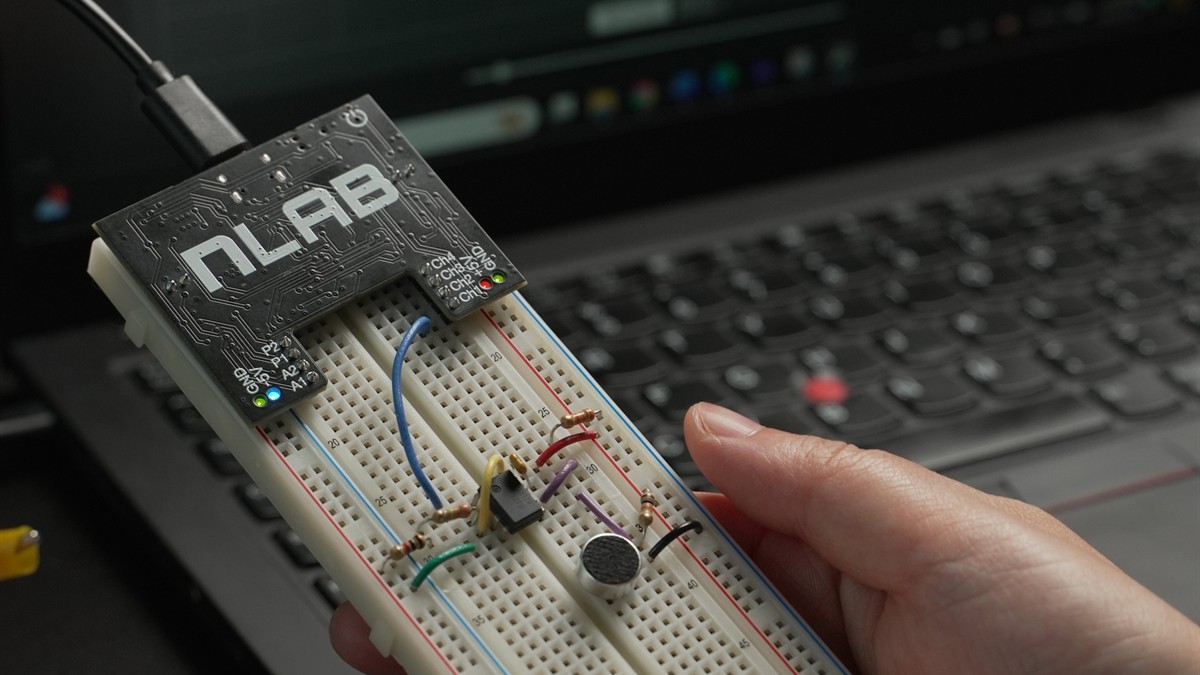
Instead of making you gather a separate signal generator, logic tool, power bits, wires, and software just to poke at a beginner circuit, nLab puts the action on a small black circuit board that sits directly on a breadboard. The product photos show the nLab module at the top of the breadboard, with labeled analog/digital points, channel markings, power indicators, and a USB cable heading back to a computer.
Related posts:
 Every Dachshund Owner Probably Needs One Of These Wiener Dog Garden Benches
 This Mini Inflatable Pool Has a Bench, And Backrest And Is Perfect For Summer Lounging
 These Wrap-Around Tree Benches Provide Beautiful Outdoor Seating Around The Base Of a Tree
 This Bubble Window For Your Fence Allows Your Dogs To Peek To The Other Side
That setup is the whole charm. It looks less like a lab instrument and more like somebody taught a circuit board to ride a miniature surfboard made of holes. The important part is that it gives beginners a more self-contained place to learn what their circuit is doing, and it gives experienced tinkerers a compact way to test small ideas without turning the dining table into a satellite repair facility.
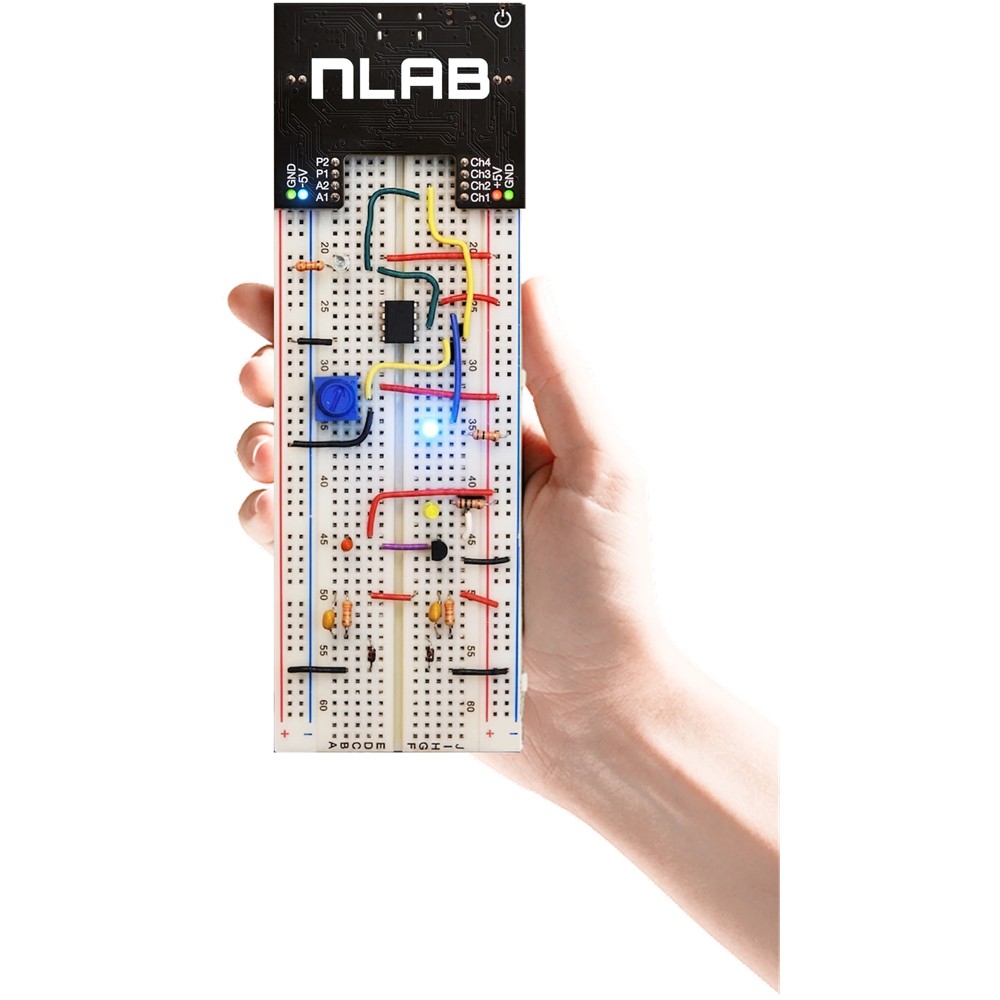
The manufacturer imagery shows the board being used with a standard solderless breadboard and basic through-hole components like resistors, LEDs, a small microphone element, wires, and a trim pot. In other words, it is aimed at the gloriously familiar world of first circuits, sensor experiments, waveform poking, classroom demos, and small proof-of-concept builds.
It is also extremely giftable in the specific way maker gear is giftable: it looks practical, but it also says, “I support your habit of voluntarily buying tiny parts that immediately fall into carpet.” That is romance, technically.
What It Actually Helps With
The nLab pitch is not that it replaces a full professional electronics bench. Nobody should be calibrating aircraft hardware with a desk toy that also makes a great stocking stuffer. The appeal is that it pulls common learning and prototyping functions into a smaller, more approachable setup.
- It gives electronics beginners a compact board-based way to experiment with breadboard circuits.
- It pairs with a computer over USB, based on the manufacturer product photos.
- It keeps common test-and-learn activities closer to the circuit instead of scattered across separate tools.
- It is sized for classrooms, workshops, dorm rooms, makerspaces, and small desks.
- It works visually as a teaching aid because the connections, parts, and board labels are right there in the open.
The real magic is not that it makes electronics effortless. Electronics will still find a way to ask whether you have considered reading the datasheet. The magic is that it makes the starting line less ridiculous. When the lab gear is already sitting on the breadboard, people are more likely to try the little circuit idea before their enthusiasm evaporates into another browser tab.
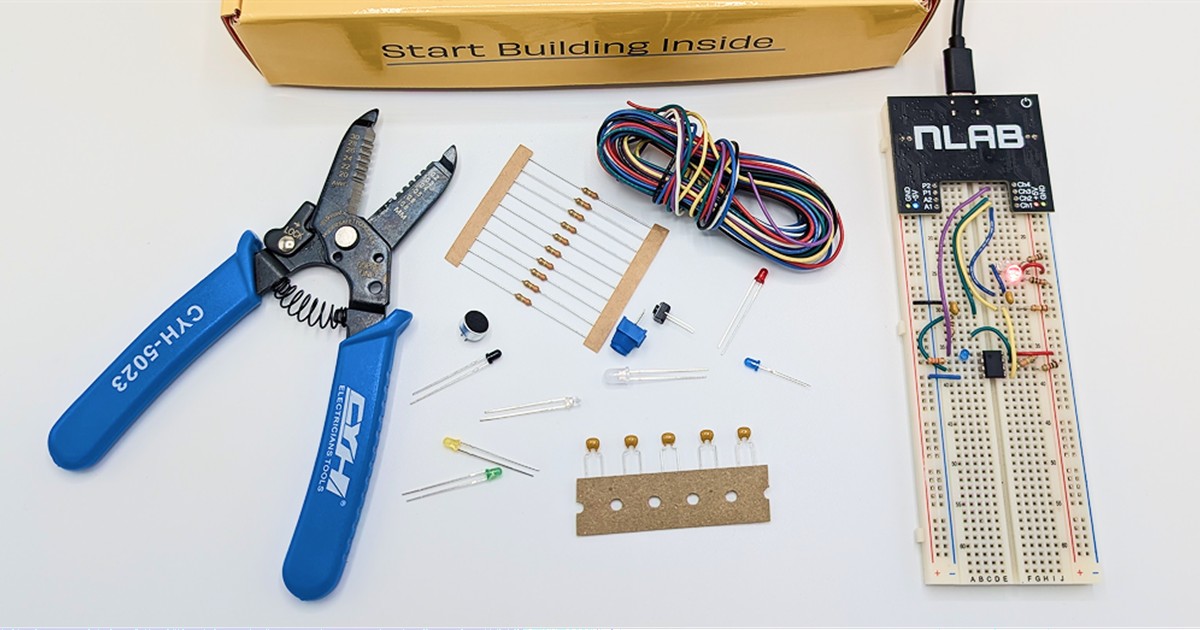
It also gives a very satisfying “science fair, but upgraded” vibe. The product photos show a black nLab board with bold white lettering, a white breadboard full of jumper wires, and a laptop nearby with waveform-style visuals. It is exactly the kind of thing that makes a curious person say, “I have no idea what that is, but I want to touch it carefully.”
| Detail | What Is Verified |
|---|---|
| Product type | Compact all-in-one electronics lab for breadboard circuit experiments |
| Primary use | Learning, testing, prototyping, and classroom-style electronics demos |
| Connection shown | USB-connected board used with a computer |
| Included context shown | Breadboard, jumper wires, resistors, LEDs, trim pot, microphone-style component, and small parts |
| Campaign status | Kickstarter funded on July 2, 2026, with late pledges referenced |
Small Enough To Make Your Desk Feel Accused
The best part of nLab is the scale. A normal electronics bench can slowly consume a room, then a closet, then the emotional well-being of anyone who opens that closet looking for tape. nLab keeps the visible setup closer to the project itself. Breadboard, board, laptop, parts, done. At least until you decide you need a third organizer box for resistors because apparently you are the mayor of Ohm Town now.
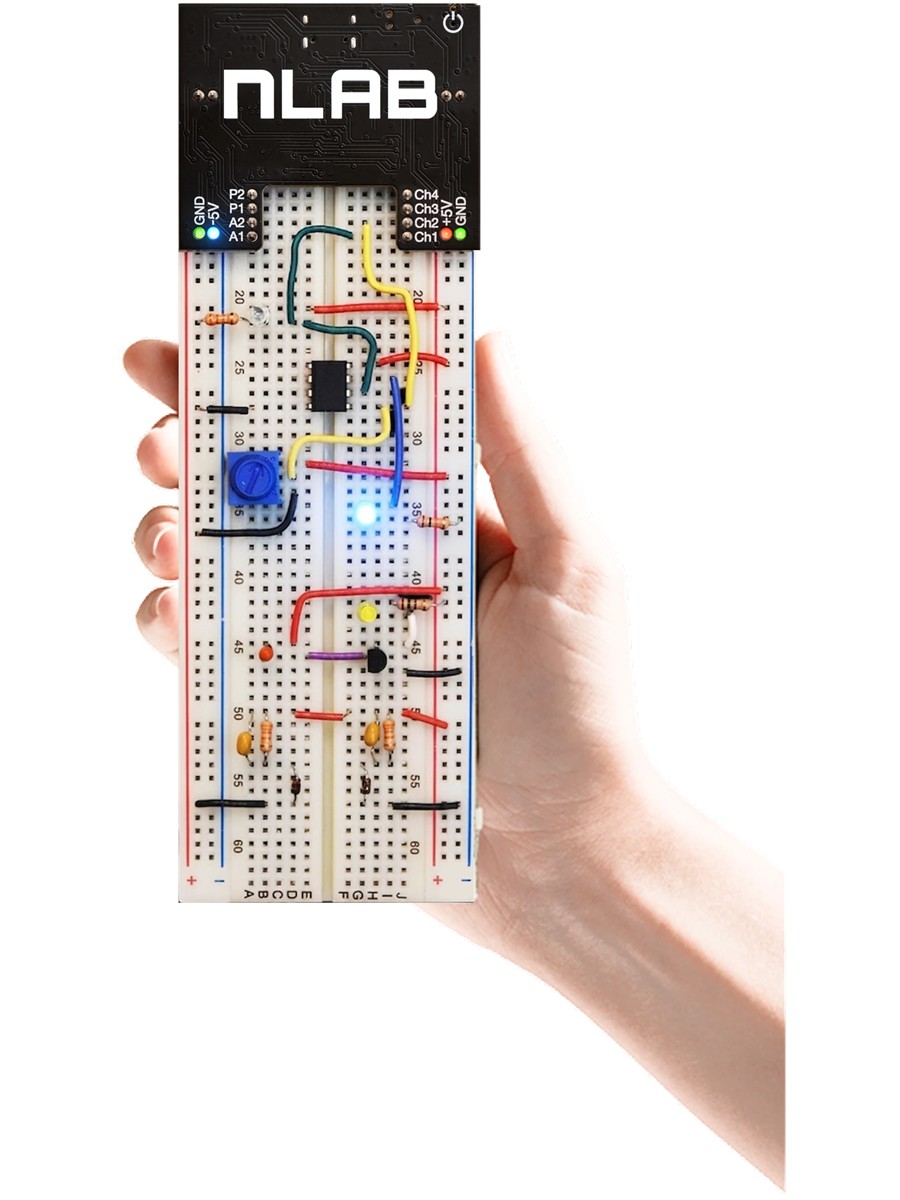
For students, that smaller setup matters. A giant pile of instruments can be intimidating before the learning even begins. A breadboard with a tiny board plugged into it feels more like an invitation. You can see the jumper wires. You can trace the component legs. You can watch a little LED behave beautifully or, more realistically, refuse to behave until you discover that one wire is in row 29 instead of row 30.
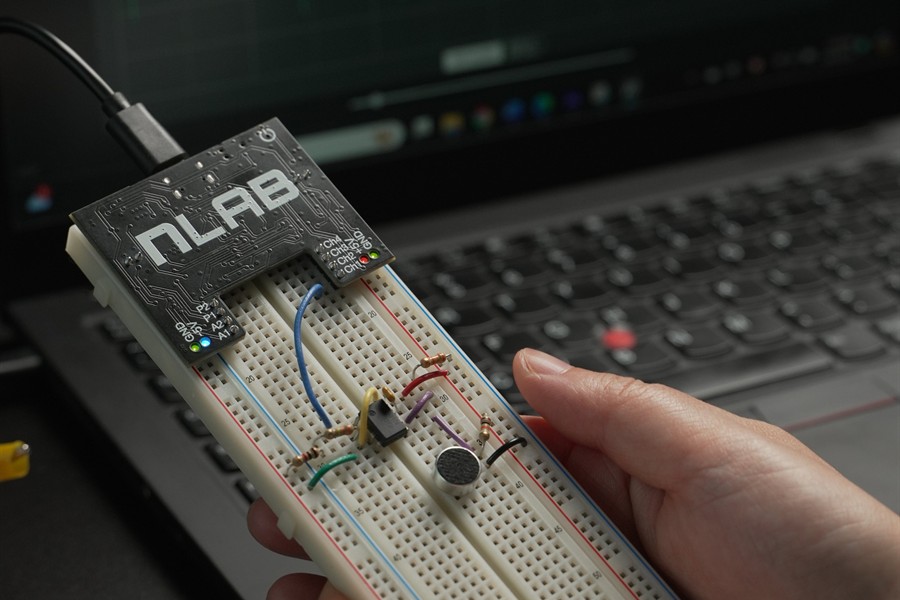
For parents and gift givers, it also lands in that sweet spot between educational and mischievous. It is not a passive gadget. It asks the recipient to build something, break something gently, learn why it broke, and then proudly explain it at dinner using at least one word nobody asked to hear.
For experienced makers, the appeal is more about convenience. A compact board like this can live in a laptop bag, classroom kit, workshop drawer, or small maker cart. It will not replace specialized tools for serious measurements, but it can make quick experiments feel less like setting up a launch control room for a circuit whose entire job is making a blue light blink.
Who This Is For
This is not the right gift for someone whose relationship with electronics begins and ends with “turn it off and back on.” It is for the person who has looked at a breadboard and thought, yes, this dense plastic rectangle of holes seems like a reasonable place to spend my evening.
That includes teens learning circuits, STEM teachers who need portable demo gear, college students building small projects, hobbyists getting back into electronics, and hackers who already own enough tiny parts to qualify for a neighborhood zoning review.
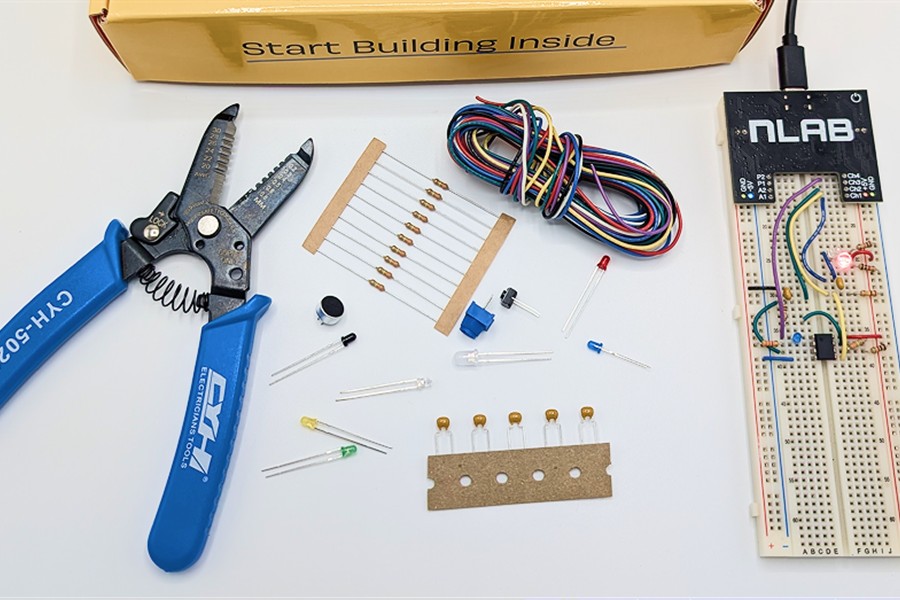
The product is especially nice because it makes the learning object visible. A lot of educational gadgets hide the interesting part inside a plastic shell. nLab does the opposite. The board, wires, LEDs, parts, and breadboard are all exposed, which means the little mistakes are exposed too. That is annoying in the moment and extremely useful five minutes later.
There is also a nice physical satisfaction to it. Dragging a wire from one row to another, watching an LED change, and seeing a waveform-like response on a computer screen is a much better way to understand circuits than reading one more sentence that begins with “current flows…” and ends with your soul leaving your body.
Availability And Price
The nLab campaign information lists the project as successfully funded on Kickstarter on July 2, 2026, with late pledges available through the campaign ecosystem. Campaign pricing references an average pledge around $181 to $178 and says the project raised $224,132. Treat that as campaign or late-pledge pricing rather than a fixed retail shelf price.
Near-bottom important bits, because every gadget needs a tiny paperwork department:
- Product: nLab, a tiny all-in-one electronics lab for breadboard projects.
- Best for: makers, STEM students, teachers, hobbyists, and compact desk setups.
- Use case: learning circuits, testing small builds, and making electronics demos more portable.
- Source: Kickstarter / late pledge, with manufacturer visuals from getnlab.com.
- Price note: campaign pricing references an average pledge around $181 to $178.
So yes, this is basically a tiny electronics bench for people who want to make circuits without first summoning a full laboratory onto the table. It is practical, nerdy, and small enough to make your current “organized parts drawer” look like a legal problem.
| Pros | Cons |
|---|---|
| Compact breadboard-first lab setup | Not a replacement for full professional bench equipment |
| Great fit for STEM learning and maker gifts | Best suited to people already curious about circuits |
| USB-connected workflow keeps the setup tidy | Requires a computer for the shown workflow |
| Visible components make lessons easier to follow | Campaign details may vary during late pledge fulfillment |
| Strong visual appeal for classrooms and demos | Kickstarter page was not directly reachable during this run |
| Small enough for desks, kits, and workshops | Price is campaign-reference pricing, not a live cart quote |
Where to find This Tiny Electronics Lab Turns a Breadboard Into a Pocket Maker Bench
OddityMall may earn a commission from qualifying purchases at no extra cost to you.
Related posts:
Every Dachshund Owner Probably Needs One Of These Wiener Dog Garden Benches
This Mini Inflatable Pool Has a Bench, And Backrest And Is Perfect For Summer Lounging
These Wrap-Around Tree Benches Provide Beautiful Outdoor Seating Around The Base Of a Tree
This Bubble Window For Your Fence Allows Your Dogs To Peek To The Other Side