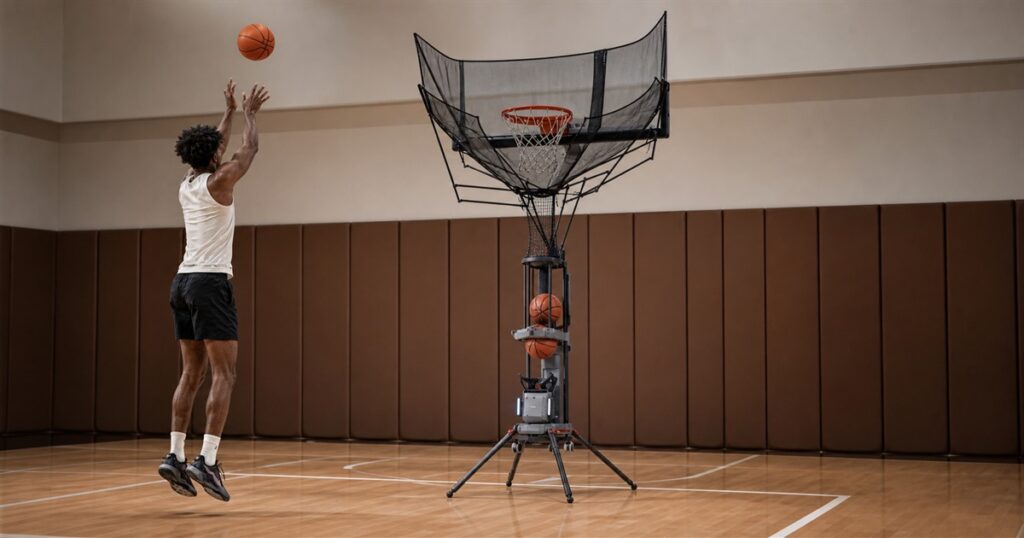
Every driveway shooter eventually learns the same depressing physics lesson: the ball will not politely come back just because you were brave enough to miss from the wing. It rolls into corners, hides under benches, and turns a simple shooting workout into cardio for people who apparently angered geometry.
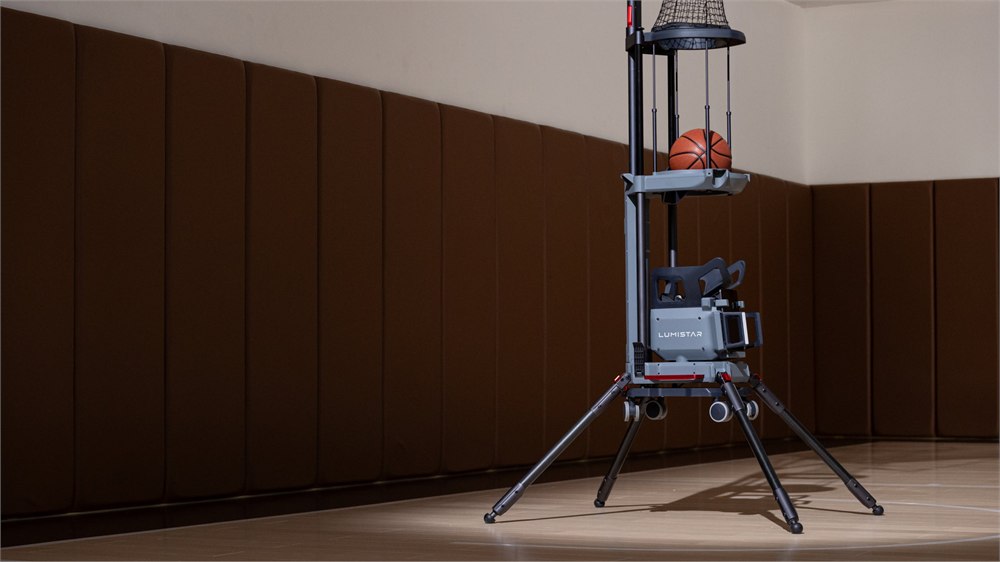
The LUMISTAR CARRY is a compact AI basketball training robot built to stop that nonsense. It is basically a rolling practice partner with an upright catching net, a ball-feeding system, quad-camera vision, gesture control, and enough sports-tech confidence to make your old rebounder feel like a folding chair with opinions.
This is not just a static ball return. LUMISTAR pitches CARRY as a movable basketball training partner that can track where you are on the court, respond to designated gestures, and deliver passes that adapt to your movement in real time. In normal human terms, it tries to give you the rhythm of a teammate feeding you the ball without requiring a friend, sibling, exhausted parent, or unpaid intern to stand under the basket for 500 shots.
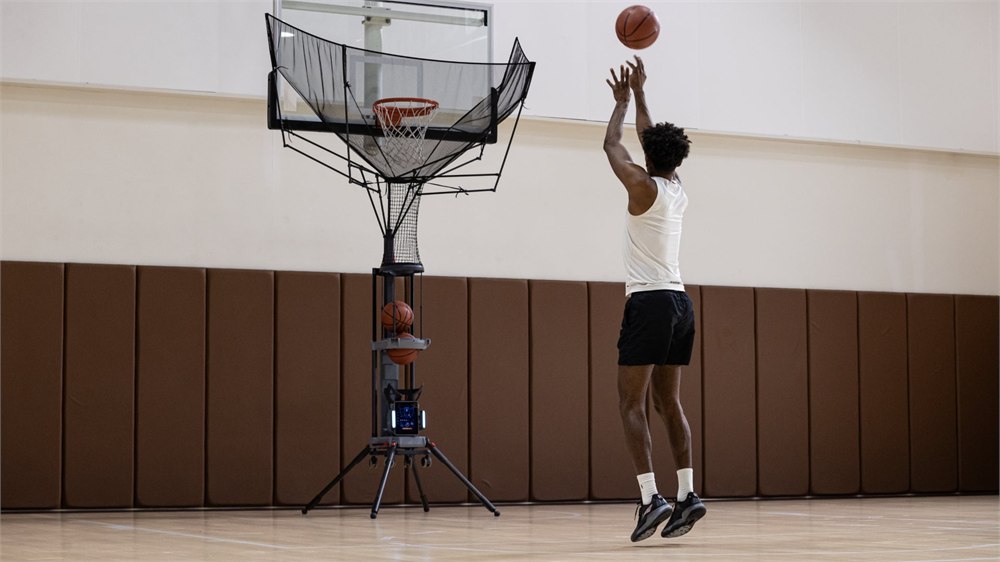
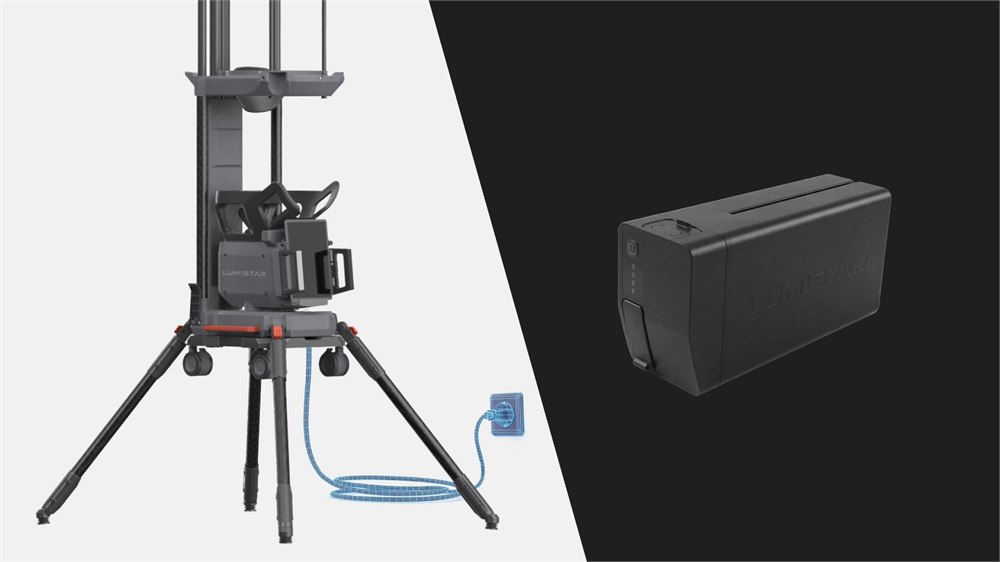
The big visual party trick is the machine’s shape. CARRY has a tall upright frame, a net/catcher assembly, a compact base, wheels, and stabilizing support legs that make it look like a basketball hoop, a ball machine, and a helpful gym robot all agreed to share rent. It stores up to four balls and can deliver passes at intervals as quick as 2.5 seconds, which is right around the moment most of us are still emotionally processing the last brick.
A Basketball Robot That Actually Moves With The Workout
The CARRY setup is designed around quad-lens AI vision with a wide court view, so the machine can follow player movement instead of just firing balls to the same sad spot forever. LUMISTAR says it can track up to five players simultaneously, which means it can support solo drills, partner work, and competitive training sessions where everyone gets to discover which friend is secretly made of missed corner threes.
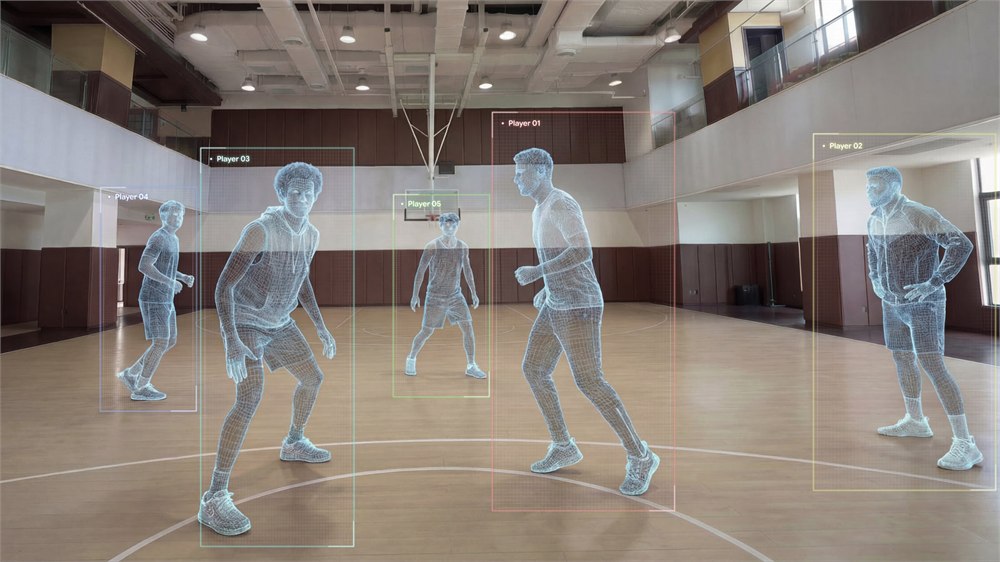
The gesture-control angle is what makes it feel especially futuristic. Rather than stopping to poke at a remote every time you want a new pass, the player can call for the ball with a designated gesture. CARRY then adjusts the passing direction and timing while you keep moving. That matters because a lot of basketball practice breaks down into tiny interruptions: retrieve ball, walk back, reset, complain quietly, repeat until the sun retires.
With CARRY, the useful idea is flow. You can work on spot-up shots, movement shooting, lead passes, timing, and catch-and-shoot stability while the robot handles the part of practice that usually burns time without improving anything except your ability to chase orange spheres.
- Quad-camera tracking is built to watch player movement across the court.
- Gesture command lets the player call for a pass without leaving the drill.
- The machine can store up to four basketballs for repeated reps.
- Passing can be adjusted for direction, timing, arc, velocity, height, and backspin.
- DIY training modes let users set reps, wait time, range, and passing patterns.
- Reports can turn workouts into shot charts, heatmaps, and form feedback.
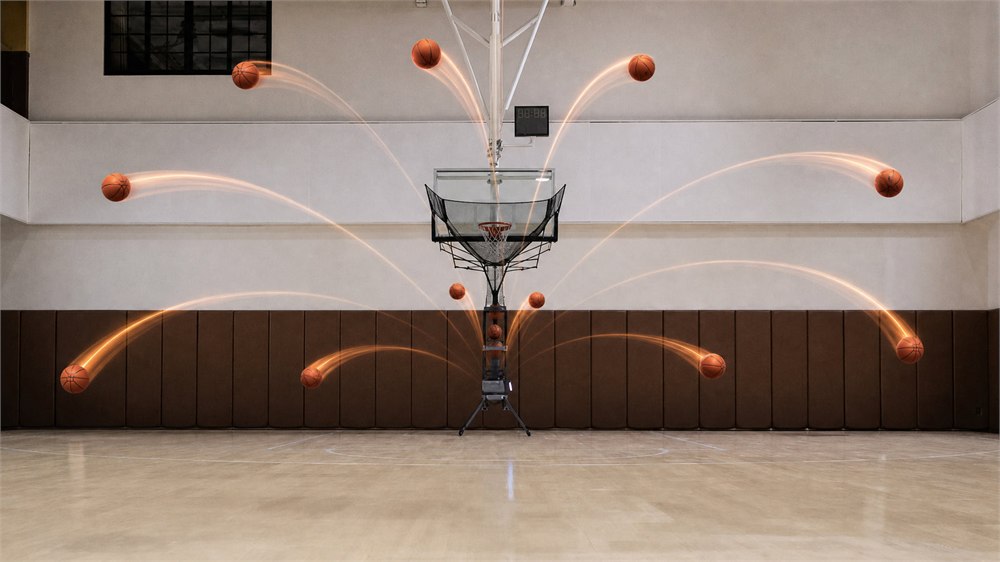
The Specs Read Like A Tiny Court Assistant
The physical design is surprisingly important here, because a basketball training machine is only useful if it can exist somewhere besides a dedicated training facility with a person named Chad guarding a storage closet. LUMISTAR lists the main unit at 77 pounds, with wheels and a handle so one player can move it around. It is still a substantial piece of gear, but the goal is portable gym equipment, not a cement monument to missed layups.
| Feature | What LUMISTAR Lists | Why It Matters |
|---|---|---|
| Vision system | Quad-camera tracking with a wide court view | Lets the machine follow player position during drills |
| Ball capacity | Up to 4 balls | Keeps reps moving before you need to reload |
| Fastest interval | 2.5 seconds per delivery | Supports higher-volume shooting sessions |
| Player tracking | Up to 5 players at once | Works beyond basic solo repetition |
| Main unit weight | 77 lbs, plus net system | Portable, but still real training equipment |
| Battery life | Up to 4 hours, with AC plug-in option | Useful for longer sessions or fixed indoor setups |
| Setup | About 60 seconds | Reduces the pre-practice equipment ritual |
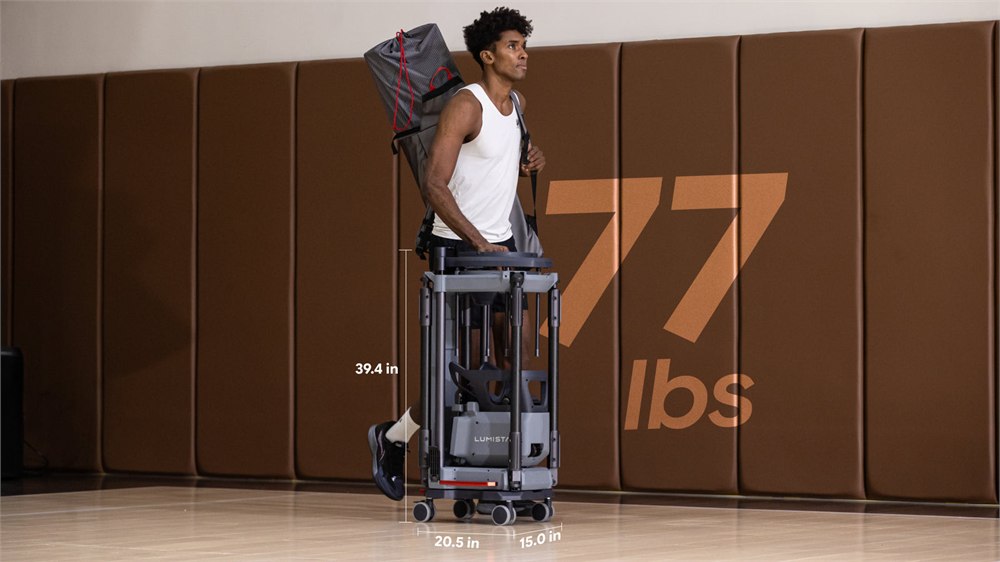
LUMISTAR also lists a carbon-fiber and aluminum alloy frame, a 1.5-meter-wide support structure, and an automated net system that extends with a button press. That last part is the kind of detail that separates a clever training robot from a garage project that becomes a coat rack by Thanksgiving.
It Wants To Be A Coach, Not Just A Ball Butler
The most interesting part of CARRY is not the passing by itself. Ball machines already exist, and some of them have been intimidating gym corners for years. The weirder and more modern part is the AI coaching layer. LUMISTAR says CARRY can analyze more than 20 performance metrics, including movement efficiency, shot distribution, shooting consistency, and release stability.
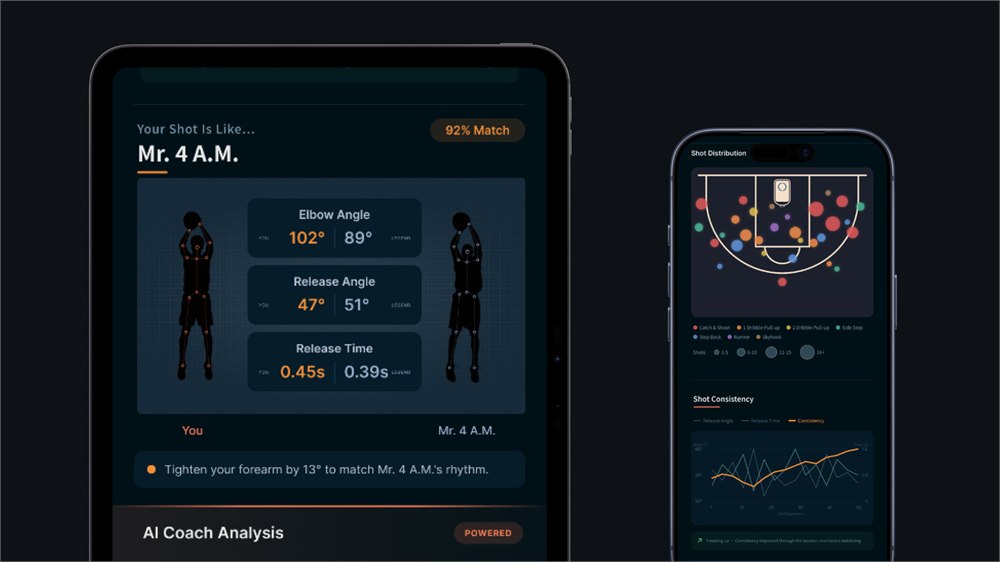
That means the machine is trying to do two jobs at once: keep the ball coming back and tell you what happened while you were busy pretending the rim moved. Its reports can include heatmaps and workout summaries, and the company describes training plans based on workout data. For players who already film themselves, track makes and misses, or obsess over why the left wing has personally betrayed them, that analytics layer is the real bait.
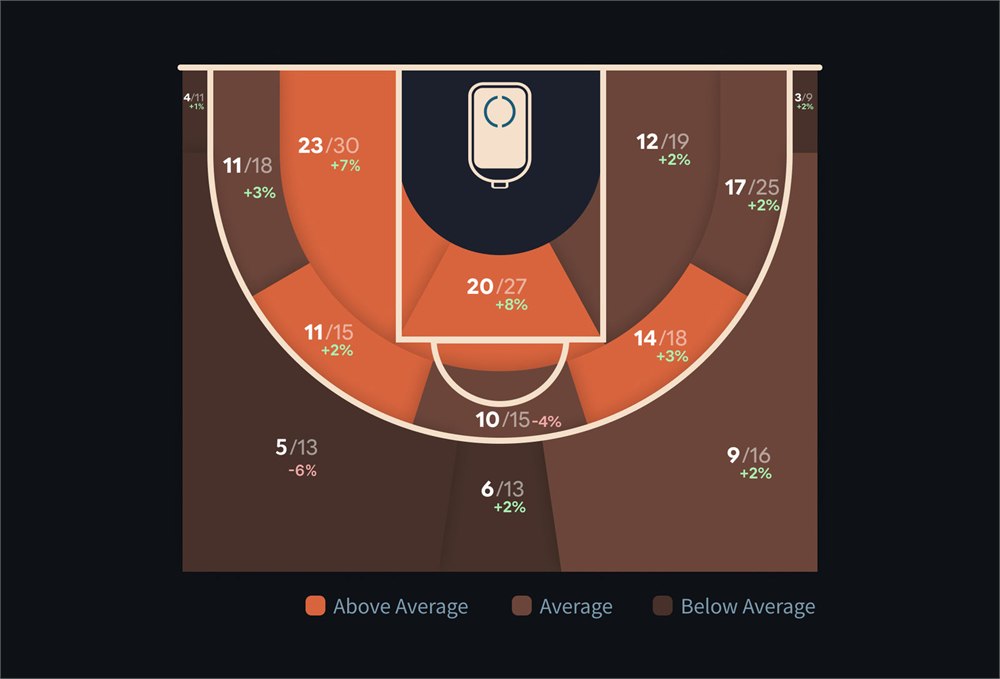
There is also a dual-control setup with an integrated 10-inch touchscreen and a mobile app. That gives it a more appliance-like feel than a simple motorized feeder. You can imagine the target user pretty quickly: serious high school players, trainers, small academies, parents building a home practice setup, and adults who technically still have a jumper if nobody checks the footage.
The machine is not magic, though. It is big enough to demand space, expensive enough to demand a real training reason, and still tied to the normal realities of crowdfunding availability. It also will not make anyone enjoy defensive slides, because technology has limits and knees have lawyers.
Who This Makes Sense For
CARRY makes the most sense for people who already know they will use it repeatedly. If your basketball career is currently one office-league game, one ankle brace, and a dream, this may be excessive in the same way buying a commercial espresso machine for instant coffee is excessive. But for players who want hundreds of reps without recruiting a rebounder, or for trainers who need a repeatable passing and tracking system, the concept is genuinely compelling.
It is also a great example of where sports gadgets are going. The old version of practice gear was mechanical: feed the ball, catch the ball, count the reps. The new version wants to understand the athlete, nudge the workout, and package the aftermath into something you can study later while pretending the heatmap is not judging you.
- Product: LUMISTAR CARRY AI basketball training partner
- Core function: moving basketball passing, rebounding, tracking, and coaching system
- Vision: quad-camera player tracking with gesture-based drill control
- Capacity: up to 4 basketballs
- Passing: fastest listed interval is 2.5 seconds per delivery
- Portability: 77 lb main unit with wheels, handle, support legs, and rapid setup
- Power: up to 4 hours on battery, with AC plug-in support
- Availability: live through LUMISTAR’s Kickstarter campaign, with initial delivery planned for Q4 2026
Photos courtesy of LUMISTAR.
LUMISTAR lists CARRY on Kickstarter with launch pricing from ,399, while the planned retail price is about ,999. That is a serious training-machine price, but also exactly the kind of price you expect when a product looks like it was designed to rebound for you, track your jumper, and quietly know too much about your release point.
| Pros | Cons |
|---|---|
| Turns solo shooting into a higher-rep workout | Crowdfunding availability means delivery timing should be watched carefully |
| Quad-camera tracking supports movement-based drills | Large enough that it needs real court or garage space |
| Gesture control keeps players in the drill flow | Price puts it beyond casual backyard novelty territory |
| Analytics and heatmaps add useful feedback after sessions | Advanced reports may be more than casual shooters need |
| Wheels, handle, and 60-second setup make it more portable than it looks | Still weighs 77 lbs before counting the net system |
| Up to four balls and a 2.5-second interval keep reps moving | Best value depends on frequent, committed training use |
Where to find This AI Basketball Training Robot Tracks Players And Feeds Passes Like A Teammate
OddityMall may earn a commission from qualifying purchases at no extra cost to you.