Teaching a kid to ride a bike is one of those wholesome family milestones that somehow turns every adult into a sweaty, sprinting sidecar with lower back pain. You start with optimism, a helmet, and maybe a camera. Ten minutes later, you are jogging behind a tiny bicycle yelling “pedal, pedal, pedal” like an underpaid Tour de France ghost.
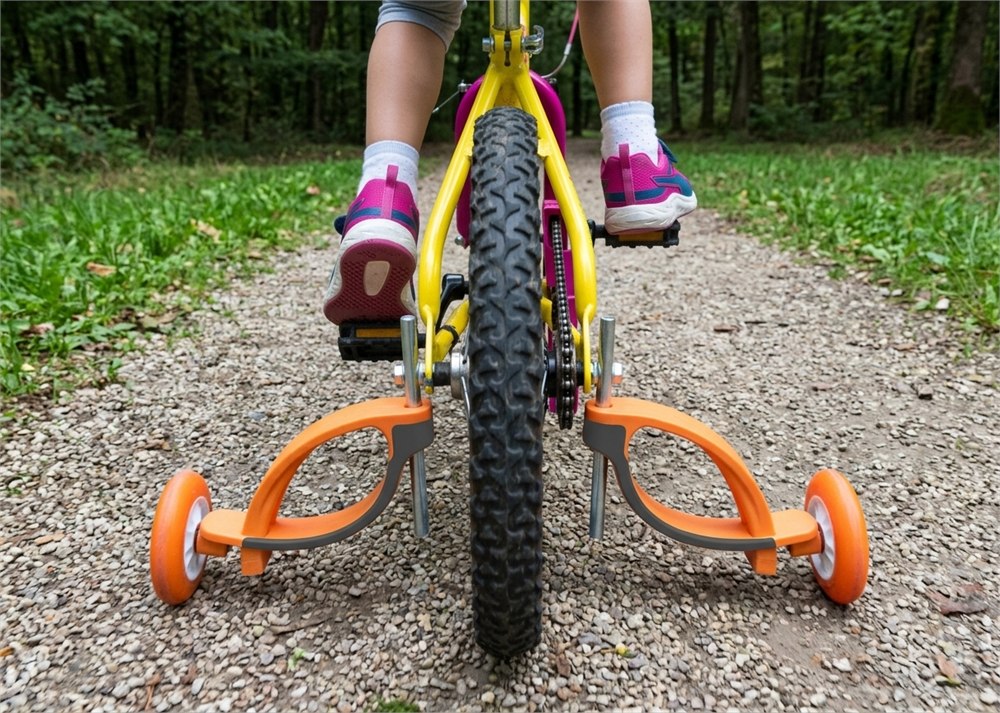
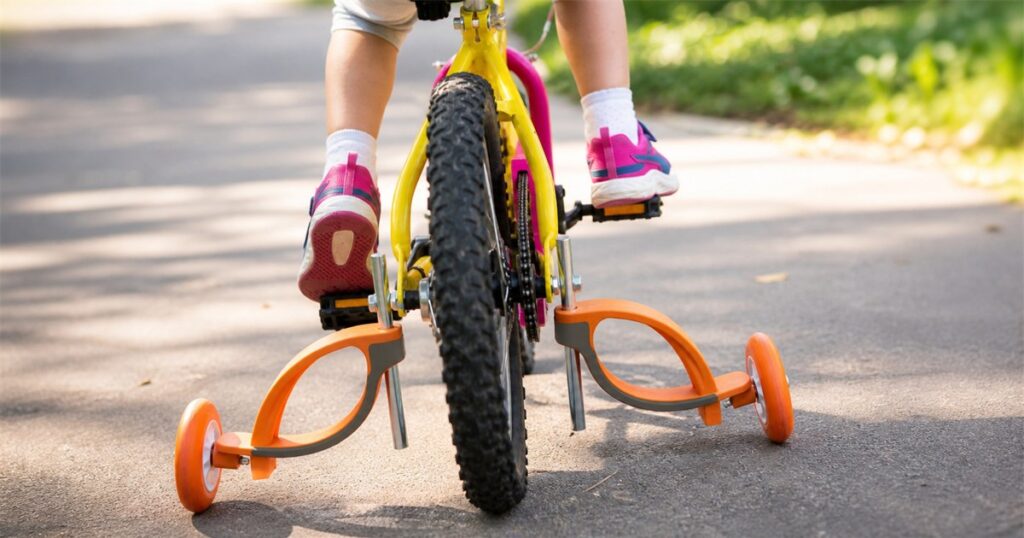
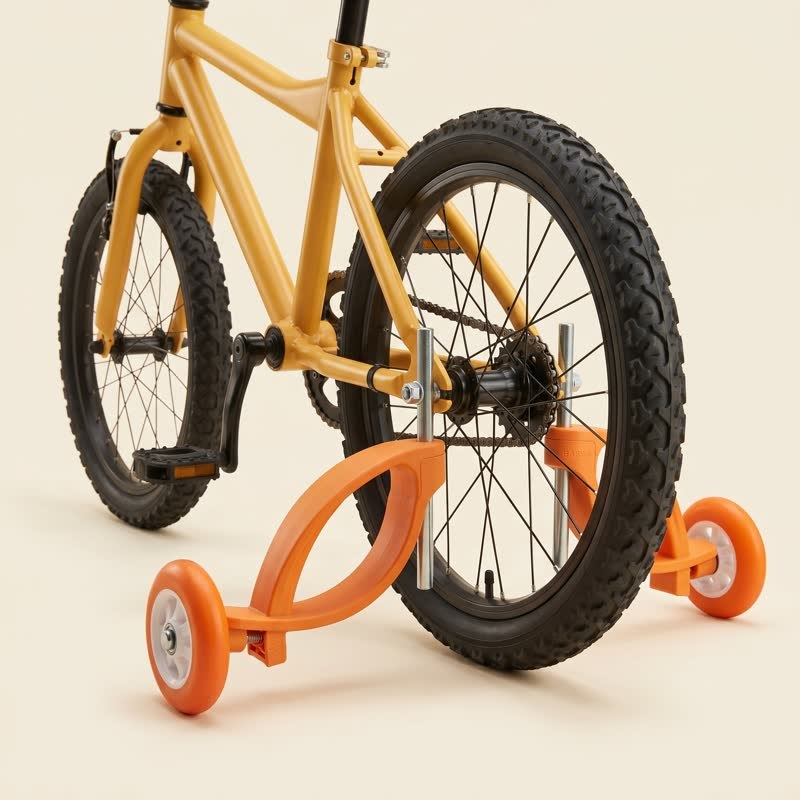
The Baswil Flexible Stabilizers are a clever twist on bicycle training wheels that tries to fix the ancient little betrayal baked into the classic design. Instead of bolting on two rigid side wheels that hold the bike upright like a very small moving table, Baswil uses orange flexible blade arms with small support wheels at the ends. The idea is simple enough to make every parent mutter, “Yeah, actually, why did we not do this earlier?”
Traditional training wheels are great at preventing the bike from falling over, but they are not great at teaching the thing a bike actually needs: balance. A bicycle turns by leaning. A kid with rigid training wheels mostly learns to pedal around on a machine that refuses to lean, then everyone acts surprised when removing the wheels feels like deleting gravity’s training manual. Baswil lets the bike tilt naturally left and right, then catches the child near the tipping point with springy stabilizer arms.
That means the child can still pedal a real bike, still steer, and still feel the bike move underneath them. The stabilizers are not there to lock everything into place. They are there to act like a tiny mechanical confidence net, which is exactly the sort of phrase you only appreciate after you have watched a four-year-old negotiate with pavement.
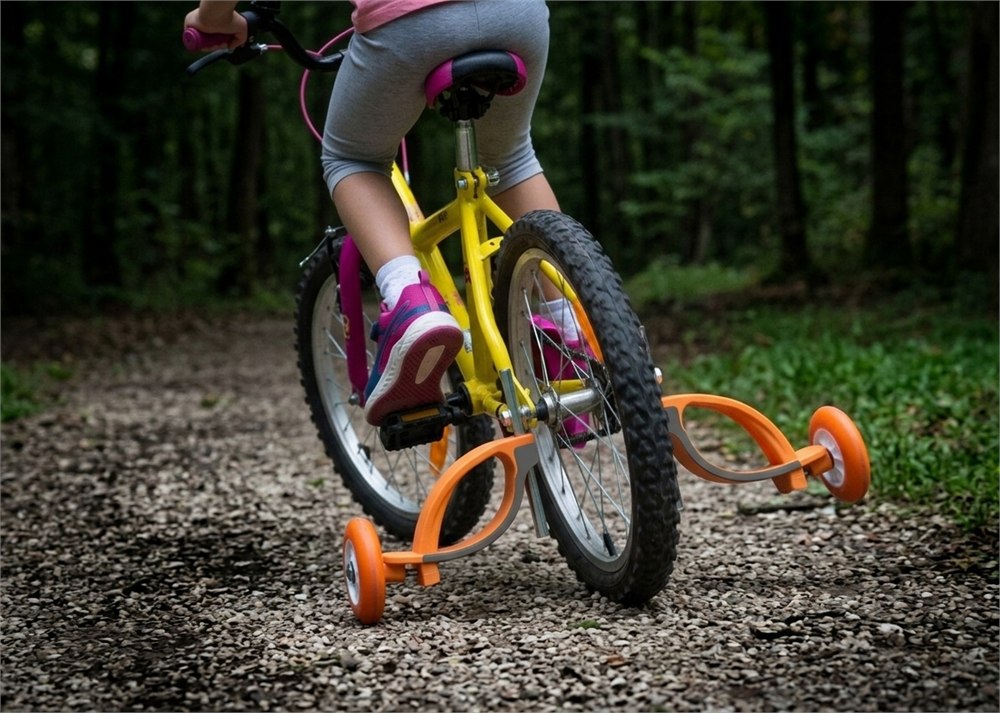
Training Wheels That Let the Bike Lean
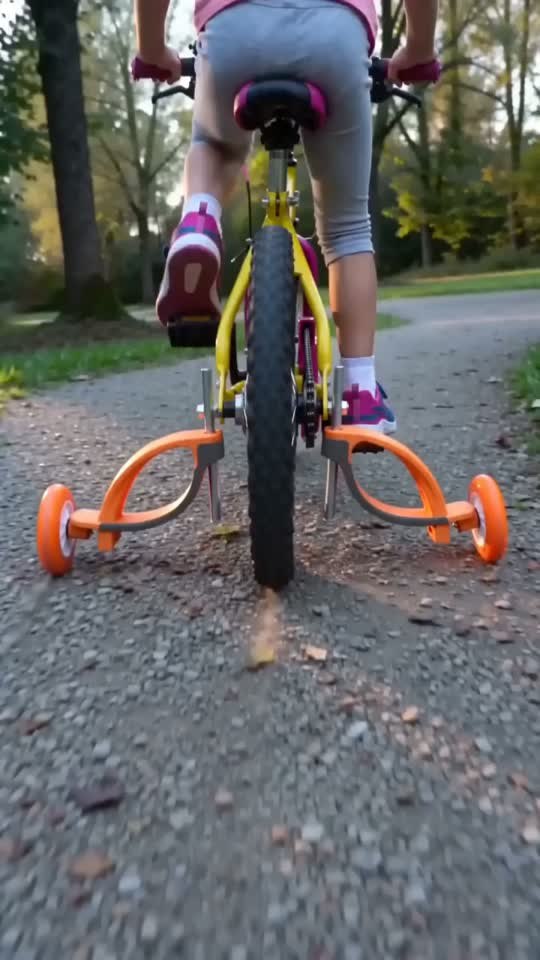
The important difference is the flexible blade shape. Baswil’s arms curve outward from the rear axle area and carry the little support wheels low and wide. When the kid rides straight, the bike can sit naturally. When the kid turns, the bike can lean into the turn before the stabilizers touch down and provide support. It is less “tricycle cosplay” and more “bike with guardrails that have learned some manners.”
The manufacturer describes Baswil as a system for kids who are learning balance while still pedaling. It is designed for 12-, 14-, and 16-inch children’s bikes, which covers the common first-pedal-bike range. Baswil also says it mounts at the same rear axle point as standard training wheels, with no bike modification needed. That matters, because no parent wants a children’s bike accessory that requires a torque wrench, a prayer circle, and the emotional resilience of a Formula 1 mechanic.
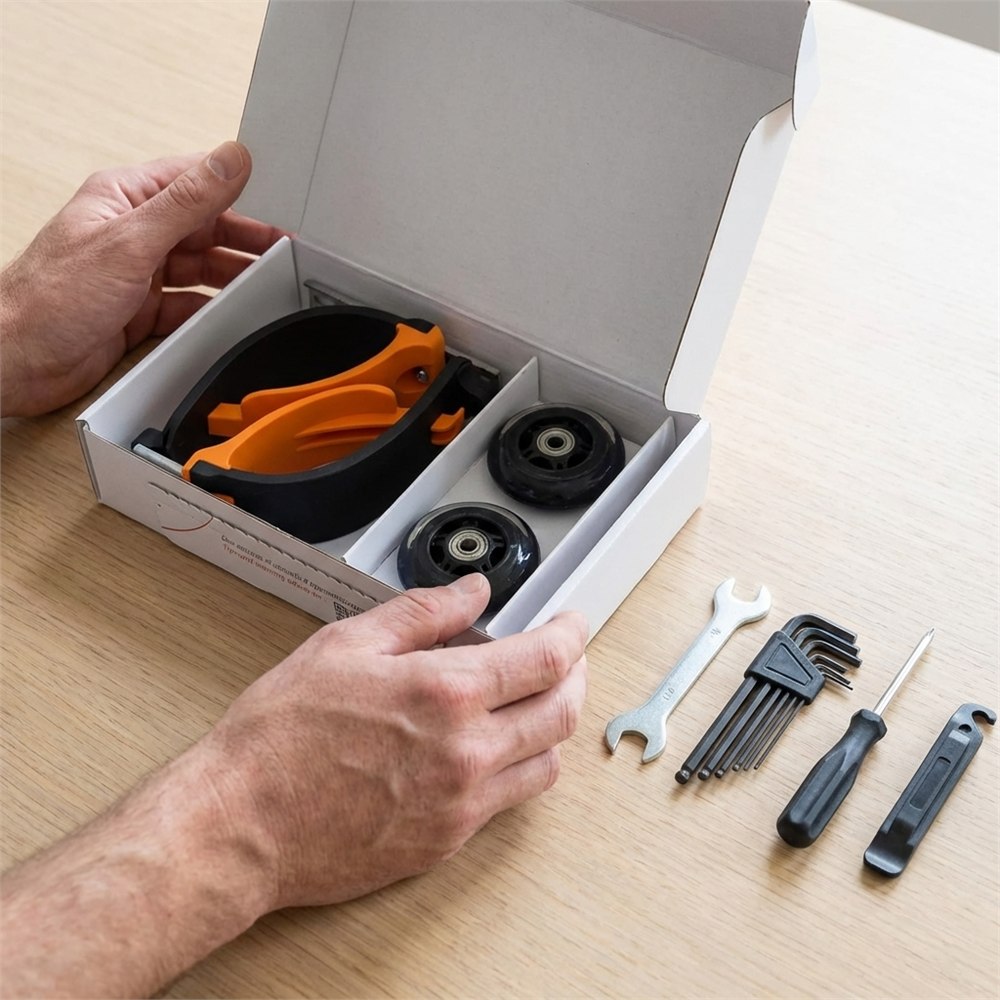
The system comes as a complete pair with mounting hardware and an illustrated manual. Baswil says installation takes about five minutes with one wrench, which is parent-product language for “you may still say one bad word, but probably not several.”
For the middle of the practical stuff, here is what the system is trying to do in normal human terms:
- Let the bike lean naturally instead of holding it stiffly upright.
- Help kids practice pedaling and balance at the same time.
- Catch the bike with flexible side supports before a full tip-over.
- Fit common 12- to 16-inch children’s bikes using the rear axle mounting point.
- Make the eventual move to no stabilizers feel less like a tiny cliff dive.
This is one of those products where the weirdness is mostly mechanical, not decorative. It does not need to look like a dinosaur or play a song. The unusual part is that it respects how a bicycle actually behaves. That is almost rude to the previous 50 years of training wheels, but progress has never been polite to little metal brackets.
How Baswil Compares to Regular Training Wheels
A regular training wheel setup gives immediate stability, but it can also teach the wrong muscle memory. The bike does not lean properly, turns feel different, and the kid can rely on the side wheels instead of building balance. Baswil’s whole pitch is that the stabilizer should intervene later, after the child has already started doing the real cycling movement.
| Feature | Classic training wheels | Baswil flexible stabilizers |
|---|---|---|
| Bike lean | Mostly blocked | Allowed, then supported |
| Balance practice | Delayed until removal | Built into each ride |
| Pedaling practice | Yes | Yes |
| Mounting point | Rear axle area | Rear axle area |
| Best fit | Basic assisted riding | Progressive balance learning |
Baswil says the stabilizers are suitable once a child can pedal a bike with training wheels, generally around ages 3 to 6, depending on the kid and the bike. The listed compatibility is 12- to 16-inch bikes, including common children’s models such as Btwin/Decathlon bikes. The company says the system is designed for children up to about 30 kg, which is roughly the weight range for that early cycling window.
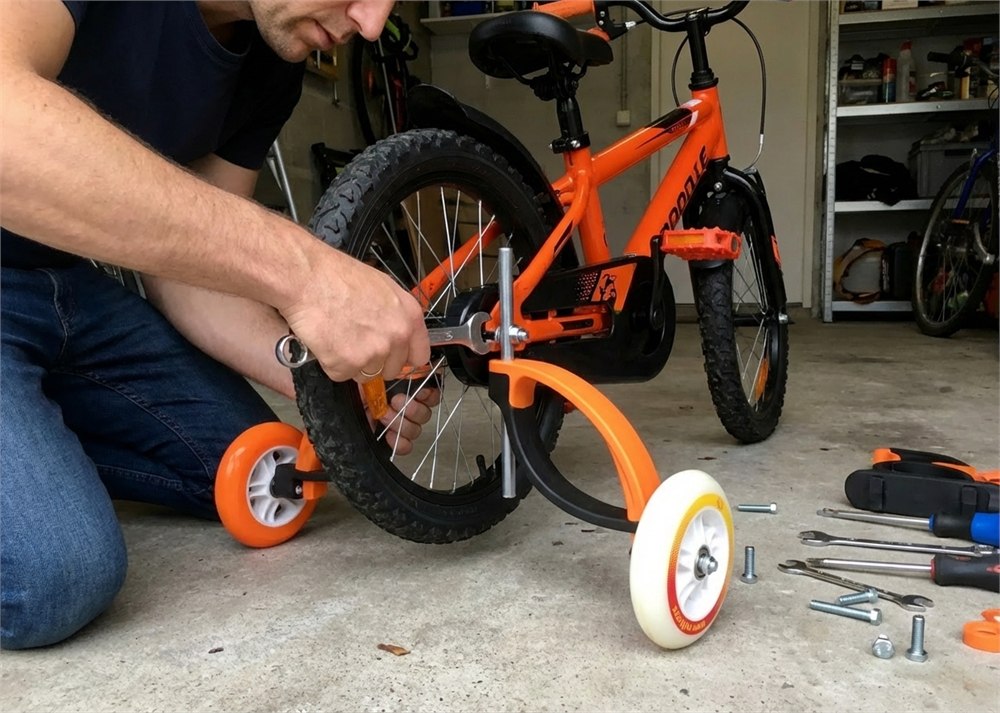
The product is also meant to be reusable. Baswil notes that it can be removed in about five minutes and passed along once a child has moved beyond stabilizers. That is useful if your household has more than one future cyclist waiting in the wings, or if your garage already operates as an informal museum of tiny wheels, outgrown helmets, and scooters with one mysterious missing bolt.
A Bike Accessory Built Around Confidence
The best part of Baswil is that it changes the emotional rhythm of learning. With rigid wheels, the big dramatic moment is removal day. Everybody knows it is coming. The kid knows it. The parent knows it. The bike, if it had eyes, would avoid making contact. Baswil tries to make that moment gradual by letting the child lean more naturally from the start.
Baswil’s public materials say many parents see progress within two to four weeks of regular use, though every child learns at a different pace. That is a sensible claim to treat as a general expectation rather than a guarantee. Children are not firmware. Some will click quickly, some will negotiate with physics for a season, and some will stop mid-ride because they found a leaf that deserves a meeting.
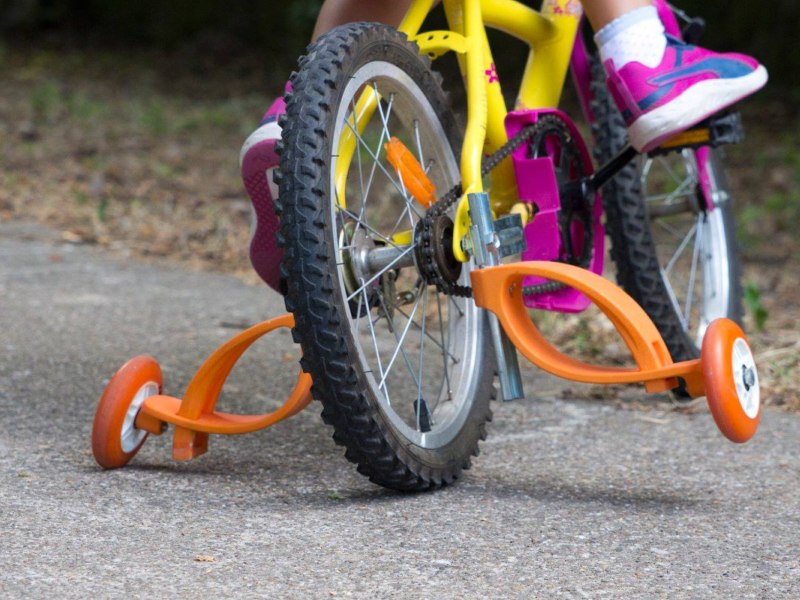
Still, the product’s theory is easy to understand. Instead of teaching “pedal now, balance later,” it teaches both at once. The stabilizers become less like permanent side wheels and more like bumpers on a bowling lane: helpful, visible, and hopefully less relevant as the rider gets better.
Baswil also leans into legitimacy. The product is described as designed in Belgium, created by a PE teacher, and recommended in Baswil’s own materials by Andy Schleck, the 2010 Tour de France winner. Nobody needs a Tour de France winner to approve their child’s driveway wobble, but it is a nice little wink from the serious cycling universe toward the tiny bike universe.
The Parenting Problem It Actually Solves
The real pain point is not that training wheels are hard to buy. They are everywhere. The problem is that they solve the wrong immediate fear. They keep the bike upright, but they can make the transition to real riding abrupt. For a child who is nervous about falling, that abruptness can turn one afternoon into a very small legal dispute between the family and the laws of motion.
Baswil is most interesting for parents who want the reassurance of support without completely removing the sensation of cycling. It is not a magic button. Adults will still need to choose a calm place to ride, adjust the bike properly, make sure the helmet fits, and resist the ancient parental urge to overcoach every half-second. But the hardware gives the child a chance to feel the bike lean before the stabilizers step in.
Near the practical end of things, the key product details shake out like this:
- Product type: flexible bicycle stabilizers for children’s bikes.
- Compatibility: 12-, 14-, and 16-inch kids bikes, using the rear axle mounting point.
- Learning goal: pedaling and balance practice at the same time.
- Included setup: a complete pair of stabilizers, mounting hardware, and manual.
- Installation: listed as about five minutes with a single wrench.
- Use range: aimed at young riders around 3 to 6 years old, up to about 30 kg.
- Support: Baswil lists a 30-day money-back guarantee and a 2-year manufacturer warranty.
The Baswil Flexible Stabilizers are sold through Baswil’s official site for €52 including VAT, with shipping based on destination. Baswil currently lists delivery to several European countries, including Belgium, Luxembourg, the Netherlands, Germany, France, Austria, Italy, Spain, and Portugal. The item is not an Amazon product, so the cleaner shopping phrase is simply “flexible training wheels” or “bike stabilizers for kids.”
For parents who have already done the bent-over driveway shuffle, Baswil is the rare children’s bike accessory that feels like it was designed by someone who watched the whole comedy unfold and then quietly fixed the engineering. It may not make learning to ride completely drama-free, because children remain children and bicycles remain bicycles, but it gives the whole process a more graceful middle step than “cling to the seat until your hamstrings file a complaint.”
| Pros | Cons |
|---|---|
| Allows the bike to lean more naturally than rigid training wheels. | Only intended for 12- to 16-inch children’s bikes. |
| Lets kids practice pedaling and balance together. | Still requires adult setup, supervision, and a safe riding area. |
| Uses familiar rear axle mounting points. | Current shipping is listed for selected European countries. |
| Complete pair includes mounting kit and manual. | Not a guaranteed instant learn-to-ride shortcut for every child. |
| Reusable after a child moves on from stabilizers. | More specialized than cheap basic training wheels. |
Where to find These Flexible Bicycle Training Wheels Help Kids Learn Balance While Pedaling
OddityMall may earn a commission from qualifying purchases at no extra cost to you.