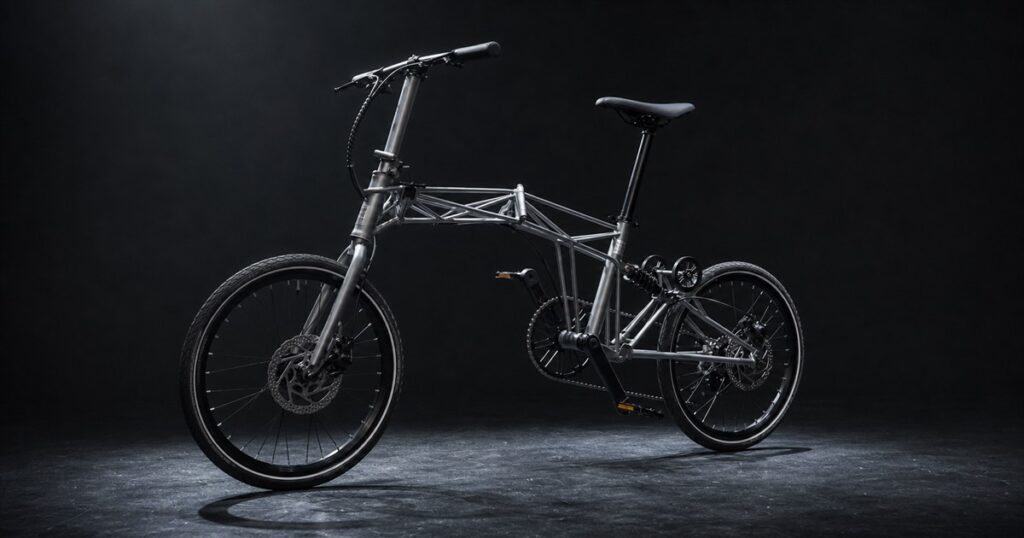
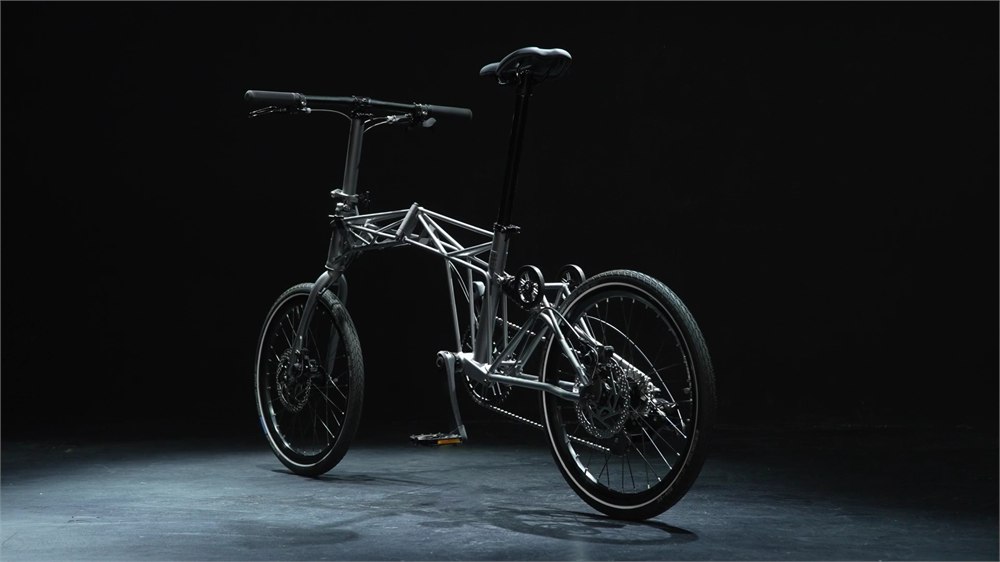
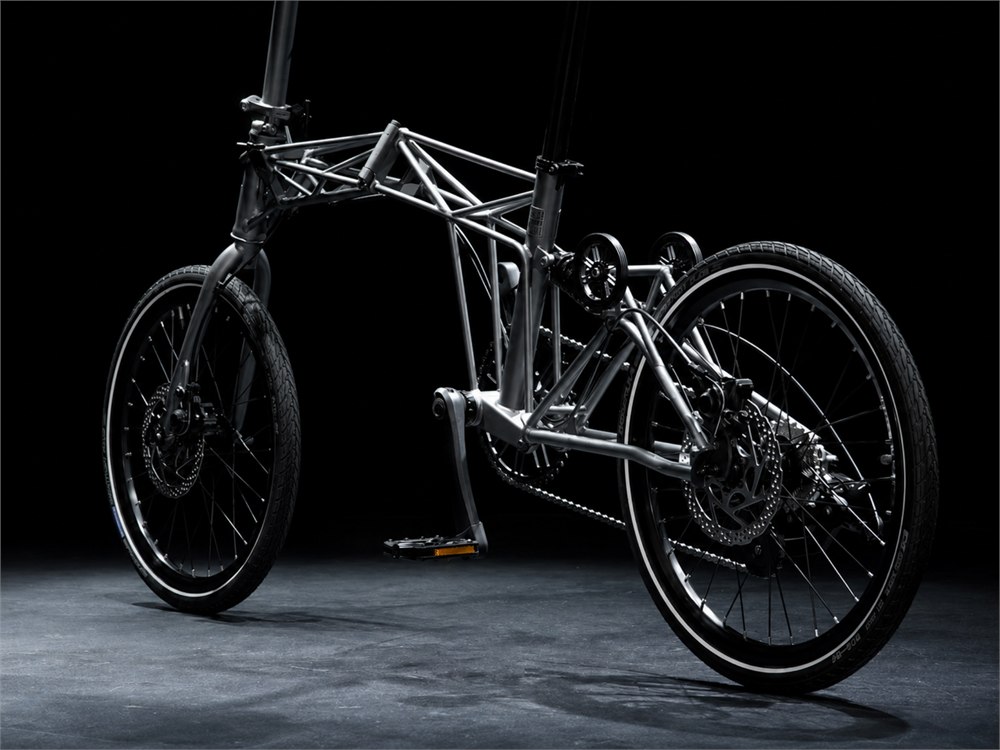
Most folding bikes look like they were designed during a tense meeting between a suitcase and a garden chair. The Tetra Space-Frame Folding Bike goes in the opposite direction. It looks like somebody taught a bridge truss to commute, then gave it rear suspension and a dramatic studio lighting budget.
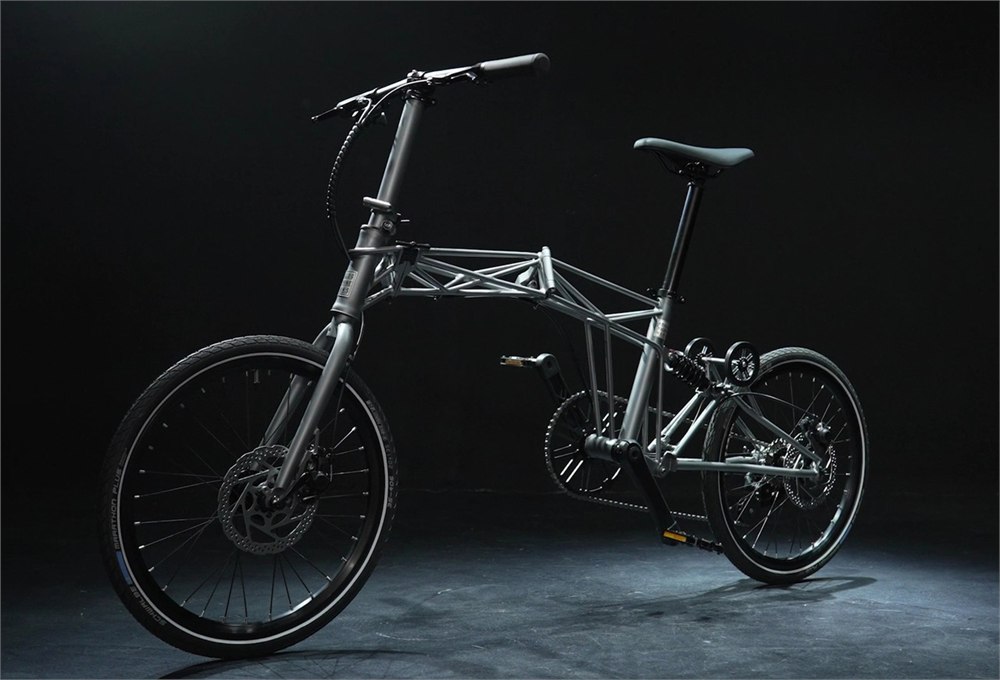
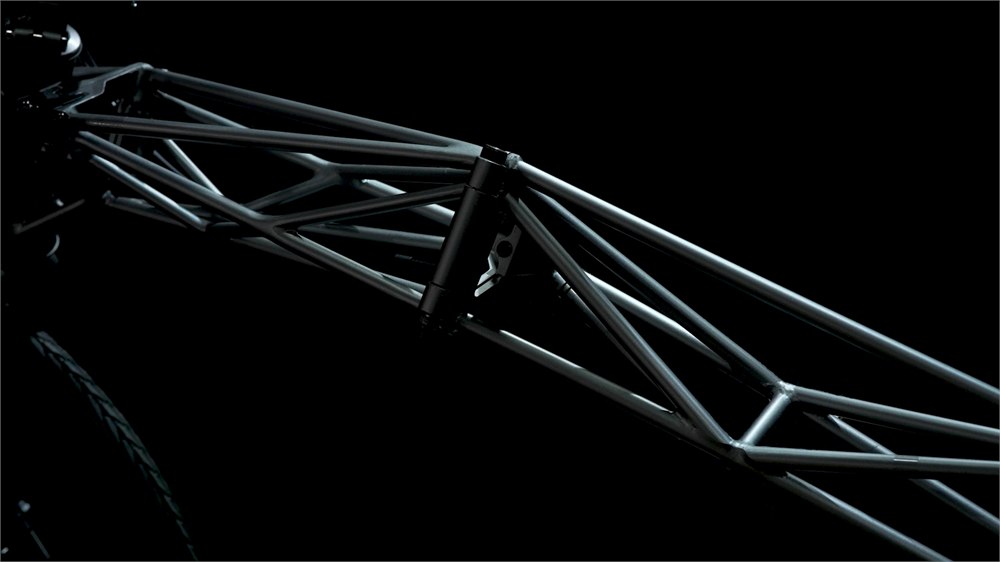
This is a tubular space-frame folding bicycle from Analog Machine Works, a South Korea-based outfit that has apparently looked at normal hinge-based folding bikes and decided, politely, that they were not geometrically intense enough. Instead of hiding its trick inside one central joint, the Tetra builds its whole personality around a long chrome-molybdenum steel frame made from paired tetrahedral structures. The result is a bike that folds, rolls, and still looks like it belongs in a design museum where the security guard has to keep reminding people not to touch the exhibits.
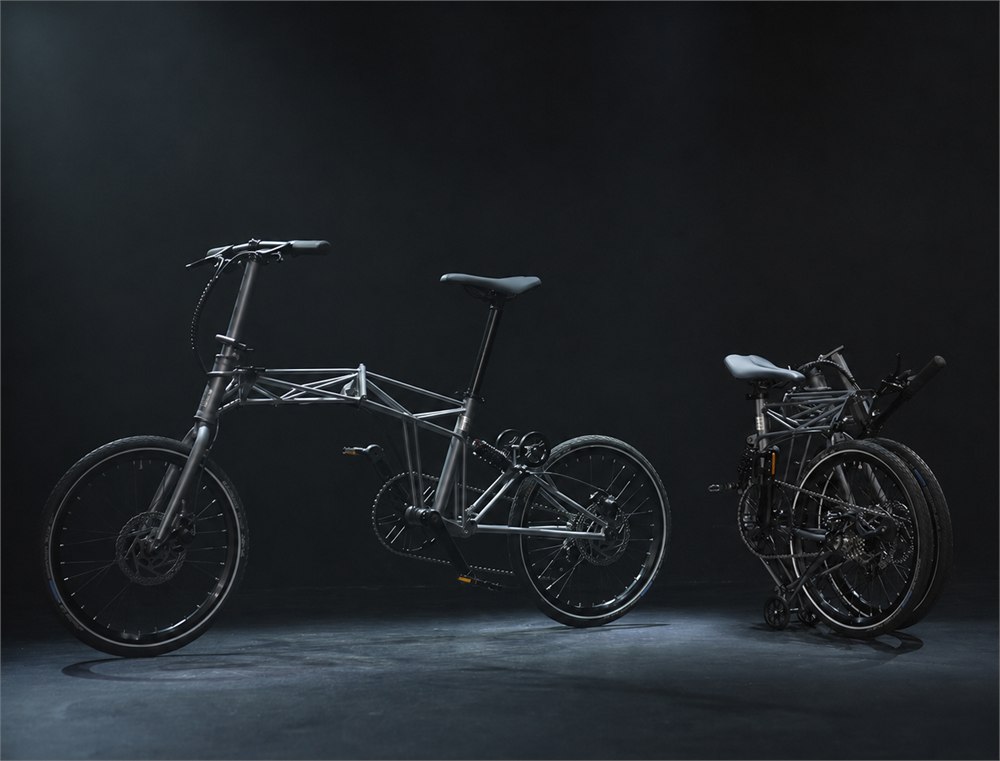
The big idea is that the frame uses four folds instead of the more familiar compact-bike origami routine. Analog Machine Works says this lets the bike keep a more stable-feeling structure while still collapsing into a carryable, rollable package. In normal human language, it is trying to be a folding bike that does not immediately feel like a polite compromise with tiny wheels and a nervous frame.
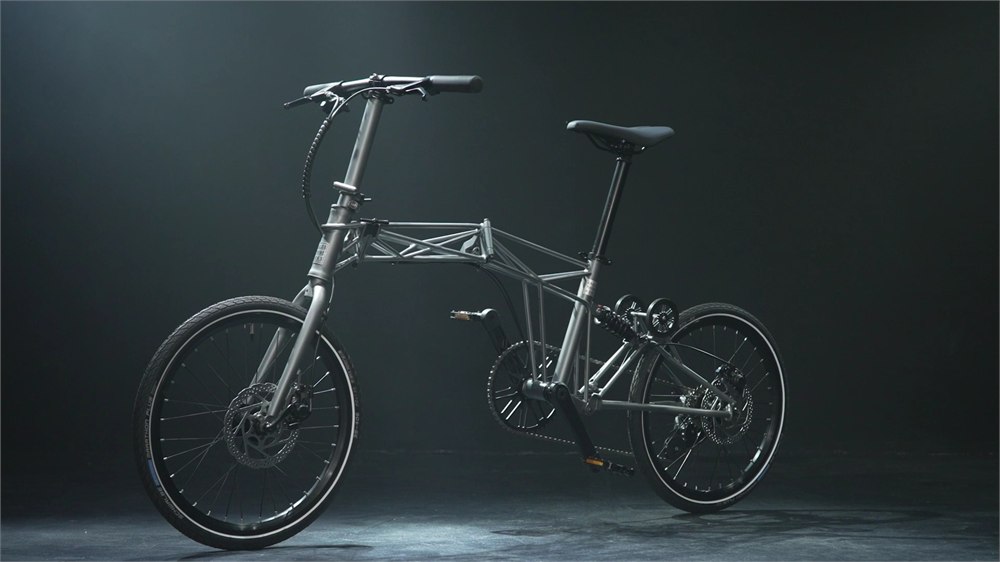
The Tetra also gets 20-inch wheels, which is a meaningful upgrade if your daily route includes cracked pavement, driveway lips, or that one block your city seems to maintain with vibes and loose gravel. New Atlas notes that many well-known folding bikes use smaller 16-inch wheels, while the Tetra stretches the platform for a smoother ride and a longer, more sculptural stance. That longer stance is part of the visual joke here: it folds, yes, but while open it has the posture of a small urban machine that has been doing Pilates since 2021.
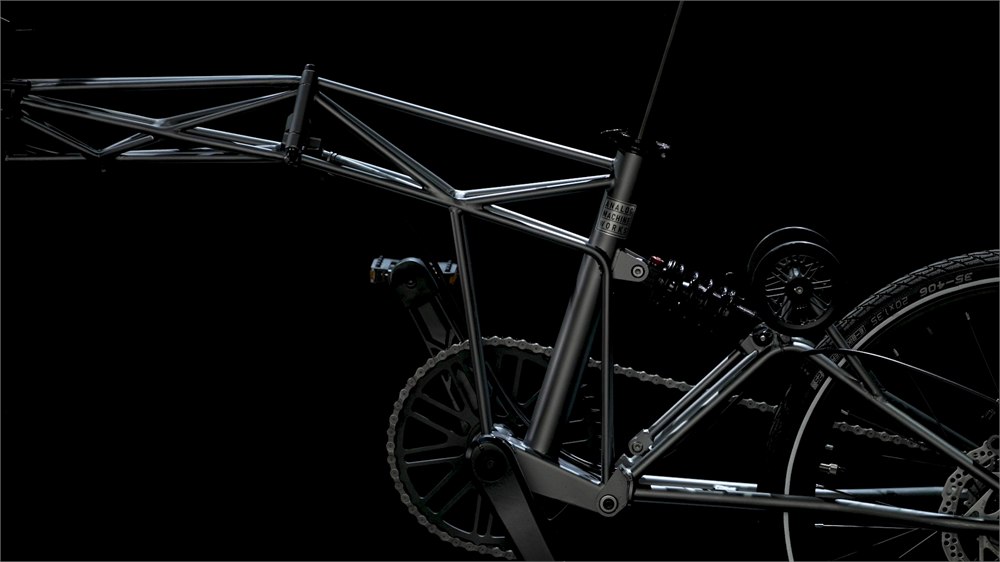
Rear suspension is another major part of the appeal. Because the frame is not just a stubby hinge with a saddle attached, the Tetra makes room for a linkage-shock system with a hydraulic rear shock absorber. It is also described as damping adjustable, which is the sort of detail that makes bicycle people lean forward slightly and makes everyone else ask whether that means the potholes lose. It does not turn a city folding bike into a downhill rig, but it does give this thing a more serious comfort story than the usual little rubber bumper approach.


A Folding Bike Built Like Tiny Architecture
The main attraction is still the frame. The Tetra has an industrial, exposed-tube look that turns every joint and brace into part of the show. It is not trying to visually disappear under panels or pretend it is a normal commuter bike. It wants you to notice the geometry. It wants your neighbor to ask if you built it yourself. It wants the office bike rack to feel underdressed.
According to the launch coverage, the frame is made from chrome-molybdenum steel and is paired with a custom crankset, a 9-speed sprocket, and Shimano disc braking. That combination puts it in an interesting lane: not a featherweight carbon commuter, not an e-bike, and not a novelty sculpture that just happens to have pedals. It is a human-powered folding bike with a very deliberate mechanical personality.
- Four-fold frame design built around paired tetrahedral tube structures
- 20-inch wheels for a more comfortable ride than many smaller-wheel folders
- Rear linkage with a hydraulic shock absorber and adjustable damping
- Chrome-molybdenum steel frame with an exposed industrial look
- 9-speed drivetrain and Shimano disc braking listed in launch details
- Small auxiliary wheels so the folded bike can roll beside you instead of being carried the whole way
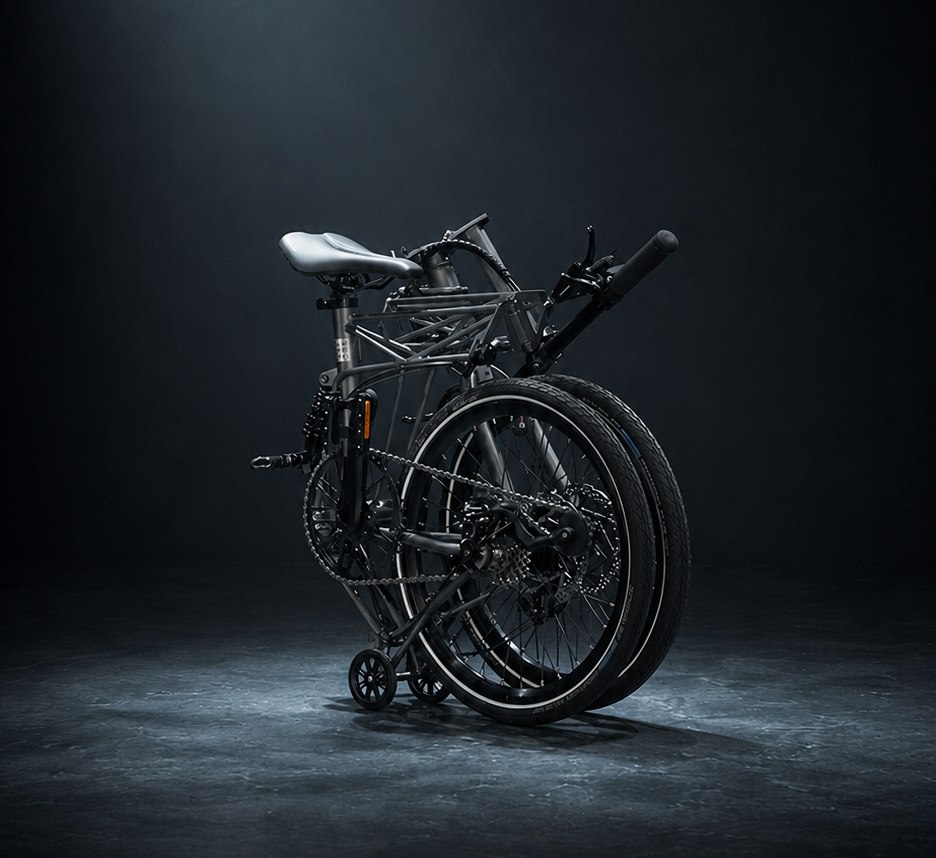
The folded mode might be the sneakiest practical feature. The wheels can lock together with a small hook, and the bike includes little auxiliary wheels so you can hold the handlebar upright and roll the folded package through hallways, sidewalks, and other places where carrying nearly 29 pounds of bicycle would turn your commute into an unrequested arm day. It is still not ultralight, but at a listed 28.7 lb, it is in the realm of manageable for many riders, especially if the roll-along mode works as intended.
| Feature | Listed Detail | Why It Matters |
|---|---|---|
| Frame | Chrome-molybdenum tubular space frame | Gives the bike its rigid-looking truss structure and wild silhouette |
| Fold system | Four folds using paired tetrahedral geometry | Aims for compact storage without relying on one simple central hinge |
| Wheels | 20-inch wheels | More comfort and rollover confidence than many tiny-wheel folders |
| Suspension | Rear linkage with hydraulic shock absorber | Adds real cushioning potential for rough urban pavement |
| Weight | 28.7 lb / 13 kg | Not featherlight, but supported by roll-along folded transport |
| Drivetrain | 9-speed sprocket with custom crankset | Useful range for city riding without adding electric assist complexity |
For Commuters Who Want The Bike Rack To Have A Plot Twist
This is probably not the folding bike for someone who wants the least noticeable object possible. Some people buy a commuter bike because it is sensible. Tetra seems aimed at the person who still wants sensible, but would prefer that the sensible object look like it escaped from a kinetic sculpture exhibit.
That makes it especially interesting for apartment dwellers, train commuters, design nerds, and people who like bikes that start conversations before the rider has even found the kickstand. A regular folder says, "I have planned my transportation." The Tetra says, "I have planned my transportation, but I also have opinions about spatial geometry and will be taking questions after lunch."
The tradeoff is that dramatic structure usually comes with real-world considerations. A 28.7-pound folding bike is not something everyone will casually lift up three flights of stairs. The exposed frame also means there is no hiding the fact that this is a complex-looking machine. That complexity is exactly the charm, but it also means buyers will want to pay attention to maintenance, shipping details, and the usual risks that come with a crowdfunded production ramp.
Analog Machine Works has reportedly been developing the Tetra since 2021, and the prototype has picked up design awards over the years. The current campaign is the step toward mass production in South Korea. That matters because the Tetra feels less like a random rendering and more like a product that has been refined in public long enough to develop a recognizable face. Or at least a recognizable lattice of tubes, which is close enough for bike people.
The bike is also fully analog, which is refreshing in a year when everything with two wheels seems contractually obligated to contain an app, a battery, and a dashboard that will become obsolete before your helmet does. Here, the drama is mechanical. The folding motion, suspension layout, and frame shape do the talking.
What To Know Before Backing It
The Tetra is being offered through Kickstarter, so the usual crowdfunding caveat applies: backing a campaign is not the same thing as buying something off a shelf with ordinary retail guarantees. New Atlas also notes that this appears to be Analog Machine Works’ first Kickstarter, which is worth keeping in the mental basket labeled "interesting but read everything twice." That does not make it bad. It just means you should treat timelines, final specs, and delivery risk like grown-up topics instead of tiny print you scroll past while emotionally adopting a bicycle.
For the practical spreadsheet part of your brain, the current campaign pricing is listed at $2,390, with an expected retail price of $3,990. Shipping was reported separately at $160 to the US and select Asian countries, or $220 to Europe, Australia, and New Zealand. That puts it in premium folding-bike territory, though the rear suspension, roll-along folded mode, and space-frame design are the reasons it is not trying to compete with ordinary budget folders.
Images courtesy of Analog Machine Works.
- Product: Tetra Space-Frame Folding Bike by Analog Machine Works
- Type: Human-powered folding commuter bicycle with a tubular space frame
- Frame: Chrome-molybdenum steel with paired tetrahedral structures
- Ride hardware: 20-inch wheels, 9-speed drivetrain, Shimano disc brakes, rear hydraulic shock
- Folded transport: Wheels lock together and auxiliary wheels help it roll while folded
- Weight: Listed at 28.7 lb / 13 kg
- Availability: Crowdfunding on Kickstarter, with campaign pricing listed at $2,390 and expected retail at $3,990
So yes, this is a folding bike. But it is also a tiny mechanical thesis statement about why commuting objects do not have to look like apologetic luggage. If your apartment is small, your route is rough, and your taste in bikes leans toward "mathematics with tires," the Tetra might be the rare folder that solves a storage problem while creating a whole new staring problem.
| Pros | Cons |
|---|---|
| Distinct tubular space-frame design is genuinely different from typical folding bikes | Premium campaign price keeps it far from impulse-buy territory |
| 20-inch wheels should ride more comfortably than many smaller-wheel folders | 28.7 lb weight is manageable, but not ultralight |
| Rear hydraulic shock gives it a stronger comfort story than basic folders | Crowdfunding availability means delivery and production risk remain factors |
| Folded roll-along mode helps reduce carrying strain | Unusual frame may attract attention whether you want it or not |
| Mechanical, battery-free design keeps the weirdness refreshingly analog | First-time Kickstarter campaign deserves careful buyer reading |
Where to find This Space-Frame Folding Bike Has Rear Suspension and Rolls While Folded
OddityMall may earn a commission from qualifying purchases at no extra cost to you.