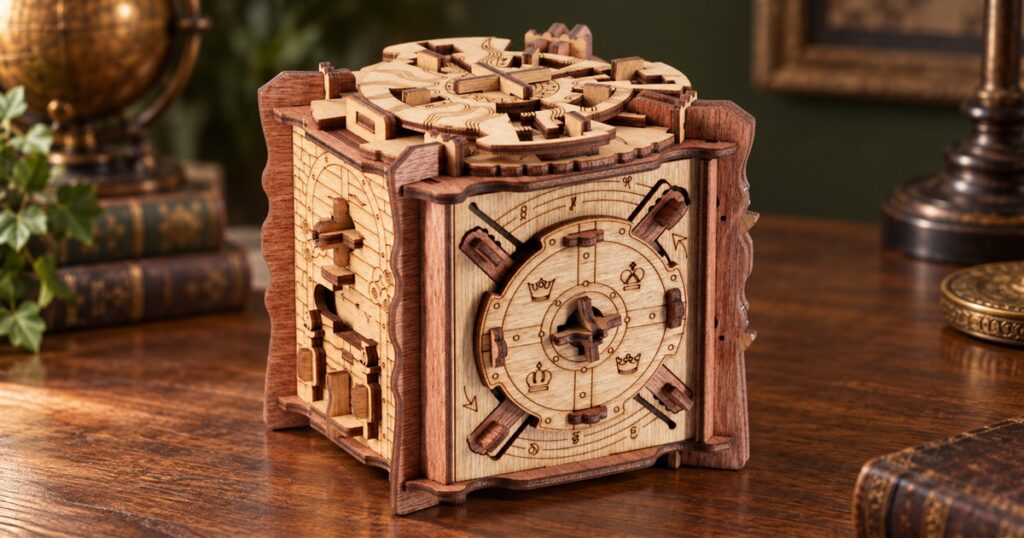
Some people put a gift in a bag. Others apparently feel that receiving a present should require an audition for the Knights of the Round Table. For that second group, here is a small wooden box with a very firm opinion about whether you deserve access to its contents.
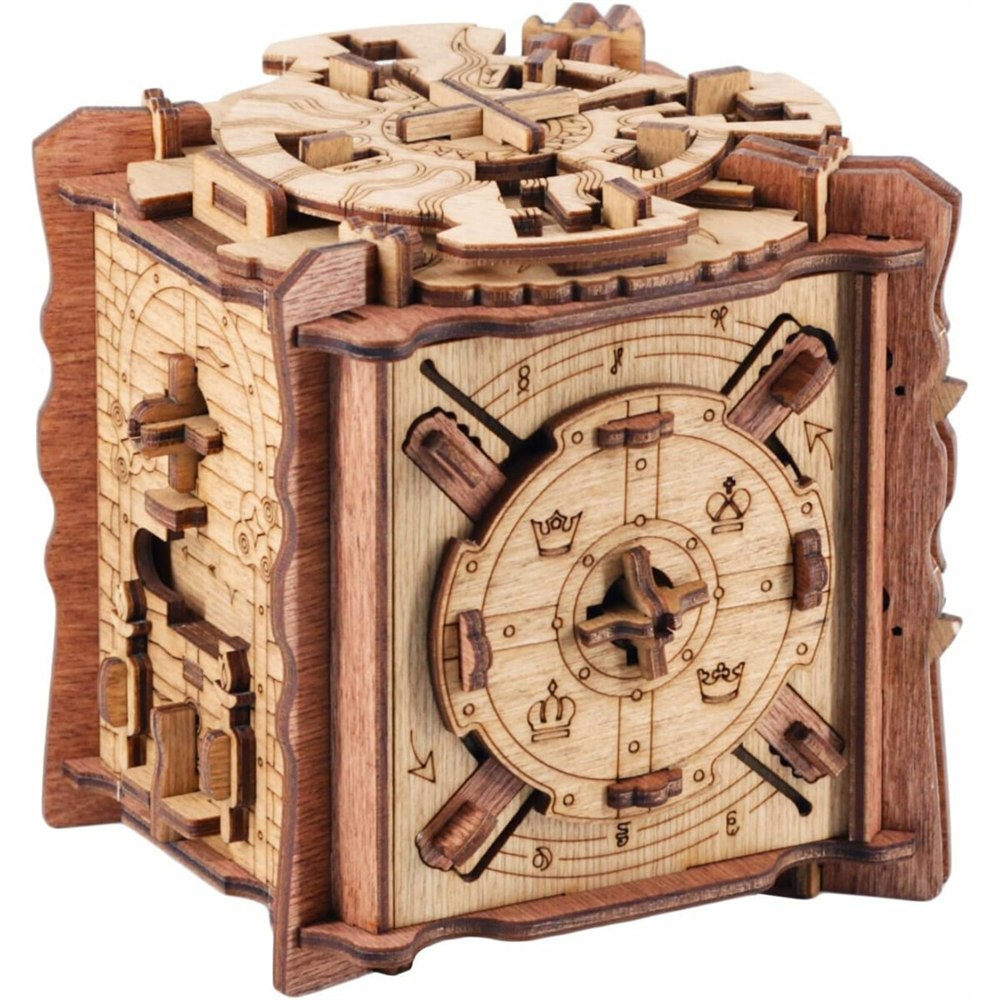
The iDventure Cluebox: The Trial of Camelot is a wooden escape room puzzle box. You work through a sequence of mechanical riddles to open it, with King Arthur and Merlin providing the theme and your increasingly suspicious fingers doing the fieldwork. It is a tabletop adventure with a secret compartment, rather than a container that simply happens to have a fiddly lid.
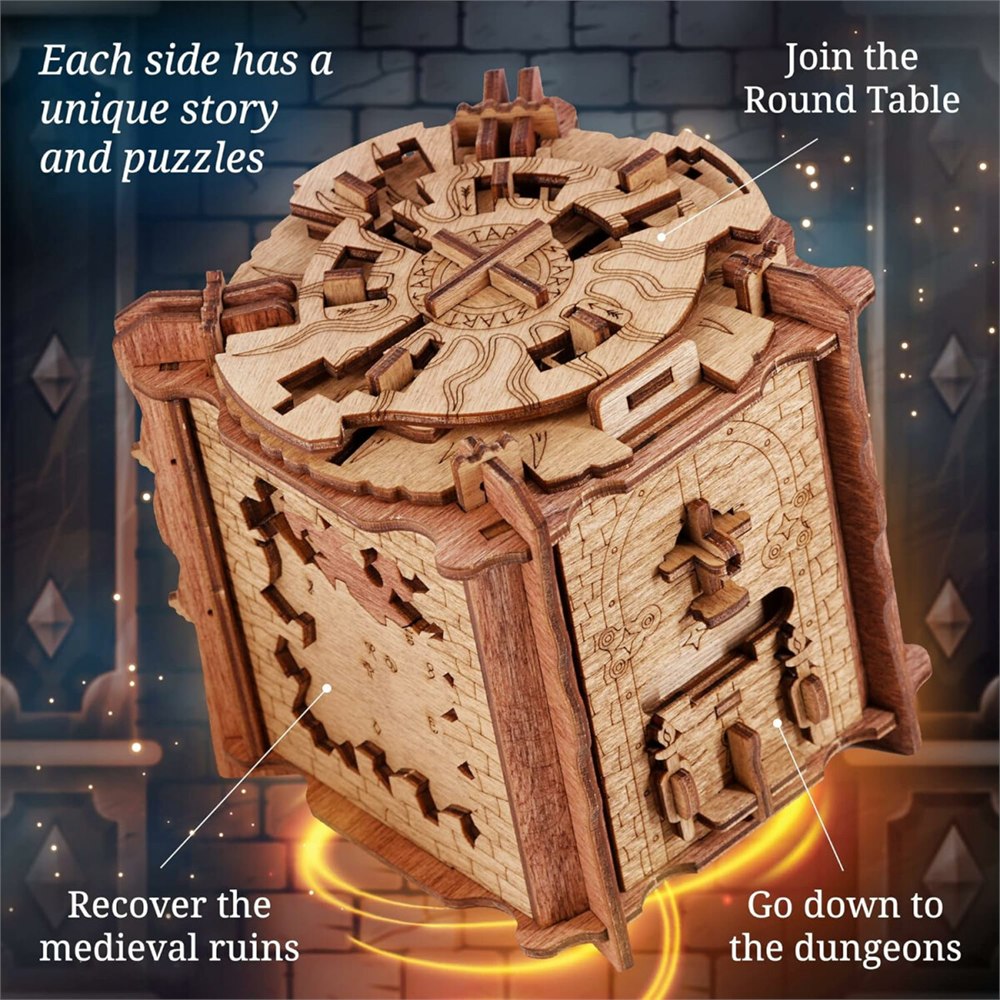
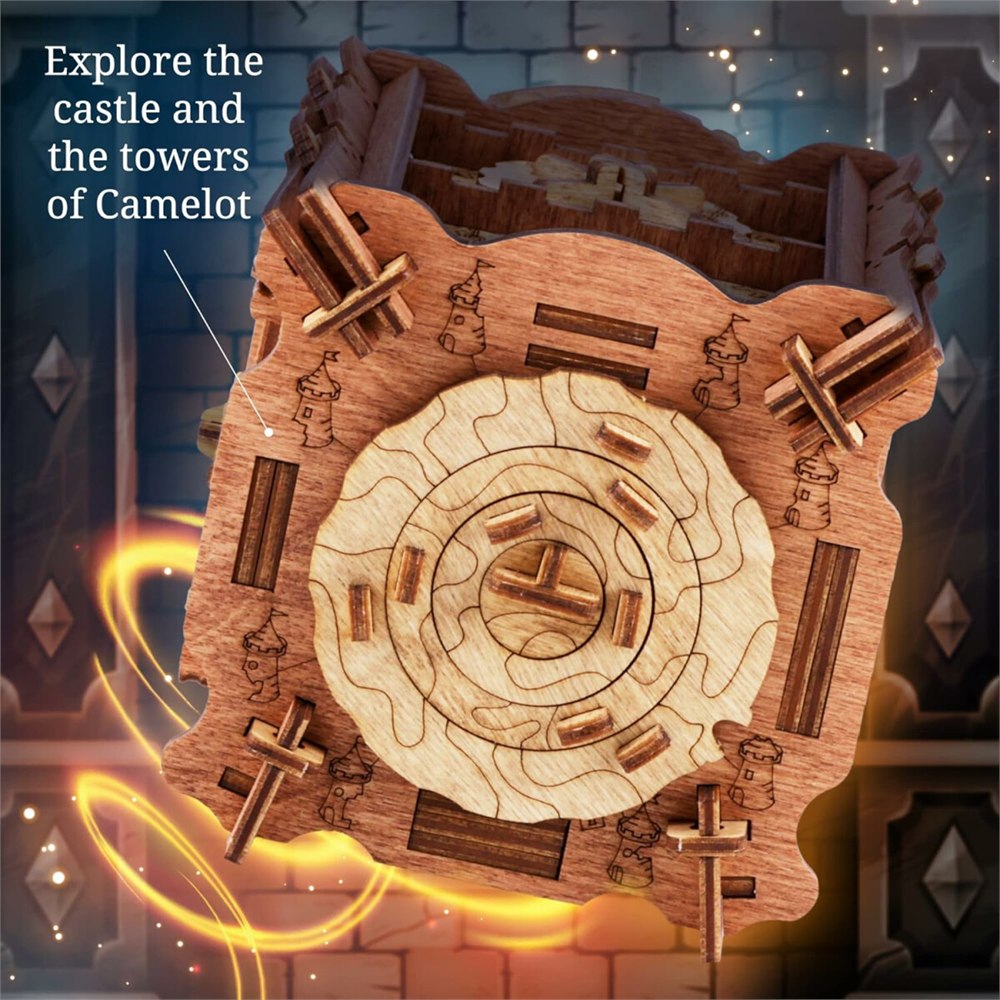
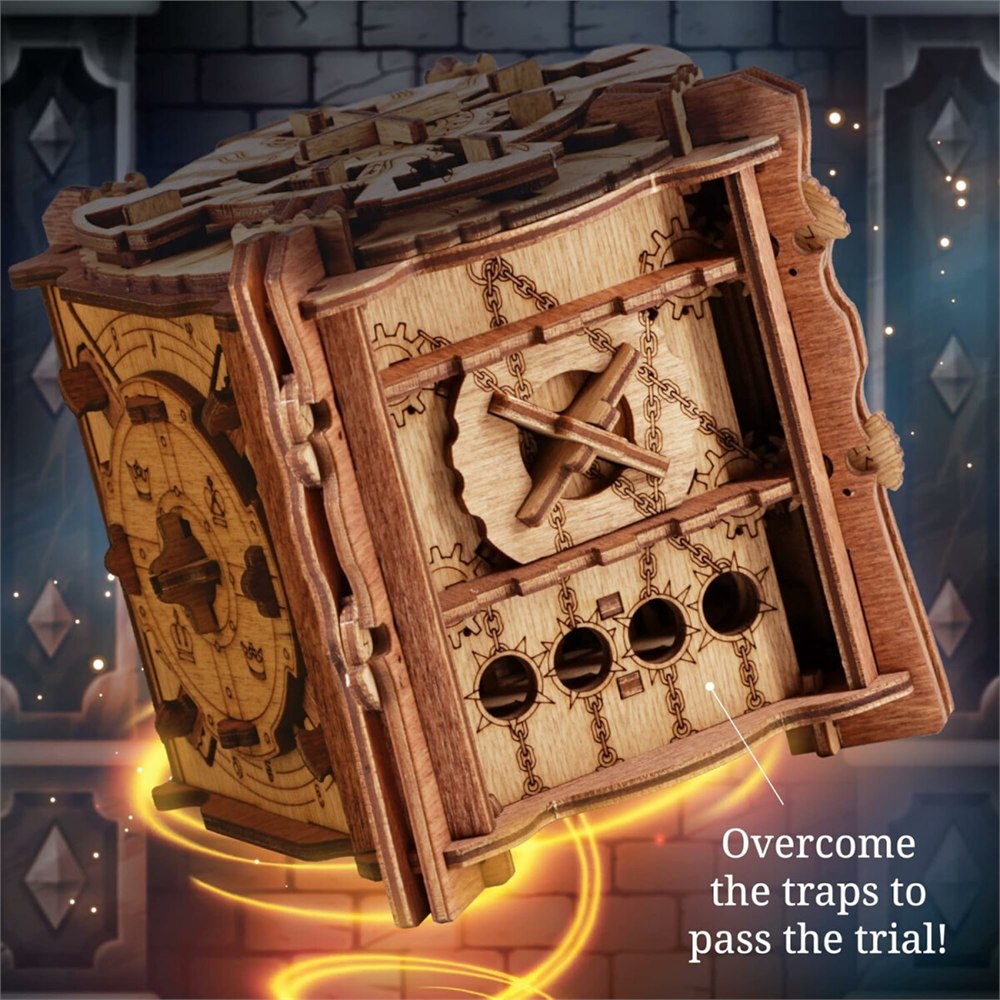
The appeal is immediate. Look at the layered panels, little wooden sliders, engraved symbols, and circular mechanisms. Everything seems to be inviting you to investigate. Nothing looks especially interested in making that investigation easy. This is precisely the sort of object that could turn a perfectly competent adult into someone whispering, “Wait, turn it back,” at a coffee table.
A tiny Camelot with an admissions policy
Its fictional setup borrows from the Arthurian world: Merlin has devised a trial, Galahad has a reputation to uphold, and a worthy knight needs more than enthusiasm to succeed. The setting gives the mechanisms a personality. Instead of staring at an anonymous combination lock, you are inspecting a miniature wooden collection of medieval mysteries.
That distinction matters if your idea of fun involves figuring out why an object behaves the way it does. A conventional puzzle lets you see the pieces spread out in front of you. Here, the questions are built into the thing you are holding. The box is both the challenge and the scenery, an admirably compact arrangement for anyone whose dining table already hosts several unrelated hobbies.
Related posts:
 This Amazing Dining Table Has a Hidden Game/Puzzle Compartment Under The Surface
 This Toilet Paper Jigsaw Puzzle Is Perfect For The Pandemic Hoarder In Your Life
 This Sphere Shaped Gradient Puzzle Contains 540 Different Colors
 This Electronic Puzzle Gift Box Makes People Solve a Tesla-Themed Escape Room for Their Present
It also looks good sitting still. Pale birch faces contrast with darker edges, while the different layers create depth around the moving parts. You can appreciate the construction before you understand any of it. In fact, “I admire the craftsmanship” is a perfectly respectable sentence to deploy while you are temporarily getting nowhere.
The job is to solve it, not build a castle
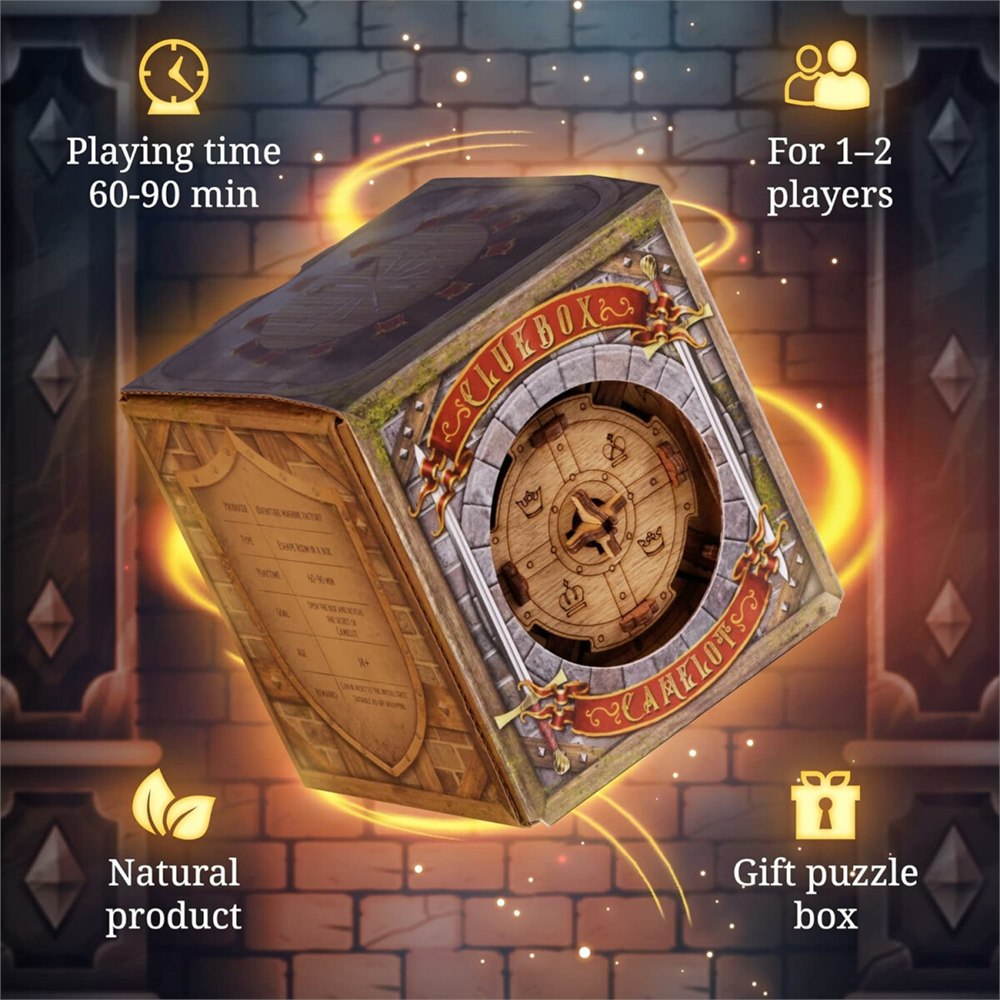
iDventure describes the box as hand-built from 195 precisely laser-cut birch-wood parts. Those are the components of the mechanism, not a promise that your afternoon begins with a loose pile of 195 pieces. The main activity is working out how the finished box opens. Anyone hoping to avoid yet another half-finished model on a shelf can appreciate that distinction.
The maker estimates 60 to 90 minutes for the adventure. Treat that as a planning guide, not a countdown to personal failure. There is a large difference between enjoying a puzzle and assigning yourself an annual performance review because a wooden circle has resisted your theory for twelve minutes.
It is intended for one or two players, with the Amazon listing recommending ages 14 and up. Solo play lets you follow a thought without someone helpfully announcing six competing thoughts. Playing together creates the familiar escape-room rhythm of noticing, testing, swapping the box, and occasionally discovering that the quiet person was right about something twenty minutes ago.
- Solo evening: Keep the box close, take your time, and work through the logic at your own pace.
- Two-person challenge: Trade observations and turns handling the mechanisms instead of turning it into a tug-of-war.
- Puzzle-loving gift recipient: The experience is the present, with a small hidden compartment offering room for an extra surprise.
- Pass-it-on game: Reset the box after solving it so another person can face the same mystery.
For a large gathering, that one-or-two-player design deserves attention. Everyone can have an opinion, but there is still only one small object to inspect. This is better suited to a focused pair than a whole party crowded around a single dial like a medieval planning committee.
Small box, fairly serious brain appointment
The physical size keeps the project manageable. You are not clearing the living room or booking a time slot somewhere across town. Pick a comfortable spot with good light and enough space to see what you are handling. The setting can be wonderfully ordinary even when the box is insisting that you have unfinished business with Merlin.
| Detail | What to expect |
|---|---|
| Type | Sequential wooden escape room puzzle box |
| Players and age | 1–2 players; ages 14 and up |
| Estimated play time | 60–90 minutes |
| Construction | 195 laser-cut birch-wood parts |
| Box size | Approximately 4.3 × 4.3 × 4.7 inches |
| Secret compartment | Approximately 0.59 × 0.98 × 1.77 inches |
The compartment measurements are particularly useful if you plan to hide something inside. “Gift box” can conjure up a very generous mental picture. This one calls for a tiny surprise or carefully folded cash, not an ordinary gift card assumed to fit without checking. Measure the gift first. Explaining that the real present is stuck beside the magic sword would undermine the ceremony.
There is also a useful difference between a puzzle compartment and a security safe. Buy this for the challenge of discovery and the fun of presentation. Its wooden construction and game-oriented purpose are the attraction; it is not where you should develop a serious valuables-storage strategy.
Hints exist, and your knighthood can survive them
If you hit a wall, iDventure points players toward an online hint page through the manual. That gives you a way to get moving again without turning a leisurely evening into a prolonged argument with a box. You can decide how long you want to sit with a problem before asking for help.
A little restraint with solution videos will serve you well. The manufacturer warns that its linked reviews can reveal answers. For a product whose central pleasure is the moment something clicks, knowing the route in advance changes the experience considerably. Admire the pictures, learn what kind of game you are buying, and leave the exact sequence for your own hands to discover.
The reset feature is welcome, too. After opening the box, you can reassemble it for someone else. That does not erase your memory of the solution or turn it into a brand-new puzzle for you. It does make it possible to share the original challenge, which is a much better second act than retiring the thing immediately.
Watching a friend solve a puzzle you already know requires its own unusual skill: remaining quiet. Consider that the unofficial bonus round. You may be able to defeat Merlin, but can you avoid saying “Have you looked at the other side?” every thirty seconds? A surprisingly demanding test of character.
Who should bring Camelot home?
This makes the most sense for someone who enjoys tactile puzzles, escape rooms, or attractive objects with concealed workings. It is a particularly appealing gift when you know the recipient likes to puzzle something out. If they regard every unexpected obstacle as a customer-service issue, perhaps choose a more cooperative present.
The wooden design also gives it a life on a desk or shelf after the first session. Unlike a scattered puzzle that needs its own protected territory, it has a compact silhouette and plenty of detail to look at. Keep it somewhere you can hand it to a curious visitor, then allow them the dignity of making their own extremely confident first guess.
- Product: iDventure Cluebox: The Trial of Camelot.
- Main attraction: A sequence of physical riddles inside a compact Arthurian-themed box.
- Best audience: One or two patient puzzlers, ages 14 and older.
- After solving: Reset it for another player or keep it as a decorative wooden object.
- Gift planning: Check the tiny internal compartment dimensions before choosing an extra surprise.
The Amazon listing is sold by iDventure Board Games. Budget around $54.99 and check the current offer before ordering; price and availability can change. The real value proposition is straightforward: a small, beautifully complicated object that gives a puzzle fan something interesting to do with both hands and the portion of their brain normally occupied by remembering passwords.
Product details and inline images: iDventure. For once, the mysterious wooden box on the table has a perfectly sensible explanation. You bought yourself a medieval homework assignment.
| Pros | Cons / considerations |
|---|---|
| Intricate, tactile wooden mechanisms | Best for people who enjoy patient problem-solving |
| Compact escape-room-style experience | Designed for only one or two players |
| Resettable for another player | Your own second attempt will not have the same mystery |
| Hidden space for a small gift | Compartment is much smaller than the box exterior |
| Online hints available | Solution videos can spoil the discoveries |
Where to find This Wooden Escape Room Puzzle Box Hides a Secret Compartment
OddityMall may earn a commission from qualifying purchases at no extra cost to you.
Related posts:
This Amazing Dining Table Has a Hidden Game/Puzzle Compartment Under The Surface
This Toilet Paper Jigsaw Puzzle Is Perfect For The Pandemic Hoarder In Your Life
This Sphere Shaped Gradient Puzzle Contains 540 Different Colors
This Electronic Puzzle Gift Box Makes People Solve a Tesla-Themed Escape Room for Their Present