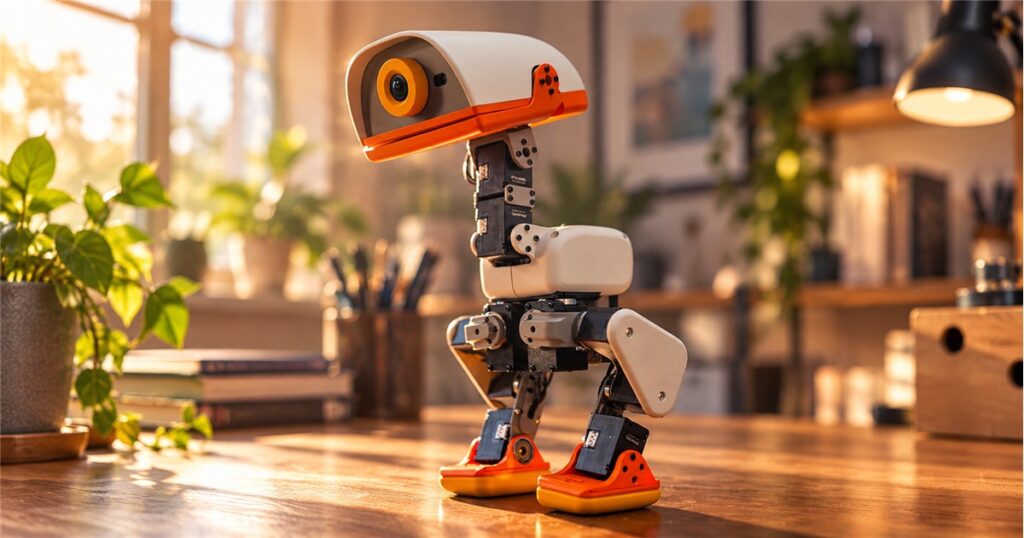
Your desk has a keyboard, a coffee cup, and several cables that appear to be reproducing. What it clearly lacks is a tiny mechanical duck with the confidence to kick a ball and the hardware to make that everyone’s problem. Microduck is a programmable duck robot from Pollen Robotics, and it gives the home robotics hobby a remarkably good face.
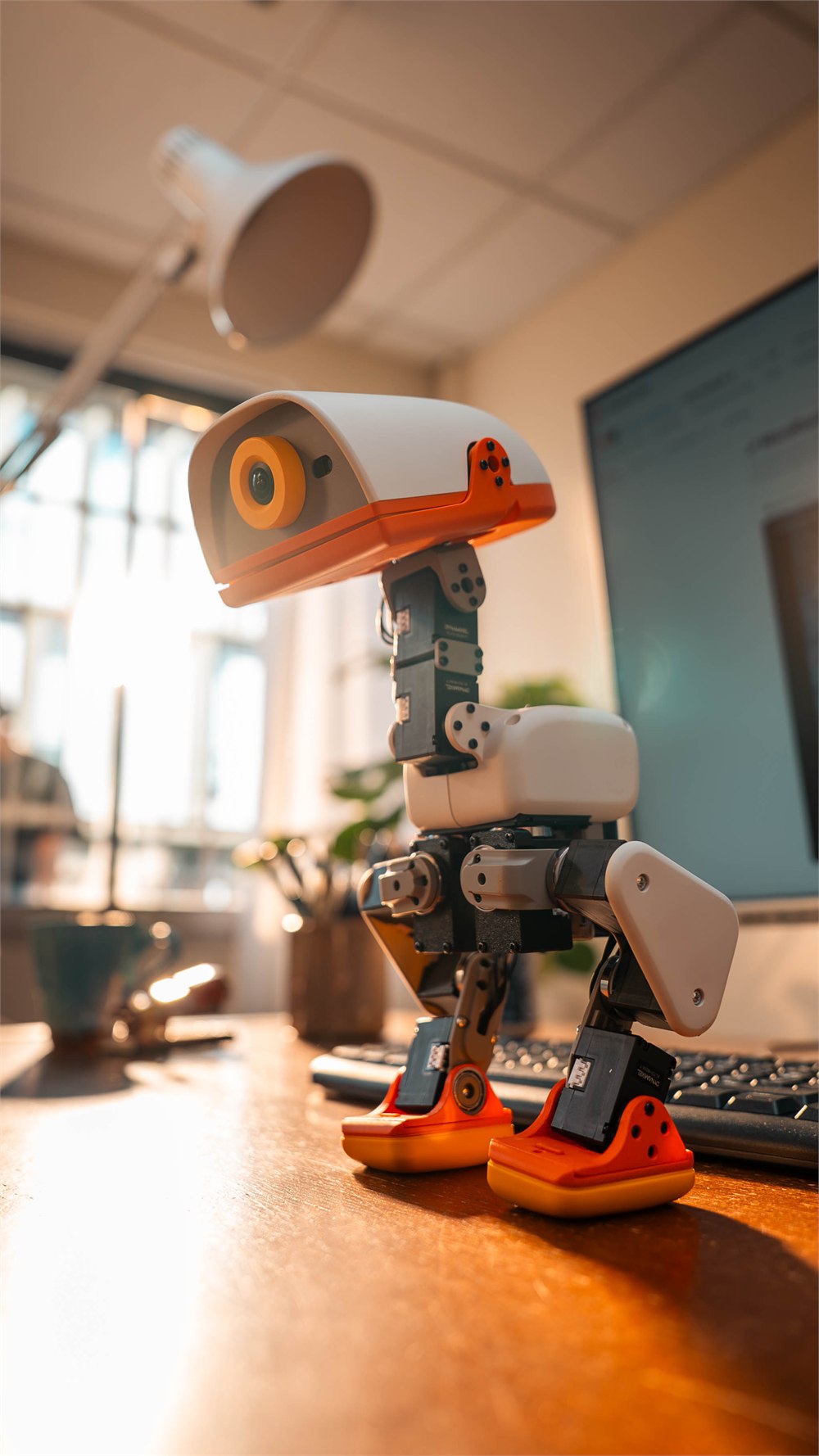
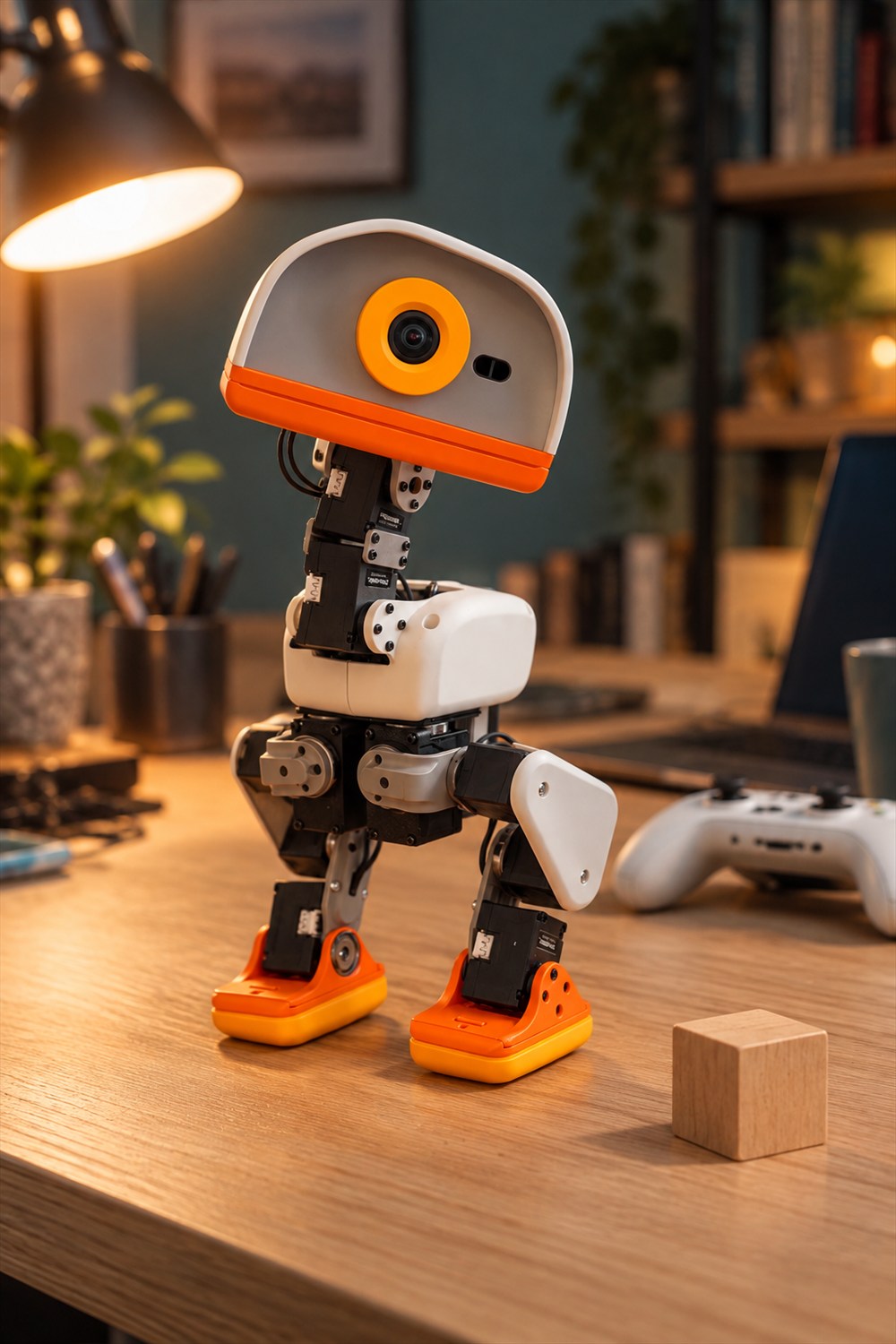
That face is mostly beak. Behind it sits an actual walking robot, with an exposed articulated neck, chunky feet, and the posture of a bird inspecting a suspicious sandwich. It looks approachable without hiding the machinery. You can see that something complicated is happening between the cute head and those determined little shoes.
Pollen Robotics, the robotics team at Hugging Face, positions Microduck as both a ready-to-play companion and a platform for learning how robots move. The distinction matters. You can start with the included controller, then investigate the software when the initial thrill of owning a tiny biped settles down. Give that at least an afternoon.
A duck with considerably more joints than your rubber one
Microduck stands 25 centimeters tall and uses 15 motors. Its front camera, LiDAR, and two inertial sensors give the electronics information about its surroundings and movement. That is a fairly serious equipment list for something that looks ready to demand breadcrumbs from a USB hub.
The design has personality because its moving parts remain visible. A long neck supports the broad head, the small body sits above two articulated legs, and the beak can grasp objects. Cream and orange give one version a familiar toy-like warmth, while the exposed servos make clear that this bird has more going on than a wind-up spring.
Related posts:
 This Duck Shaped Snowball Maker Lets You Build Your Own Army Of Ducks
 This Funny Lying Down Duck Night-Light Might Make You Relate To It A Little Too Much
 This Duck Shaped Mini Fridge Features a Smart Phone Sterilizer and Bluetooth Speaker
 These Swinging Car Ducks Are The Ultimate Way To Relax In Traffic

There are four shell colors: Cream, Graphite, Lavender, and Sky. The hardware underneath is the same. Choosing a color is therefore a question of taste, desk decor, and which duck you would most enjoy explaining to visitors. It is not a secret performance tier where the lavender one earns an advanced degree.
The robot is still a preorder product. The published demonstrations show what the maker has developed, rather than guaranteeing flawless performance on every floor or around every obstacle. That is useful context for anyone imagining an entirely independent household helper. This is a robot to play with and experiment with, not a replacement for picking up your own laundry.
Walking is only the beginning of the duck business
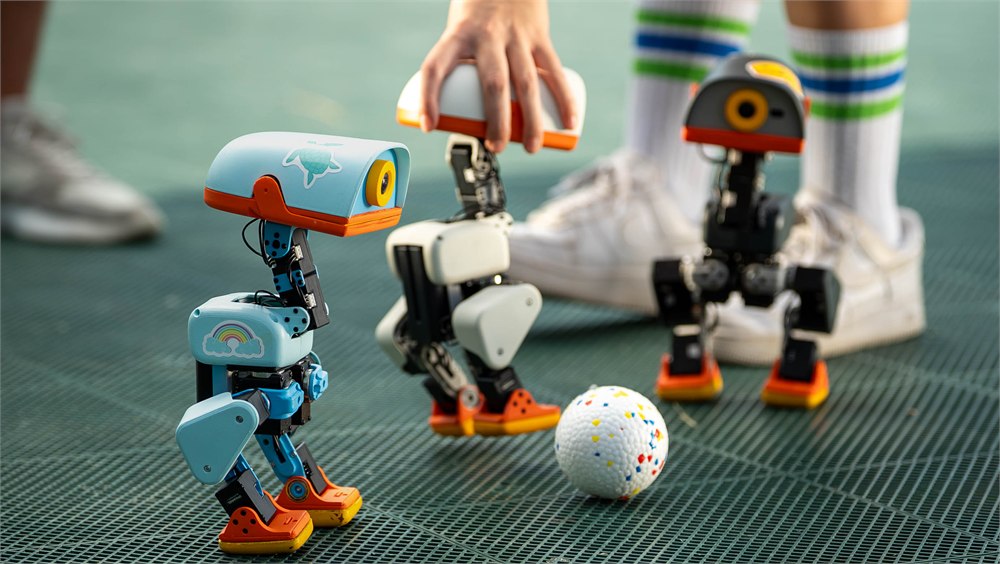
Pollen’s demonstrations include walking, sitting and standing, kicking, picking objects up with the beak, and recovering from falls. Roller skating is also shown with the roller attachments fitted. A tiny robot learning to remain upright is charming enough; adding wheels suggests that someone at the company enjoys giving gravity a more interesting workday.
- Use the included controller to explore the ready-made movements before writing code.
- Try the grasping beak for small-object experiments, within the maker’s operating guidance.
- Explore optional play accessories if skating and ball games are the main attraction.
- Study and retrain movement behaviors when you want a deeper robotics project.
The controller is an important part of the appeal. Plenty of technical hobbies open with a shopping list and a troubleshooting session. Having a way to interact immediately gives this one a friendlier front door. You can appreciate the waddling first and investigate the math later, preferably after the duck has stopped distracting everyone else in the room.
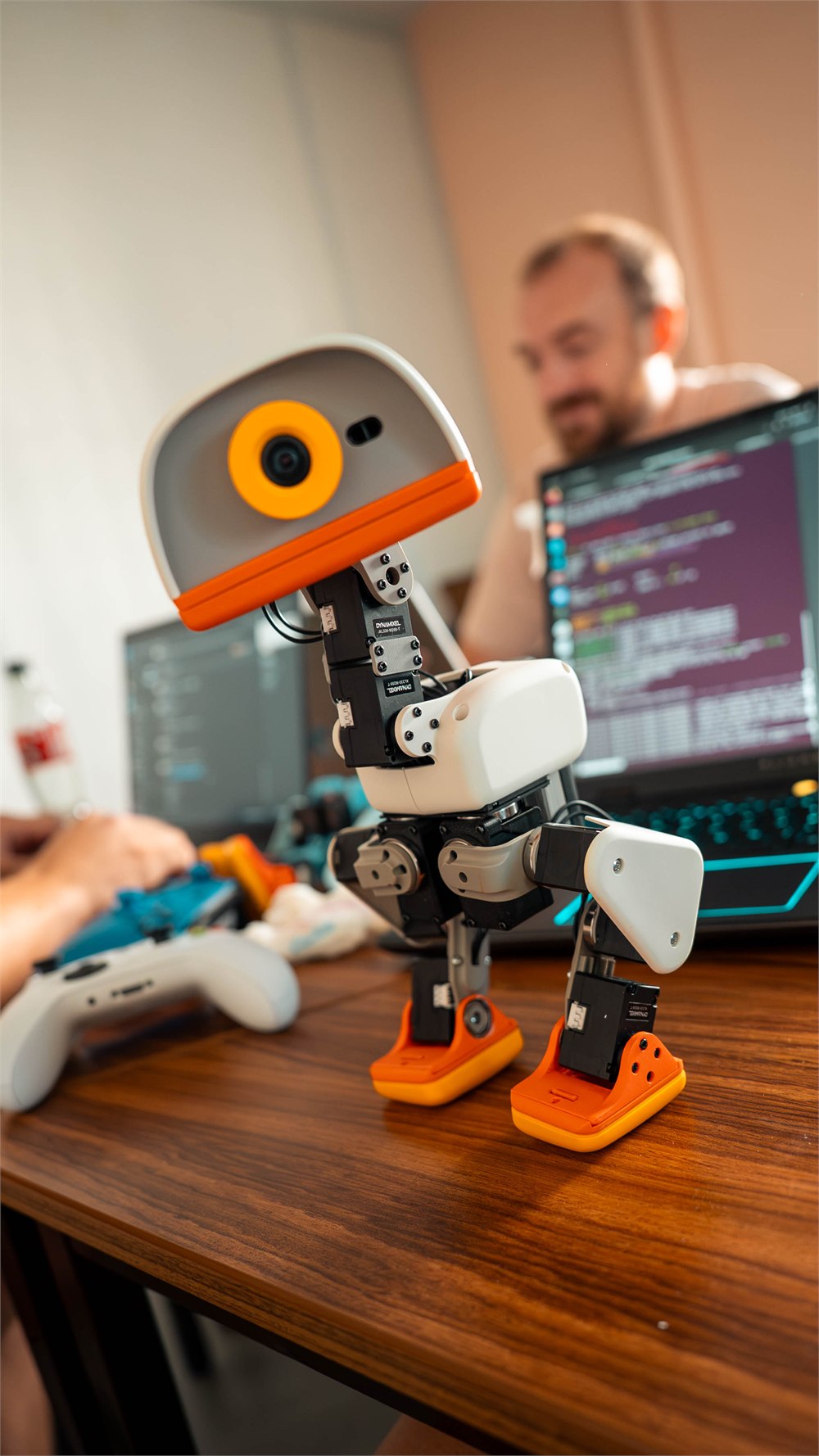
A grasping beak also makes sense for this shape. Arms would turn it into a very different creature. Using the head for interaction keeps the silhouette wonderfully strange while providing a real mechanical task to explore. The funny appearance and the engineering are working together, rather than taking turns.
The useful details behind the wobble
The following specifications come from Pollen’s product information and press kit. Several finer details remain provisional, so buyers should check the final specification before ordering. The broad outline is a compact platform with accessible controls and room for experimentation.
| Detail | Manufacturer’s specification |
|---|---|
| Size | 25 cm tall; 14 cm wide |
| Weight | Under 800 g |
| Movement | 15 motors; articulated legs, neck and grasping beak |
| Sensing | Camera, LiDAR and two IMUs |
| Power | Removable NP-F550 battery; roughly one hour depending on use |
| Starter contents | Robot, battery, USB-C cable and game controller |
The removable battery is a practical detail in a product otherwise capable of monopolizing a conversation with its feet. Runtime depends on what you ask the robot to do. A published estimate is useful for planning a session, but it should not be treated as a stopwatch promise for every experiment.
The maker also says that camera specifications, some connectivity details, and the age recommendation are still being finalized. A cute face does not automatically make this a suitable unsupervised toy for every child. For a household purchase, the final guidance matters more than whether the duck matches the playroom.
You can teach it, but there is actual homework
Microduck’s software approach lets developers train movement behaviors in a physics simulator and transfer the resulting behavior to the real robot. That gives experimentation a useful rehearsal space. Instead of discovering every mistake by repeatedly tipping over a physical duck, you can work on a virtual one first.
There is still a learning curve. Simulation is a tool, not a magic wish-granting pond. Tuning a behavior requires patience, observation, and an interest in why a movement succeeds or fails. For someone who enjoys that process, the awkward attempts can be part of the fun. For someone expecting a conversation to instantly produce a new trick, the distinction deserves attention.
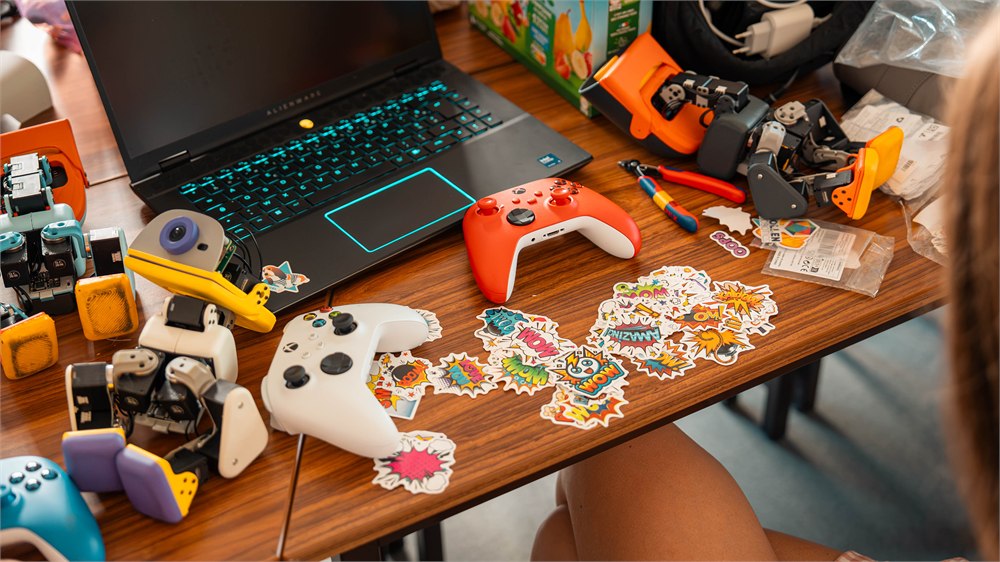
Pollen describes the software stack as open source, including the tools for robot control, simulation, and training. The mechanical and electronic design files are not covered by that description. You are getting visibility into the software, rather than a promise that every physical component can be freely reproduced from published plans.
That makes the best audience fairly clear: curious makers, robotics learners, and people who want a playful physical project to accompany their coding. It can be entertaining before the deeper work starts, but its longer-term appeal lies in having something to investigate. A robot that occasionally needs your help gives a hobbyist a project; it gives an impatient person a duck-shaped interruption.
What to know before joining the flock
The compact scale helps this feel like a home project rather than a workshop commitment. You still need an appropriate clear space for movement, sensible supervision, and realistic expectations. A desk photograph makes a lovely introduction, but an edge remains an edge, even when the approaching robot has an excellent beak.
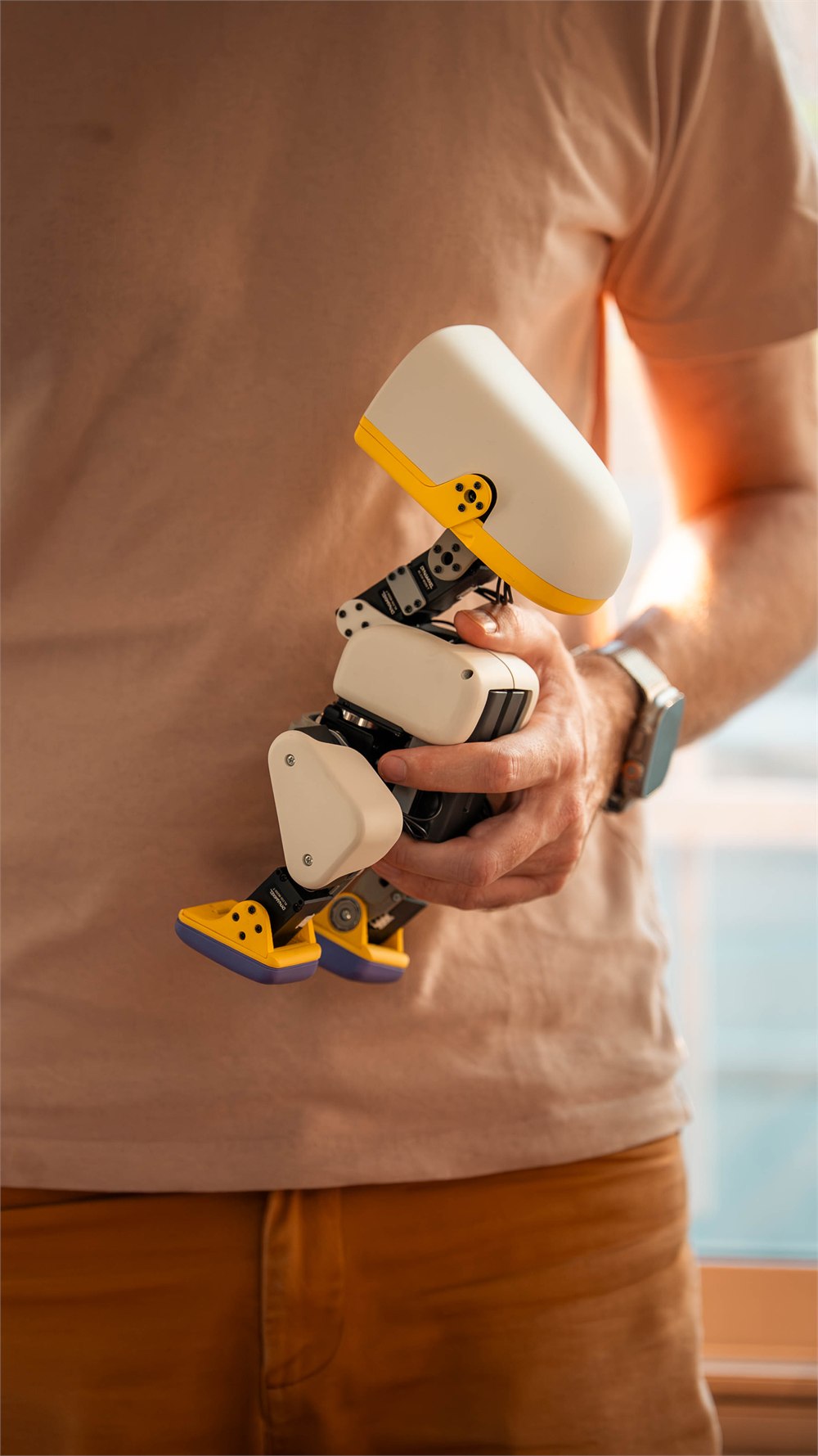
Product photographs: Pollen Robotics.
- Small biped robot with an articulated grasping beak and visible mechanical joints.
- Four color options share the same underlying robot.
- Controller-based play provides a starting point before software experimentation.
- Open-source software supports movement research; the hardware design files are not open source.
- Preorder availability and provisional specifications require a final check before purchase.
Microduck is listed by Pollen Robotics at an introductory preorder price of $399 before taxes and shipping. The maker targets first deliveries before Christmas 2026, with North America and Europe as its launch markets. That is a target, not a guaranteed holiday arrival. Optional charger, developer, and accessory packs are separate purchases.
If your ideal evening involves making something move, figuring out why it moved wrong, and laughing because the something is a duck, this is a particularly appealing proposition. It will not organize your life. It may, however, give your perfectly functional living room a very small robotics department.
| Pros | Cons |
|---|---|
| Expressive, compact biped design | Movement needs appropriate space and supervision |
| Included controller for initial play | Advanced behavior training takes technical effort |
| Open-source software to explore | Mechanical and electronic design files are not open source |
| Removable battery | Runtime varies with use |
| Optional play and development packs | Accessories add cost |
| Distinctive hands-on robotics project | Preorder delivery target and some specifications remain provisional |
Save this find.
Thank yourself later.
Your next great gift idea. Your someday space. Your collection of wonderfully weird things.
Save to PinterestPick a board. Keep the inspiration.
This Programmable Duck Robot Walks, Grabs Objects, and Lets You Train New Tricks
Where to find This Programmable Duck Robot Walks, Grabs Objects, and Lets You Train New Tricks
OddityMall may earn a commission from qualifying purchases at no extra cost to you.
Related posts:
This Duck Shaped Snowball Maker Lets You Build Your Own Army Of Ducks
This Funny Lying Down Duck Night-Light Might Make You Relate To It A Little Too Much
This Duck Shaped Mini Fridge Features a Smart Phone Sterilizer and Bluetooth Speaker
These Swinging Car Ducks Are The Ultimate Way To Relax In Traffic