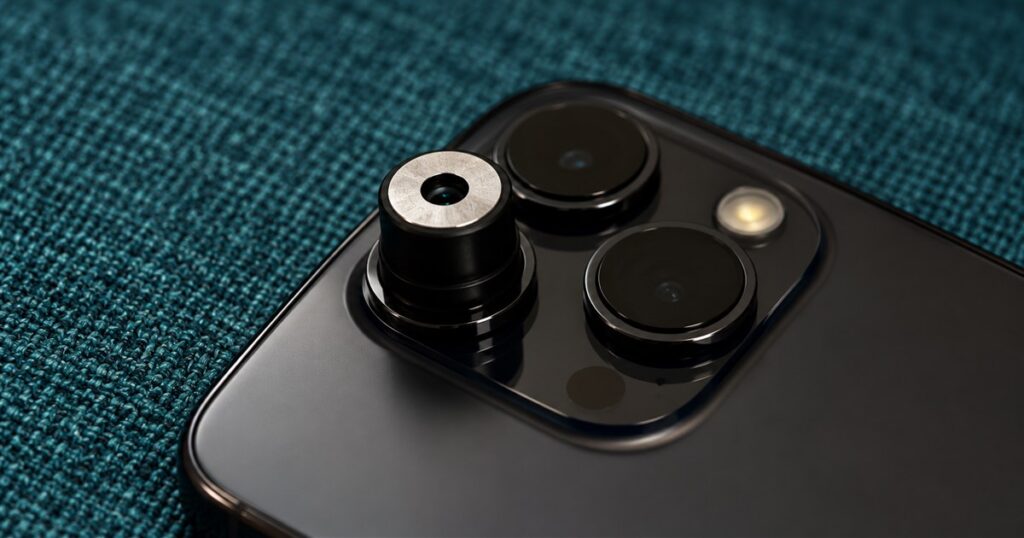
Your phone has photographed enough lunches. It may be time to give it a slightly more demanding assignment, like investigating the lunch. The iMicro XL15 is a fingertip-size smartphone microscope lens that turns everyday objects into close-up subjects, without asking you to clear a desk for a laboratory. Suddenly a leaf is an afternoon activity, a scrap of fabric has architecture, and the person who said they were just checking one thing has disappeared into a sugar crystal.
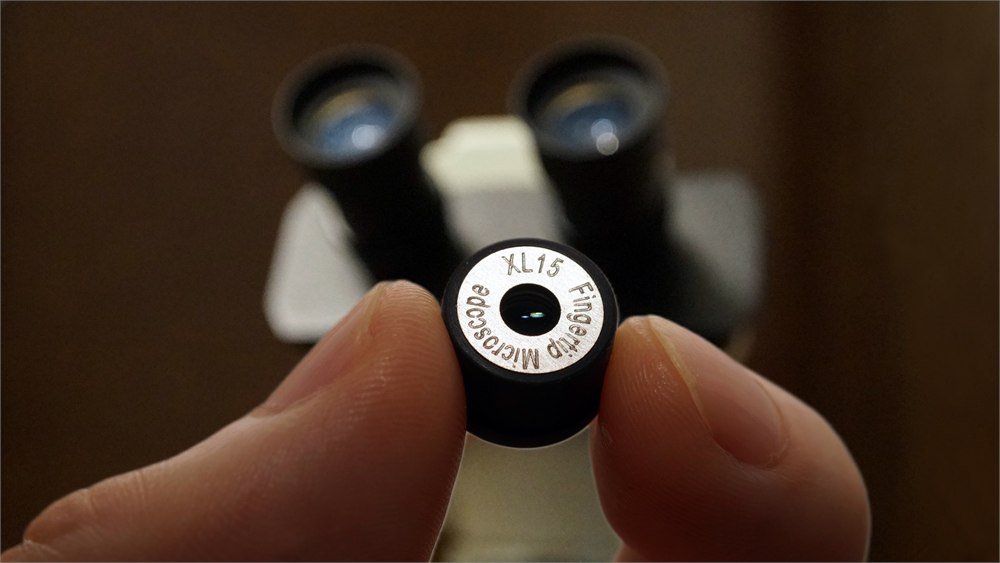
Made by QingYing E&T, the XL15 is built around an unusually practical detail: room between the lens and whatever you are looking at. Its stated working distance is 21 mm, with an approximately 10 mm field of view. Those numbers sound modest until you remember that this is the tiny world, where an extra bit of space can make the difference between examining a subject and practically parking on it.
This is a crowdfunding product, with delivery still ahead rather than a gadget ready to arrive on your porch tomorrow. The appeal is easy to understand, though. Instead of treating every microscopic expedition as a competition to produce the largest magnification number, this little lens makes a case for seeing more of the scene.
A phone microscope with some elbow room
Think about trying to identify a building while standing with your nose against one brick. You can learn plenty about that brick. You may still struggle to find the front door. A wider view is useful for the same reason: context matters, even when the landscape happens to be a circuit board.
The clearance also leaves space for irregular subjects. A plant surface is not a prepared glass slide. Neither is a connector, a textured coating, or the assorted small objects that accumulate in a hobby drawer. The XL15 is intended for this kind of everyday exploration, where the specimen has declined to be perfectly flat and professionally arranged.
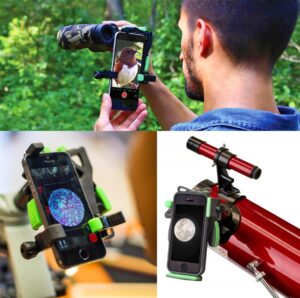
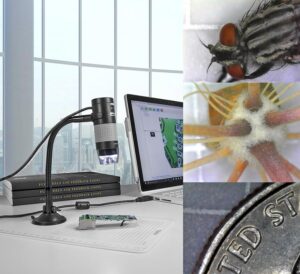
There is something delightful about a tool that makes the contents of a desk more interesting without requiring you to buy new contents. That random bit of paper now has a second career. The leaf you brought indoors is research. Your habit of keeping odd little objects finally has a department name.
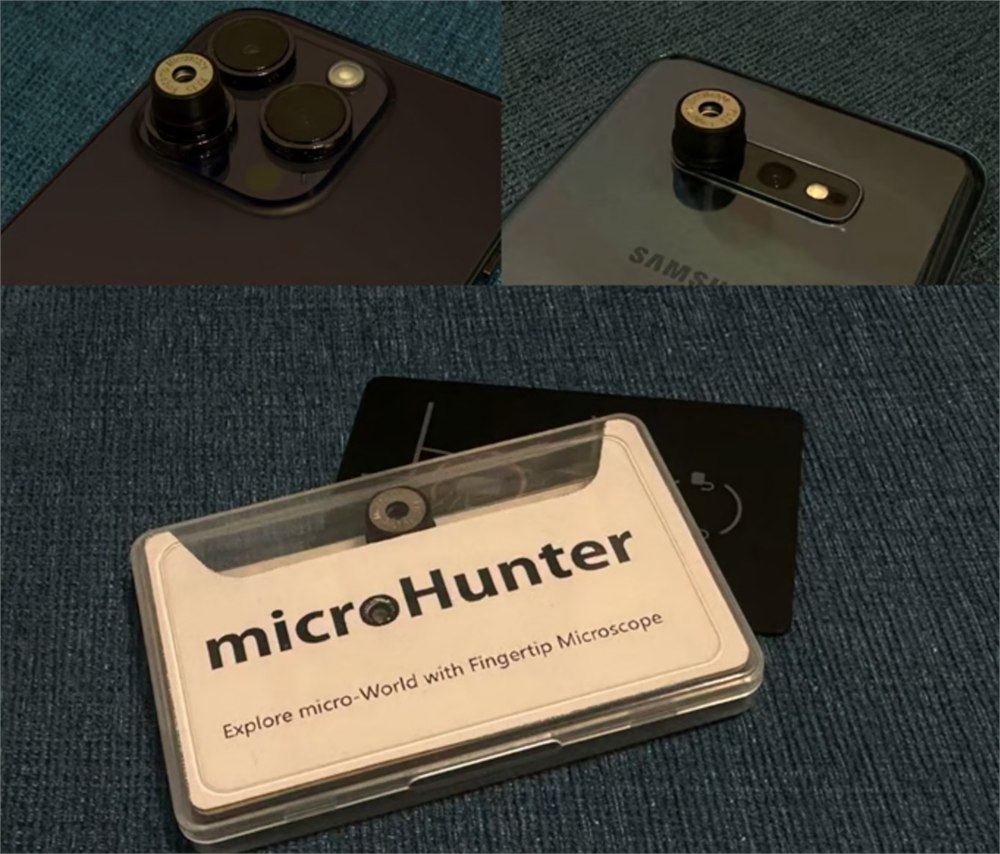
The attachment is small; the curiosity problem is not
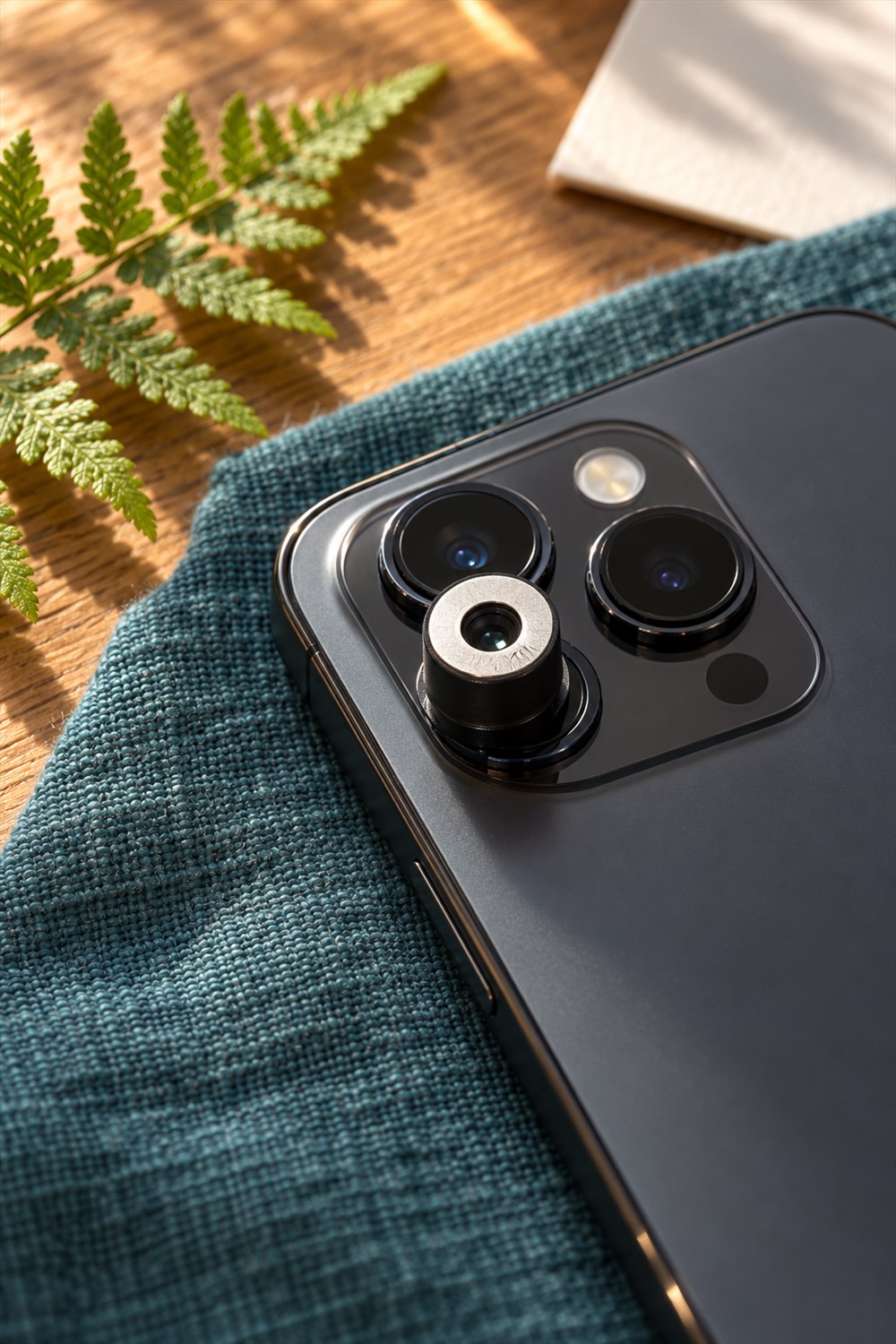
The lens uses a reusable nano-suction mounting pad. The maker recommends a clean, smooth, nonporous surface around the camera; rough or textured surfaces are less suitable. Broad phone compatibility is the aim, but the practical question is whether the mounting area on your particular device provides a good seat.
That is worth checking before deciding that every phone in the house is about to become a science station. Camera surrounds vary, and a bulky case can change the space available. The attraction here is a compact attachment, so a little attention to the actual mounting surface is more useful than a heroic assumption.
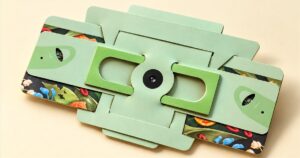
The kit pairs the lens with the FS-5 focusing stand, a removable light, a calibration ruler, and a slim carrying case. It is a collection of small supporting pieces built around a very small main event. This is the rare gadget package where the star could plausibly lose an argument with a shirt pocket.
- For hobby browsing: compare the visible structures of paper, fabric, and plant material.
- For electronics curiosity: explore a circuit board or connector with room around the subject.
- For photographs: use the stand when holding everything steady becomes the least enjoyable part.
- For lighting experiments: change the light angle and see how the same surface responds.
These are ways to explore the product’s intended uses, not promises that it will diagnose an electronics fault or replace a specialist inspection system. Sometimes the achievement is simply getting a good look at something you have ignored for years. That is a perfectly respectable hobby, and considerably easier to explain than collecting mysterious cables.
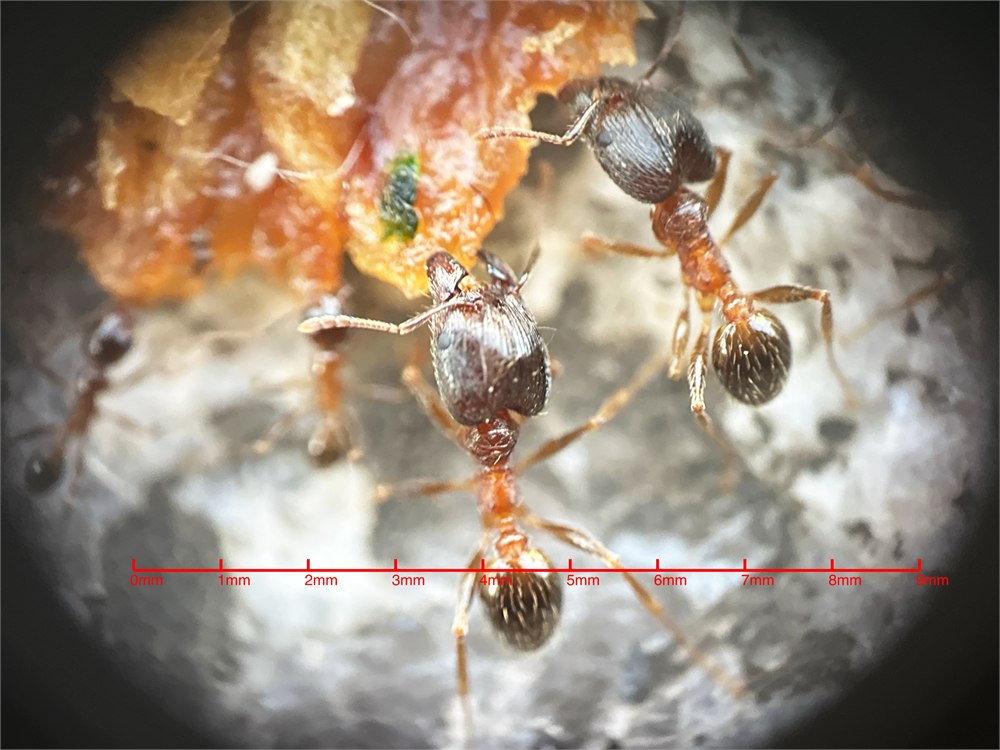
A small studio, with movable lighting
A close-up can be interesting before it becomes useful. Finding the angle that makes a surface readable is part of the process. The removable lighting module is meant to give you that flexibility, rather than fixing the light in one position and asking every subject to cooperate.
The module has its own rechargeable battery. White, colored, low-angle, and UV illumination are among the described options. UV is presented as an exploratory feature for responsive materials, not a replacement for specialized fluorescence microscopy. It is an extra way to investigate a subject, not an automatic upgrade to a research laboratory.
For anyone who has ever spent ten minutes moving a desk lamp to photograph one stubborn object, this is a relatable design choice. Sometimes the missing ingredient is not more technology. Sometimes the light simply needs to be over there.
| Part of the setup | What it contributes |
|---|---|
| XL15 lens | Phone-based close-up observation |
| 21 mm working distance | Clearance between lens and subject |
| Approximately 10 mm field of view | More of a small subject in the frame |
| FS-5 stand | Support for steadier positioning and focus |
| Removable light | Independent placement around the subject |
| Slim PP case | Storage and a simple lightbox function |
The case doing double duty is a nice touch. Small equipment is most appealing when its storage does not become a separate project. Nobody wants a pocket microscope that travels with the emotional baggage of a full camera bag.
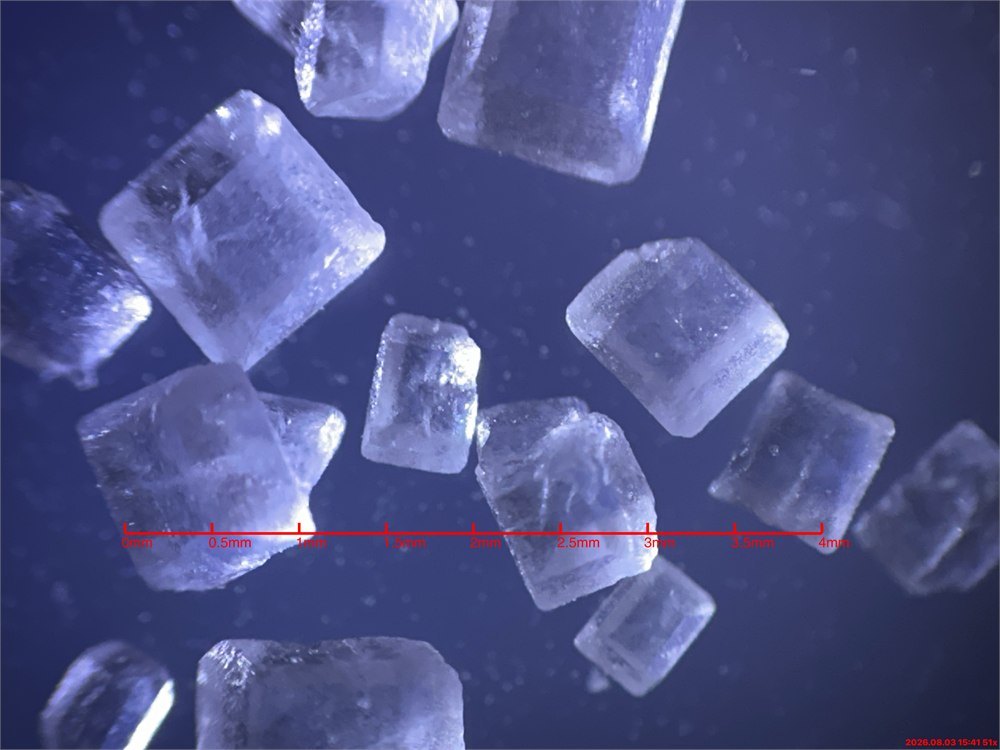
Observe first, measure when you need to
The XL15 can work with a regular phone camera app. The optional i-SEEING app adds calibration and measurement features, using the included μRuler M as a reference. That distinction leaves room for two very different afternoons: taking an interesting picture, or getting properly absorbed in the size of what is in it.
For casual use, the interesting question may be, “What does this look like?” For a more deliberate comparison, a scale can make the photograph more meaningful. A dramatic close-up without context can make a grain of sugar look like an object that requires planning permission.
The maker’s quoted resolution depends on the camera used and the imaging conditions. It is sensible to treat phone choice, lighting, focus, and stability as parts of the setup, rather than assuming that attaching one tiny lens makes every camera identical. This is an accessory working with a phone, after all, not a magical exemption from photography.
That also makes the stand more than an optional-looking piece of furniture. Holding a phone steady while adjusting a tiny subject can turn two ordinary hands into a staffing shortage. A stable setup lets you spend more time looking and less time negotiating with your own wrists.
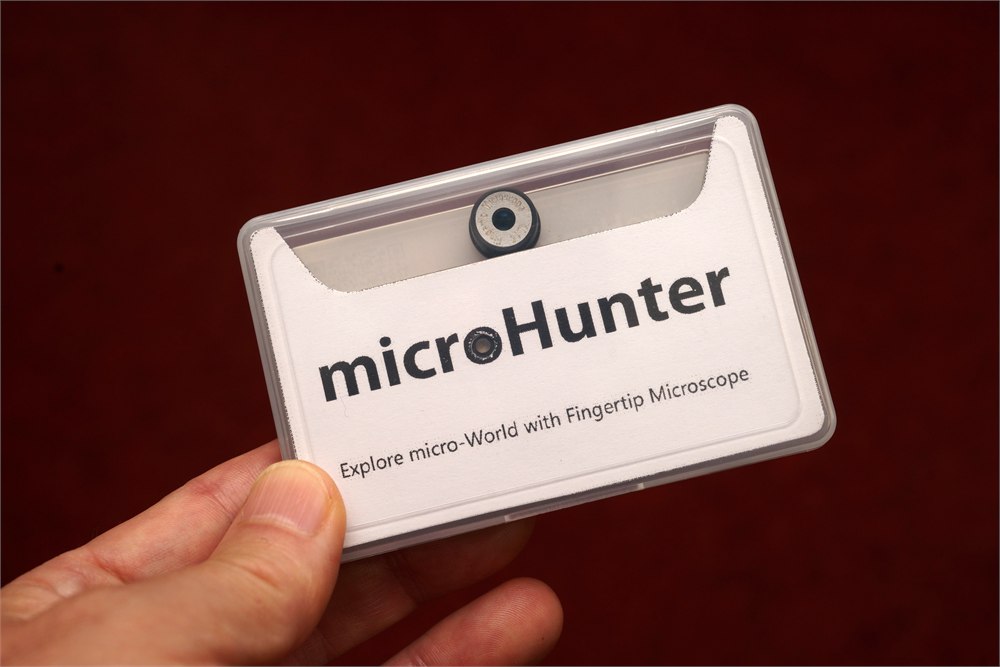
Product images: iMicro, via New Atlas. Product details are described in the creator’s FAQ and campaign overview.
The pocket microscope essentials
- Product: iMicro XL15 smartphone microscope kit from QingYing E&T.
- Main appeal: close-up exploration with space around three-dimensional subjects.
- Mounting: reusable nano-suction pad for a suitable smooth camera surround.
- Supporting pieces: focusing stand, removable light, ruler, and carrying case.
- Software: regular camera use, with i-SEEING for additional measurement functions.
- Availability: Kickstarter campaign; delivery remains an estimate.
The launch offer was reported at CAD 84, roughly US$60, for the Super Early Bird pledge. Reward availability and the final amount should be checked on Kickstarter before backing. The campaign runs through December 19, 2026, with April 2027 given as the estimated shipping start. As with crowdfunding generally, a pledge supports a project and does not guarantee delivery on that date.
For the person who is forever picking things up and announcing that everyone needs to look at this, the XL15 is a very understandable temptation. It takes that impulse seriously enough to provide a stand and lighting. The rest of the household may wish to establish a policy about how many close-up fabric photographs belong in the family group chat.
| Pros | Cons |
|---|---|
| Compact lens uses a phone you already have | Mounting depends on a suitable camera surface |
| Working clearance suits irregular subjects | Not a substitute for every laboratory microscope task |
| Movable lighting offers more experimentation | Good results still require careful setup |
| Stand and calibration accessories broaden its uses | Measurement takes more preparation than a casual snapshot |
| Small kit can make everyday objects fascinating | Crowdfunding delivery and reward availability are uncertain |
Save this find.
Thank yourself later.
Your next great gift idea. Your someday space. Your collection of wonderfully weird things.
Save to PinterestPick a board. Keep the inspiration.
This Pocket Smartphone Microscope Leaves Room to Explore Tiny Objects
Where to find This Pocket Smartphone Microscope Leaves Room to Explore Tiny Objects
OddityMall may earn a commission from qualifying purchases at no extra cost to you.