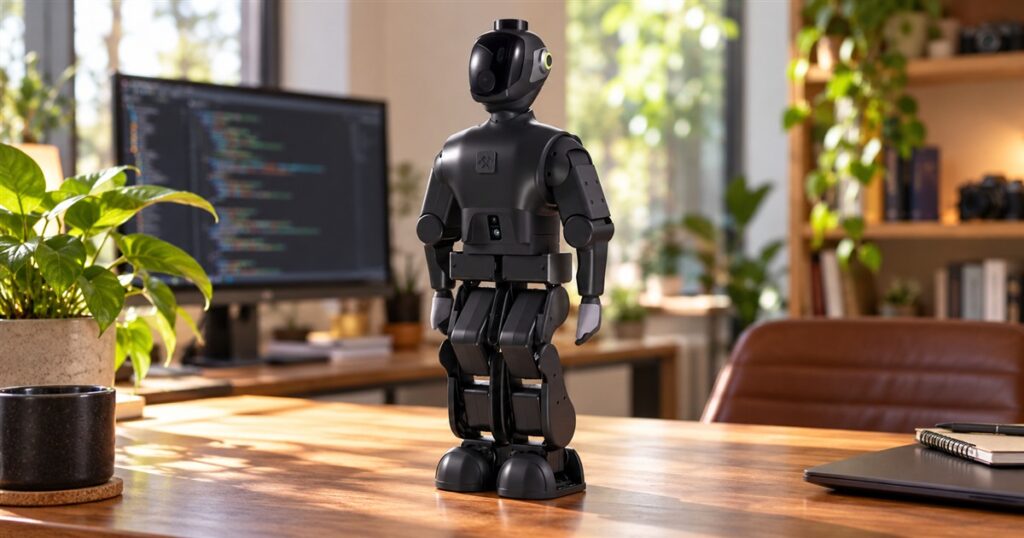
Your smart speaker can answer a question, but it has never had the decency to walk over and look interested. The FF Nova humanoid robot offers a more theatrical arrangement: a small, jointed machine that puts legs under the conversation. It is the sort of desk companion that makes your stapler seem painfully unambitious.
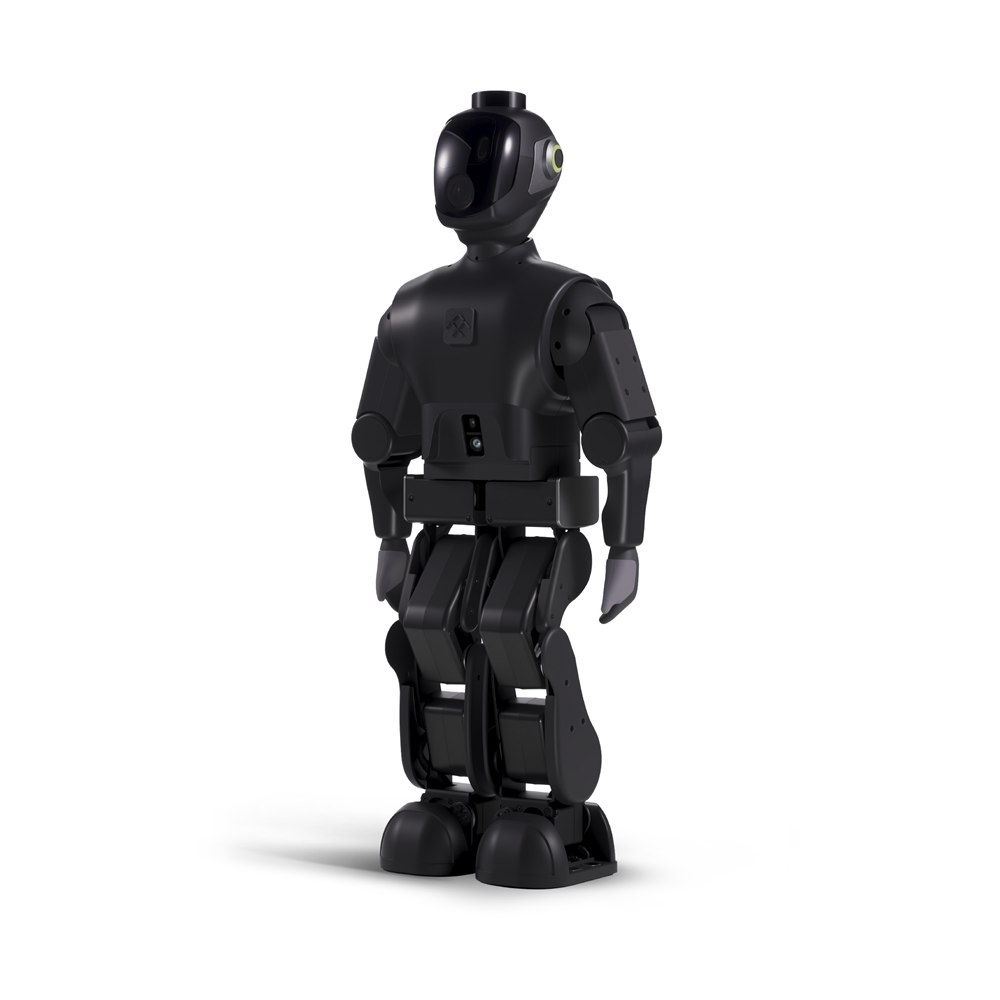
Faraday Future’s Nova is a compact robot built around a bipedal body and a separate mobile cart. The intended audience is developers, researchers, and educators who want to experiment with physical AI. Think of it as a robotics project with a face, rather than a household employee waiting for an apron.
That distinction matters. A machine can have arms without being ready to fold fitted sheets, and a robot that greets you has not necessarily volunteered to empty the dishwasher. Nova’s appeal is the opportunity to explore movement, sensing, and software on an actual little body. The laundry pile remains your department.
A humanoid robot that fits on the desk
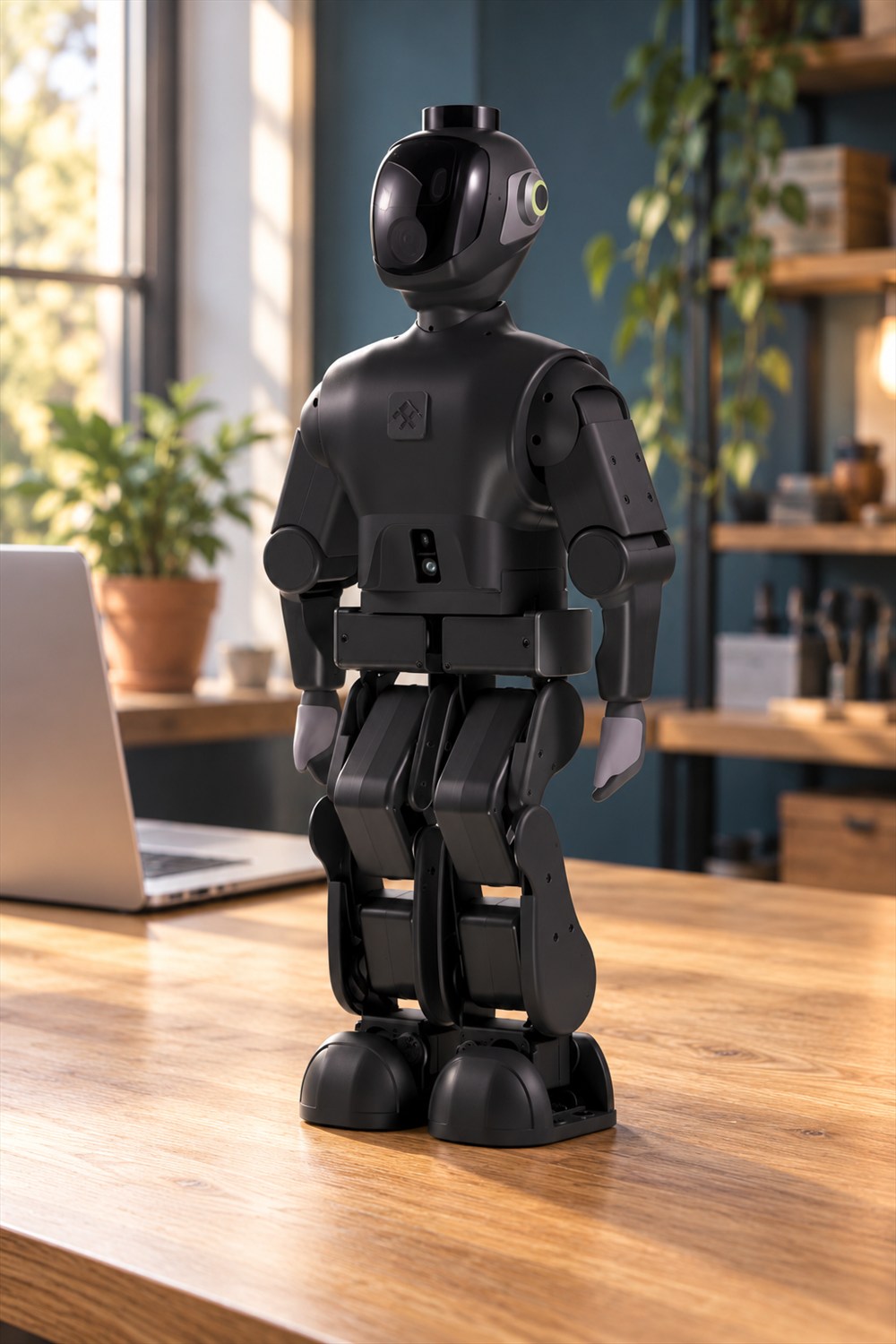
The robot itself stands 497 millimeters tall and weighs about 2.8 kilograms. That puts it in a very different category from the human-sized machines that require an entire room just to look impressive. Nova can be part of a tabletop workspace, where a laptop, a controller, and a suspicious number of charging cables already feel at home.
Its appearance does plenty of the selling. The rounded head, dark face panel, articulated limbs, and broad feet give it the air of a miniature laboratory assistant. The official imagery shows both black and white bodies. Either way, this is a conspicuous upgrade from the tiny plastic dinosaur currently supervising your monitor.
Related posts:

Nova has 20 degrees of freedom, distributed across its head, arms, and legs. For a buyer, the useful point is that there are multiple joints to work with when developing motion. A wave is something the body can physically perform, rather than a cheerful animation trapped behind glass.
Walking is charming; wheels are practical
Faraday Future describes three ways Nova gets around: walking on a desk or floor, traveling on its detachable cart, and returning to a dock. The cart is an especially sensible touch. Humanity spent centuries inventing wheels, and it would be rude for robots to ignore them simply because knees photograph well.
The listed maximum walking speed is 0.1 meters per second, while the cart reaches up to 0.8 meters per second. Those are manufacturer figures, but the difference explains the two-part approach. Legs make movement and balance interesting to study; a wheeled base makes crossing a room less of an expedition.
Of course, a room in a promotional scene and a room full of shoes are two different engineering assignments. Think about your own floor space before imagining a tiny robot commute. The most ambitious navigation system in the world still deserves a better starting point than the cable jungle behind your television.
- Movement experiments: Work with a bipedal body instead of limiting every project to a screen.
- Room-scale exploration: The separate cart provides a faster travel option than the listed walking pace.
- Programming projects: An open development approach supports behavior and motor-control work.
- Teaching demonstrations: A visible, moving machine can make abstract software decisions easier to discuss.
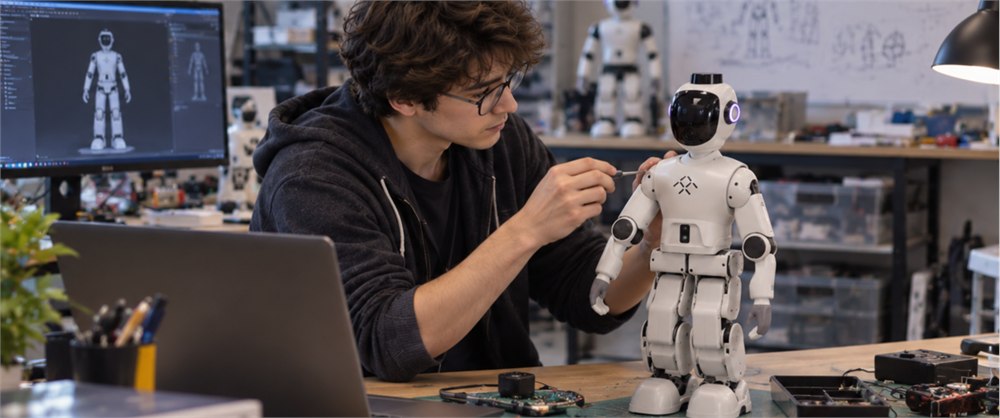
The interesting work happens behind the face
Nova combines on-device computing with cameras, LiDAR, and a microphone array. Faraday Future promotes mapping, recognition, and voice conversation as part of the platform. That makes the face and ear lights more than a decorative excuse to name an appliance: the machine is designed to perceive and respond to its surroundings.
There is a useful difference between reading about a robot’s perception and developing an interaction around it. On paper, a greeting is a sentence. On a moving machine, it raises questions about timing, position, sound, and what the robot should do next. Suddenly, saying hello becomes a whole afternoon. Developers have built entire careers out of less.
The product page also lists a two-inch expression display and Wi-Fi and Bluetooth connectivity. These are supporting ingredients, not a promise that every imagined interaction arrives fully finished. The fun here is partly in the building, and partly in discovering that a tiny mechanical head turn can become your proudest accomplishment of the week.
| Detail | Manufacturer listing |
|---|---|
| Robot size | 497 × 195 × 125 mm |
| Robot weight | Approximately 2.8 kg |
| Articulation | 20 degrees of freedom |
| Maximum speeds | 0.1 m/s walking; 0.8 m/s on cart |
| Listed operating time | 2–3 hours continuous operation |
| Listed charging time | Approximately 2 hours |
A little body for a substantial coding project
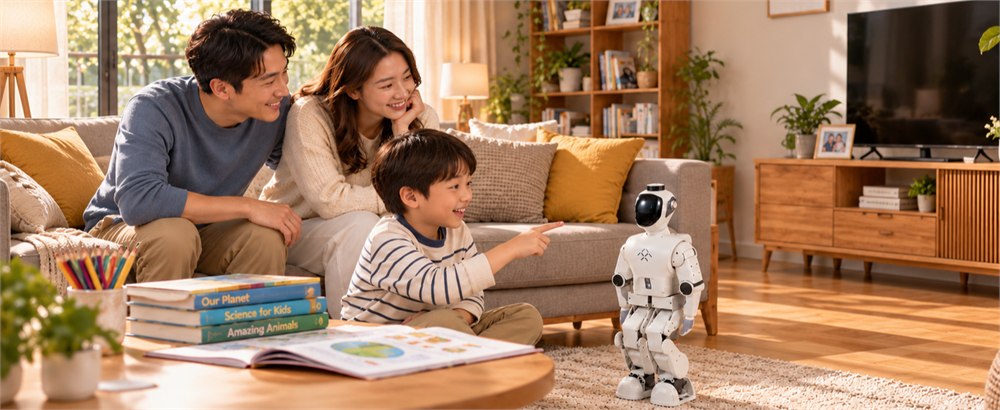
The development side is a major part of Nova’s identity. The maker describes Python support, a lower-level Spine SDK, ROS 2 integration, and simulation-to-real workflows using NVIDIA Isaac tools. In plain language, the pitch spans higher-level behavior and work closer to the motors, with simulation serving as a place to develop ideas before bringing them into the physical world.
That is an appealing setup for someone who enjoys solving technical problems. It is a different proposition for someone who wants a machine to perform household chores immediately after unboxing. Buying a development platform because it looks adorable is understandable. Discovering you have also bought yourself homework is the part worth anticipating.
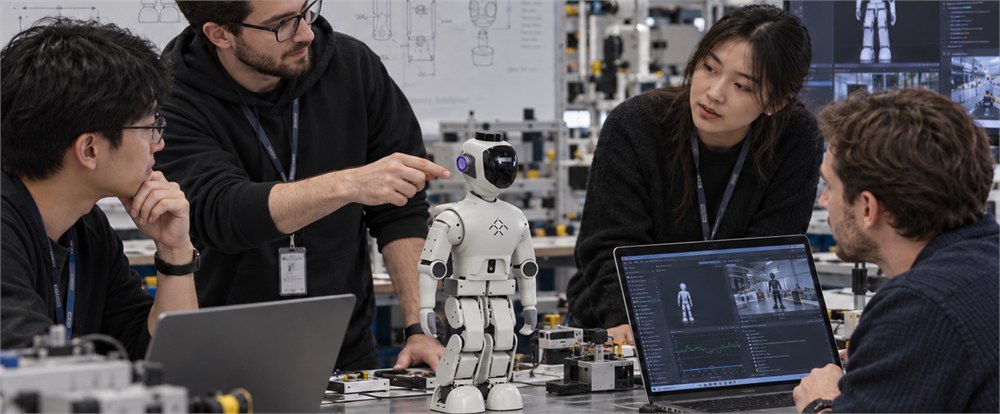
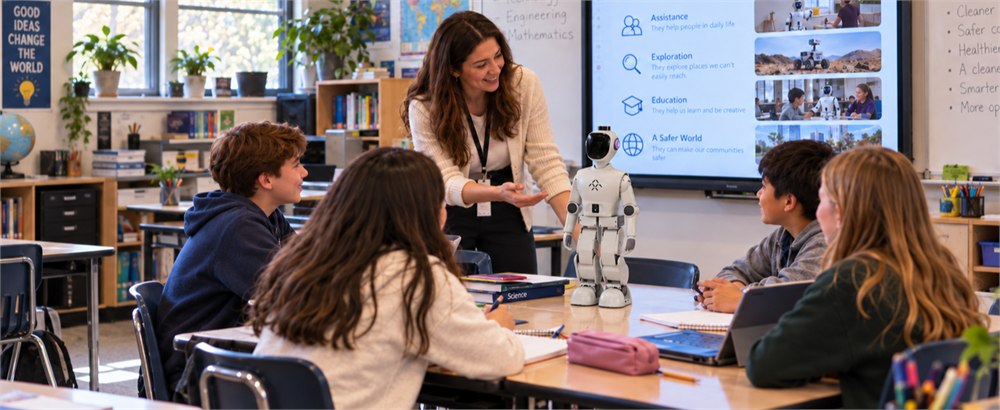
For classrooms, the physical format gives discussions about programming a visible result. A movement can succeed, hesitate, or need adjustment right in front of the group. There is something satisfyingly concrete about that feedback. A robot taking a step is considerably harder to ignore than another slide titled Introduction to Something Important.
Children should use Nova with adult supervision, as the manufacturer advises. A small robot is still moving hardware. Give it an appropriate workspace and treat any protective features as support for responsible use, rather than an invitation to test how close it can stand to the edge of a crowded table.
What to expect before inviting Nova home
The battery figures also encourage realistic expectations. A listed two to three hours of continuous operation is enough to think in sessions, not around-the-clock companionship. Plan time for charging and project setup. Even your enthusiastic new robot colleague has a fairly firm opinion about breaks.
Its best audience is someone who sees the development process as the attraction. Robotics students, curious programmers, and educators can appreciate having a compact body to build around. Anyone shopping for a fully autonomous domestic assistant should read the capabilities carefully and ask about the exact software and support included with their order.
The October 15 launch announcement outlined three release phases: an initial invitation-only batch limited to 100 units, a later opening to developers and educational institutions, and then a broader consumer launch. It also identified a separate Developer Skills Package. Confirm the current phase, eligibility, delivery terms, and package contents with Faraday Future before purchasing.
The useful details before the robot naming ceremony
- Product: FF Nova, a compact humanoid development and education robot.
- Core arrangement: Jointed bipedal body paired with a detachable Mini Cart.
- Included hardware: The official listing names the robot, cart, power adapter, and Bluetooth game controller.
- Best fit: Programming, robotics learning, research, and experimentation.
- Buying consideration: Check release-phase access and which software or educational extras are included.
Faraday Future lists Nova at an MSRP of $2,490 USD. Its launch announcement separately priced the Developer Skills Package at $390, so do not assume every development extra comes with the base hardware. Current checkout terms, shipping, and access conditions deserve a look before your credit card meets your robot ambitions.
Nova’s strongest trick may be making a complicated subject feel approachable enough to put on a desk. It brings the challenge of physical robotics down to a more manageable scale, without pretending the challenge disappears. Your stapler can relax: nobody expects it to learn Python. Yet.
Product details and images: Faraday Future. Lifestyle scenes are manufacturer illustrations of the platform’s intended uses.
| Pros | Cons and considerations |
|---|---|
| Compact humanoid format | Still needs a suitable, supervised workspace |
| Walking body plus separate mobile cart | Listed walking pace is slow |
| Developer-oriented software access | Technical work is part of the appeal |
| Physical teaching and experimentation possibilities | Not a promised household chore assistant |
| Hardware package includes a controller and cart | Development extras and release eligibility need checking |
Save this find.
Thank yourself later.
Your next great gift idea. Your someday space. Your collection of wonderfully weird things.
Save to PinterestPick a board. Keep the inspiration.
This Compact Humanoid Robot Walks on Two Legs and Rides Its Own Mini Cart
Where to find This Compact Humanoid Robot Walks on Two Legs and Rides Its Own Mini Cart
OddityMall may earn a commission from qualifying purchases at no extra cost to you.