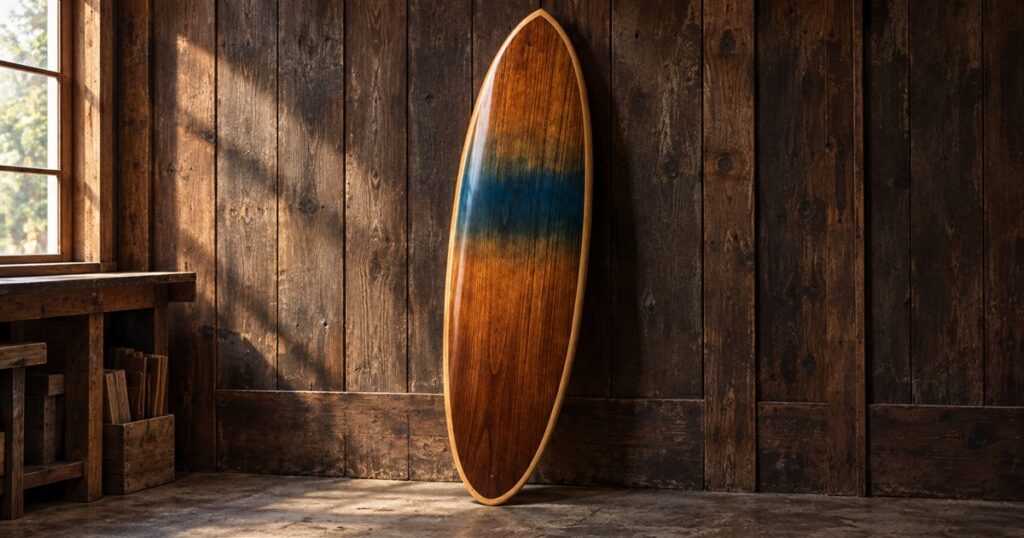
Most surfboards arrive with a story about a shaper, a favorite wave, or someone who quit accounting. This one can start with a bear having a go at a tree. Siita’s wooden surfboards give bear-damaged cedar a second career, which is an impressive professional pivot for something that recently failed a woodland inspection.
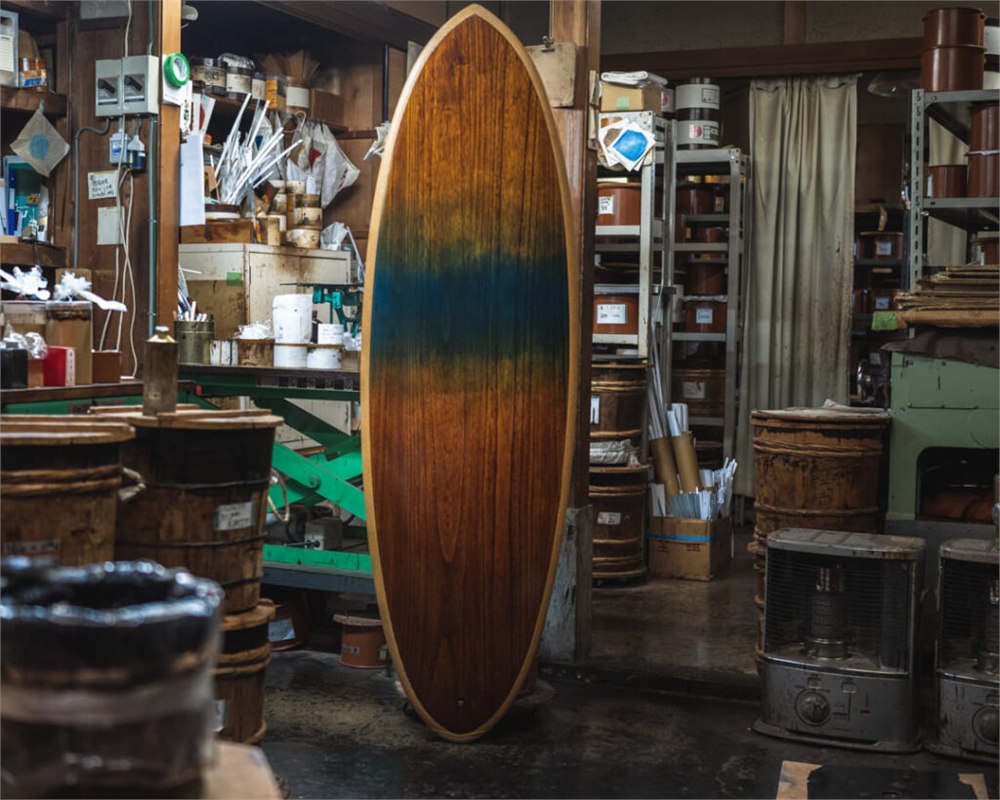
The Kyoto-based brand makes wooden boards finished with urushi lacquer, including cedar boards connected to the BEARS WOOD PROJECT. The interesting part is what stays visible: grain altered by the tree’s damage and growth. Nobody needs to print a wilderness graphic on top. The material has already had a fairly eventful life.
And yes, these are surfboards. That matters, because the photographed finish looks good enough to make a person instinctively reach for a coaster. There is a pleasing tension between an object you want to examine under a light and an object intended to accompany you into salt water.
A bear gets an accidental design credit
In the forests around Keihoku, bears sometimes strip bark from standing trees. As a damaged tree continues growing, the affected area can develop irregular grain. Timber buyers may see reduced value. The BEARS WOOD PROJECT sees material worth working with, bringing that uneven history into the finished board rather than treating it as something to hide.
This is a much more interesting origin story than a factory selecting “rustic” from a dropdown menu. The distinction is physical. An irregularity in the wood becomes something a craftsperson can respond to, instead of a pattern that gets repeated every few feet until you notice it and can never unsee it.



It also gives the conversation around the board somewhere useful to go. A visitor asks about the grain, and suddenly you are discussing trees and woodworking. Usually, explaining sporting equipment to a guest ends with them politely nodding while slowly looking for the snacks.
Wood grain gets the spotlight
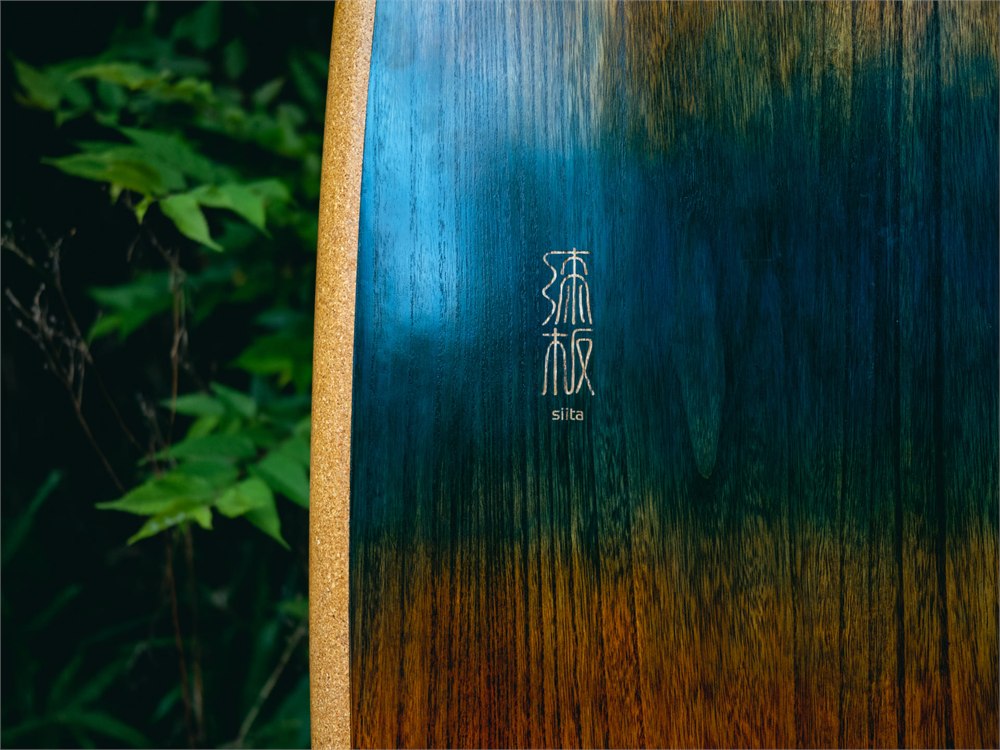
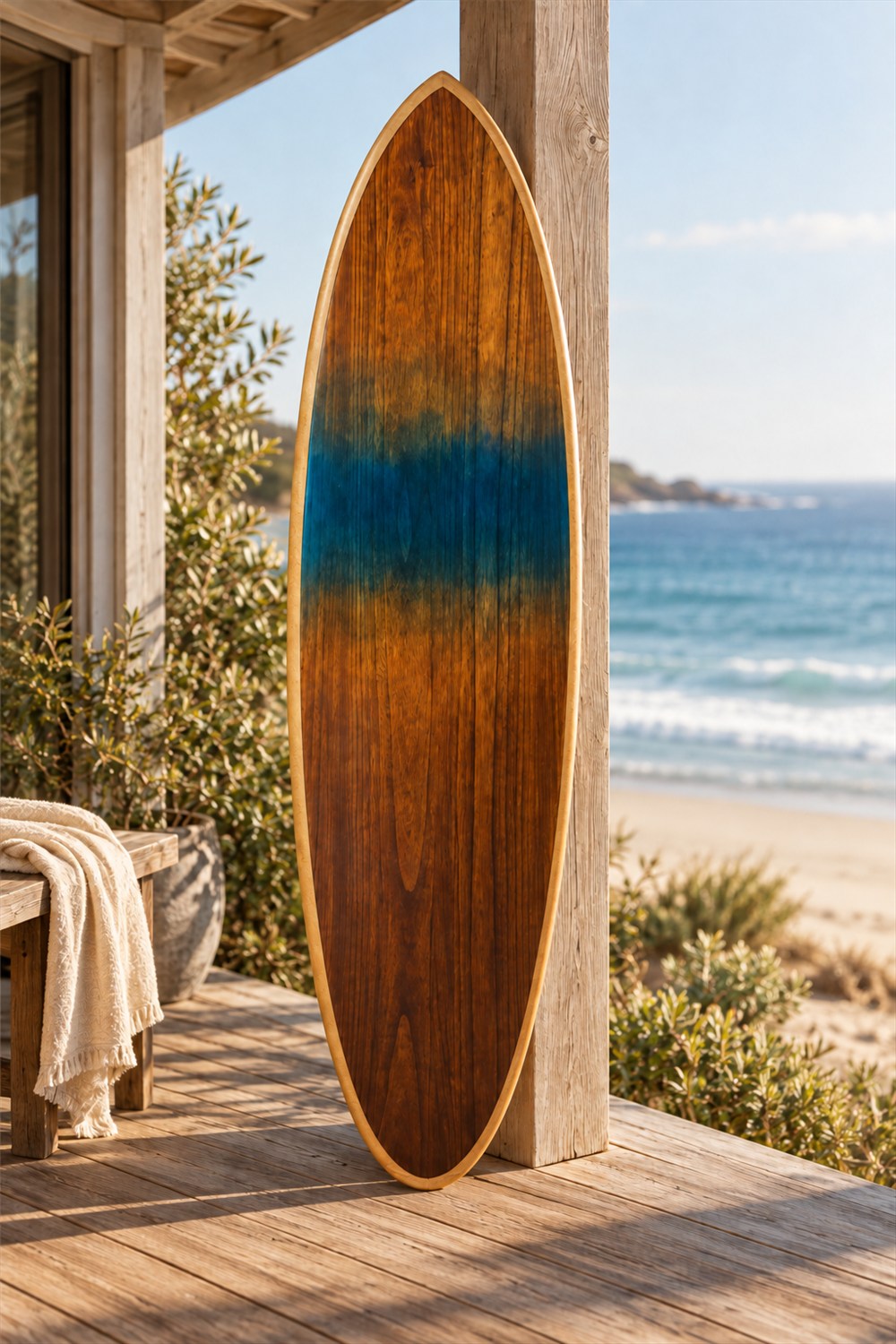
The official Siita photographs show long, flowing grain beneath a rich finish, with a pale edge outlining the board. One photographed example has a dark blue band across its warm brown face. It looks striking without turning the whole object into a billboard. The wood remains the thing your eye follows.
Those photographs illustrate the wider Siita collection and its making process; they are not a promise that every cedar board will have that same color treatment. For something bought partly because of its material character, the particular board matters. Ask to see the actual piece before deciding that the one in your head is the one you are ordering.
That is part of the appeal for a design-minded buyer. You can appreciate the outline from across a room, then discover the smaller details up close. There is no need for a glowing status indicator. A board has managed to become interesting while refusing to notify you of anything.
- Choose a specific board for its outline and grain, rather than assuming every example looks identical.
- Discuss riding experience and intended conditions with the maker before selecting a shape.
- Confirm dimensions, weight, finish, and care requirements for the board being offered.
- Ask what is included instead of assuming accessories shown elsewhere come with it.
Two crafts meet on one board
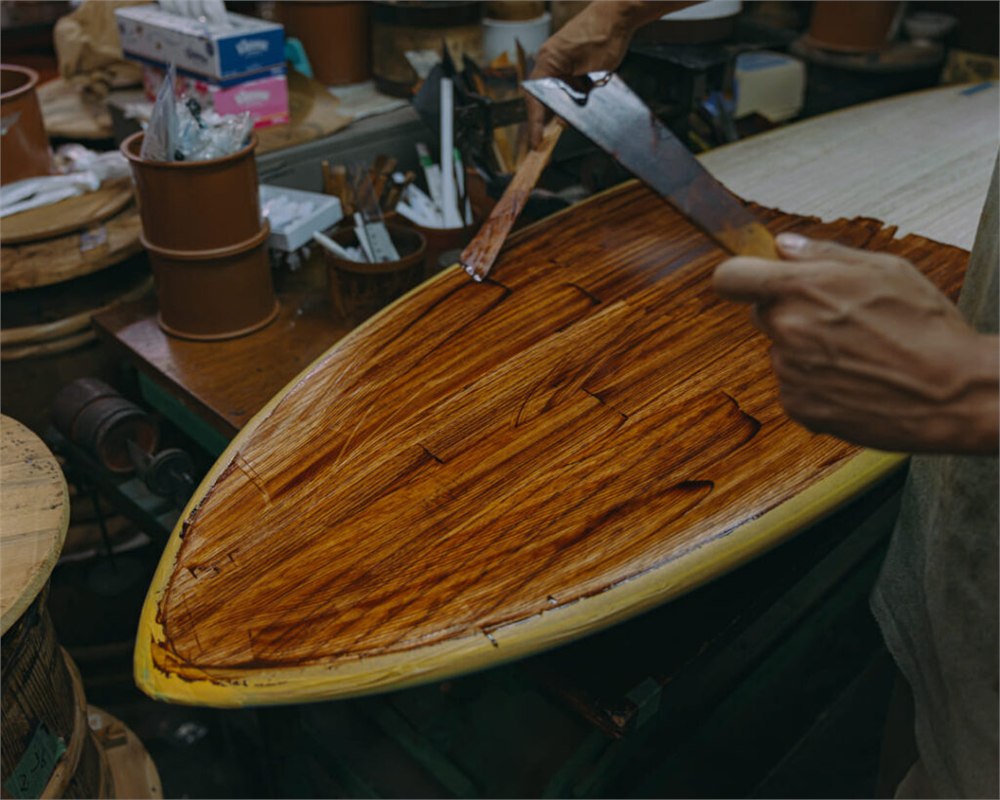
Wood shaper Rodrigo Matsuda and lacquer artisan Takuya Tsutsumi bring different skills to Siita. The boards are shaped in Keihoku and finished through Tsutsumi Asakichi Urushi. Urushi comes from tree sap and serves as a protective coating. Here, a material associated with traditional craft gets a rather salty assignment.
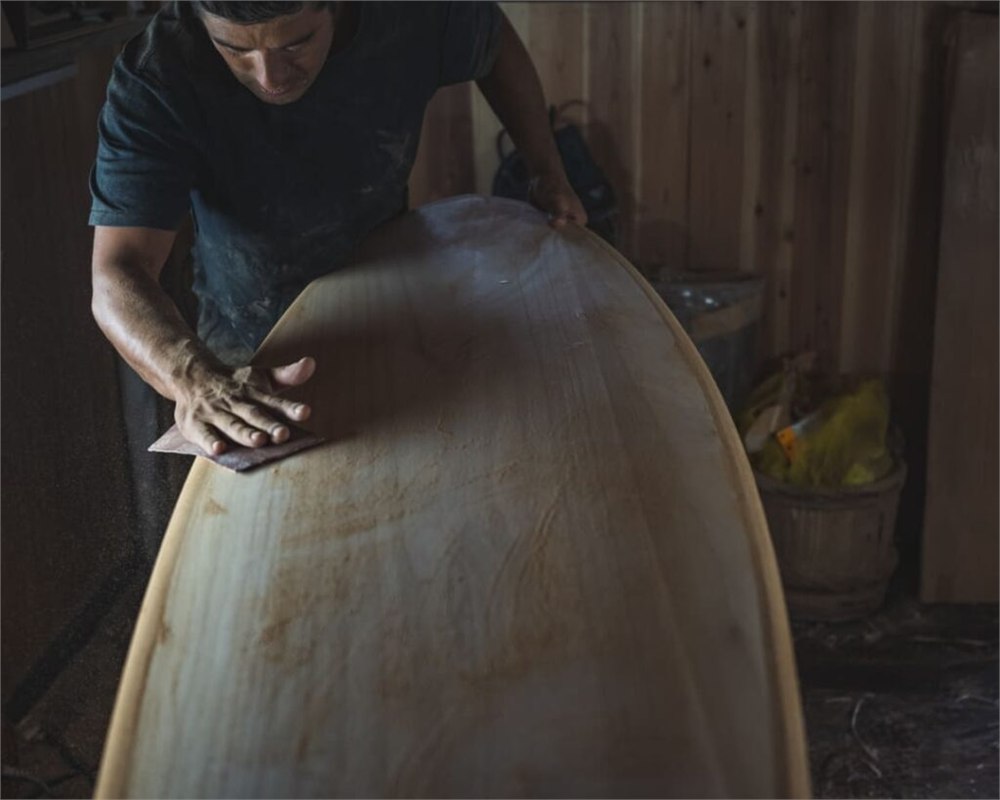
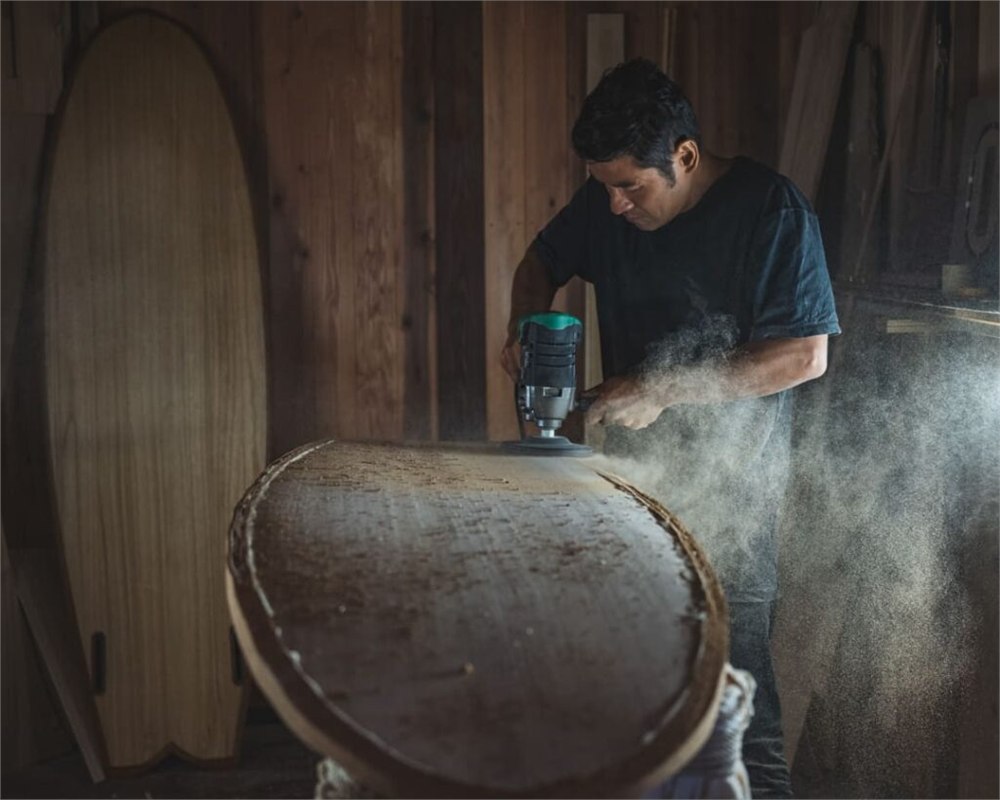
The process photographs are worth lingering over. A hand follows a curved surface. Tools work the outline. Finish goes onto visible grain. They make it easier to appreciate the board as a made object, rather than a mysterious glossy thing that materialized beside somebody’s very expensive beach house.
For a prospective owner, that human involvement is a reason to ask practical questions, too. Who should handle a repair? What should happen after a session? How should the finish be stored and maintained? Admiration is free, but it is most useful when accompanied by enough information to look after the thing you admire.
| Detail | What to know |
|---|---|
| Product | Siita wooden surfboards |
| Featured material story | Bear-damaged cedar used through the BEARS WOOD PROJECT |
| Finish | Urushi lacquer |
| Craftspeople | Rodrigo Matsuda and Takuya Tsutsumi |
| Before ordering | Confirm the individual board’s specifications and availability |
A different kind of surfing wish list
Siita draws inspiration from Hawaiian alaia boards, the finless wooden predecessors of modern surfboards. That reference gives the project a clear direction, but it does not tell you which individual board suits your ability. A beautiful outline and the right board for your riding are related questions, not interchangeable answers.
Think of this as a conversation purchase. An experienced surfer interested in wooden shapes has different questions from a collector interested in craft, and both have different questions from someone buying a surprise present. “I saw a bear involved” is a terrific opening line. It is a less complete sizing guide.
The gift potential is obvious, but so is the case for involving the recipient. A surfer may care deeply about details that are invisible to the person holding the wrapping paper. Letting them help choose could produce a better gift and spare you the experience of learning surfboard terminology during a return discussion.
For the design enthusiast, the appeal is easier to explain: the form is simple enough to let the surface do the talking. You do not need to understand every shaping decision to enjoy looking at it. You do need to resist treating attractive photography as a substitute for the maker’s buying advice.
The details before you start clearing a wall
The most memorable part is the change in perspective. Something that lowered a tree’s commercial appeal becomes a reason to pay closer attention to it. That is a satisfying design idea without needing to pretend one surfboard will personally solve forestry. It gives a particular material a useful destination and a very good story.
- Siita makes wooden surfboards with an urushi finish.
- The cedar project works with timber damaged by bears.
- Individual grain and finish deserve attention when choosing a board.
- Ask the maker about riding suitability, dimensions, care, and ordering.
Tsutsumi Asakichi Urushi does not list a price on the project page. Current availability, specifications, and purchase arrangements need to be confirmed with the company. This is one shopping decision where an actual conversation makes considerably more sense than guessing and hoping the ocean is impressed.
Product information and process photographs: Tsutsumi Asakichi Urushi. Additional background on the bear-damaged timber: Designboom.
| Pros | Cons |
|---|---|
| Distinctive material history and visible wood grain | Photographs do not establish the appearance of every available board |
| Combines woodworking with urushi craft | Care and repair guidance should be confirmed with the maker |
| Interesting choice for wooden-board enthusiasts | Riding suitability needs an individual discussion |
| Strong visual appeal beyond ordinary sporting graphics | No public price or ready-to-order specification on the project page |
Save this find.
Thank yourself later.
Your next great gift idea. Your someday space. Your collection of wonderfully weird things.
Save to PinterestPick a board. Keep the inspiration.
These Wooden Surfboards Turn Bear-Damaged Cedar Into Beautiful Riding Boards
Where to find These Wooden Surfboards Turn Bear-Damaged Cedar Into Beautiful Riding Boards
OddityMall may earn a commission from qualifying purchases at no extra cost to you.