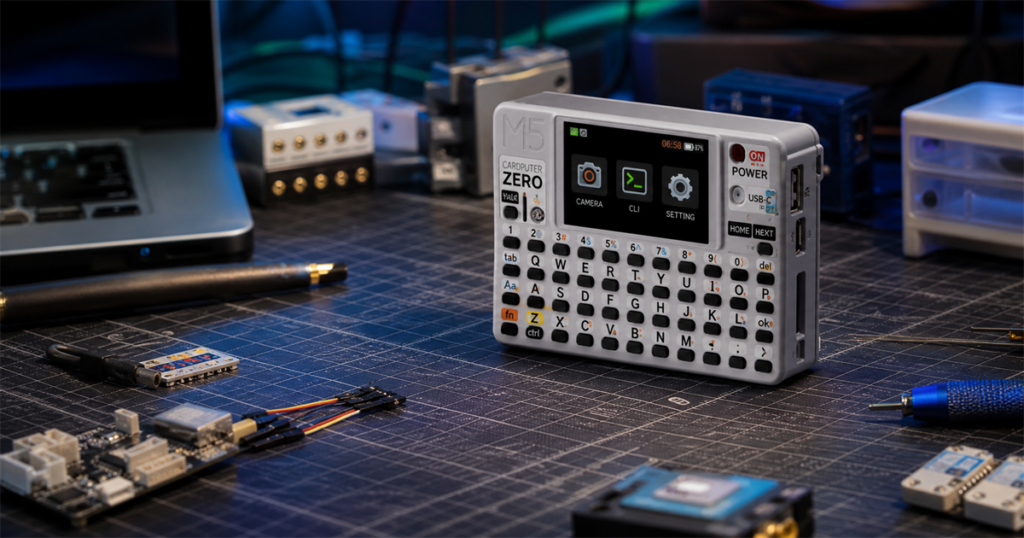
Most of us have reached the point where even our computers need smaller computers to cope with the emotional workload. Your laptop has a dock, the dock has a dongle, the dongle has opinions, and somewhere in the middle of all that a tiny command-line machine shows up looking like it escaped from a cyberpunk calculator factory.
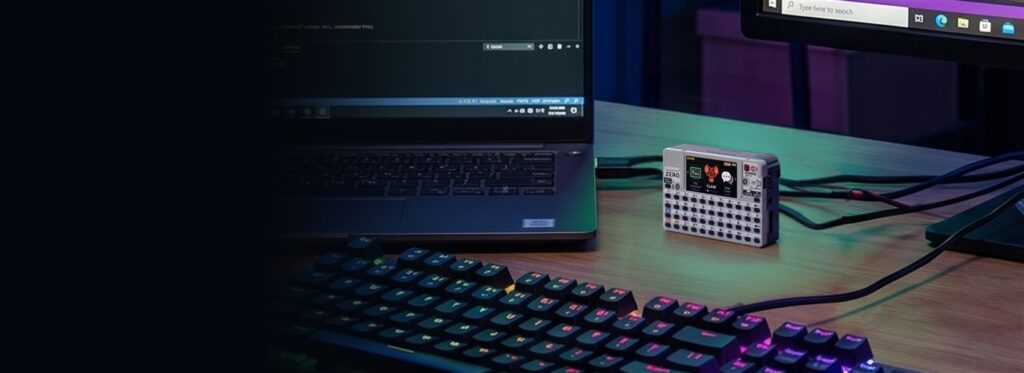
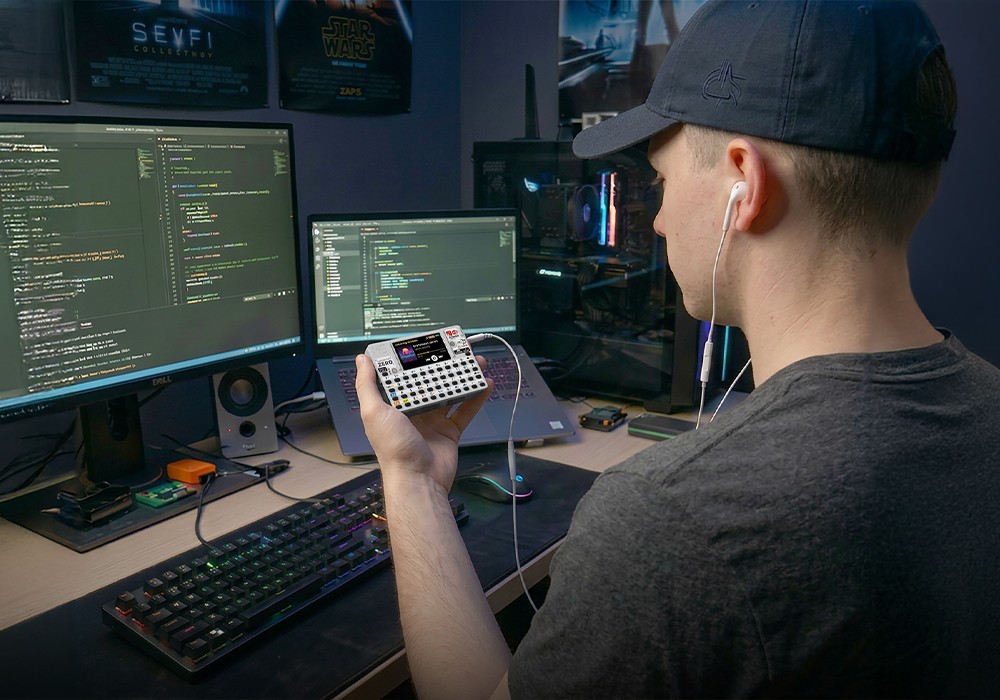
That is the general energy of the CardputerZero from M5Stack, a pocket Raspberry Pi computer built for people who look at a normal workstation and think, “What if this could also fit in the weird little pocket of my backpack?” It is a credit-card-sized Linux device with a screen, physical keyboard, battery, audio, wireless connectivity, and enough ports to make your junk drawer feel professionally validated.
The basic idea is simple in the same way a tiny submarine is simple: compact object, large amount of nerd possibility. M5Stack describes the CardputerZero as a pocket Linux lab for CLI tools, SSH access, Python code, Git, Vim, on-device AI experiments, hardware tinkering, and portable debugging. It is not trying to be your main computer. It is trying to be the little computer you reach for when your main computer is too much computer, or when you just want to poke a server without unfolding an entire lifestyle.

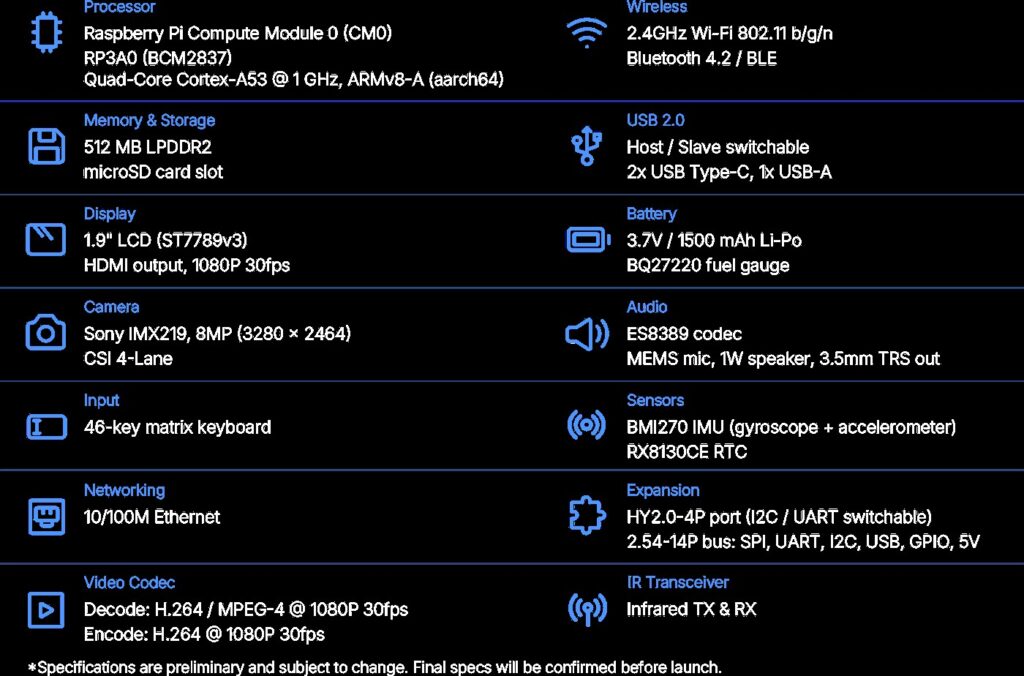
The hardware is built around the Raspberry Pi Compute Module 0, specifically an RP3A0-based CM0 with a quad-core Cortex-A53 processor. M5Stack’s preliminary specs list 512 MB of LPDDR2 memory, a microSD card slot, 2.4 GHz Wi-Fi, Bluetooth 4.2/BLE, a 1.9-inch LCD, and a 46-key matrix keyboard. It also lists a 3.7V 1500 mAh Li-Po battery, a Sony IMX219 8MP camera, a microphone, speaker, 3.5 mm audio output, USB-C, USB-A, HDMI output, and Ethernet.
That is a lot of stuff to cram into something that looks like it should be used to order snacks in a spaceship cafeteria. The keyboard is probably the funniest part because it makes the device feel less like a passive screen and more like an actual tiny terminal. You can imagine someone fixing a config file from a bus stop, checking a Raspberry Pi project from the couch, or typing commands in a server room with the confidence of a person who definitely owns too many labeled cables.
Related posts:
 This Vintage Style Typewriter Keyboard Lets You Type In The Most Satisfying Way Possible
 This Credit Card Skin Turns Your Card Into a Blockbuster Membership Card
 This Automatic Card Dealing Robot Might Be The Coolest and Fastest Way To Deal Cards
 This Bubble Window For Your Fence Allows Your Dogs To Peek To The Other Side
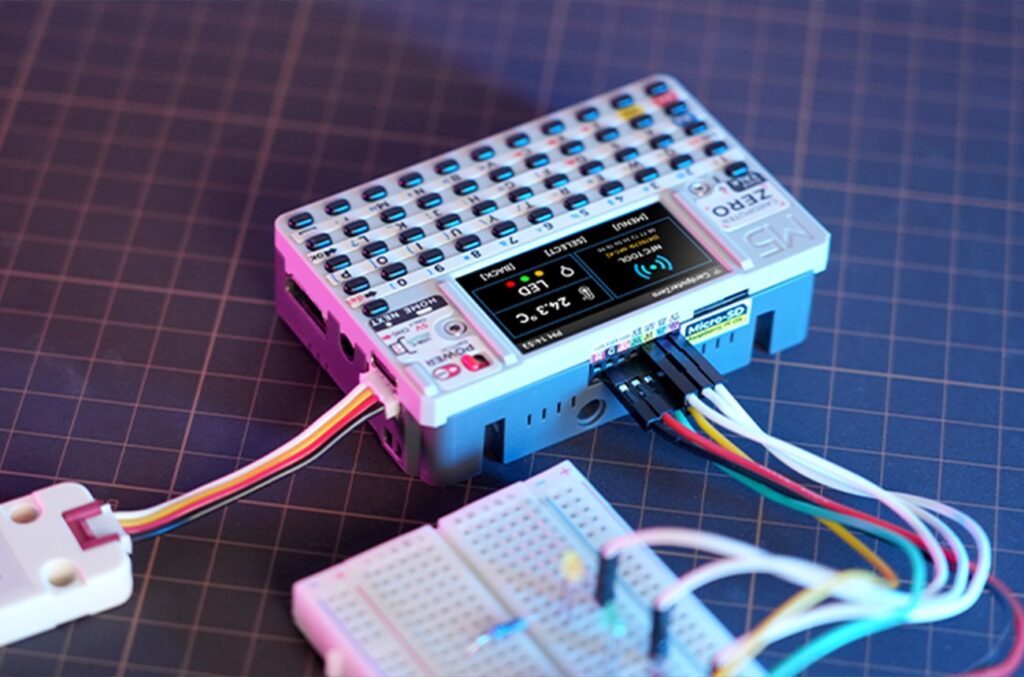
The maker angle is where it gets especially OddityMall. CardputerZero supports M5Stack’s ecosystem of add-ons, including Grove, M5Units, and custom hardware through SPI, I2C, UART, USB, and GPIO. M5Stack says it works with more than 100 M5 modules, which means this little handheld box can become a sensor tool, a wireless experiment, a portable debugging station, or the kind of weekend project that begins with “this should only take an hour” and ends with you learning three new protocols and forgetting lunch.
It also has enough normal-human features to avoid becoming a pure basement-only device. M5Stack pitches it for retro gaming with physical buttons, visual capture experiments with camera add-ons, pocket media playback through the speaker or 3.5 mm jack, and lightweight edge AI tools such as OpenClaw. That does not mean it is a polished phone replacement, but it does mean the CardputerZero sits in that delightful zone between practical tool, tiny computer, and toy for adults who read datasheets recreationally.

The physical size is one of the best selling points. M5Stack calls it credit-card sized at about 85 x 54 mm, which is absurdly small for something with Linux I/O, battery power, a display, keys, networking, and expansion. It is the kind of thing that makes a regular laptop look like it has been overreacting this whole time.
There are sensible limitations, of course. A pocket Linux computer with a 1.9-inch screen and tiny keyboard is not where you write a novel, edit a spreadsheet, or conduct a video call unless you are trying to punish yourself for reasons best discussed with a professional. This is for quick command-line work, hardware projects, portable experiments, and maker workflows where “small enough to carry everywhere” matters more than “large enough to preserve your wrist health.”
What This Tiny Linux Computer Is For
The best audience is makers, coders, Raspberry Pi fans, network tinkerers, students, retro-gaming weirdos, and anyone who enjoys tools that feel like props from a very competent hacker movie. It makes sense for SSH sessions, Python scripts, Git edits, serial debugging, module experiments, sensor projects, and quick field work where pulling out a full laptop feels like bringing a dining table to a picnic.
It is also a pretty excellent gift idea for the sort of person who already owns a soldering iron, has strong feelings about USB-C cables, and says “I could automate that” in situations where no tiny computer was requested. They may not need it. That is not the point. Half the joy is watching their brain immediately invent eight uses for it before the box is fully open.
Price And Availability
M5Stack’s campaign preview lists Super Early Bird pricing at for the CardputerZero Lite and for the CardputerZero, with higher MSRP targets shown at and . The Kickstarter listing also referenced reward pricing around for Lite and for the standard CardputerZero, so check the live campaign for the current reward tier, shipping details, and final specs before making plans around a tiny Linux rectangle.
Image credit: M5Stack.
It is not a laptop replacement, a phone replacement, or a replacement for going outside. It is a pocket Raspberry Pi computer for the very specific, very real joy of carrying a miniature Linux lab around like your backpack has a secret IT department.
Where to find This Pocket Raspberry Pi Computer Turns Your Desk Into a Tiny Linux Lab
OddityMall may earn a commission from qualifying purchases at no extra cost to you.
Related posts:
This Vintage Style Typewriter Keyboard Lets You Type In The Most Satisfying Way Possible
This Credit Card Skin Turns Your Card Into a Blockbuster Membership Card
This Automatic Card Dealing Robot Might Be The Coolest and Fastest Way To Deal Cards
This Bubble Window For Your Fence Allows Your Dogs To Peek To The Other Side