There are two types of people in this world: people who see a robot arm on a desk and think, “That seems practical,” and people who immediately wonder whether it can be trained to hand them snacks with the emotional precision of a tiny metal butler.
{
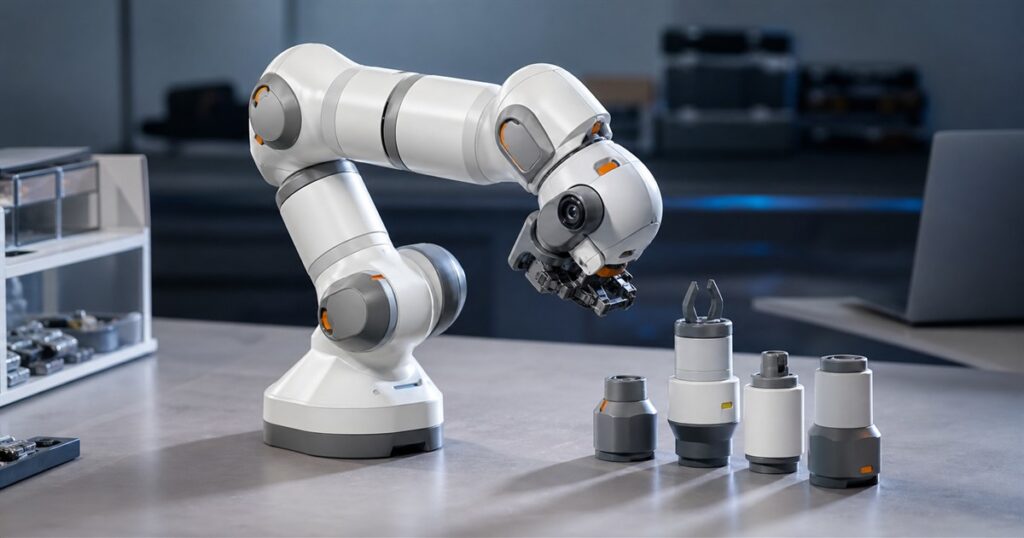
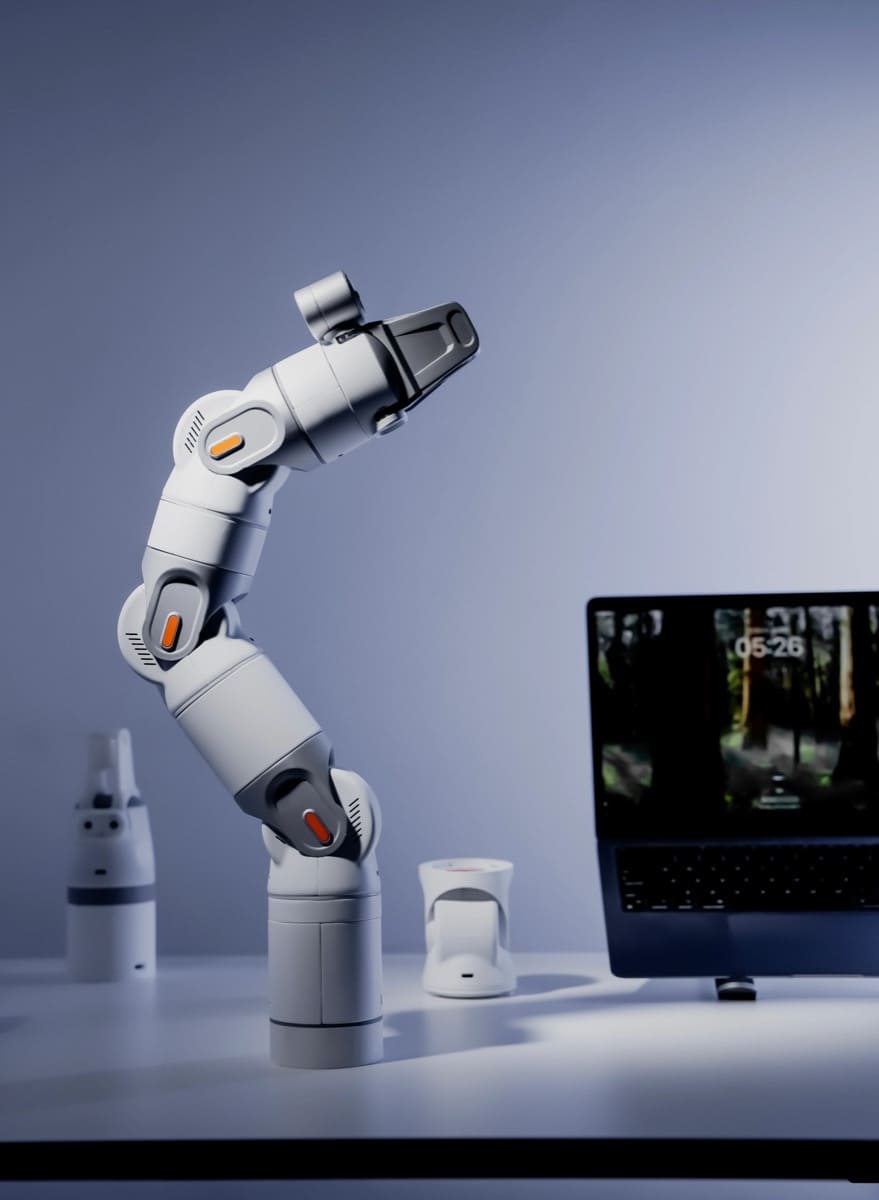
The Kynooe One Modular Personal AI Robot Arm is very much for both groups. It is a desktop-scale robotics platform built around stackable, swappable modules instead of the usual “congratulations, here is your industrial arm and a weekend of silent panic” approach to robotics.
At its simplest, Kynooe One is a compact white-and-gray robot arm with interchangeable accessories, app-based controls, AI interaction features, and a beginner-friendly no-code interface. At its most dangerous, it is the sort of thing that makes a normal person start saying phrases like “household robot workflow” while standing in a kitchen that still contains three unwashed coffee mugs.
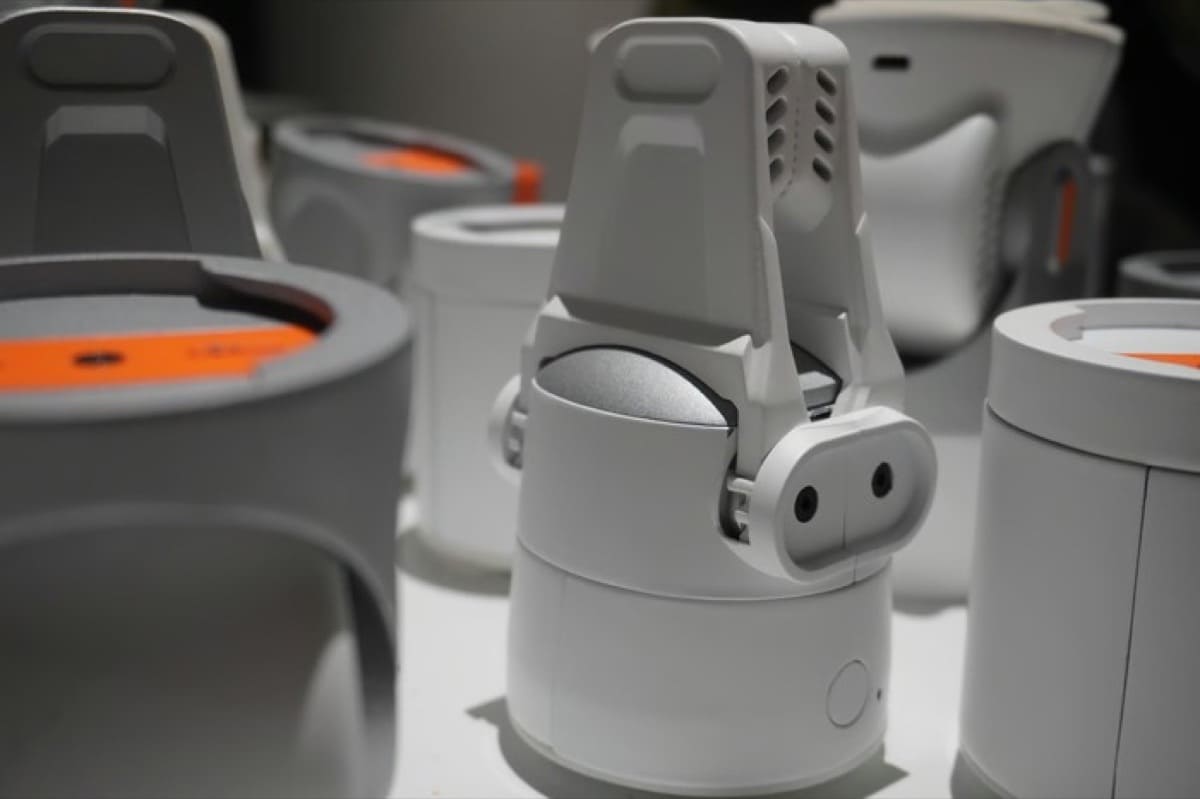
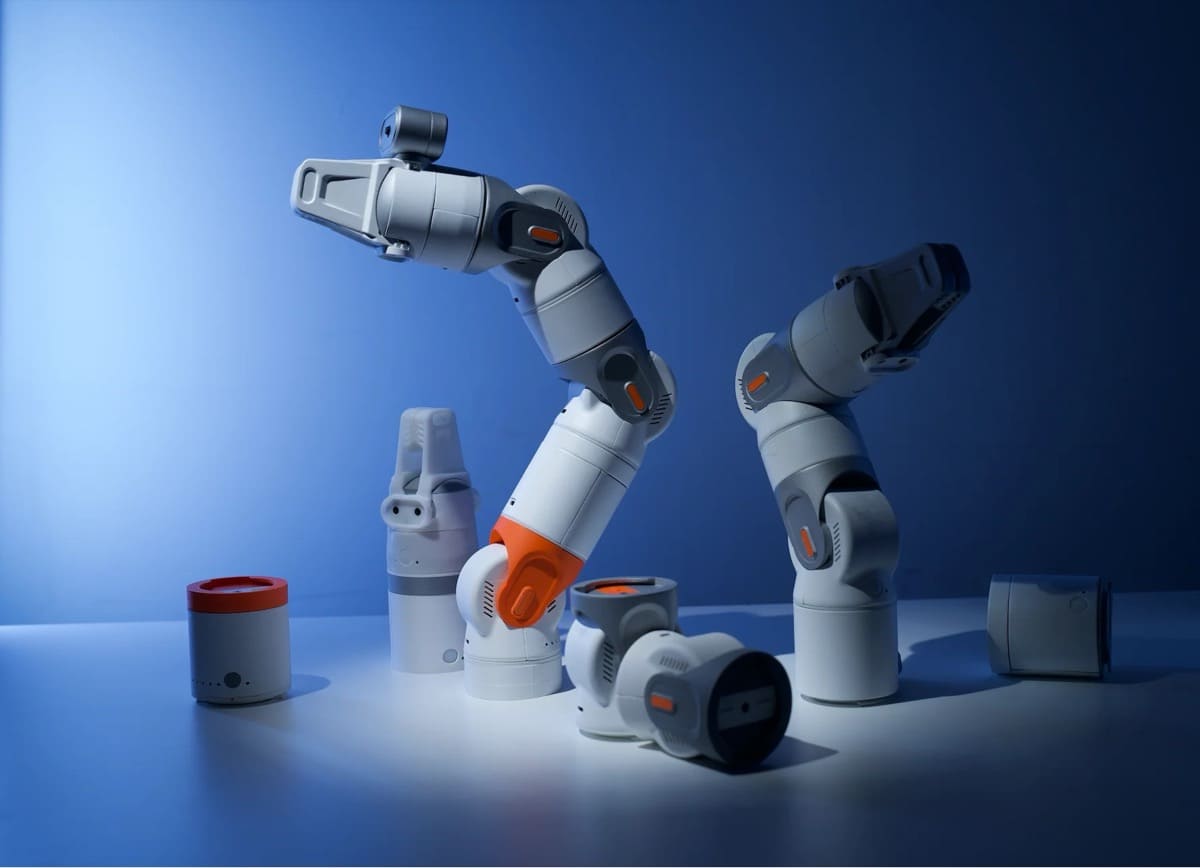
The big hook is modularity. Rather than treating the arm as one fixed machine with one permanent destiny, Kynooe is built around interchangeable tools, accessory modules, and expandable parts. The company describes it as a system that can shift between creative workflows, smart filming, household assistance, entertainment, and maker projects depending on what you attach and how you control it.
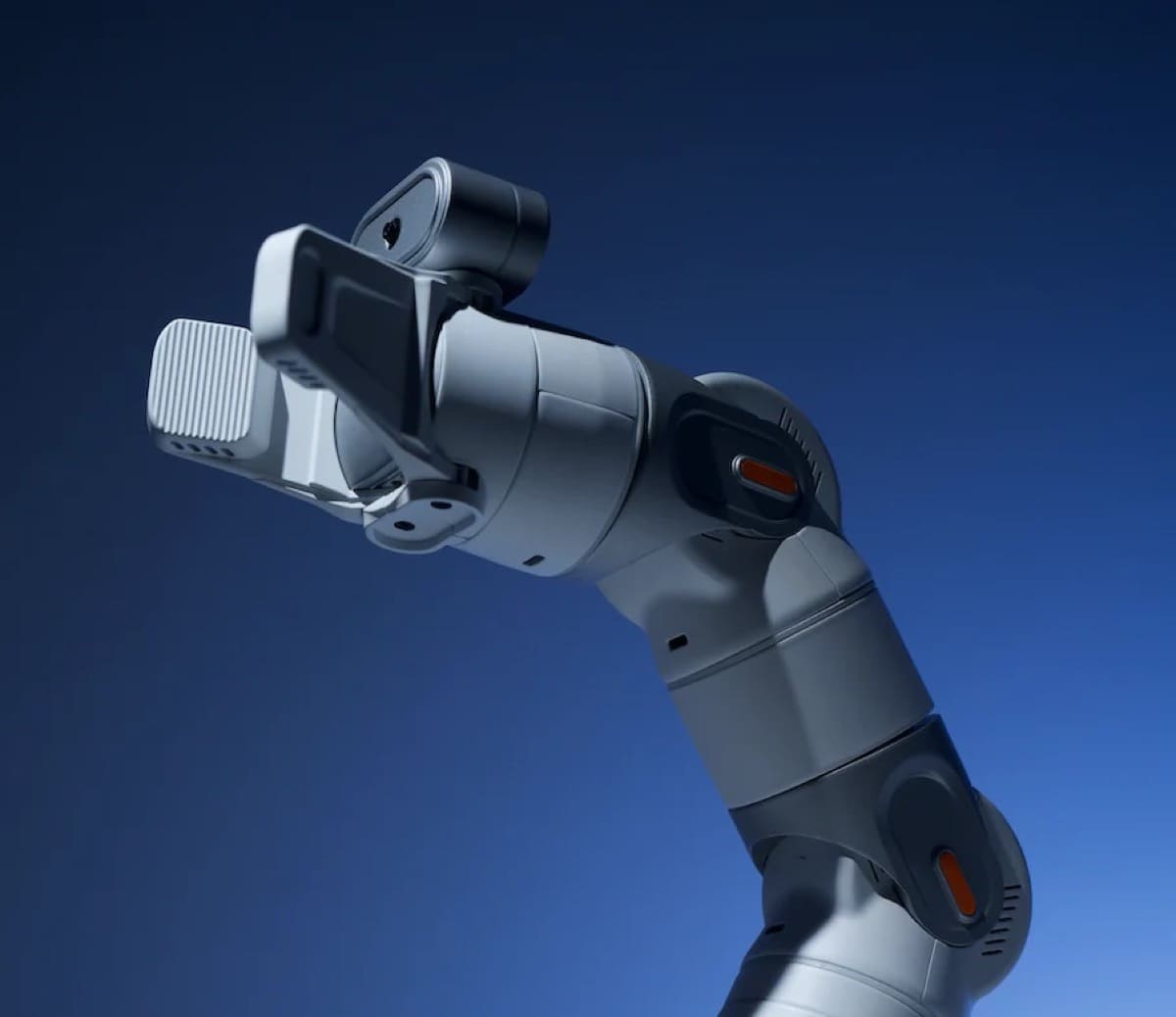
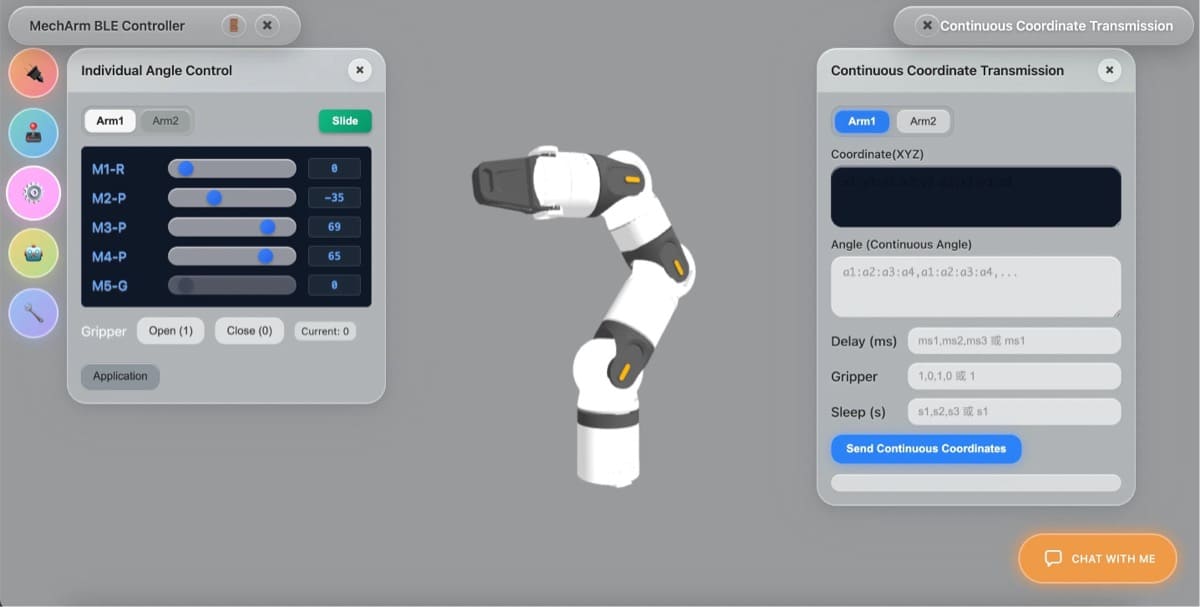
That makes it less like a single-purpose gadget and more like a small robot construction kit that happens to have opinions about posture. The campaign materials show arm segments, gripper-style modules, visual control panels, and mechanical connector details that make the whole thing look like a consumer-friendly robotics lab escaped onto a desk.


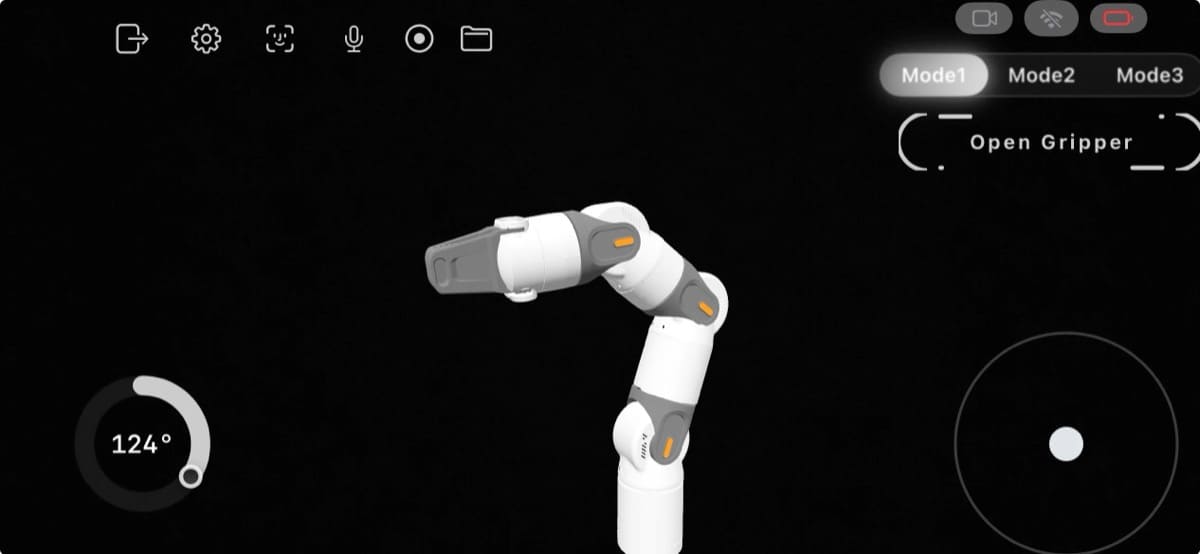
Built for people who do not speak fluent robot
Kynooe is pitching the arm as a robotics platform for everyday users, not just engineers. The system is designed around plug-and-play setup and app-based controls, with a visual interface meant to feel more like operating a smartphone than wrestling a small factory machine into obedience.
That no-code angle matters, because robot arms traditionally have a way of turning simple ideas into homework. “Move this thing over there” can become a terrifying soup of joint angles, coordinates, libraries, and forum posts written by people who appear to solder for cardiovascular exercise.
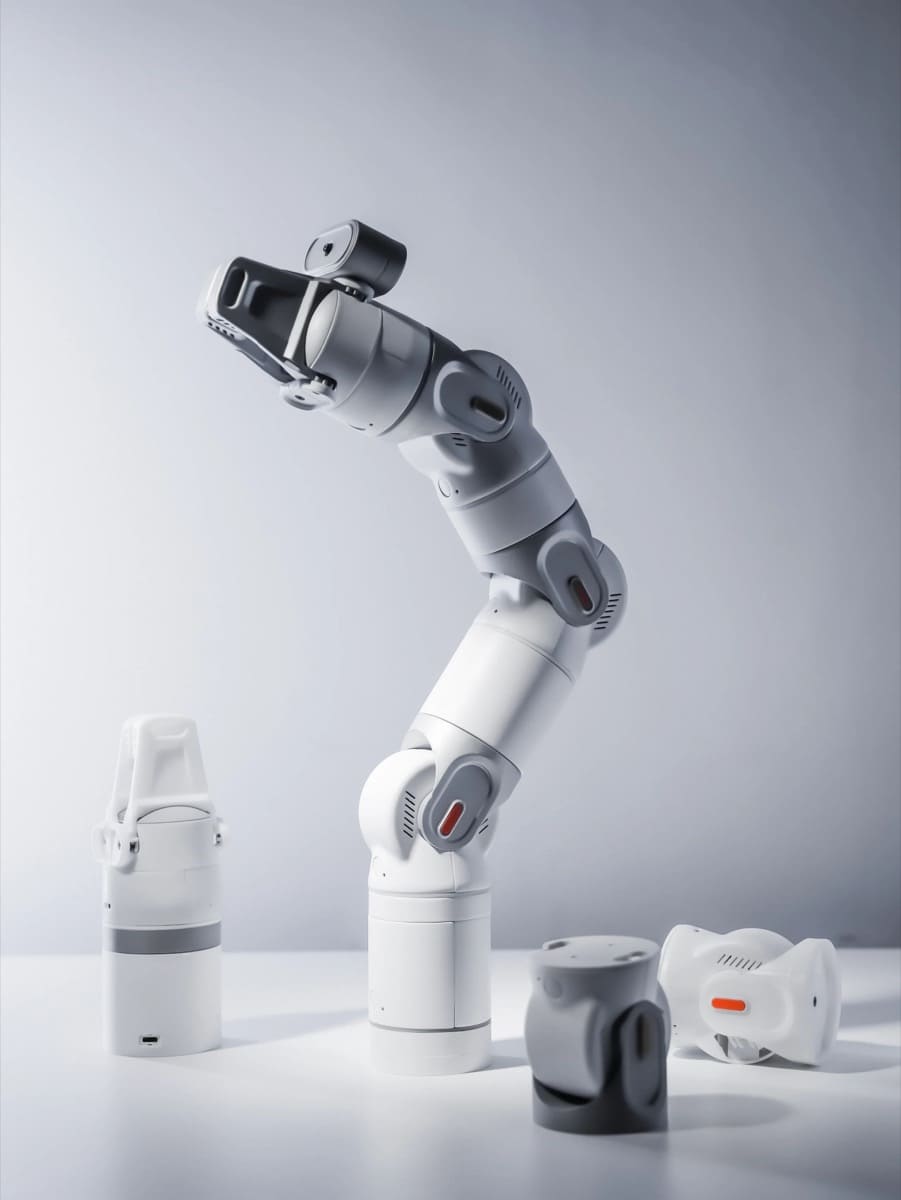
Kynooe still has developer appeal, though. The company says it plans to release an open-source SDK on GitHub, giving advanced users access to AI integrations and low-level joint controls. So beginners can poke around with visual workflows, while the more ambitious crowd can eventually teach it to perform suspiciously specific rituals involving cameras, tools, sensors, and whatever is happening on their workbench.
AI interaction, face tracking, and swappable tasks
The AI portion is aimed at making the arm feel less like a manually controlled claw and more like a flexible assistant. Kynooe says users can interact with the robot through natural language commands, and one of the featured built-in tricks is on-device AI face tracking for filming.
{
That could make it interesting for creators who want a robotic camera operator, makers who want a programmable helper, or families who want to explain to guests why there is a cheerful mechanical arm following faces in the living room. The company also mentions future on-device AI features, with the privacy-friendly implication that more can happen locally instead of being shipped off to the great mystery warehouse in the cloud.
There is also the Kynooe Robot Hub, a planned ecosystem for training, customizing, publishing, and sharing robotic behaviors. The idea is that users could eventually download or share robot skills kind of like apps, except the app may physically move across your desk and knock over a pencil if you get too ambitious.
What it is actually for
Kynooe One is not being sold as a factory replacement or a miracle servant that will fold your laundry, settle your taxes, and gently ask why you own seventeen charging cables. It is better understood as a modular desktop robotics platform for experiments, filming, light robot-control, education, prototyping, and creative projects.
Potential use cases include smart filming, object manipulation, interactive displays, maker projects, STEM learning, robotics demos, and whatever strange weekend project begins with “I bet I can make it press this button.” The product is especially interesting because it tries to sit in the awkward but exciting space between toy, tool, robotics kit, and personal robotics machine.
{
Images via Kynooe campaign coverage from Bikman Tech.
Price and availability
The Kynooe One campaign has been running through Kickstarter, with campaign details listing an average pledge around $670. As with any crowdfunded hardware project, the usual caveats apply: shipping timelines, final specs, accessories, and production details can change before units reach backers.
Kynooe has said structural design, hardware validation, and small-batch trial production have already been completed, with certification, production validation testing, and mass production preparation still ahead for planned shipments later in 2026.
So yes, it is a robot arm for your desk. But it is also a little glimpse of the future where your home office contains a modular AI appendage, and somehow the strangest part is that it may genuinely be useful.
Where to find This Modular AI Robot Arm Lets Beginners Build Desktop Automation
OddityMall may earn a commission from qualifying purchases at no extra cost to you.