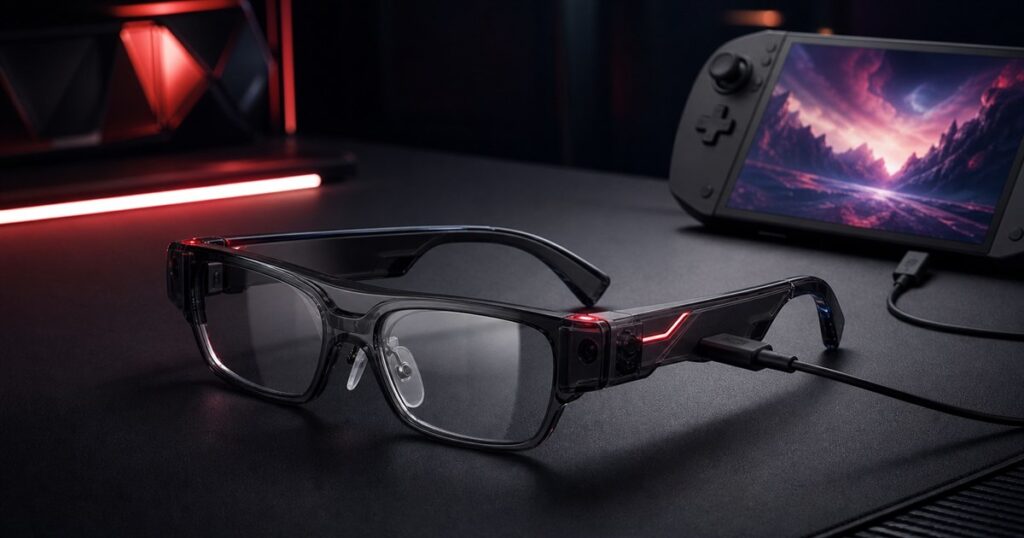
There comes a time in every gamer’s life when a normal screen starts to feel like a civic insult. A television is too far away. A monitor is too attached to the desk. A handheld is wonderfully portable, but it also asks your eyeballs to accept that a dragon battle and a spreadsheet have roughly the same display budget.

The ROG XREAL R1 Gaming AR Glasses are here for that very specific modern problem: wanting a massive gaming display without actually owning a massive gaming display, moving a massive gaming display, or explaining to another adult why the living room now belongs to a racing sim.
Built by ASUS Republic of Gamers with XREAL, these smart-looking gaming glasses plug into compatible devices over USB-C and put a huge virtual display in front of your face. ASUS describes it as a 171-inch screen viewed from about 4 meters away, which is exactly the sort of measurement that makes your apartment feel both futuristic and mildly judged.
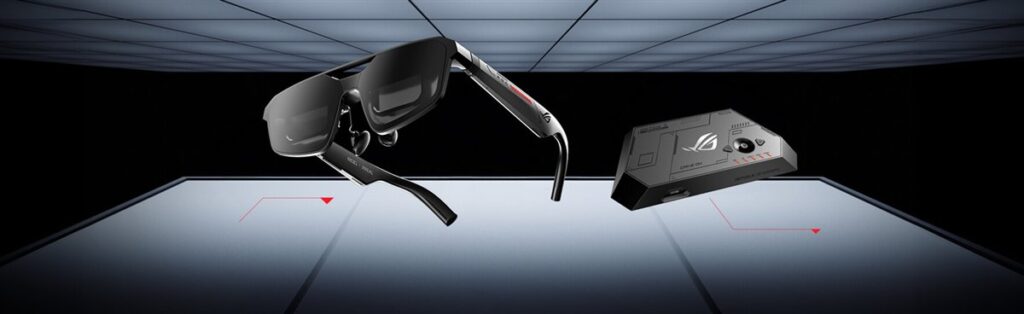
The headline trick is speed. The glasses use Micro-OLED displays with Full HD resolution per eye, a 240Hz refresh rate, and a claimed 0.01ms response time. That puts them in the portable-display-for-people-who-notice-frame-pacing category rather than the novelty sunglasses-that-play-a-video category.
They are pitched especially hard at ROG Ally owners, which makes sense. The handheld gaming PC is already a tiny portal to an enormous backlog of unfinished games. Add the R1 glasses and suddenly that little device can pretend it rented out an IMAX theater for your 38th attempt at finishing a boss fight.
Related posts:
 Japan Has Created The Ultimate Gaming Bed, So You Never Have To Rejoin Society Again
 These Cocktail Glasses Are Made To Look Like a Jellyfish
 This Bubble Window For Your Fence Allows Your Dogs To Peek To The Other Side
 These Spatial Computing Glasses Turn Your Laptop Into a Floating Multi-Screen Setup

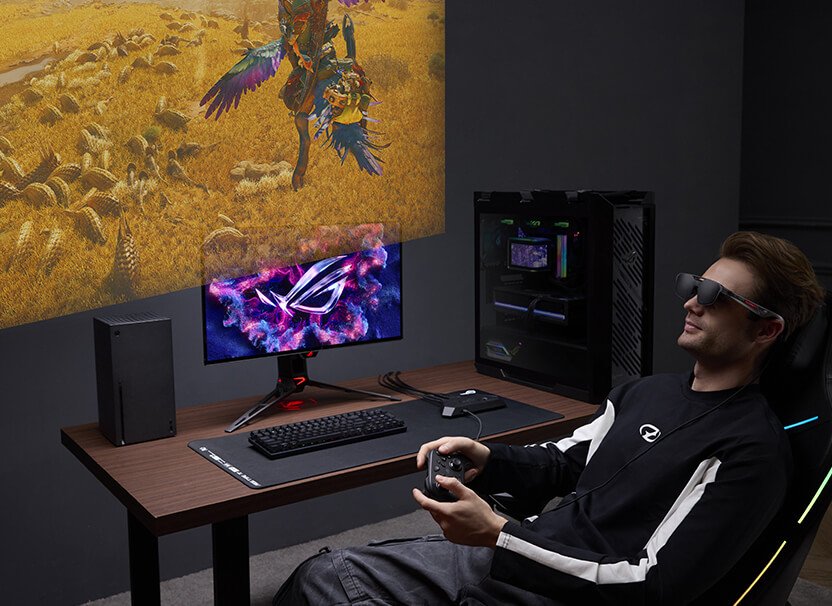
The R1 can also work in a PC or console setup through the ROG Control Dock, which lets it act more like a stationary display hub. That means the same pair of glasses can bounce between a couch session, a desk setup, and the classic ‘I am absolutely not gaming on this flight, I am merely wearing suspiciously intense eyewear’ travel scenario.
A Tiny Theater That Sits On Your Nose
The virtual screen is backed by a 57-degree field of view, electrochromic dimming, and native 3DoF modes. In normal human language, that means you can darken the lenses for a more private, screen-forward experience, and the display can either stay anchored in space or follow your head movement depending on the mode.
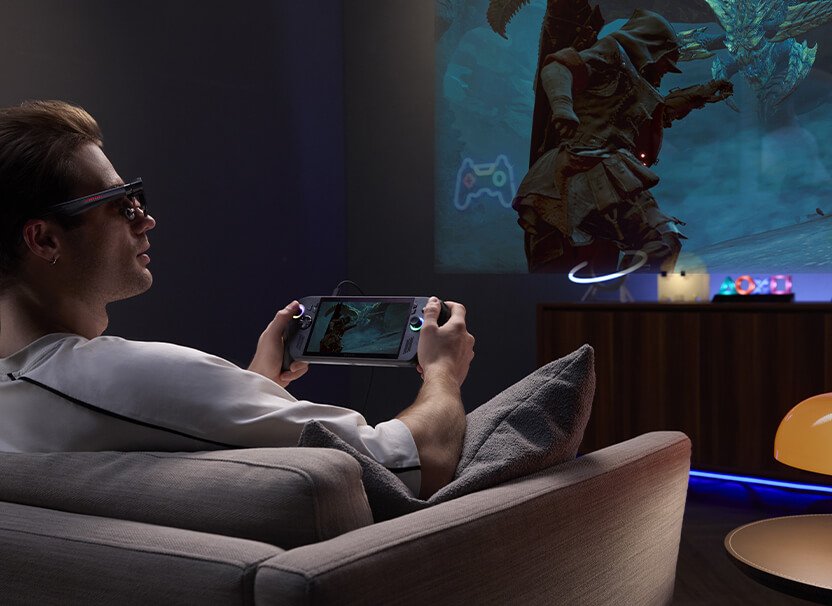
That is useful because nobody wants their racing line, raid party, or dramatic cutscene floating around like a haunted sticky note. Anchor mode is the grown-up setting. Follow mode is for when you have accepted that reality is now an accessory.
ASUS also lists Instant 3D, GamePlus, GameVisual, HDR tone mapping, and DisplayWidget Center support among the feature set. Some of that will matter more to competitive players, some to tinkerers, and some to the person who simply wants to watch a giant imaginary screen while everyone else in the house believes they are peacefully wearing sunglasses indoors for no reason.
Comfort Still Has To Survive A Long Session
AR glasses live or die by comfort, because the face is not a great place to store regret. The R1 weighs 91 grams, according to ASUS, and includes adjustable nose pads, flexible temples, and two IPD size ranges meant to cover most users from 57mm to 75mm. Prescription lens support is also part of the pitch, which matters if your eyes already have their own complicated firmware situation.
The audio is handled with Sound by Bose, so the glasses are aiming for a full portable gaming bubble rather than just a screen replacement. That makes the R1 feel less like a weird monitor and more like a personal entertainment helmet that had the decency to stop before becoming an actual helmet.

Best For
- ROG Ally and handheld PC owners who want a much bigger virtual display
- Console or PC players who like the idea of a private screen without another monitor
- Travel gamers who refuse to let a hotel TV decide their destiny
- People who think “171-inch screen on my face” sounds less like a warning and more like a lifestyle
The ROG XREAL R1 Gaming AR Glasses are listed by ASUS and XREAL with preorder pricing around to .99, with availability expected around July 2026. That is not cheap, but neither is building a secret gaming theater in the spare room and pretending it is “for productivity.”
If your dream setup is a huge screen that disappears into a glasses case, this is the sort of gadget that turns “portable gaming” into “portable private cinema for extremely serious button pressing.”
Image credit: ASUS ROG / XREAL.
Where to find These Gaming AR Glasses Put A 171-Inch Screen On Your Face
OddityMall may earn a commission from qualifying purchases at no extra cost to you.
Related posts:
Japan Has Created The Ultimate Gaming Bed, So You Never Have To Rejoin Society Again
These Cocktail Glasses Are Made To Look Like a Jellyfish
This Bubble Window For Your Fence Allows Your Dogs To Peek To The Other Side
These Spatial Computing Glasses Turn Your Laptop Into a Floating Multi-Screen Setup