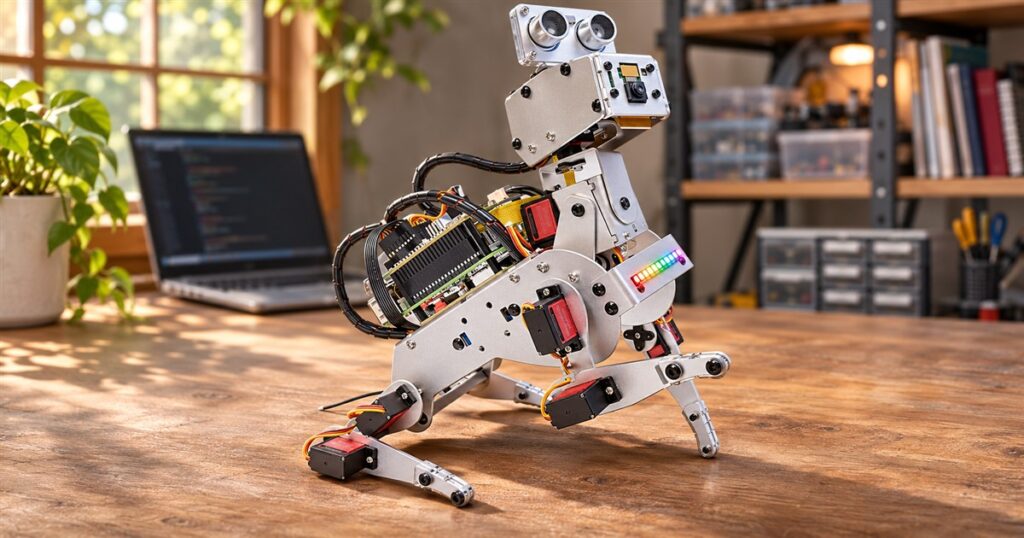
Some dogs learn to sit for a biscuit. This one wants you to assemble its legs, install software, and supply a small computer before it even considers being a good boy. SunFounder’s PiDog is a Raspberry Pi robot dog kit with an exposed metal body, a wonderfully earnest pair of ultrasonic eyes, and the sort of personality you can actually edit. Finally, a pet whose stubborn streak might have a line number.
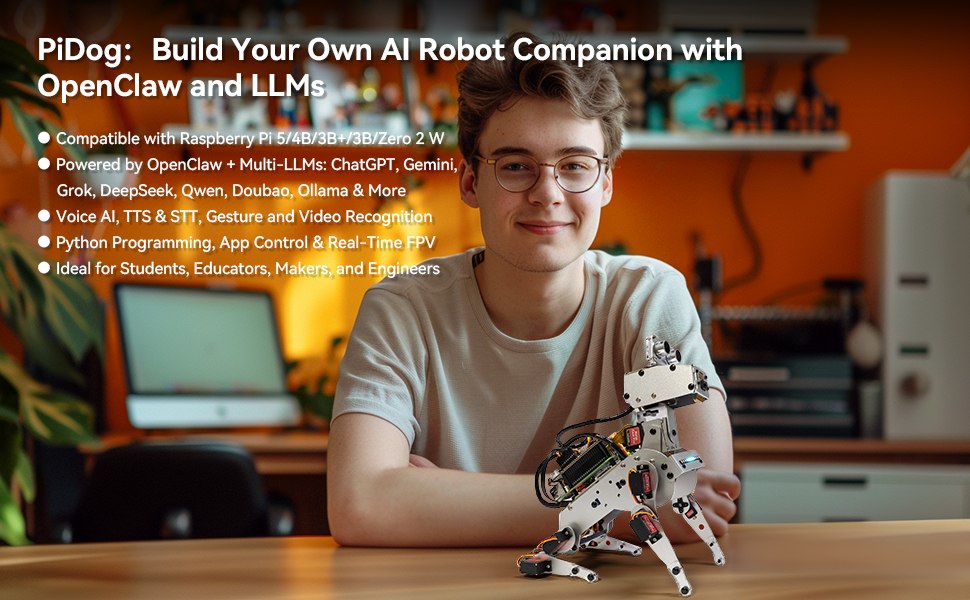
The attraction is delightfully specific: you build a four-legged robot, then explore how movement, sensors, programming, and optional AI services work together. It is a robotics project wearing the outline of a dog. If your ideal evening involves a screwdriver and a satisfying little breakthrough, this is very much your breed.
The Raspberry Pi itself is not included in the listing covered here. That distinction matters before anyone pictures opening a box and immediately chatting with a fully trained mechanical Labrador. PiDog asks you to participate in its upbringing, and that upbringing involves considerably more wiring than puppy school.
A robot dog with nothing to hide
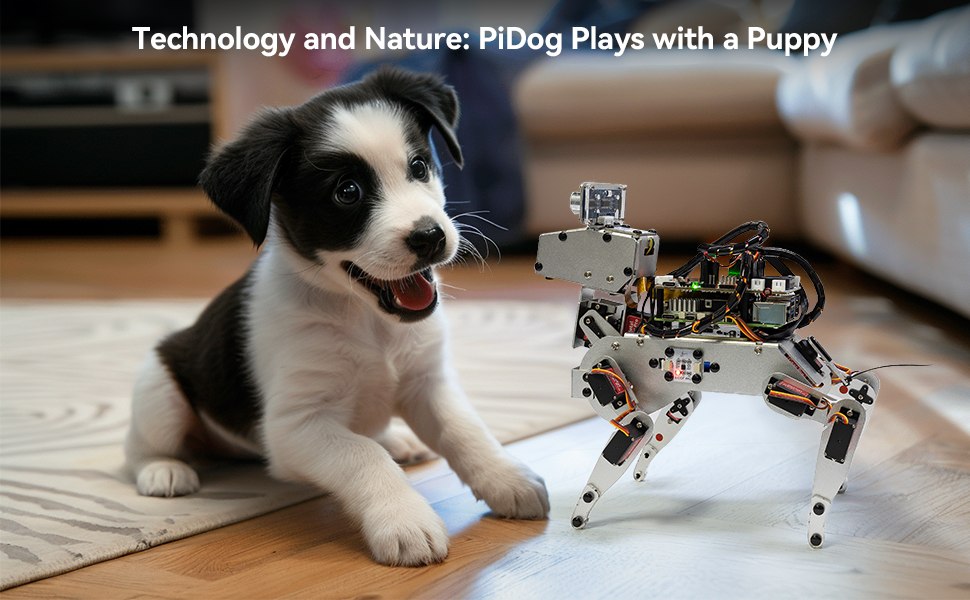
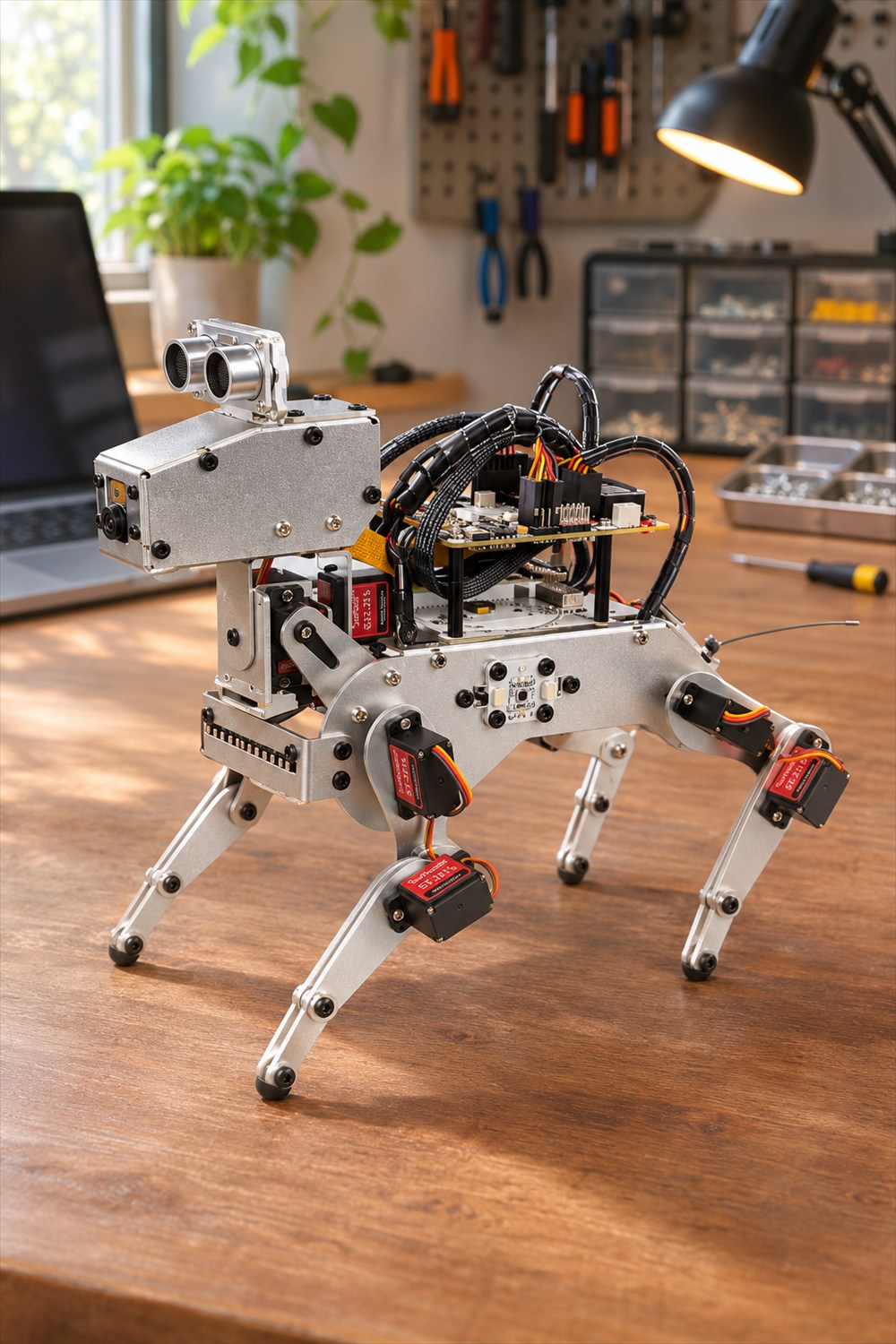
PiDog’s aluminum structure leaves its circuit boards, cables, joints, and servos out in the open. There is no fluffy costume concealing the mechanism. You can look at it and see that the movement has to come from somewhere, which is a big part of the appeal for anyone learning how robots work.
Its face does a surprising amount with very little. The two round ultrasonic transducers suggest eyes, while the camera gives the front of the head another practical job. Below that, the articulated body looks like a tiny workshop experiment that has decided it deserves a name.

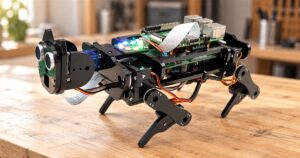
SunFounder lists 12 servos and 32 dog-like actions, including walking, sitting, standing, head movements, and tail wagging. Those motions give you something visible to experiment with. Changing a program is much more entertaining when the result has knees.
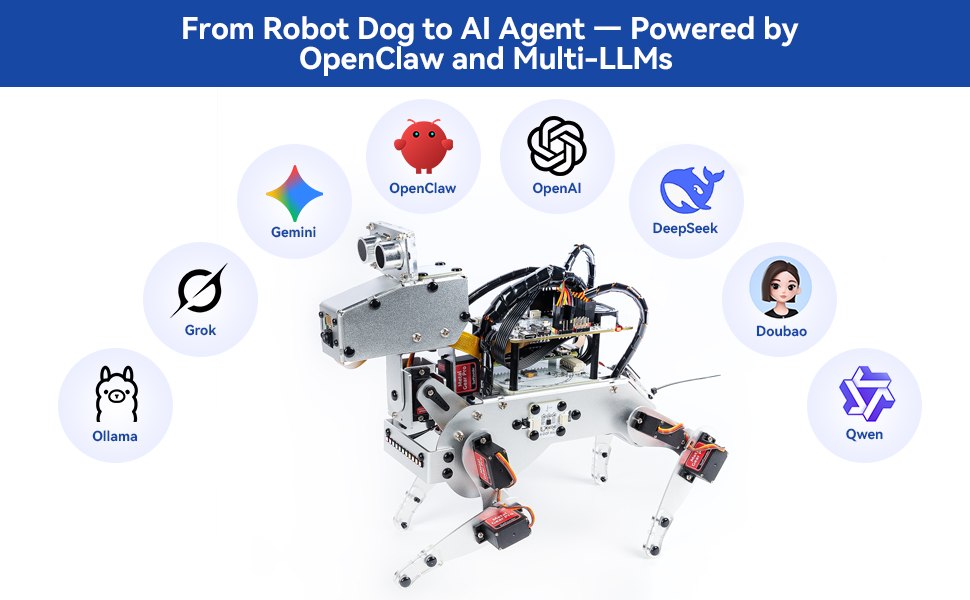
The useful part is learning how the tricks happen
A robot that moves on command is entertaining. A robot whose behavior you can investigate is a different sort of toy altogether. PiDog brings the mechanics close enough to the surface that the project becomes about connecting cause and effect: a sensor reports something, a program makes a decision, and a motor moves.
That makes it appealing to students, adult hobbyists, and makers who want a physical project for their programming. It also makes it a more involved gift than an ordinary remote-controlled animal. The recipient should enjoy building and troubleshooting, or at least want to learn. A surprise box of homework needs the right audience.
The seller describes Python programming and app control, along with camera-related tools such as OpenCV and MediaPipe. These provide different ways to approach the project. You can work toward understanding individual behaviors, then explore more ambitious combinations once the basic robot is operating properly.
- Movement experiments: use the articulated legs, head, and tail to explore programmed actions.
- Camera projects: investigate supported vision and recognition examples.
- Touch interaction: build behaviors around the head’s touch sensors.
- Distance sensing: use the ultrasonic module to detect nearby obstacles.
- Voice experiments: explore speech recognition, spoken responses, and supported AI integrations after setup.
None of those possibilities requires pretending the robot understands the world like a real dog. Its appeal is that you get to investigate the machinery behind the performance. The tiny tail wag is charming; knowing what caused it is the extra reward.
What is actually doing the sensing?
There is more here than a camera perched on a walking frame. SunFounder lists ultrasonic sensing, touch input, a gyroscope, sound sensing, a microphone, and a speaker. Different parts support different kinds of interaction, so the robot can serve as a small collection of practical experiments.
The camera is relevant to vision work, the microphone and speaker to voice interaction, and the ultrasonic module to nearby distance detection. The lights add another visible output. It is a useful reminder that a convincing robot personality can come from several fairly concrete systems working together.
| Part or capability | What it brings to the project |
|---|---|
| 12 servos | Articulated movement and dog-like poses |
| Camera module | Vision and recognition experiments |
| Ultrasonic module | Nearby obstacle and distance sensing |
| Touch sensors | Input from physical interaction |
| Microphone and speaker | Audio input and spoken output |
| Raspberry Pi | Required computer; purchased separately for this kit |
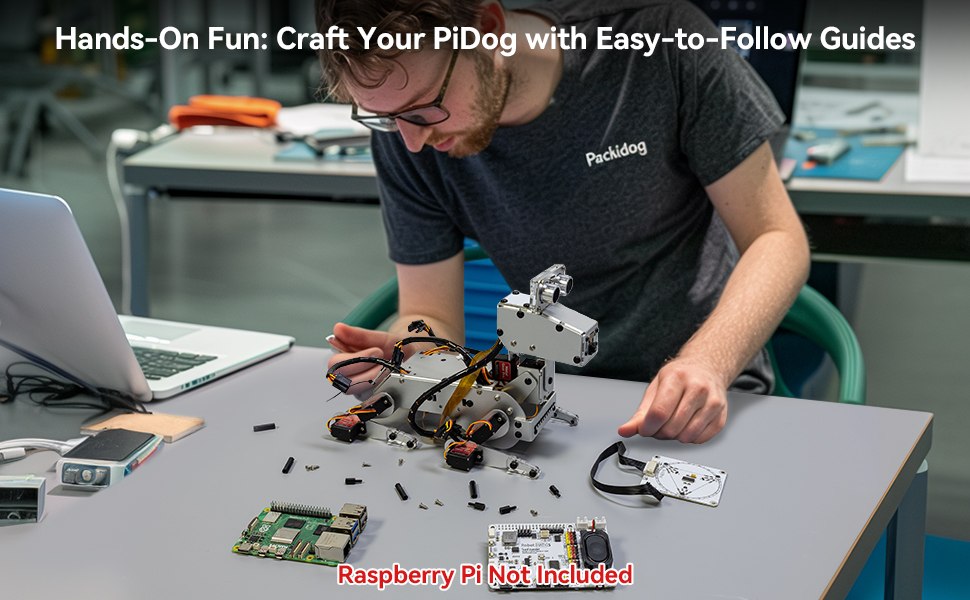
Assembly is part of the entertainment
This is a kit, and the exposed construction is an invitation to build. SunFounder provides online documentation and video guidance, but you should still approach it as a project that deserves time and attention. Following the correct assembly and setup sequence is part of getting a small pile of components to behave like a dog.
The official documentation distinguishes the older Standard version from V2. In particular, it says the Standard version’s servos and Robot HAT are not compatible with Raspberry Pi 5. Anyone planning to use a Pi 5 should confirm they are getting the appropriate V2 hardware and follow the matching instructions.
That is a worthwhile detail for people who already have a Raspberry Pi sitting in a drawer. The current listing names several compatible models, but the specific kit version still matters. Check the board you own against the documentation before scheduling your new dog’s first obedience lesson.
There is also a useful change in expectations here. The assembly is not merely packaging standing between you and the fun. For the intended buyer, seeing the parts become a working robot is a major portion of the fun. The screwdriver gets a speaking role.
Conversation takes more than a cute face
The current product listing promotes several AI integrations alongside voice and video recognition. SunFounder’s voice-assistant documentation describes a combination of a language model, speech-to-text, text-to-speech, sensors, and programmed actions. That is a helpful explanation of what the conversational side involves.
These features require software configuration. Depending on the services or models you choose, there may also be separate accounts, connectivity requirements, and usage costs. Buying the hardware should not be mistaken for buying unlimited access to every AI service named in the promotional material.
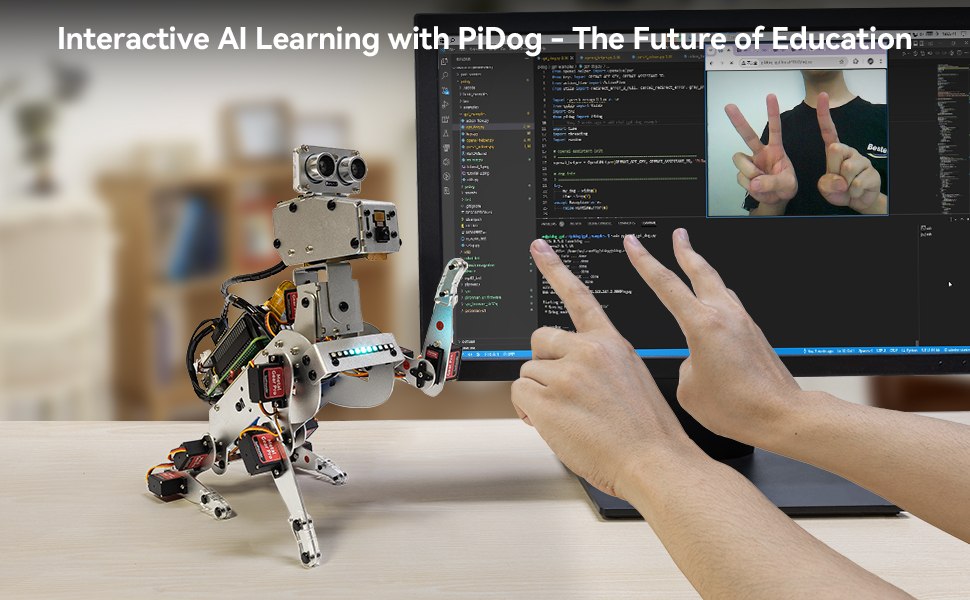
For a curious builder, that extra setup can be the point. You can explore how a spoken request becomes text, how a response is produced, and how the robot gives that response a physical flourish. For someone who simply wants a finished talking pet, it is a reason to think carefully before choosing a development kit.
The robot’s little movements make otherwise abstract software feel unusually tangible. A response on a screen is one thing. A response accompanied by a metal dog adjusting its head is another. Somehow, visible screws make the performance more endearing.
Who will enjoy this particular breed?
PiDog makes the most sense for someone who likes both the process and the result. A maker may enjoy the mechanics, a programmer may enjoy giving code a body, and a student may appreciate having several kinds of sensors in one project. SunFounder describes the listing as an engineering-oriented development product for ages 15 and above.
It is easy to imagine it becoming the resident character of a home workshop. It is less sensible to buy it expecting a maintenance-free household companion. This is a robot to build, configure, and experiment with, complete with the occasional pause while its human figures something out.
- SunFounder PiDog is a buildable Raspberry Pi robot dog kit.
- The open aluminum design exposes the electronics and mechanical joints.
- The seller lists 12 servos and 32 dog-like actions.
- Camera, touch, ultrasonic, motion, and audio components support interactive projects.
- Python, app control, and optional AI integrations offer multiple learning paths.
- The Raspberry Pi is not included; hardware version and software setup need attention.
At the time of writing, the PiDog kit was listed on Amazon for $179.99, sold by SunFounderDirect and marked in stock. Budget separately for the Raspberry Pi and any additional requirements of your chosen setup. Availability and pricing can change, particularly when different kit versions or bundles are involved.
Product images courtesy of SunFounder’s Amazon listing. Hardware and setup details are also covered in SunFounder’s PiDog documentation. This is a dog for people who hear “some assembly required” and instinctively clear a space on the desk.
| Pros | Cons and considerations |
|---|---|
| Expressive articulated robot with visible mechanics | Requires assembly and careful setup |
| Multiple sensors support varied learning projects | Raspberry Pi is not included |
| Python and app-control options | Technical troubleshooting may be part of the experience |
| Optional voice and AI experiments | Services may need separate accounts or incur costs |
| Online documentation and video guidance | Older Standard and V2 hardware have different compatibility |
Save this find.
Thank yourself later.
Your next great gift idea. Your someday space. Your collection of wonderfully weird things.
Save to PinterestPick a board. Keep the inspiration.
This Raspberry Pi Robot Dog Kit Walks, Wags, and Teaches You to Code
At a glance
Product snapshot
- Listed price
- $179.99Prices and availability can change. Check the seller for current details.
- Where to find it
- Amazon.com
- Category
- Gadgets