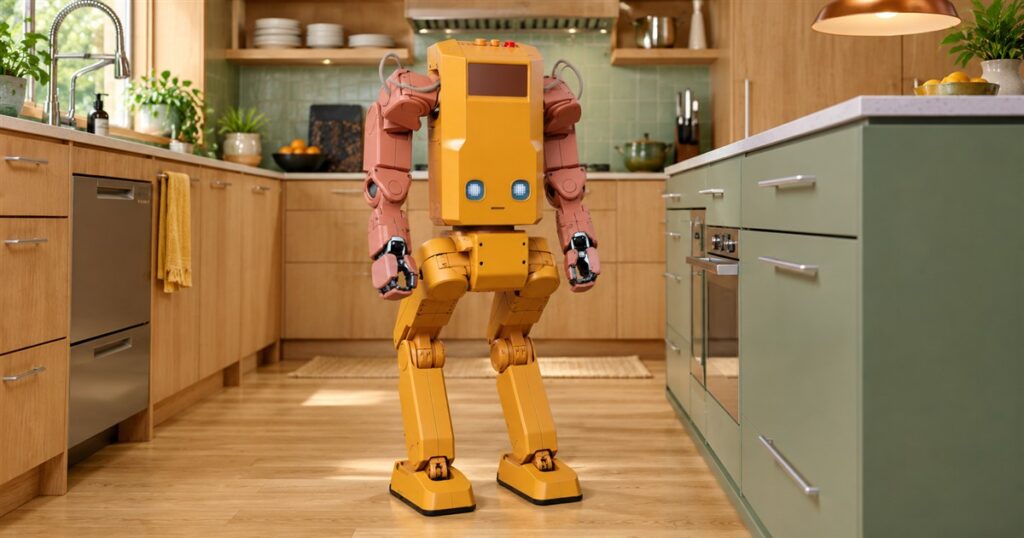
Every home has a chair that has quietly become a second closet. Nobody voted for this arrangement. It just happened, one cardigan at a time. Tuesday Labs is developing a home robot called Voxel Series-1 that might eventually intervene in this textile land dispute, and it looks considerably more cheerful about household chores than anyone currently living here.
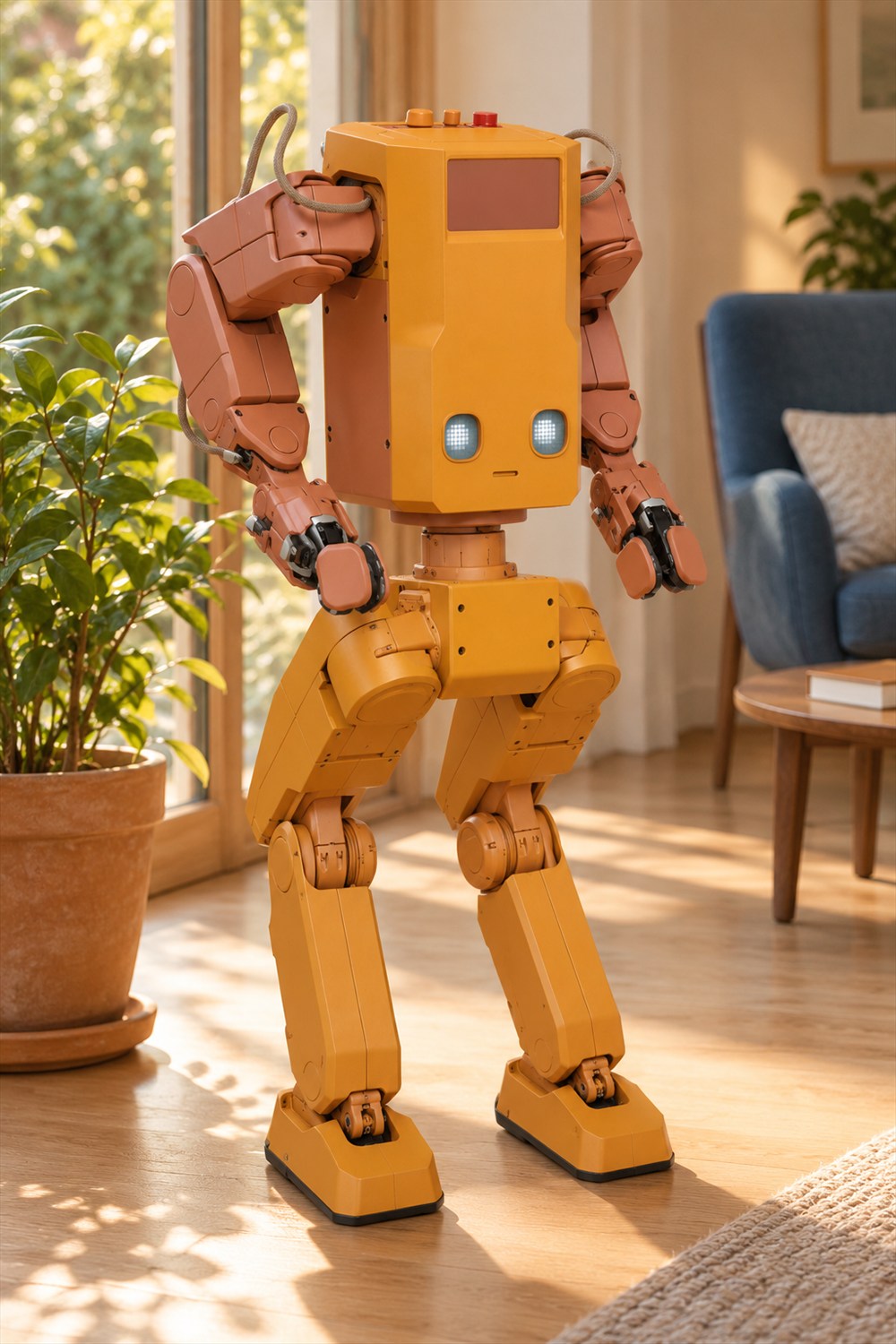
Voxel is a two-legged domestic robot with a long yellow box of a body, salmon-colored arms, and little illuminated eyes positioned low on its front. The overall effect is somewhere between a friendly workshop machine and a cartoon character who has been assigned his first apartment. You can practically picture him taking the recycling schedule very seriously.
The important word here is developing. Tuesday Labs calls the machine shown in its presentation a concept robot, with features and specifications subject to change before shipment. This is an early look at a proposed household helper, not a promise that you can have a fully trained mechanical housemate delivered next week.
A home robot with a rather familiar to-do list
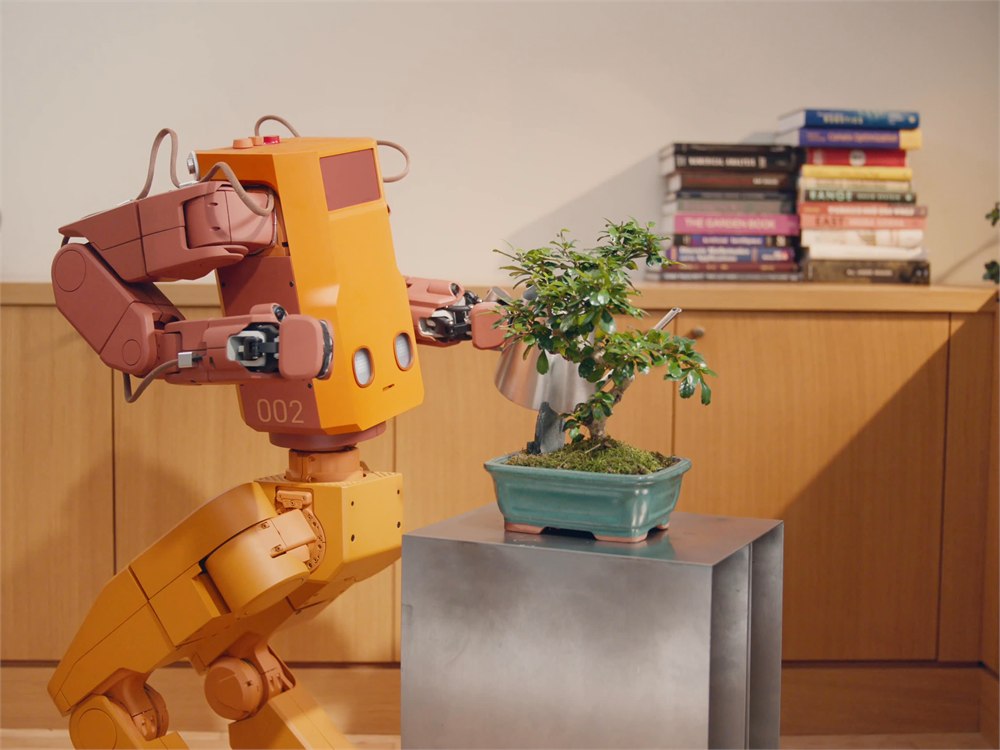
The intended jobs are wonderfully unglamorous: put things away, help locate misplaced belongings, bring you objects, and look after plants. There are no asteroid-mining ambitions in that list. Just the daily domestic tasks that somehow regenerate while you are standing in another room.
Consider putting things away. The actual movement is only part of the annoyance. First comes deciding whether the item belongs upstairs, downstairs, in a drawer, or in that mysterious pile everyone has agreed not to discuss. A robot that could meaningfully help with this routine would be doing more than moving a sock. It would be reducing the number of tiny decisions between dinner and sitting down.
Related posts:




Finding things is a different sort of relief. Tuesday Labs describes a function that could tell you where Voxel last saw an object. That is a specific and useful idea, and it is narrower than a magical guarantee to recover everything you have ever lost. Your wallet from 2009 should probably remain off the assignment sheet.
Fetching a book or a drink has obvious couch appeal. Plant tending has its own audience: people who love greenery but sometimes remember watering day when a leaf makes a dramatic exit. These are the company’s development goals, rather than tasks we have independently tested in a busy household.
For now, the sensible way to picture Voxel is as a proposal for sharing the boring bits of home life. The yellow fellow has applied for the position. The working interview is still ahead.
- Putting things away: the planned room-reset function focuses on returning belongings to their places.
- Finding misplaced items: the idea is to recall where an object was last seen.
- Bringing objects over: fetching everyday items is another advertised development goal.
- Plant care: Tuesday Labs also presents watering as a proposed household task.
Those wonderfully peculiar knees have a job
Voxel’s silhouette does much of the talking. Rather than dressing a human-shaped mannequin in a shiny shell, the design embraces an unapologetically boxy body and bent, angular legs. It looks like a machine that knows it is a machine, which is oddly reassuring. Nobody has tried to give it realistic eyebrows.
The maker lists Z-shaped legs with impact-aware feet, seven-degree-of-freedom arms, and simple single-degree-of-freedom grippers. The arms are intended to work around the awkward geometry of furniture and everyday objects. That is a reasonable place to focus: homes tend to have been designed for humans carrying coffee, not for tidy engineering diagrams.
The phrase “degrees of freedom” sounds grand, but the practical question is easier to understand. Can an arm reach the thing you need without everything around it becoming collateral clutter? Tuesday Labs highlights articulated wrists as part of its approach. How gracefully the eventual product manages your particular furniture is something a finished machine will need to demonstrate.
| Design element | What Tuesday Labs currently describes |
|---|---|
| Arms | Seven degrees of freedom with actuated wrists |
| Hands | Single-degree-of-freedom grippers |
| Legs | Z-shaped layout with impact-aware feet |
| Vision | Stereo RGB and wide-field vision |
| Product stage | Concept in development; final specifications may change |
A household appliance you might actually name
There is a difference between wanting a machine to work and wanting it to occupy your living room. A dishwasher can hide behind a cabinet door. A walking robot is going to be encountered on the way to breakfast. Its shape matters in a more personal way.
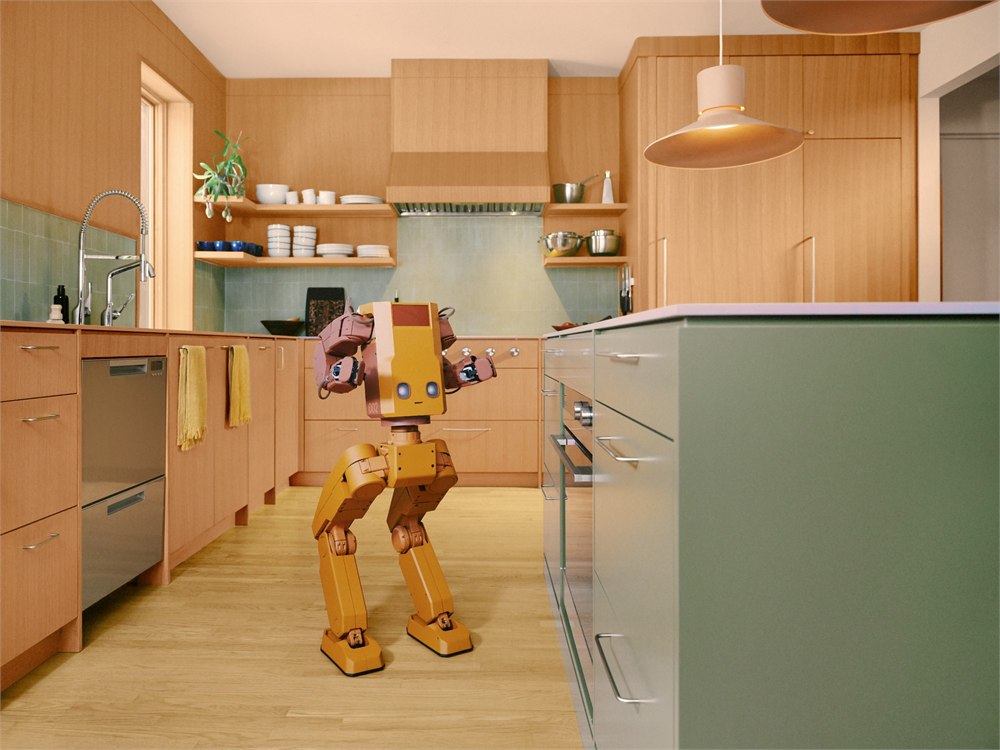
Tuesday Labs says it works with illustrators, animators, and character designers. You can see the intention in Voxel’s proportions. The little face occupies only part of that tall yellow front, while the arms and bent legs give the whole thing an expressive outline. Even standing still, it looks slightly inquisitive, as though it has just discovered that humans keep spare cables in a biscuit tin.
That character-first approach is the most immediately appealing part of the concept. It gives the machine a visual identity beyond “expensive appliance on legs.” Whether that charm holds up during everyday use will depend on behavior as much as appearance. A cute robot blocking the refrigerator would still be blocking the refrigerator.
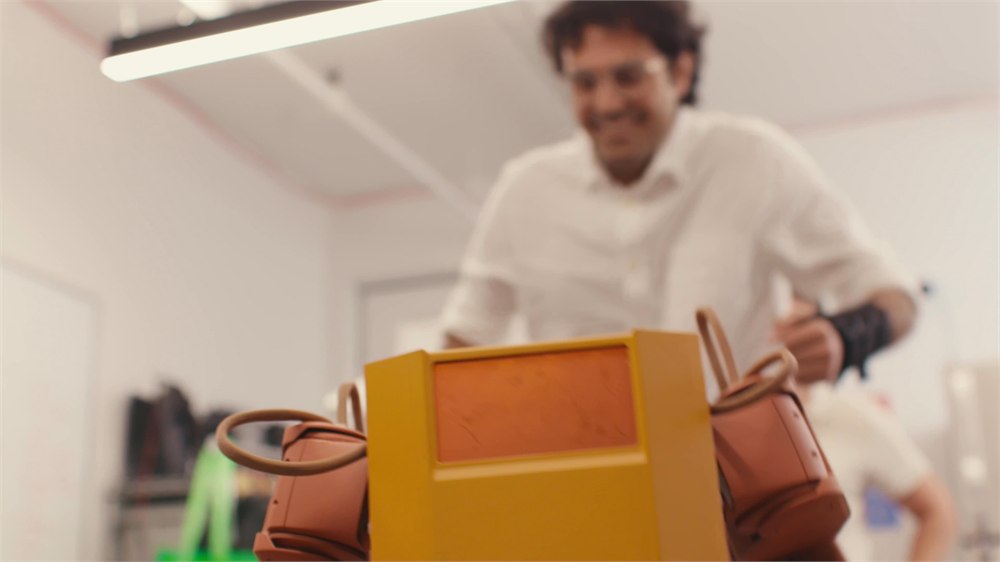
The official photographs also make the development process feel tangible. There is a workshop view, close mechanical detail, and the robot standing among ordinary kitchen cabinets. Those settings help explain the ambition without requiring a spaceship corridor or a glowing laboratory floor.
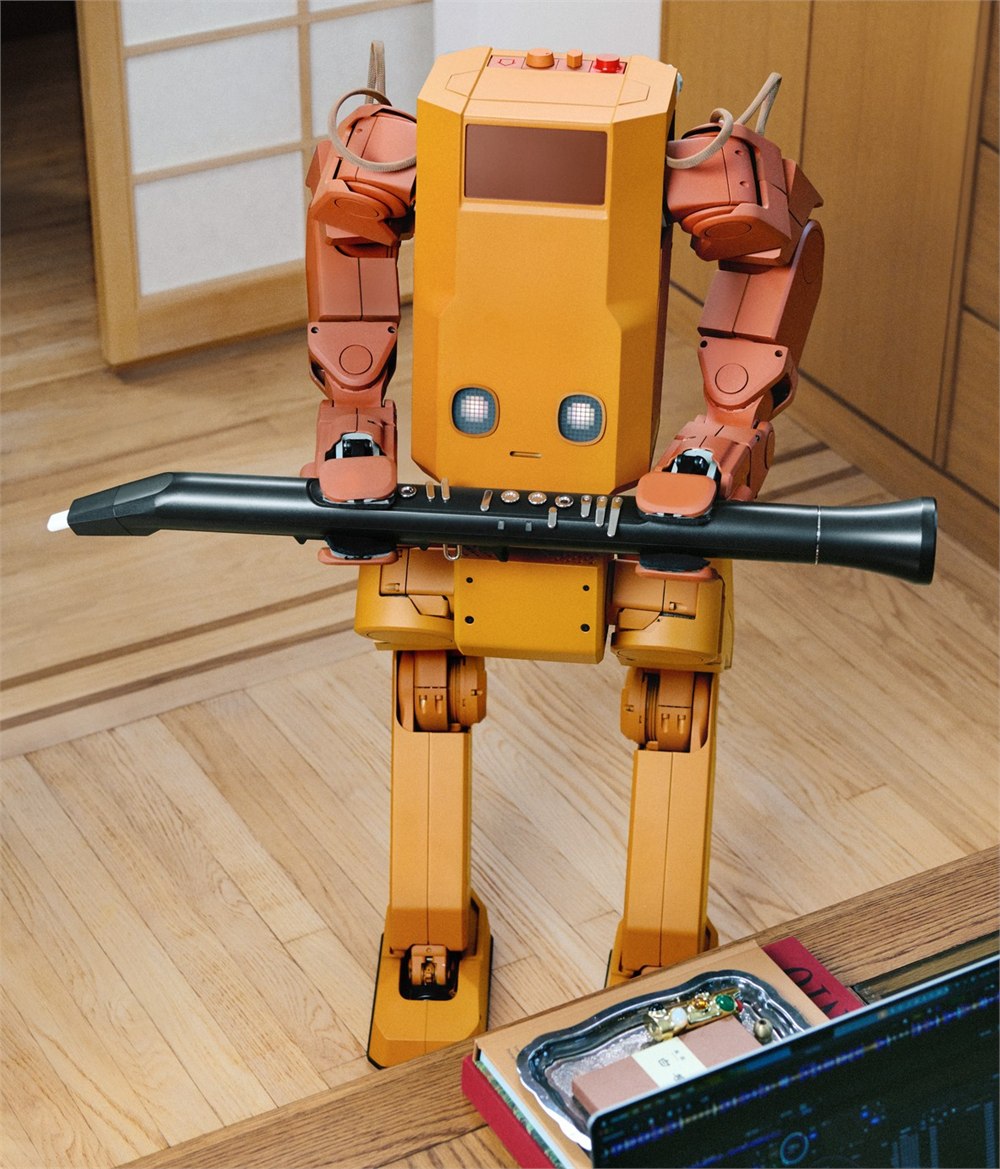
One photograph shows Voxel holding a clarinet. It is a memorable image, but holding an instrument is not evidence that it can play one. Please do not sack the school band director on this basis. The same distinction applies throughout: a compelling concept presentation is an invitation to follow development, rather than a substitute for finished-product demonstrations.
The reservation is a place in line
Tuesday Labs currently expects deliveries to begin in 2028, with timing dependent on production and location. Availability is listed for the United States only. That puts Voxel firmly in the patient-enthusiast category. If your immediate problem is a laundry pile threatening to gain voting rights, you still need a plan for this weekend.
The reservation program is for an opportunity to purchase from the first production run. The company says buyers will be contacted to confirm their orders when the robot is ready. Series-1 units are intended to carry individual numbers assigned according to reservation order, with a numbered edition certificate for owners.
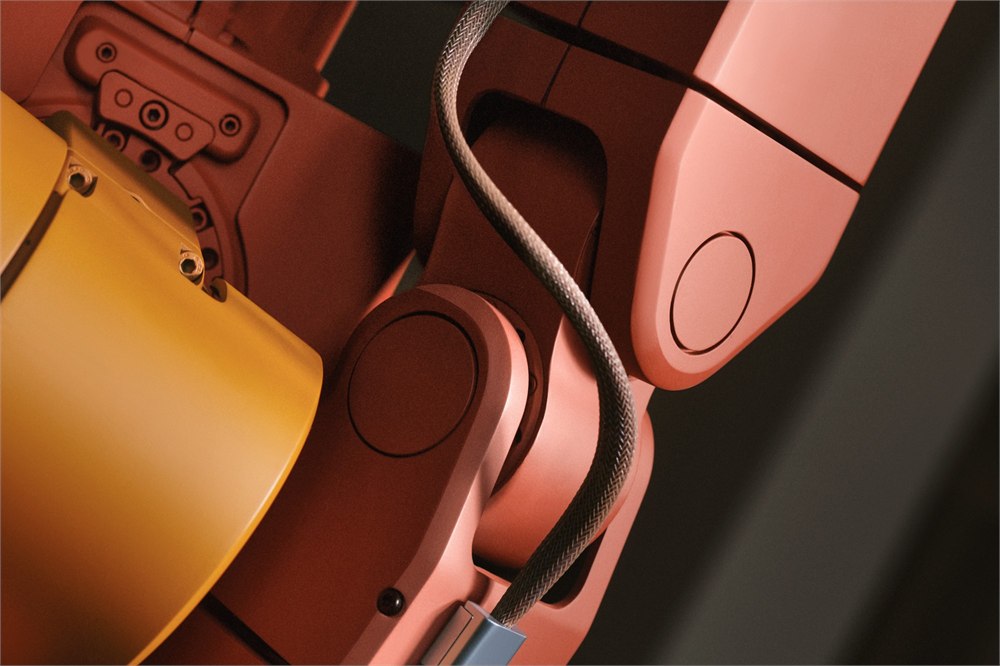
Photographs courtesy of Tuesday Labs.
Before treating it as a future household purchase, the useful questions are practical ones: which tasks will the delivered version perform, what supervision will it need, and how well will it fit your actual home? The final feature list matters more than an appealing demonstration. A home full of narrow passages, assorted furniture, and everyone’s abandoned shoes is a demanding workplace.
- Product: Voxel Series-1, a characterful bipedal home robot from Tuesday Labs.
- Purpose: planned help with tidying, finding and fetching belongings, and plant care.
- Distinctive design: yellow box-shaped front, expressive illuminated eyes, articulated arms, and Z-shaped legs.
- Current status: concept in development, with specifications expected to change.
- Availability: U.S. reservations, with deliveries currently expected to begin in 2028.
The reservation payment is $200 and fully refundable, applied toward an estimated final price of $20,000. Tuesday Labs says final pricing will be confirmed before an order is placed and that further charges require explicit confirmation. That is a substantial distinction: the reservation amount buys a place in line, not the robot.
Voxel’s appeal is easy to understand. It offers a hopeful picture of a home where someone else notices the scattered belongings, and that someone has delightful mechanical knees. Until the finished version arrives, we remain in charge of the cardigan chair. It has had a very long and successful administration.
| Pros | Cons |
|---|---|
| Distinctive, approachable character design | Shown machine is still a concept |
| Targets familiar household chores | Delivered capabilities remain to be confirmed |
| Articulated arms and wrists are part of the design | Real-home performance still needs demonstration |
| Refundable reservation payment | Estimated final price is substantial |
| Numbered first production series | U.S.-only availability and a planned 2028 start |
Save this find.
Thank yourself later.
Your next great gift idea. Your someday space. Your collection of wonderfully weird things.
Save to PinterestPick a board. Keep the inspiration.
This Home Robot Is Being Designed To Tidy Rooms, Fetch Things, and Water Plants
Where to find This Home Robot Is Being Designed To Tidy Rooms, Fetch Things, and Water Plants
OddityMall may earn a commission from qualifying purchases at no extra cost to you.