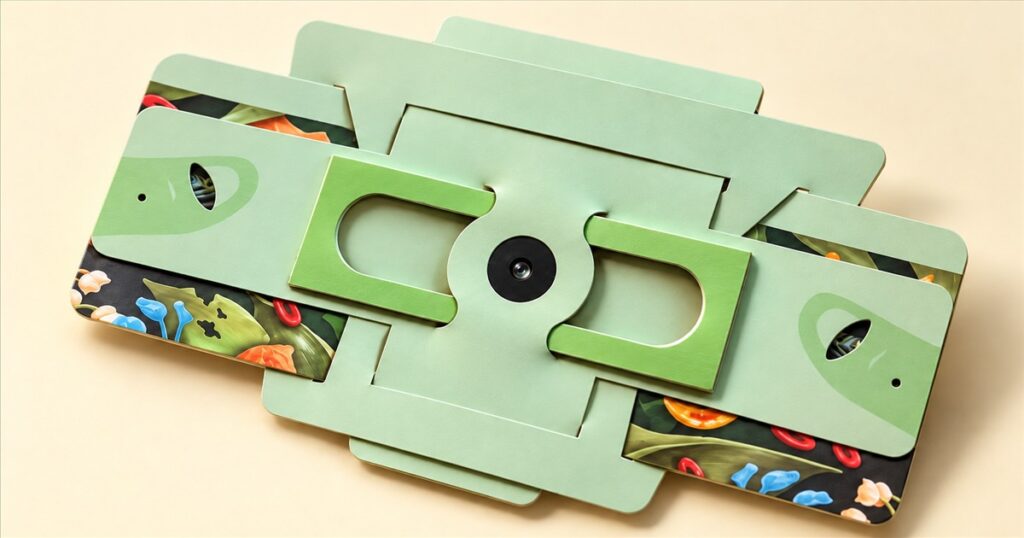
A walk around the block gets considerably more interesting when you can bring home a leaf and interrogate it. The Foldscope Explorer Kit puts a tiny, flat microscope in your pocket, giving ordinary specks the sort of close examination usually reserved for suspicious charges on a restaurant bill.
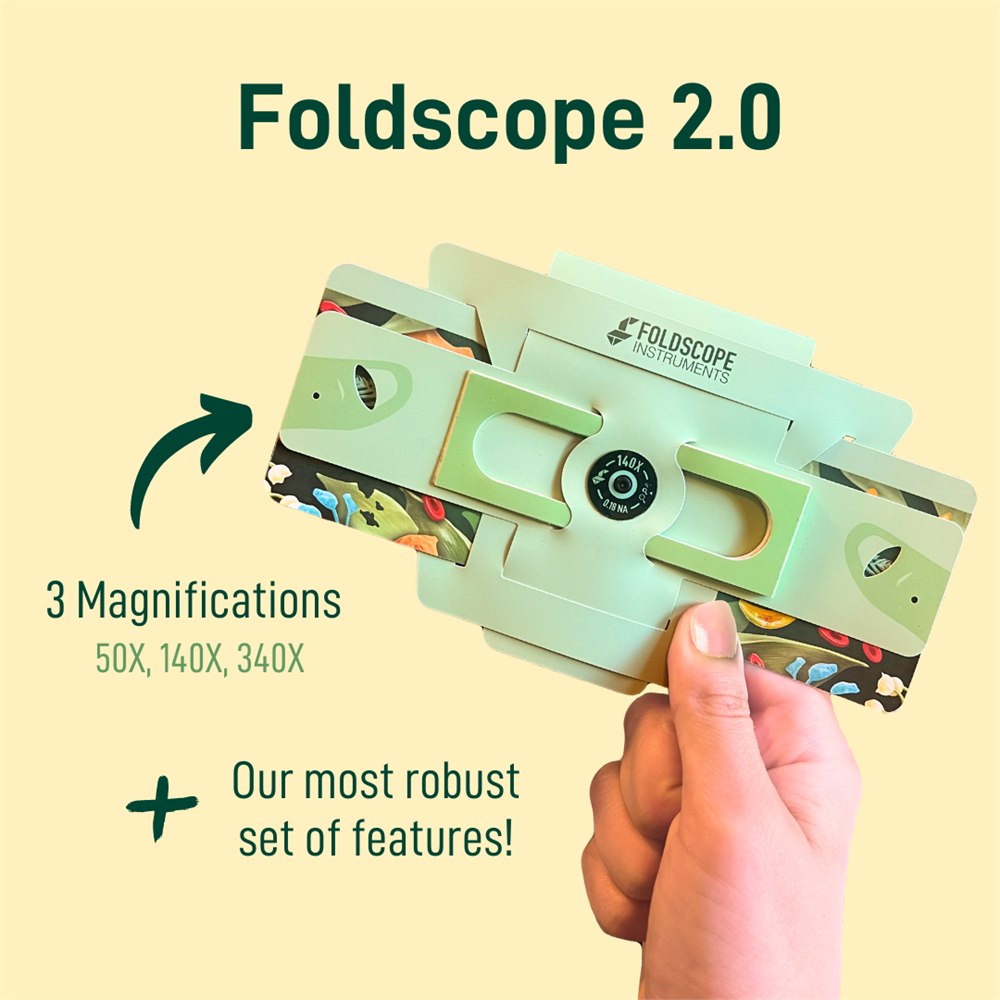
Inside the kit is an assembled Foldscope 2.0, three interchangeable lenses, a light module, and tools for preparing samples. The whole collection travels in a decorated metal box. It is a portable invitation to stop saying “probably dirt” and actually find out what you are looking at.
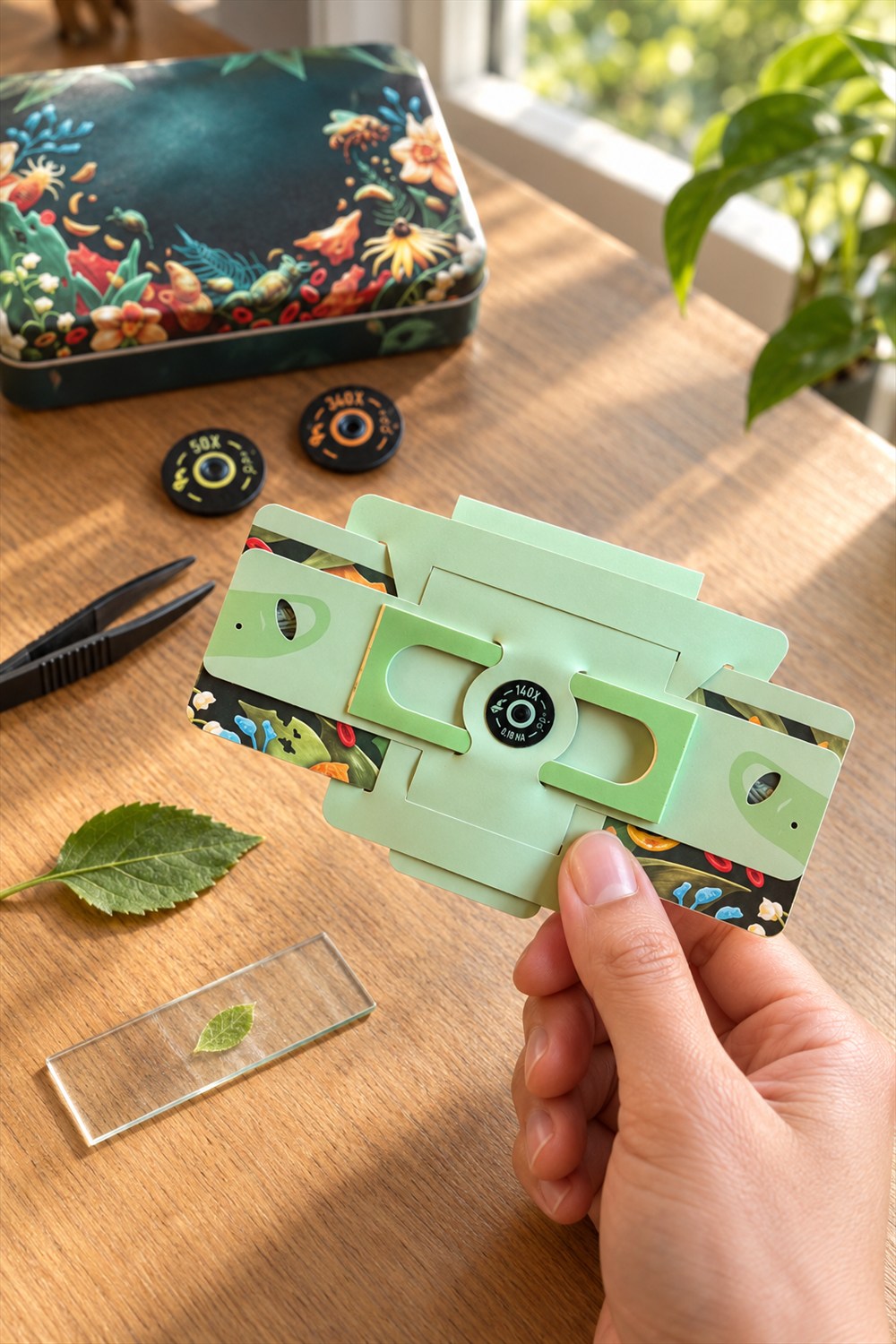
The microscope itself is the particularly odd part. Forget the upright instrument with a heavy base that occupied a corner of the school science room. This one looks more like a very ambitious folded card, complete with a small circular lens at its center and sliding parts you work with your fingers.
A paper microscope with a proper set of tools
Foldscope calls the material used for its folded components synthetic paper, describing it as waterproof and tear-resistant. That does not make the entire kit a submarine, but it does explain why this isn’t simply a delicate craft project waiting to lose an argument with a backpack.
The metal part is the storage box. The distinction matters: you are buying a compact folded microscope with a metal carrying tin, rather than a miniature metal laboratory instrument. Its appeal comes from how little structure it needs to put a real lens between your eye and a specimen.
The Explorer Kit also arrives with the microscope already assembled. For anyone whose enthusiasm for science fades somewhere around instruction diagram seventeen, that is a welcome head start. There is still plenty to learn; folding the instrument from scratch just doesn’t have to be the opening event.
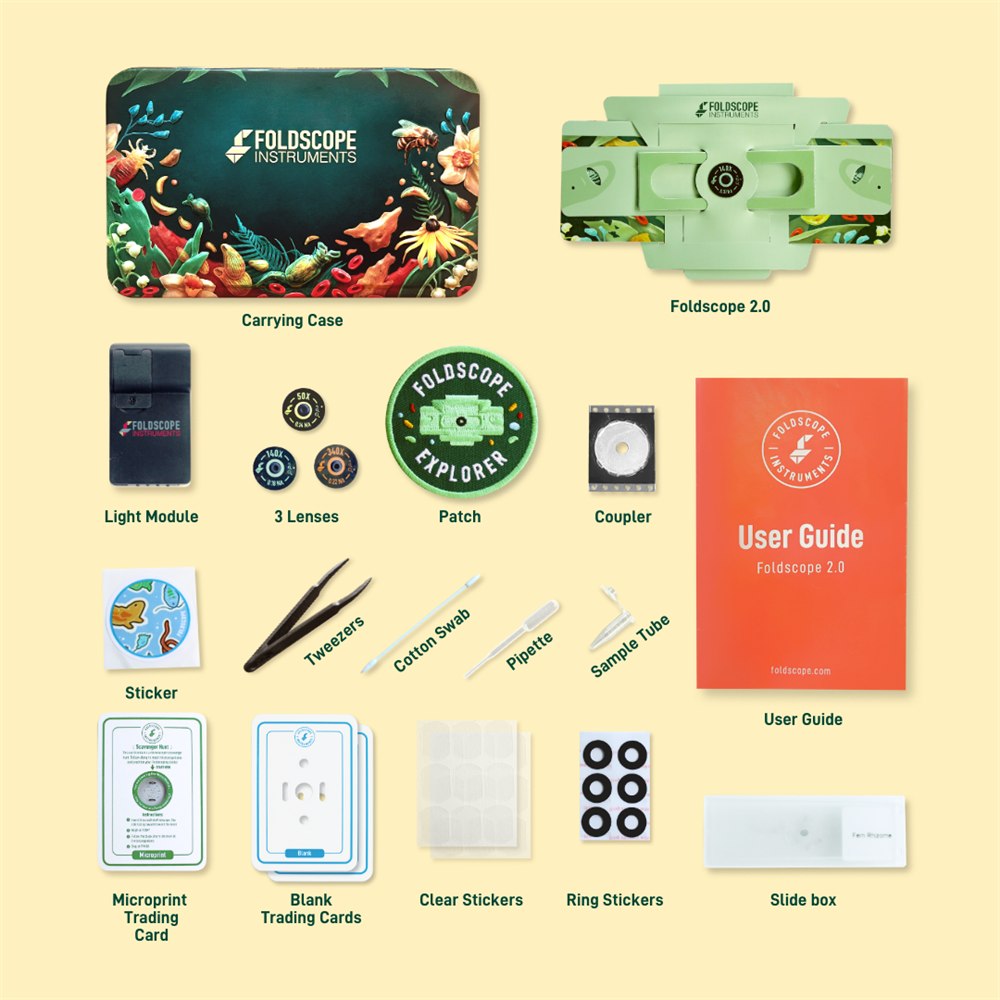
The accessories give that enthusiasm somewhere to go. A pipette handles small liquid samples, tweezers help with little bits that fingers tend to squash, and a sample tube provides a place to put a discovery. There are slides, stickers, sample cards, and a user guide, too.
It feels like the difference between receiving a sketchbook and receiving a sketchbook with pencils. The main object is interesting either way, but the supporting pieces make it much easier to sit down and begin. Your kitchen table can audition for the role of science bench without committing to a permanent career change.
Three lenses, three reasons to look again
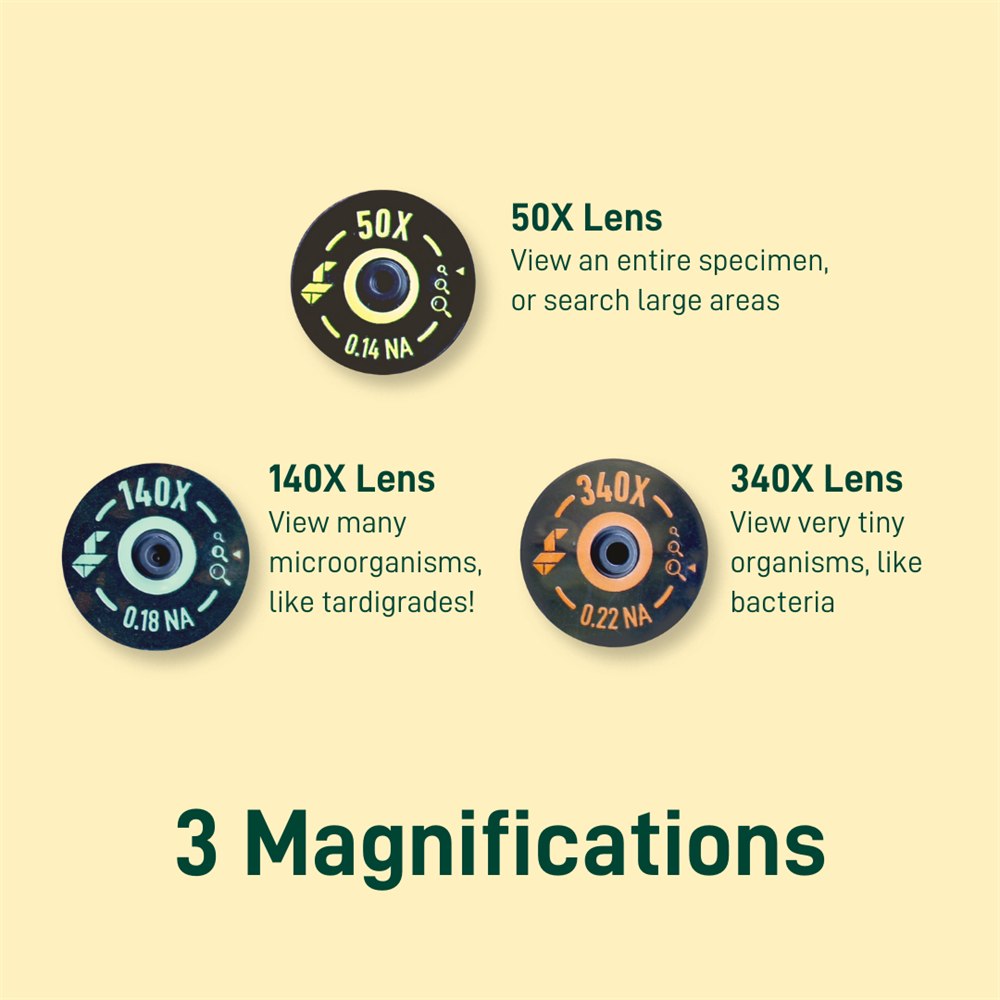
The included lens options are 50x, 140x, and 340x. They are separate interchangeable lenses, rather than a zoom dial you twist through every value in between. Foldscope’s modular arrangement lets you change the lens without having to reposition the sample itself.
Starting with the lower magnification makes practical sense when you are trying to find something interesting. Once you have a particular area in view, a stronger lens offers a different look. Immediately choosing the biggest number is tempting, of course. Humans will press the elevator button twice, just in case the first press lacked ambition.
Magnification is only part of the experience. Light, sample thickness, positioning, and focus all affect what you can see. A giant blurry blob is still a blurry blob, however impressively you describe it to the rest of the household.
- Swap lenses: choose the included 50x, 140x, or 340x lens for a different magnification.
- Move around the sample: use the microscope’s panning controls to explore beyond the first little patch.
- Adjust focus: move the focus ramp gently until the specimen becomes clearer.
- Choose a viewing method: look with your eye, connect a phone camera, or explore the projection method.
- Prepare something new: use the supplied tools and sample materials to turn curiosity into an actual slide.
This is hands-on microscopy. It rewards a bit of practice rather than promising that every random crumb will instantly become a museum-quality photograph. That involvement is a large part of the charm: you get to do the finding, adjusting, and occasional triumphant pointing.
Small instrument, useful choices
The kit brings together viewing, lighting, and sample-preparation pieces in one place. Here is how the main components fit into an afternoon of looking much too closely at ordinary things.
| Component | What it contributes |
|---|---|
| Assembled Foldscope 2.0 | A flat, portable microscope with manual focus and panning |
| Three lenses | 50x, 140x, and 340x magnification options |
| LED light module | Lighting options for transmitted and reflected light |
| Phone coupler | A way to align a smartphone camera for viewing and recording |
| Slides, cards, and tools | Materials for preparing and handling samples |
| Metal storage box | One place to keep the microscope and accessories together |
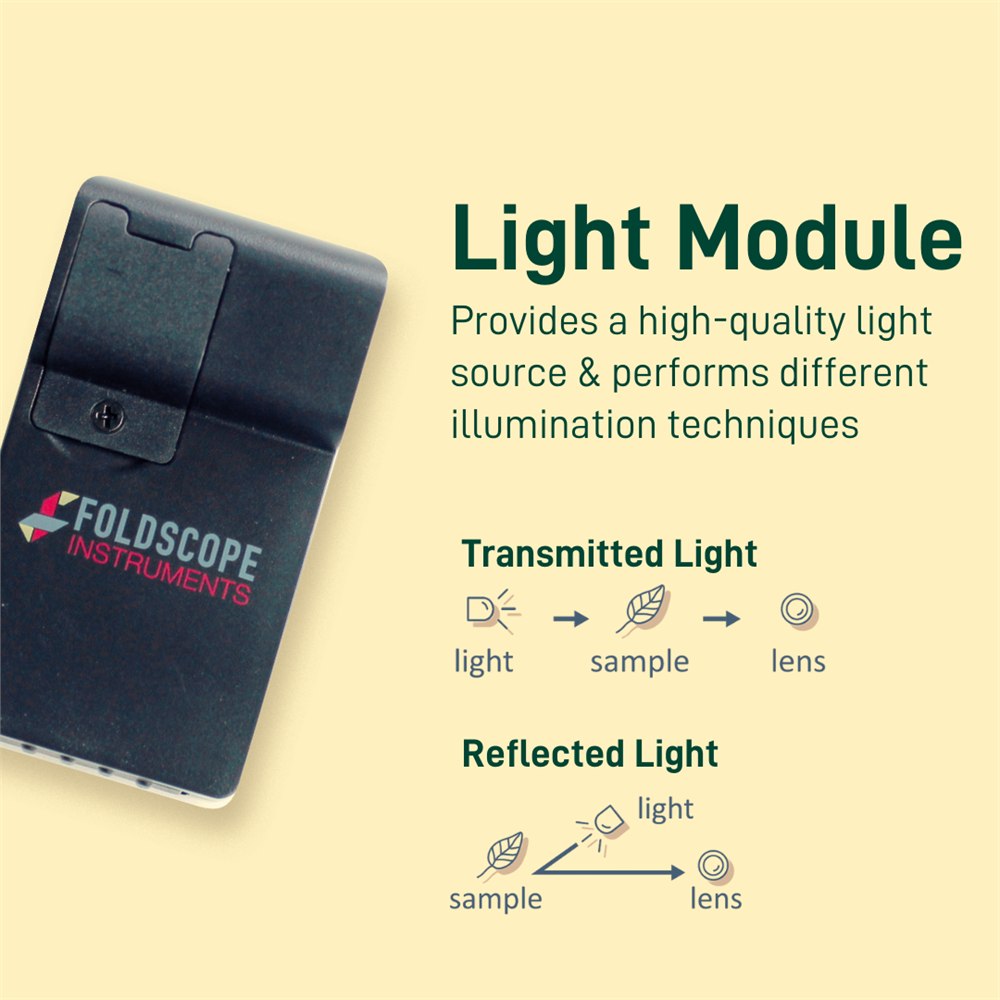
The LED module is more than a tiny flashlight thrown into the box for company. Foldscope describes using it for both transmitted light and reflected light. In plain terms, that gives you different ways to illuminate a specimen instead of relying on whatever the ceiling fixture happens to provide.
It is still worth following the user guide when setting things up. The right light placement can matter as much as the lens you choose. Direct eye viewing also means paying attention to where you aim the instrument; Foldscope specifically warns against looking toward the sun.
Your phone can join the investigation
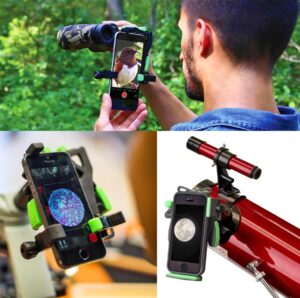
You can use the microscope directly with your eye, so owning a smartphone isn’t the entrance fee to the tiny world. The included phone coupler adds another option: align your camera with the lens and use the phone to capture photos or video.
That makes sharing a discovery considerably easier than handing someone a leaf and insisting that it is fascinating. You can show the view, keep a record, or compare images from different samples. Expect to spend a little time getting the lens and camera lined up; this remains a physical optical setup.
There is no built-in display on the Foldscope. The phone supplies that screen when you choose phone viewing, while eye viewing keeps things pleasingly direct. Foldscope also supports a projection method for another way of showing a sample, with setup guidance in its instructions.
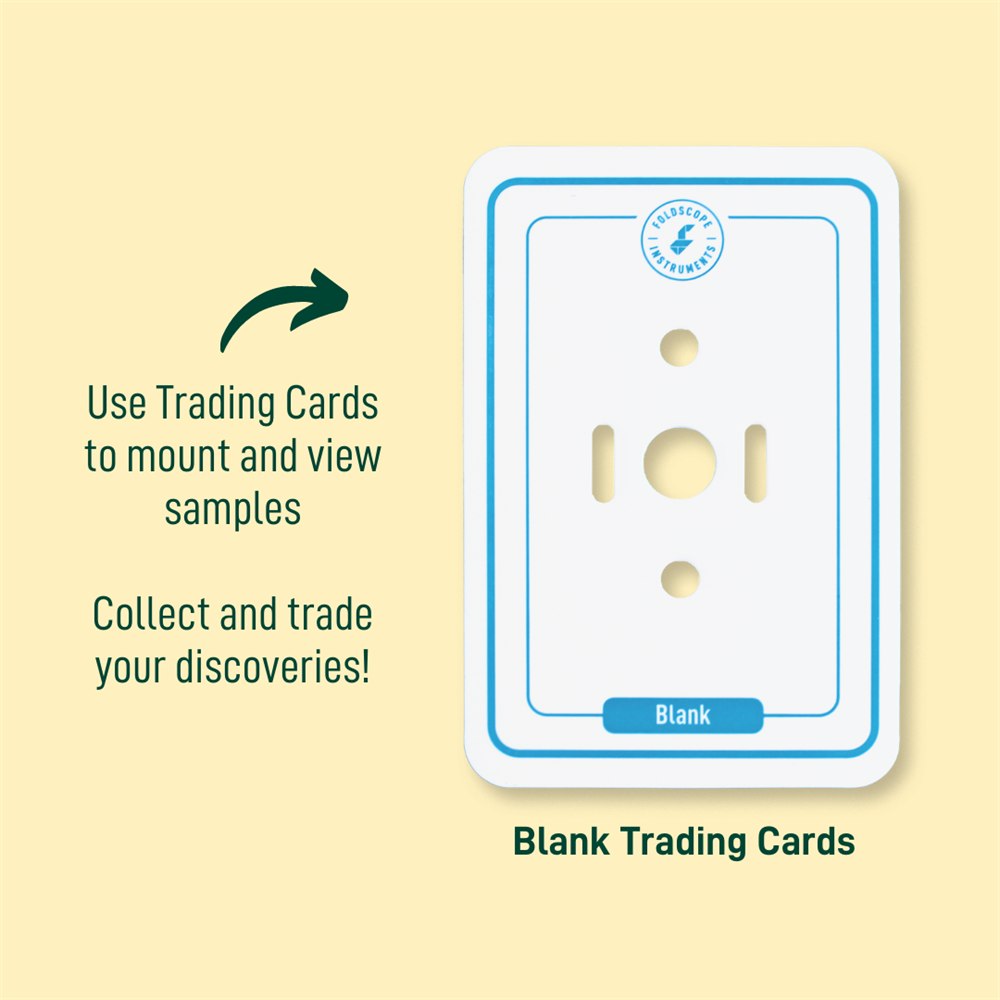
The blank trading cards are a nice touch for people who like giving a hobby a filing system. They provide another way to mount samples, while the included microprint card offers a ready-made subject to explore. Before attempting anything elaborate, having something intended for practice is rather reassuring.
A child and an adult could work through the kit together, taking turns preparing, focusing, and describing what appears. Teachers and curious grown-ups are equally obvious candidates. Nothing about discovering detail in a tiny specimen requires pretending you bought the thing exclusively for educational reasons.
A little lab that packs away
The decorated metal case gives all those small parts a home. That matters with a kit like this: a lens, a coupler, and a pair of tweezers are less fun when distributed across three drawers and the mysterious gap behind a desk.
It also makes the Explorer Kit feel like something you can take out for a particular activity and then put away. You don’t need to surrender a shelf to a permanent microscope station. Clear a patch of table, open the box, and become temporarily unavailable because a specimen has become unexpectedly compelling.
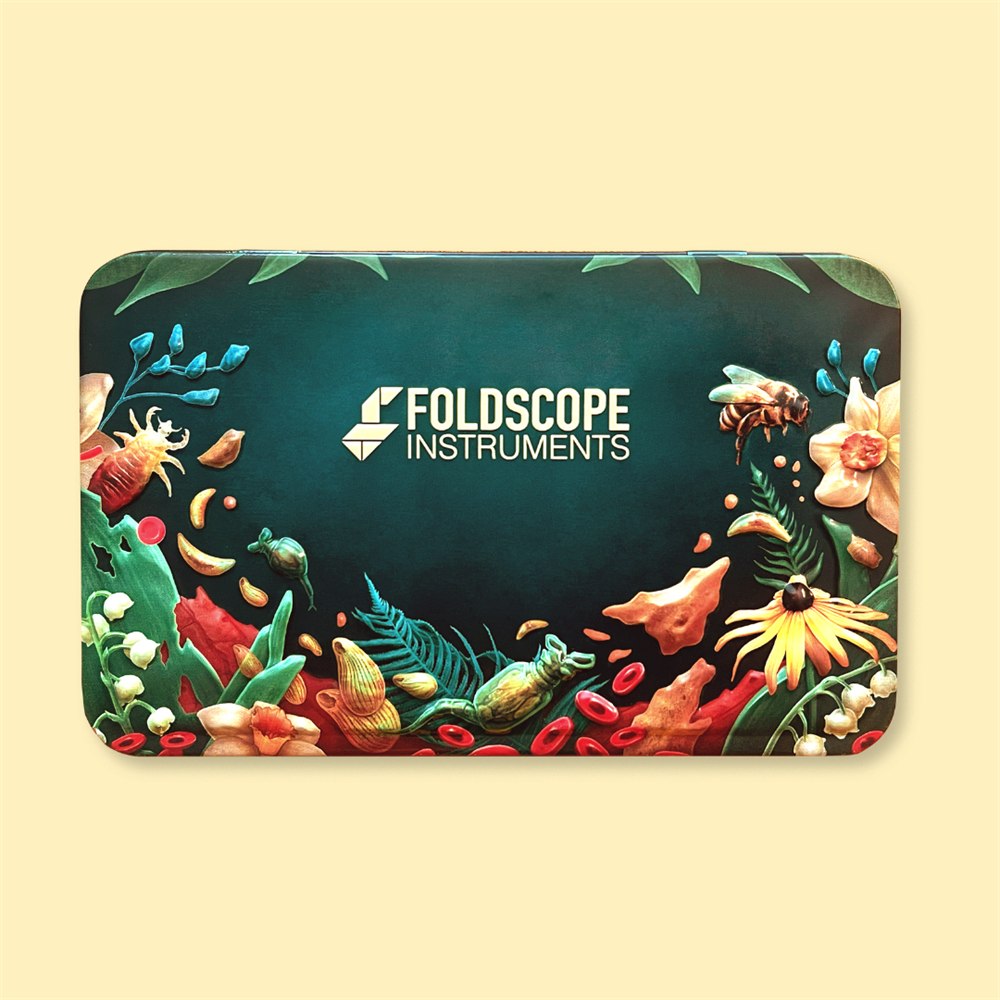
Product images courtesy of Foldscope Instruments.
- Product: Foldscope Explorer Kit with one pre-assembled Foldscope 2.0.
- Magnification: three included lenses rated at 50x, 140x, and 340x.
- Viewing: direct eye viewing, smartphone-camera viewing, and projection options.
- Accessories: LED module, phone coupler, slides, sample cards, and preparation tools.
- Storage: a decorated metal box for the kit.
- Best suited to: curious beginners, hands-on science activities, and portable exploration.
The Foldscope Explorer Kit is listed on Amazon for $49.00, sold by Foldscope Instruments and shipped by Amazon at the time of writing. Check the current listing for delivery details and price changes. It is a compact way to start looking at everyday material differently, with enough accessories to make the first session more than a quick peek.
Just leave a little room in the afternoon. “One more sample” is a perfectly respectable explanation for why you are still at the table holding a pipette.
| Pros | Cons and considerations |
|---|---|
| Flat microscope packs into a compact kit | Small accessories need careful storage |
| Three interchangeable magnifications included | Changing magnification means swapping lenses |
| Pre-assembled instrument and sample tools | Sample preparation and focusing take practice |
| Eye, phone, and projection viewing options | Phone-camera alignment requires setup |
| LED module and metal storage box included | No built-in screen or automatic focusing |
Save this find.
Thank yourself later.
Your next great gift idea. Your someday space. Your collection of wonderfully weird things.
Save to PinterestPick a board. Keep the inspiration.
This Pocket Microscope Kit Gives Everyday Specks a 340x Close-Up
Where to find This Pocket Microscope Kit Gives Everyday Specks a 340x Close-Up
OddityMall may earn a commission from qualifying purchases at no extra cost to you.