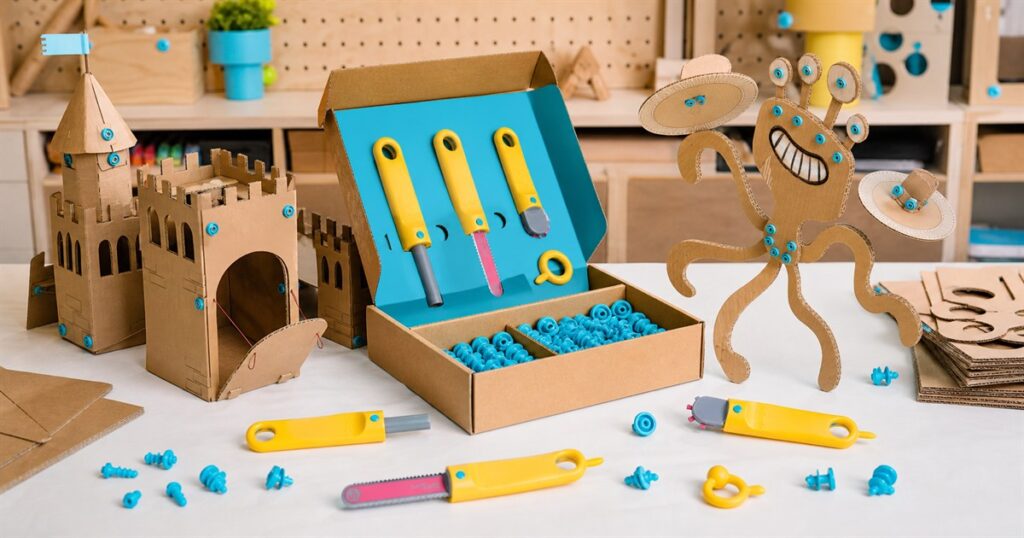
Cardboard boxes are the only household object that can arrive full of boring adult responsibilities and then immediately become a pirate ship, a vending machine, a medieval fortress, or a place for a child to hide from the tyranny of bath time. The problem is that most of us hand over a box with regular scissors, tape, and the confidence of someone who has forgotten how fast tape becomes a sticky ball of despair.
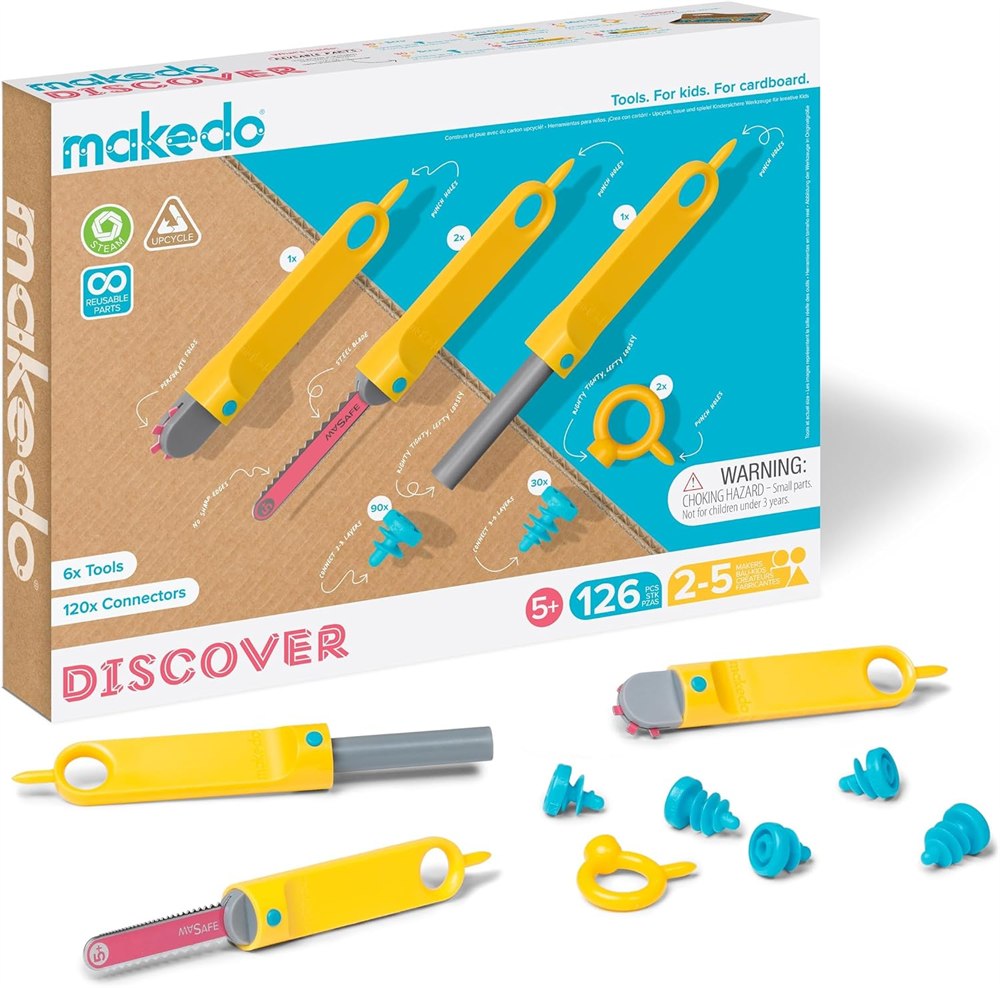
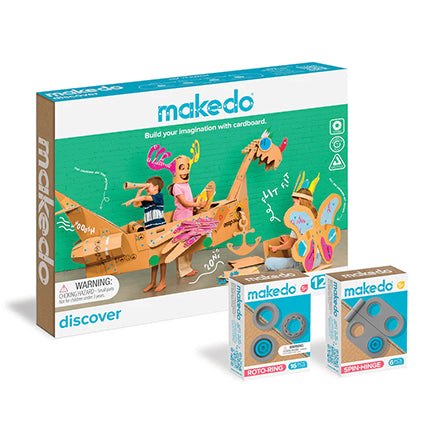
The Makedo Discover 126-Piece Cardboard Construction Toolbox is a reusable building kit that turns ordinary corrugated cardboard into a proper construction material. Instead of duct-taping a lopsided castle until it looks like a recycling bin having a breakdown, kids and grown-ups get purpose-built tools for cutting, folding, punching, and fastening cardboard together with reusable plastic Scru connectors.
The kit is designed for one to five makers, which is a polite way of saying it can handle a solo cardboard architect, a family table covered in shipping boxes, or the sort of group project where everyone has strong opinions about drawbridge placement. Makedo positions the Discover kit as a family-size cardboard construction set for kids, classrooms, and open-ended STEM/STEAM play, but the appeal is much simpler: it gives a cardboard box the structural dignity it has always believed it deserved.
A Toolbox For The Box Kingdom
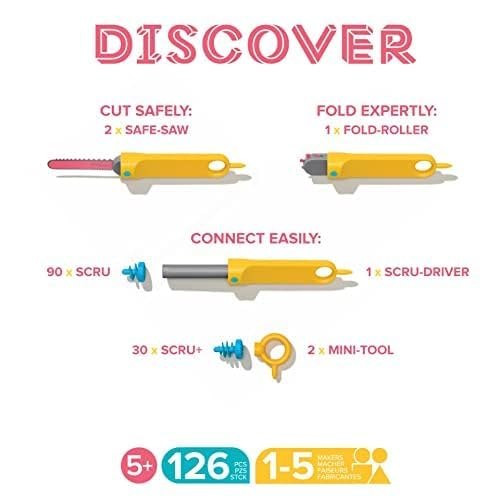
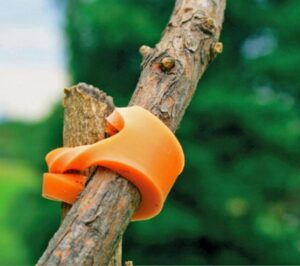
At the center of the system are Makedo’s child-safe cardboard tools and reusable fasteners. The Safe-Saw is made to cut through cardboard with rounded teeth that are designed for small hands. The Fold-Roller perforates neat fold lines, which means builders can bend cardboard into cleaner shapes instead of crushing corners with the emotional precision of a folding chair in a thunderstorm. The Scru-Driver and Mini-Tool work with Makedo Scrus to connect layers of cardboard, then take them apart again when the castle becomes a robot, the robot becomes a grocery store, and the grocery store becomes evidence in the living room.
That reusable part is the trick. Tape and glue are fine until a project needs to change, collapse, upgrade, or return to being a dinner table. Makedo’s connectors are meant to be removed and reused, so cardboard can be rebuilt instead of permanently laminated into a tribute to poor planning. It is construction play with an undo button, which is also what many home renovation shows desperately need.

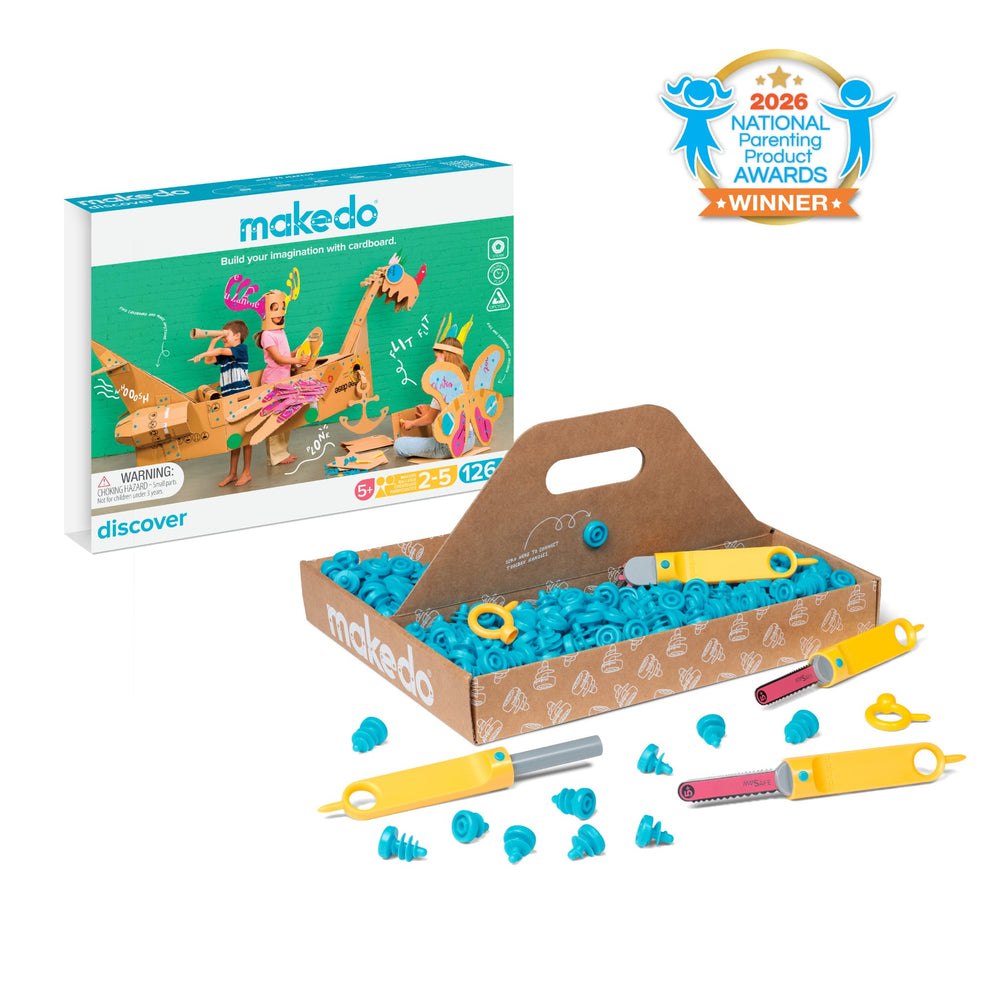
The official Makedo page says the Discover kit includes the core tool family plus a storage tray. The set is pitched for two to five makers or a family group, while Makedo’s broader guidance says children aged 4 and up can make with adult help and children aged 7 and up can generally build more independently. The Amazon listing describes it as a 126-piece toolbox for one to five makers and frames it for at-home play, classroom learning, and reusable cardboard building.
- Turns everyday cardboard into a reusable construction material for forts, costumes, creatures, vehicles, play shops, and suspiciously ambitious living-room architecture.
- Uses Scru and Scru+ connectors instead of single-use tape, so finished builds can be taken apart and rebuilt.
- Includes kid-focused tools for cutting, folding, connecting, and removing cardboard parts.
- Works for solo builders, siblings, families, playdates, classrooms, and adults who pretend they are only supervising.
- Encourages screen-free making without requiring proprietary cardboard, batteries, apps, or a subscription to Box Premium Plus.
What Comes In The Discover Kit
Makedo sells several kit sizes, and the Discover version sits in the useful family middle. It is larger than the smaller Explore kit, but not as classroom-sized as the Create or Invent kits. For most homes, that is probably the sweet spot: enough pieces for multiple people to build together, without accidentally becoming the local cardboard infrastructure department.
| Component | What It Does | Why It Matters |
|---|---|---|
| Safe-Saw | Cuts through cardboard with rounded teeth | Lets kids shape panels without normal sharp saw drama |
| Fold-Roller | Perforates fold lines and traces cutting paths | Makes cardboard bends cleaner and more intentional |
| Scru-Driver | Drives and removes Makedo Scru connectors | Turns cardboard assembly into a repeatable building system |
| Mini-Tool | Smaller driver for extra makers | Helps more than one builder participate at once |
| Scru and Scru+ | Reusable connectors for joining cardboard layers | Holds builds together, then releases when it is time to rebuild |
| Storage tray | Keeps the tools and connectors organized | Prevents the blue Scrus from becoming floor confetti |
The whole premise works because cardboard is everywhere. Makedo notes that it does not sell the cardboard itself; the idea is to find it locally from home recycling, groceries, hardware stores, loading bays, picture framers, bike and appliance shops, second-hand box suppliers, recycling plants, or cardboard manufacturers. In other words, the raw material is probably already in your garage, quietly waiting to become a lunar rover.
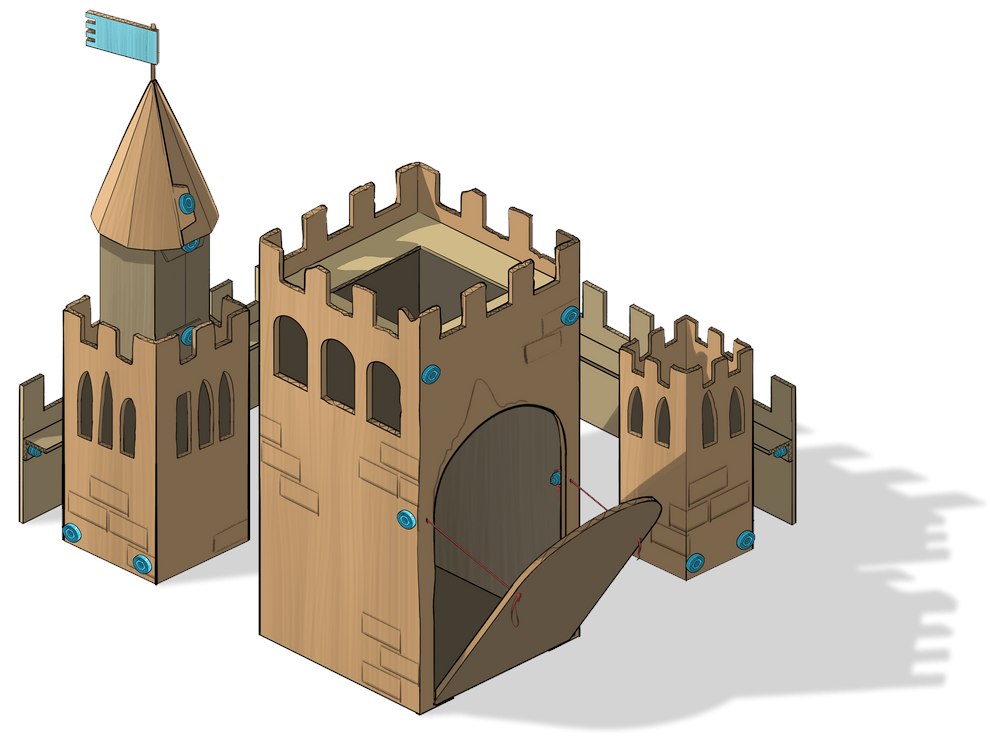
That gives the kit a nice bit of practical weirdness. It is a toy that gets better when you have more packaging waste. The same delivery box that once carried laundry detergent can come back as a castle wall, a claw machine, a stage, a puppet, or a tiny cardboard bureaucracy with its own ticket window. It makes the recycling pile feel less like evidence of online shopping and more like a raw materials depot.
Why It Is More Than A Craft Kit
The Discover kit is easy to misunderstand as just another craft box. But there is no preplanned animal to assemble, no one correct result, and no requirement that the finished object look like the picture on the packaging. The kit supplies tools and connectors, then gets out of the way. That is why it feels closer to a miniature workshop than a rainy-day activity someone panic-bought at 8 p.m.
Open-ended play is also where the funny part lives. A child can decide that the family needs a cardboard bakery, a space helmet, a hotel for stuffed animals, or a fortress specifically engineered to prevent younger siblings from entering. The adult can say encouraging things while quietly admiring the hinge system. Everyone gets to participate in the extremely serious business of making trash architecturally relevant.

The educational angle is real without needing to sound like a brochure fell into a lesson plan. Cutting, folding, fastening, testing, failing, and rebuilding are all design skills. Kids work through spatial reasoning, collaboration, problem-solving, and iterative thinking, except they experience it as “the front wall keeps falling off the cardboard submarine.” That is a much better teacher than a worksheet, mostly because the submarine has opinions.
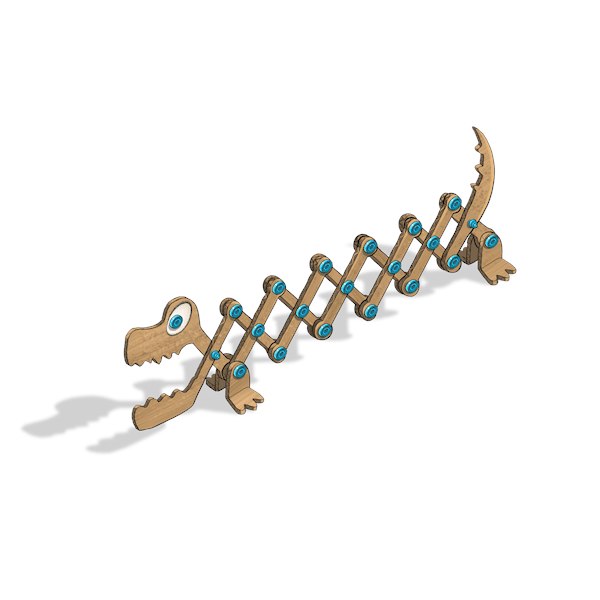
It is also a useful kit for families who like toys with a long tail. Many toys are amazing for six minutes and then enter the toy bin as a permanent resident. Makedo changes with whatever cardboard is available and whatever story the builder wants to act out next. One weekend it can be a costume shop; the next it can be a pet robot; after that, it can become a sprawling cardboard city that forces everyone to step sideways through the hallway.
The tradeoff is that the kit does need cardboard and space. It is not a tidy little desk toy. It wants boxes, offcuts, floor area, and some tolerance for temporary domestic chaos. The finished builds may be recyclable, reusable, or rebuildable, but during the making stage your home may briefly look like a shipping department discovered theater.
Best Uses Around The House Or Classroom
At home, the Discover kit fits rainy weekends, birthday gifts, homeschool projects, playdate engineering, and the sacred post-delivery ritual of asking whether anyone can use this box before it gets flattened. In classrooms and makerspaces, it can support collaborative building challenges without requiring expensive materials. The tools are reusable, and cardboard is cheap or free enough that big ideas do not feel financially dangerous.
It is especially good for kids who like building large. Blocks and magnetic tiles are great, but cardboard lets a child make something wearable, room-sized, crawl-through, or absurdly specific. A cardboard vending machine that dispenses paper snacks is not practical, but neither is childhood, and that is kind of the point.
The kit is also friendly to mixed ages. Younger kids can help decorate, choose shapes, or fasten simpler pieces with supervision, while older kids can plan structures, cut panels, make moving features, and redesign failures. Adults can join without taking over, though certain adults may need to be reminded that the cardboard castle does not require a permit set.
For the practical money part, Amazon recently showed the Makedo Discover 126-piece kit at $55.00, while Makedo’s own store currently lists the Discover Kit at $70.00 AUD. Amazon availability and price can move around, so the product link is the best place to confirm the current offer before drafting your cardboard empire’s capital budget.
- Product: Makedo Discover 126-Piece Cardboard Construction Toolbox
- Maker: Makedo
- Use: reusable tools and connectors for building with upcycled cardboard
- Group size: designed for one to five makers; Makedo describes Discover as a family-size kit
- Included tool types: Safe-Saw, Fold-Roller, Scru-Driver, Mini-Tool, Scru, Scru+, and storage tray
- Suggested age guidance: Makedo says ages 4+ with adult help and 7+ for more independent making
- Current noted pricing: Amazon queue price $55.00; Makedo direct-store price $70.00 AUD
- Best for: creative kids, families, classrooms, makerspaces, cardboard hoarders with a vision
The Makedo Discover kit is available through Amazon and directly from Makedo. It is not the cardboard itself, which is important because some child somewhere is already pointing at a refrigerator box and explaining that it has always wanted to be a lunar research station.
| Pros | Cons |
|---|---|
| Reusable connectors make cardboard projects easier to rebuild | You need to supply your own cardboard |
| Encourages open-ended, screen-free construction play | Large builds can take over a room quickly |
| Works for families, playdates, classrooms, and makerspaces | Younger makers still need supervision |
| Purpose-built tools are more cardboard-friendly than random household tools | Finished projects depend heavily on the builder’s patience and available boxes |
| Supports collaborative problem-solving without a fixed final model | Small blue connectors need to be stored carefully |
| Turns recycled packaging into something genuinely fun | Not ideal for households that hate craft messes |
| Can scale from small creatures to forts, costumes, and room-sized play builds | Price may vary between Amazon and Makedo’s own store |
Where to find This Cardboard Construction Toolbox Turns Boxes Into Reusable Build Projects
OddityMall may earn a commission from qualifying purchases at no extra cost to you.