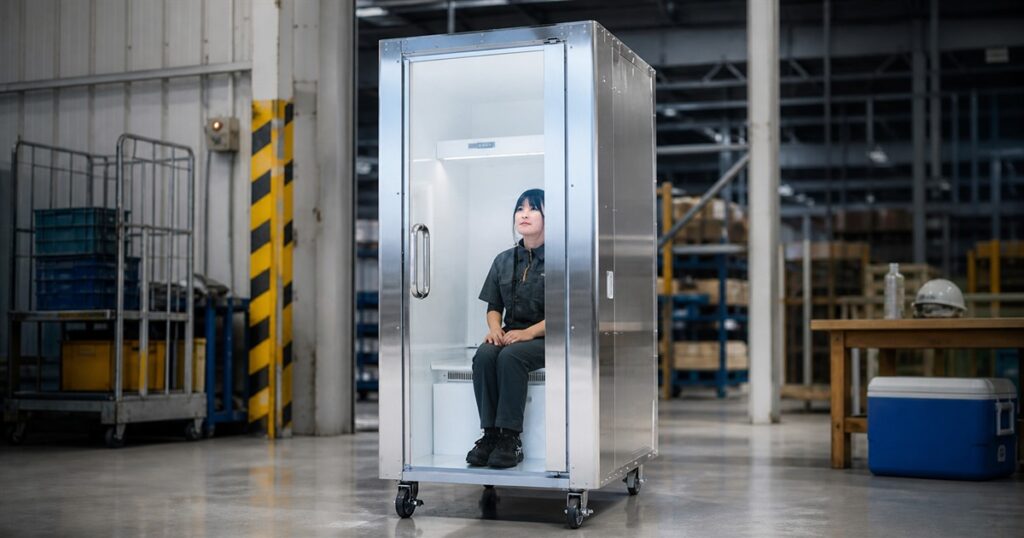
Every summer eventually invents a new kind of panic, and Japan has apparently reached the part of the calendar where the reasonable answer is to roll a personal refrigerator onto the worksite and let a whole adult climb inside for a dignity-restoring cooldown.
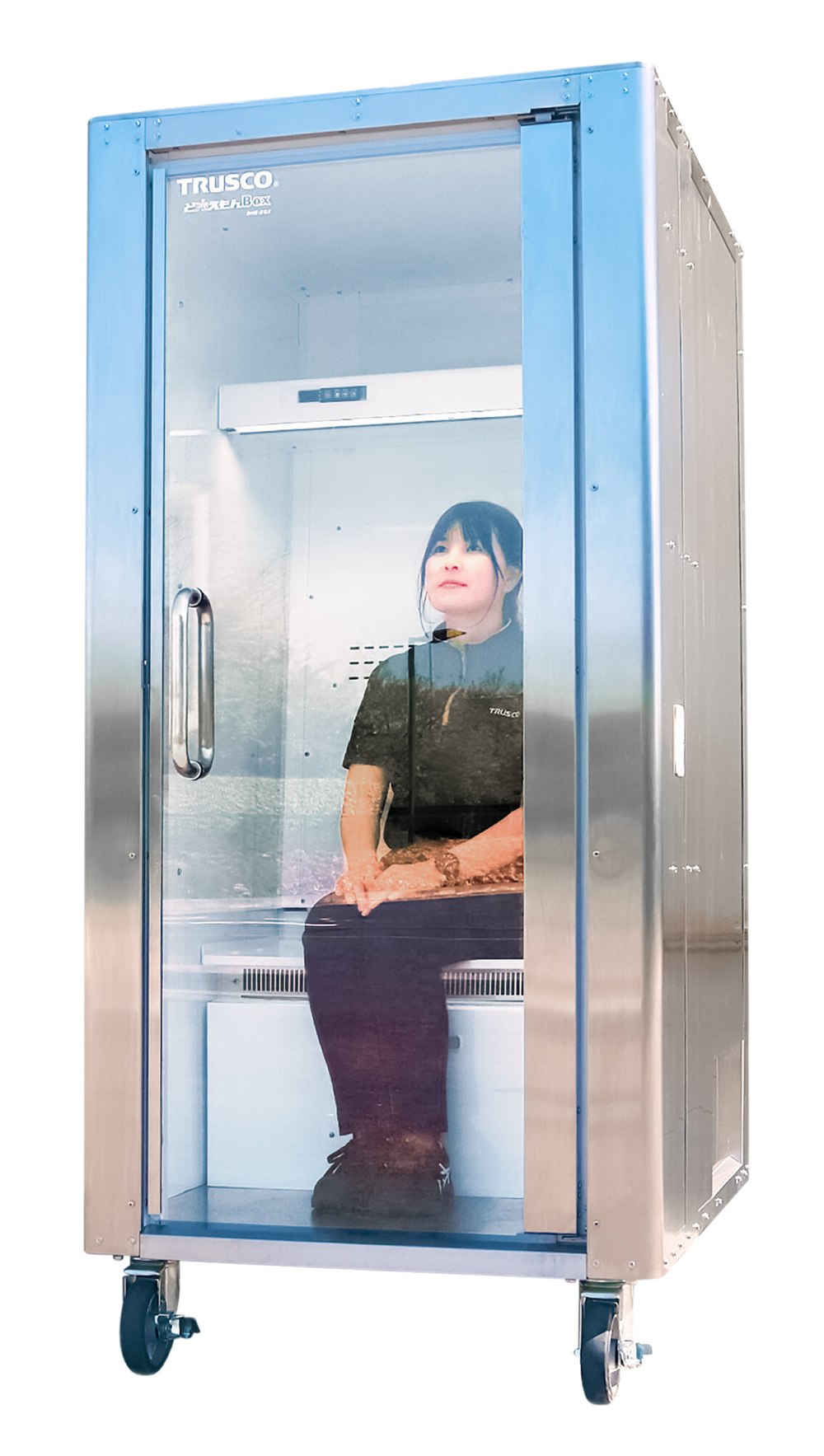
That is the basic idea behind the TRUSCO Do Hiemon Box, a one-person personal cooling booth from TRUSCO Nakayama and SDRS that looks like a stainless steel vending machine decided to go into employee wellness. TRUSCO’s own page calls it a personal cooling box, and the concept is wonderfully direct: sit inside the glass-front booth, close the door, and let cold air hit your body instead of trying to survive on a tiny neck fan and raw stubbornness.
The product has been nicknamed a human refrigerator for obvious reasons, although it is not pretending to be a home appliance for storing your cousin until Labor Day. It is an industrial heat-break booth meant for factories, warehouses, construction sites, outdoor event areas, and other places where the phrase “just drink more water” starts sounding like management folklore.
A Cooldown Booth For When A Fan Is No Longer Negotiating
Most heat-relief gear works like a small apology. A misting fan helps one cheek. A cooling towel gives your neck a few minutes of optimism. The Do Hiemon Box goes for the full-body reset by surrounding one seated person with chilled air inside an insulated booth.

According to TRUSCO, the booth is designed to cool the body from head to toe, with cold air directed from the rear and upper area so it reaches around the head, neck, shoulders, back, and seated body. The company lists the cold air outlet temperature at about 5 degrees C, which is roughly chiller-compartment territory, while the inside case temperature is listed at about 15 degrees C. That is the kind of temperature drop that makes a hard hat start writing poetry.
Related posts:
 This Portable Wireless Fan Extends Into a Full Size Standing Fan
 People Are Making Barn Door Baby Gates, Window Shutters, and TV Covers, and They Look Amazing
 These Air Forts Are A Super Quick And Easy Activity For The Kids To Do While Stuck Inside
 We Found The Cutest and Most Unique Doggie Door Designs Ever
The booth is not a walk-in freezer and should not be treated like one. TRUSCO says the exact box temperature cannot be finely set, but the temperature and airflow can each be switched through three levels. There is also a 20-minute auto-stop function, which is a sensible little guardrail because nobody needs to become the world’s first refrigerated forklift operator.
- It is built for one seated user at a time.
- Cold air is routed toward the upper body and back rather than simply blasting the feet.
- The temperature and fan strength each have three settings.
- The door uses a magnetic closure and can be pushed open from inside.
- The transparent acrylic front lets people outside see whether the occupant is cooling down or just having a spiritual meeting with the air conditioner.
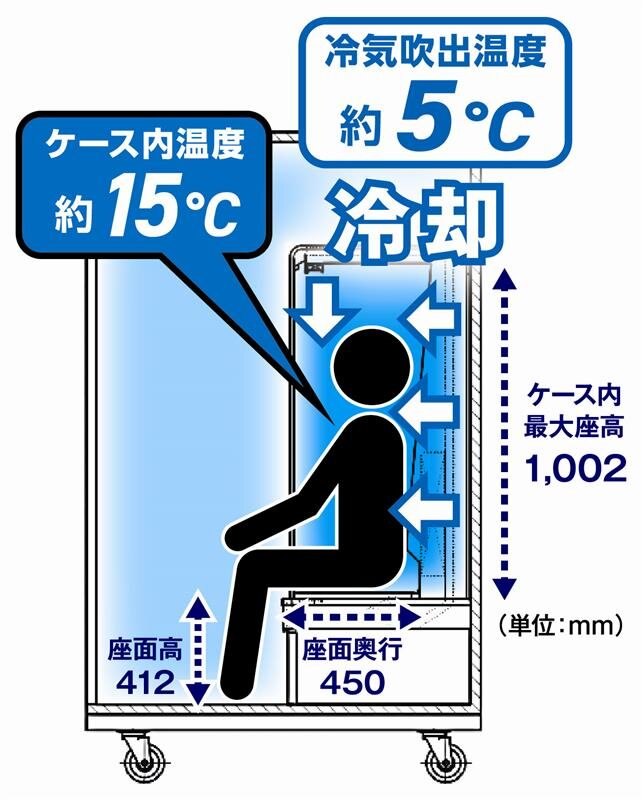
What TRUSCO Lists For The Do Hiemon Box
The spec sheet is where the joke becomes a very real, very heavy piece of workplace equipment. This is not a novelty cooler with a chair in it. The standard model is a tall stainless box on casters, and TRUSCO also lists an eyebolt version for sites where it may need to be moved by lifting equipment.
| Feature | TRUSCO Listed Detail |
|---|---|
| Power | Single-phase 100V |
| Power consumption | 0.51 kWh at 35 degrees C outside temperature |
| Recommended environment | About 20 degrees C to 35 degrees C |
| Standard outside size | 931 x 1202 x 2031 mm |
| Eyebolt model outside size | 971 x 1202 x 2138 mm |
| Inside size | 864 x 1113 x 1750 mm |
| Weight | 293 kg standard, 343 kg eyebolt version |
| Load capacity | 150 kg |
The exterior wall is listed as SUS430 stainless steel with a hairline-style finish, while the interior uses white painted steel and polystyrene insulation board. That sounds less like a novelty product and more like a tiny break-room bunker built by people who understand that summer heat does not care about your upbeat safety poster.
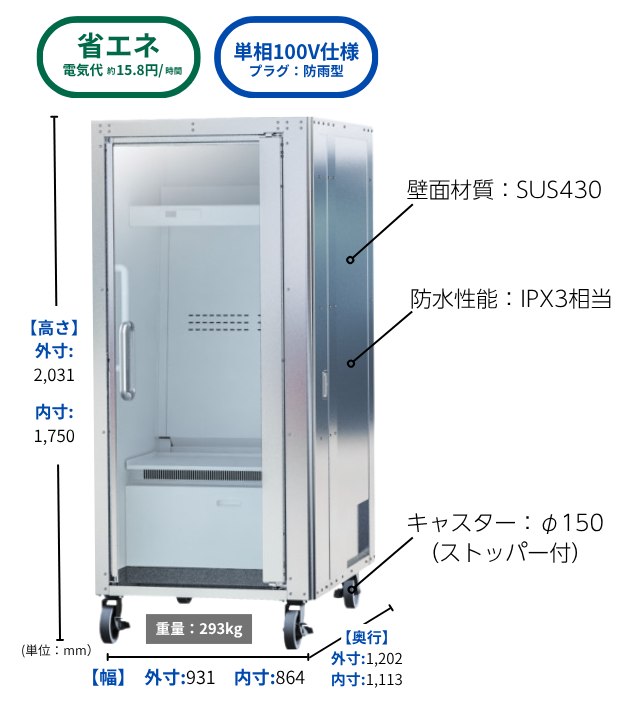
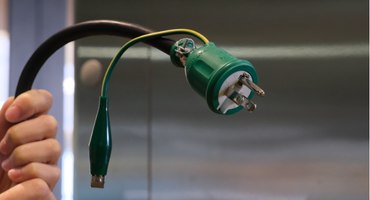
TRUSCO says the Do Hiemon Box does not require installation work and can be used indoors or outdoors. It runs from a single-phase 100V power supply, uses a 3-meter cord, and includes a weather-resistant plug style. The company also says it costs about 16 yen per hour to operate, with power-saving performance described as roughly half that of a typical spot air conditioner.
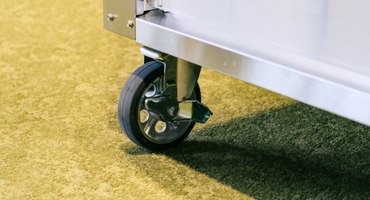
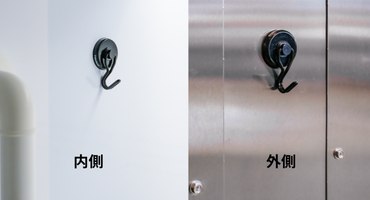
The mobility details are equally practical. The booth has casters with stoppers, so it can be rolled into position and locked down instead of permanently becoming part of the scenery. When it is not in use, it can be locked with the included padlock. The interior and exterior can also accept magnets, which is a small but very funny detail because you know someone is immediately going to put a laminated “Bob is defrosting” sign on it.
The Weirdly Serious Use Case
Part of what makes the Do Hiemon Box so OddityMall-perfect is that it looks absurd at first and then becomes more reasonable the longer you think about it. If workers are rotating through hot loading docks, outdoor event setups, factories, plant floors, or temporary summer worksites, a dedicated cooling booth is not just a gag. It is a way to create a controlled cooldown spot without building a full room, installing a permanent air-conditioning system, or asking everyone to cram into the office next to the printer.
There are limitations, of course. TRUSCO notes that the rear and both sides need at least 20 cm of exhaust space. The Q&A also says the dustproof level has not been tested, even though the filter can catch larger cotton-dust-like material. Drainage is handled by a forced evaporation method using heat from the unit, but humid conditions may still allow drain water to accumulate. In other words, it is a cooling booth, not a magic weather treaty.
The door design is reassuringly normal for a product that looks like it wandered out of a sci-fi workplace comedy. It closes magnetically, opens by pushing from inside, and uses acrylic so people can see into the booth. That last bit matters because a personal cooling booth should not accidentally feel like an industrial time-out chamber.
TRUSCO says demo units are available through the company’s branch contact route for dealers, or through a user’s regular dealer. The company also notes that it does not sell directly to end users, so buyers without an existing TRUSCO product purchase route are told to consult the company. Delivery is also very much in the serious-equipment category: TRUSCO’s Q&A mentions a 4-ton truck with a power gate and curbside delivery that may require one or two people to assist with receiving.
Who This Is Actually For
The natural temptation is to imagine buying one for your garage so you can sit inside and consider your life choices between lawn-mowing passes. But the Do Hiemon Box is really aimed at workplaces and facilities that need a practical heat-stress break zone. It is for people managing hot sites, not for someone trying to make the basement man cave more legally refrigerated.
Still, it is hard not to admire the bluntness of the design. Instead of pretending that every climate problem can be solved with a wearable gadget the size of a biscotti, TRUSCO made a whole booth. You do not put it around your neck. You enter it. It is the difference between bringing a hand fan to a heat wave and negotiating terms with an appliance.
- Product: TRUSCO Do Hiemon Box personal cooling booth
- Maker/seller: TRUSCO Nakayama, with SDRS listed in product coverage
- Use case: one-person seated cooldown breaks for hot indoor or outdoor work areas
- Cooling: about 5 degrees C cold air outlet and about 15 degrees C case interior, according to TRUSCO
- Controls: three temperature levels, three fan levels, and a 20-minute auto-stop
- Construction: stainless exterior, white painted steel interior, insulation board, acrylic front door, caster base
- Availability route: through TRUSCO product dealers or inquiry route, not direct consumer checkout
TRUSCO’s product page lists the Do Hiemon Box at 1,500,000 yen before tax, which is about $9,300 depending on exchange rate. That price makes complete sense once you remember this is a 293 kg to 343 kg industrial cooling booth, not a patio cooler with career ambitions. It is available through TRUSCO Nakayama’s product route in Japan, with the official page and Orange Book listing providing the purchase and inquiry paths.
| Pros | Cons |
|---|---|
| Gives workers a dedicated full-body cooldown spot | Far too large and expensive for casual home use |
| Uses cold air around the seated body instead of a tiny personal fan | Requires power, exhaust clearance, and serious delivery planning |
| Works indoors or outdoors according to TRUSCO | Only one person can use it at a time |
| Casters make it movable around a site | It weighs hundreds of kilograms |
| Transparent push-open door keeps the booth visible and accessible | Temperature is level-switched, not finely programmable |
| 20-minute auto-stop helps prevent overcooling | Not dustproof-rated beyond the listed filter note |
| So visually strange it basically writes the break-room jokes itself | Your regular cooler is going to feel professionally inadequate |
Where to find This Personal Cooling Booth Is Basically a Human Refrigerator for Heat Breaks
OddityMall may earn a commission from qualifying purchases at no extra cost to you.
Related posts:
This Portable Wireless Fan Extends Into a Full Size Standing Fan
People Are Making Barn Door Baby Gates, Window Shutters, and TV Covers, and They Look Amazing
These Air Forts Are A Super Quick And Easy Activity For The Kids To Do While Stuck Inside
We Found The Cutest and Most Unique Doggie Door Designs Ever