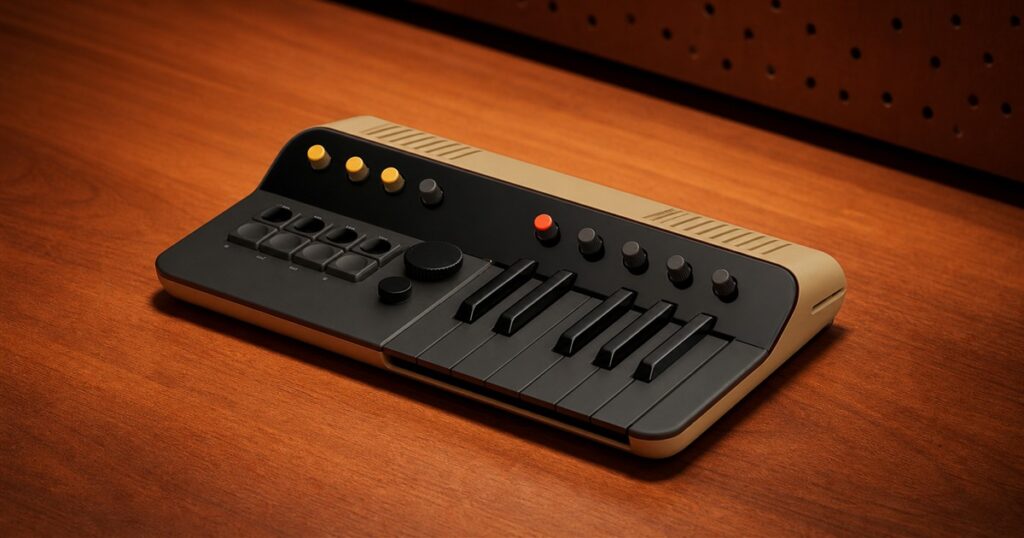
Somewhere between “I should learn music theory” and “what if this song simply wrote itself out of pity,” there is a small black-and-tan machine that looks like a keyboard went to architecture school and came back with opinions.
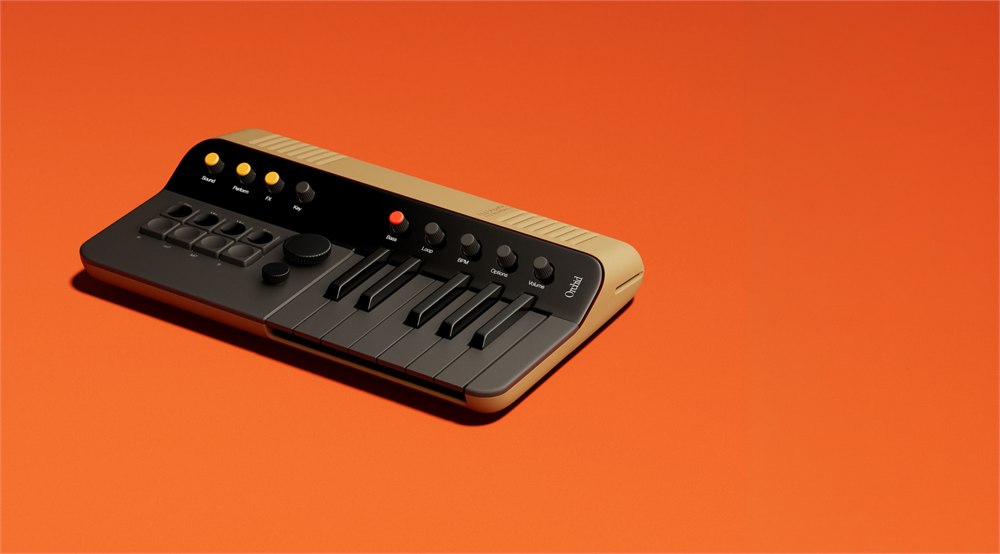
That machine is the Telepathic Instruments Orchid ORC-1, an advanced chord-generating synthesizer built for musicians who want to get ideas moving before their fingers start filing paperwork with the jazz department. It is not a full piano, not a plain MIDI controller, and not one of those mysterious studio boxes that only makes sense after three forums and a small personal crisis. It is a compact chord machine designed to help players summon harmonies quickly, reshape them with dials, loop them, add rhythm, and generally stop staring at the ceiling while waiting for inspiration to descend in formal attire.
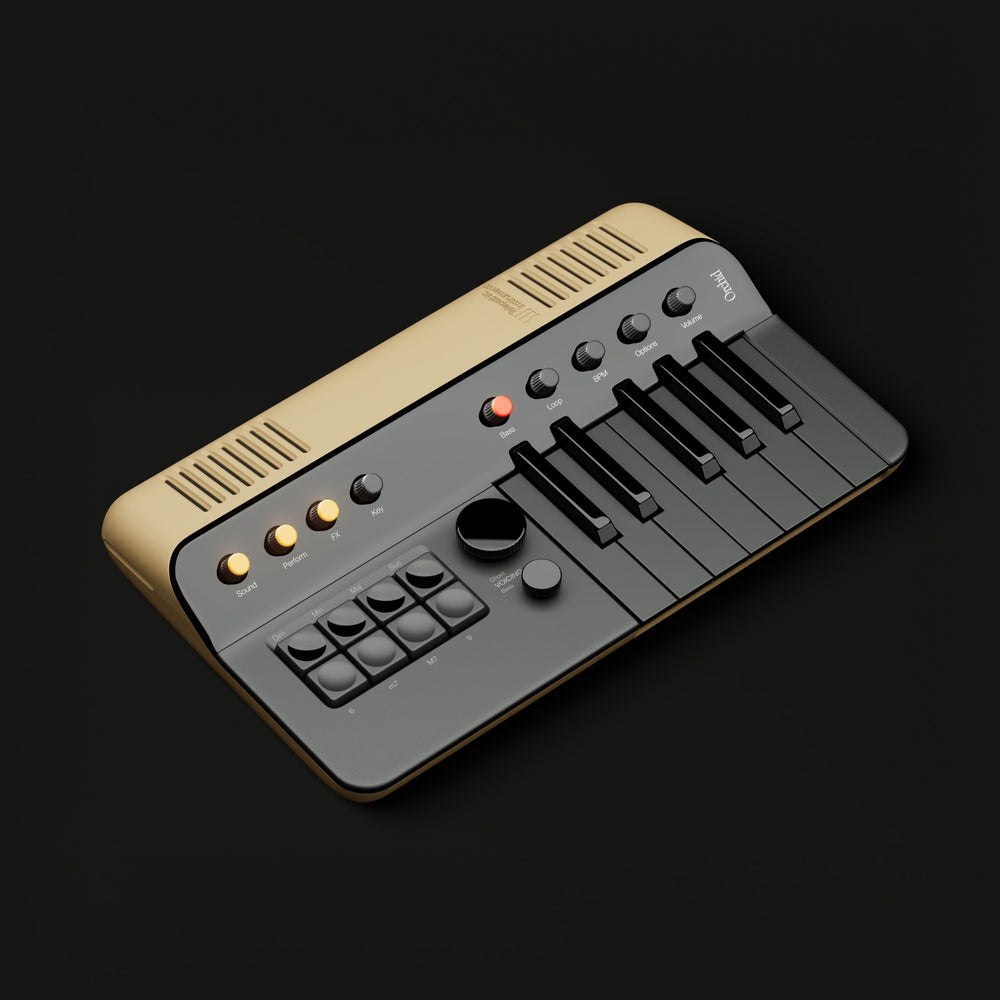
The core trick is wonderfully direct: you use the single-octave velocity-sensitive keyboard to choose the root note, then the dedicated chord buttons decide what kind of harmonic creature appears. The upper row handles chord types, while the lower row adds modifiers for extra color and complexity. In normal human language, that means the Orchid can turn one-finger musical intent into richer chords without making you first prove your loyalty to diminished sevenths.
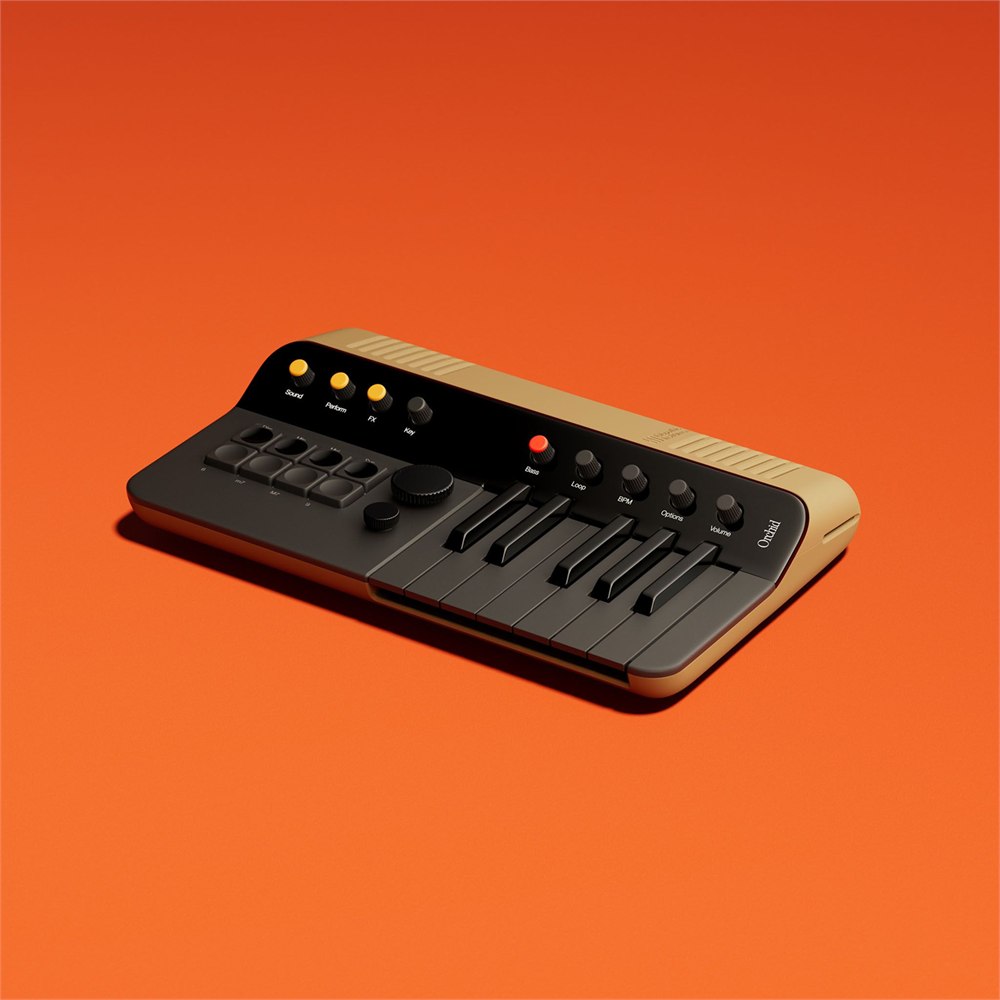
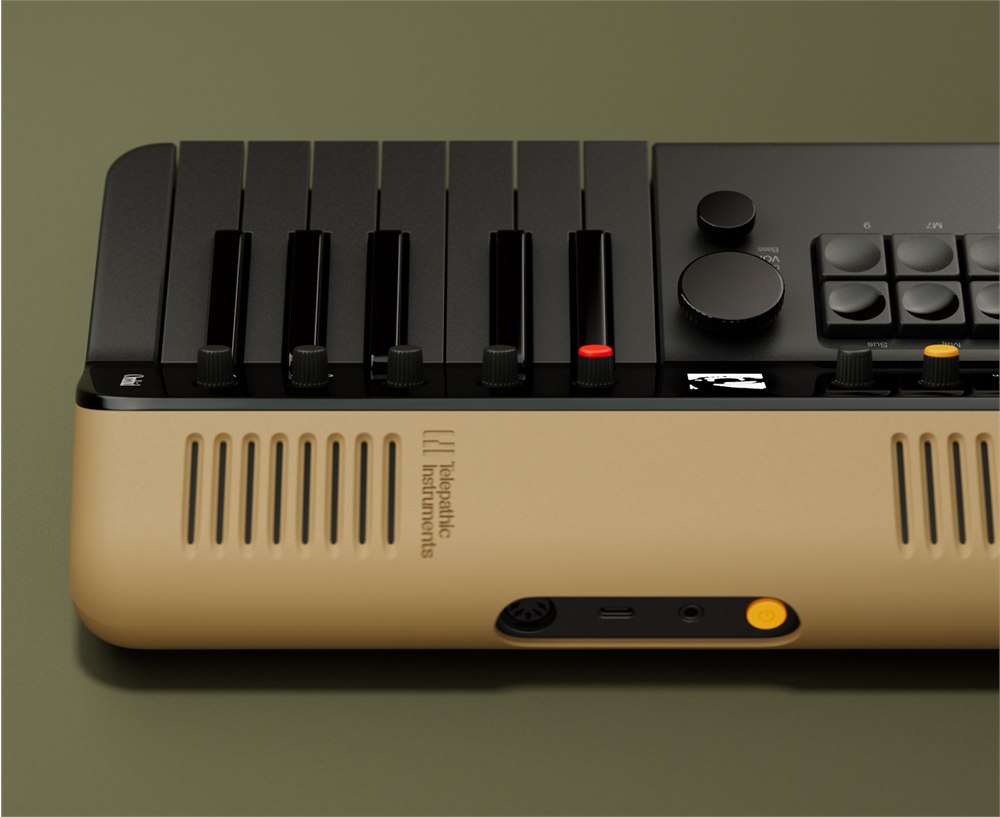
It also has the rare quality of looking immediately understandable and slightly alien at the same time. The small piano keys sit beside a pad-like bank of chord buttons, rotary controls, sliders, and a few brightly colored knobs. The body is rounded, compact, and tabletop-friendly, like a studio instrument designed by someone who has seen both a vintage calculator and a very confident lunchbox.
A Chord Machine For People Who Get Ambushed By Their Own Ideas
Orchid is built around the idea that musical creativity often arrives before technical execution does. You may hear a sad cinematic chord in your head, but your hands may respond by playing the same three shapes they have been emotionally recycling since 2017. Orchid tries to interrupt that loop by separating the spark of an idea from the finger gymnastics usually required to express it.
Related posts:




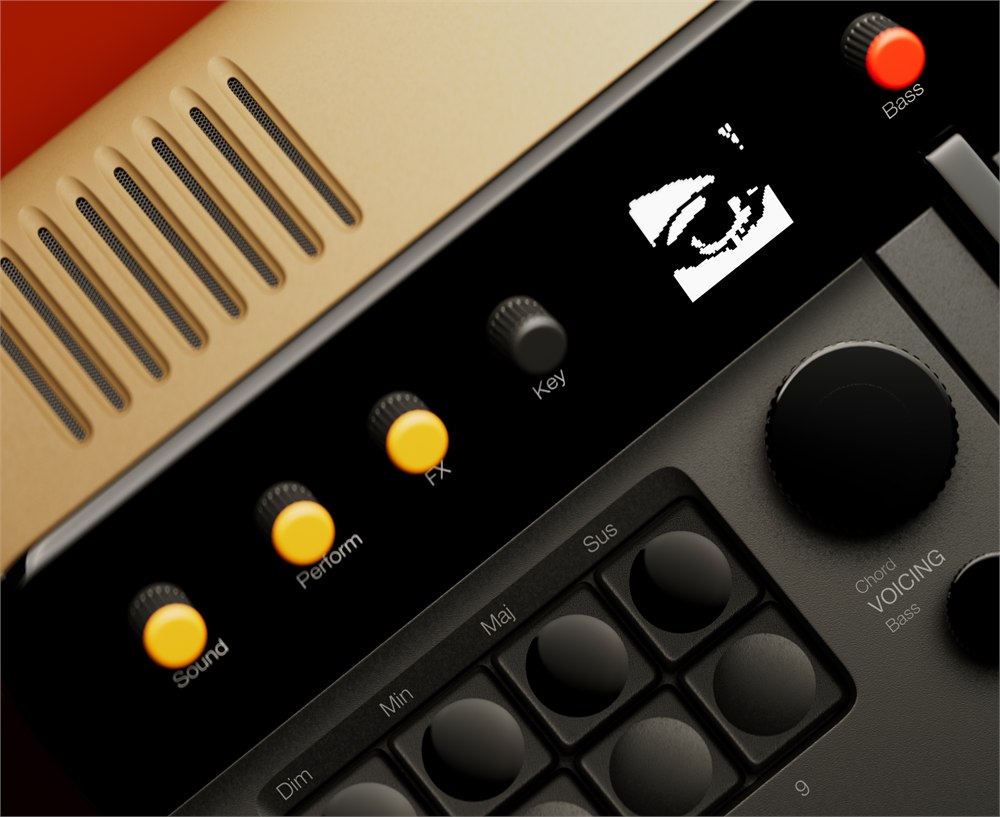
The two Voicing Dials are the most delightfully specific part of the whole device. Telepathic Instruments describes them as patent-pending controls that let you move up and down the keyboard one note at a time, cascading through chord voicing inversions and changing the character of a chord as you turn. That is a fancy way of saying your chord can go from “gentle indie film credits” to “final scene of a documentary about a haunted aquarium” without you needing to manually rebuild the harmony from scratch.
There are three synth engines inside the Orchid, plus effects and performance modes. A dedicated Bass mode can add root-note low end, or you can put it into solo mode when the bassline deserves its own little adventure. There is also an onboard beat machine with 20 pre-programmed drum beats, plus looping controls for recording, layering, undoing, and manipulating musical phrases in real time.
For the practical brain that insists on entering the room and asking where all the knobs go, here is the less poetic version:
- Root notes are selected on a single-octave velocity-sensitive keyboard.
- Chord Type and Chord Modifier buttons build the harmony around that root.
- Two Voicing Dials reshape inversions and tonal character while you play.
- Nine rotary encoders access sounds, effects, performance styles, and saved settings.
- Looping tools support recording, layering, manipulation, saving, and undo.
- The onboard beat machine adds 20 pre-programmed drum patterns.
- USB-C, MIDI, and 3.5mm stereo outputs make it useful beyond sofa noodling.
That combination makes the Orchid feel less like a shortcut around music and more like a different front door into it. You still need taste. You still need ears. You still need to know when your brilliant idea has become seven overdubs wearing one trench coat. But the instrument gives you a faster way to explore harmonic options before the original mood evaporates and you end up ordering cables instead.
The Useful Bits, Without The Synth Cave Smoke
One of the better things about Orchid is that it is specific enough for gear people, but approachable enough for someone who hears the phrase “chord modifier” and starts looking for exits. Telepathic Instruments says it is for songwriters, producers, gear heads, and people discovering music for the first time. That is a wide net, but the actual design backs it up: pick a root, choose a chord, turn the voicing, loop it, layer something, and let the song begin behaving like it has places to be.
| Feature | What It Does | Why It Matters |
|---|---|---|
| Single-octave keyboard | Sets the root note for generated chords | Fast entry point for ideas without full piano technique |
| Chord buttons | Select chord types and modifiers | Builds richer harmony from simple inputs |
| Voicing Dials | Moves through chord inversions and tonal variations | Turns one chord into a moving emotional weather system |
| Three synth engines | Provides lead, bass, and drum sound options | Keeps sketches self-contained before moving to a DAW |
| MIDI output | Sends chord information through MIDI | Lets the little box boss around a larger studio setup |
The current version also reflects feedback from Telepathic’s Garden community. The company says this crop added 10 new sounds designed by Kevin Parker, new “Secret Chords,” improved loop saving, quicker Key Mode selection, and a visual display that shows where the voicing split sits. If your relationship with music theory is mostly vibes, grudges, and half-remembered YouTube lessons, that display sounds like the responsible adult in the room.
Key Mode is another feature that quietly does a lot of work. When activated, notes played on the keyboard automatically generate chords that fit within the chosen key. That does not magically make every idea good, because no device can yet stop a person from adding shaker to everything, but it does reduce the number of ways a promising sketch can wander into the wrong neighborhood.
The Orchid also has integrated stereo speakers for immediate audio feedback, which is ideal for anyone who wants to jam without first assembling the ancient temple of audio routing. When it is time to connect to the rest of a setup, the listed outputs are USB-C, MIDI, and 3.5mm stereo. The MIDI output can split chord information into multiple channels, which is exactly the kind of sentence that makes producers lean forward and people at dinner parties slowly check their phones.
Small Enough For A Desk, Weird Enough For A Whole Song
Physically, the Orchid measures 305 x 190 x 50 mm and weighs 1.8 kg. That puts it firmly in desktop instrument territory: substantial enough to feel like a real piece of gear, but not so huge that it demands its own rolling case, emotional support shelf, and dedicated corner of the house.
The box includes the Orchid itself, a Quickstart Guide, and a Manuscript Notebook. A carrying case is sold separately, and Telepathic also offers the Pistil Plugin, which extends the ecosystem into software. Pistil is described as the original synth engine Kevin Parker used to design Orchid’s onboard sounds, and it can work as a standalone plugin or sync with Orchid so ideas can move between the hardware and a DAW.
That hardware-software handoff is a nice touch, because a lot of small idea instruments have the same problem as hotel notepads: they capture the thought, then leave you wondering how to get it into the real project without turning the process into a documentary. Orchid’s MIDI and plugin ecosystem give it a more practical path from “I made a cool loop at 11:42 p.m.” to “this might actually become a song.”
It is also worth noting what Orchid is not. It is not a replacement for learning music, and Telepathic does not present it that way. The appeal is not that it lets you avoid craft forever, then emerge with a cape and a Grammy. The appeal is that it changes the path into a musical idea. Sometimes your fingers are too trained. Sometimes they are not trained enough. Sometimes they are just busy holding a snack. Orchid gives the idea another route.
Who This Tiny Harmony Console Makes Sense For
The obvious audience is songwriters who like building from chords but hate the blank-page stage where every option feels either too obvious or too technically annoying. Producers could use it as a front-end idea machine, especially when they want to audition harmonic directions quickly. Beginners may appreciate that it makes complex chord colors approachable, while experienced players may enjoy being pushed out of familiar shapes.
There is also a strong “gift for the musician who already owns confusing things” energy here. Orchid looks strange enough to delight the gear-obsessed, but it is not just a decorative studio object. The controls serve a clear purpose, the feature set is unusually focused, and the form factor is compact enough that it can live beside a laptop, audio interface, or the half-empty coffee cup currently conducting most bedroom studios.
For anyone now measuring a corner of the desk and pretending that counts as budgeting, here are the key details:
- Product: Telepathic Instruments Orchid ORC-1 chord-generating synthesizer.
- Main function: generates and reshapes chords from root notes, chord buttons, modifiers, and Voicing Dials.
- Sound tools: three synth engines, effects, performance modes, bass mode, looping, and beat machine.
- Connections: USB-C, MIDI, and 3.5mm stereo output.
- Size and weight: 305 x 190 x 50 mm and 1.8 kg.
- Included items: Orchid, Quickstart Guide, and Manuscript Notebook; carry case sold separately.
- Current availability: listed by Telepathic Instruments as sold out with a waitlist open.
- Price: $649 USD for the Orchid ORC-1, with an Orchid plus case option listed separately at $699 USD.
The Orchid ORC-1 is available from Telepathic Instruments, though the current product page lists it as sold out and invites shoppers to join the waitlist. That is inconvenient if your songwriting emergency is scheduled for this afternoon, but it does at least confirm the device has crossed from “wild music-tech idea” into “people are apparently buying the harmony toaster.”
| Pros | Cons |
|---|---|
| Makes complex chords approachable from simple root-note input | Currently listed as sold out, so patience may be required |
| Voicing Dials provide a distinctive way to reshape harmony | Not a full replacement for deeper music theory or keyboard skill |
| Built-in speakers, looping, bass mode, and beat machine support quick sketches | Small keyboard limits traditional playing range |
| USB-C, MIDI, and 3.5mm output help it fit into a real setup | Carry case is sold separately |
| Compact desktop size keeps it easy to keep nearby | The workflow may feel unusual if you prefer conventional instruments |
Where to find This One-Key Chord Synthesizer Turns Root Notes Into Full Chords
OddityMall may earn a commission from qualifying purchases at no extra cost to you.