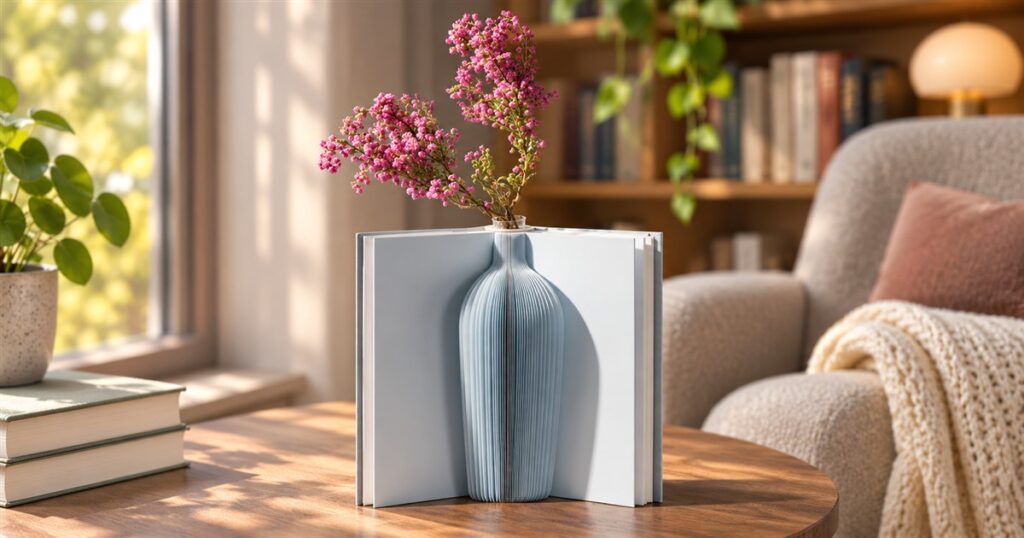
Some books change your life. This one changes the vase, which is a considerably more manageable assignment for a Tuesday. Open it, give a flower somewhere to stand, and suddenly your shelf has a plot. There are no chapters to finish, no discussion questions, and absolutely nobody asking whether you understood the symbolism of the curtains.
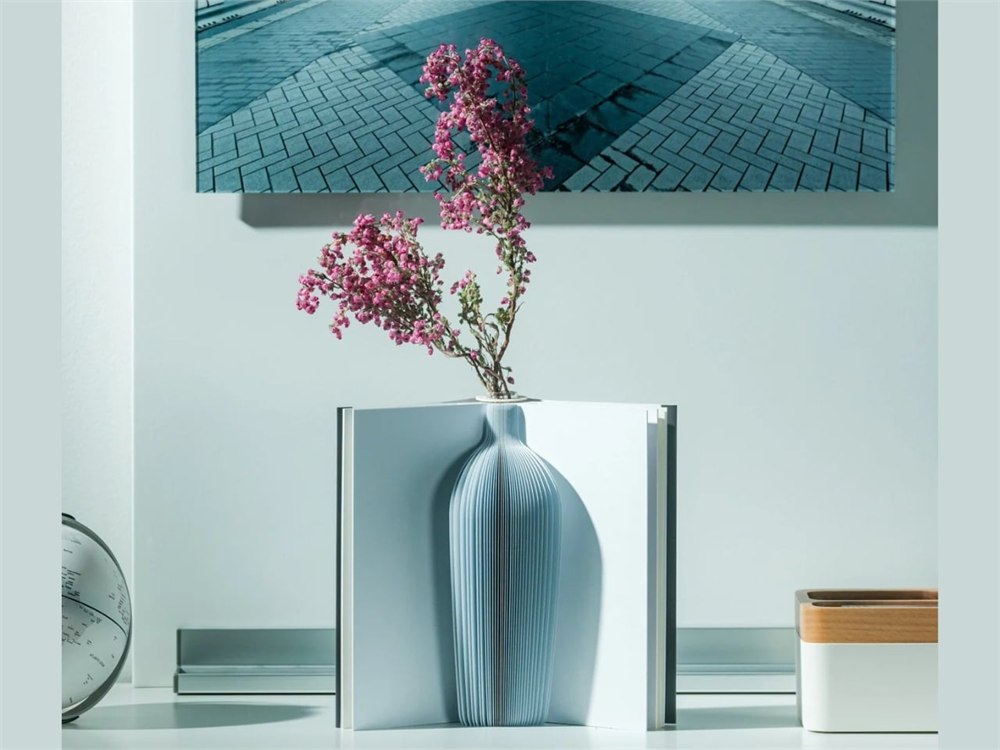
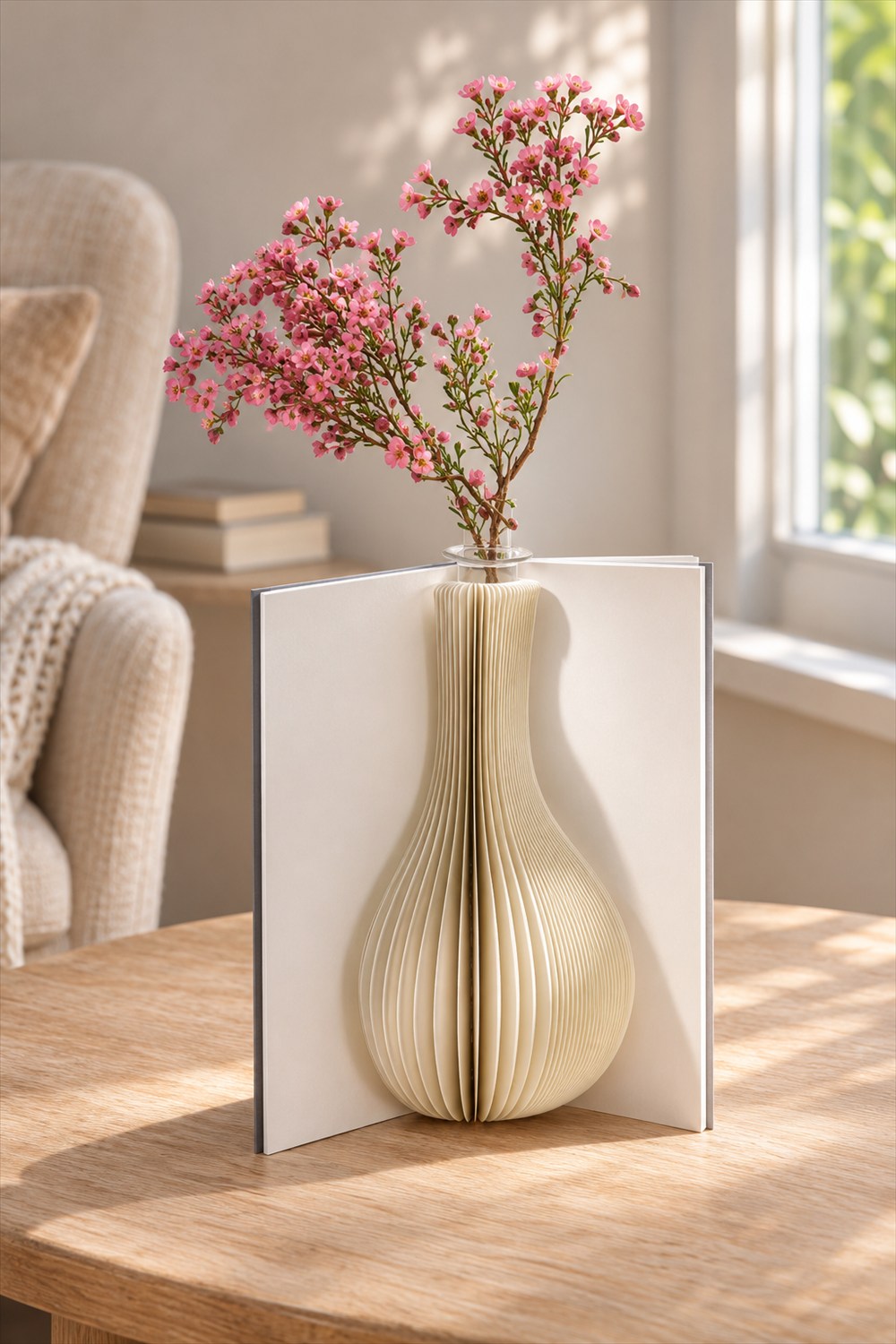
The MECLI Flowery Tale is a pop-up book vase: a small book-shaped object whose paper pages spread into a sculptural vessel silhouette. A glass tube handles the actual flower-and-water business. The paper supplies the theatrical entrance. It is the sort of object that makes a perfectly reasonable person lean closer and say, “Wait, that’s paper?”
That little double take is the whole attraction. You can see the book, you can see the flower, and you can see the outline of a vase. Your brain briefly tries to file all three things under one sensible category before giving up and admiring the folds.
A flower display with a page-turning habit
There are three vase shapes within each book, and reversing the book provides six possible arrangements. You choose a page and open the display around its spine. Changing the silhouette becomes a small physical ritual instead of another shopping trip. Your flower gets a wardrobe change; your cupboard does not acquire a new tenant.
The visual effect comes from repetition. Each thin leaf contributes an edge, and those edges together describe a rounded form. Seen head-on, it has the familiar outline of a decorative vase. Look from an angle and the construction becomes the interesting part: orderly layers, little gaps, and shadows that make flat paper appear surprisingly substantial.
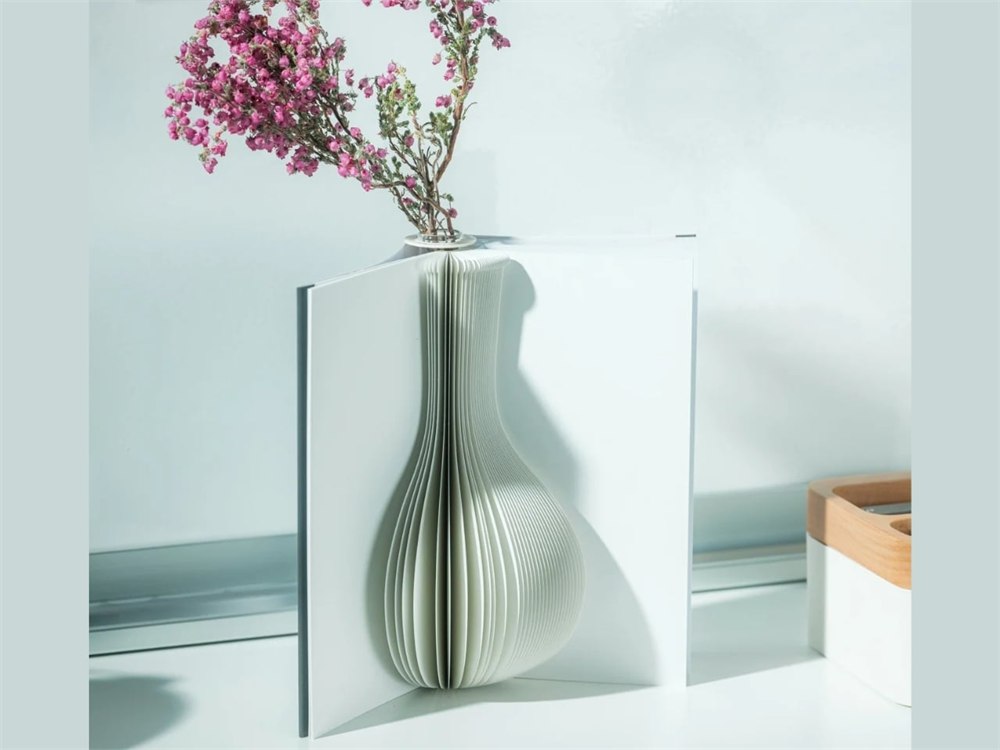
It also gives you a reason to enjoy the display without constantly buying more flowers. A single stem can be the main event. The backdrop does some of the decorating, so the arrangement needn’t audition for a hotel lobby. This feels particularly suited to a little desk, a reading corner, or that shelf you’ve been calling “finished” while continuing to rearrange it weekly.
The open covers remain visible, which is a good thing. Hiding the book would remove the joke. The appeal is watching an everyday format do an unexpected job, like discovering that your dictionary has quietly retrained as an interior designer.
The glass does the wet work
A removable glass test tube sits at the spine. That is the container for water, while the surrounding paper creates the decorative body. Keep that distinction in mind when filling it: this isn’t a paper bucket with spectacular confidence.
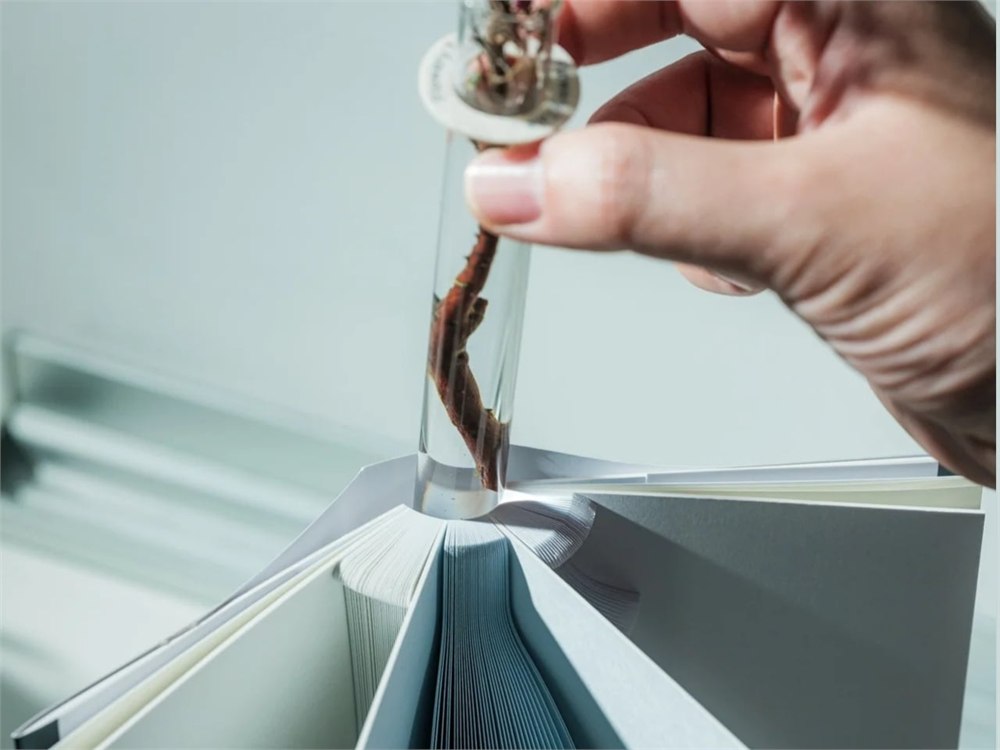
The maker uses water-resistant paper, but water-resistant is still a reason to be careful around splashes. Wipe up spills promptly and let the paper dry before putting the book away. Refilling the glass away from your other books is a sensible habit, especially if your collection includes anything you would describe as a treasured first edition.
For everyday use, the practical considerations are refreshingly understandable:
- Choose a modest floral arrangement that suits the narrow glass insert.
- Leave enough room for the covers and paper silhouette when open.
- Handle the pages gently when changing the shape.
- Keep water in the glass tube and wipe stray droplets from the paper.
- Dry the parts before closing the display for storage.
None of that is difficult, but it sets the right expectation. This is a small decorative object you interact with, rather than a rugged vessel to toss into the sink with the dinner dishes. If you enjoy unfolding, arranging, and adjusting things, those moments are part of its charm.
A small book with a different assignment
MECLI lists the body at 100 by 30 by 182 millimeters, approximately 3.9 by 1.2 by 7.2 inches when closed. The Japanese-made design includes a borosilicate glass test tube. Its compact form helps explain why the bookshelf storage idea works: once the floral performance ends, the scenery can close up too.
| Detail | What to expect |
|---|---|
| Display | Paper vase silhouettes within an opening book |
| Shape choices | Three shapes, six arrangements with inversion |
| Water holder | Glass test tube at the spine |
| Closed body | 100 × 30 × 182 mm |
| Storage | Close and shelve after drying |
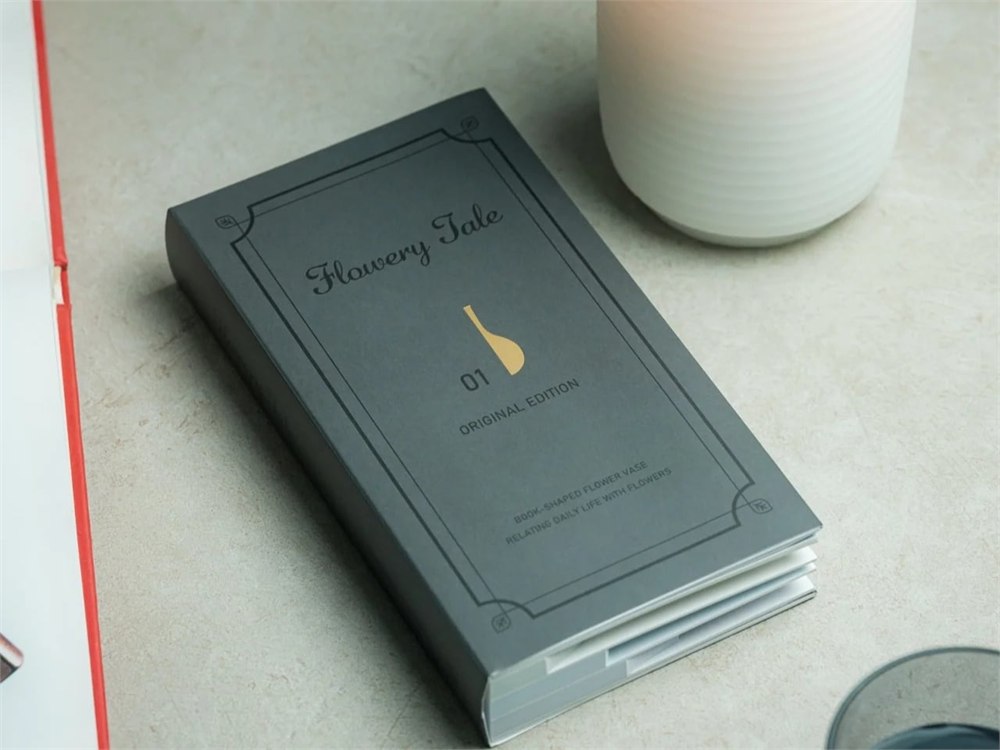
The closed version is a satisfying object in its own right. It resembles a slim decorative volume, with a proper cover and a small amount of thickness. There is something pleasing about a vase having an off-duty appearance. Most vases simply stand there empty, silently reminding you that the flowers are gone.
This one can return to the shelf without looking abandoned. That makes it appealing for people who like occasional flowers but don’t want a permanent collection of empty containers. It won’t organize your entire home, obviously. The drawer full of charging cables remains an independent humanitarian crisis.
For readers who also rearrange their shelves
The strongest gift match is easy to imagine: someone who likes books, paper objects, and flowers, with a soft spot for a clever reveal. It offers a little interaction without needing a battery, pairing process, or companion app. The setup tutorial is essentially a gesture.
It is also a more specific choice than a standard vase. The recipient needs to enjoy the visible book format and the slightly delicate character of paper. Someone who wants a big, easy-clean container for a generous bunch of stems may be happier with plain glass. There is no shame in wanting your vase to behave exclusively like a vase.
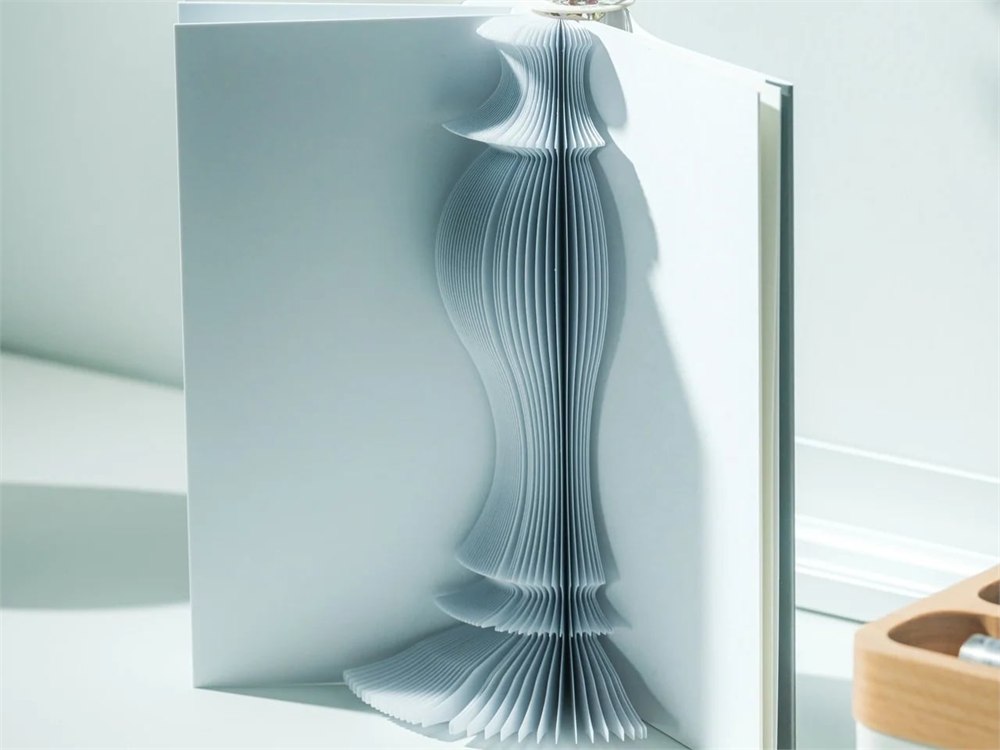
For everyone else, the pleasure is in choosing a shape to accompany a flower. A rounded outline feels different from a narrow, curving one even when the stem stays the same. Small adjustments can make a familiar corner feel considered again, without escalating into the sort of weekend project that requires furniture sliders.
The design also rewards a spot where you can see it from more than one angle. A side table or accessible shelf lets the paper structure show itself. Burying it behind several other ornaments would be like buying a pop-up book and refusing to open the interesting page.
The details before you turn the page
- Product: MECLI Flowery Tale pop-up book vase.
- Three paper silhouettes provide six arrangements when reversed.
- A glass insert holds the flower and water.
- The body closes into a compact book form for storage.
- Best approached as a decorative single-stem display.
- Paper needs gentle handling and should dry before storage.
Yanko Design Select lists the Pop-up Book Vase at $45. The listing showed availability when checked, though stock can change. That price buys the changing paper display as much as the practical ability to hold a flower. If all you want is somewhere to park a stem, simpler containers exist; if you want your shelf to perform a small magic trick, this is a much more entertaining proposition.
Product details: MECLI. Product photographs: Yanko Design.
| Pros | Cons |
|---|---|
| Changes shape without collecting separate vases | Paper needs more care than an ordinary glass vessel |
| Closes into a book for storage | Must be dry before being put away |
| Glass insert separates water from decoration | Narrow format suits small arrangements |
| Distinctive gift for book and flower lovers | Costs more than a basic single-stem vase |
Save this find.
Thank yourself later.
Your next great gift idea. Your someday space. Your collection of wonderfully weird things.
Save to PinterestPick a board. Keep the inspiration.
This Pop-Up Book Vase Gives One Flower Six Different Looks
At a glance
Product snapshot
- Listed price
- $45.00Prices and availability can change. Check the seller for current details.
- Where to find it
- Yanko Design Select
- Category
- Home & Kitchen