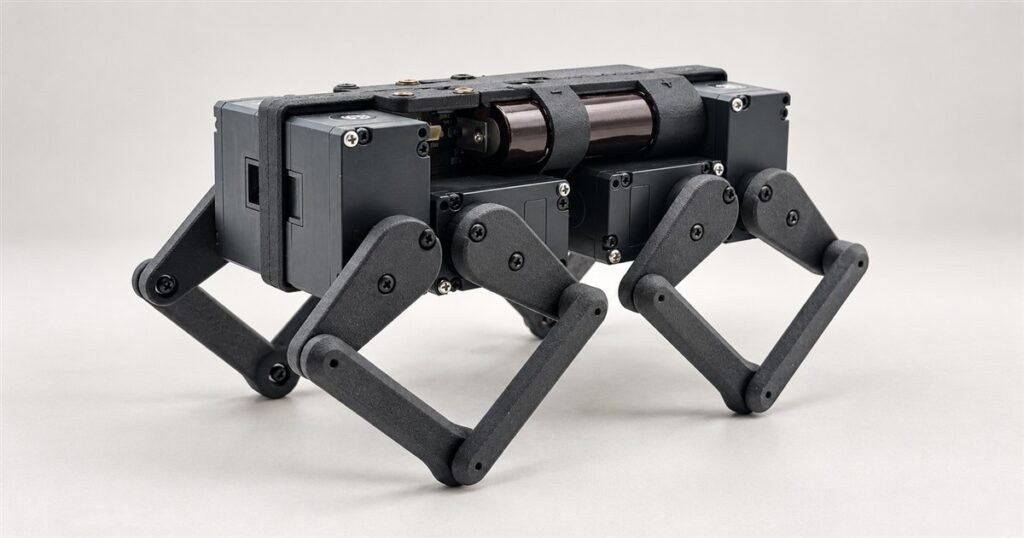
A normal dog demands walks, snacks, and an explanation for why you briefly went outside without it. This palm-sized robot dog asks for something different: a charged battery and perhaps a little enthusiasm for joint angles. Q8botOne is a four-legged robotics platform from ZeroWire Robotics, and it looks like a tiny piece of laboratory equipment decided that sitting still was beneath it.
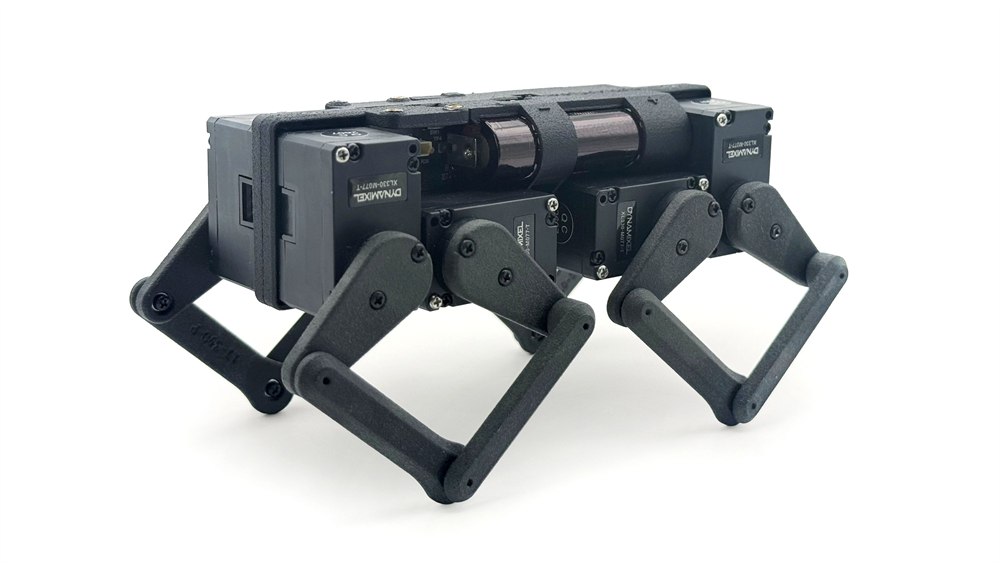
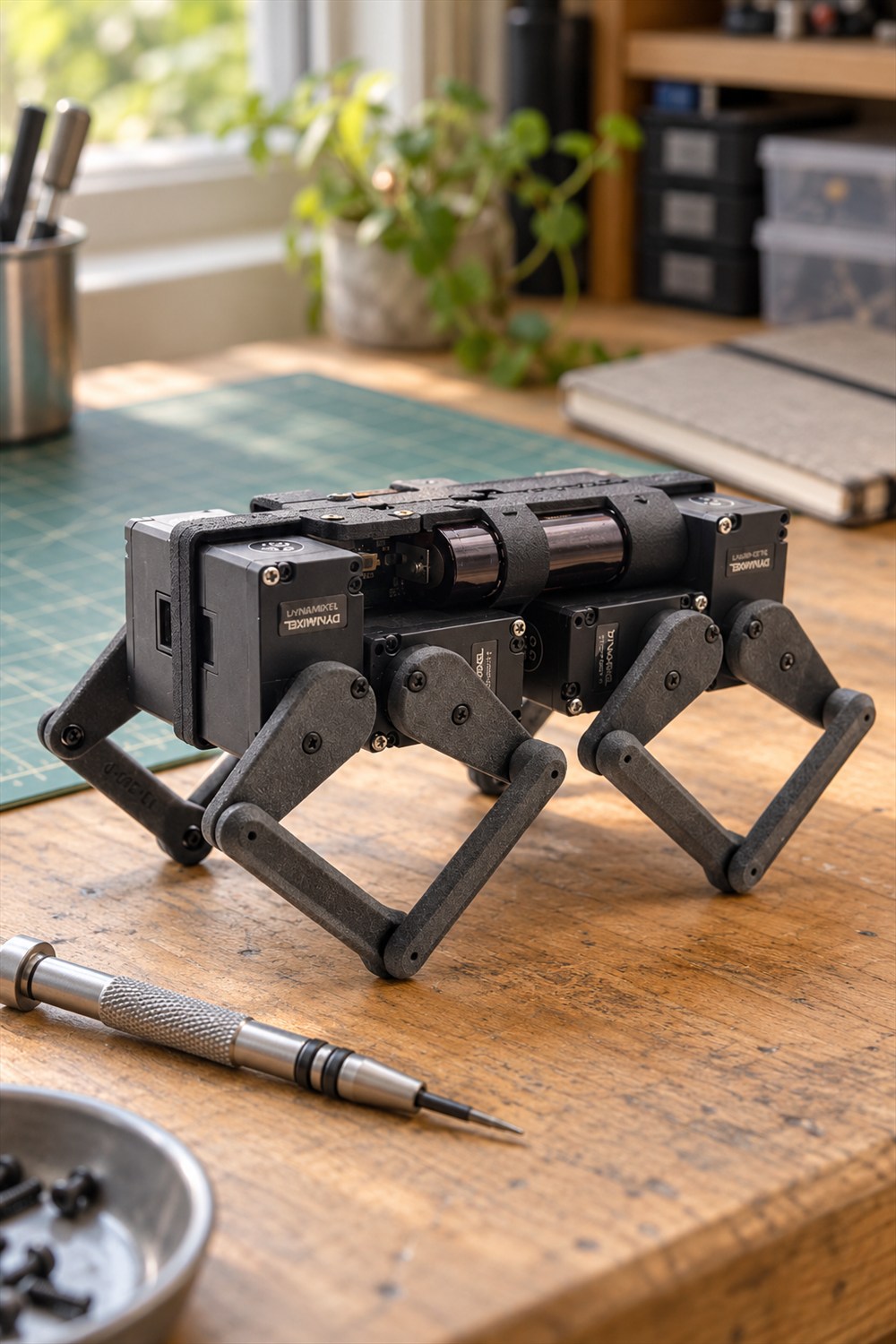
There is no furry disguise here. No cartoon eyes, wagging tail, or pretend snout trying to persuade you this is a golden retriever. Its rectangular body and angular legs are gloriously mechanical. It has the charm of a walking circuit-board sandwich, which turns out to be a surprisingly strong aesthetic if your idea of a relaxing evening includes a screwdriver.
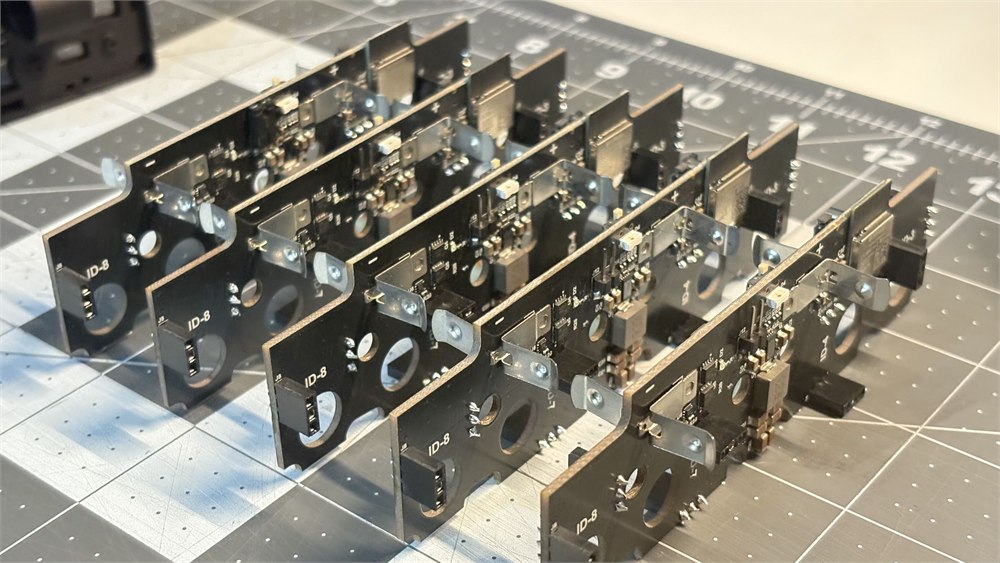
The unusual part is how that sandwich goes together. Q8botOne dispenses with conventional wiring harnesses between its components. The central printed circuit board carries the electrical connections, with components integrated directly onto it. The maker’s “zero-wire” description refers to that assembly arrangement; it does not mean the motors have somehow abandoned the laws of electromagnetism. Their internal coils still exist. Physics has kept its job.
A Tiny Robot With Its Machinery on Display
At a listed 120 by 70 by 70 millimeters and 250 grams, this is a tabletop-scale machine. Think small enough to examine up close, rather than something you would send down the driveway to investigate a noise. Its exposed layout makes the mechanics part of the appeal: you can actually look at the legs, joints, batteries, and body and start understanding how the pieces cooperate.
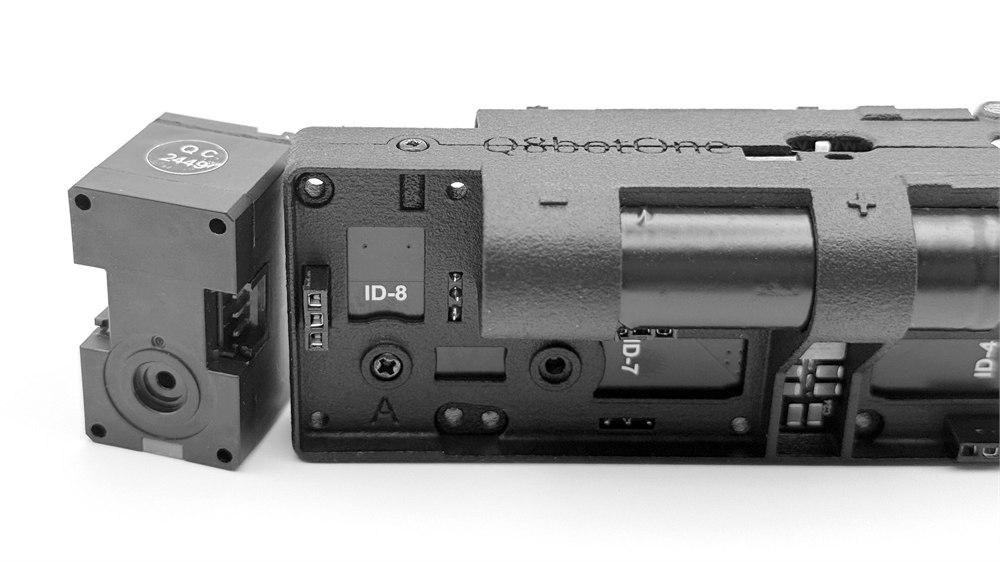
ZeroWire Robotics says the platform can jog, jump, and carry twice its own weight. Those are the maker’s performance claims, rather than the result of our own obstacle course. The interesting possibility is experimentation: changing how a leg moves, adjusting a stance, or seeing how the little machine behaves with an added load. Your desk can become a robotics lab without first becoming an aircraft hangar.
Related posts:



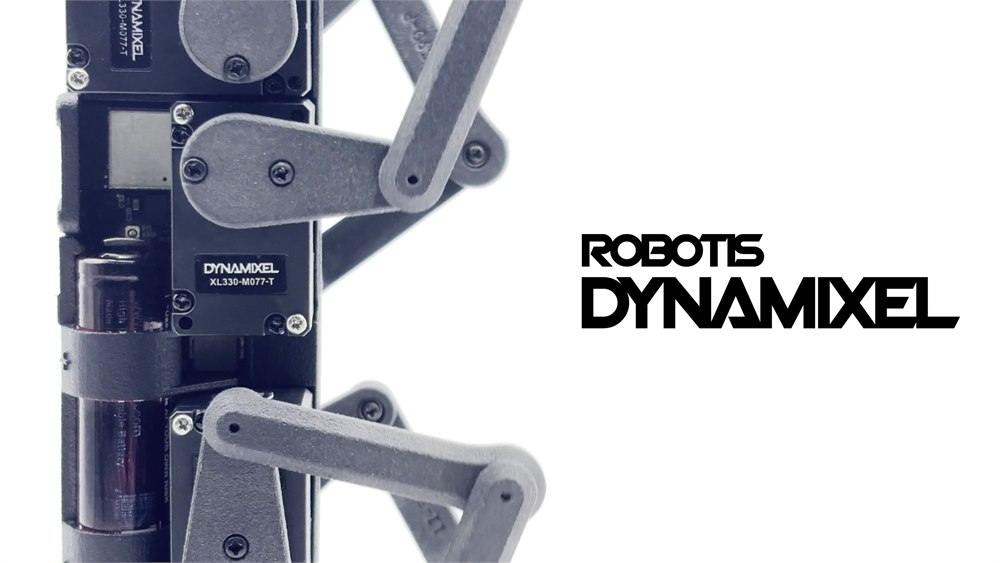
Its four legs use parallel linkages, and the assembled robot has eight ROBOTIS DYNAMIXEL smart actuators. These are not just little motors waiting for a simple position command. They provide digital communication and feedback, giving a curious owner more to work with than “go there” and “please stop making that noise.” The joints can become part of the lesson, rather than sealed black boxes.
Start Driving, Then Get Curious
The included controller offers a gentle entrance. Give it power through USB-C, switch on the robot, and use the joystick. A phone, power bank, or suitable adapter can provide that controller power. This is a useful distinction: the controller needs a power source, even though the robot itself avoids conventional internal cabling. You have not purchased a small exemption from charging things.
The October 13 development update describes buttons for changing gaits and triggering motions such as jumping, greeting, and dancing. That gives you something entertaining to do before opening a programming environment. A little robot greeting you from the desk is fun; a little robot that you can later teach a different stance is the reason this might remain interesting after the first afternoon.
- Use the supplied joystick controller for direct driving and built-in motions.
- Connect that controller to a computer with a USB-C data cable to use it as a wireless dongle.
- Explore the desktop interface for robot information and pose adjustments.
- Try gamepad control through the desktop software; the maker recommends an Xbox One controller.
- Move into Python commands when you want to experiment with your own behavior.
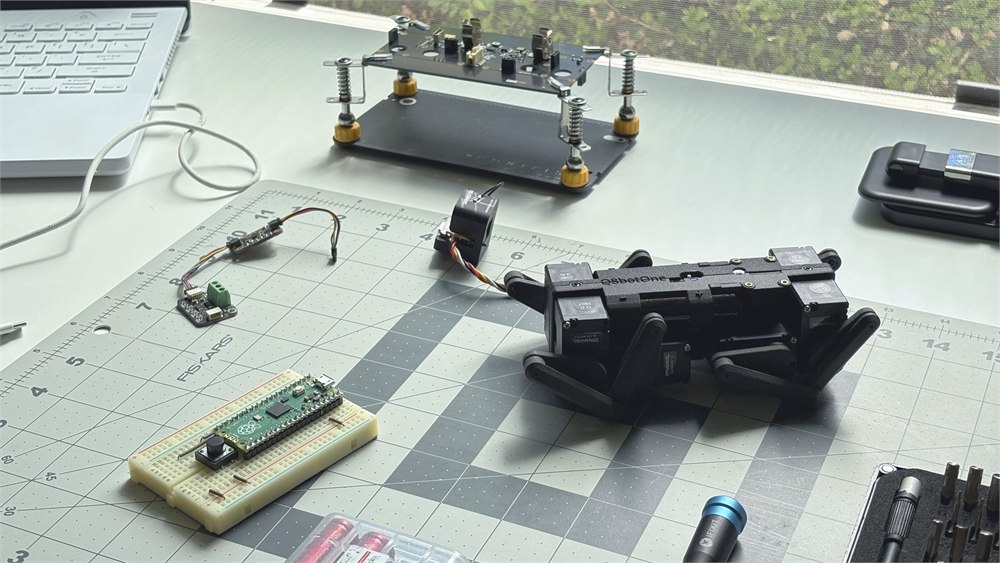
That progression matters. A robotics project can become an expensive paperweight if the first instruction feels like a graduate entrance exam. Here, basic play and deeper investigation occupy the same machine. You can enjoy the funny little walk first, then decide whether you want to learn why it walks that way. Curiosity gets a ramp instead of a cliff.
| Detail | Listed configuration | Practical meaning |
|---|---|---|
| Size and mass | 120 × 70 × 70 mm; 250 g | A compact platform for close-up experiments |
| Leg hardware | Eight DYNAMIXEL smart actuators | Digital joint control and feedback |
| Body and linkages | MJF-printed Nylon PA12 parts | Visible mechanical construction |
| Power | Two 14500 Li-ion batteries | Rechargeable robot with USB-C charging |
| Expansion | Qwiic / STEMMA QT and powered UART | Connections for compatible additional hardware |
A Walking Starting Point for Your Own Ideas
The basic robot deliberately leaves room for additions. Compatible sensors and extra computing hardware can be connected through its expansion ports, while mounting holes provide attachment points. That does not mean a camera, navigation system, or autonomous household helper arrives magically included. It means the platform gives you somewhere to begin building those experiments. There is a considerable difference between an expansion connector and a finished superpower.
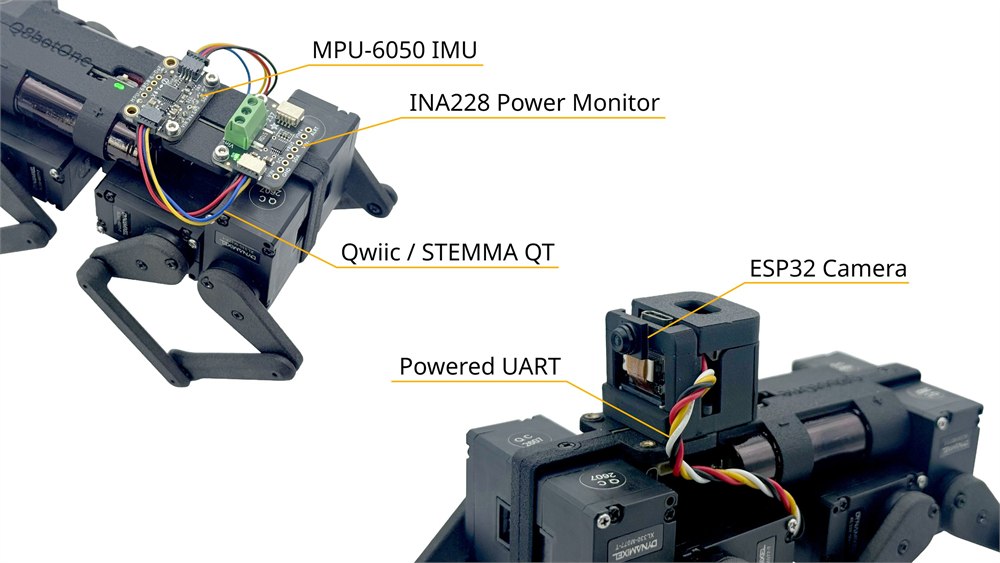
The campaign illustrates optional sensing and camera hardware, which helps explain the intent. One owner might care about movement; another might want to investigate how a walking machine reacts to information from its surroundings. Someone else will inevitably spend a weekend perfecting an unnecessarily dramatic bow. All three sound like reasonable uses of a small robot, particularly the bow.
Open hardware and software are central to the pitch, but the release is still developing. The October 13 update says preliminary firmware and software are public, while detailed build instructions and promised hardware file releases are still forthcoming as prototypes are validated. A public working CAD document is available. Buyers who need a completely finished documentation package should pay attention to that distinction.
This also helps define the audience. Q8botOne makes the most sense for hobbyists, educators, and people who enjoy understanding a machine from the inside out. It is less obviously suited to someone who wants a sealed toy with every possible behavior completed and explained on day one. The pleasure here includes the tinkering. If your relationship with tiny screws is already hostile, choose your version carefully.
What to Know Before Adopting One
The campaign launched on October 6, 2026, and is scheduled to run through November 19. This is crowdfunding for a product moving toward production, not a promise that a tiny robot is waiting beside a shipping label today. Component supply, assembly, testing, and shipping preparations can affect the timeline. Even a robot that can jump cannot leap over manufacturing schedules.
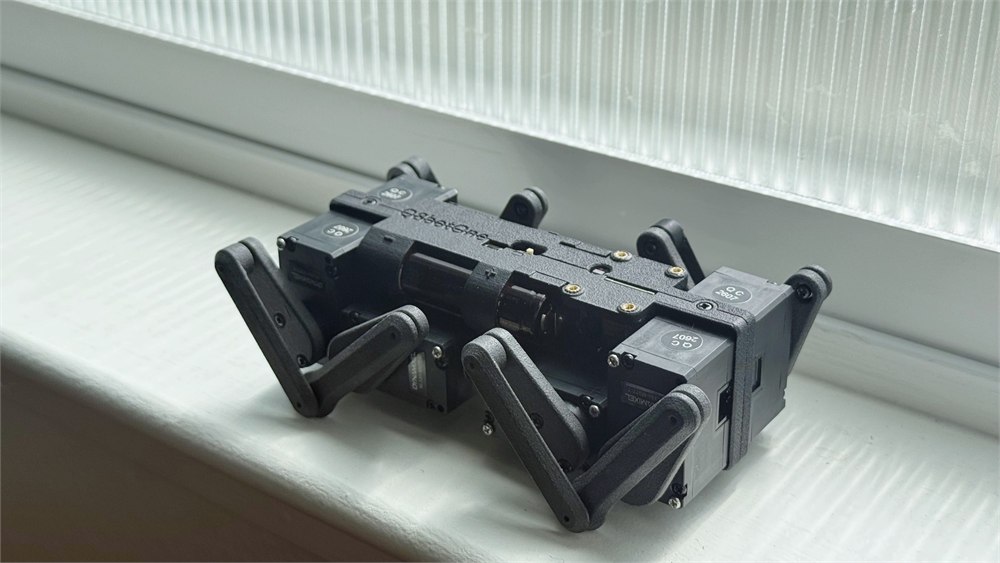
Images courtesy of ZeroWire Robotics via Crowd Supply. The optional additions shown in the expansion image illustrate possible projects rather than the standard included equipment.
- Product: Q8botOne from ZeroWire Robotics.
- Purpose: a small, programmable four-legged robotics platform.
- Distinctive construction: components connect through a central PCB without conventional assembly wiring harnesses.
- Control choices: included controller, desktop interface, gamepad support, and Python API.
- Buying choices: an assembly kit without actuators or a fully assembled robot.
- Current status: crowdfunding, with development and documentation work continuing.
Crowd Supply lists the kit at $199 and the assembled robot at $599. The cheaper option requires eight separately purchased DYNAMIXEL actuators as well as assembly, so it is not the full walking robot for one-third the money. Both options list batteries and a pre-programmed controller among the included equipment. The current estimated shipping date is March 24, 2027, with free worldwide shipping shown for both robot options.
For the right person, the appeal is wonderfully straightforward: a little machine whose movement you can enjoy, inspect, and eventually change. It will not fetch your slippers. It might, however, turn “just checking something on my desk” into three hours of making a tiny mechanical quadruped dance. Unlike a real dog, it will not judge you for finding that a productive evening.
| Pros | Cons |
|---|---|
| Compact, visible mechanics invite hands-on learning. | Better suited to tinkerers than buyers seeking a finished robot pet. |
| Controller provides an accessible starting point. | Deeper customization requires technical learning. |
| Smart actuators offer feedback and control options. | The lower-priced kit excludes all eight actuators. |
| Expansion connections support additional projects. | Extra sensors and computing hardware are separate additions. |
| Open development lets owners explore the design. | Some hardware files and build documentation are still forthcoming. |
| Kit and assembled configurations offer a choice. | Crowdfunding delivery estimates can change. |
Save this find.
Thank yourself later.
Your next great gift idea. Your someday space. Your collection of wonderfully weird things.
Save to PinterestPick a board. Keep the inspiration.
This Palm-Sized Robot Dog Lets You Program Its Walk, Jump, and Dance
Where to find This Palm-Sized Robot Dog Lets You Program Its Walk, Jump, and Dance
OddityMall may earn a commission from qualifying purchases at no extra cost to you.