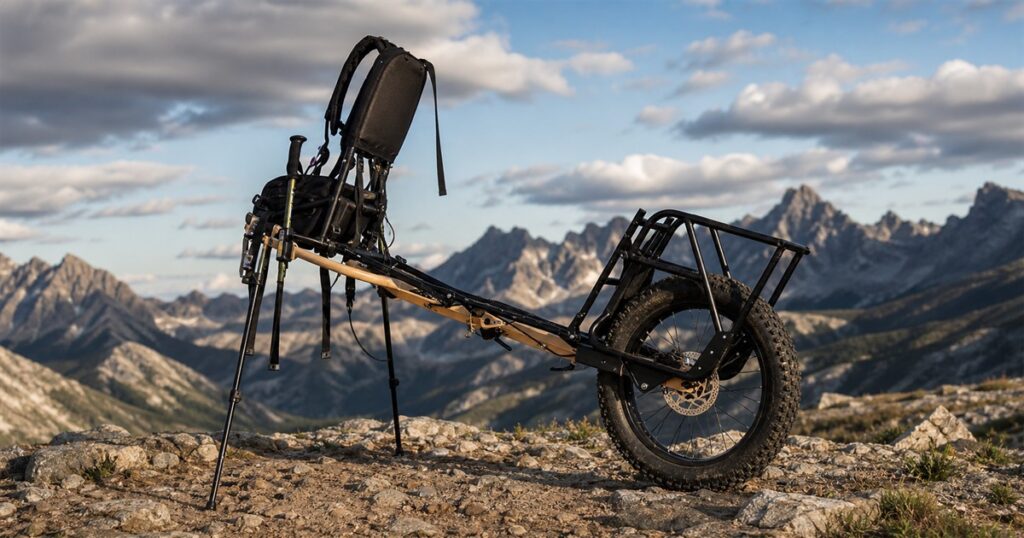
Most of us pack for the outdoors like we are either lightly strolling to a picnic or fleeing an empire. There is no middle setting. One minute you need a jacket and a sandwich, the next minute you are staring at a cooler, a tool bag, a tent, a chainsaw, three mystery bins, and the emotional weight of admitting your spine is not a forklift.
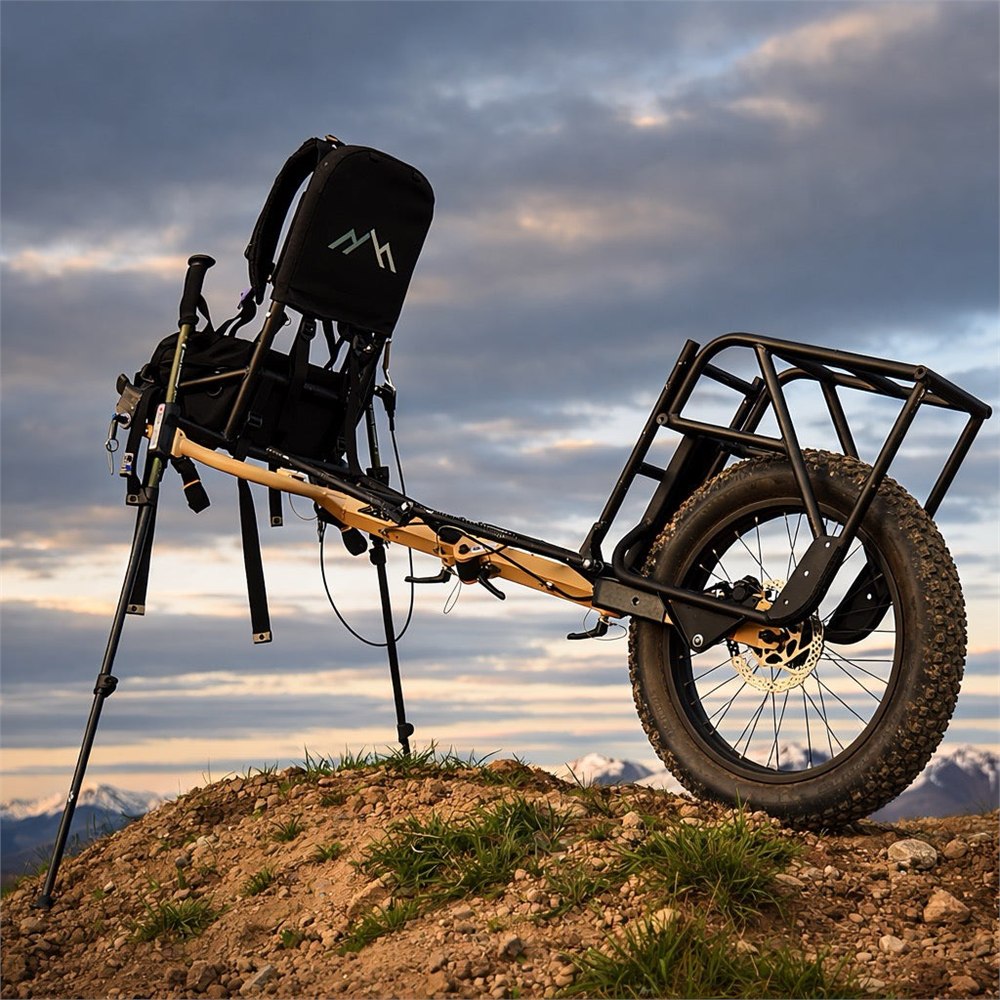
The RuckTruck one-wheel backcountry gear hauler is for that exact moment: when the trail is too mean for a wagon, the load is too rude for a backpack, and your knees have started filing written complaints. It is a single-wheel outdoor utility cart that connects to a backpack-style frame, turning heavy gear into something that follows behind you instead of living directly on your shoulders like a clingy cast-iron roommate.
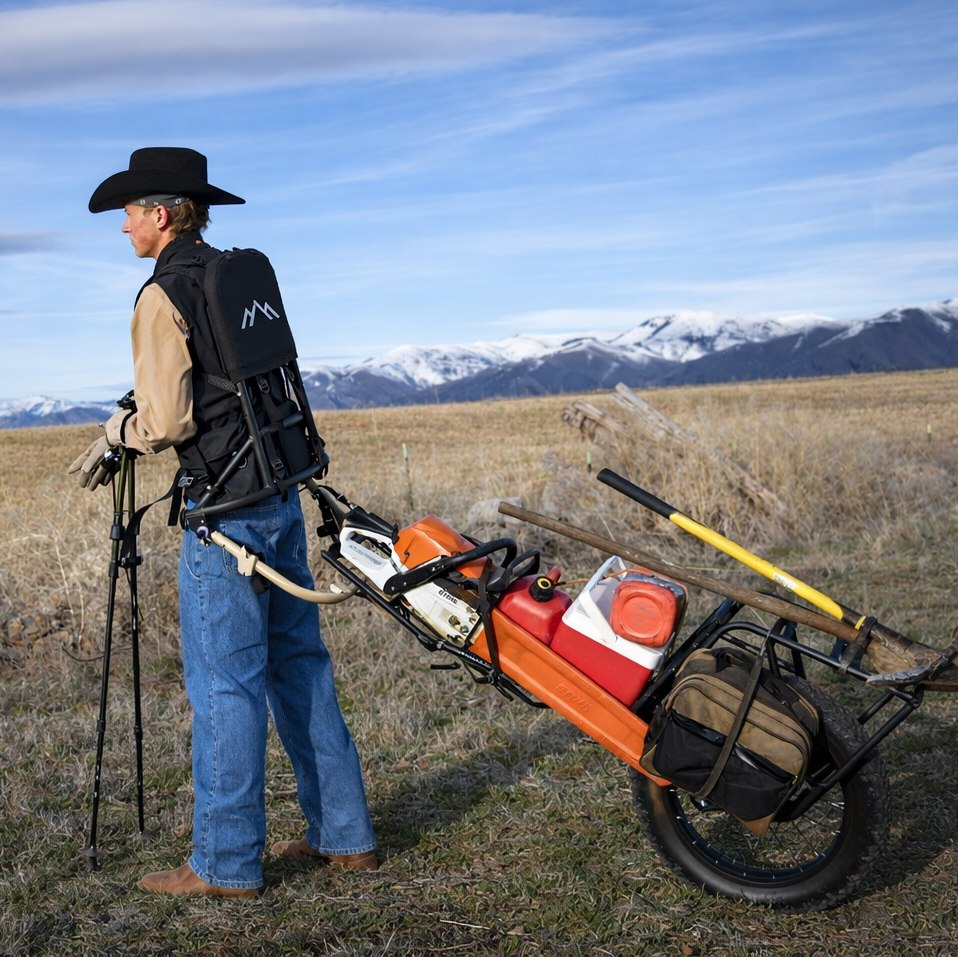
RuckTruck describes it as an off-road gear hauler built for rugged terrain, and the basic idea is immediately understandable once you see it. There is one big fat all-terrain wheel at the back, an open tubular cargo frame for securing gear, a long center structure, and a wearable front harness that lets the user steer and balance the load while walking. It looks like a mountain bike wheel had a practical argument with a hiking backpack and somehow they both won.
A Cart For Places That Hate Carts
The funny thing about most carts is that they are wonderful right up until the world stops being a parking lot. Roots, mud, rocks, sand, snow, narrow trails, uneven service paths, and soft ground all have a way of turning normal wheeled gear into a little rolling tantrum. RuckTruck takes the opposite approach: fewer wheels, larger contact, and a load path designed around the person wearing the front frame.
The company says it is meant for backcountry hunts, field operations, trail work, multi-day trips off grid, and other situations where vehicles cannot go. That makes it less of a cute camping accessory and more of a portable argument against making four trips. If you have ever hauled gear by repeatedly walking twenty yards, dropping something, re-gripping, sighing, and pretending the scenery is helping, this is the product quietly judging your logistics.
Related posts:
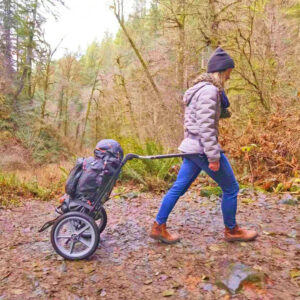
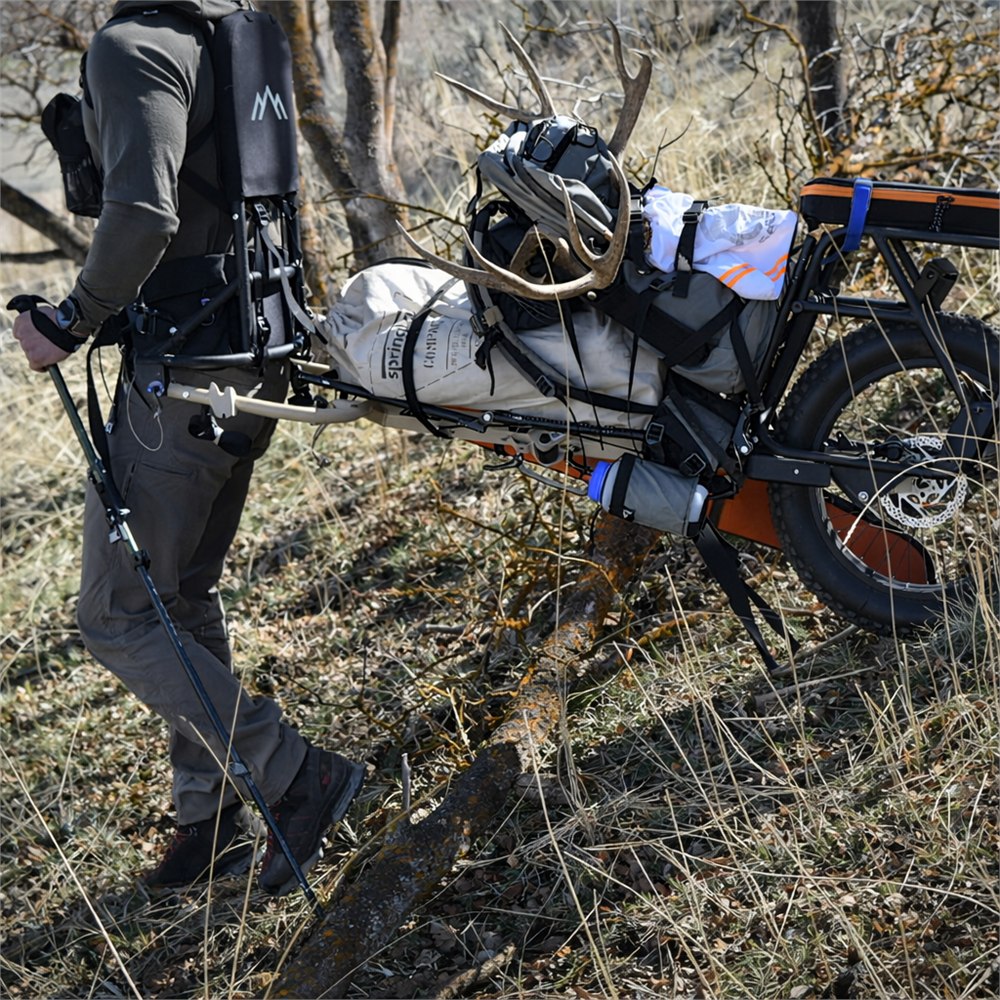
The official product page lists a maximum payload of 220 pounds, which is the sort of number that makes a normal backpack look like a decorative napkin. That does not mean every person should immediately try to drag 220 pounds up a boulder field while making heroic documentary noises. It means the frame is designed around serious loads: hunting equipment, coolers, tools, camping gear, rescue supplies, trail maintenance gear, or whatever else your weekend has become.
The layout also helps explain why it is visually so strange. The load sits back near the wheel and frame, while the front assembly attaches to the user with adjustable straps. The wheel supports much of the burden, and the person supplies balance, steering, and forward motion. In practical terms, it is trying to make heavy hauling feel less like carrying a moody refrigerator and more like guiding a very useful one-wheeled pack mule that passed shop class.
What The RuckTruck Actually Does
There are plenty of outdoor products that promise freedom and then immediately require a roof rack, a storage unit, and three new opinions about ultralight titanium. RuckTruck is more direct. It is a high-capacity, foldable, all-terrain hauling frame with a standard non-powered version and an optional e-assist upgrade.
Here is the practical version of what it is trying to solve:
- Move heavy gear over dirt trails, rocks, mud, sand, snow, and other rough ground.
- Shift a big portion of the load away from your back, hips, and shoulders.
- Carry hunting, camping, worksite, field, or emergency gear where vehicles cannot reach.
- Pack down for transport and storage when the trip is over.
- Add powered assistance on the e-assist version for long hauls and climbs.
That middle point is the heart of the whole thing. The RuckTruck is not trying to make your gear disappear, because physics remains annoyingly undefeated. It is trying to put the weight where a wheel can do more of the ugly work, while still keeping the setup narrow and trail-capable enough for rough access.
The company also lists a folding design, which matters because every big outdoor helper eventually has to answer one humiliating question: where does this live when it is not doing hero work? RuckTruck folds from a deployed footprint of 60 inches by 24 inches down to 42 inches by 26 inches by 16 inches. That is still not pocket-sized, unless your pockets are legally a shed, but it is far easier to transport than a rigid cart that insists on occupying your entire life.
| Spec | RuckTruck Listing |
|---|---|
| Deployed size | 60 inches by 24 inches |
| Folded size | 42 inches by 26 inches by 16 inches |
| Standard model weight | 35 pounds |
| E-assist model weight | 48 pounds |
| Maximum payload | 220 pounds |
| User height fit | 5 feet to 6 feet 8 inches |
| Waist belt fit | Adjustable from 25 inches to 50 inches |
The fit range is worth calling out because this is not a hand cart you casually lend to the nearest person with elbows. It is a wearable hauling system, so the waist belt, chest strap, and height range matter. RuckTruck lists a 25-inch to 50-inch adjustable waist belt and a multi-position adjustable chest strap, which should help the frame sit correctly on different users.
The E-Assist Version Is For Hills With Bad Intentions
The standard version is the straightforward mechanical hauler: one wheel, rugged frame, human power, and a lot of optimism made from tubing. The e-assist upgrade adds powered help for the part of the trip where the hill stops being a hill and starts being a personal insult.
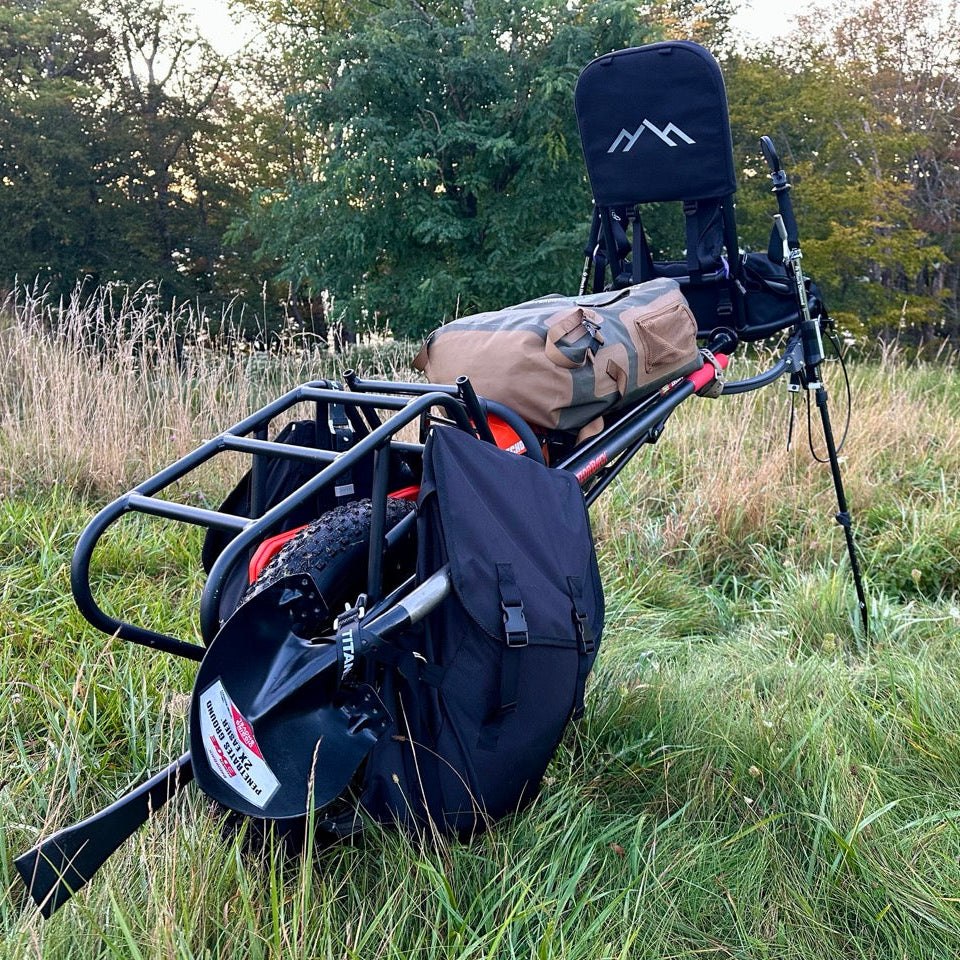
RuckTruck says the powered model provides extra torque and up to 5.5 hours of runtime. That detail is especially relevant for people dealing with long approaches, steep climbs, heavy field gear, or work where the outbound trip is only half the problem. Nobody wants to triumphantly deliver tools, supplies, or camp gear somewhere remote and then remember that the return trip still exists.
The e-assist version also weighs more: 48 pounds compared with 35 pounds for the non-powered model. That is the classic outdoor gear negotiation. Add power, gain capability, accept weight. The right choice depends on whether your use case is occasional moderate hauling or repeated heavy trips where powered assistance could keep the whole mission from becoming a sweaty character study.
It also comes in two listed colors, Desert Sand and Granite Gray, which are exactly the shades you would expect from a product designed to disappear into a garage full of coolers, tarps, boots, and things you insist are “for emergencies.” The product page shows standard and e-assist options rather than a maze of editions, which is refreshing in a world where a water bottle can have a trim hierarchy.
Born From A Much More Human Problem
The backstory makes the RuckTruck more interesting than a normal outdoor hauling frame. RuckTruck says the design grew out of the same engineering behind the Cascade Cart, which LJ Wilde originally created so his daughter Luci, who lives with a rare disability, could continue joining the family on hikes and outdoor adventures.
That origin matters because the product does not feel like someone started with a spreadsheet titled “make hunters buy another thing.” It began with access, load management, and getting people and gear across terrain where ordinary solutions fail. RuckTruck is the rugged gear-hauling branch of that family tree, aimed at backcountry crews, hunters, rescue teams, trail workers, and outdoor explorers with enough equipment to qualify as a small migration.
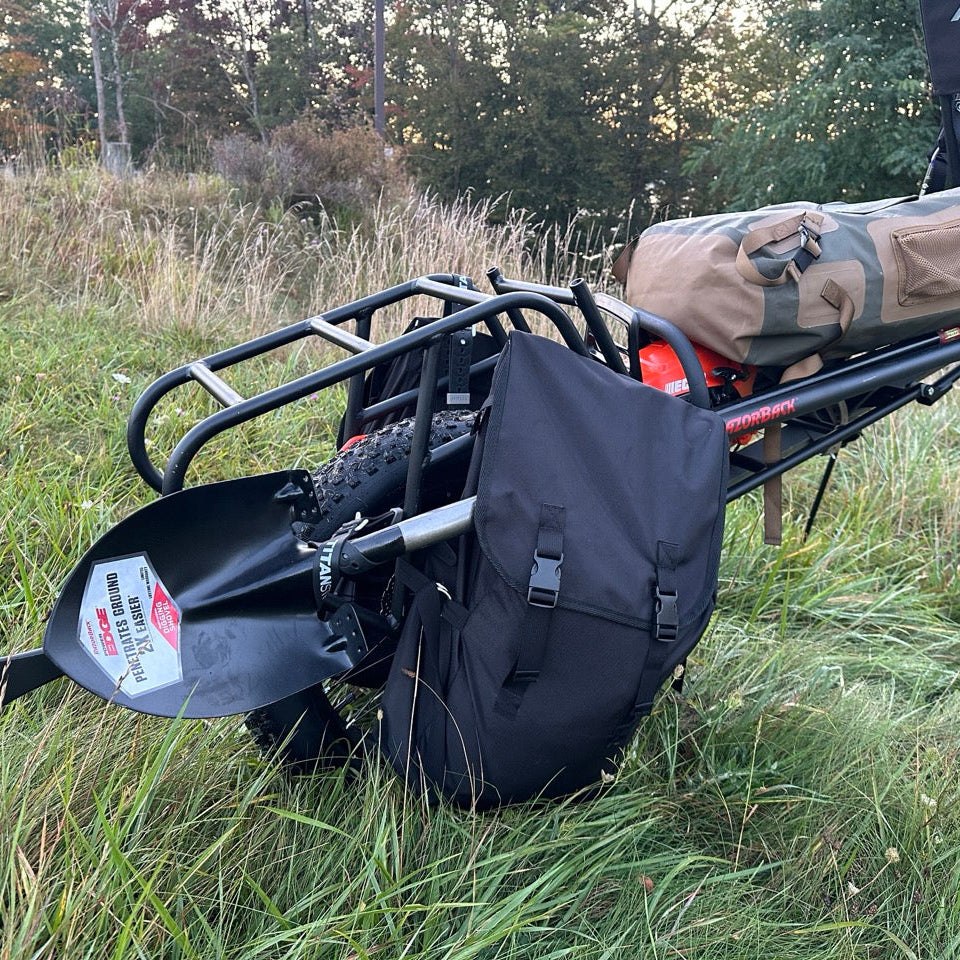
GearJunkie highlighted the RuckTruck in its July 17, 2026 emerging gear roundup, noting its one-wheel hauler format, backpack-like frame, 220-pound capacity, optional electric assist, and possible use beyond hunting for trail maintenance, search-and-rescue teams, and outdoor explorers. That outside mention helps confirm the product is not just a quietly listed oddball on a storefront; it is a new outdoor gear idea getting attention for the right reasons.
Still, the public-facing question is simple: who is this for? It is probably overkill for a casual campground where your biggest challenge is carrying marshmallows from the hatchback. It makes much more sense for people who routinely move awkward, heavy, or mission-critical loads through places where a vehicle, ATV, sled, or normal cart is impractical.
For Hunters, Trail Crews, Field Teams, And Chronic Overpackers
The RuckTruck product page specifically mentions hunting gear, worksite equipment, and multi-day off-grid trips. GearJunkie also mentions hunting, trail maintenance, search-and-rescue teams, and outdoor explorers. That gives the product a surprisingly broad lane: not just recreation, but serious outdoor work.
Hunters may see the appeal immediately because packing out heavy gear or game over uneven ground is nobody’s idea of a relaxing stroll. Trail crews could use a narrow, rugged hauler for tools and supplies. Search-and-rescue teams may appreciate a load carrier that can go places vehicles cannot. Campers and expedition types may simply enjoy the intoxicating possibility of bringing too much stuff and suffering slightly less for it.
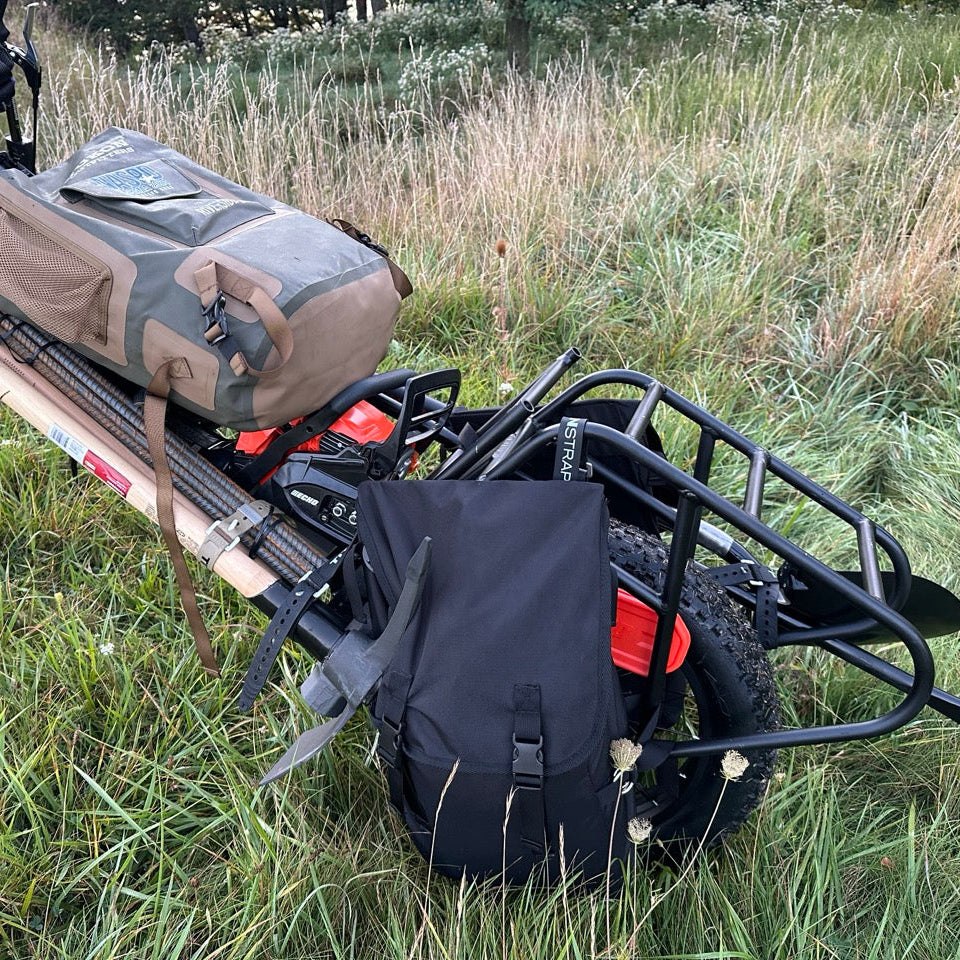
The open-frame design is also a strength. RuckTruck says the frame includes multiple attachment points and can be used with tie-down straps, bungee cords, and other fastening systems to secure coolers, tool bags, camping gear, hunting equipment, and more. That means the product is not locked into one proprietary bin or one oddly specific payload shape. It is more like a rolling skeleton that politely asks you to strap down your chaos.
There are limits, of course. A 220-pound payload rating does not make every trail, user, or load configuration magically sensible. Balance, terrain, slope, weather, physical ability, and how well the load is secured will all matter. It is still outdoor hauling, not teleportation. But if your current method is “make a second person carry the terrible part,” RuckTruck at least offers a more engineered conversation.
Key Details Before You Start Naming It
Near the buying end of things, the RuckTruck is currently listed for preorder through the official RuckTruck store. The standard model is listed at $1,799 sale pricing with a $1,999 regular price, while the e-assist upgrade appears in the product data at $2,799 sale pricing with a $2,999 regular price. Shipping timelines are listed as to be announced as production batches are finalized.
- Product: RuckTruck one-wheel outdoor utility cart and backcountry gear hauler.
- Core function: helps move heavy gear across rugged terrain with a wearable front frame and single rear all-terrain wheel.
- Payload: up to 220 pounds according to the official listing.
- Models: standard non-powered version and e-assist upgrade.
- Runtime: e-assist model lists up to 5.5 hours of powered assistance.
- Best fit: hunting, camping, field operations, trail work, search-and-rescue support, and gear-heavy off-grid trips.
- Availability: preorder through RuckTruck, with production-batch shipping timelines still to be announced.
So yes, it is expensive, specific, and probably unnecessary if your idea of roughing it is walking from the hotel parking lot to the scenic overlook. But for people who regularly drag serious gear through places that treat ordinary carts like snacks, the RuckTruck is a wonderfully weird answer to an old outdoor problem: how do you bring the heavy stuff without becoming the heavy stuff?
| Pros | Cons |
|---|---|
| 220-pound listed payload gives it serious hauling potential. | Preorder status means final shipping timing depends on production batches. |
| Single fat wheel and narrow layout suit rougher access than many wagons. | It still requires balance, strength, and smart loading by the user. |
| Wearable harness shifts the concept away from ordinary hand-cart pulling. | The standard model starts at a premium price. |
| Optional e-assist helps with long hauls and climbs. | E-assist adds weight compared with the non-powered model. |
| Folding frame helps with transport and storage. | Folded size is still substantial, not apartment-closet tiny. |
| Open attachment points allow flexible load setups. | Accessories for specialized uses are still being developed. |
| Useful across hunting, trail work, camping, and field operations. | Overkill for casual car camping or short, flat carries. |
Where to find This One-Wheel Backcountry Gear Hauler Lets You Drag 220 Pounds Into Bad Decisions
OddityMall may earn a commission from qualifying purchases at no extra cost to you.