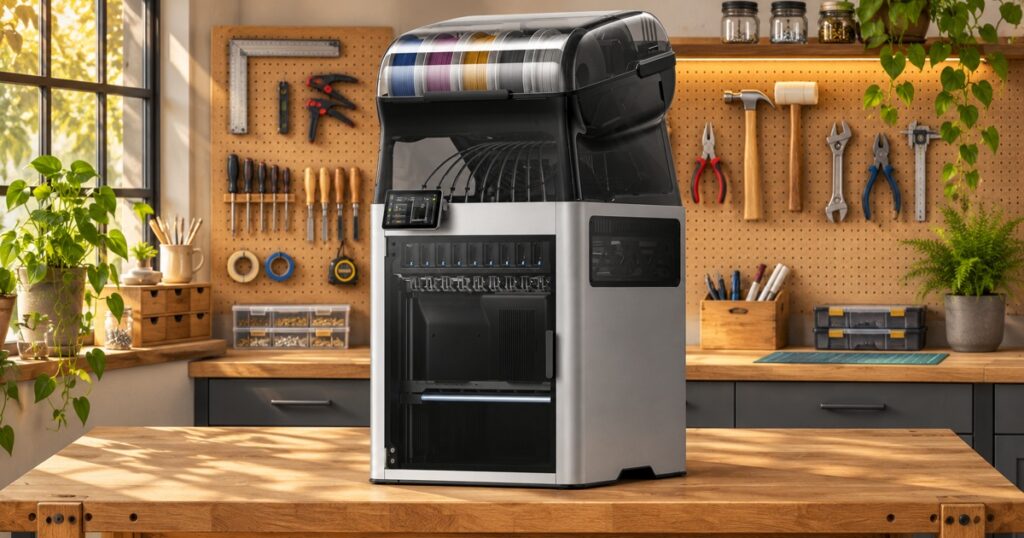
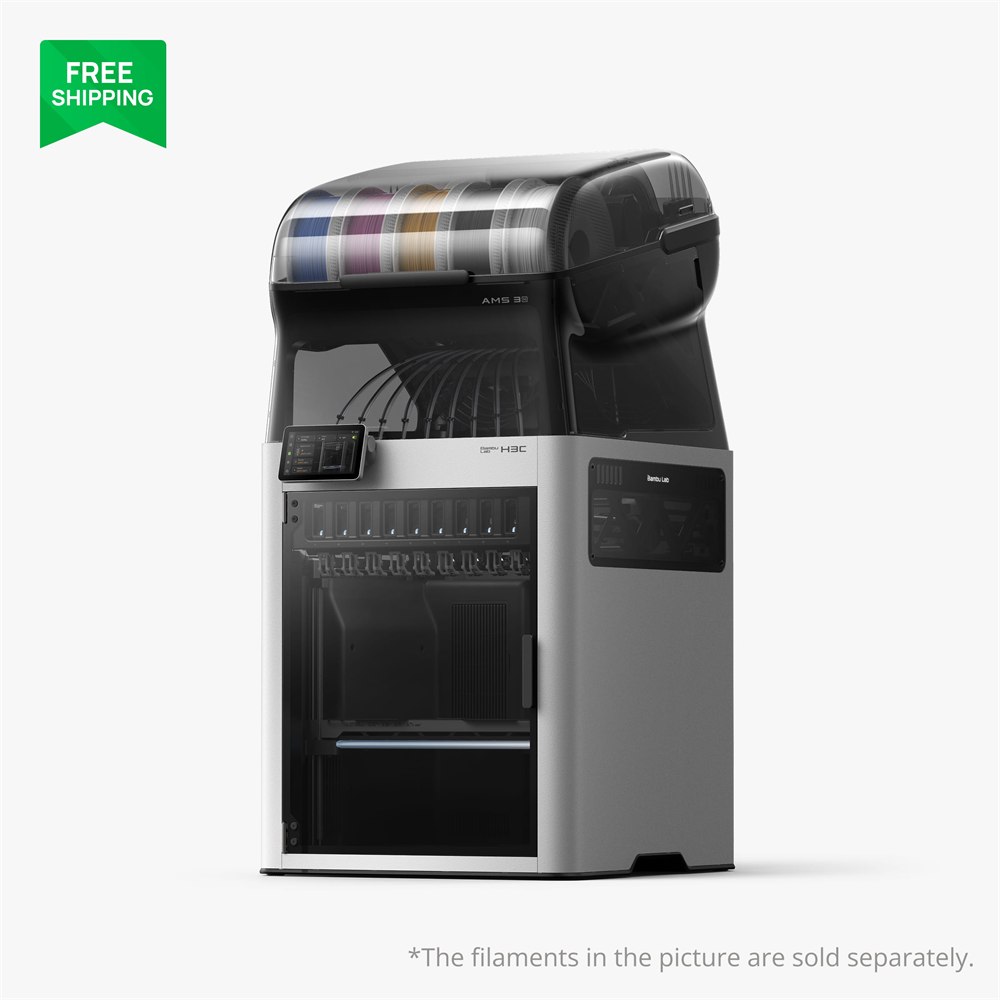
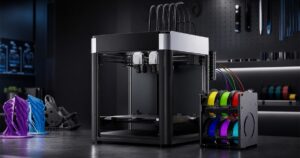
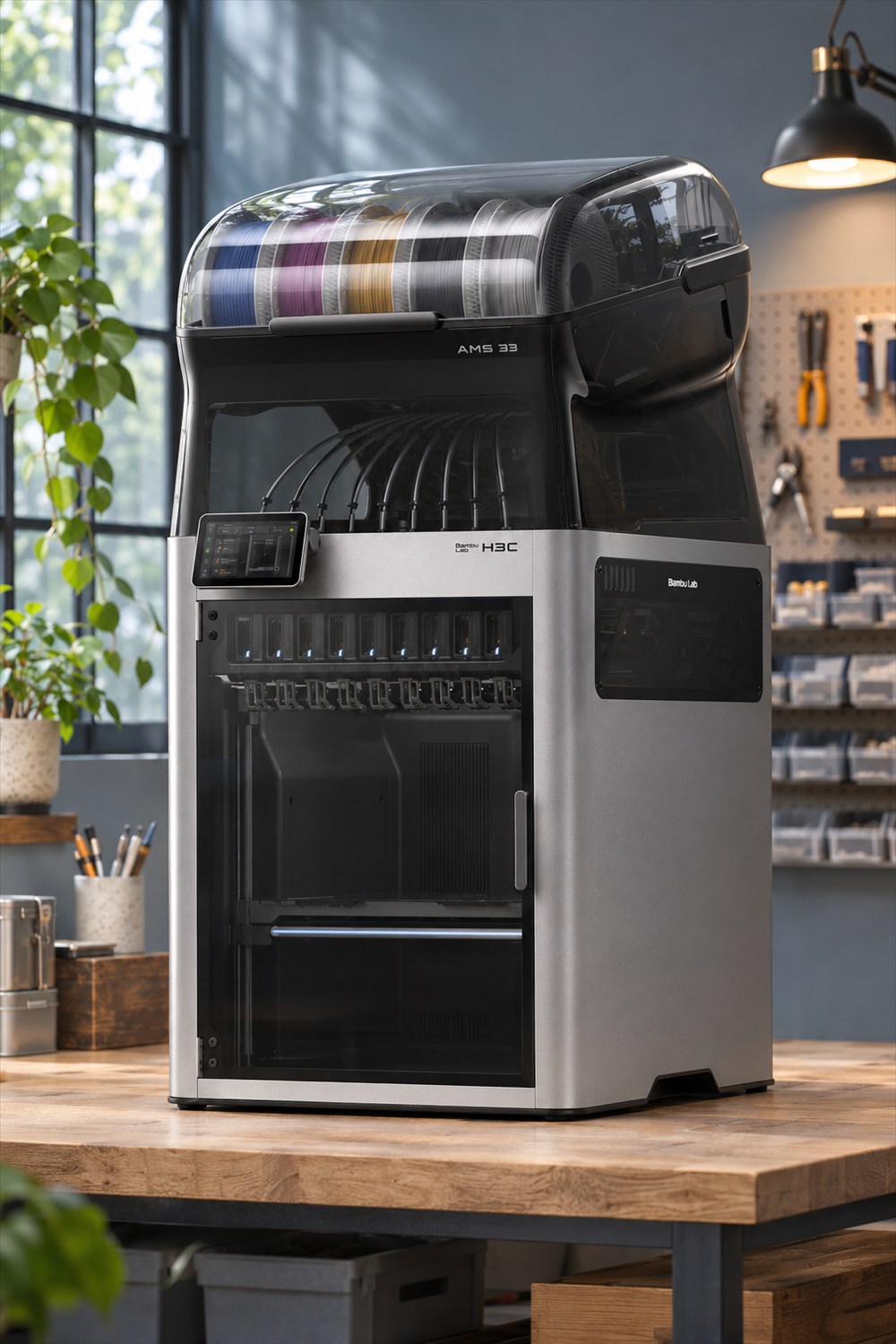
Look through the front door of the Bambu Lab H3C and there’s a neat row of tools hanging above the print bed. They look rather like the keys to nine apartments. Each has its own heater and filament path, and the printer can pick one up mid-job, put it back, and reach for another. That’s how a machine with one moving carriage can print both a watch case and the soft strap that fastens it to your wrist.
The distinction matters if you’ve ever watched a color change take longer than the little patch of color you actually wanted. A red second hand on a white dial might take very little plastic. Getting the last of the white out of the nozzle so the red doesn’t come out pink is another matter. Do that dance up through the layers of a model and suddenly the waste pile has a respectable claim to being your second print.
What happens during a tool change?
The H3C keeps the filament with its tool. When the carriage parks one PrintTool, the material threaded through it can stay put. The next tool has its own supply, and the printer looks ahead in the job so it can start heating the nozzle before the carriage needs it. Bambu calls the system Swaptek and quotes as little as six seconds from printing with one material to printing with the next. That’s a best case for the switch, not a promise about how long the whole object will take.
There are two nice consequences. One is less plastic spent flushing an old color out of a shared path. The other is that you can spend those nine parking spaces on things besides color. A fine nozzle for lettering, a nozzle for soft material, and a tool carrying support material can all have good reason to show up at the same job. Nobody has to stand beside the printer holding the next spool like a caddy.
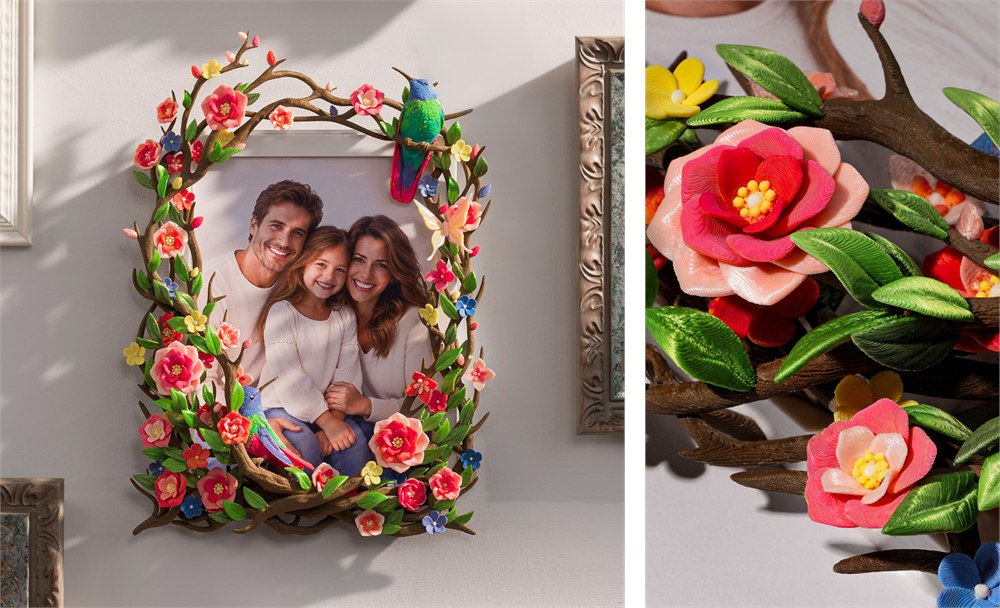
Take Bambu’s floral picture frame. Five tools handle the color work. Another lays down water-soluble supports; the remaining three add visual texture with silk and wood-effect filaments. Look at the blossoms, then at the knobbly branches underneath them. Painting all of that after printing would be a perfectly good hobby. It would also be a second hobby, which is quite a commitment for somebody who just wanted a frame for Grandma.
Spend the tool slots where they count
- Give small lettering a finer nozzle while a larger one builds the surrounding body.
- Use a separate support material where a tool or a pair of fingers would struggle to reach.
- Change how an object bends from one area to the next by assigning different grades of flexible filament.
- Save some slots for texture. Two pieces of plastic can be close in color and still catch the light quite differently.
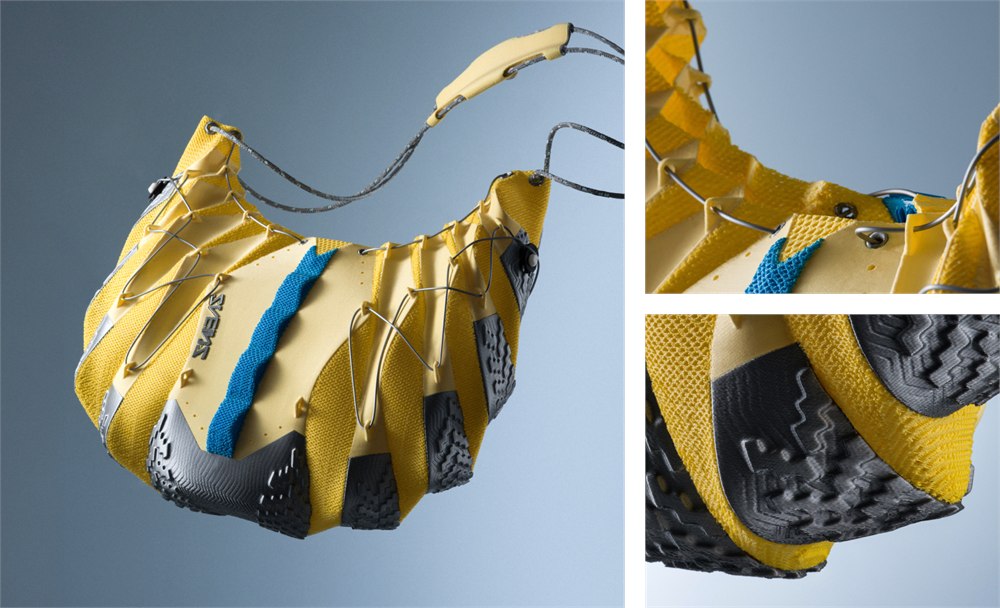
The yellow and blue gather bag in Bambu’s examples makes the case for that third trick. The body uses softer 75A TPU where the bag should stretch and firmer 95A TPU where it needs structure. A third grade, 90A, provides cushioning underneath. Imagine picking up a tote by the top and having the base come along a moment later like a very reluctant jellyfish. Deciding where the bag gives and where it holds its shape is a design decision a color swap alone can’t solve.
| H3C example | Job for the tool changer |
|---|---|
| Floral frame | Color, surface texture and removable supports in one piece |
| Gather bag | Three grades of TPU for stretch, structure and cushioning |
| Maker Watch | Fine dial markings, a rigid case and a flexible band |
| Hinge lamp | A fine ratchet and a soft cushion inside a rigid joint |
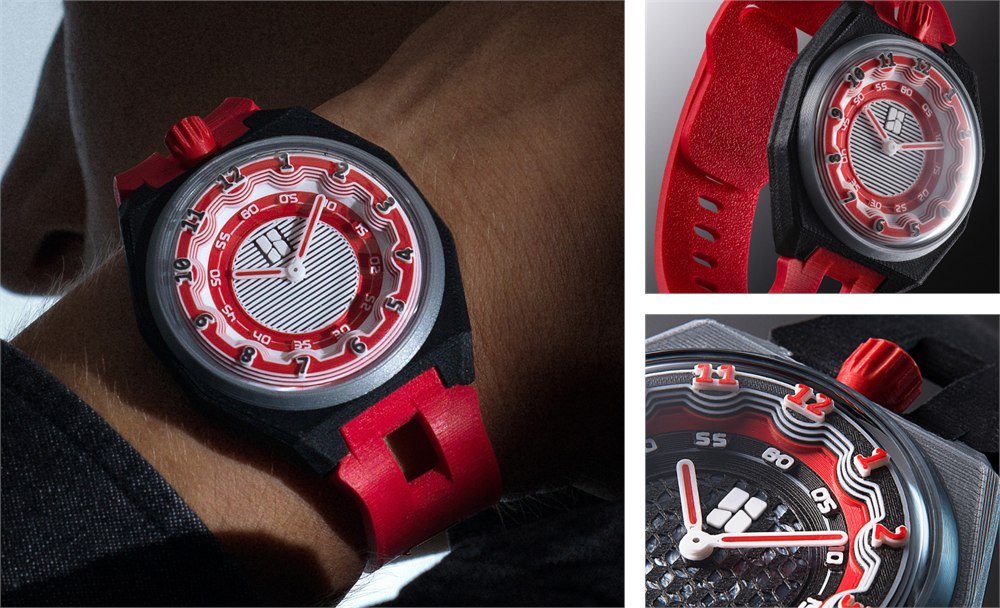
The watch is my favorite argument for mixing nozzle sizes. Look at the little indices around the face. You want the lines sharp enough to tell the time, but nobody is going to peer through a loupe at the great unbroken sides of the case. The example uses a 0.2 mm nozzle on the indices and a 0.4 mm nozzle for the case. The strap gets soft TPU. Bambu says the printed dial, case and band come off the plate together. The movement is a separate kit; this printer has many talents, but printing the time isn’t one of them.
There’s a shopping detail hidden in that handsome watch photo, too. Bambu specifies three 0.2 mm hardened-steel hotends for the Maker Watch model, sold separately. Nine available tool positions don’t mean every possible combination of nozzle sizes comes in the box. If one particular model is the reason you’re clearing a spot in the workshop, read its parts list before giving away the shelf.
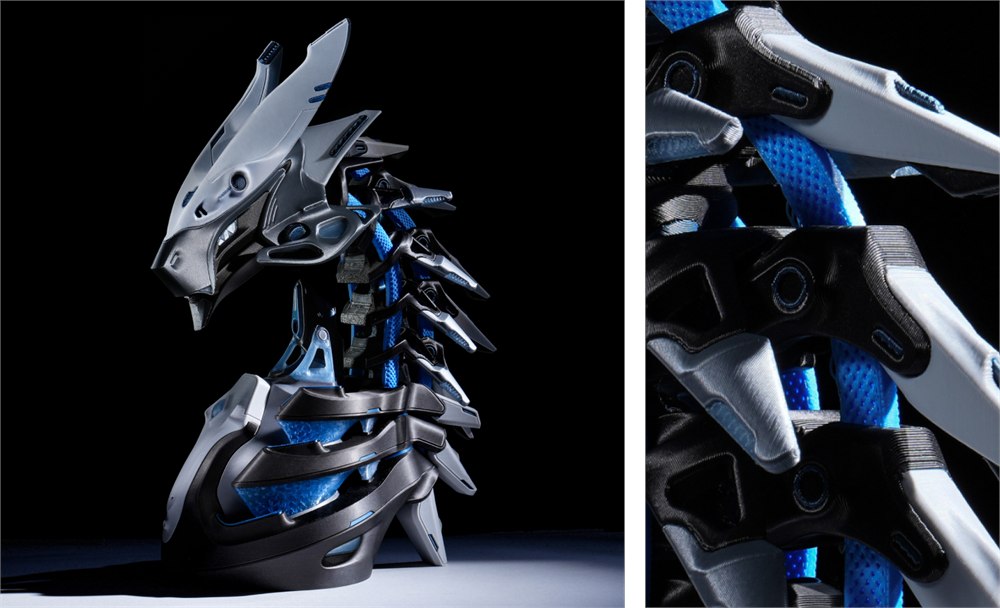
For a more theatrical anatomy lesson, there’s the Frostspine dragon bust. Its frame is rigid PLA, its ball joints have cushions printed in 90A TPU, and softer 75A TPU runs through the structure like ligaments. A shelf dragon could have gotten by on looking ominous. This one gets an actual reason to have a spine. The useful idea underneath the scales is that different materials can share a joint without requiring you to fish a tiny loose bushing out from under the workbench.
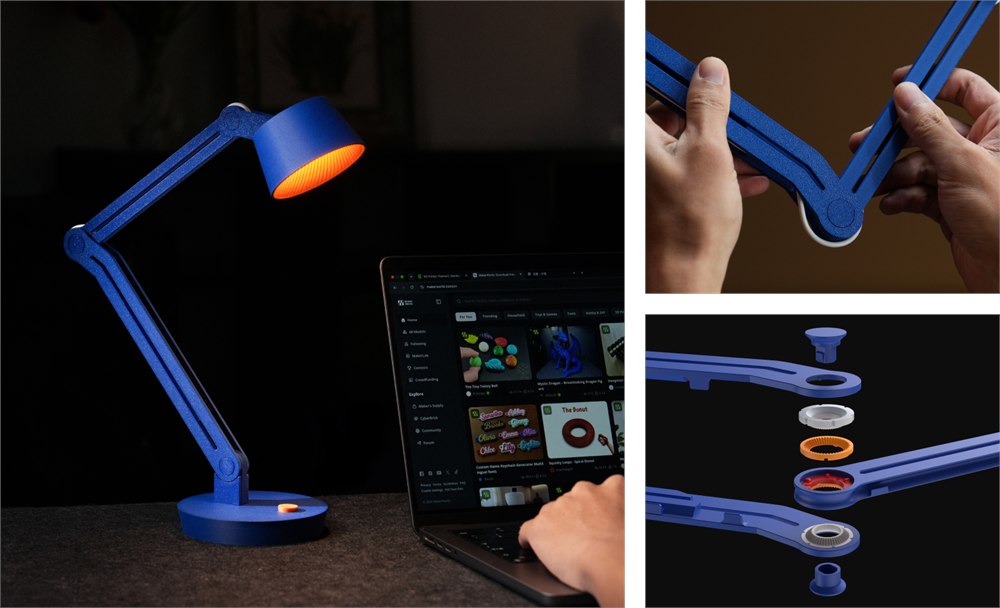
The same idea shows up in a quieter place on the hinge lamp. A soft cushion sits between rigid shells and a fine nozzle forms the ratchet. One part provides the spring and another defines where the hinge stops. It’s a better demonstration of what nine tools buy you than nine stripes on a cube, although nobody from the cube community has returned my calls.
What to know before making room
- The usable build volume is 330 by 320 by 325 mm. Those are print dimensions, not the dimensions of the cabinet.
- Up to nine independent PrintTools can stay loaded for the job.
- Enclosed filament storage and feeding, active chamber heating and cooling, and built-in drying are part of the system.
- Model-specific materials, hotends and finishing hardware can add to the shopping list.
The H3C Combo is listed at $2,499 at the Bambu Lab Official Store in the US. For someone printing identical drawer knobs in one material, that’s an elaborate way to avoid a tool change that was never going to happen. For someone designing a joint, a wearable or a model with tiny raised markings, the interesting question is which parts you can now design together. A watch strap that leaves the printer already attached to its case is a pretty persuasive answer.
| Pros | Cons |
|---|---|
| Dedicated paths reduce purging between materials. | Low purge does not mean zero waste. |
| Different nozzle sizes can work on one print. | Some example projects require extra hotends. |
| Rigid and flexible sections can share a design. | Single-material jobs make less use of the tool rack. |
Save this find.
Thank yourself later.
Your next great gift idea. Your someday space. Your collection of wonderfully weird things.
Save to PinterestPick a board. Keep the inspiration.
This Nine-Tool 3D Printer Prints a Watch Case and Its Flexible Strap Together
At a glance
Product snapshot
- Listed price
- $2,499Prices and availability can change. Check the seller for current details.
- Where to find it
- Bambu Lab Official Store
- Category
- Gadgets