Every desk eventually becomes a tiny archaeological site where productivity went to be politely buried. There is the cable layer, the receipt layer, the mystery screw layer, the pen-that-does-not-write layer, and somewhere under all of it, the original dream of becoming a focused adult with a clean workspace.
The Focus Gap Premium Modular Desk System is a walnut-and-anodized-aluminum attempt to negotiate peace with that mess. It is a magnetic desktop ecosystem built around a monitor riser and matching modules, so your laptop, phone, watch, glasses, stationery, tiny plant, and suspiciously important tray of pocket debris can all stop forming their own independent government.
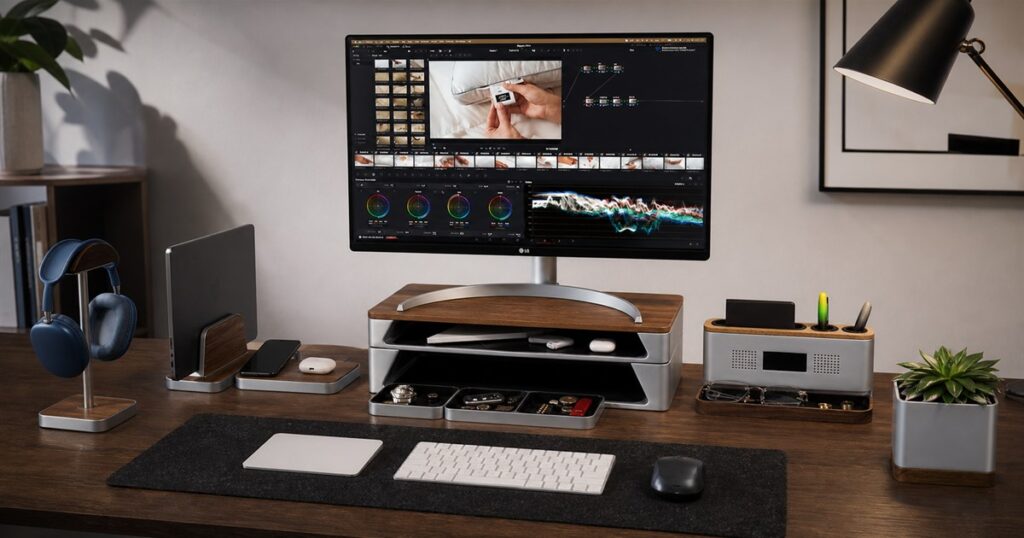
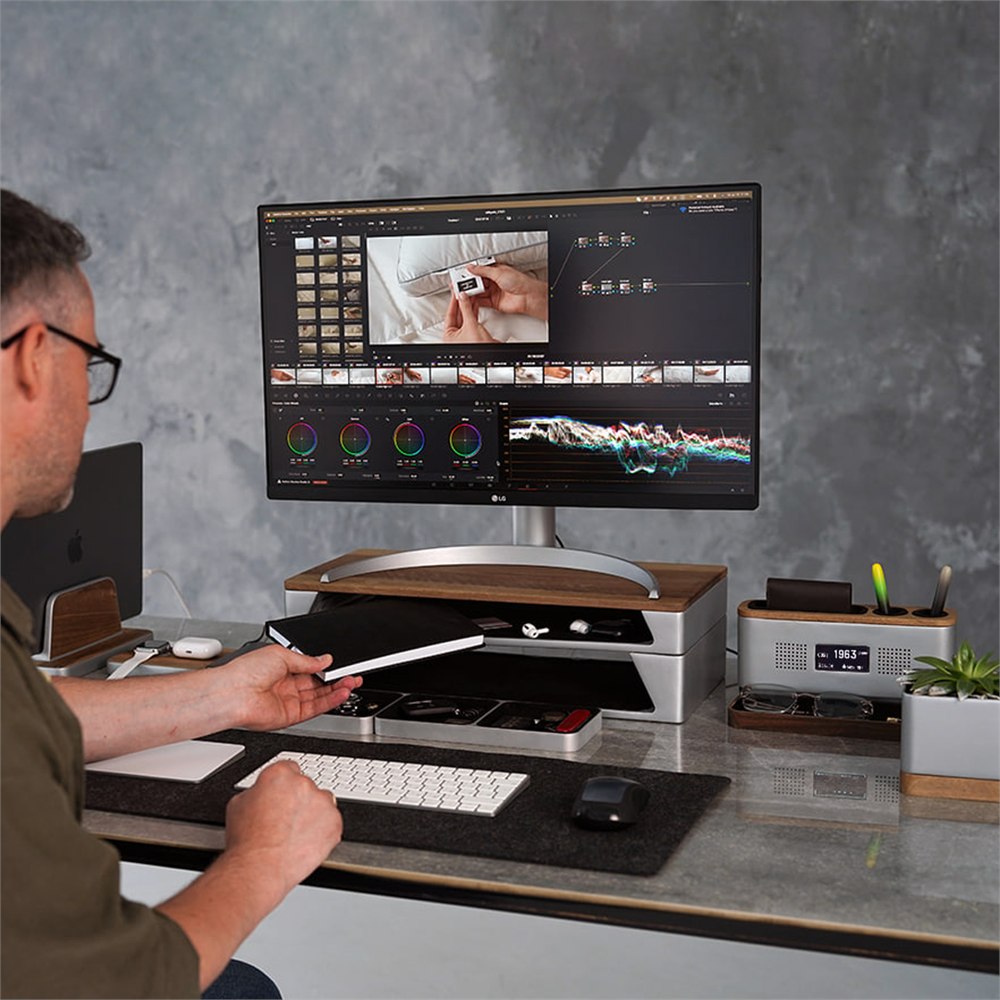
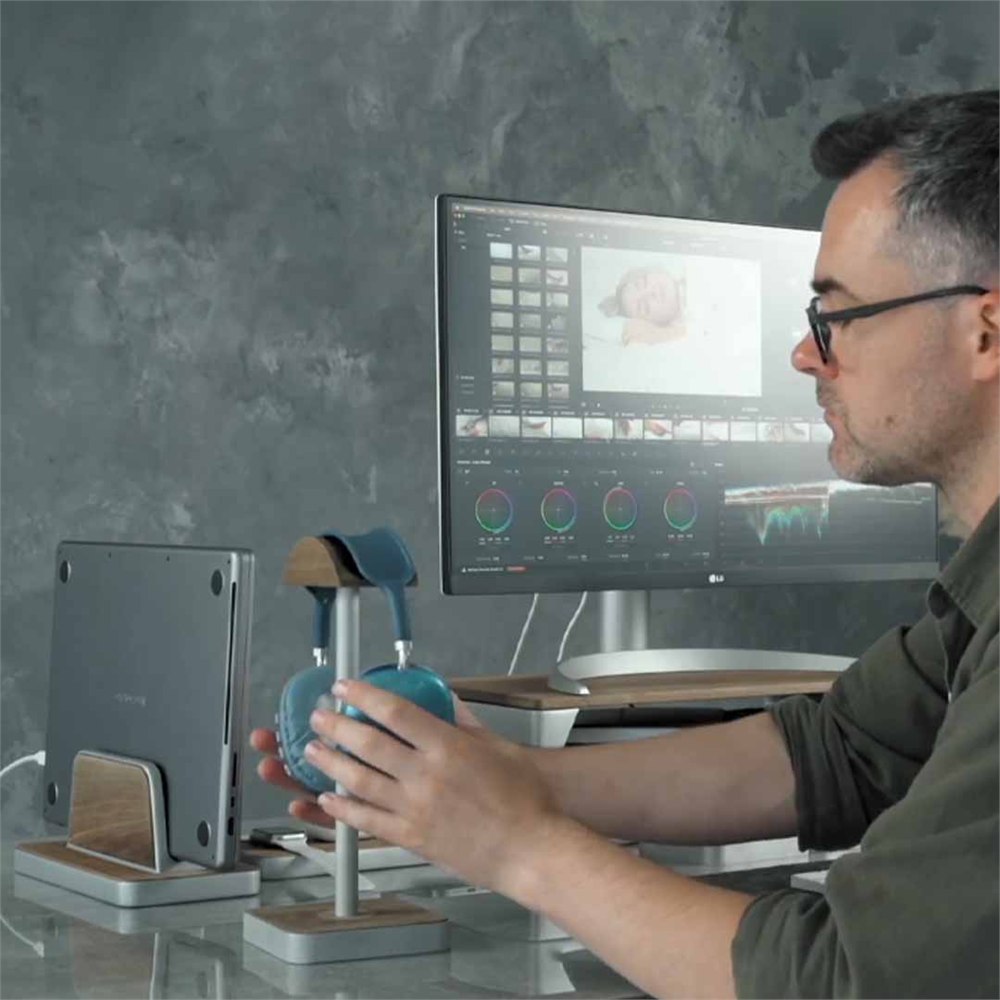
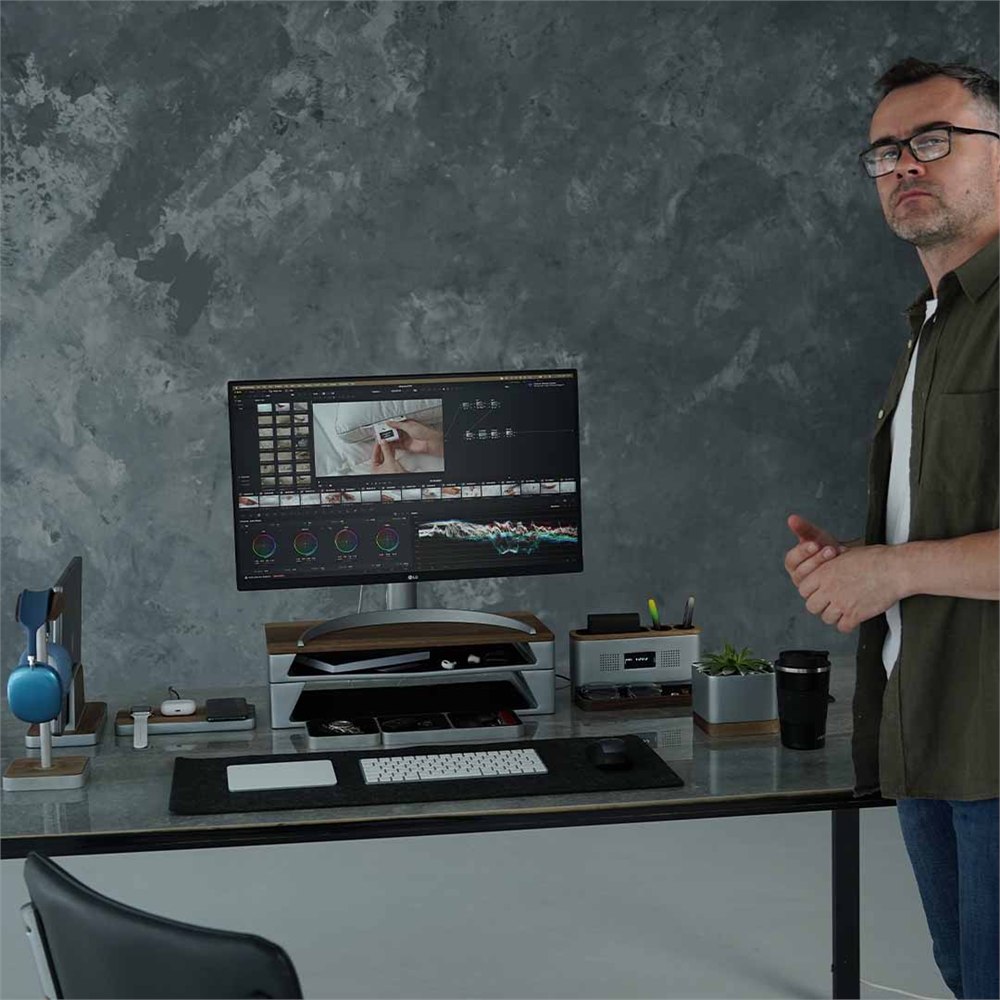
At the center is a monitor stand with warm walnut surfaces, silver aluminum structure, and open storage underneath. Instead of acting like a plain slab of furniture, the system uses magnetic connections and coordinated accessories that can be moved around as your desk needs change. That means the setup can be tidy in a way that still admits humans are going to drop keys, earbuds, pens, cables, and a snack wrapper in the same two square feet.
Focus Gap describes the whole thing as a premium modular desk system, and that phrase is doing a lot of work. This is not just a riser with a drawer pretending to be architecture. The campaign shows a family of matching pieces that can include a monitor shelf, storage trays, a phone and watch charging pad, tablet and laptop stands, a headphone stand, a planter, and a smart organizer module with a front display for CO2, temperature, and humidity.
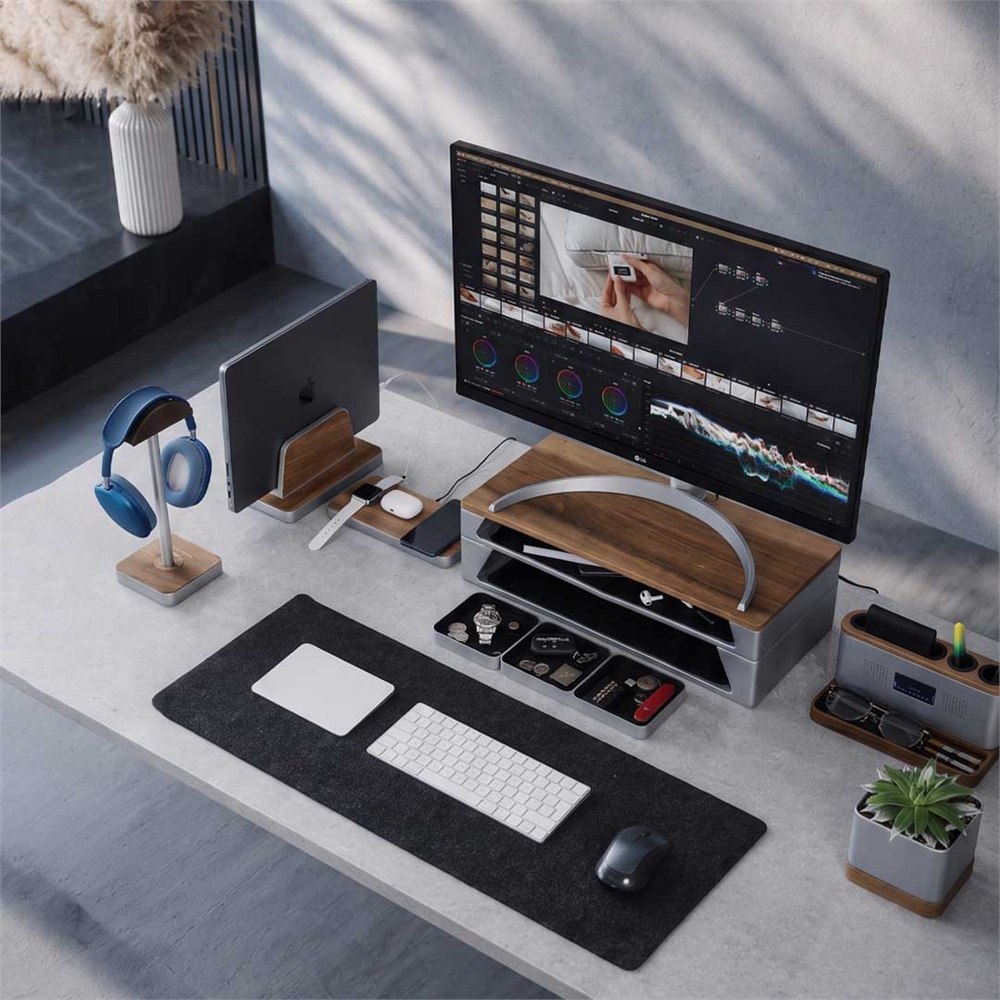
The visual trick is that it all looks like it belongs together. Walnut gives the setup enough warmth to avoid the cold spaceship-desk vibe, while the aluminum keeps it from feeling like a craft-store box that got overconfident. The result is a desktop that says, “I file taxes,” while still quietly admitting, “I also need a tray specifically for the tiny things I cannot emotionally throw away.”
Related posts:


A Desk System For People Whose Accessories Have Accessories
The main monitor riser lifts your screen while opening up storage space below it. In the campaign images, that lower area works for a laptop, tablet, notebook, keyboard, small gear, and the kind of flat electronics that normally slide around like they are training for the office luge. Small pull-out trays can sit beneath or in front of the riser, giving coins, keys, watch bands, drives, adapters, and other desk shrapnel somewhere more dignified than “directly under the mouse.”
The side modules are where the system gets more interesting. A matching organizer can hold pens and a wallet while adding a display module that shows CO2 level, temperature, and relative humidity. The campaign FAQ says the device lets users know when indoor air quality needs attention, which is helpful for anyone who has ever spent three hours in a closed room and slowly become a houseplant with email access.
- A walnut-and-anodized-aluminum monitor riser raises the display and creates open storage underneath.
- Magnetic modular accessories can be rearranged around the desk instead of being locked into one layout.
- Matching trays give small daily-carry items a visible landing zone.
- The smart module can display CO2, temperature, and humidity for quick room awareness.
- Accessory options shown in the campaign include charging, device stands, a headphone stand, and a planter.
This is exactly the kind of product that understands how desk organization actually fails. The problem is rarely that people do not own containers. The problem is that the containers are ugly, mismatched, too far away, or shaped like an accusation. Focus Gap makes the organizational pieces feel like part of the workstation instead of punishment furniture for your clutter.
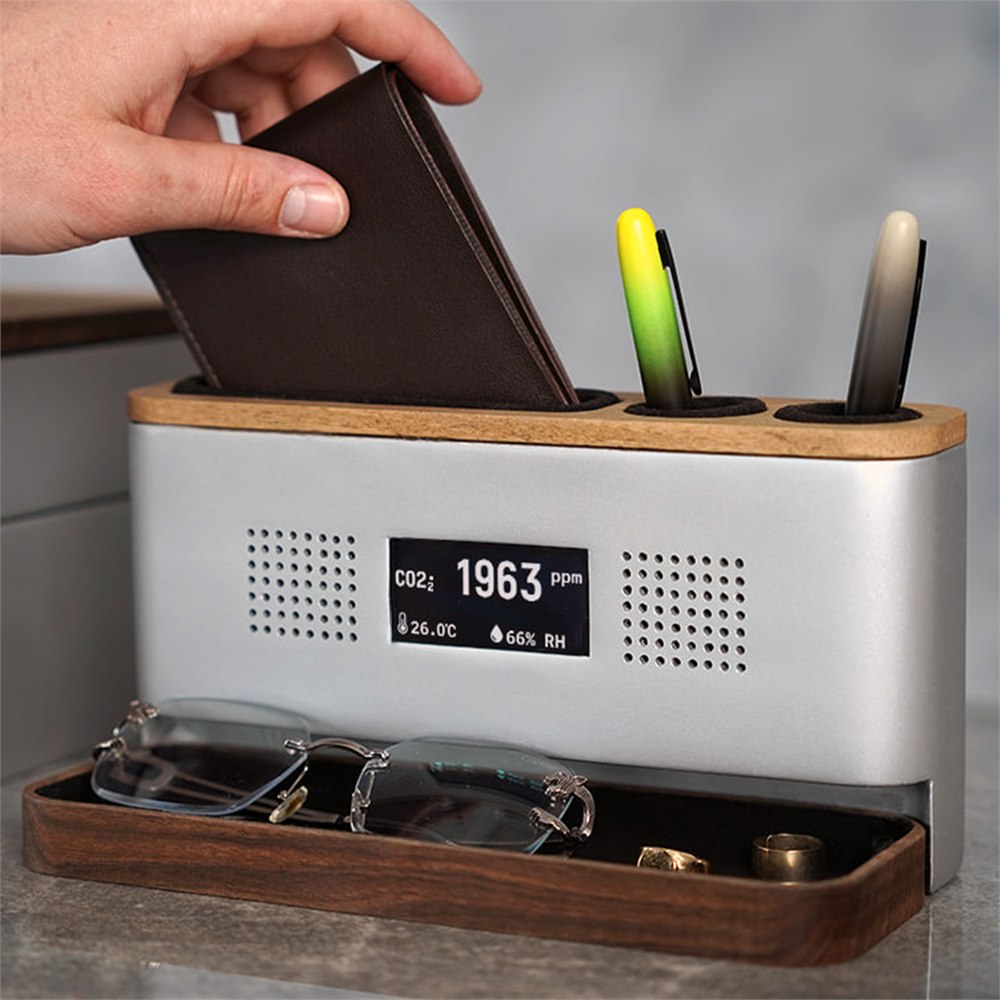
The magnetic approach also matters because a fixed desk organizer can become wrong the moment you change monitors, move your laptop, buy different headphones, or develop a new personality involving fountain pens. With a modular setup, the charging pad can live near the phone, the plant can migrate away from danger, and the tray of mysterious metal objects can remain close enough to monitor, but not so close that it becomes your primary personality trait on video calls.
| Module | What It Handles | Why It Matters |
|---|---|---|
| Monitor riser | Display height and under-shelf storage | Gets the screen up while giving laptops and small gear a place to hide responsibly |
| Storage trays | Keys, watches, coins, adapters, and daily carry | Keeps small objects visible without letting them colonize the whole desk |
| Charging pad | Phone, earbuds, and watch charging | Turns cable panic into a designated landing spot |
| Smart organizer | CO2, temperature, humidity, pens, and small items | Adds room-awareness data without needing another separate desktop gadget |
| Device stands | Tablet, laptop, headphones, and accessories | Helps vertical storage look intentional instead of desperate |
Walnut, Aluminum, Magnets, And The Fantasy Of Having A System
The campaign materials describe a walnut and anodized aluminum build, which gives Focus Gap a more furniture-like feel than the usual plastic desk organizer. The walnut appears across the top surfaces, tray fronts, and accessory accents, while the aluminum gives the modules their clean silver frame. It is very much aimed at people who want their workstation to feel calm, premium, and slightly more assembled than their internal monologue.
That material pairing also helps the pieces blend across different desk styles. A walnut desktop, concrete-look surface, white desk, or dark wood setup can all make sense with this kind of modular kit. It is not invisible, which is good, because invisible desk organizers are just clutter with marketing copy. Instead, it becomes a visible organizing layer that looks like part of the setup.
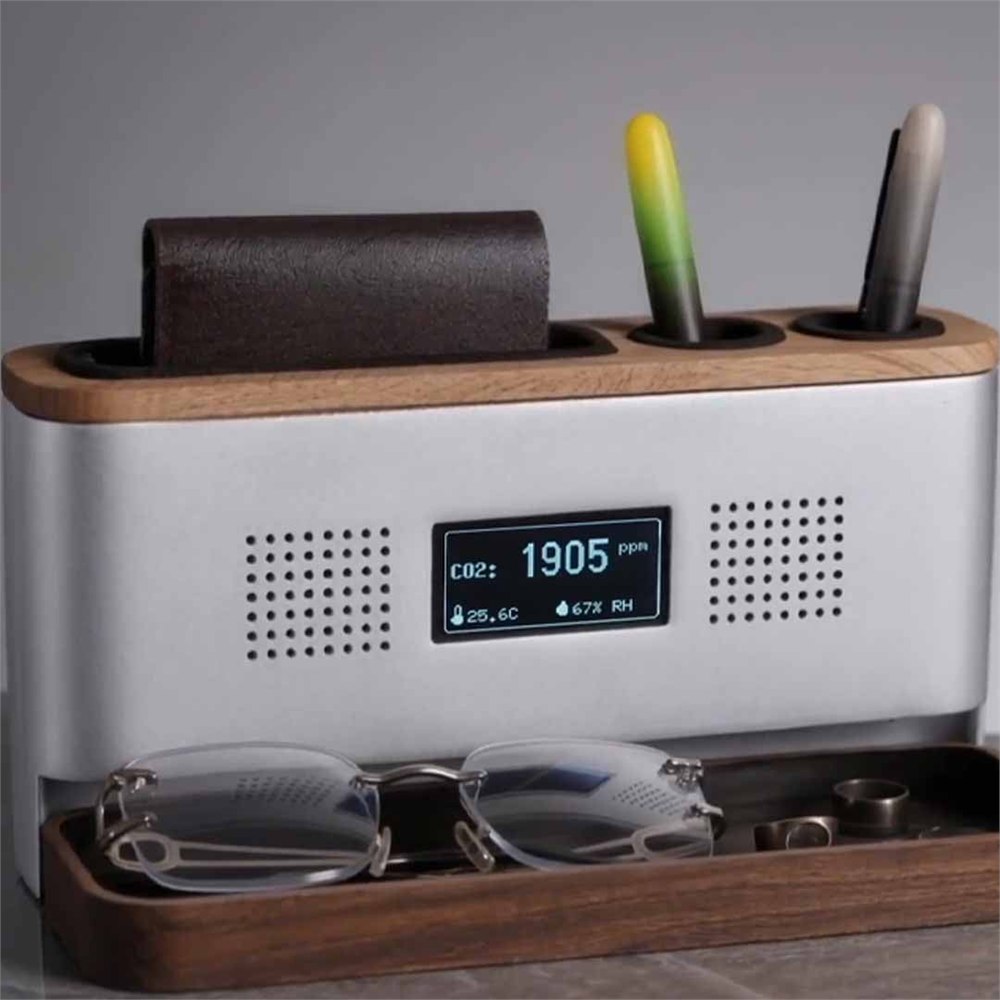
The CO2 display module is the most “wait, my desk has lungs now?” part of the system. The campaign FAQ describes CO2, temperature, and humidity monitoring, with app use listed as optional. That gives the smart module a practical job: letting you see when a room may need fresh air or when your workspace climate is becoming a silent productivity swamp. It does not magically make you open a window, but it does provide the little numerical nudge that says, “Maybe the room is not supposed to feel like a submarine.”
For people who work from home, this is more useful than it may sound. A desk can be physically clean and still feel stale if the room has bad airflow, dry air, or heat building up around electronics. Having a small display integrated into the same organizer that holds pens and daily gear makes the information easier to notice than burying it in a separate app or another gadget that eventually becomes a coaster.
The Modular Part Is The Whole Joke And The Whole Point
Most desk products are sold as if there is one ideal setup. In reality, a desk changes constantly. Mondays need documents. Tuesdays need charging. Wednesday is when the coffee cup gets too close to the expensive keyboard. Friday requires a plant to provide moral supervision. Focus Gap leans into that by making the accessories repositionable, so the system can follow the chaos instead of losing to it.
The campaign shows accessories for common work objects: phone, watch, earbuds, tablet, laptop, headphones, pens, glasses, jewelry, small tools, cables, and greenery. The best use case is probably not someone who owns all modules and builds a tiny command center immediately. It is someone who starts with the riser and adds the accessories that match the specific mess their desk creates every week.
The planter deserves its own tiny bow because every serious desk system benefits from one soft non-electronic thing. A plant module breaks up the metal, screens, and charging pads, while giving the workspace a suspiciously wholesome corner. It will not answer emails, but neither will the other objects on your desk, and at least this one improves morale without needing firmware.
There are practical caveats. Kickstarter campaigns can change shipping timelines, final package details, and exact reward availability before fulfillment. The campaign FAQ notes that taxes, VAT, customs duties, and similar import costs are not included in pledge pricing and may be collected separately depending on location. The product also appears to be a configurable system rather than one single universal box, so buyers should check which modules are included in the specific pledge or package they choose.
That said, the core idea is strong: make the desk system attractive enough that people keep using it, flexible enough that the layout can change, and specific enough that common desk items stop drifting into piles. It is organization for people who want order, but only if the order looks like it was designed by someone who has also lost a charging cable while holding it.
The campaign reward structure varies by configuration, so the most accurate price note is that live Kickstarter reward pricing depends on the selected Focus Gap setup. The project is listed through Kickstarter, with Kicktraq showing a campaign launch date of August 24, 2026, and BackerKit showing the project running during the campaign window. Buyers should use the live campaign page for the current reward tiers, shipping estimates, included modules, and regional cost details.
Key Product Details
- Product: Focus Gap Premium Modular Desk System.
- Core function: magnetic modular desktop organization built around a monitor riser.
- Main materials described by the campaign: walnut and anodized aluminum.
- Shown modules include storage trays, charging pad, tablet/laptop stand, headphone stand, planter, and smart organizer.
- Smart module can show CO2 level, temperature, and humidity.
- App use is described as optional in the campaign FAQ.
- Price: live Kickstarter reward pricing varies by selected configuration.
The Focus Gap Premium Modular Desk System is available through Kickstarter, where reward tiers and included modules can vary by configuration.
| Pros | Cons |
|---|---|
| Combines monitor elevation, storage, charging, and accessories in one visual system | Kickstarter availability means timing and final package details can change |
| Walnut and anodized aluminum look more premium than typical plastic desk organizers | Exact value depends heavily on which reward configuration is selected |
| Magnetic modular layout can adapt as the desk setup changes | People with very small desks may need to choose modules carefully |
| CO2, temperature, and humidity display adds useful room-awareness data | The smart module is helpful, but it still relies on the user to act on the readings |
| Trays and stands give daily-carry items obvious landing zones | Accessory-heavy setups may tempt the user into buying an entire desk ecosystem |
| Planter and wood accents make the workspace feel less sterile | Backers should review shipping, VAT, customs, and regional costs before pledging |
Where to find This Premium Modular Desk System Organizes Your Workspace With Walnut, Aluminum, and Mild Judgment
OddityMall may earn a commission from qualifying purchases at no extra cost to you.