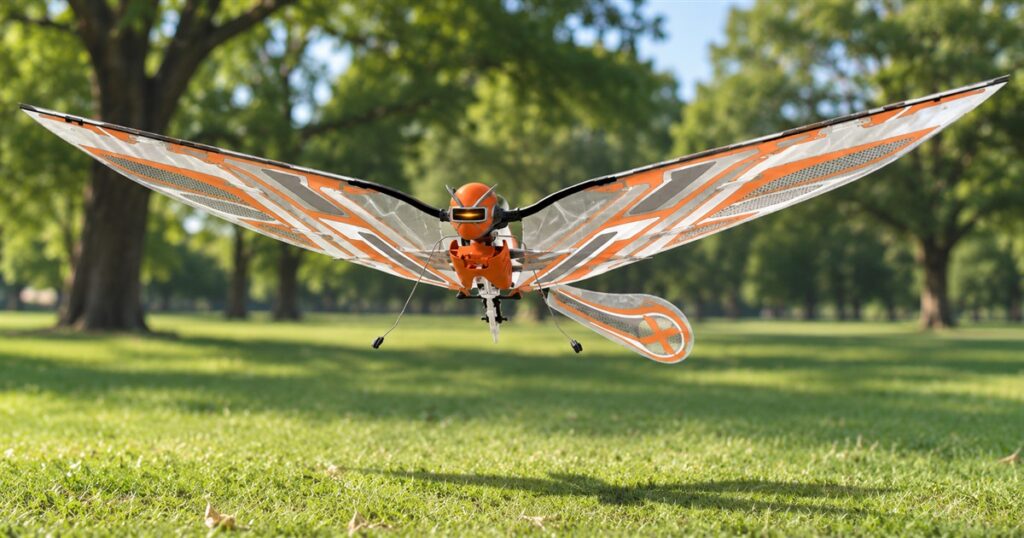
Birds have spent millions of years perfecting flight, and humans have spent a respectable portion of that time wondering whether we could steer one with a phone. X-Fly gets us surprisingly close without requiring a pigeon to accept a software update. This little remote-controlled flying machine beats its wings, glides, and generally makes a conventional quadcopter look like it brought office equipment to the park.
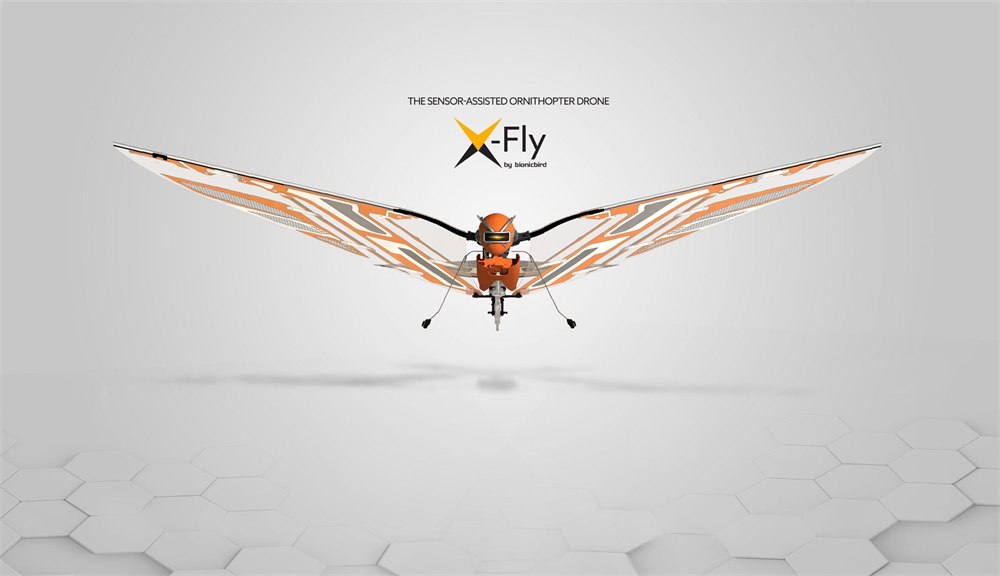
Made by BionicBird, X-Fly is an ornithopter: an aircraft that flies by flapping its wings. The word sounds like a dinosaur with a consulting business, but the idea is straightforward. Instead of spinning propellers, it moves a pair of lightweight wings to propel itself through the air.
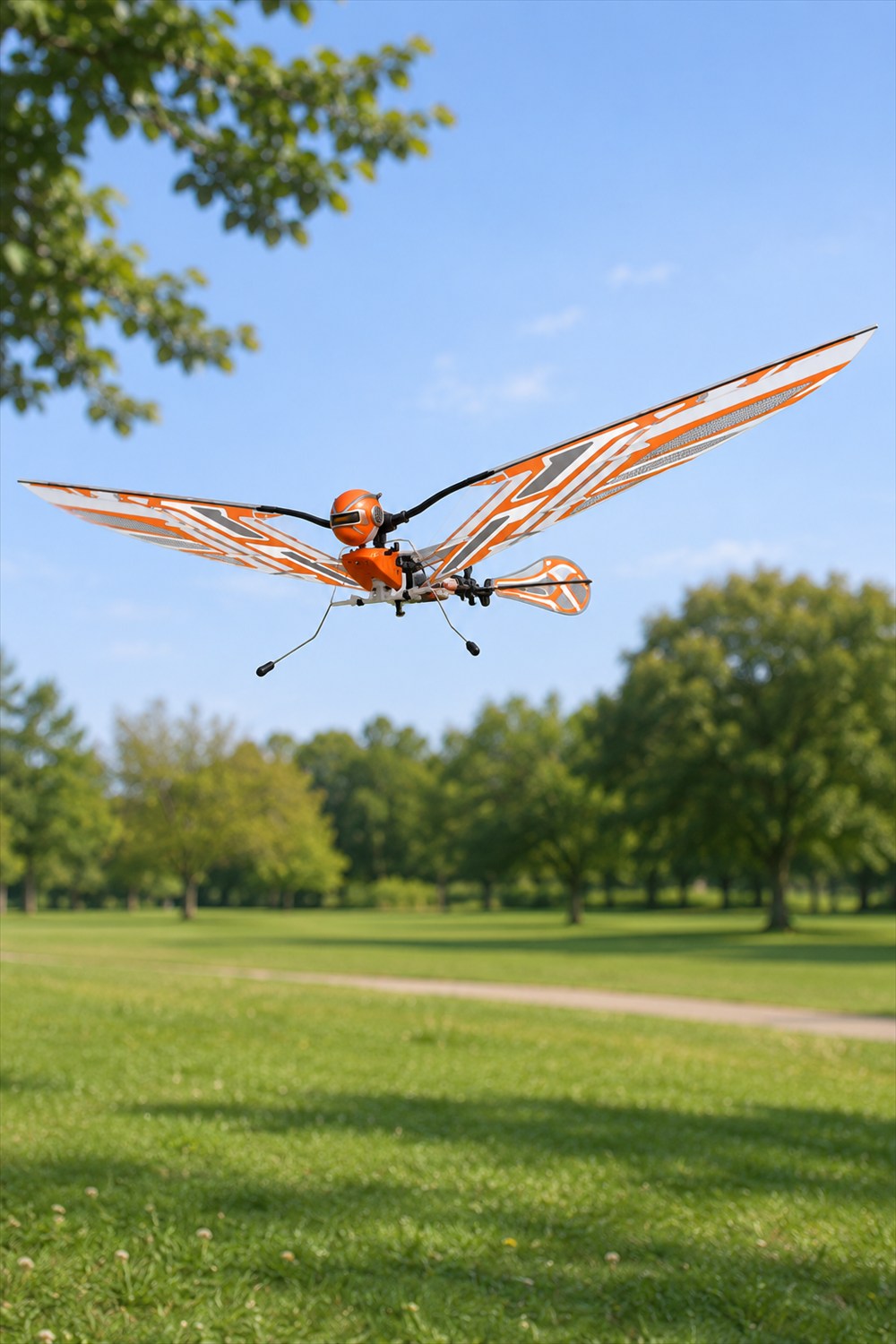
The result looks somewhere between a mechanical bird and an unusually ambitious insect. Orange, white, gray, and black patterns cover the broad wings, while the narrow body leaves much of the tiny mechanism visible. There is no attempt to disguise the engineering. This bird has brought its skeleton to show-and-tell.
Flapping wings do the actual work
X-Fly weighs about 12 grams and stretches roughly 38 centimeters from wingtip to wingtip. That combination gives it a broad silhouette without much mass behind it. It is a small recreational aircraft, built for watching and piloting rather than carrying equipment or filming your vacation.
The maker describes a symmetrical flapping mechanism, with speed controlled through the wingbeat rate. Steering involves deforming the wings, borrowing a trick from actual flying animals. A rear rudder adds directional control while gliding. The appeal is seeing those parts work together, rather than merely watching a plastic shell travel across a lawn.
Related posts:


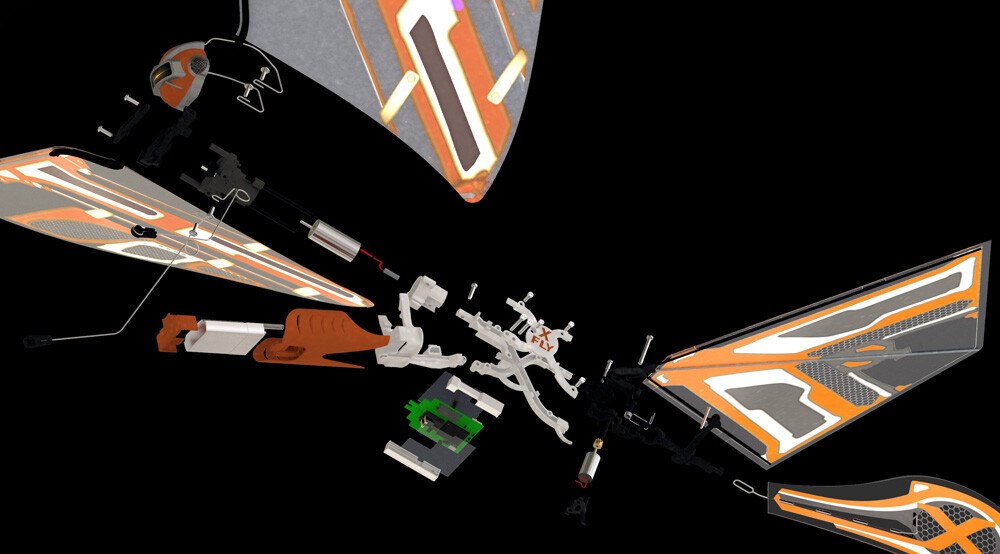
That also changes the rhythm of flying. There is a visible distinction between powered wingbeats and a glide, giving the aircraft a more animal-like movement than a hovering multirotor. Anyone who enjoys small mechanical systems will probably spend an unreasonable amount of time looking at the linkage before even launching it. Understandable. The linkage is doing quite a lot with very little.
A little help for the pilot
Being inspired by a bird does not automatically give the person holding the phone a bird’s coordination. X-Fly uses a six-axis sensor system and flight-assistance software to help. The manufacturer describes assistance for straight flight and turns, including help reducing excessive banking and altitude loss in a turn.
Those aids are intended to make the aircraft more manageable; they do not turn it into an autonomous pet. You still control the flight, choose an appropriate space, and pay attention to where it is going. Think helpful co-pilot, not a tiny employee who can be sent outside with a task list.
- Flapping wings provide propulsion without spinning propellers.
- Sensor assistance helps with straight flight and controlled turns.
- Phone controls let you manage speed, direction, and altitude.
- A removable battery allows a charged spare to replace an empty one.
- Optional accessories add physical controls or extra functions.
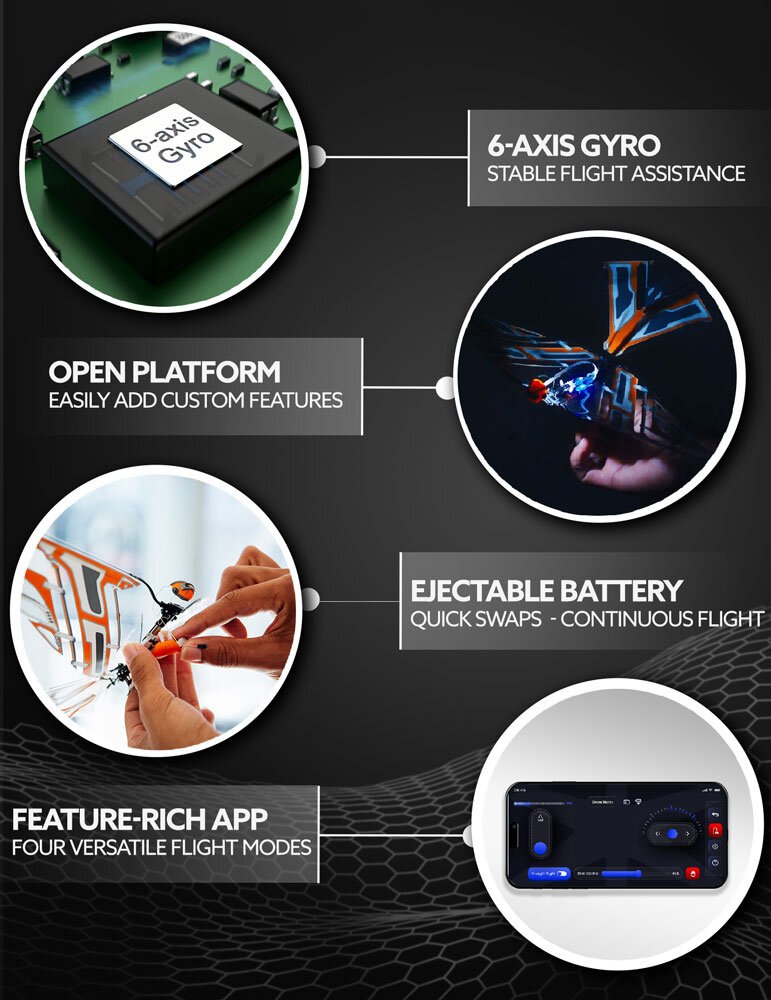
The assistance settings can be adjusted through TheFlyingApp. That is useful because a first afternoon of tentative circles and a later afternoon of more confident flying are different experiences. There is room to experiment with the controls without pretending that everybody starts with the same flying ability.
| Specification | Manufacturer-listed detail |
|---|---|
| Aircraft type | Flapping-wing ornithopter |
| Weight | Approximately 12 g |
| Wingspan | 38 cm |
| Flight time | Up to 12 minutes |
| Battery charging | Approximately 12 minutes |
| Control range | Up to 150 m with Bluetooth 5.2 in suitable conditions |
Your phone gets a second career
TheFlyingApp offers several ways to steer. A portrait touch mode puts the controls under one thumb. A tilt mode uses phone movement for direction while your thumb manages the throttle. Landscape touch control splits the work between two thumbs, which will feel more familiar to anyone accustomed to an ordinary game controller.
The Amazon listing advertises support for iOS and Android. Check the current app requirements against your particular phone before buying, since the phone is part of the control system. This is one purchase where discovering that your handset is unsuitable after opening the box would put a definite dent in the afternoon.
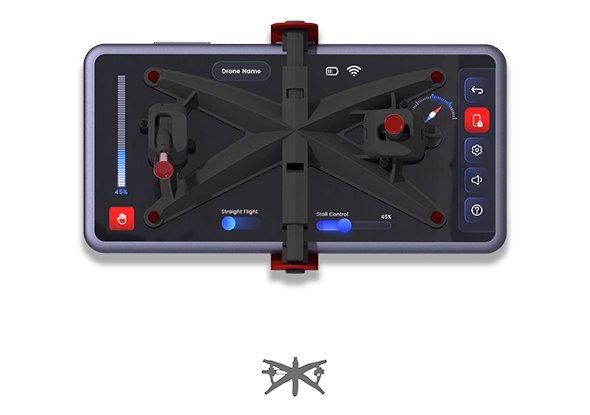
For people who prefer something physical under their fingers, the optional X-Play joystick attaches to the smartphone. It is a separate accessory, not something to assume comes with the basic aircraft. The app also provides tutorials, firmware updates, and settings for compatible add-on modules.
That makes the phone more than a substitute for a radio transmitter. It also holds the instructions and adjustments. Read those instructions before handling the delicate parts, especially when fitting wings or changing the battery. A machine this light rewards a gentler touch than the one used to open stubborn snack packaging.
Short flights, quick battery changes
The stated flight time is up to 12 minutes, with charging taking approximately the same amount of time. Actual time aloft will depend on how you fly and the conditions. The useful detail is that the battery is removable: with a separately purchased charged spare, a depleted battery does not have to end the session.
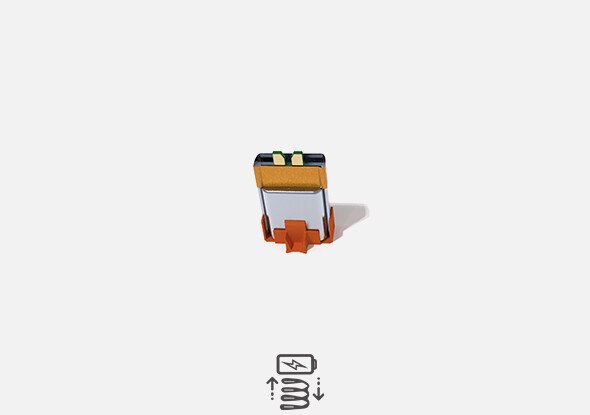
BionicBird also offers replacement parts and optional modules. A light module changes the aircraft’s appearance, while a buzzer can help locate it after a landing in vegetation. These are extras, and the exact contents depend on the package you choose. A photo showing an accessory is not a promise that every box includes it.
The maker describes flexible construction and impact-absorbing parts, but lightweight does not mean indestructible. Give it space, start in calm conditions, and keep it away from people, animals, and obstacles. Its propeller-free design is appealing, yet it still needs a responsible pilot. The neighborhood shrubs have already eaten enough recreational aircraft.
A flying toy for people who like the mechanism
X-Fly makes the most sense for someone intrigued by how things move. The attraction is not a camera feed or a long checklist of automated tricks. It is the sight of an engineered creature making progress through the air with those large patterned wings, responding to your inputs as it goes.
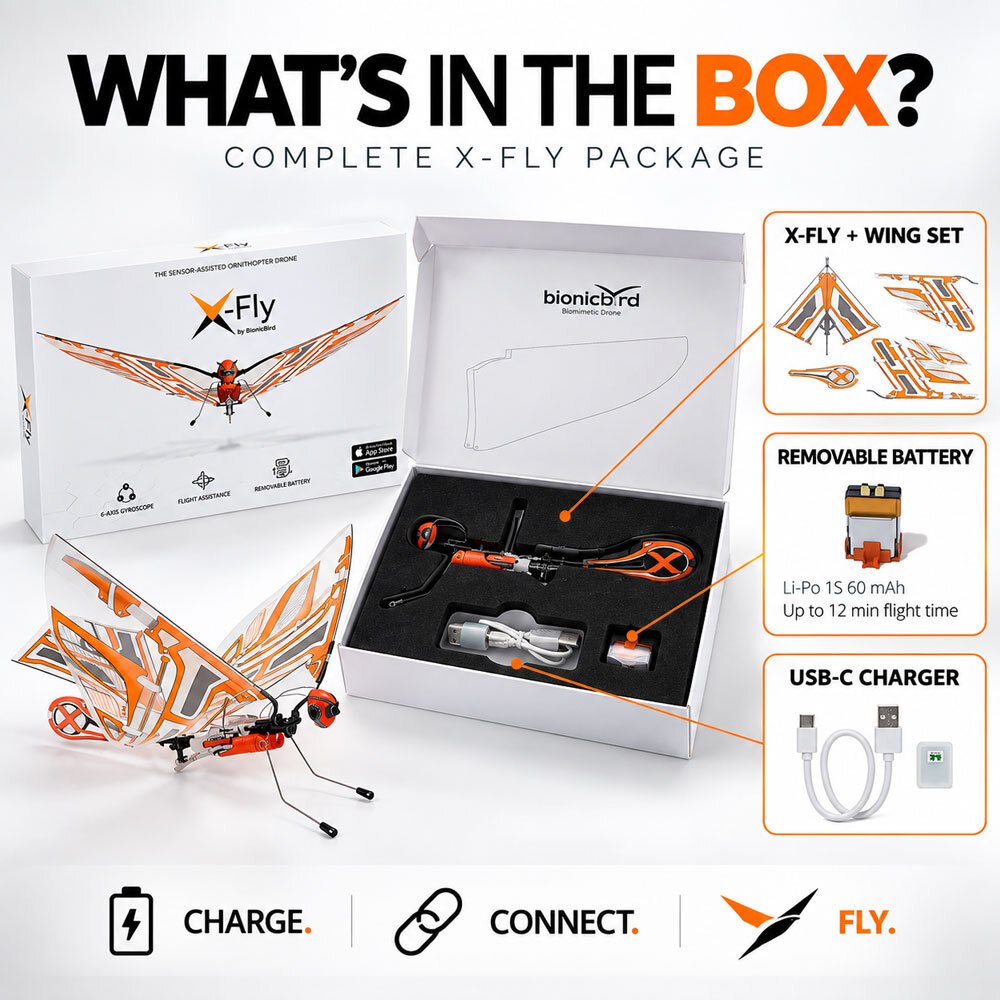
Images: BionicBird.
It is also a more involved gift than a simple toss-and-watch glider. The recipient needs a compatible phone, patience for setup, and somewhere suitable to practice. For the right person, those are ingredients for a hobby. For someone hoping to press one button and walk away, they are homework wearing wings.
- BionicBird X-Fly is a small RC ornithopter with real flapping wings.
- Approximately 12 g, with a 38 cm wingspan.
- Phone-based control with adjustable flight assistance.
- Up to 12 minutes of flight and a removable rechargeable battery.
- X-Play controls, extra batteries, and modules are optional purchases.
The basic X-Fly listing was available on Amazon for $119 when checked, sold by BionicBird Store and shipped by Amazon. Availability and pricing can change. For a pilot who would rather watch wings work than listen to another set of rotors, it is a delightfully strange way to spend an afternoon looking up.
| Pros | Cons |
|---|---|
| Distinctive flapping-wing flight and gliding | Requires practice and suitable flying space |
| Lightweight design with sensor assistance | Delicate components need careful handling |
| Multiple phone control modes | Compatible smartphone required |
| Removable battery and available spare parts | Spare batteries and accessories cost extra |
| Mechanically interesting alternative to a quadcopter | Up-to figures depend on flight conditions |
Save this find.
Thank yourself later.
Your next great gift idea. Your someday space. Your collection of wonderfully weird things.
Save to PinterestPick a board. Keep the inspiration.
This RC Bird Flies by Flapping Its Wings and Takes Commands From Your Phone
At a glance