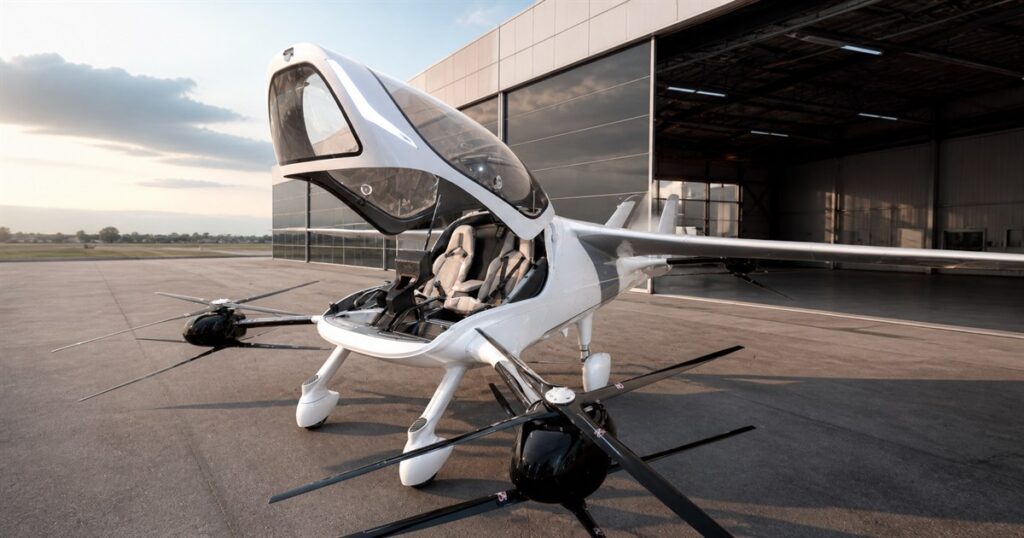
Every generation eventually invents the transportation device that makes the previous generation spit coffee onto a newspaper. The horse got the car, the car got the hoverboard, and now the perfectly innocent driveway is being asked to emotionally prepare for a two-seat aircraft with wings, rotors, and the general vibe of a sports car that discovered clouds.
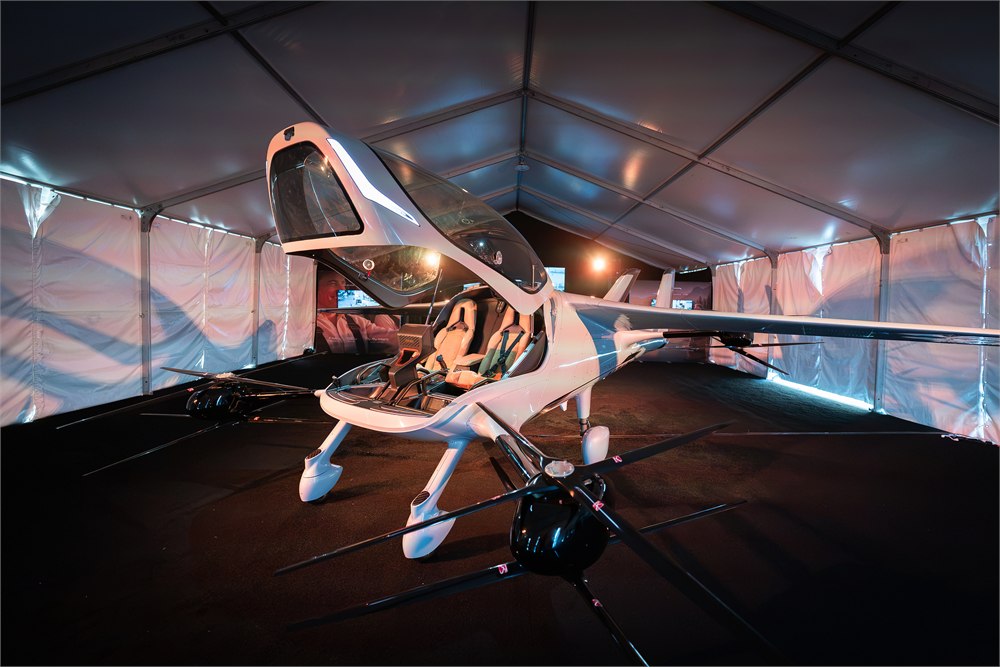
The AIR ONE is a personal electric vertical takeoff and landing aircraft from AIR, and yes, that means the elevator pitch is basically: what if your weekend aircraft could rise like a drone, cruise like a small plane, and make your garage look like it accidentally joined an aerospace startup? It is not a flying car in the cartoon sense, because it is very much an aircraft. But it is built around the dream of private, owner-operated eVTOL flight, which is exactly the sort of phrase that makes suburban zoning boards start sweating through their clipboards.
AIR recently unveiled an updated AIR ONE configuration at EAA AirVenture Oshkosh, and the new version is aimed at the company’s next phase of piloted flight testing. The update brings in a production-oriented airframe engineered by EDAG, custom NIDEC motors, a new aircraft battery, Dynon SkyView HDX avionics, premium seating, an overhead cockpit panel, and cockpit ergonomics meant to make the whole thing feel more intuitive for the person brave enough to tell brunch they may be arriving from above.
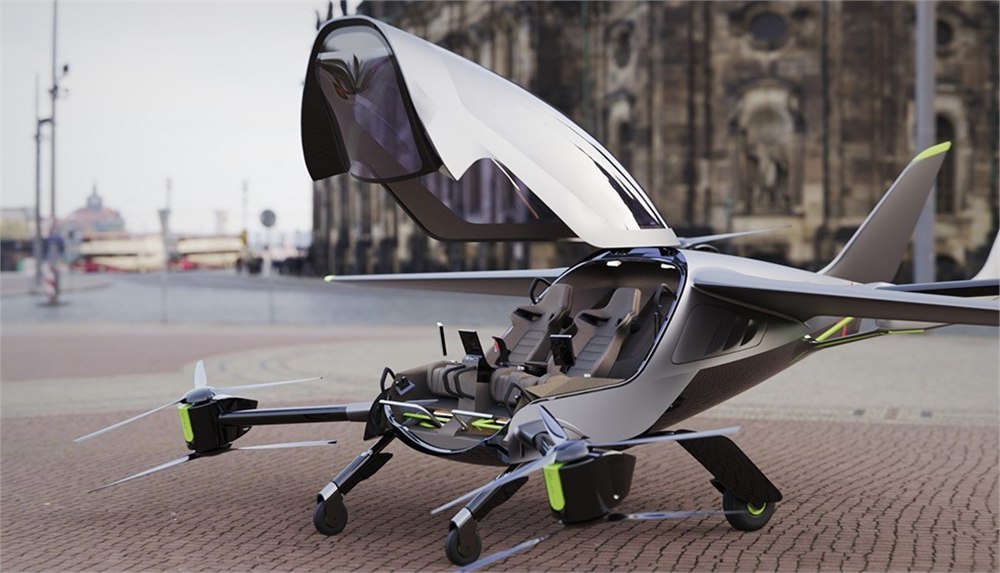
The core layout is still gloriously absurd in the best possible way: a compact two-seat cockpit, fixed-wing aircraft bones, landing gear, and eight rotor/motor units doing the vertical lift business. Instead of needing a runway for every movement, the AIR ONE is designed around vertical takeoff and landing, then wing-borne flight once it is moving. In normal human language, it is trying to combine the “up please” part of a drone with the “let’s actually go somewhere” part of an airplane.
AIR describes its broader platform as a Smart Aircraft family covering private, cargo, and defense uses. The private AIR ONE is the version that makes ordinary people immediately start calculating whether their garage has enough room, whether their spouse would notice, and whether “I needed it for errands” holds up under cross-examination.
Related posts:
 These Garage Door Decals Make It Look Like There’s an Airplane, Horse, or Giant Dump Truck In Your Garage
 This All-In-One Aircraft Flight Display Replaces a Stack of Cockpit Avionics
 We Found The Coolest Gadgets You Need In Your Garage For 2020
 Ultimate Garage Door Opener, Ultra-Quiet, Modular, and Smart Phone Capable
A Small Aircraft With Main Character Syndrome
The AIR ONE’s official site lists a one-hour flight time, a fast cruise speed of 115 knots, and pending Light Sport Aircraft certification for the private platform. Those numbers matter because they keep the AIR ONE from being just a dramatic lawn ornament with rotors. It is being positioned as a real aircraft platform, not a novelty drone that swallowed two bar stools and asked to be taken seriously.
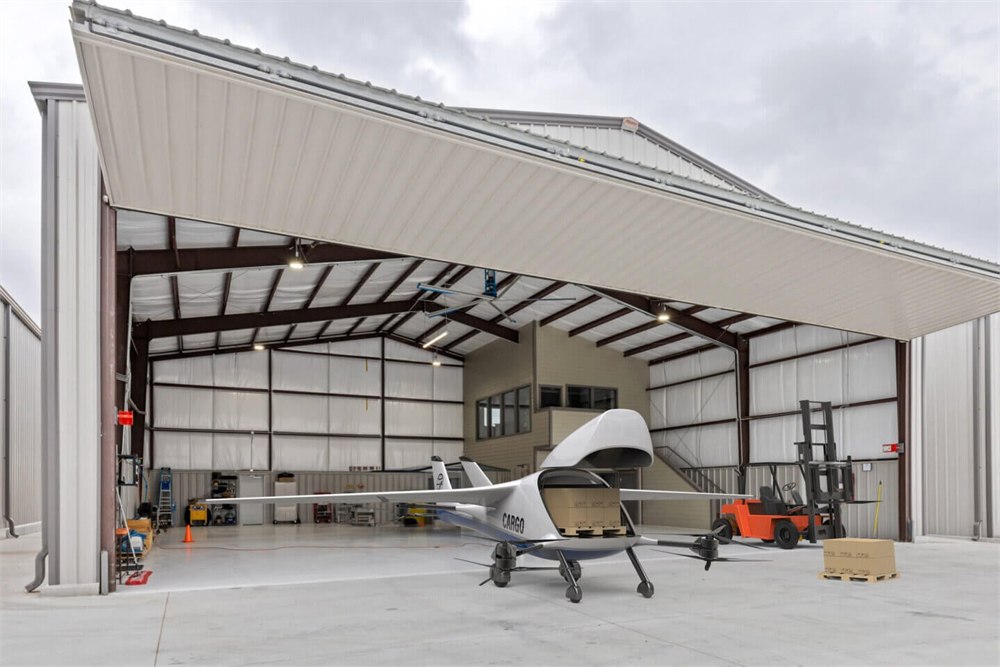
FlyOnE, AIR’s Australian distributor, adds a few more buyer-facing details for the people already imagining this thing parked next to the bicycles. Its listing says the wings and rotor arms fold for storage in a standard garage, and it describes private-property landing possibilities in Australia while also acknowledging the very real matter of community acceptance. That is a polite aviation way of saying your neighbors may need a minute before they accept “quiet eVTOL arrival” as a normal Tuesday sound.
Practical details worth knowing before anyone starts measuring the driveway with suspicious enthusiasm:
- It is a two-seat personal eVTOL aircraft, not a road-legal car that sprouts wings.
- The private AIR ONE platform is listed with one hour of flight time and a 115-knot fast cruise speed.
- The updated 2026 configuration includes EDAG airframe work, custom NIDEC motors, a new battery, and Dynon SkyView HDX avionics.
- AIR says its patented Fly-By-Intent flight-control system translates pilot intent into stabilized flight commands.
- FlyOnE says the wings and rotor arms fold for standard-garage storage.
- The aircraft is still tied to certification, training, regulation, and delivery timelines, so this is not a casual impulse purchase between toaster ovens.
That last point is important. The AIR ONE is exciting because it looks like private aviation trying to escape the airport monoculture, but it is still aviation. There are licenses, rules, airspace, training, maintenance, certification work, and the minor social obligation of not treating the sky like a personal shortcut lane because the grocery store had a sale on mangoes.
The Updated 2026 Configuration
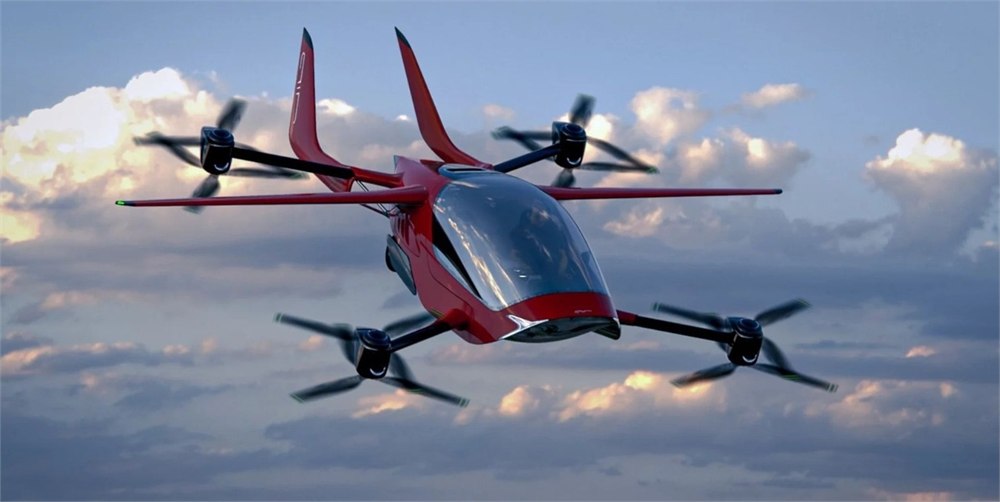
The July 2026 AIR ONE reveal was not just a new paint job and a more confident press photo. AIR said the latest version reflects years of testing and design refinement, with changes intended to improve performance, manufacturability, and the pilot experience. That is the less silly side of this product: if personal eVTOL aircraft are going to become anything more than expensive tech-show sculptures, they need to move from prototype spectacle toward aircraft that can be built, tested, certified, serviced, and understood by humans who occasionally misplace their sunglasses.
| Detail | What AIR or FlyOnE Lists |
|---|---|
| Aircraft type | Two-seat personal electric VTOL aircraft |
| Flight time | 1 hour listed for the private platform |
| Fast cruise speed | 115 knots listed by AIR |
| Certification note | Light Sport Aircraft certification listed as pending |
| Updated configuration | EDAG airframe, custom NIDEC motors, new battery, Dynon avionics, updated cockpit ergonomics |
| Storage note | FlyOnE says the wings and rotor arms fold for a standard garage |
It is also a very specific kind of futuristic. This is not the glossy sci-fi dream where everyone floats silently between skyscrapers while wearing white linen. The AIR ONE looks more like an enthusiast aircraft that wandered into the drone aisle and left with opinions. There are visible rotors, landing gear, a real cockpit, and enough wing to remind you that physics has not been entirely replaced by vibes.
The AIR ONE’s wing-rotor topology is one of the big visual hooks. FlyOnE describes it as delivering up to 60% of lift without needing a tilt or push motor, while AIR’s own site points to a shared Smart Aircraft architecture that can be adapted across mission profiles. For a reader, the simple version is that the aircraft is designed to take off vertically, transition into more efficient forward flight, and avoid looking like someone strapped a porch swing to eight leaf blowers.

Who This Is Actually For
This is where the fantasy and the paperwork shake hands awkwardly. The AIR ONE is not for someone who wants to beat traffic on a whim after watching one inspiring video. It is for early adopters of personal aviation, pilots, aviation hobbyists, wealthy futurists, and the rare household where “do we need a second aircraft?” is a dinner-table question instead of a psychological evaluation.
It also has a surprisingly practical emotional hook. Personal aviation has always been fascinating but intimidating. Small planes require runways, hangars, airport access, and a level of planning that does not exactly scream “quick hop.” Helicopters solve some of that but bring cost, noise, complexity, and a reputation for making wallets hide under furniture. AIR is trying to land somewhere between those worlds with an electric platform that is simpler to operate, quieter in concept, and more owner-focused than traditional private aircraft.
That does not mean the AIR ONE makes aviation simple in the same way a toaster is simple. It means AIR is trying to simplify parts of the flight experience with software, flight-envelope protection, distributed electric propulsion, and a form factor that could make personal aircraft ownership feel less like joining a secret society with propellers.
The funniest thing about the AIR ONE is that it makes extremely advanced hardware feel weirdly domestic. The open canopy and two seats look like something you could explain to a friend in one sentence. The folding storage claim makes people immediately picture a garage. The vertical takeoff premise makes every long driveway seem suspiciously useful. It drags the future out of the airport lounge and drops it somewhere between the lawn mower and the inflatable holiday decorations.
The Catch, Because The Sky Has Rules
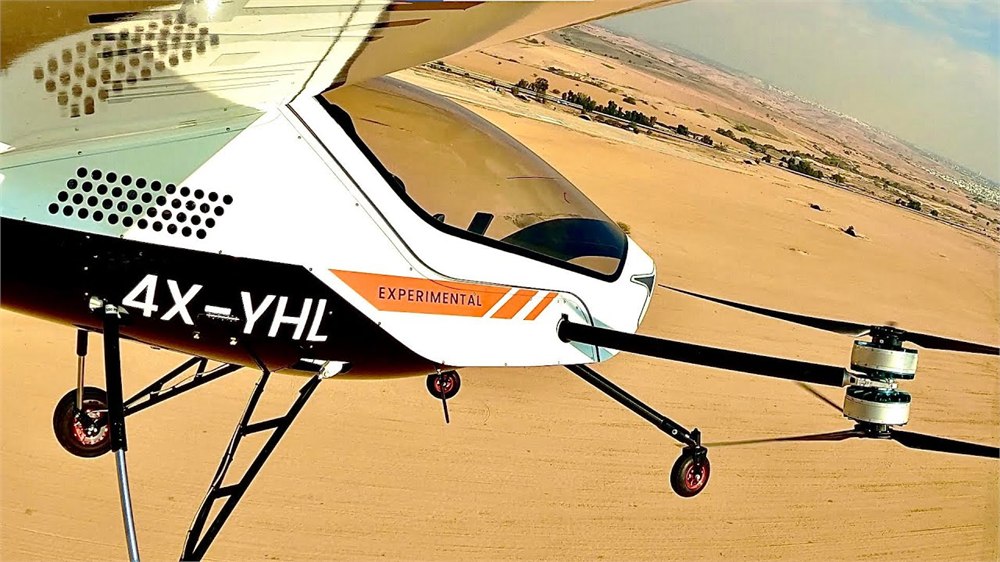
The AIR ONE is still a developing aircraft product, and that matters. AIR’s announcement frames the newest configuration around preparation for piloted flight testing, and the private platform’s certification is still listed as pending. FlyOnE’s page is open about uncertain delivery timing and says options and configurations will be available closer to scalable manufacturing. In other words, this is not the same buying experience as ordering a weird lamp and wondering if it will arrive before the party.
There is also the licensing and location question. FlyOnE discusses recreational pilot licensing and powered-lift endorsement possibilities for Australia, while AIR’s broader certification path is tied to aviation authorities and Light Sport Aircraft rules. The exact experience will depend heavily on country, regulations, training access, property permissions, and whether your neighborhood is emotionally ready for a personal aircraft folding itself into a garage.
The AIR ONE’s most useful role right now may be as a very visible marker of where private flight is trying to go. It takes the once-vague idea of “personal eVTOL” and gives it a cockpit, seats, rotors, wings, a published preorder path, and enough real engineering partners to move the conversation away from pure vaporware. It is still early, expensive, regulated, and very much not for the average shopper. But as an object, it is wonderfully clear: this is a private aircraft trying to make vertical flight feel personal instead of institutional.
Key AIR ONE details and features:
- Personal two-seat electric VTOL aircraft from AIR.
- Updated 2026 AIR ONE configuration unveiled at EAA AirVenture Oshkosh.
- Listed private-platform specs include one-hour flight time and 115-knot fast cruise speed.
- Uses eight rotors/motors with a winged aircraft layout for vertical lift and forward flight.
- Updated version includes EDAG structural work, custom NIDEC motors, a new battery, and Dynon SkyView HDX avionics.
- FlyOnE lists folding wings and rotor arms for standard-garage storage.
- Pricing through FlyOnE is listed from AUD $350,000, with an AUD $100 refundable priority preorder.
The AIR ONE is available to reserve through AIR, with Australian preorder information listed by FlyOnE. FlyOnE lists pricing from AUD $350,000 and says an AUD $100 refundable priority preorder can secure a place in line. This is obviously not a stocking-stuffer unless your stocking is a climate-controlled hangar, but it is one of the clearest “yes, the personal aircraft future is getting weirdly tangible” products currently hovering near the edge of reality.
| Pros | Cons |
|---|---|
| Combines vertical takeoff with a real winged aircraft layout. | Still tied to certification, testing, and regulatory timelines. |
| Two-seat cockpit makes it feel more usable than a single-person novelty craft. | Pricing puts it firmly in serious aviation/toy-for-the-very-committed territory. |
| Updated 2026 configuration adds notable engineering and cockpit upgrades. | Requires training, licensing, and suitable operating locations. |
| Foldable storage claim makes the concept feel surprisingly domestic. | Neighborhood acceptance may be as important as landing-pad math. |
| Official platform specs give it more substance than a concept render. | Delivery timing and final configurations are still developing. |
| Visually spectacular enough to make any driveway feel underdressed. | Not a road vehicle, despite every flying-car instinct it triggers. |
Where to find This Personal eVTOL Aircraft Takes Off Vertically and Parks in a Garage
OddityMall may earn a commission from qualifying purchases at no extra cost to you.
Related posts:
These Garage Door Decals Make It Look Like There’s an Airplane, Horse, or Giant Dump Truck In Your Garage
This All-In-One Aircraft Flight Display Replaces a Stack of Cockpit Avionics
We Found The Coolest Gadgets You Need In Your Garage For 2020
Ultimate Garage Door Opener, Ultra-Quiet, Modular, and Smart Phone Capable