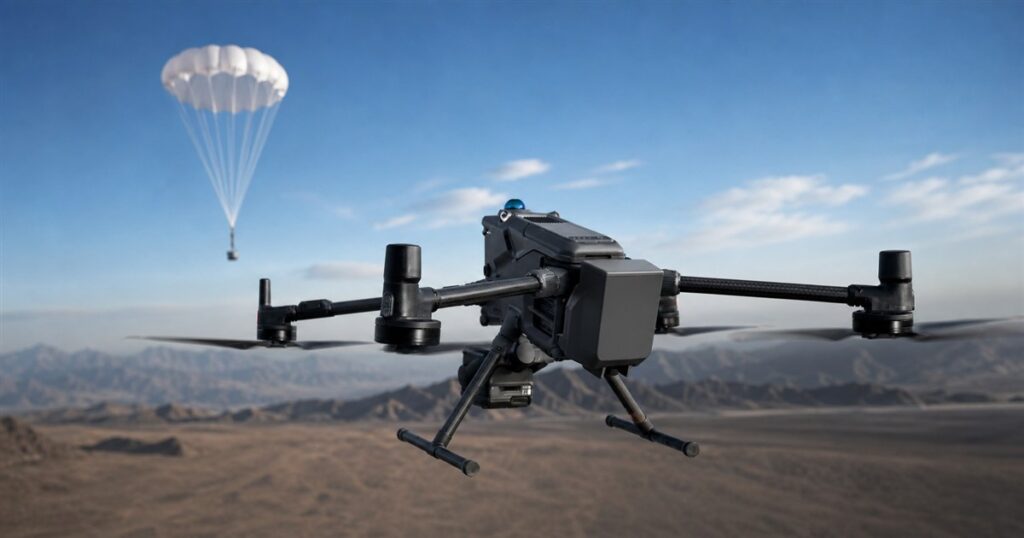
Every expensive drone should probably come with a tiny panic room, a therapist, and one friend whose only job is to yell, “not over the parking lot.” DJI has apparently skipped the emotional support staff and gone straight to the part where the flying machine can throw out a parachute when things start getting weird.
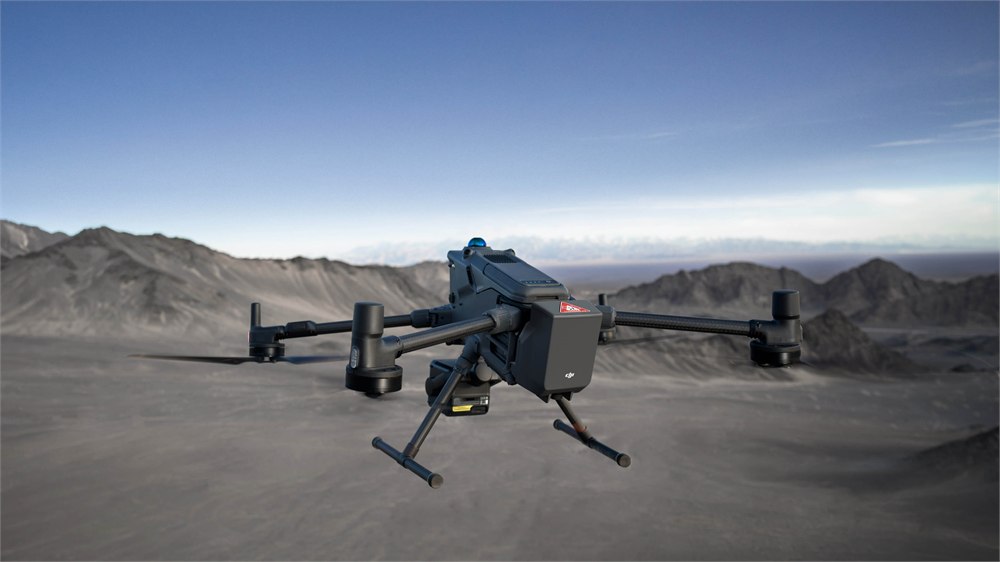
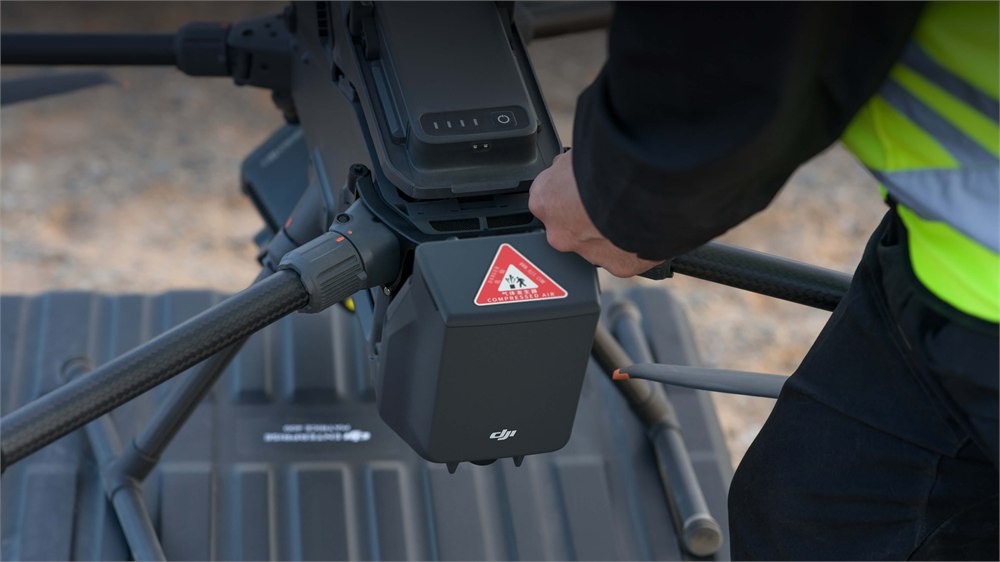
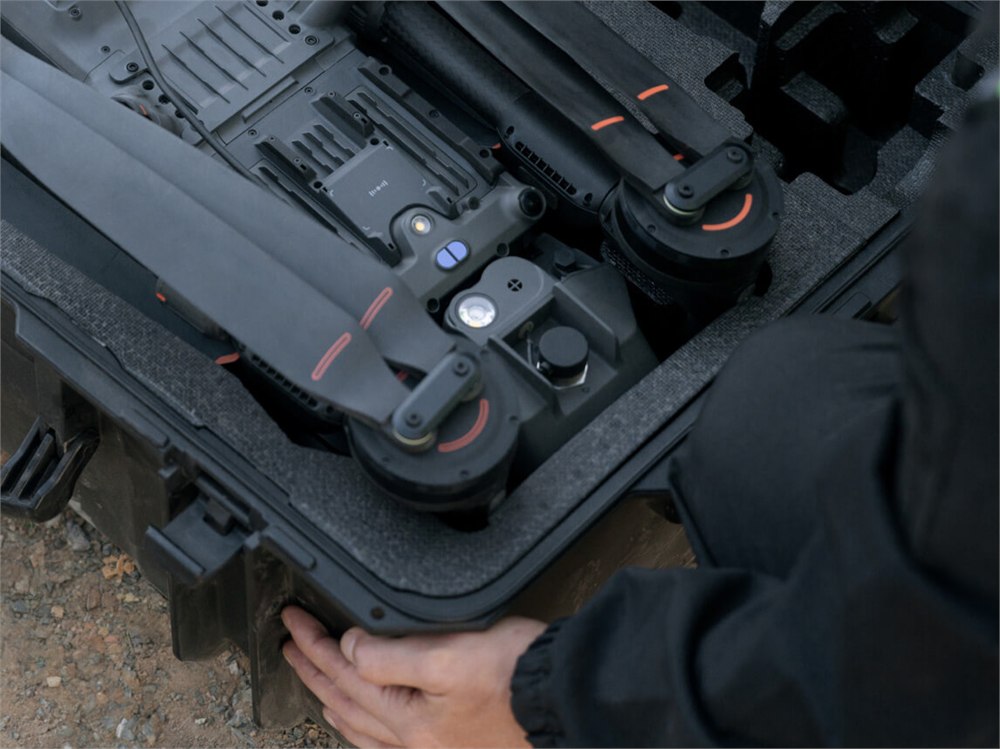
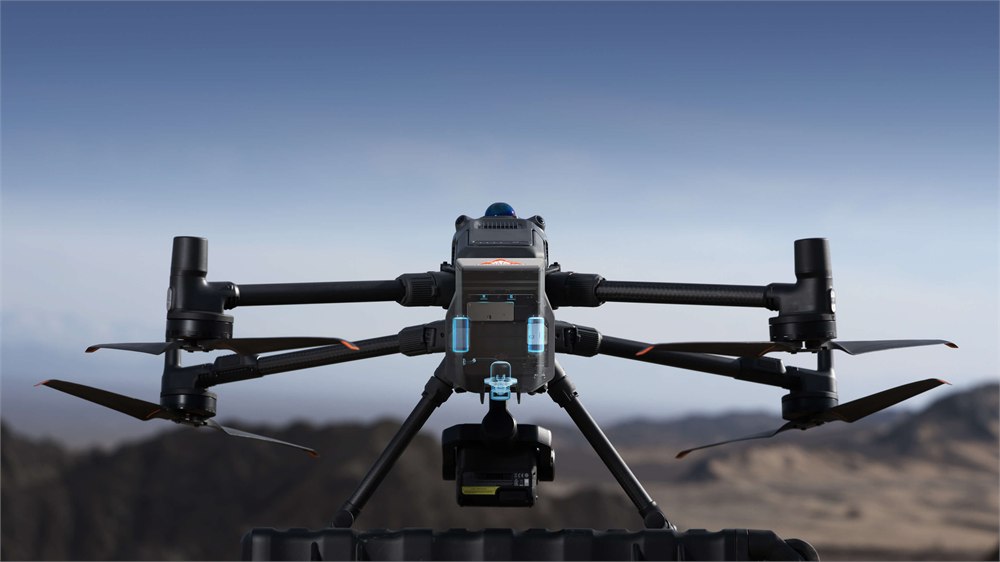
The DJI AP100 is an automatic parachute system built for the Matrice 400, which is DJI’s large enterprise drone platform for jobs that usually involve serious equipment, serious paperwork, and someone on the ground pretending not to think about gravity. It mounts to the rear of the aircraft and gives the M400 a dedicated safety module that can deploy by itself or be triggered manually.
That makes it less of a cute drone accessory and more of an airborne emergency exit. The AP100 is designed to protect the drone, the payload, and, most importantly, the people and property underneath the drone. This is a comforting idea if you have ever looked up at a professional quadcopter and realized that the sky has started outsourcing responsibility.
DJI says the AP100 has independent power and full-link redundancy, which is a very enterprise way of saying the parachute is not waiting around for the drone to be in a good mood. The system has its own flight control, sensors, backup power, and monitoring logic, so it can keep watching the aircraft even if the main platform has a bad day.
The headline number is wonderfully dramatic: DJI lists a response time under 600 milliseconds. That is less time than it takes most people to decide whether the sound from upstairs was the house settling or a disaster with shoes on. If the system detects abnormal flight attitude or speed, the parachute can automatically deploy, with DJI listing a descent rate below 5 meters per second in controlled testing.
Related posts:
 DJI Osmo Pocket: Stabilized Handheld 4k Camera
 You Can Now Get a Flamethrower Drone Attachment, and It’s Perfect For Wasp Nest Removals
 This Home Security Surveillance Drone Automatically Deploys When It Senses Intruders
 Air PIX Pocket Sized Drone Lets You Get The Perfect Selfie, Controlled By Your Phone
A Parachute For The Drone That Has Seen Your Budget
The AP100 is meant for the Matrice 400, not the little drone you use to film your cousin’s backyard gazebo like it is a Netflix documentary. This is enterprise hardware, aimed at inspections, mapping, public safety, infrastructure work, and other missions where a drone may be carrying expensive payloads above places that would rather not receive a surprise package from the sky.
The system is also tied into regulatory use cases. DJI says the AP100 can help the Matrice 400 meet certain EASA and UK CAA operational safety requirements, including C5/UK5 and C6/UK6 configurations depending on the aircraft setup. The details matter here, because DJI notes that some labels apply only to factory-certified systems, while an existing Matrice 400 can use the AP100 for applicable C5 or UK5 requirements.
In regular human language, this means the parachute is not just for making a cool video where a robot accepts its fate with dignity. It is a compliance-friendly safety component for organizations that need to fly near people, over urban areas, or beyond visual line of sight where supported and approved.
- It can deploy automatically when the system detects abnormal flight attitude or speed.
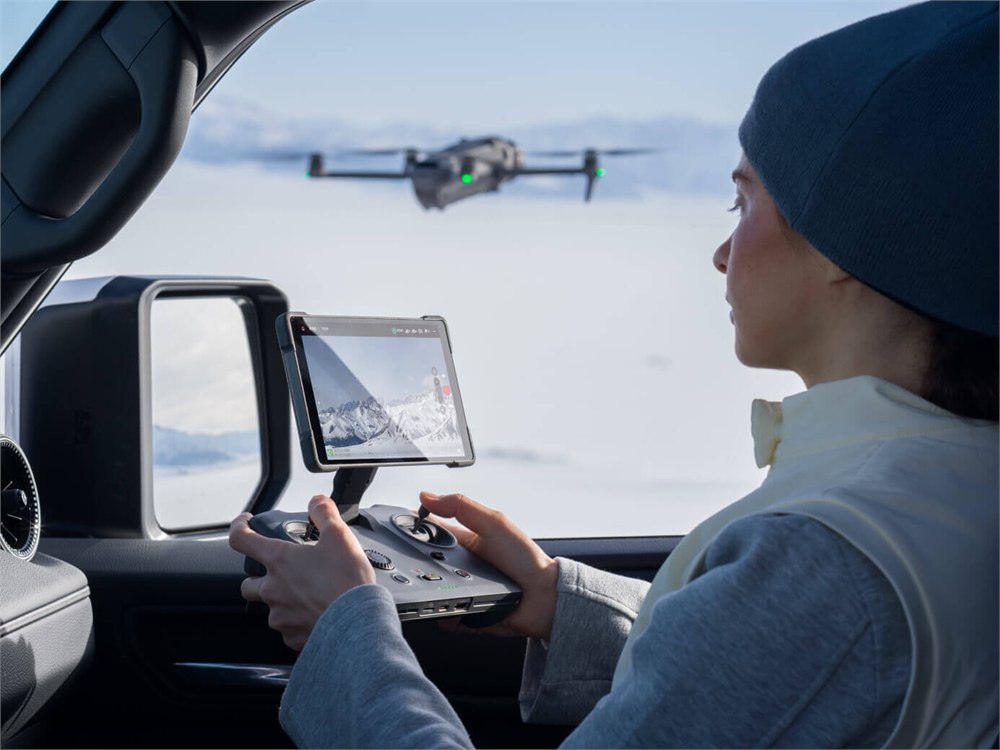
- Operators can trigger it manually through DJI Pilot 2 when a human decides the vibes have become unacceptable.
- It has independent backup power, so the safety module is not fully dependent on the aircraft’s main power path.
- An independent Flight Termination System can cut motor power before the parachute ejects.
- After deployment, the system can use audible alarms and bright flashing lights to warn people nearby and help operators find the aircraft.
That rotor-shutdown step is one of the details that makes the AP100 feel like someone at DJI thought about the actual physics instead of just attaching a backpack to a drone and calling it innovation. DJI says the Flight Termination System can cut motor power within 600 milliseconds before parachute ejection, reducing the risk of the canopy or lines getting into a propeller blender situation.
The Serious Specs, Minus The Corporate Fog Machine
The AP100 weighs about 935 grams, according to DJI’s announcement, and it is designed for rear-mount installation on the Matrice 400. DJI says that keeps the Matrice 400’s 15.8 kg maximum takeoff weight intact, while the added system has a roughly 6 minute impact on flight time. For an enterprise operator, that is the kind of tradeoff that gets discussed in a meeting with three screens and at least one person saying “risk profile” with a straight face.
| Feature | DJI AP100 Detail |
|---|---|
| Compatible platform | DJI Matrice 400 |
| Mounting style | Rear-mounted parachute safety module |
| Listed weight | About 935 g |
| Deployment modes | Automatic or manual through DJI Pilot 2 |
| Response time | Under 600 ms in DJI controlled testing |
| Descent rate | Below 5 m/s in DJI controlled testing |
| Environmental rating | Shares the Matrice 400 IP55 rating |
The parachute also has built-in dual capacitors that DJI says provide up to 1 hour of independent backup power. That means the module can continue monitoring flight attitude and supporting automatic deployment without leaning entirely on the drone’s main power or an active E-Port connection.
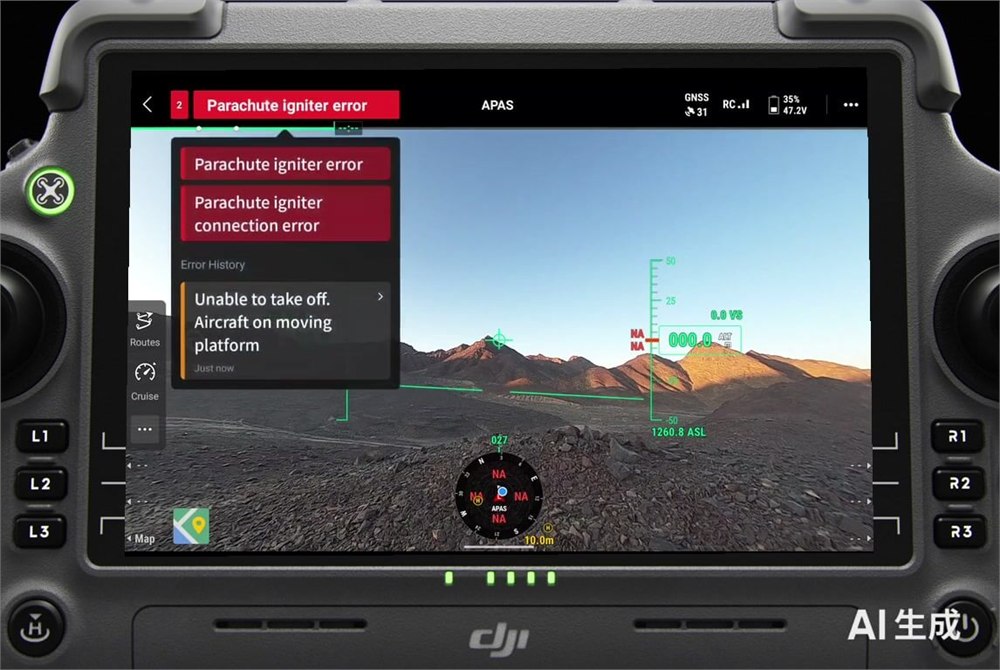
DJI also says the AP100 performs safety self-checks while the Matrice 400 is powered on and throughout flight. It monitors the gas generator and communication links, then sends real-time alerts if something appears off. If drones are now going to check themselves before they wreck themselves, society may have finally invented the least glamorous and most useful kind of robot self-awareness.
For harsh conditions, the AP100 shares the Matrice 400’s IP55 rating and is listed for operation from -20 degrees C to 50 degrees C, or -4 degrees F to 122 degrees F. That makes sense for the kind of work the Matrice 400 might do: inspecting infrastructure, supporting emergency response, surveying rough terrain, or hovering over industrial places where a flimsy gadget would immediately start writing its resignation letter.
What Happens After The Big Fabric Flower Opens
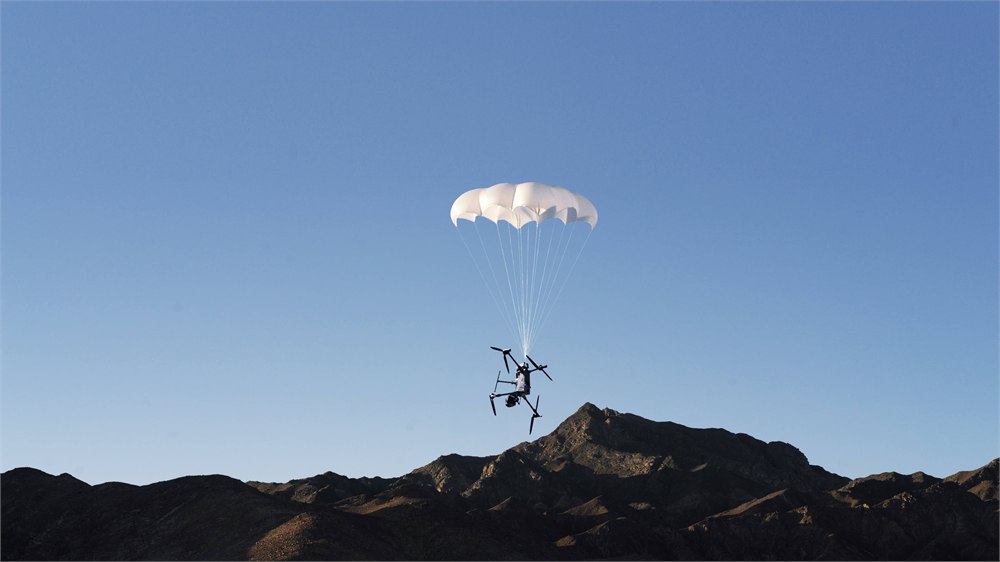
A parachute deployment is not exactly a normal landing, and nobody should pretend otherwise. It is the drone equivalent of pulling the fire alarm, exiting through a window, and hoping your insurance paperwork is wearing comfortable shoes. But for a heavy enterprise drone, a controlled descent is dramatically better than gravity improvising.
After deployment, DJI says the AP100 emits loud alarms and high-intensity flashing lights for about 1 hour. That is useful for two reasons: warning people on the ground to stay clear, and helping operators recover the aircraft after the most expensive part of the flight has become a treasure hunt.
The AP100 can also connect into larger DJI workflows. In supported regions, automatic deployment can be triggered when the drone breaches a geocaging boundary set in DJI Pilot 2. Remote deployment is available through DJI FlightHub 2’s Flight Termination System. This is the part where the drone safety system begins to sound less like an accessory and more like a small, airborne bureaucracy with a nylon escape plan.
The important thing is that the AP100 is not promising to make risky flights magically risk-free. It is a safety layer for professional operators who already have to care about regulations, route planning, aircraft limits, weather, payload weight, and all the other adult responsibilities that separate enterprise drone work from “watch this” behavior.
When it comes time to buy one, because nobody should shop for a parachute system like it is an impulse snack, the price is not listed as a fixed retail number. DJI says the AP100 will be available through authorized DJI Enterprise dealers, so the practical price situation is dealer quote required.
That makes sense for the category. This is not a phone case. It is a safety system for organizations flying a large professional drone, and the actual purchase may depend on region, aircraft configuration, dealer package, service requirements, and whether the operator needs a factory-certified Matrice 400 combo for specific compliance needs.
- Product: DJI AP100 Automatic Parachute for Matrice 400
- Core function: Automatic or manual parachute deployment for enterprise drone safety
- Best fit: Matrice 400 operators doing regulated, professional, or higher-risk missions
- Key numbers: Under 600 ms response time and below 5 m/s descent rate in DJI testing
- Power setup: Independent backup power with dual capacitors listed for up to 1 hour
- Durability: Shares the Matrice 400 IP55 rating and listed -20 C to 50 C operating range
- Availability: Through authorized DJI Enterprise dealers, with pricing by dealer quote
The DJI AP100 is one of those products that sounds funny until you remember what it is attached to. Then it sounds very reasonable. If your drone weighs enough to make gravity start licking its chops, a dedicated parachute system with its own sensors, backup power, rotor shutdown, alarms, and compliance angle is not overkill. It is the drone equivalent of admitting that the ground has been there the whole time, waiting patiently.
| Pros | Cons |
|---|---|
| Automatic and manual deployment options | Only for DJI Matrice 400 operators |
| Independent power and monitoring system | Dealer quote required instead of simple retail pricing |
| Under-600 ms response time listed by DJI | Adds about 935 g to the aircraft setup |
| FTS can cut motor power before ejection | Can reduce flight time by about 6 minutes |
| Designed to support certain compliance scenarios | Some regulatory labels depend on factory-certified configurations |
| Audible and flashing alerts help recovery after deployment | Deployment is still an emergency event, not a normal landing |
Where to find This Drone Parachute Gives DJI’s Matrice 400 an Emergency Descent Plan
OddityMall may earn a commission from qualifying purchases at no extra cost to you.
Related posts:
DJI Osmo Pocket: Stabilized Handheld 4k Camera
You Can Now Get a Flamethrower Drone Attachment, and It’s Perfect For Wasp Nest Removals
This Home Security Surveillance Drone Automatically Deploys When It Senses Intruders
Air PIX Pocket Sized Drone Lets You Get The Perfect Selfie, Controlled By Your Phone