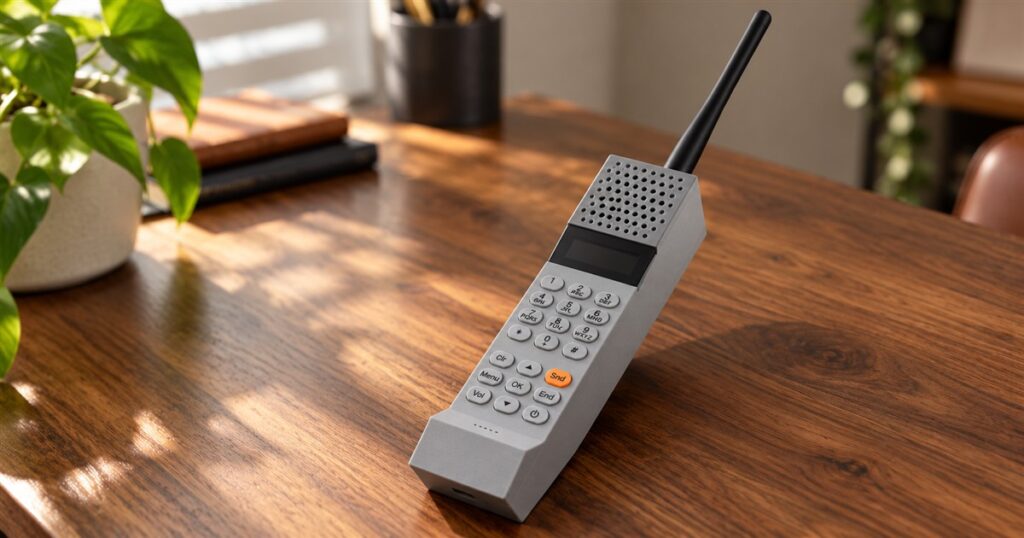
Checking one message should not require emerging forty minutes later with strong opinions about a stranger’s kitchen renovation. Kevin Noki’s answer is a spectacularly chunky Bluetooth handset that lets your iPhone handle the connection while an object resembling a retired movie prop handles the conversation. Finally, a reason to put a brick on your desk that the office manager might accept.
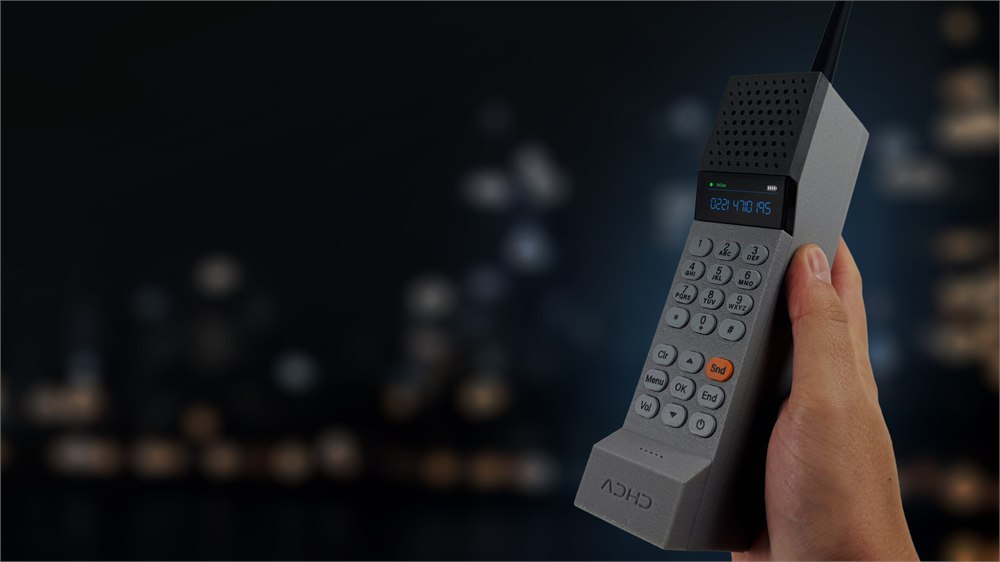
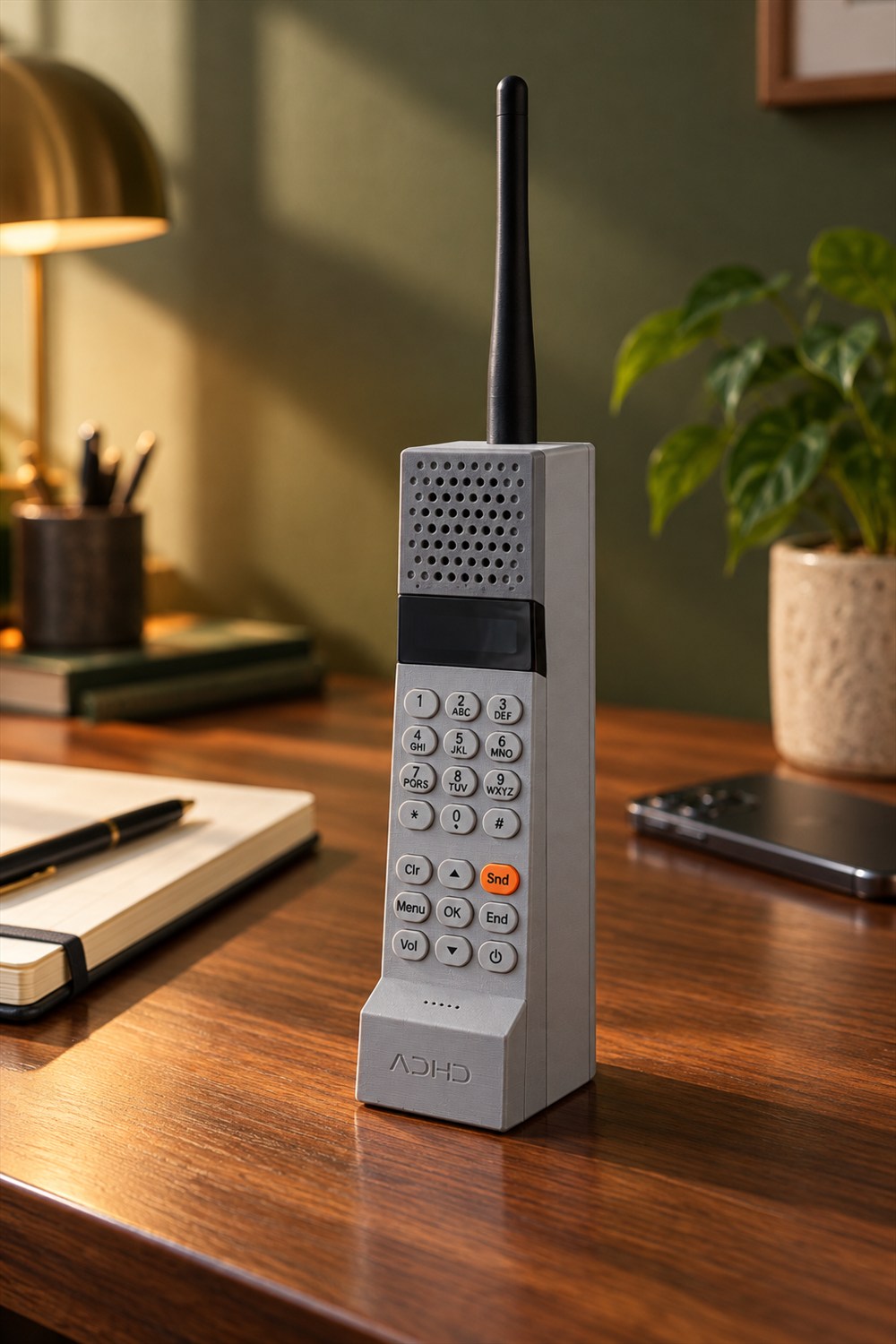
The ADHD ONE, short for Anti Distraction Handset Device, is a DIY build project with an unmistakable 1980s silhouette. There is a long antenna, an actual keypad, and a little display. The proportions suggest you should answer it by announcing that the merger is off. Your mother asking about Sunday lunch will also work.
The important shopping detail comes early: the available product is a digital construction package. You are buying files for making the handset yourself, rather than a finished handset that arrives ready for its first dramatic business call. Think workshop project, with a useful result at the end.
A separate handset for the phone you already own
According to Designboom’s coverage of the project, the handset connects to an iPhone over Bluetooth and has no independent cellular connection. The iPhone must remain within range. This is a companion to your existing phone, with a very different physical interface.
That distinction is the entire appeal. Put the touchscreen out of immediate reach and keep a dedicated object available for calls. The internet has not been abolished. It has simply been moved far enough away that opening it requires a decision, rather than a thumb twitch.
Related posts:


It is easy to imagine this on a desk during a writing session, or near a favorite reading chair. Whether that arrangement helps depends on your habits. If you immediately retrieve the iPhone anyway, the handset cannot stage an intervention. It is a hardware project, not your sternest friend.
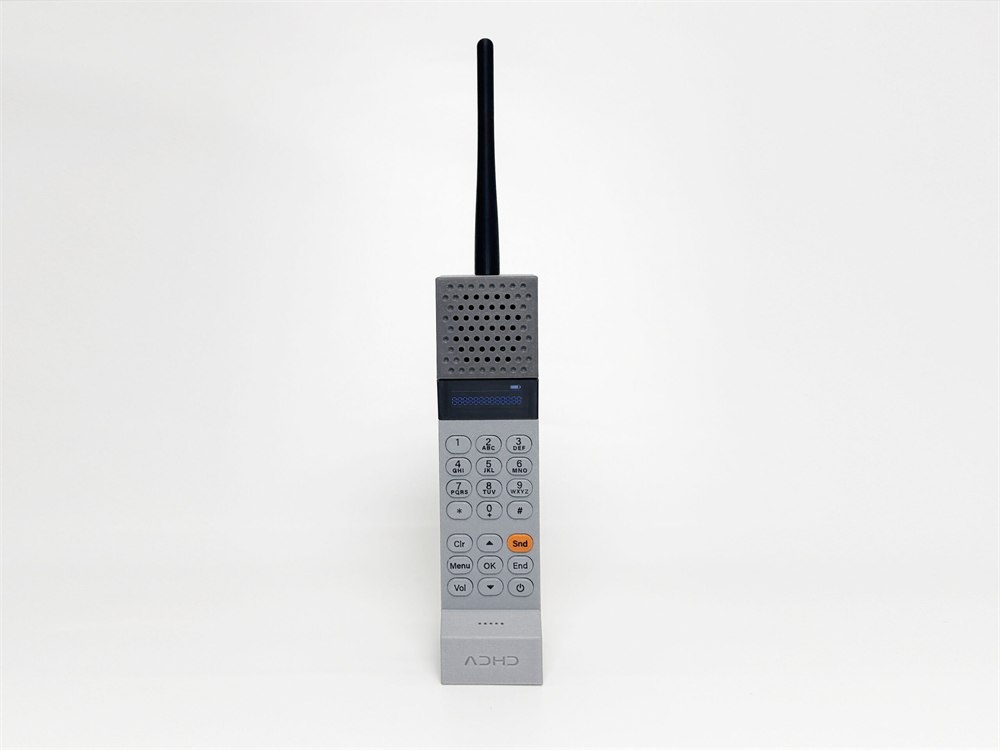
The brick aesthetic is doing some heavy lifting
The official photographs show a gray, angular enclosure with a perforated speaker section, a dark display window, and rows of small physical buttons. An orange key interrupts the gray. Below the keypad, the lower section projects forward with the confidence of an appliance that remembers when desks were enormous.
What makes the design fun is the commitment. It does not merely place a retro wallpaper behind modern icons. The whole shape participates: tall body, narrow face, long aerial, thick sides. Even lying flat, it looks prepared to receive a call about a warehouse full of fax machines.
There is also a pleasant clarity to a dedicated physical object. A touchscreen can become almost anything, which is wonderful until it becomes everything at once. This handset looks like something you pick up to talk into. Nobody is likely to mistake it for a device optimized for browsing throw-pillow recommendations.
What the downloadable package contains
Noki’s official build-file listing supplies the manufacturing material and a starting guide. You still need to organize the physical build. The main ingredients are:
- Printable STL parts for the enclosure, internal supports, and 19-key keypad.
- Compiled UF2 firmware ready to flash.
- Gerber and drill files for having a circuit board manufactured.
- A PDF bill of materials with sourcing notes.
- A PDF quick-start guide.
For a maker, that is a rather different gift proposition from another sealed gadget. The satisfying part can begin before the first call, with parts becoming a recognizable object on the bench. For somebody who dislikes assembly, however, the same proposition may sound like receiving homework with a very long antenna.
Access to suitable printing and electronics assembly resources matters more here than an enthusiasm for retro aesthetics. A handsome photograph cannot do the assembly for you. Check the project requirements against your own tools and experience before turning a casual afternoon idea into a permanent pile of little gray pieces.
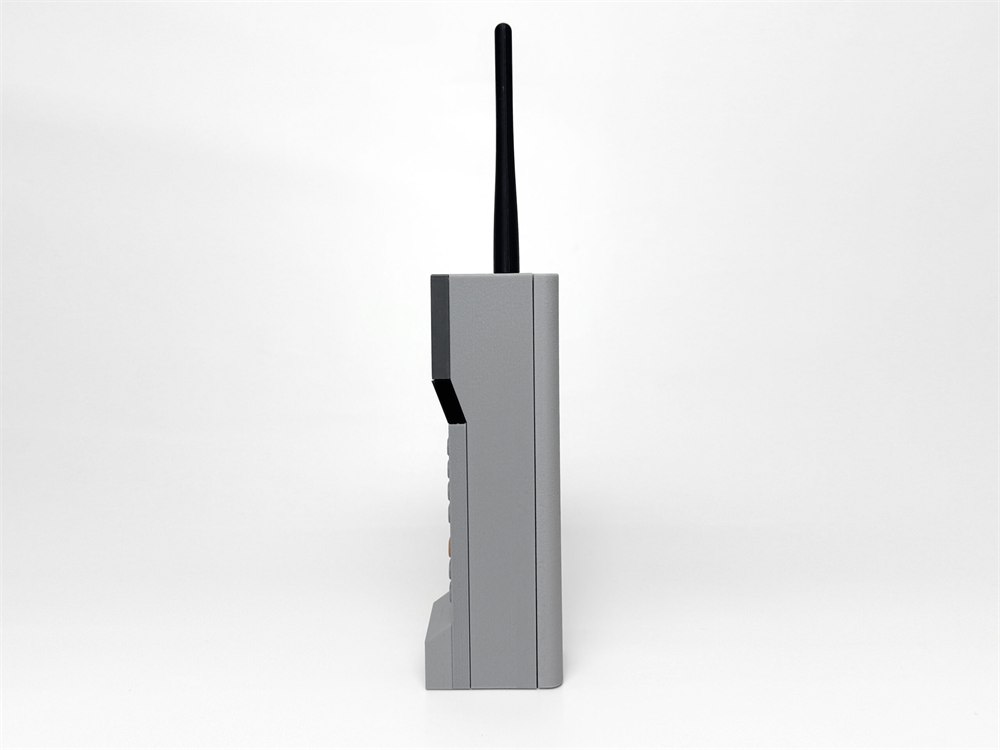
Pick a look before you start building
The file package offers choices for the exterior. These are useful decisions to make before committing time and material to a build. You can indulge the full brick-phone look, or tone down the part most likely to make visitors ask whether you are contacting an offshore oil platform.
| Part | Included choices | What to decide |
|---|---|---|
| Speaker grille | Classic, Holes, Stripes | Choose the face you prefer. |
| Antenna shape | Retro, Slim, Screw | Choose your preferred silhouette. |
| Main housing | Alternative without an antenna hole | Decide whether to omit the antenna. |
Those options make the project feel less like assembling a single predetermined souvenir. The variations are cosmetic choices within a specific design, though; an alternative antenna shape should not be taken as a promise of different reception or independent mobile service.
The pictured gray version has a wonderful office-equipment seriousness. It looks as if it might have a purchase order filed somewhere. That sober appearance makes the absurd size and shape more entertaining, especially beside the smooth glass rectangle that is doing the actual smartphone work.
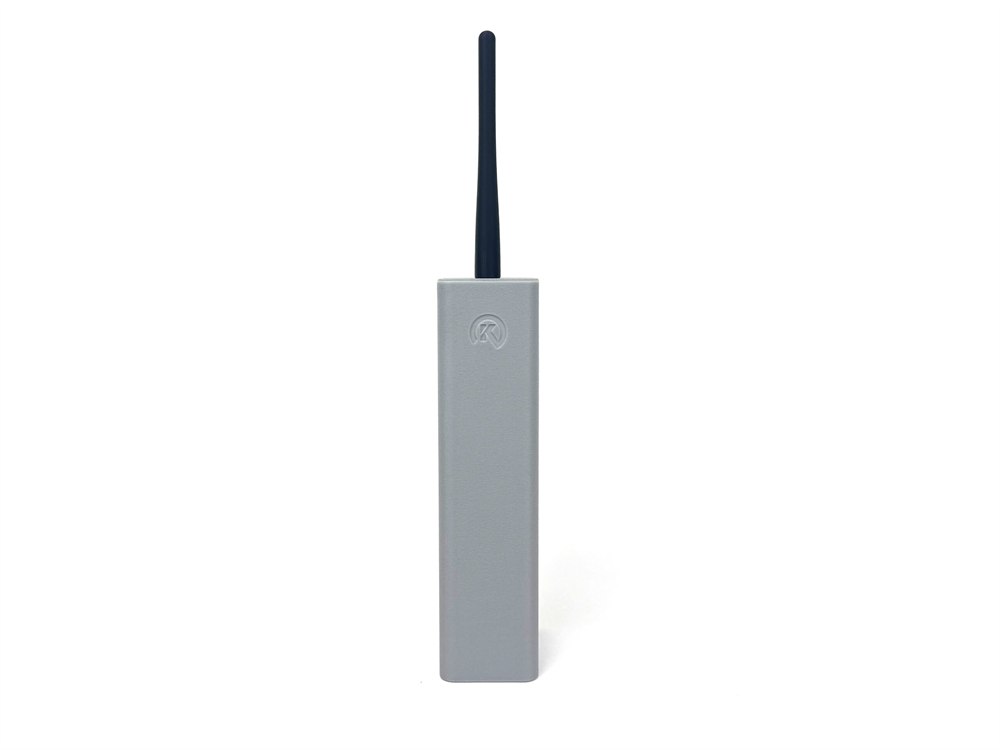
Read the fine print before clearing the workbench
The download excludes physical components, firmware source code, editable CAD files, and editable PCB design files. It is licensed for personal use, without permission to redistribute or resell the files. Those are meaningful boundaries for anyone expecting a fully editable development platform.
For a builder who simply wants to reproduce the project, supplied manufacturing files may be the relevant part. Someone planning extensive redesigns should examine the file formats and license closely. A finished shape and the original editable design are different things, even when both eventually become an object that takes up too much desk space.
Likewise, budget for more than the download. Components, fabrication, and any equipment you need belong in your own build plan. We do not have a verified all-in finished-handset cost to quote. Treating a digital-file price as the price of a complete working object would make for a very surprising afternoon at checkout.
The project name expands to Anti Distraction Handset Device. It should not be read as a medical claim. The reader-relevant idea is straightforward: give calls their own physical interface and make the tempting touchscreen less immediately available. Whether you prefer that routine is a personal question.
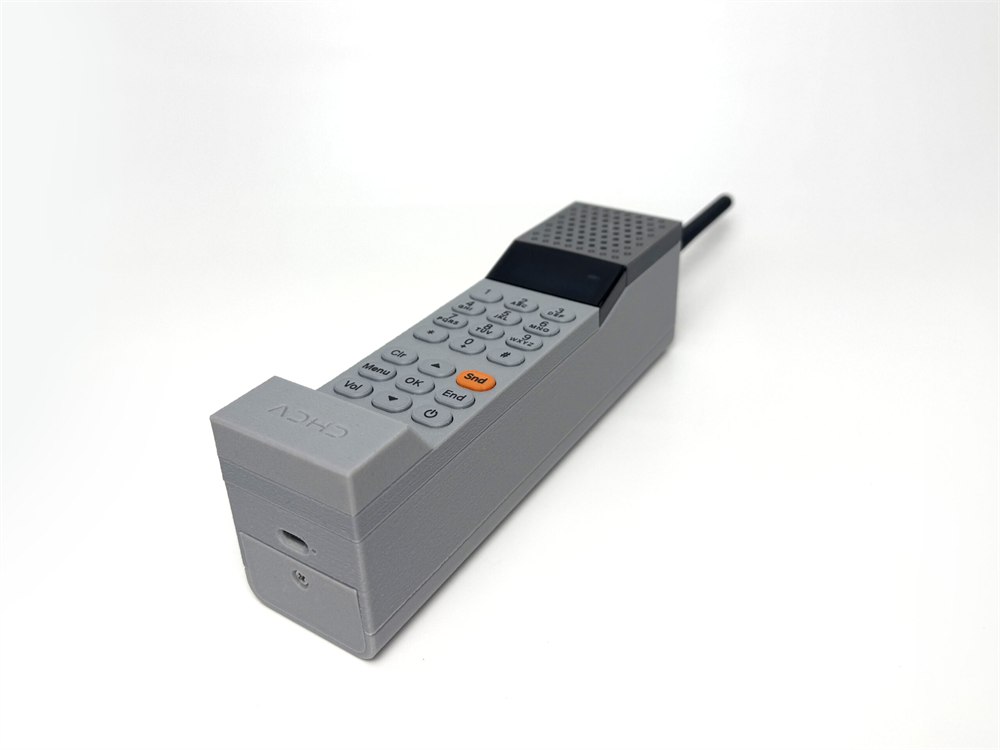
Who will enjoy this particular kind of inconvenience?
This seems most appealing to someone who enjoys making electronics and appreciates old industrial design. The build is part of the entertainment. You could buy a finished accessory for convenience, but convenience is hardly the only reason people spend a weekend constructing something delightfully specific.
It could also make an entertaining shared project with an experienced builder. Discuss the actual work before gifting the files, though. There is a substantial emotional difference between “I found your next fun project” and “I have assigned you a telecommunications department.”
The practical details to keep in mind are:
- This is the ADHD ONE DIY Build Files V1 digital package.
- The finished design uses Bluetooth with a nearby iPhone.
- Printing, parts sourcing, and assembly are the builder’s responsibility.
- The distinctive body uses a physical keypad and small display.
- Personal-use licensing and excluded editable files limit how the package can be reused.
The digital package is listed at €29.99 through Kevin Noki’s store. No physical parts are shipped with that purchase. A separate physical DIY kit appears on the maker’s site as not available yet, so do not confuse the two listings when planning your project.
Product photographs courtesy of Kevin Noki. If your ideal weekend involves making a phone accessory large enough to have opinions, this one has excellent desk presence. Just remember to leave space for the actual phone somewhere within Bluetooth range.
| Pros | Cons and considerations |
|---|---|
| Distinctive retro handset with physical controls | Needs a nearby paired iPhone; no independent cellular connection |
| Printable parts and manufacturing files supplied | Requires separate parts, fabrication, and assembly |
| Several exterior configuration choices | Editable CAD, PCB designs, and firmware source are excluded |
| Dedicated interface for calls | Does not remove distractions from the paired smartphone |
| Available as a digital download | Personal-use license; physical DIY kit is not yet available |
Save this find.
Thank yourself later.
Your next great gift idea. Your someday space. Your collection of wonderfully weird things.
Save to PinterestPick a board. Keep the inspiration.
This DIY Bluetooth Brick Handset Takes iPhone Calls Without the Scrolling
Where to find This DIY Bluetooth Brick Handset Takes iPhone Calls Without the Scrolling
OddityMall may earn a commission from qualifying purchases at no extra cost to you.