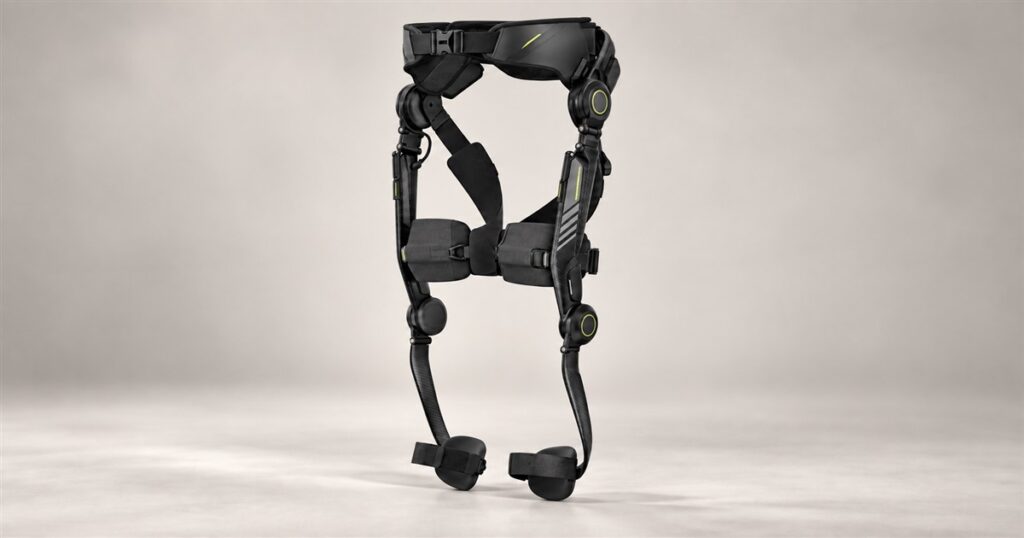
Hiking has traditionally required boots, snacks, and a private argument with a hill. The Hypershell Halo adds another option: four motors strapped to your lower body. This full-leg hiking exoskeleton assists both your hips and knees, giving the walk to a scenic overlook the equipment budget and general appearance of a small robotics expedition.
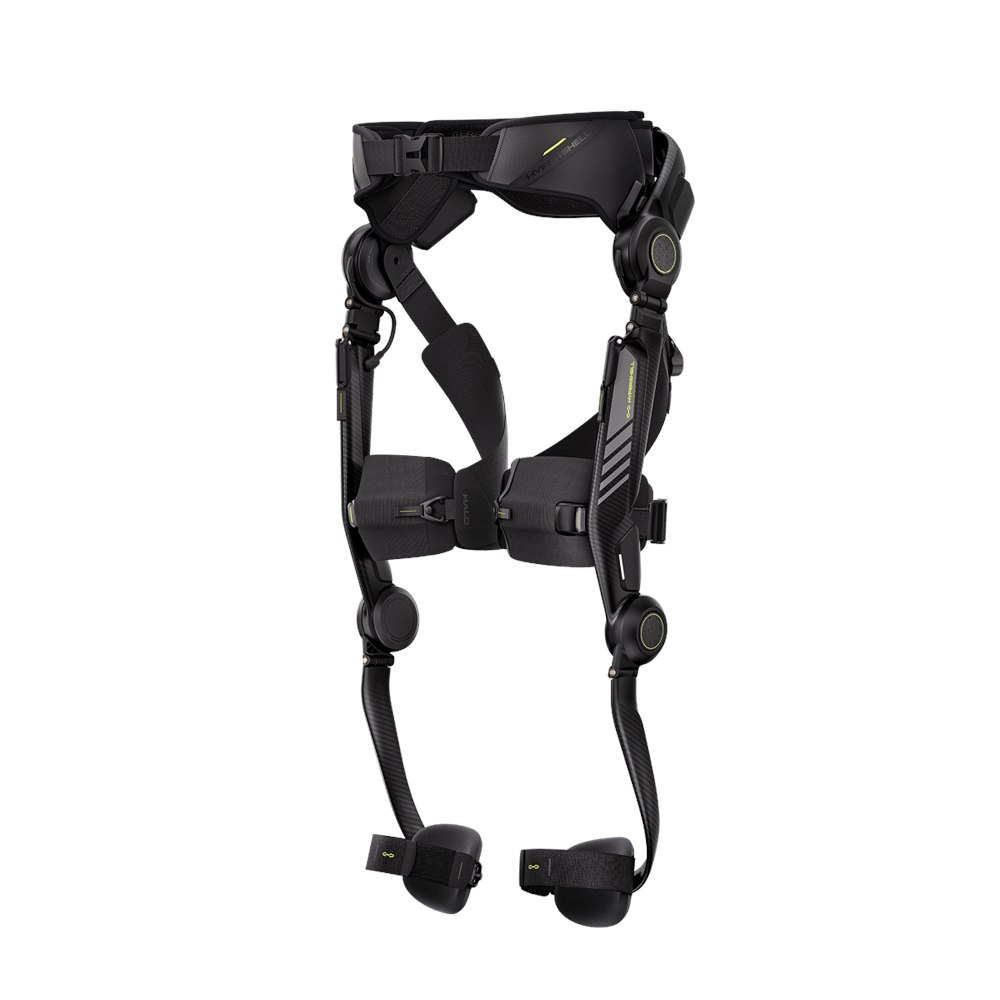
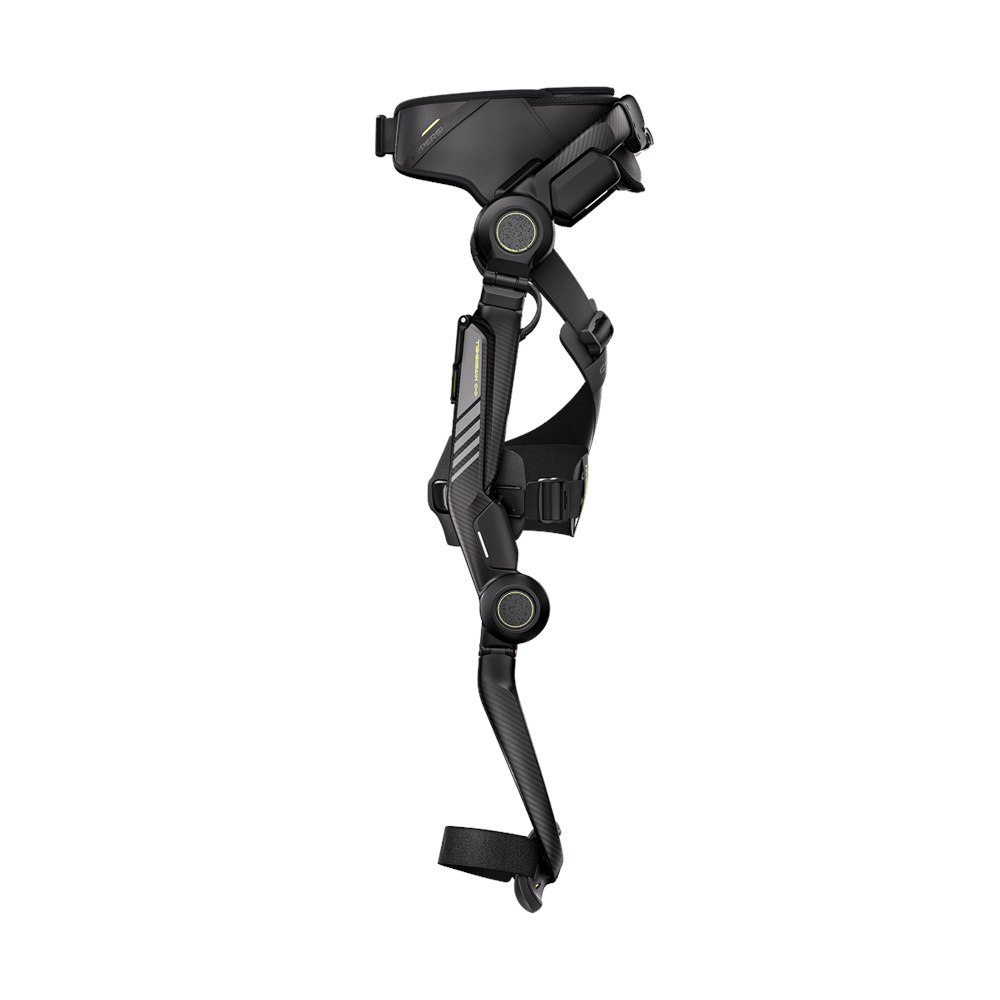
Halo is a wearable powered frame, with a padded waist belt, articulated supports down the outsides of the legs, and straps that hold the system against the body. It is designed to move with the person wearing it. You still walk, choose your footing, and carry out the ambitious itinerary you announced before breakfast.
The difference from a hip-only exoskeleton is right there at the knees. Hypershell connects hip and knee assistance in one coordinated structure, rather than treating the lower leg as someone else’s department. Four motors work across those joints, supporting both the swinging part of a step and the part where a leg bears weight.
A hiking exoskeleton that brings the knees into the meeting
That arrangement gives Halo a broader job description than simply adding a push to a forward stride. Hypershell describes assistance for walking, climbs, descents, stairs, squats, and getting up from a seated position. Your legs have apparently acquired a small management team, although you remain responsible for where the team goes.

The frame is open rather than a pair of robotic trousers. Black structural pieces follow the outside of each leg, round motor housings sit around the hip and knee areas, and soft cuffs secure the assembly. The effect is somewhere between serious outdoor equipment and the lower half of a superhero costume with unusually sensible purchasing paperwork.
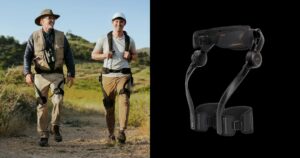


Hypershell calls the coordinated design its Unified Architecture. A continuous structure links the hip, thigh, knee, and lower leg, while the control system coordinates all four motors. That is the central idea here: assistance delivered across the leg as a connected movement, instead of a collection of separate nudges.
The interesting part is when the power arrives
The headline power figure is 1,490 watts of peak output. Peak output describes a maximum, so it should not be read as a constant shove every time you wander toward the refrigerator. Timing and adjustment matter in something attached to moving joints. A strong motor with terrible timing would make an extraordinarily bad walking companion.

Halo uses Hypershell’s HyperIntuition 2.0 motion-control system and more than 30 motion sensors. The company advertises movement prediction 0.2 seconds ahead. That is a manufacturer claim about the system’s anticipation, not a promise that the wearer will suddenly develop useful foresight about weather, parking, or whether the shortcut is actually shorter.
According to Hypershell, terrain changes do not normally require a dedicated manual terrain switch. The system responds to movement and posture, while the wearer can still choose a mode and adjust assistance. That distinction is useful: automatic adjustment does not mean there are no settings, or that every person will prefer the same amount of help.
- Hip and knee assistance: four motors coordinate support across both legs.
- Selectable modes: Eco, Hyper, Fitness, and Transparent give the wearer different operating choices.
- Removable power: the PocketVolt battery can be replaced and charged independently.
- Packable frame: Halo folds down when the powered part of the outing is over.
- Fit before adventure: hip width, leg length, and waist measurements matter to proper alignment.
Those controls make this more of a piece of equipment to learn than an accessory you forget you are wearing. Someone who enjoys dialing in a backpack harness will probably understand the appeal. Someone who considers tying shoelaces excessive preparation may need a moment.
The battery gets its own pocket
Halo’s detachable 72 Wh PocketVolt battery can clip at the waist or ride in a pocket or backpack. Hypershell lists the battery at 370 grams and says it displays remaining charge and the current assistance level. Keeping that information visible is a practical touch when your walking accessories now have a fuel situation.
The rated range is up to 20 kilometers per battery, roughly 12.4 miles. Treat that as a planning reference, not a guaranteed trail distance. Hypershell says assistance level, wearer weight, slope, speed, temperature, carried load, battery condition, and fit all affect the result. A gentle path and a steep climb with camera gear are different assignments.
| Detail | Hypershell’s listed specification |
|---|---|
| Powered joints | Four motors assisting hips and knees |
| Peak output | 1,490 W |
| Battery | Removable 72 Wh PocketVolt |
| Rated range | Up to 20 km; conditions affect range |
| Weight without battery | 2.6 kg without wearable system; 3.2 kg with it |
| Folded volume | 8 liters |
| Ingress rating | IP54 |
The weight distinction deserves attention. The smaller 2.6-kilogram figure excludes both the battery and the wearable system. With the wearable system, the listed weight is 3.2 kilograms before adding the battery. That is still something you carry, even if the motors are helping while it is on. Robot assistance has not repealed luggage.
Folding robot legs are still luggage
Hypershell lists an eight-liter folded volume, which gives the frame a plausible place in a travel or outdoor packing plan. Whether it fits your particular backpack depends on the bag and what else is inside. The sandwich, rain jacket, and inexplicably large collection of charging cables will want representation in that discussion.
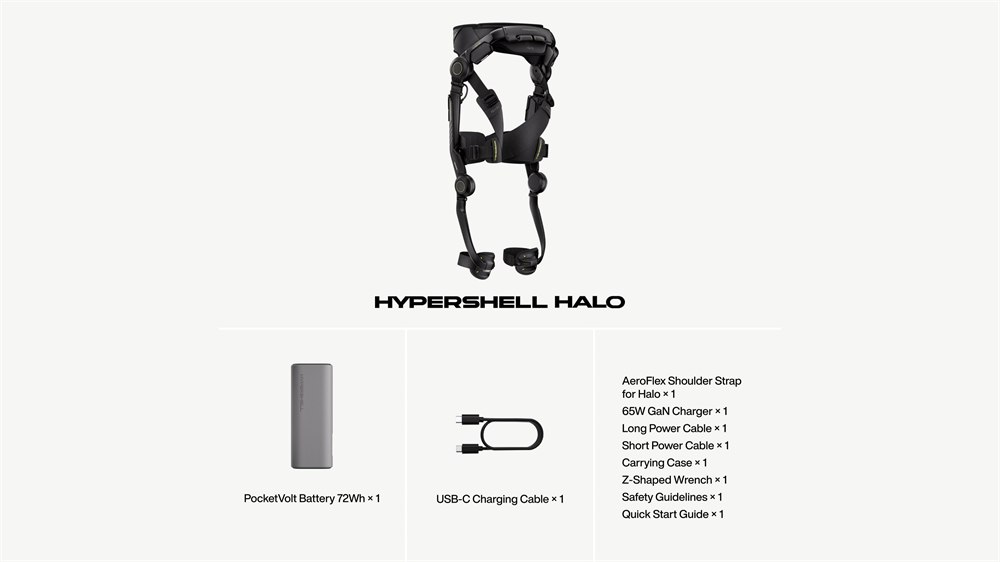
The standard box lists Halo, a PocketVolt battery, USB-C charging cable, 65 W GaN charger, shoulder strap, carrying case, long and short power cables, a Z-shaped wrench, and the getting-started documents. The purchase page also advertises an extra-battery preorder offer. Check the selected bundle before ordering, since a promotion and the standard box list are different things.
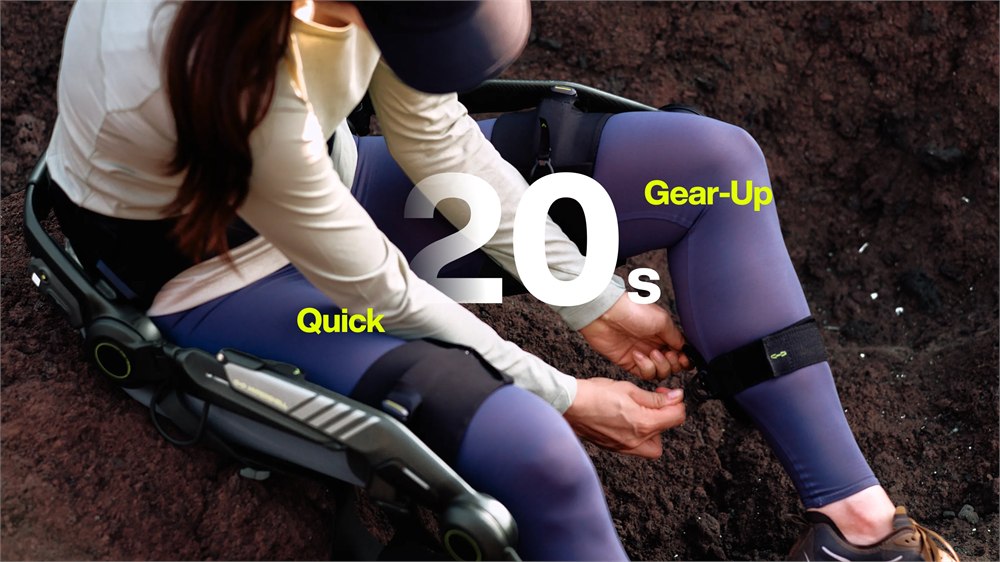
The five-buckle system is advertised as allowing a 20-second gear-up. That sounds appealing once the fit is sorted, but the first fitting deserves more attention than a speed challenge. Joint alignment and a stable, comfortable fit are part of making wearable equipment usable. This is one purchase where the measuring tape should get involved before the credit card.
Who this is actually for
Halo makes the most sense to consider if you already walk independently and are interested in powered help for outdoor movement. Hypershell explicitly describes it as lifestyle equipment, not a medical or rehabilitation device. It requires unassisted walking and balance. The futuristic appearance does not turn it into a substitute for either.
It also does not turn loose gravel into pavement or make a bad route a good idea. You remain in charge of terrain choices and footing. The appealing part is the possibility of coordinated assistance during a demanding outing, especially for people who enjoy both hiking and the sort of gear that comes with an operating mode called Hyper.
Compared with the hip-focused Hypershell X hiking exoskeleton, Halo extends the powered structure down to the knees. That makes it a different proposition in both coverage and equipment commitment. The extra joints are the point, and the extra frame is part of the deal.
- Full-leg consumer exoskeleton with integrated hip and knee assistance.
- Four motors, adjustable assistance, and HyperIntuition 2.0 control.
- Replaceable 72 Wh battery with a rated range of up to 20 km.
- Folds to a listed eight-liter volume for carrying.
- Requires an appropriate fit, independent walking, and unassisted balance.
- Sold as a preorder, with shipping estimated to begin in late November 2026.
Product images courtesy of Hypershell.
Price and availability
Hypershell lists the standard Halo at US$2,299 on its direct store, with preorder shipping estimated to start in late November 2026. A separate Origin Edition is also offered. Confirm the edition, included batteries, fit requirements, and current delivery estimate before buying. This is upcoming equipment, so the shipping date is an estimate rather than a completed delivery.
For most casual walks, boots remain a remarkably competent technology. Halo is for the person who looks at a long climb and wonders whether their hips and knees could use a little coordinated electrical backup. Your trail mix can remain entirely analog.
| Pros | Cons |
|---|---|
| Coordinates assistance at hips and knees | More frame and fitting involved than hip-only equipment |
| Battery is removable and independently rechargeable | Actual range depends on use and conditions |
| Folds for transport | Wearable system and battery add to the headline weight |
| Adjustable assistance and selectable modes | Requires learning the settings and getting the fit right |
| Direct preorder option | Premium price and an estimated future shipping date |
| Designed for varied everyday and outdoor movement | Not medical equipment; wearer must walk and balance independently |
Where to find This Full-Leg Hiking Exoskeleton Adds Powered Hip and Knee Assistance
OddityMall may earn a commission from qualifying purchases at no extra cost to you.