There comes a point in every vacation video where the person holding the camera realizes they have accidentally become furniture. Everyone else is hiking, skating, biking, walking dramatically toward a sunset, or pretending to be spontaneous near a waterfall. Meanwhile, the camera person is backing up like a nervous wedding photographer, trying not to fall into a decorative bush.
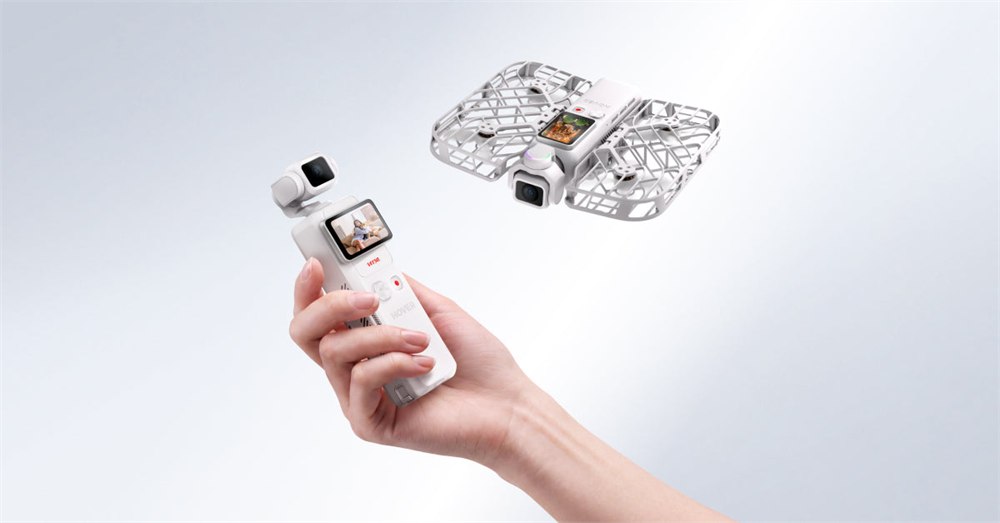
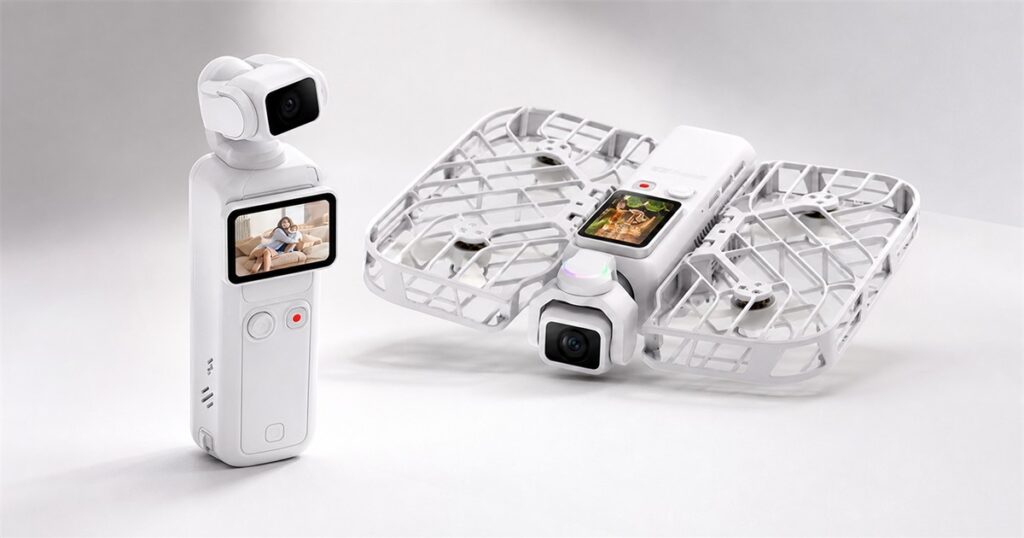
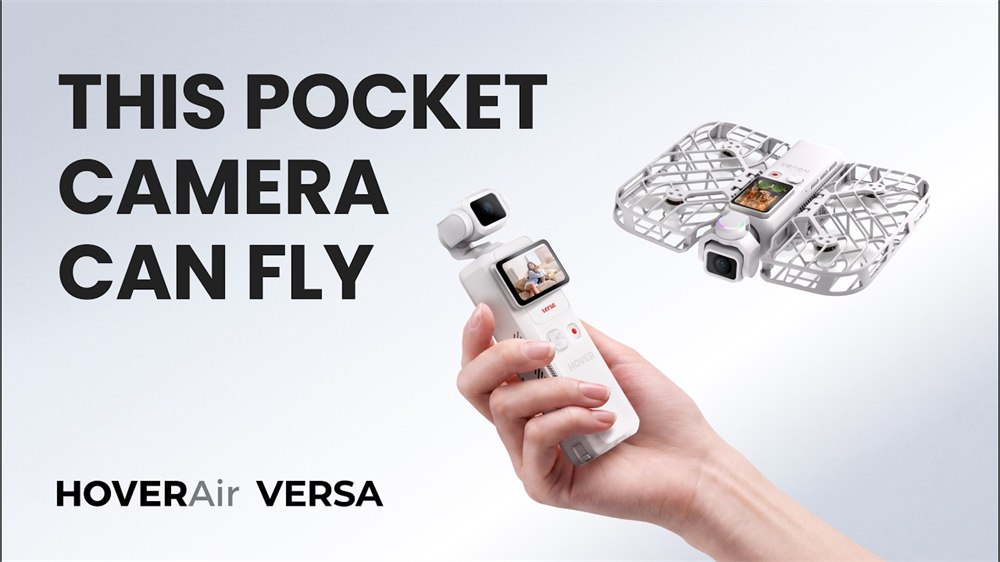
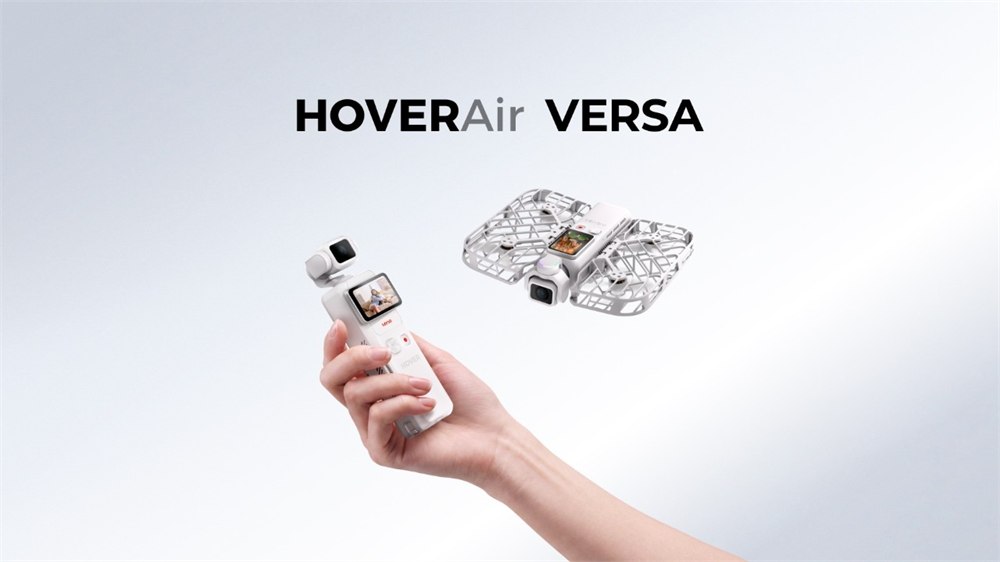
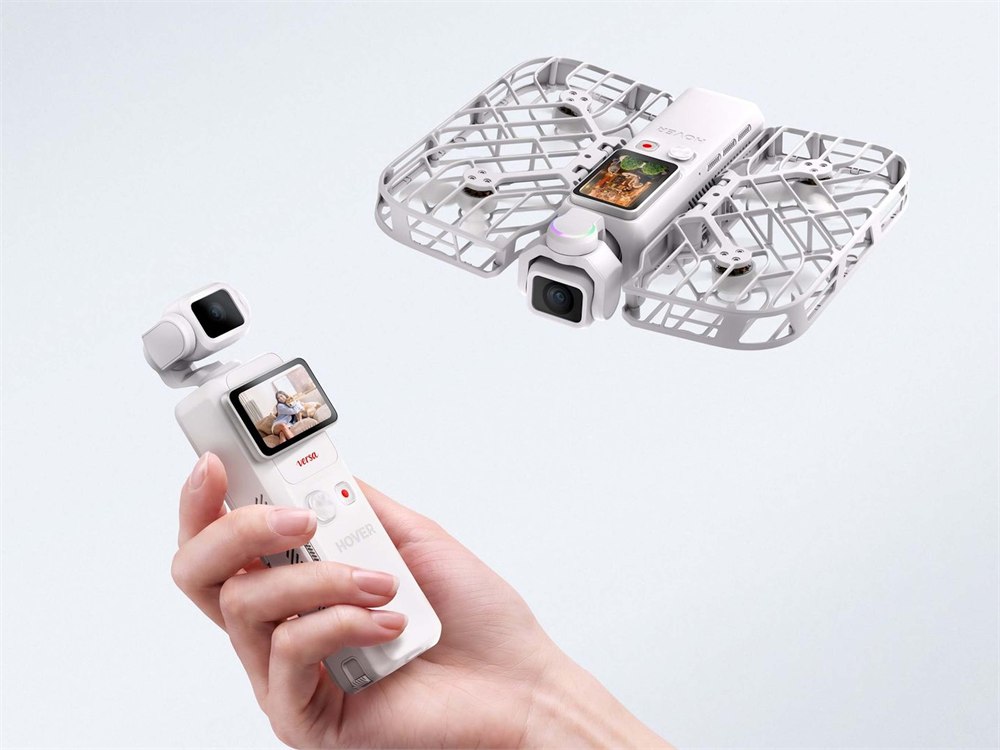
The HOVERAir VERSA is built for that exact little crisis. It is a pocket-size 3-axis gimbal camera that can be used by hand like a compact stabilized vlogging camera, then snapped into a guarded flight kit so it can lift off and film from the air. In normal human terms, it is a tiny camera that looked at a selfie stick and said, “What if I simply left?”
HOVERAir describes VERSA as one device for ground and aerial perspectives. In handheld mode, the camera module is meant for smooth walking shots, travel clips, vlogs, family moments, and the kind of “look at this quaint street” footage that usually requires someone to hold their phone with the concentration of a bomb technician. Its 3-axis gimbal handles stabilization, while the company’s page calls out strong dynamic range, low-light capture, and AI framing tools for composing shots.
Then comes the ridiculous part, which is of course the part we are all here for. The camera module attaches to the Flight Kit, a white fold-out frame with protected propeller guards, and becomes a self-flying camera. The idea is not to pilot it like a traditional drone or perform joystick gymnastics in a public park while strangers judge your thumb technique. HOVERAir says VERSA can follow a subject using AI tracking, launch without a controller, and use more than 10 intelligent flight modes.
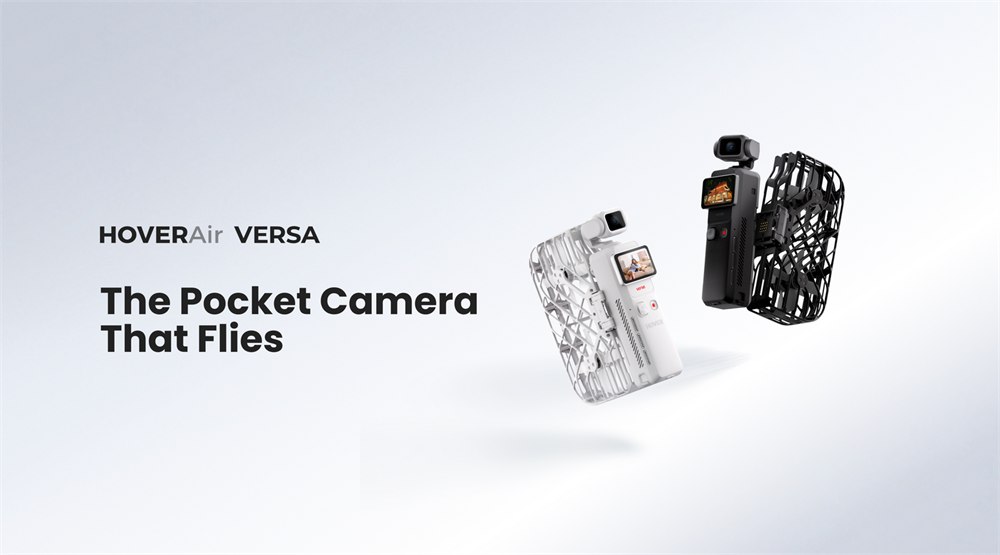
A Pocket Camera With An Escape Plan
The clever part is that VERSA is not trying to be only a drone. It starts as a handheld camera. That matters because most people do not need an aerial shot of every sandwich, dog walk, and mildly scenic sidewalk. Sometimes you just want smooth handheld footage without your phone wobbling like it has received unsettling news.
Related posts:
But when the moment does need a wider angle, the Flight Kit changes the whole personality of the gadget. The camera snaps into a flying frame with guarded propellers, so the same lens can move from “I am holding this” to “this is now following me from a more flattering distance.” It is the camera equivalent of a friend who can jog backward, fly, and never complain about being asked to take one more shot.
- Use it handheld for stabilized walking clips, vlogs, family videos, and travel footage.
- Attach it to the Flight Kit when a self-flying follow shot or overhead angle makes more sense.
- Let AI tracking keep the subject framed instead of manually piloting every movement.
- Use preset flight modes for orbiting, following, and more cinematic movement patterns.
- Capture 3D Worlds by having VERSA fly a 360-degree pattern and reconstruct the scene for later viewing.
HOVERAir says the handheld camera uses a 3-axis gimbal, while the flying setup is designed around autonomous shooting rather than distant aerial surveying. That distinction is important. This is not being pitched as the kind of drone you send across three counties to inspect a grain silo. It is more like a personal camera assistant for creators, travelers, cyclists, skaters, hikers, families, and people who say “content” with a straight face in public.
The Specs That Matter
The campaign and coverage list VERSA as a two-in-one camera with 4K shooting, 17.5 stops of dynamic range, a 3-axis gimbal, up to 36 km/h flight speed, more than 10 auto flight modes, and a 230 g flying weight. The product page also highlights AI auto-composition, picture-perfect framing, and a 3D Worlds mode that records a 360-degree flight pattern and rebuilds the moment into a viewable three-dimensional scene.
| Feature | What HOVERAir Lists |
|---|---|
| Core design | Handheld gimbal camera plus detachable self-flying Flight Kit |
| Stabilization | 3-axis gimbal for handheld shooting |
| Flight behavior | AI tracking with more than 10 intelligent flight modes |
| Flight speed | Up to 36 km/h, or about 22 mph |
| Weight in flying setup | Listed at 230 g |
| Creative mode | 3D Worlds 360-degree capture and reconstruction |
| Availability note | Campaign availability varies by region, with current U.S. restrictions reported for the Flight Kit |
That last line is not fine print for ants; it is a real buyer note. Recent reporting says HOVERAir’s U.S. plans for the Flight Kit hit regulatory trouble shortly after launch, and the company’s own page may show region limitations depending on where you visit from. So the sane move is to treat VERSA as a very interesting campaign product with availability that needs checking carefully before anyone starts mentally storyboarding their driveway launch sequence.
Still, the concept is delightfully specific. A normal pocket gimbal camera is useful, but it has to stay attached to your hand, which is rude of physics. A normal drone can film from outside the action, but it adds batteries, controllers, setup time, regulations, and the social burden of becoming “drone person” at the family picnic. VERSA tries to jam both jobs into one modular gadget small enough to feel like something you might actually bring.
Who This Makes Sense For
VERSA is probably most appealing to solo creators and small groups. If you are filming yourself cycling, walking through a city, skating, camping, making travel videos, or performing any other activity where your hands are already full of poor decisions, having a camera that can switch from handheld to self-flying makes a lot of sense.
It also makes sense for people who want the look of a drone shot without learning a full drone workflow. The guarded propeller frame and automated shooting modes are there to make flight feel less intimidating. That does not mean you can ignore local laws, privacy, weather, common sense, or the ancient rule that spinning propellers deserve respect. It does mean HOVERAir is aiming at people who want better angles without turning every outing into a flight school seminar.
The physical design also deserves credit. The white camera module looks more like a compact vlogging camera than a traditional drone body, while the flight frame has the company’s familiar enclosed-guard look. That protected shape is part of HOVERAir’s whole self-flying-camera identity, and on VERSA it makes the transformation visually obvious: little handheld camera, then little handheld camera with wings, then suddenly your picnic is being documented by a tiny airborne intern.
The downside is that modular gadgets always live in the land of tradeoffs. More modes means more parts to remember. A flying camera means battery limits. A compact form means you are choosing portability over giant-camera brute force. And because the campaign is tied to regional availability issues, especially in the United States, buyers should check the current seller page and campaign notes before assuming the Flight Kit is available where they live.
Image credits: HOVERAir and NotebookCheck.
Price And Availability
The HOVERAir VERSA launched through Indiegogo in August 2026, with campaign pricing listed from $449 for the Pocket-Only version. Coverage of the campaign also listed higher bundles, including a FlyMore Combo with the Flight Kit and extra accessories, and a Creator Combo with add-ons for shooting and mounting. Prices and bundle contents can shift on crowdfunding pages, so the current campaign page is the place to verify exactly what is available in your region.
In short, the HOVERAir VERSA is a pocket gimbal camera for people who occasionally wish their camera would stop being trapped in their hand and go get the shot itself. It is part travel camera, part self-flying camera, part “my tripod has developed ambitions.” Just check the regional restrictions before falling in love with the flying half.
- Product: HOVERAir VERSA Flying Pocket Camera
- Maker: HOVERAir / Zero Zero Robotics
- Core function: handheld 3-axis gimbal camera that can attach to a self-flying Flight Kit
- Camera notes: 4K capture, 17.5-stop dynamic range claim, AI framing, and low-light emphasis
- Flight notes: guarded propeller frame, AI tracking, 10+ auto flight modes, and 36 km/h listed speed
- Creative feature: 3D Worlds mode for 360-degree capture and scene reconstruction
- Price: campaign pricing from $449 for the Pocket-Only version at the time of writing
- Availability: campaign and regional availability should be checked carefully, especially for U.S. buyers
| Pros | Cons |
|---|---|
| Combines handheld stabilized shooting and self-flying capture in one modular system | Regional availability is complicated, especially for the Flight Kit in the U.S. |
| Protected propeller guards make the flying setup less intimidating than exposed rotors | Crowdfunding pricing and bundle details can change before delivery |
| AI tracking and preset flight modes reduce the need for manual piloting | Compact size means flight time and camera hardware will have practical limits |
| 3D Worlds mode gives it a genuinely unusual creative trick | Extra parts and accessories add more things to pack, charge, and keep track of |
| Useful for solo creators who need both ground and aerial angles | Buyers still need to follow local drone and privacy rules |
Where to find This Pocket Gimbal Camera Snaps Into a Self-Flying Flight Kit
OddityMall may earn a commission from qualifying purchases at no extra cost to you.