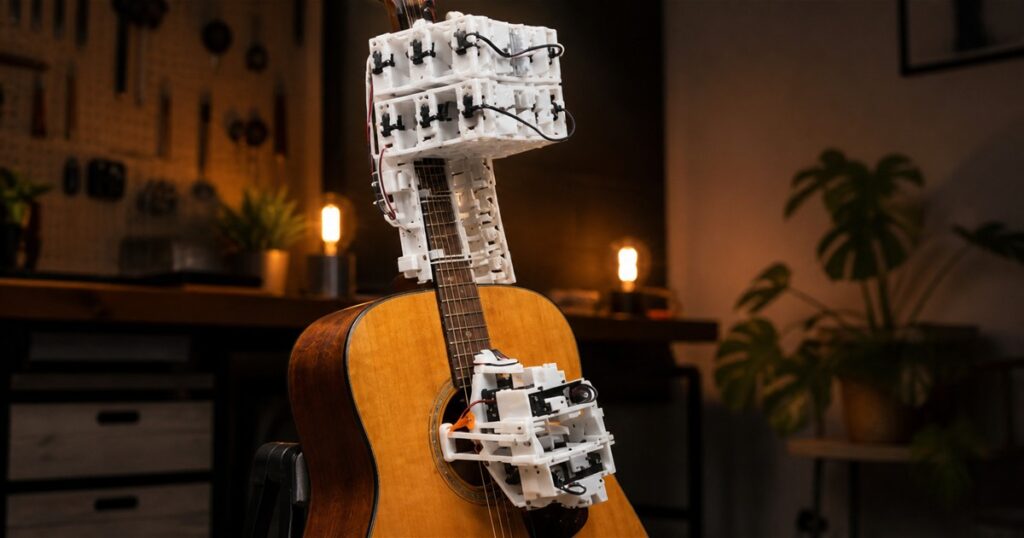
Somewhere between “learn guitar” and “build a tiny mechanical coworker for your guitar,” a person with a soldering iron chose the funniest possible third option.

The MegCell Pulse is a 3D-printable guitar-playing robot that straps onto an acoustic guitar and physically plays the instrument from digital tablature. It is not a speaker, not a backing track, and not one of those apps that politely tells you your timing is bad while you slowly lose the will to practice. It is an actual mechanical system that presses strings, plucks strings, and turns digital notes back into room-filling acoustic sound.
The project comes from MegCell, founded by New Zealand-based engineer Bruce, who describes the idea as a way to give digital music a physical body again. That is a very poetic way to say “what if your guitar got possessed by a 3D printer,” but it is also a surprisingly clean explanation of why the thing is interesting. Most music gadgets push sound through software, samples, amps, headphones, or another little rectangle. MegCell Pulse goes the other direction. It takes the neat, obedient language of digital notation and makes a real wooden guitar deal with it in public.
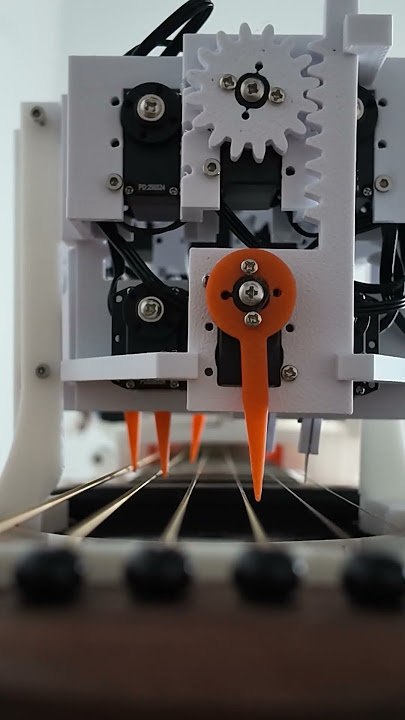
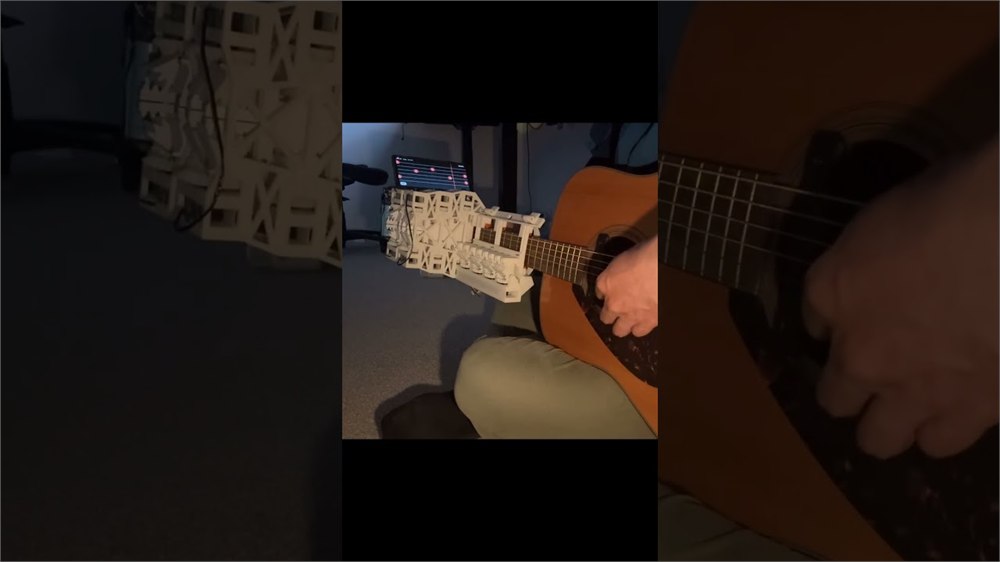
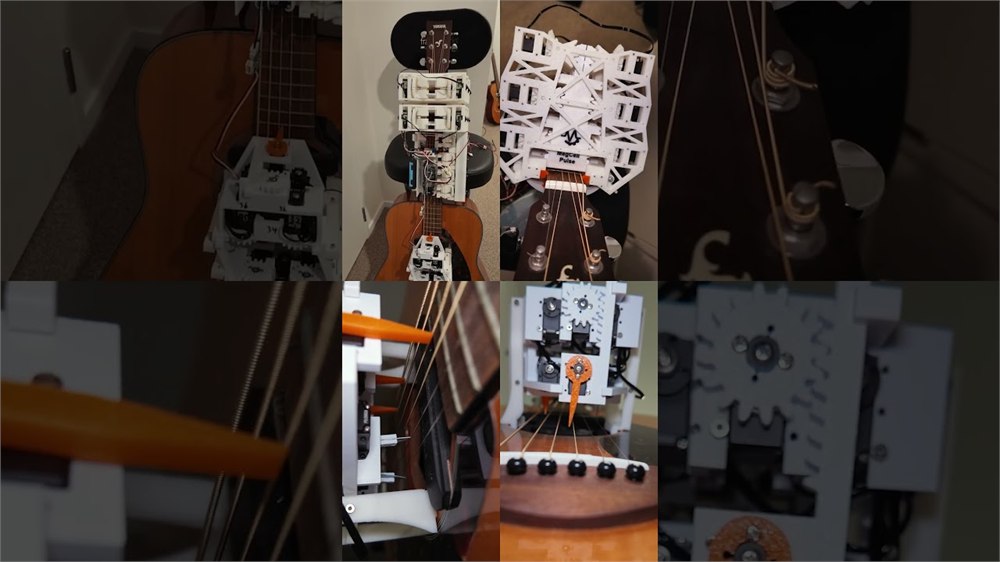
Mechanically, the system is split into two jobs, just like a human guitarist who has not yet rage-quit after learning barre chords. One assembly handles fretting on the neck. Another sits around the strings near the sound hole and handles plucking. Together, they act like a robotic pair of hands, except these hands appear to have been raised entirely by CAD files, servo brackets, and a very patient workbench.
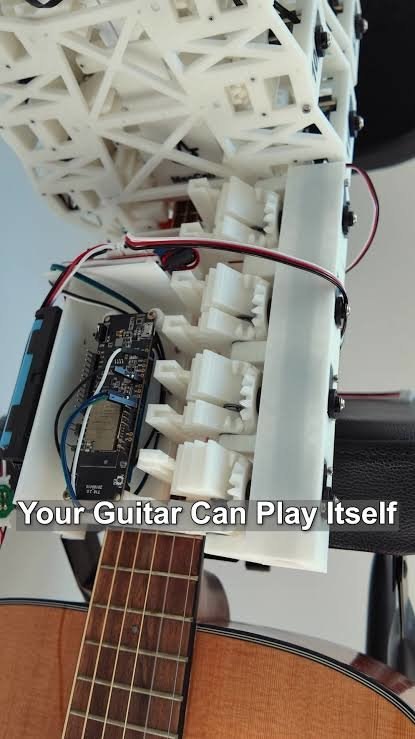
A Robot That Makes The Guitar Do The Work
The best part is that the guitar remains the sound source. New Atlas describes the Pulse as a system that fits onto an acoustic guitar and plays music fed to it in digital tablature format, pressing strings between frets and plucking them in time. So the output is still the vibration of a real instrument in a real room, with all the tiny wooden imperfections, string buzz, and acoustic personality that make a guitar sound alive instead of like a ringtone wearing a cowboy hat.
Related posts:


That makes it more than a novelty robot. It is a strange bridge between digital composition and physical performance. A song can start as notation, move through control software, become mechanical motion, and finally arrive as acoustic vibration. Somewhere in that chain, your guitar gets to experience what office workers feel when a spreadsheet suddenly becomes a meeting.
Core77 reports that the system attaches to a guitar in two components: one for fretwork and one for plucking. The same coverage notes that users need software that can handle digital sheet music, with MuseScore given as one example, and then export the file to the device. Hackaday adds that the two robot halves work together from digital tablature, with one unit doing the fretting and the other using individual plectrum-style pluckers.
In practical terms, the appeal is partly musical, partly maker-ish, and partly “look what my acoustic guitar can do while everyone else is still arguing about capos.” Backers are not buying a finished robot that arrives in a giant box and immediately starts playing “Wonderwall” at your family. The campaign is for digital build files and supporting instructions. The queue evidence and MegCell’s own site both clarify that the Kickstarter is digital files only, with no physical robot or hardware included.
That means the Pulse is aimed at people who are comfortable with 3D printing, sourcing parts, assembling mechanisms, and debugging the kind of project where a tiny plastic finger has opinions about rhythm. It is more DIY laboratory than plug-and-play living room appliance, which honestly makes it more charming. A regular smart speaker plays a song. This thing asks you to build the machine that persuades your guitar to perform it.
- It is designed for acoustic guitars rather than replacing the instrument with a speaker or synthesizer.
- The system uses separate mechanical roles for fretting and plucking, similar to a player’s two hands.
- Backers receive digital files, parts guidance, control software, and assembly instructions rather than finished hardware.
- The project can run automatically from compatible digital notation, and it can also assist a player by handling fretting while the person plucks.
- Because much of the structure is printable, the design can be repaired, modified, and upgraded by capable makers.
The Maker Project Hiding Inside The Music Demo
MegCell’s official site describes the Pulse as converting digital pulses into mechanical motion, then turning that motion into acoustic vibration. It also points to magnetic actuation as part of the system, while New Atlas describes the mechanism as using gears, magnetic actuators, and arms. That is the sentence where most normal household objects quietly back away from the table.
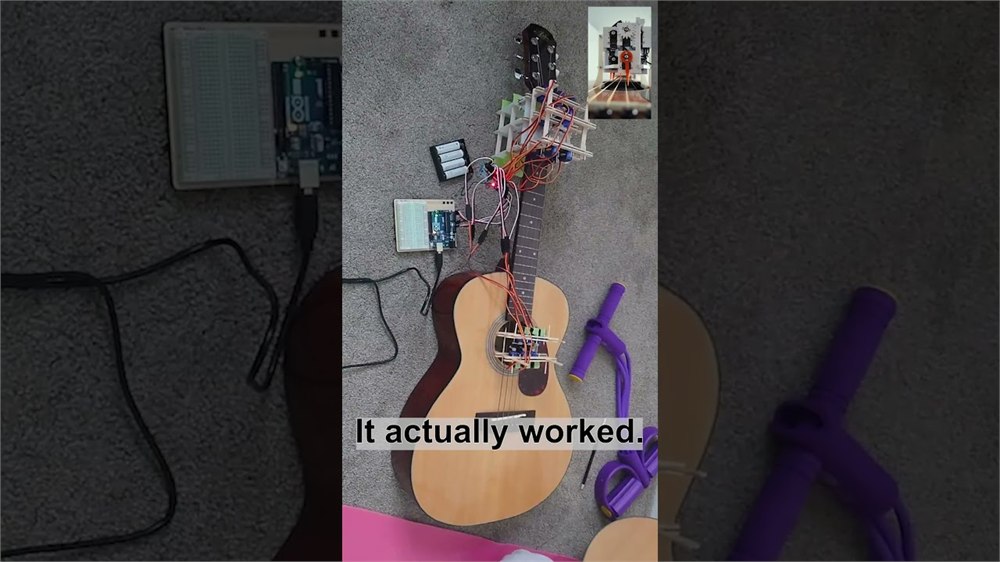
The project has reportedly been a long-running build. Kicktraq’s campaign mirror includes an update summary saying Bruce started with guitar and Arduino experiments years ago, then kept developing prototypes through multiple generations. Core77 says he has spent six years developing the 3D-printed guitar player. That explains why the current version looks less like a one-weekend novelty build and more like something that has survived many late nights, many failed prints, and at least one moment where a tiny actuator probably flung itself into emotional exile.
| Detail | What It Means |
|---|---|
| Product type | 3D-printable robotic system for acoustic guitar |
| Main action | Frets and plucks real strings from digital music input |
| Creator | MegCell, led online by New Zealand-based engineer Bruce |
| Delivery model | Digital build files, software, parts list, and assembly guidance |
| Current limitation | Does not cover the entire fretboard and cannot slide between frets |
The limitations are important because this is not a magical session guitarist in a plastic exoskeleton. New Atlas notes that the current form does not cover the entire fretboard on most guitars and cannot slide between frets for legato licks. Core77 makes the same practical point: it can press strings at specific frets, but it is not going to suddenly become Jimi Hendrix with a parts list.
That does not make it less weirdly impressive. If anything, it makes the whole project easier to understand. MegCell Pulse is a machine that performs the kinds of guitar movements it can physically reach and repeat. It is not pretending to be a complete replacement for a musician. It is a robotic music experiment that happens to use your actual guitar as the loud, resonant, emotionally complicated output device.
Why This Is More Fun Than Another Bluetooth Speaker
The world is not short on music gadgets. There are smart amps, tiny synths, loop pedals, practice apps, wireless pickups, portable speakers, and enough glowing rectangles to make every desk look like a suspicious airport runway. MegCell Pulse stands out because it is physical in the most literal possible way. It does not simulate a guitar. It bullies a guitar into participating.
That physicality creates a different kind of spectacle. Watching a mechanism press the strings and pluck in rhythm makes the performance visible. You can understand what is happening even if you do not know much about music theory. It is a machine turning instructions into motion, and motion into sound. It is also the rare robot that makes an acoustic guitar look like it has been selected for a low-budget space mission.
There is also a serious accessibility-adjacent angle, handled carefully. New Atlas says Bruce has demonstrated the Pulse assisting a human musician by taking over fretting duties. Core77 describes the two halves as independently usable, which could allow someone to pluck while the machine handles fretwork. That does not make it a medical device, and nobody should treat it like one. But it does make the project more interesting than a mechanical party trick, because the same mechanism that can perform automatically might also let a person interact with a guitar in a different way.
For makers, the repairability angle may be the real hook. A finished consumer gadget is wonderful until one proprietary plastic bracket snaps and the entire product becomes a decorative grievance. MegCell Pulse leans into the opposite idea. If the printable parts, instructions, and parts list are the product, then the owner is also part technician, part musician, and part tiny robot landlord.
It is not for everyone. If your ideal product experience is “open box, press button, receive dopamine,” this may feel like being assigned homework by a guitar. But for people who already enjoy 3D printing, mechanical tinkering, music tech, robotics, or building things that make guests ask whether everything is okay, it is extremely in the OddityMall danger zone.
Availability And Key Details
The MegCell Pulse is being offered through Kickstarter as a digital-files project, not as a shipped assembled robot. Kicktraq lists the campaign as active, with dates from August 5 to September 2, 2026, and describes it as a project to build a 3D-printable robot that physically performs music on your own guitar. Core77 reported the digital plans at USD $76, while Hackaday noted supporting tiers up to $100. As with any crowdfunding project, final delivery, compatibility, assembly difficulty, and real-world performance depend on the creator’s fulfillment and the builder’s own tools and patience.
- Product: MegCell Pulse 3D-printable guitar-playing robot
- Use case: Turns digital tablature or compatible music files into mechanical guitar performance
- Instrument: Designed around acoustic guitar performance
- Included: Digital files, control software, parts list, and assembly guidance for backers
- Not included: A finished physical robot or hardware kit
- Price noted by coverage: Digital plans reported at USD $76
- Best for: Makers, robotics nerds, music-tech experimenters, and guitar owners with a high tolerance for tiny mechanical drama
| Pros | Cons |
|---|---|
| Turns real digital notation into physical acoustic sound | Requires 3D printing, assembly, and parts sourcing |
| Uses a real acoustic guitar rather than simulated audio | Not sold as a completed hardware product |
| Separate fretting and plucking modules make the mechanism easy to understand | Current version does not cover the whole fretboard |
| Repairable and upgradable in the spirit of maker projects | Cannot perform sliding legato-style fret movements |
| Could be used for automatic performance or assisted playing experiments | Crowdfunding delivery and final build experience are not guaranteed |
| Visually bizarre enough to make any music room instantly more interesting | Probably not the right project for casual guitar beginners |
Where to find This 3D-Printable Guitar-Playing Robot Turns Tabs Into Real Acoustic Music
OddityMall may earn a commission from qualifying purchases at no extra cost to you.