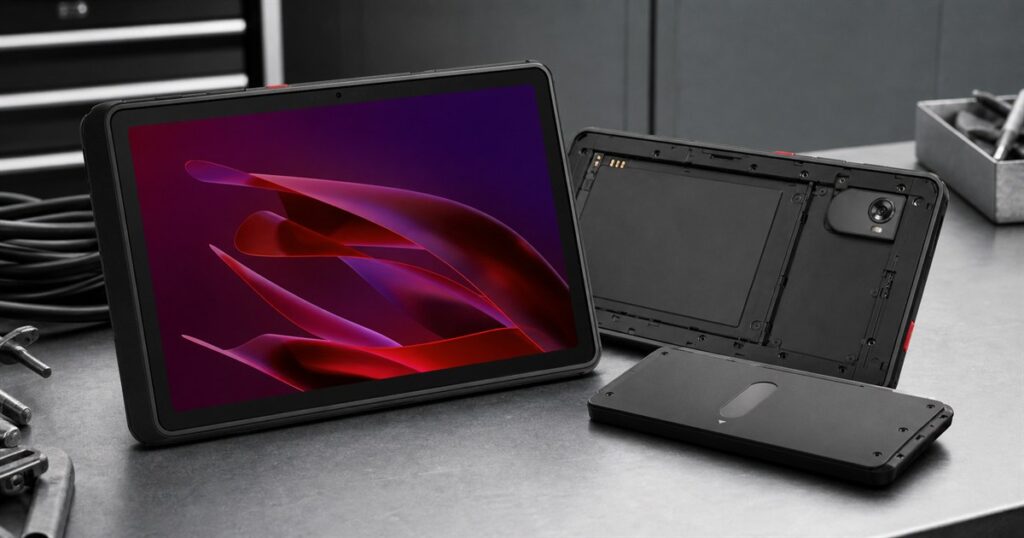
Most tablets live gentle little lives. They nap on couches, collect fingerprints during streaming marathons, and occasionally get asked to survive the terrible wilderness known as a kitchen counter. The Lenovo ThinkTab X11 is not that tablet. This is the Android slate that looks at a warehouse floor, a service truck, a loading dock, or a campsite with suspiciously ambitious Wi-Fi plans and says, “Fine, but I am bringing my own armor.”
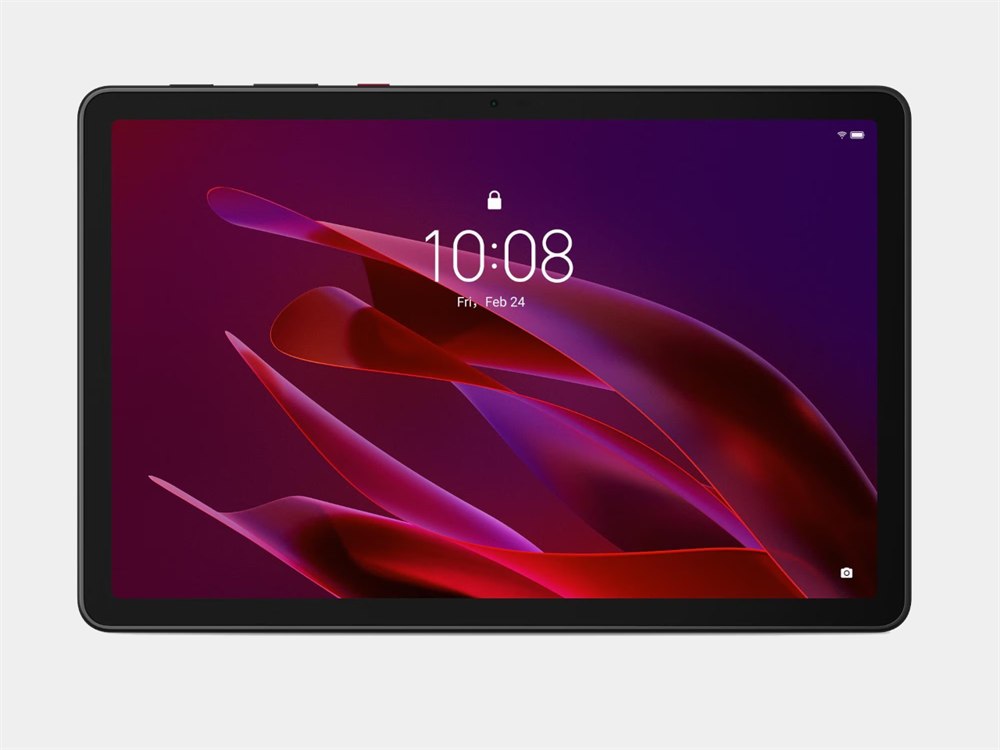
The ThinkTab X11 is a rugged Android tablet built for work places where ordinary consumer tablets start writing their resignation letters. It has the thick black frame, practical ports, and business-first attitude of a device designed to be dropped, mounted, scanned with, charged all day, and passed between people who do not have time to explain to accounting why another glass rectangle has become expensive confetti.
The weirdly refreshing part is not just that Lenovo made a rugged tablet. Rugged tablets exist, usually with prices that make small businesses instinctively protect their wallets. The hook here is that the ThinkTab X11 brings a removable 10,200 mAh battery and a battery-less operating mode to a modern Android tablet, which is the sort of deeply practical feature that feels almost rebellious in 2026. Somewhere, a sealed-device design meeting just got uncomfortable.
Instead of requiring tiny screwdrivers, prayer, and a questionable YouTube repair video, the tablet’s rear setup is made for tool-free battery access. The idea is simple: if the battery runs low during a long shift, swap it and keep moving. If the tablet is mounted in a kiosk, vehicle, workstation, or other fixed setup, it can run from DC power without a battery installed at all. That can help avoid cooking a battery during continuous plugged-in use, which is less glamorous than a folding screen but far more useful if your tablet’s job is to keep a line moving.
A Rugged Tablet That Remembers Batteries Should Come Out
The ThinkTab X11 is aimed at frontline and industrial work, but its appeal is easy to understand even if your most hostile worksite is a garage full of unlabeled bins. Lenovo lists IP68 dust and water resistance, and the tablet is tied to MIL-STD-810H durability when used with its rugged case. That means it is built for bumps, vibration, wet fingers, and the general workplace chaos that happens when humans and equipment share the same square footage.
Related posts:
 Hi-Lift Jack: Rugged/Versatile Emergency Jack and Rescue Tool
 There’s Now an Ultra-Rugged Job Site Coffee Maker That Runs On Power Tool Batteries
 This Bubble Window For Your Fence Allows Your Dogs To Peek To The Other Side
 This Ultra-Rugged Outdoor Coffee Maker Is Perfect For Job Sites or Onboard Boats
Under the rugged shell is a 10.95-inch display with a 2560 x 1600 resolution, a 90Hz refresh rate, Gorilla Glass, and brightness listed at 600 nits with an outdoor high-brightness mode noted in product coverage. It runs on Qualcomm’s Snapdragon 7s Gen 3 platform, with configurations around 8GB of RAM and 128GB or 256GB of storage in the US listing, plus Android 16 out of the box. In normal-person language, it is not trying to be a gaming tablet wearing a construction vest. It is trying to be a durable work tablet that does not make every inventory app feel like it is being powered by a tired calculator.
The front-mounted NFC point is also a smart touch, because field devices often need to scan, verify, check in, or handle quick authentication without being flipped around like someone trying to find the barcode on a cereal box. There are two USB-C ports as well, which is one of those features that sounds boring until the moment you need to charge and connect a peripheral at the same time. Then it becomes a tiny miracle with a cable.
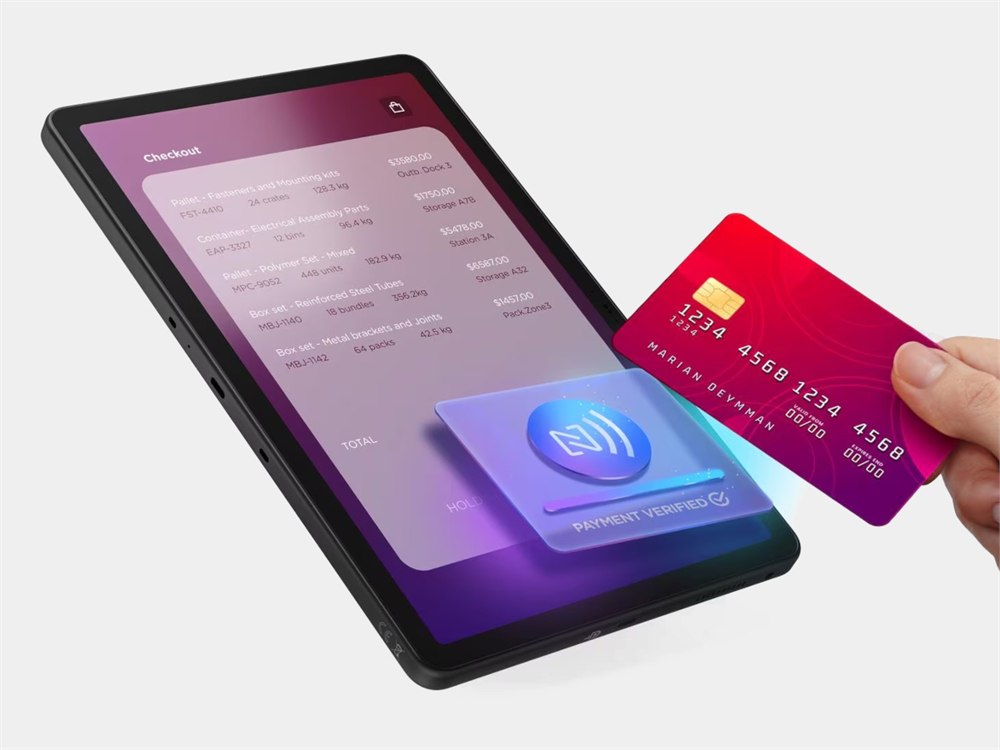
Here is the practical core of what makes the ThinkTab X11 interesting:
- Tool-free removable 10,200 mAh battery for longer shifts and faster swaps.
- Battery-less mode for fixed, vehicle-mounted, kiosk, or workstation use.
- IP68 dust and water resistance for messier work environments.
- MIL-STD-810H rugged certification when used with the rugged case.
- Two USB-C ports for charging and accessories without cable gymnastics.
- Front NFC for scanning, authentication, payment-style workflows, or access control.
That combination gives the tablet a personality beyond “slate with a case.” It is more like a very serious clipboard that has seen things, survived them, and would like everyone to stop making devices that cannot be serviced without a heat gun.
| Feature | What Lenovo Is Going For |
|---|---|
| 10.95-inch 2.5K display | Readable work surface for forms, dashboards, maps, and inventory apps. |
| Snapdragon 7s Gen 3 | Modern Android performance for business tasks without overkill pricing. |
| Removable 10,200 mAh battery | Hot-shift practicality when downtime is the enemy. |
| Battery-less DC mode | Permanent installs without slowly roasting a battery forever. |
| IP68 and rugged case support | Better odds against dust, rain, spills, drops, and workplace nonsense. |
| Android 16 with business tools | Current Android base with enterprise management appeal. |

For Work Trucks, Warehouses, Campsites, and People Who Break Things Honestly
Lenovo is clearly pitching this at logistics, manufacturing, construction, transportation, energy, and other jobs where a normal tablet is basically a dare. But this is OddityMall, so the fun is imagining where else this thing belongs. A mobile mechanic could mount one in a van. A campground office could use it as a durable check-in tablet. A maker space could leave one near the tools without needing a velvet rope. A person who camps like they are planning a minor moon landing could use it for maps, manuals, entertainment, and the deeply important work of proving that the cooler inventory spreadsheet was correct.
It also scratches a very particular modern itch: the desire for electronics that do not treat their batteries like sacred organs. Removable batteries used to be ordinary. Then everything got thinner, smoother, more glued together, and a lot more dramatic when it aged. The ThinkTab X11 bringing a removable pack back into the conversation feels like the hardware equivalent of discovering a coat with enough pockets. It is not flashy. It is better than flashy. It is useful.
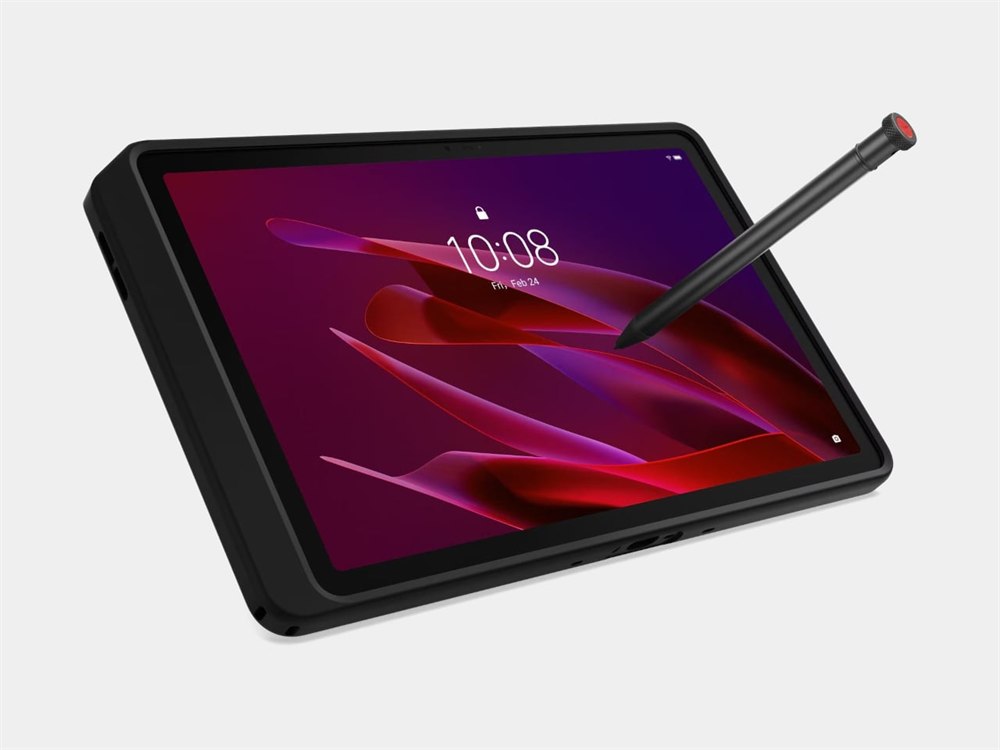
The tablet still looks like a work device, and that is part of the charm. The black body, thick bezel, red accents, rear panel, and rugged case compatibility all make it look prepared for a day that includes dust, rain, bad decisions, and at least one person saying, “Just set it over there.” It is not pretending to be a luxury media slab. It is the tablet you give to the person who carries keys, a radio, three pens, and the emotional burden of knowing where the replacement labels are stored.

There are normal tablet specs here too: Wi-Fi 6E support, Bluetooth, cameras front and back, Dolby Atmos speakers, a headphone jack in some spec listings, support for Lenovo’s Tab Pen XE, and microSD expansion noted in PSREF-related specs. None of that is the headline, but it matters because a rugged tablet still has to function as a tablet. The best durable gear is not the stuff that survives abuse while being unpleasant to use. It is the stuff people actually keep using after the novelty of not breaking it wears off.
The biggest limitation is that this is not really a couch-first tablet. It is a business and field device, and that means the design priorities are serviceability, uptime, durability, and manageability. If your main tablet job is watching shows in bed until your hand drops it on your face, there are thinner and prettier options. If your tablet needs to live where gloves, rain, dust, trucks, tools, or shared staff devices are involved, the ThinkTab X11 starts making a lot more sense.
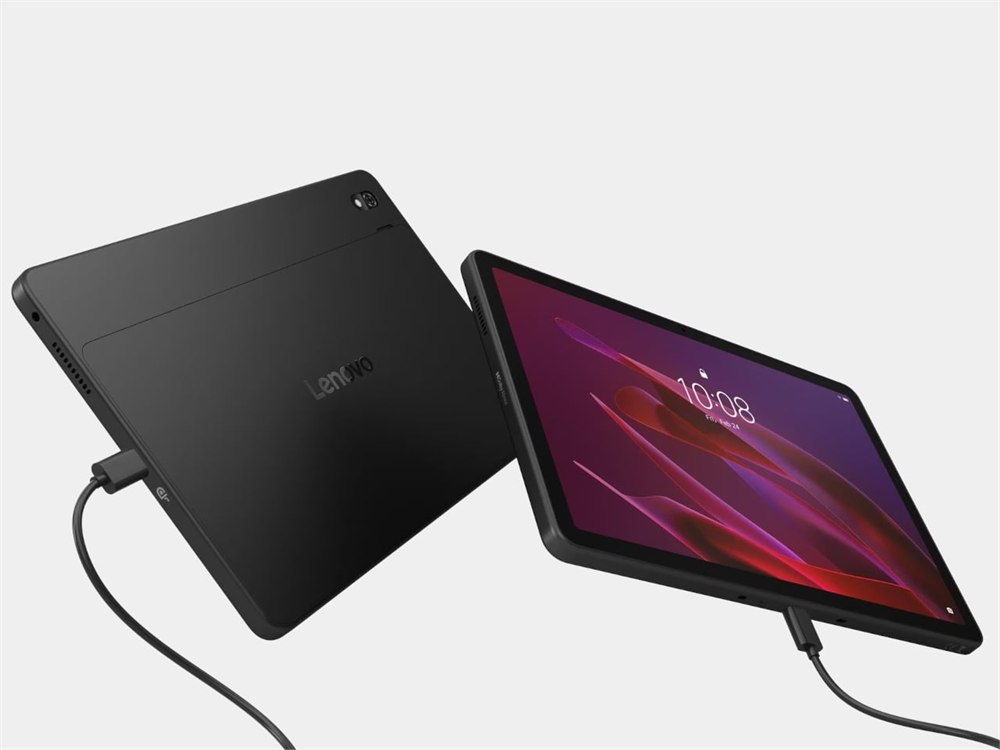
The Bottom Line On Lenovo’s Rugged Battery-Swapping Tablet
The Lenovo ThinkTab X11 is available through Lenovo’s site, with the current US pricing listed at .99 for the 128GB model and .99 for the 256GB model. That puts it in an interesting place: not cheap in the casual tablet sense, but noticeably approachable for a rugged, business-focused Android tablet with removable power hardware and enterprise durability claims.
Key product details and features:
- Product type: rugged Android work tablet.
- Main hook: removable 10,200 mAh battery with battery-less DC operating mode.
- Display: 10.95-inch 2560 x 1600 panel with 90Hz refresh rate.
- Processor: Qualcomm Snapdragon 7s Gen 3.
- Durability: IP68 dust/water resistance and MIL-STD-810H rugged-case support.
- Connectivity/use: dual USB-C ports, front NFC, Wi-Fi 6E, and Android 16.
- Best for: field work, warehouses, vehicles, kiosks, job sites, rugged travel, and anyone tired of sealed batteries acting like tiny hostages.
So yes, this is a tablet with a removable battery in the year 2026, and that should not feel as thrilling as it does. But here we are, applauding a back panel because it opens. Progress is strange, and sometimes it looks like remembering how useful old ideas were before we glued them shut.
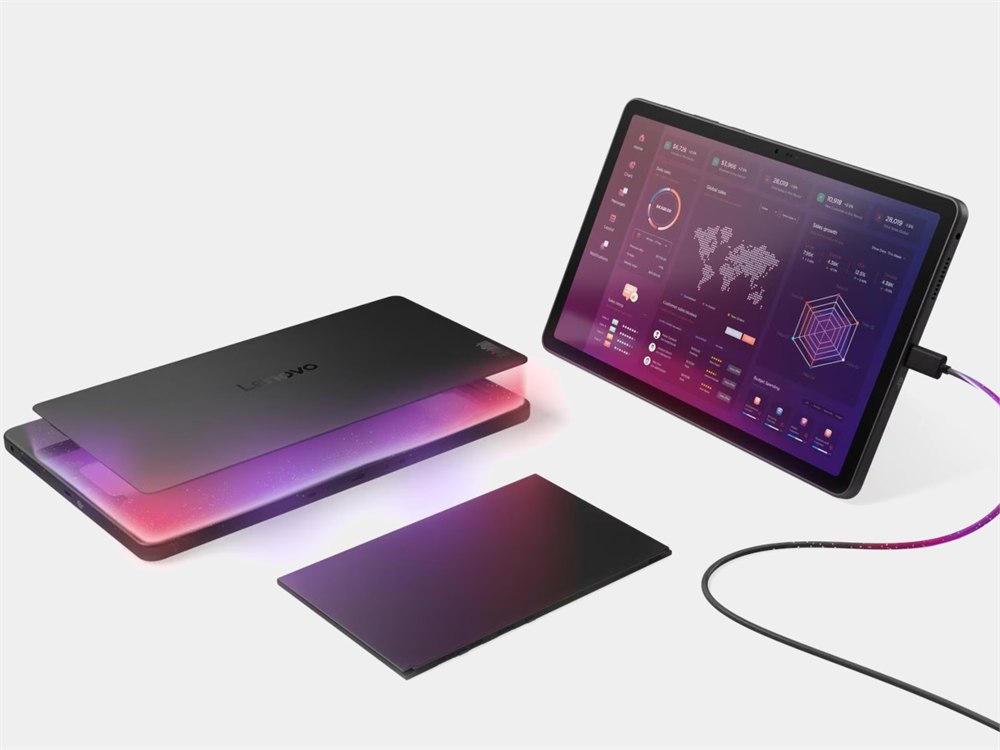
| Pros | Cons |
|---|---|
| Removable battery is genuinely useful for long shifts. | Rugged design is bulkier than a normal media tablet. |
| Battery-less mode makes fixed installs more practical. | Business-focused features may be overkill for casual users. |
| IP68 and rugged-case support fit harsh environments. | Not the prettiest couch-and-coffee-table tablet. |
| Dual USB-C ports solve real accessory and charging problems. | Model availability and exact configurations can vary by region. |
| Front NFC is smart for scanning and authentication workflows. | Cameras are more utility than photography flex. |
| Starts at a reasonable price for rugged enterprise hardware. | Rugged tablet buyers still need to check accessory and fleet needs. |
Where to find This Rugged Android Tablet Has a Removable Battery and Runs Without One
OddityMall may earn a commission from qualifying purchases at no extra cost to you.
Related posts:
Hi-Lift Jack: Rugged/Versatile Emergency Jack and Rescue Tool
There’s Now an Ultra-Rugged Job Site Coffee Maker That Runs On Power Tool Batteries
This Bubble Window For Your Fence Allows Your Dogs To Peek To The Other Side
This Ultra-Rugged Outdoor Coffee Maker Is Perfect For Job Sites or Onboard Boats