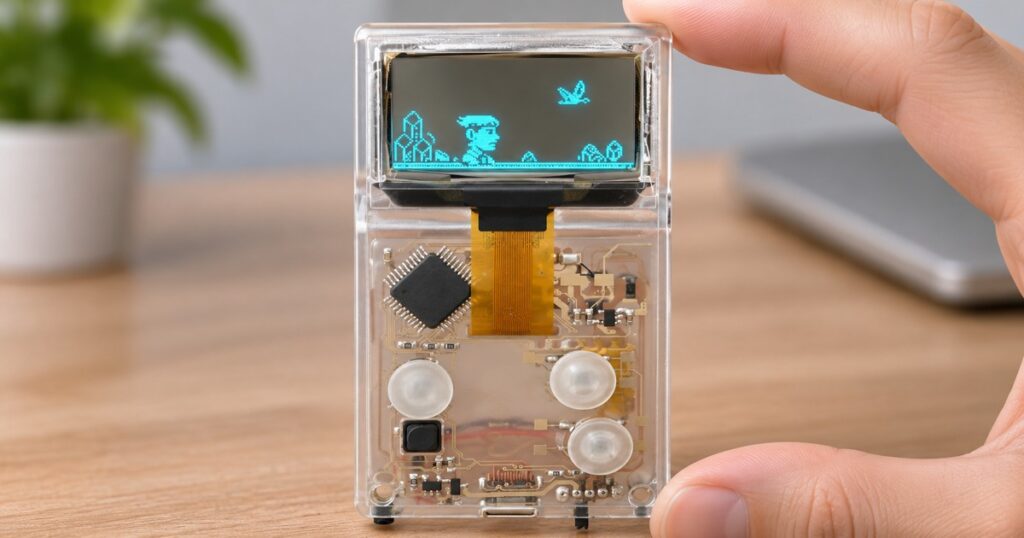
Hold the Arduview in front of a houseplant and the plant gets a small role in a video game. A few cyan pixels light up, a character goes about its business, and an entirely real leaf supplies the scenery. Move your hand two inches and the level takes place on a bookshelf. Nobody had to draw the bookshelf.
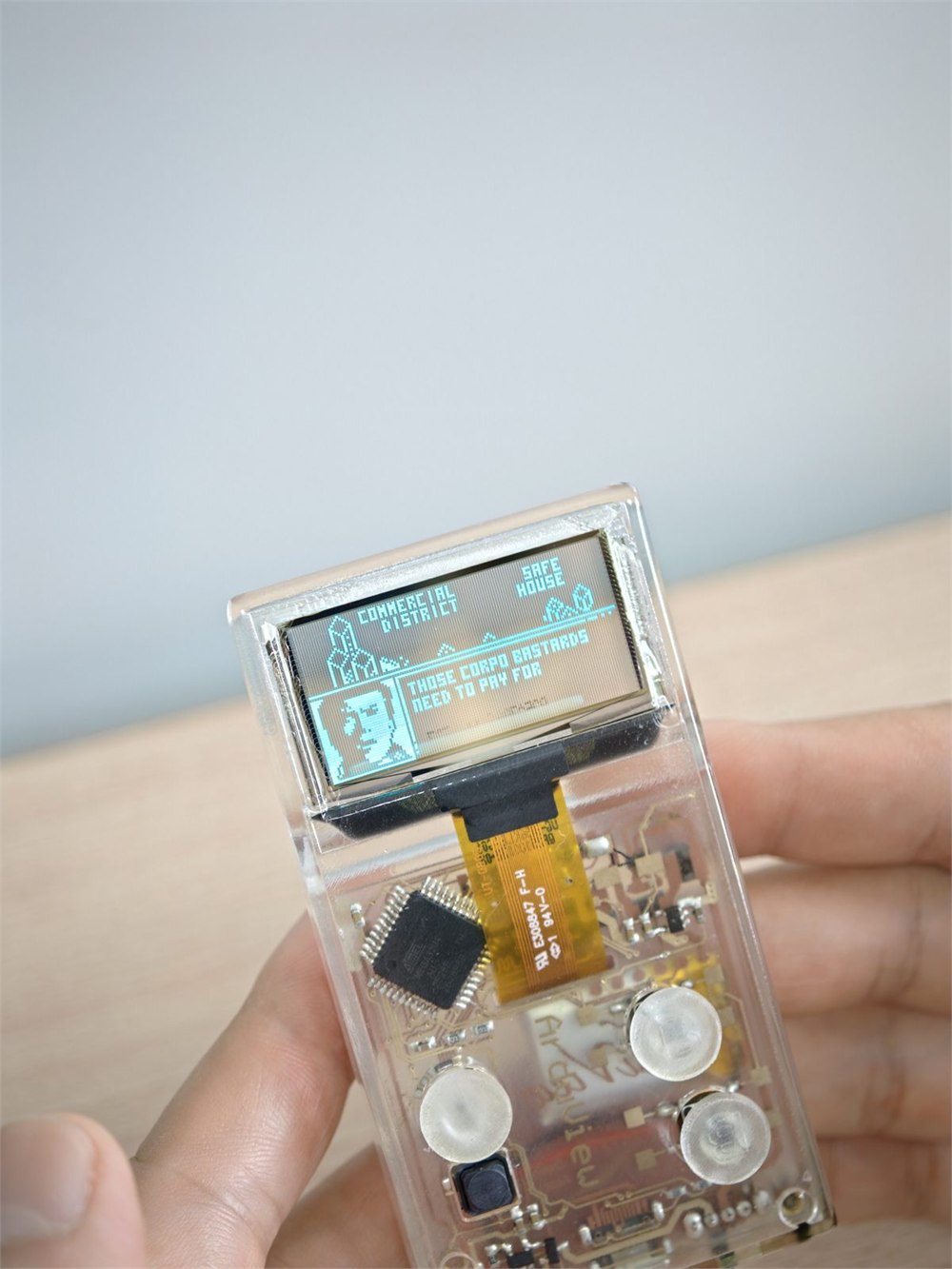
The Arduview is a transparent handheld game console roughly the size of a credit card. Plenty of us remember clear controllers that let us admire the innards of a button we had just blamed for losing a race. This one extends that privilege to the display. You can watch the action from the back, a deeply impractical way to play and an excellent way to settle the question everyone will ask when they first pick it up.
Where the black pixels went
On a conventional handheld, the artist gets to pick what fills the space around a character. Here, the lit pixels glow cyan and the idle ones let you see through the panel. If a little spaceship flies across an otherwise empty screen, the kitchen wall can occupy a surprising amount of outer space. Switch the power off and even the spaceship goes away.
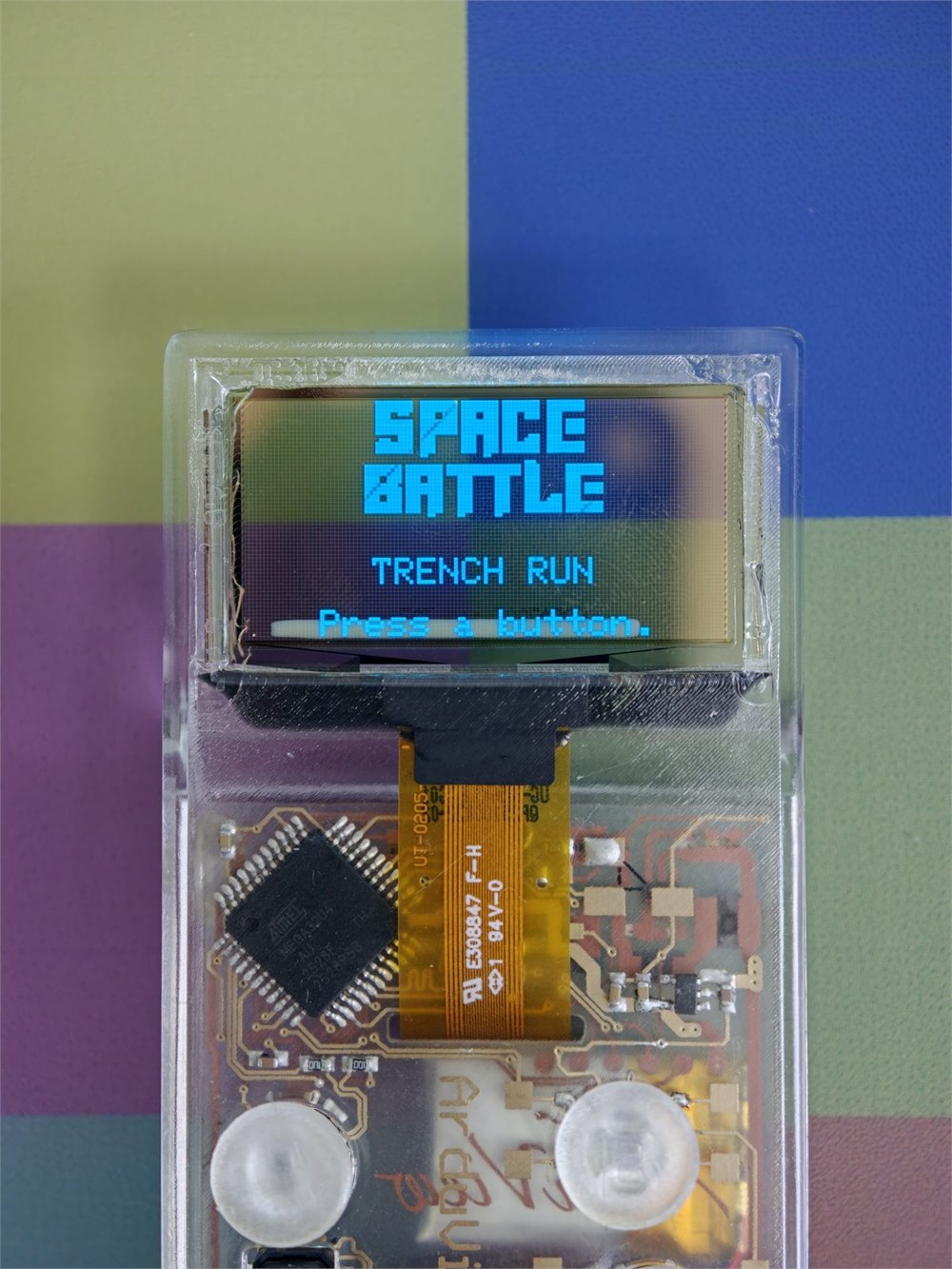
That behavior comes from the OLED panel. The pixels produce their own light, so the game can still show up in a dark room. In daylight, the choice of backdrop becomes part of the fun. Try the same scene against a plain shirt and a patterned tablecloth. You may discover strong opinions about the ideal wallpaper for a game that ships without any.
The effect is easy to mistake for a camera trick in a product photo. VGC spent about a month with an Arduview and confirmed that the image really is visible through the other side. That gives a spectator a particularly silly seat for a boss fight. They get to watch your thumbs from the wrong side of the machine and still tell you when you should have jumped.
A good reason to look below the screen
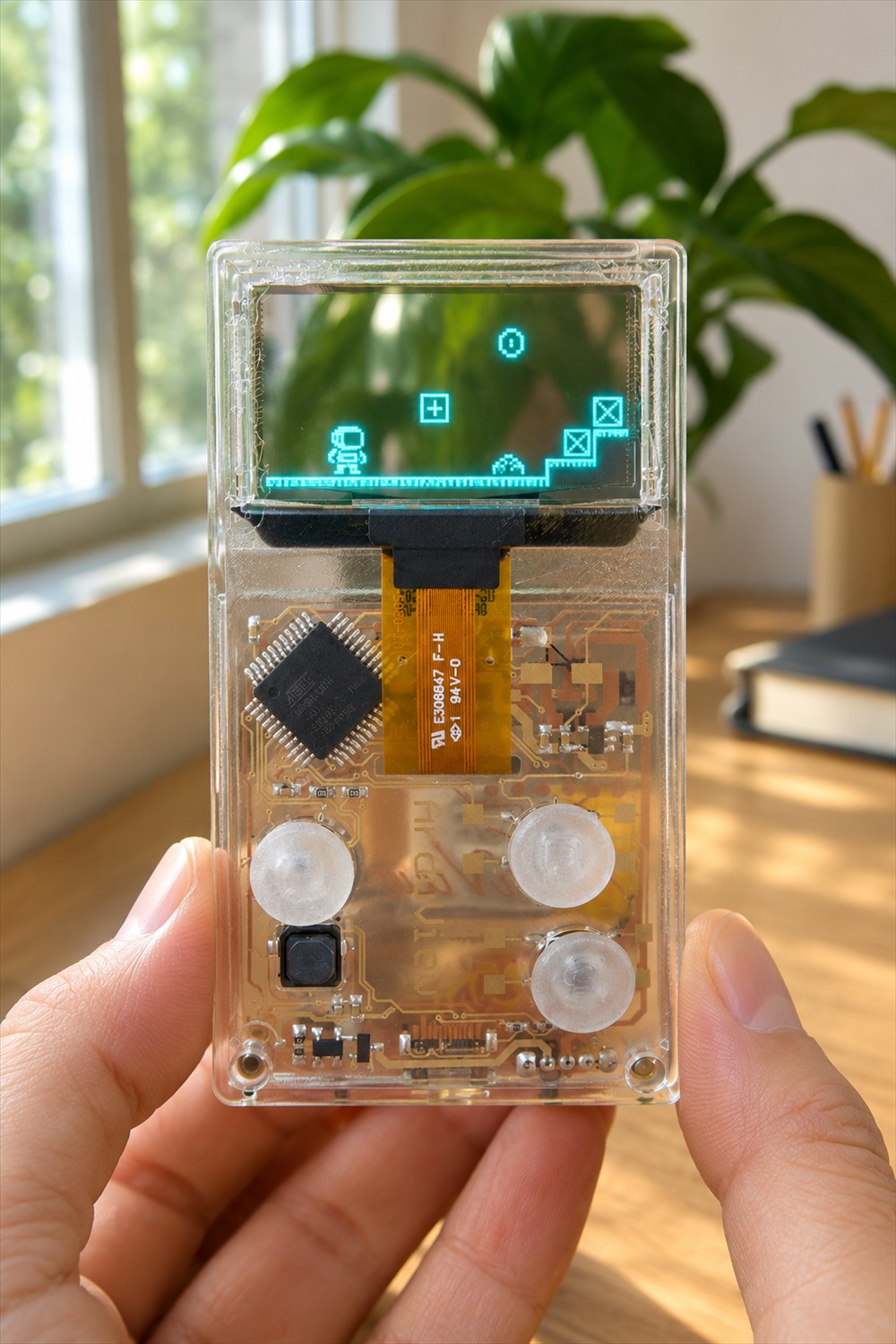
The lower half makes a decent little electronics lesson. Follow the amber strip down from the display, look for the dark square chip sitting at an angle, then find the round contacts beneath the controls. In the close-up you can trace several of the connections by eye. Usually getting this view of a handheld involves a screwdriver and a small dish for screws that will mysteriously wind up one short.
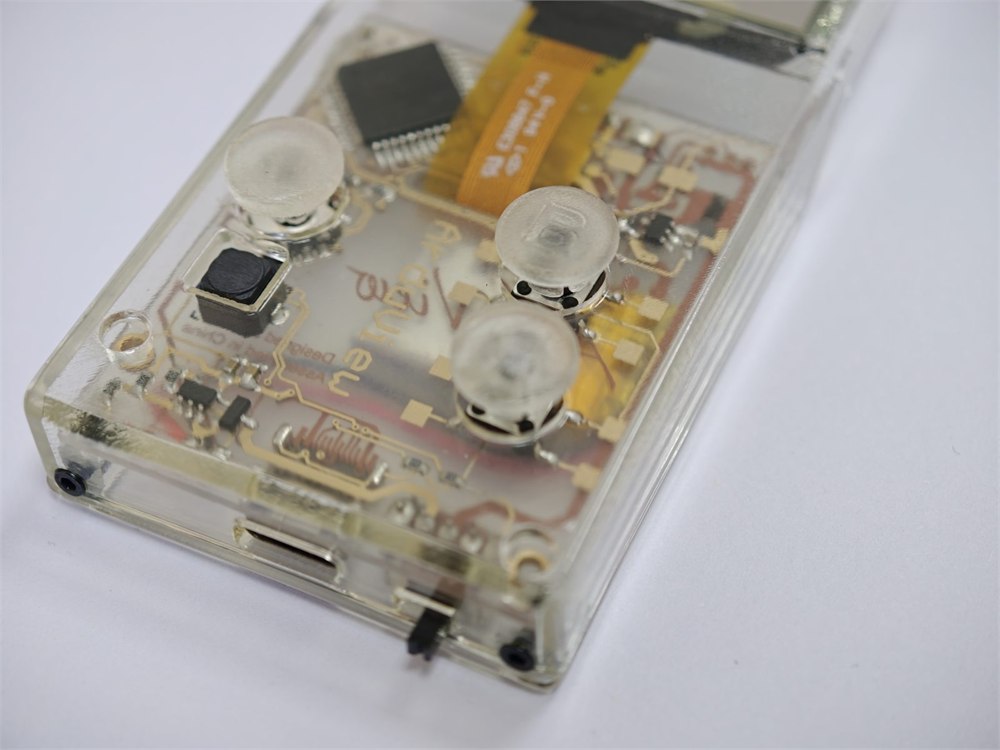
Designer Louis Huang built the handheld around the open Arduboy platform. The software choice makes sense of the hardware. An elaborate painted landscape would lose something if the dining room kept showing through the mountains. A few chunky pixels marking the edge of a platform, on the other hand, can convey an astonishingly urgent message to a thumb.
- For a quick game, switch on the console and choose from the preloaded Arduboy library. The initial setup can wait until after your first spectacular defeat.
- For a better look at the hardware, set it over a sheet of plain paper. The traces and little components stand out against a quieter background.
- For a different game, use the USB-C connection to load a compatible community title. The library extends beyond the games that come aboard.
What fits on a card-sized console?
Arduview lists 400 games on its product site. The catalogue draws on the Arduboy community, where developers make games for a very small screen and a limited set of inputs. That last detail matters when shopping for someone who says they love retro games. A person who wants to revisit a specific Game Boy cartridge and a person who likes discovering homebrew puzzle games have given you two quite different shopping assignments.
| Part | What you get |
|---|---|
| Game platform | Arduboy-compatible 8-bit games |
| Display | Transparent OLED with cyan graphics |
| Weight | 50 grams |
| Connection | USB-C for charging and loading games |
| Sound | Built-in speaker, no headphone jack |
Arduventure, Mystic Balloon, Circuit Dude and Micro City are among the community titles the team points to. If you know someone who could happily spend an evening discussing how much city fits on a tiny display, hand them the console with Micro City in mind. If they write games themselves, they can also put their own Arduboy creations on hardware and see how the graphics read against a real room.
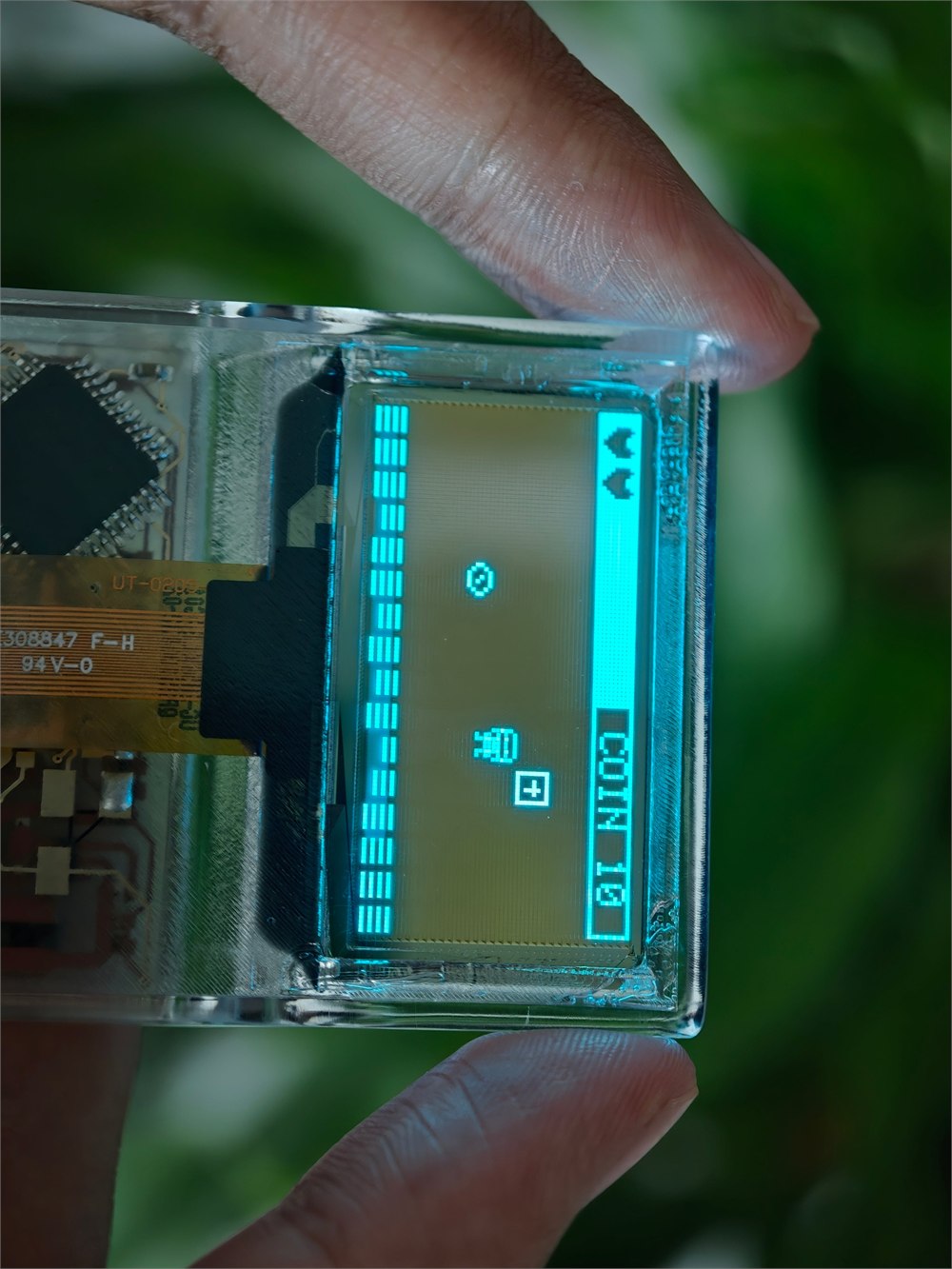
The physical size favors the kind of game you can take out while waiting for the kettle. At 50 grams, carrying it around hardly demands a second thought. Actually playing on something this small is a different question. Look at the fingertips in the photo for a sense of the space available. Someone who prefers full-size controls should pay at least as much attention to that picture as to the glamour shot of the screen.
What goes in the pocket with it
The team lists a 130 mAh battery and estimates about 50 minutes for a charge. Play time per charge is still being measured. Those are two different numbers, and the second one would matter quite a bit to anyone packing this for a long flight. There is also a built-in speaker. If plugging wired earbuds into a handheld is part of your travel routine, look closely at the bottom edge. USB-C is the only port.
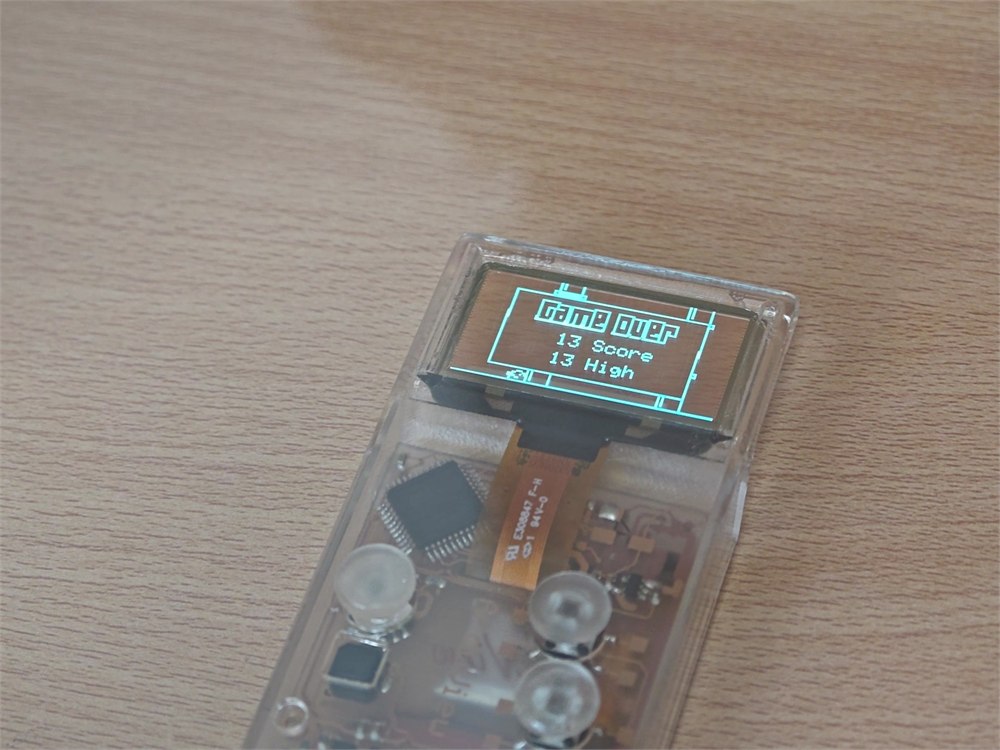
The campaign includes a console, a USB-C cable and an instruction manual with a console pledge. The little display stand and keyring are optional extras. The stand makes sense for the sort of person who already angles objects on a desk so visitors will ask about them. This may be the rare desk ornament where picking it up and turning it around actually improves the demonstration.
The pocket-size particulars
- Clear shell, clear board and a see-through OLED let you inspect the hardware and the game from either side.
- The manufacturer lists 400 preloaded games, with more available from the Arduboy community.
- USB-C handles both the battery and the trip from a computer to a new game on the handheld.
- The campaign shows working prototypes and targets early 2027 for backer delivery. Timing remains an estimate.
Arduview launched its Kickstarter single-console rewards at HK$573, roughly US$74, with higher tiers as limited rewards fill. Shipping is charged separately by region. Check the available tier before budgeting for one, particularly if the plan involves giving it to someone on a specific date. In the meantime, the houseplant has plenty of time to rehearse.
| Pros | Cons |
|---|---|
| See-through pixels make the surroundings part of the picture. | A busy background can compete with small details. |
| The open game library gives tinkerers room to experiment. | It does not play Game Boy cartridges or run Game Boy games. |
| Lightweight hardware and USB-C suit short sessions away from home. | Battery life per charge is still unconfirmed. |
| Working prototypes demonstrate the transparent display. | Backers still have to wait for production and delivery. |
Save this find.
Thank yourself later.
Your next great gift idea. Your someday space. Your collection of wonderfully weird things.
Pick a board. Keep the inspiration.
This Transparent Handheld Game Console Lets You See Through the Game
At a glance
Product snapshot
- Listed price
- Kickstarter launch tier HK$573 (about US$74)Prices and availability can change. Check the seller for current details.
- Where to find it
- Arduview
- Category
- Geeky Stuff