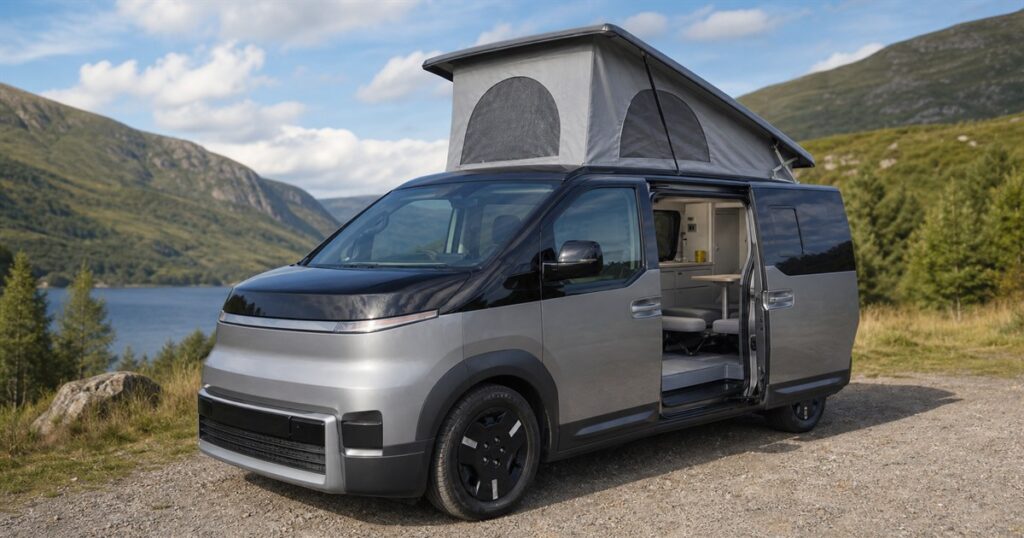
Some vehicles are cars. Some vehicles are vans. Some vehicles are tiny apartments that looked at a parking space and said, “I can probably make this weird.” The Wellhouse Kia PV5 iCamper lives in that last category, which is where transportation becomes less about getting somewhere and more about arriving with a sink, a bed, and a suspiciously smug pop-top roof.
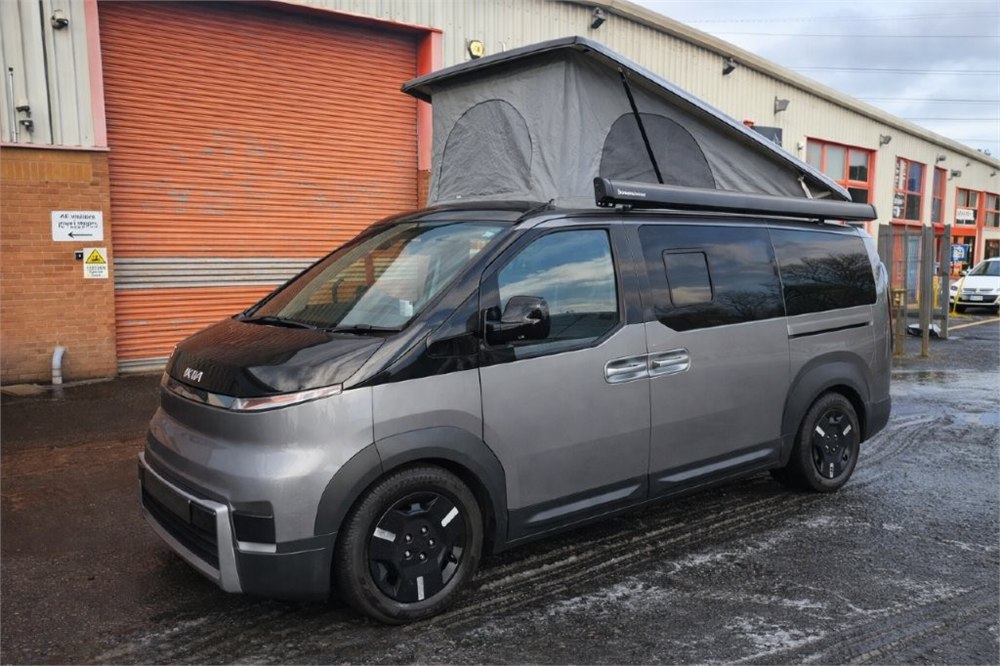
The Wellhouse Kia PV5 iCamper is a fully electric compact campervan conversion built around Kia’s PV5 EV platform. Wellhouse Leisure is taking the boxy electric people-and-cargo hauler and turning it into a small camper with a raised roof, a side conversion, an upper roof bed, a kitchen-style layout, a leisure battery, solar, and a seating system that can slide, fold, and be removed when the van needs to stop being a bedroom and start behaving like a van again.
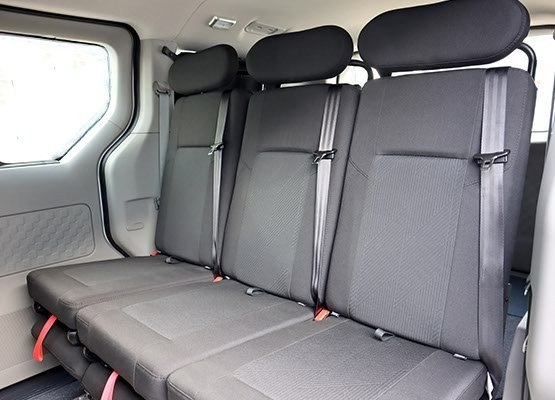
That last part is the fun hook. Plenty of campervans have seats that fold down into beds. This one uses two single Schnierle sliding seats that Wellhouse says can fold down to make a bed, slide back and forth, or come out completely. So the same compact EV can be arranged for camping, opened up for cargo, or used with one seat removed to keep the middle clear for something like a bike. It is the kind of flexibility that makes ordinary furniture look like it has been refusing to participate.
Wellhouse says its first van is now back with the roof on and that customers are welcome to view it, with orders being taken. The company also notes that the Kia PV5 model arrived toward the end of 2025 and reached Kia dealers in early 2026, which makes this conversion one of those rare camper stories where the van, the EV platform, and the tiny-home gymnastics are all happening at once.
A Campervan That Can Stop Being A Campervan
The most practical magic trick here is the rail-mounted seating. A campervan seat is usually a long-term roommate. It lives there, it has opinions about floor space, and every bike, box, cooler, dog bed, or “we may need this folding chair someday” has to negotiate around it. Wellhouse’s listed setup uses two individual sliding seats instead, which can become lower sleeping space or be removed when the van needs a clear load area.
Related posts:
 This Electric Camper Van Conversion Turns the Kia PV5 Into a Rooftop Base Camp
 These Retro Campers Are Made With a Functioning Row Boat That Doubles as The Roof
 This Hanging Poolside Leisure Bed Lets You Relax In Pure Bliss, Even Through The Night
 You Can Now Get a Mini Camper Trailer That’s Towed With Your Bicycle
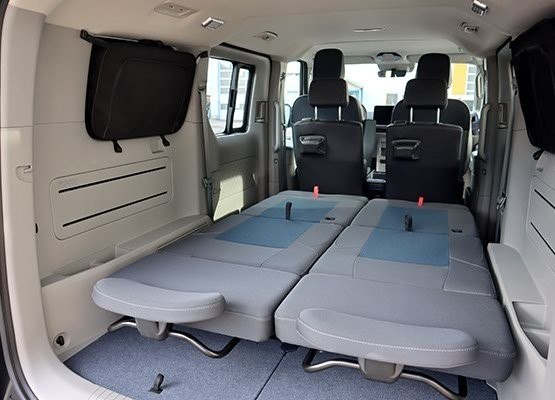
That makes the iCamper feel less like a van that was permanently converted and more like a small electric room with several moods. Need two single seats? Fine. Need them folded flat? Also fine. Need one seat gone so a bike can ride in the middle like it has been promoted to passenger? Apparently also fine. The whole point is that the tiny camper does not have to spend every day in full vacation costume.
The planned habitation spec is familiar in the best way: elevating roof, upper roof bed, side conversion, sliding seat system, sink with tap and electric water pump, fresh water tank, LED lighting, lithium leisure battery, and a 200-watt solar panel. Wellhouse says the camper electrics are separate from the vehicle propulsion battery, with mains hookup, 12V supply, and the ability to slow-charge the vehicle battery when plugged in at a campsite.
- Fully electric Kia PV5 campervan conversion based on the long-range 71.2 kWh model.
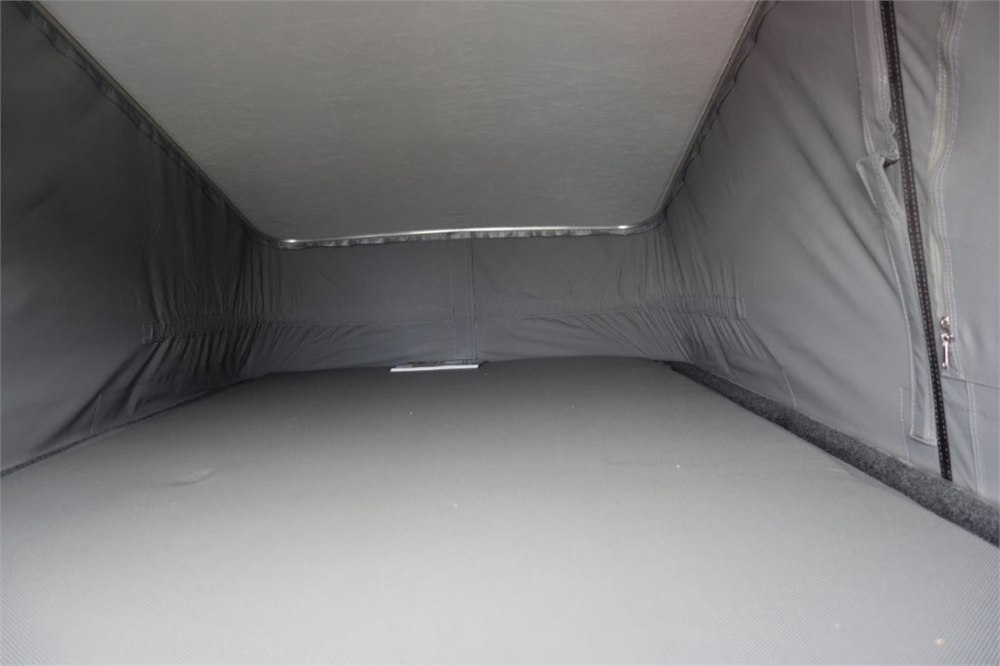
- Raised pop-top roof with an upper bed planned for the camper layout.
- Two single Schnierle sliding seats that can fold into bed space, slide, or be removed.
- Side conversion layout with sink, tap, electric water pump, and fresh water tank.
- Separate camper electrical setup with mains hookup, lithium leisure battery, 12V supply, and 200W solar panel.
- Compact dimensions that keep the van closer to daily-driver territory than giant motorhome territory.
There is also an excellent domestic honesty to this layout. A giant RV announces itself like a building with mirrors. A compact campervan has to earn every inch. The iCamper’s pitch is not that you get a palace on wheels; it is that the same electric van can do bed, cargo, kitchen, campsite power, and weekday practicality without needing its own zip code.
The Kia PV5 Bones Under The Tiny House Trick
Wellhouse lists the base as the Kia PV5 Plus 71.2 kWh model, with the larger battery and higher spec configuration. The page states a driving range of up to 247 miles for the long-range version, with the Plus model bringing safety and comfort features like heated seats, heated steering wheel, electric folding mirrors, blind-spot collision avoidance, rear cross-traffic collision avoidance, safe exit warning, and smart charging features including interior V2L and V2X capability.

The dimensions are a major part of the appeal. Wellhouse lists the van at 4.69 meters long, 1.89 meters wide, and 1.99 meters high. In normal human language, that means it is much closer to a compact van than a rolling studio apartment. It should be easier to park, easier to live with, and less likely to make you feel like you accidentally bought a municipal vehicle because you wanted weekend coffee beside a lake.
| Detail | Wellhouse Listing | Why It Matters |
|---|---|---|
| Base vehicle | Kia PV5 Plus 71.2 kWh | Uses the larger-battery, higher-spec PV5 setup Wellhouse selected for weight and equipment balance. |
| Range | Up to 247 miles listed for the long-range model | Gives the campervan a useful EV touring range before charging plans become the day’s main hobby. |
| Dimensions | 4.69m long, 1.89m wide, 1.99m high | Keeps the camper compact enough for normal roads, parking, and less dramatic campsite arrivals. |
| Sleeping layout | Upper roof bed plus lower bed from folding sliding seats | Lets the small van create more sleeping space than its footprint would suggest. |
| Camper power | Mains hookup, lithium leisure battery, 12V supply, and 200W solar panel | Separates camping power needs from the main vehicle battery system. |
| Flexible seating | Two removable Schnierle sliding single seats | Turns the same cabin into seating, bed space, or open load area. |
The Plus model details also mean the van is not starting from a bare-bones commercial shell with a mattress and a dream. The listed base-vehicle spec includes a 12.9-inch touchscreen navigation system, 7.5-inch driver display, wireless Apple CarPlay and Android Auto, parking sensors, rear camera, smart cruise control, lane assistance, and Kia Connect services. That is useful because a campervan may be romantic, but only until you are backing it into a tight spot while everyone suddenly becomes a professional parking consultant.
The Interior Is The Small-Space Olympics
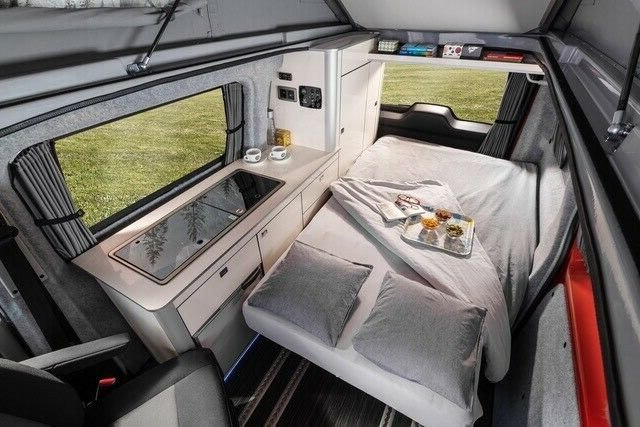
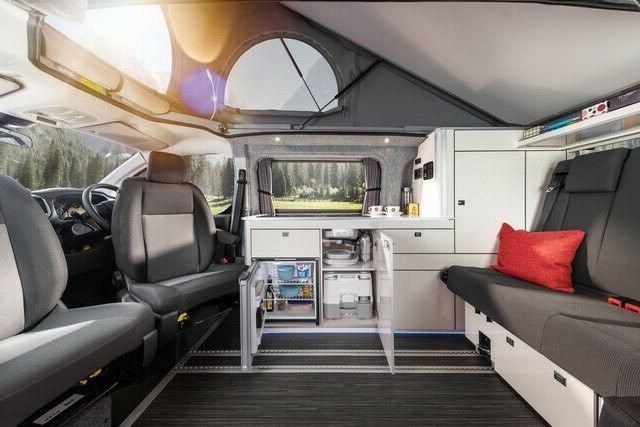
Inside, Wellhouse says the conversion will be similar in style and size to its Toyota Proace conversion, which gives the PV5 iCamper a fairly familiar side-kitchen camper layout rather than some science-fiction capsule arrangement where the sink unfolds from the ceiling and the kettle requires a password. The seller’s page shows the side conversion approach with storage, worktop, sink area, lighting, and sleeping space packed into a narrow interior.
The sliding seats are still the star because they are what make the van feel modular rather than merely compact. Fold them and you get lower sleeping space. Slide them and you adjust the cabin. Remove them and you can reclaim the central floor for cargo. A normal van asks what you packed. This one seems to ask what identity it should have before breakfast.
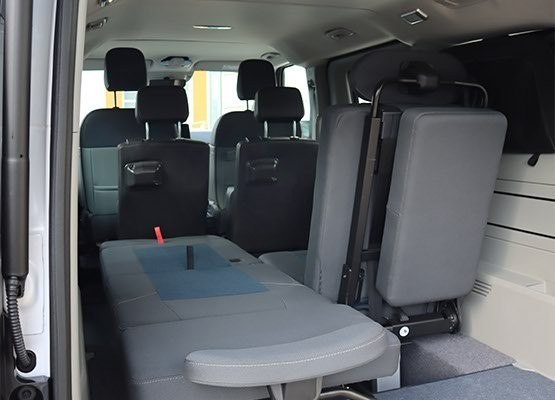
There are some sensible caveats. Wellhouse notes that some images showing completed campervans are AI generated, while the conversion photos are from its Toyota Proace work and the Kia is intended to look like that when converted. That is not a dealbreaker, but it is worth understanding: this is a new build based on a new electric van platform, so buyers should treat the official listing, viewing availability, and Wellhouse’s build updates as the practical source of truth rather than assuming every glamour image is a finished production example parked behind a hedge.
As camper weirdness goes, though, this is the productive kind. It is not weird because someone stapled a hot tub to a scooter. It is weird because the interior tries to solve the classic campervan problem: you want a bed, kitchen, storage, seating, and daily usability, but physics keeps rudely insisting that a compact van has a finite amount of van inside it.
Electric Camping Without Draining The Trip’s Soul
The separate camper power setup is one of the smartest parts of the listed design. Wellhouse says the Kia will have mains hookup, a lithium leisure battery, and 12V supply in addition to the vehicle propulsion battery. At a campsite, that should let the camper systems do camper things without constantly treating the main driving battery like an emotional support outlet.
The listing also says that when plugged into mains as a camper, the setup will in turn be able to slow-charge the vehicle battery. That is a very campervan sentence: part practical engineering, part gentle reminder that the future involves asking a campsite bollard to refill your bedroom-car.
Wellhouse lists additional extras too, including awnings, tow bars, roof rails, bike racks, socket options, exterior screens, body colors, worktops, flooring, and conversion finishes. Those details matter because a campervan is never just a campervan; it is a personality test with wheels. Somewhere between “I need an awning rail” and “Which floor looks least like I dropped soup on it?” a buyer discovers who they really are.
The current Wellhouse listing shows the Kia PV5 Plus 71.2 kWh campervan from GBP 59,995, with the heat pump, metallic paint, and higher-spec Plus model marked as included on the model card. Availability is through Wellhouse Leisure, which says orders are being taken and that the first van with the roof installed is available for customer viewing.
Key details and features:
- Product: Wellhouse Kia PV5 iCamper fully electric campervan conversion.
- Base vehicle: Kia PV5 Plus 71.2 kWh long-range EV.
- Listed driving range: up to 247 miles for the long-range model.
- Listed dimensions: 4.69m long, 1.89m wide, and 1.99m high.
- Camper layout: elevating roof, upper roof bed, side conversion, sink, fresh water tank, LED lighting, and sliding seat system.
- Flexible seating: two removable Schnierle sliding seats that can fold down into bed space.
- Camper electrics: mains hookup, lithium leisure battery, 12V supply, and 200W solar panel listed.
- Price and source: from GBP 59,995 through Wellhouse Leisure.
For anyone who wants an electric camper but does not want to pilot something the size of a touring musician’s emotional baggage, the Wellhouse Kia PV5 iCamper is a compelling little oddball. It is a compact EV van that can sleep, cook, carry, charge, rearrange itself, and then go back to pretending it is just a sensible vehicle. That is not normal, which is exactly the point.
| Pros | Cons |
|---|---|
| Compact fully electric campervan based on the Kia PV5 platform. | New conversion means buyers should verify final production details directly with Wellhouse. |
| Removable sliding seats can create bed space or open cargo room. | Some official page visuals are previews or related conversion examples rather than finished Kia interiors. |
| Pop-top roof and upper bed add sleeping utility without a giant van footprint. | Listed range is still an EV planning factor for longer camping trips. |
| Separate leisure battery, mains hookup, 12V supply, and solar support camping use. | The compact size means storage and living space will still require careful packing. |
| Plus-spec PV5 brings modern driver assistance and comfort features. | Availability depends on Wellhouse build timing and order slots. |
| Can work as camper, people carrier, or more open cargo van depending on seat setup. | The GBP 59,995 starting price puts it firmly in serious campervan purchase territory. |
Where to find This Electric Campervan Uses Removable Seats to Turn Into a Tiny Bedroom
OddityMall may earn a commission from qualifying purchases at no extra cost to you.
Related posts:
This Electric Camper Van Conversion Turns the Kia PV5 Into a Rooftop Base Camp
These Retro Campers Are Made With a Functioning Row Boat That Doubles as The Roof
This Hanging Poolside Leisure Bed Lets You Relax In Pure Bliss, Even Through The Night
You Can Now Get a Mini Camper Trailer That’s Towed With Your Bicycle