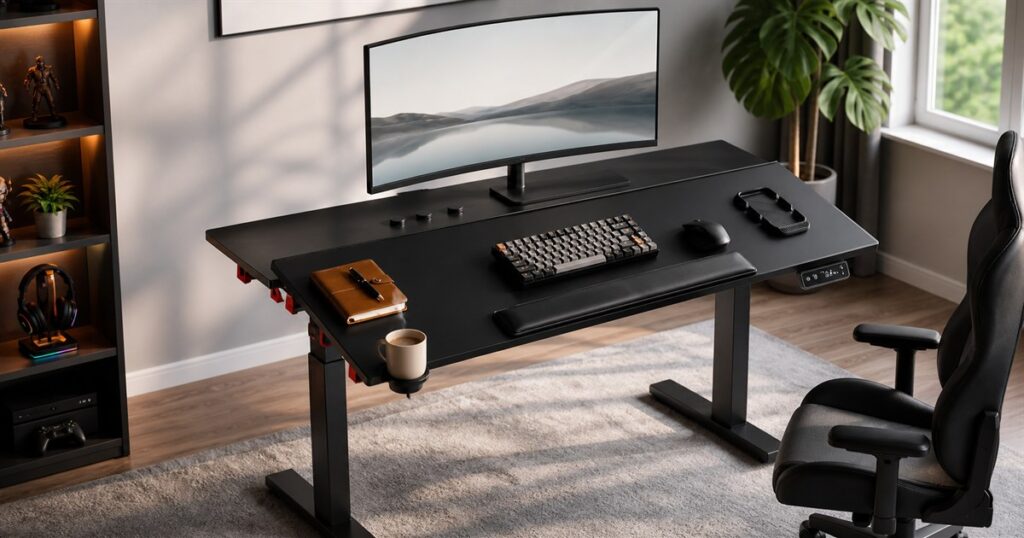
The modern desk has spent decades pretending its biggest responsibility is holding coffee without collapsing into a pile of particleboard regret. That was cute for a while. Then everyone started working, gaming, scrolling, snacking, charging six devices, pretending to understand cable management, and occasionally trying to maintain the posture of a mammal with a spine.
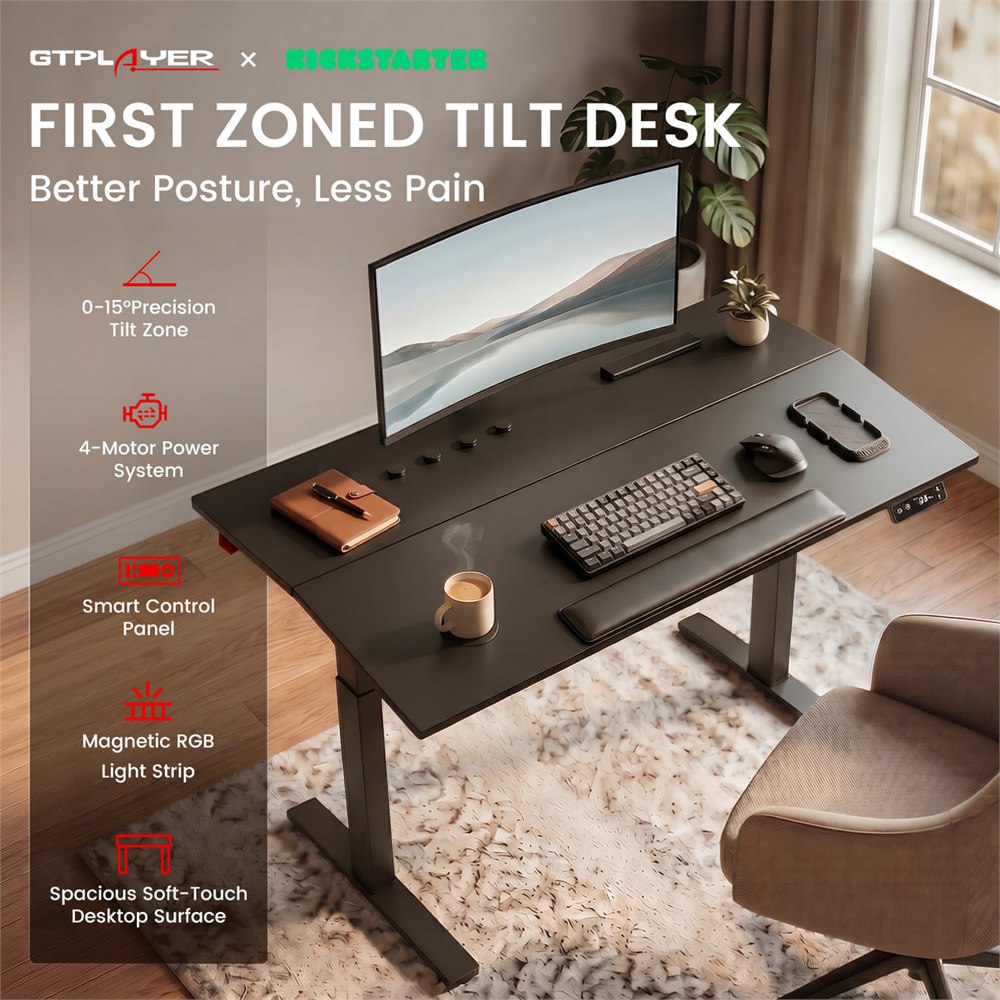
The GTPlayer Zoned-Tilt 4-Motor Smart Standing Desk is a motorized workstation built around one very specific idea: maybe the whole desktop should not be forced to act like one giant, flat dinner tray. Instead, this desk splits the surface into zones, keeps a rear load area flat for monitors and heavier gear, and lets the front work zone tilt from 0 to 15 degrees so your keyboard, mouse, laptop, sketchpad, or general pile of responsibilities can lean toward you.
It is basically what would happen if a standing desk went to therapy and came back saying, “I have boundaries now, and also four motors.”
The headline trick here is the zoned tilt surface. Traditional standing desks usually move up and down as one slab. That is useful, but it still leaves your wrists, shoulders, and neck negotiating with a flat tabletop like three departments inside a poorly managed company. GTPlayer’s version adds a separate tilting front area, so the desk can support a more reclined or angled work posture without sending your monitor, coffee mug, and emotional support notebook sliding into your lap.
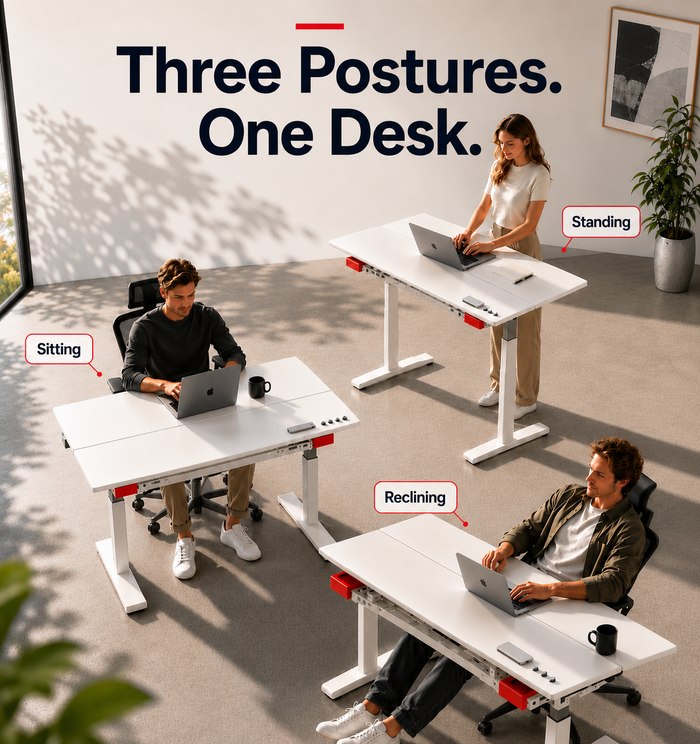
The rear section is meant to stay horizontal for the load-bearing stuff: monitors, laptop stands, speakers, decor, and the sacred mug that must never be tested by gravity. The front zone is the posture playground. It can remain flat for normal seated or standing use, or tilt up to 15 degrees when you want the input area closer to your hands. That makes the desk especially interesting for people who alternate between typing, reading, drawing, gaming, or working from a reclined chair setup.
Related posts:
 This Automatic Reclining Robotic Desk Might Be The Ultimate Workstation
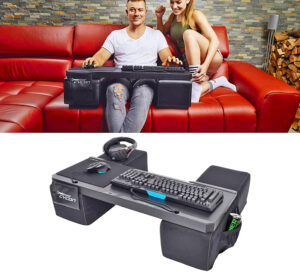 The Couchmaster Is a Lap Desk That Creates a Workstation Right On Your Couch
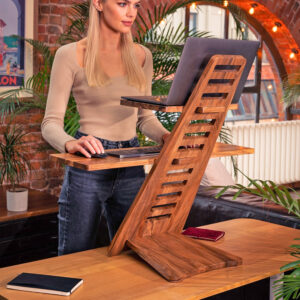 This Wooden Laptop Stand Converts Your Existing Desk Into an Any-Height Standing Desk
 This Vintage Style Typewriter Keyboard Lets You Type In The Most Satisfying Way Possible
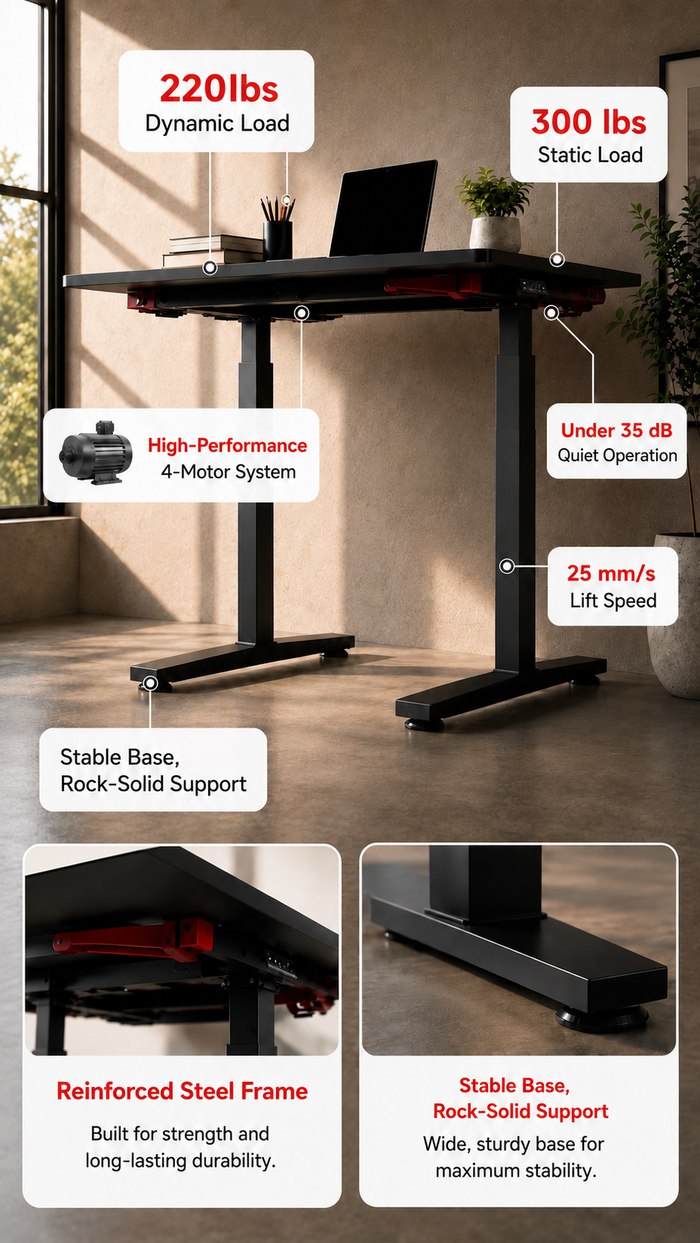
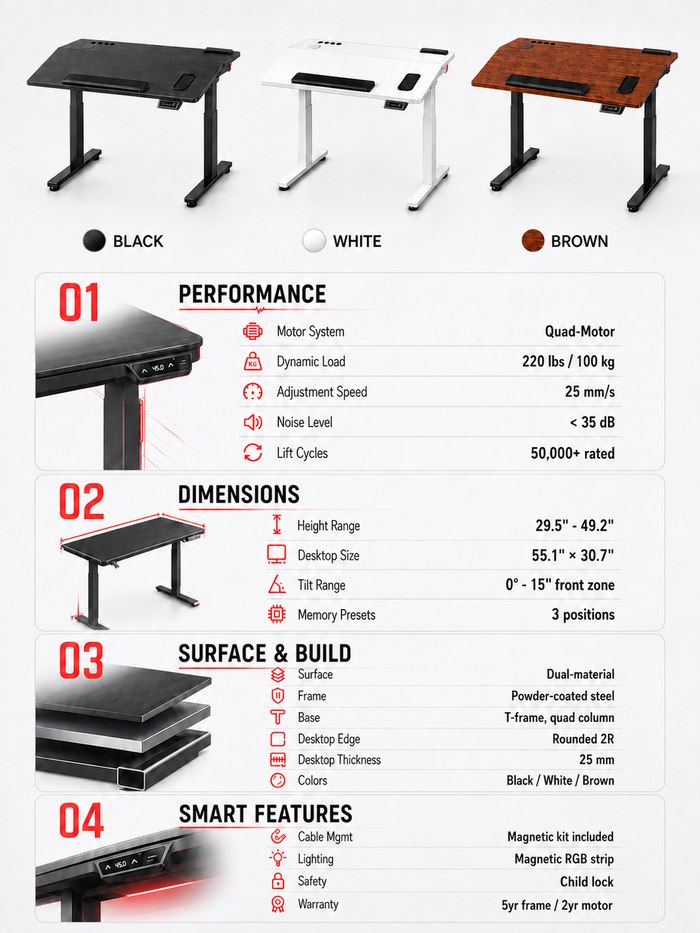
This is not a tiny laptop riser trying to reinvent civilization with two hinges and a prayer. The official GTPlayer listing describes a quad-motor system, a 29.5-inch to 49.2-inch height range, a 25 mm/s lift speed, and a 220-pound dynamic load rating, with a 300-pound static load rating shown in the product materials. The product page also lists a 55.1-inch by 30.7-inch desktop, three memory presets, child lock mode, and a dual-material tabletop surface.
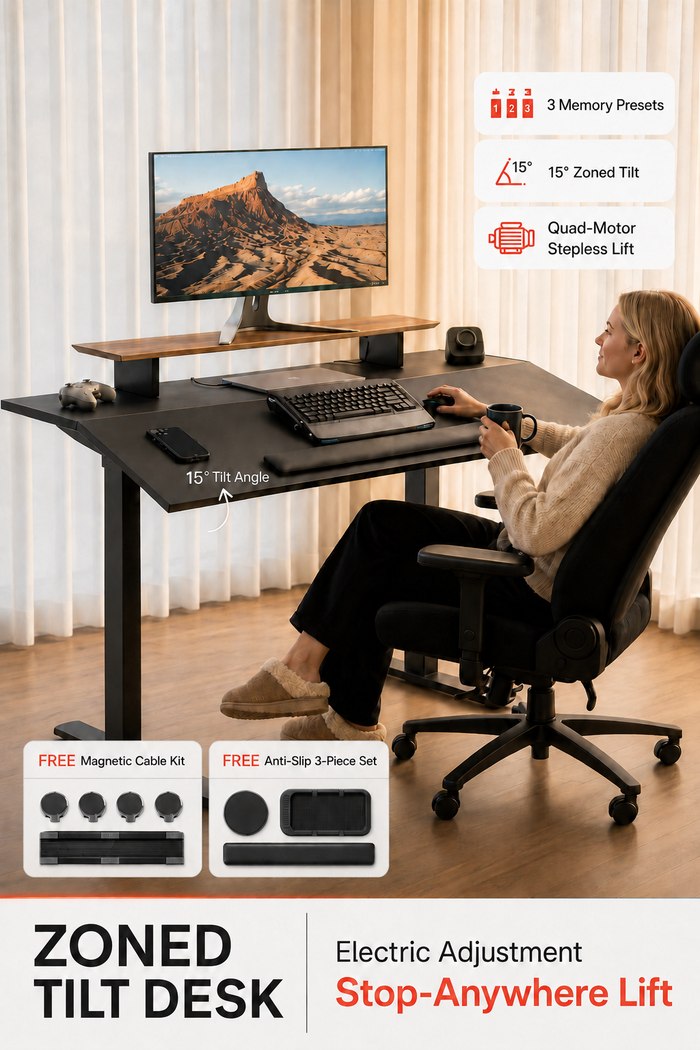
That means the desk is not merely doing the usual standing desk elevator routine. It is trying to become a full workstation platform for people who want to sit, stand, recline, and switch modes without rebuilding the entire desk setup like they are preparing for a small office exorcism.
The practical appeal is pretty clear once you imagine a real day at it. Morning emails can happen in standard seated mode. A mid-day meeting can happen standing, so your legs remember they are still on payroll. Later, when your shoulders begin filing complaints, the front zone can tilt so the keyboard and mouse meet your hands at a more relaxed angle. At night, the same setup can become a reclining gaming station, because apparently the human body now needs a cockpit to answer Slack and lose ranked matches.
Here is the desk’s basic weird-workstation pitch in plain English:
- A fixed rear zone keeps monitors and heavier desktop gear level.
- A front work zone tilts from 0 to 15 degrees for typing, reading, sketching, or reclined use.
- Four motors handle the height and tilt adjustments instead of a manual crank or wedge system.
- Three memory presets let different positions become one-button routines.
- Included accessories shown by GTPlayer include magnetic cable clips, a magnetic cable cover, a wrist rest, a phone pad, an anti-slip cup holder, and a magnetic RGB light strip.
- The desk is offered in black, white, and brown finishes according to the official product imagery.
The accessories are where the desk starts to feel less like office furniture and more like a workstation kit that has accepted what desks are actually used for. There are magnetic cable clips and a magnetic cable cover for the wire swamp. There is a wrist rest because wrists are small, opinionated hinges and should not be ignored. There is a cup holder, which sounds unnecessary until you remember that the front surface can tilt and civilization is held together by remembering where the coffee is.
GTPlayer also shows a magnetic RGB strip, because this is still a gaming-adjacent desk and the global treaty apparently requires everything near a keyboard to glow at least a little. The nice part is that the lighting is presented as an accessory rather than the whole personality of the product. The actual strange magic is still the tabletop geometry.
| Feature | Verified Detail | Why It Matters |
|---|---|---|
| Tilt range | 0 to 15 degrees on the front zone | Lets the input area angle toward the user while the rear section stays level |
| Height range | 29.5 inches to 49.2 inches | Supports seated and standing positions |
| Lift system | Quad-motor, stepless electric adjustment | Moves the desk without manual cranking |
| Desktop size | 55.1 inches by 30.7 inches | Large enough for monitors, laptop, keyboard, mouse, and accessories |
| Load rating | 220-pound dynamic load, 300-pound static load shown in GTPlayer materials | Gives the desk room for typical workstation gear |
| Controls | Touch panel with three memory presets and child lock | Makes posture changes quicker and reduces accidental button chaos |
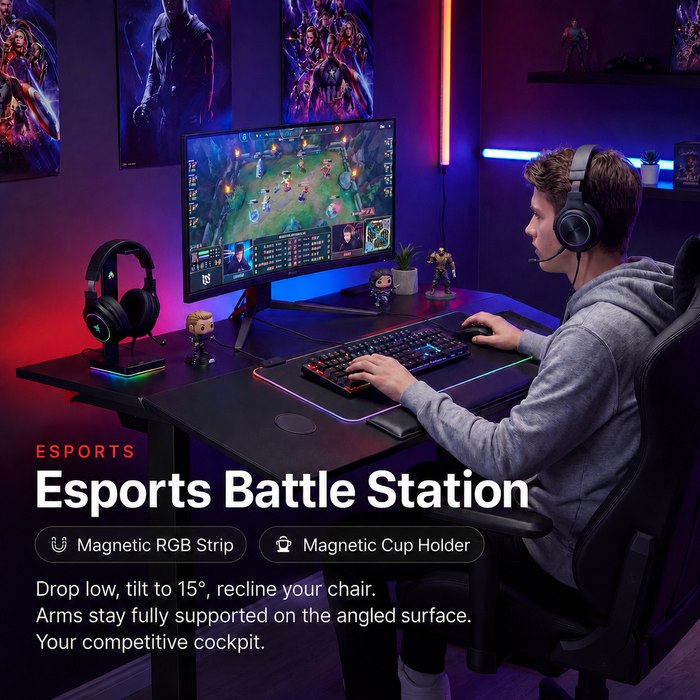
The 15-degree front tilt is the part that makes this feel OddityMall-worthy instead of merely “nice desk, please enjoy your LinkedIn workstation photo.” A normal standing desk can help if your main problem is sitting all day. This one seems aimed at the messier reality: sometimes you want to sit upright, sometimes you want to stand, sometimes you want to recline like a Victorian fainting couch has joined the IT department, and sometimes you just want the keyboard to stop living so far away from your arms.
Because the rear zone stays flat, the design avoids the obvious problem with many tilting work surfaces: the expensive objects do not need to go on a field trip. Monitors stay on the horizontal portion, while the front pad, keyboard, mouse, or laptop can sit on the angled section. In other words, the desk is trying to divide the desktop into “things that must not move” and “things your wrists would like to negotiate with.”
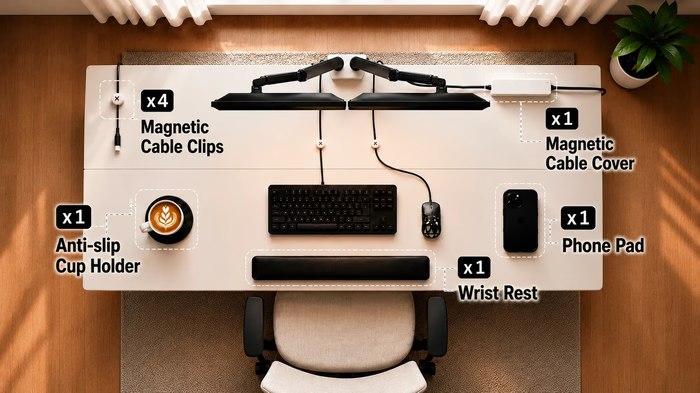
The desk also has a soft-touch front work surface in GTPlayer’s campaign language, with a scratch-resistant rear load area called out by product coverage. That division makes sense. The front zone is where your arms, keyboard, mouse, and laptop are going to spend the most time. The rear section is where heavier and less forgiving hardware can live without being part of the tilt drama.
There is an obvious gaming angle, especially with the RGB strip, cup holder, phone pad, and huge monitor setups shown in the product imagery. But the idea is not limited to gaming. Artists, editors, laptop workers, programmers, remote workers, and people who are one more awkward Zoom posture away from becoming a question mark could all see the appeal. The desk is essentially a shape-shifting workstation for anyone who wants more posture variety than “chair mode” and “same pain, but taller.”
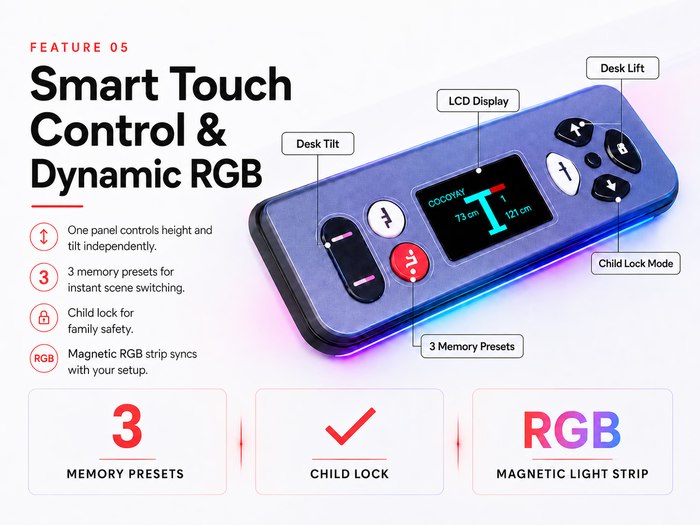
It is also a fairly large piece of furniture, so this is not for someone trying to wedge a work setup between a radiator and a pile of laundry. The 55.1-inch width gives it a proper workstation footprint. That is good for gear and bad for tiny apartments where every purchase has to justify itself to the floor plan. The product materials show black, white, and brown finishes, which at least gives the desk a chance to match something in the room besides the panic in your eyes.
The desk launched as a Kickstarter campaign in July 2026, with BackerKit and Kicktraq both tracking the project as active and funded during the campaign window. GTPlayer’s own product page also lists the Zoned-Tilt Smart Standing Desk at $499.00 USD, while the Kickstarter campaign materials and coverage have referenced a $449 early-bird pledge. As always with crowdfunded furniture, buyers should read the campaign terms, delivery estimates, warranty details, and shipping notes before treating it like a normal in-stock cart purchase.
Images via GTPlayer.
Key product details:
- Product: GTPlayer Zoned-Tilt 4-Motor Smart Standing Desk
- Core function: height-adjustable standing desk with a separately tilting front work zone
- Tilt range: 0 to 15 degrees on the front section
- Height range: 29.5 inches to 49.2 inches
- Desktop size: 55.1 inches by 30.7 inches
- Listed price: $499.00 USD on GTPlayer, with $449 early-bird Kickstarter pledge noted in campaign coverage
- Seller/source: GTPlayer and Kickstarter
- Best fit: gamers, remote workers, creators, and anyone building a more posture-flexible workstation
If your current desk is just a flat platform where coffee, cables, and spinal negotiations go to argue, this GTPlayer desk is a much more mechanical answer. It does not promise to fix the entire modern workday, which would require a calendar flamethrower and perhaps a new society, but it does offer a genuinely unusual way to make a desk adapt to how you sit, stand, lean, and attempt to remain human.
| Pros | Cons |
|---|---|
| Front work zone tilts up to 15 degrees while the rear gear zone stays level | Crowdfunding buyers still need to evaluate campaign risk and delivery timing |
| Four-motor system handles both height and tilt adjustments | Large footprint may not suit compact rooms |
| Height range supports seated and standing work | Some product imagery includes gaming-heavy styling that may not fit every office |
| Included cable-management and comfort accessories are actually relevant | Price is higher than many basic standing desks |
| Three memory presets make repeat positions easier | People with simple laptop-only needs may not use the full mechanism |
| Available in black, white, and brown finishes | As with any motorized furniture, long-term durability matters |
Where to find This 4-Motor Standing Desk Tilts Its Front Work Zone
OddityMall may earn a commission from qualifying purchases at no extra cost to you.
Related posts:
This Automatic Reclining Robotic Desk Might Be The Ultimate Workstation
The Couchmaster Is a Lap Desk That Creates a Workstation Right On Your Couch
This Wooden Laptop Stand Converts Your Existing Desk Into an Any-Height Standing Desk
This Vintage Style Typewriter Keyboard Lets You Type In The Most Satisfying Way Possible