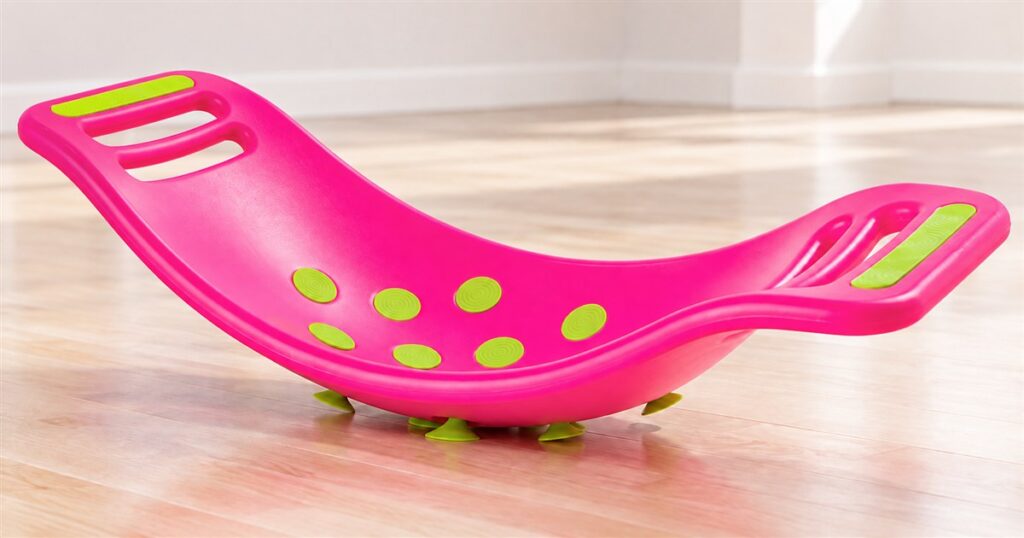
Children have spent generations discovering that the loudest object in a room is usually the most interesting. Fat Brain Toys has taken that research seriously and put suction cups under a balance board. The Teeter Popper rocks, wobbles, and makes popping noises as a child shifts around on it, turning a patch of floor into an activity with its own percussion section.
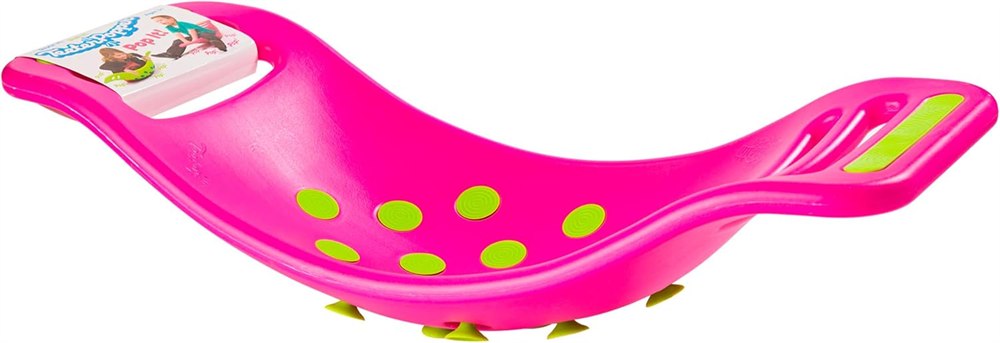
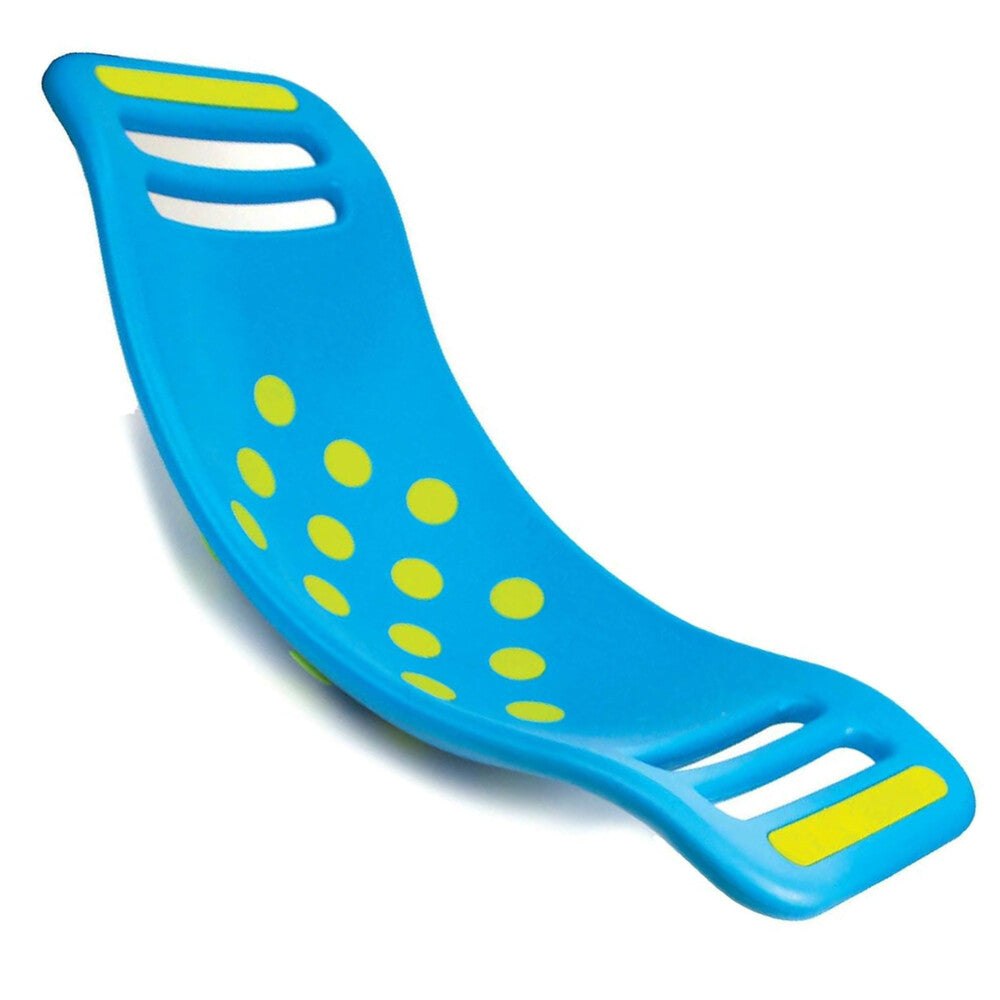
This is a curved plastic rocking toy with a shallow bowl in the middle, raised ends, and handles built into both tips. Underneath, silicone suction cups make contact with the floor and release as the board moves. The sound comes from that physical action. Your child supplies the movement, and the board supplies the extremely persuasive reason to do it again.
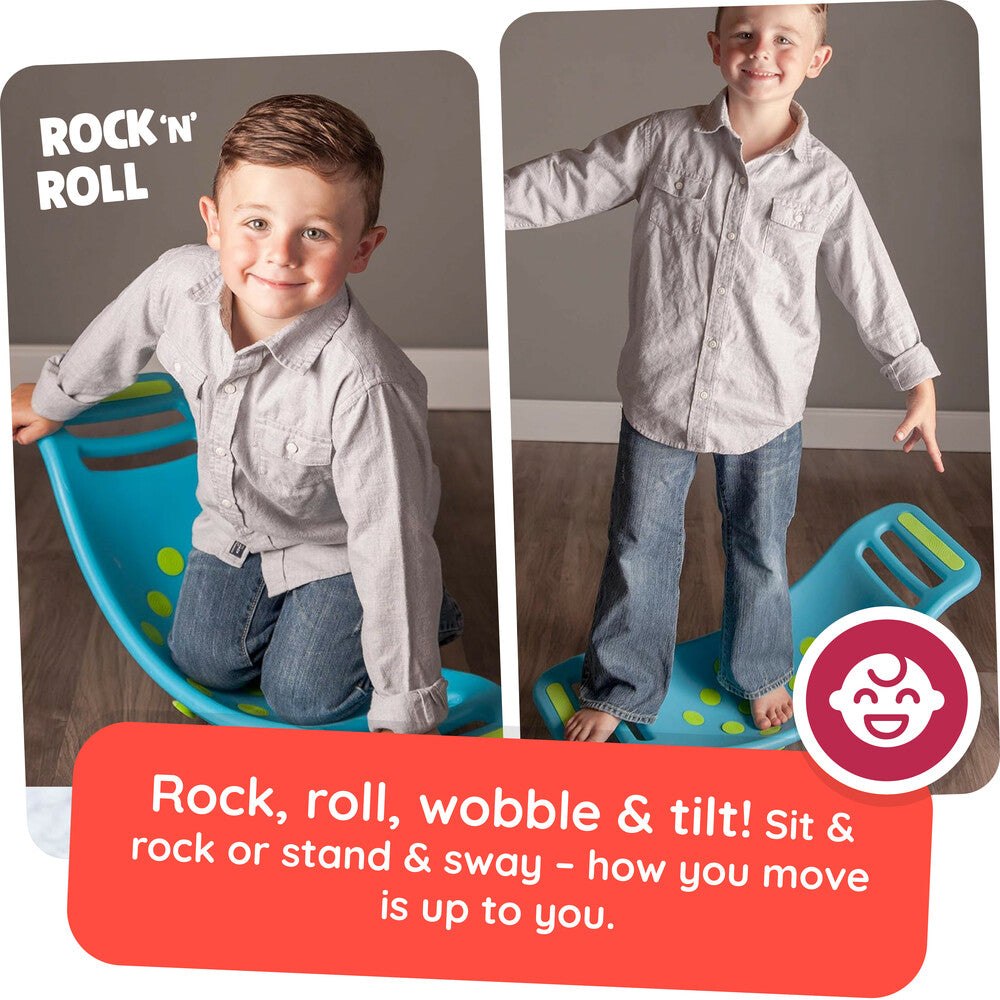
It looks a little like a tiny hammock that decided fabric was holding it back. There are no game pieces to arrange before the fun starts and no correct sequence of moves to memorize. A child can sit in the curve, hold the ends, and explore the rocking motion. Standing and balancing are also part of the maker’s suggested play, depending on the child’s ability and appropriate supervision.
A balance board with a noisy underside
The suction cups are the detail that changes the whole experience. An ordinary rocking board moves beneath you. This one responds with little pops as the cups grip and release. Movement produces a result a child can hear as well as feel, which gives even a small wobble a satisfying conclusion. Apparently, shifting your weight needed a sound effect all along.
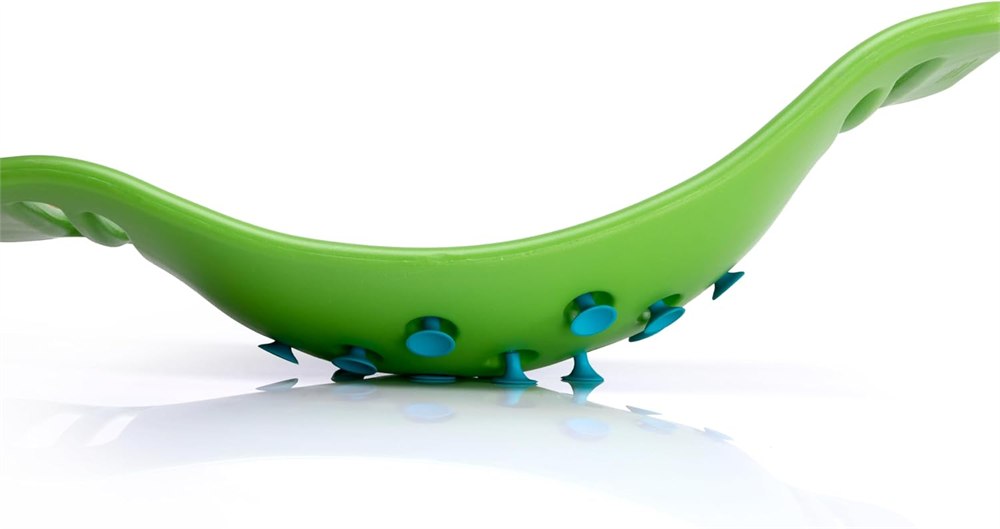
The board’s body is rigid plastic, while the cups are silicone. That combination lets the main shell support the rider while the softer pieces underneath do the sticking and releasing. The cups are visible on the underside, and their contrasting circular tops dot the inside of the board. It is a simple mechanism with a very obvious personality.
Related posts:

Floor choice matters to that mechanism. Suction needs a surface it can seal against, so a smooth, suitable floor makes more sense for popping than a thick rug. Carpet cannot be expected to deliver the same effect. Check the product’s instructions and your flooring before play, especially with a delicate finish. A toy that rewards movement still deserves a sensible place to move.
That also makes the sound a real buying consideration. If you are choosing an activity specifically for quiet time, repeated popping may be the opposite of the assignment. If you have a child who loves cause-and-effect toys and active play, the noise is probably the feature they will demonstrate to you first. And second. And while you are answering a very ordinary question on the phone.
One shape, several ways to play
Fat Brain Toys presents the Teeter Popper as an open-ended toy. There is no score to beat or finish line to reach. Sitting, rocking, wobbling, and standing all use the same shell in different ways. The challenge changes with how the child positions their body, rather than with a new attachment or a second box of parts.
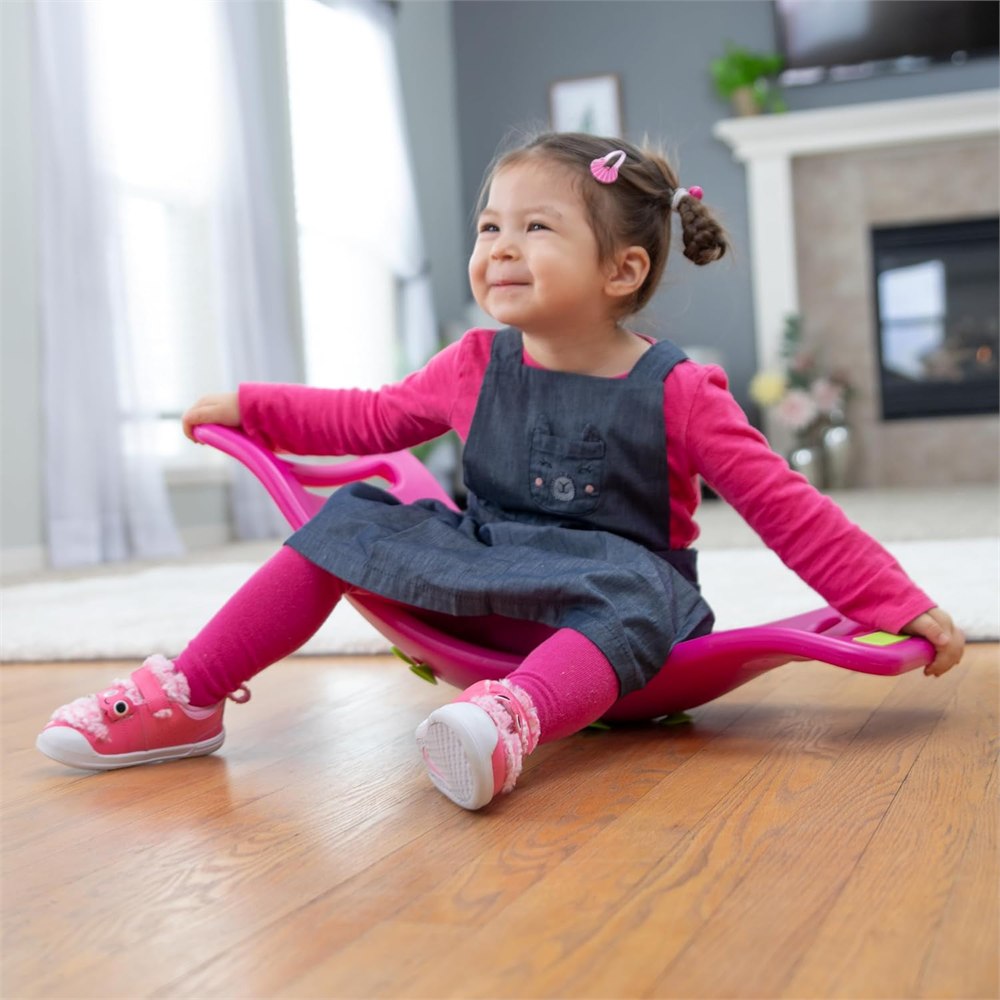
The built-in handles give small hands somewhere deliberate to go during seated play. They also make the ends easy to identify, which sounds minor until you compare that with toys requiring a parent to explain which side is the front. Here, the basic invitation is visible: settle into the curve, hold on, and see what a small movement does.
- Seated rocking: The curved center offers a place to sit while holding the end handles.
- Standing balance: The maker includes standing and swaying among the play possibilities; match the activity to the child’s ability.
- Sound exploration: Changing the movement changes how the underside cups contact and release from the floor.
- Imaginative play: Its open-ended shape leaves room for a child to supply the story instead of following a fixed game.
The manufacturer describes balance, coordination, stability, and core strength as benefits of this kind of active play. Those are useful descriptions of the movements involved, rather than a promise that buying a board produces a particular developmental result. What you can see is straightforward: a child shifts position, responds to the rocking, and tries another movement.
There is something refreshing about a toy that leaves the plot unfinished. It can be a rocking seat one moment and part of an invented adventure the next. Parents do not have to announce an educational objective before every turn. Sometimes the entire lesson is that leaning a little to one side makes an amusing noise, and that is enough to get the next experiment started.
Check the dimensions before the grand unveiling
The Teeter Popper measures 28 inches long, 11.5 inches wide, and 7.5 inches deep. That makes it a substantial floor toy, rather than something destined for the pocket of a car-seat organizer. Consider both its storage spot and the clear space a child will need around it while rocking. Its footprint is only the starting point for a play area.
| Detail | What the maker lists |
|---|---|
| Recommended age | 3 years and up |
| Maximum supported weight | 110 pounds, approximately 50 kg |
| Dimensions | 28 × 11.5 × 7.5 inches |
| Main body | Rigid plastic with handles at both ends |
| Popping mechanism | Silicone suction cups underneath |
| Play format | Open-ended rocking, sitting, wobbling, and balancing |
The 110-pound limit is particularly useful information for the adult who sees a small rocking board and immediately says, “Let me try.” Enthusiasm is not a weight rating. This is a children’s toy, and the stated limit should guide who uses it. The age recommendation also matters: looking inviting does not make it suitable for every younger sibling in the room.
For a gift, those practical details are more helpful than simply knowing the recipient likes bright colors. Think about the child’s age, available floor space, and whether the household enjoys toys that make themselves heard. A board that lives in an accessible play area has a different daily life from one that needs to be excavated from behind a stack of boxes.
A small movement with an immediate payoff
The appeal is not complicated, and that is probably the point. Rocking produces sound without a complicated setup. The child can see the shape, feel the change in balance, and hear the cups release. The Teeter Popper takes something kids already do naturally—wiggle around—and gives it a purpose beyond testing the structural patience of the sofa.
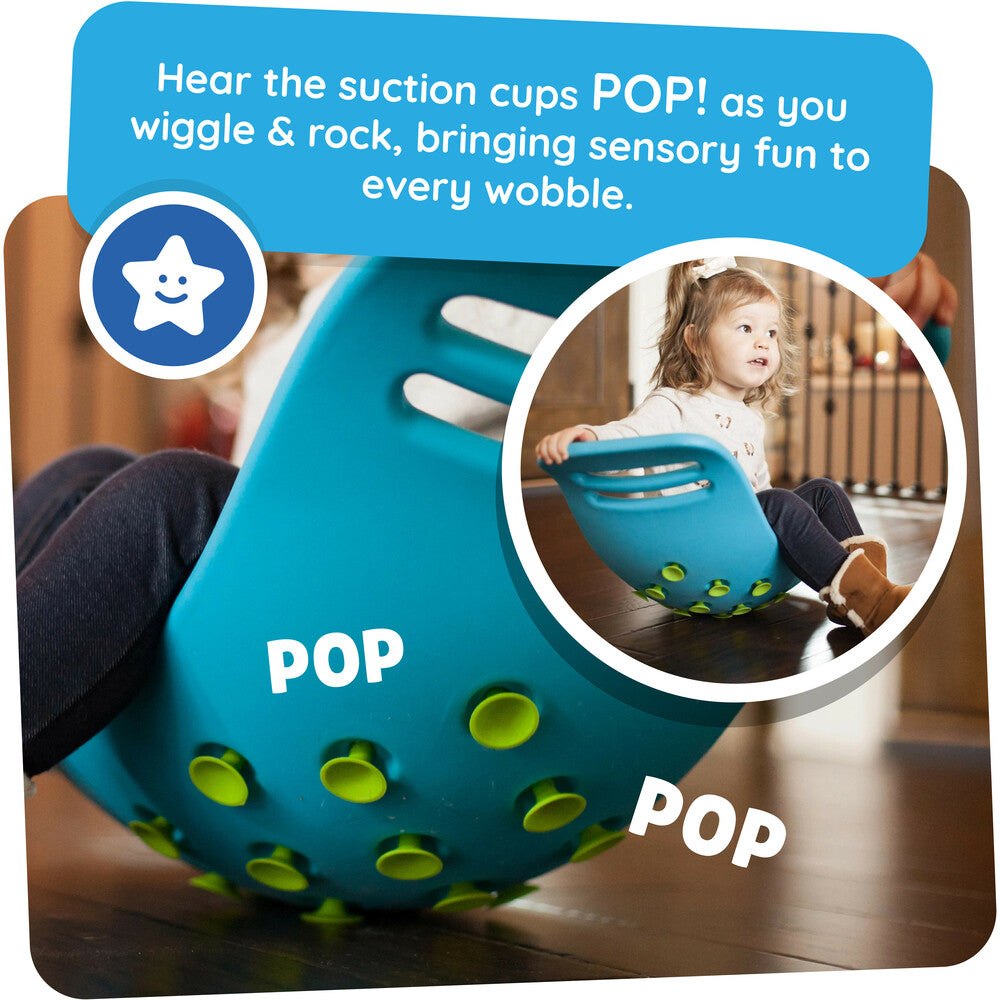
Product photos show blue, green, and pink versions of the same basic design. The Amazon listing linked here is the pink option, so check the selected color when ordering. The contrast between the shell and suction cups is more than decoration in the photos: it makes the unusual underside easy to spot and explains why this rocker behaves differently.
Do not confuse open-ended play with an invitation to skip supervision. A moving balance toy belongs in a clear, appropriate area, away from stairs and sharp furniture edges, with an adult matching the activity to the child. Start with manageable movements and follow the maker’s directions. There is plenty of fun available before anyone attempts to establish a household wobbling record.
Product images: Fat Brain Toys UK and the Fat Brain Toys Amazon listing.
- Fat Brain Toys Teeter Popper: a curved rocking and balance toy with audible suction-cup action.
- Recommended for ages 3 and up, with a maximum supported weight of 110 pounds.
- Plastic shell, silicone cups, and integrated handles at both raised ends.
- Measures 28 × 11.5 × 7.5 inches and needs a suitable clear floor area.
- Supports several kinds of active, open-ended play; popping performance depends on the surface.
The pink Teeter Popper is listed on Amazon.com at $49.95 at the time of writing, with a displayed shipping charge of $7.99. Seller offers, color availability, and the final total can change, so check the details before ordering. It is a fairly direct proposition: give a child a rocking board, give the board suction cups, and accept that your floor may be joining the conversation.
| Pros | Cons and considerations |
|---|---|
| Suction cups add sound and tactile feedback to rocking. | The repeated popping may not suit quiet play periods. |
| One board offers seated and standing play possibilities. | Activities need to suit the child’s ability and supervision. |
| Handles are integrated into both ends. | The board still moves and needs clear surrounding space. |
| Simple plastic-and-silicone construction. | The popping effect depends on a suitable surface. |
| Clear age, dimension, and weight specifications. | Ages 3+ and the 110-pound limit exclude some users. |
Where to find This Suction-Cup Balance Board Pops as Kids Rock and Wobble
OddityMall may earn a commission from qualifying purchases at no extra cost to you.