Every desk eventually starts collecting little monuments to human distraction. There is the mug that became a pen cup, the paperweight that has never met a dangerous breeze, and the tiny object you keep around because it makes your brain feel like it owns a lab coat.
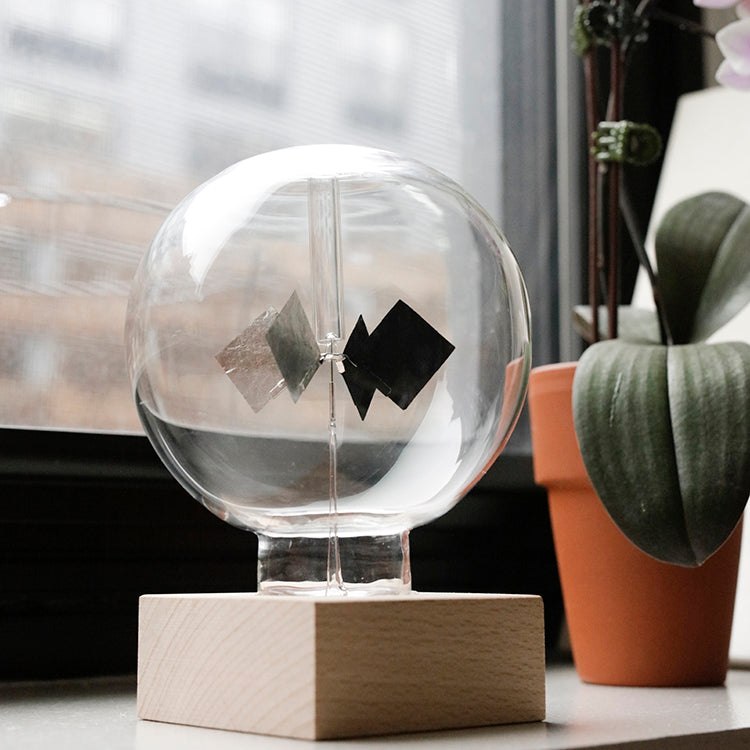
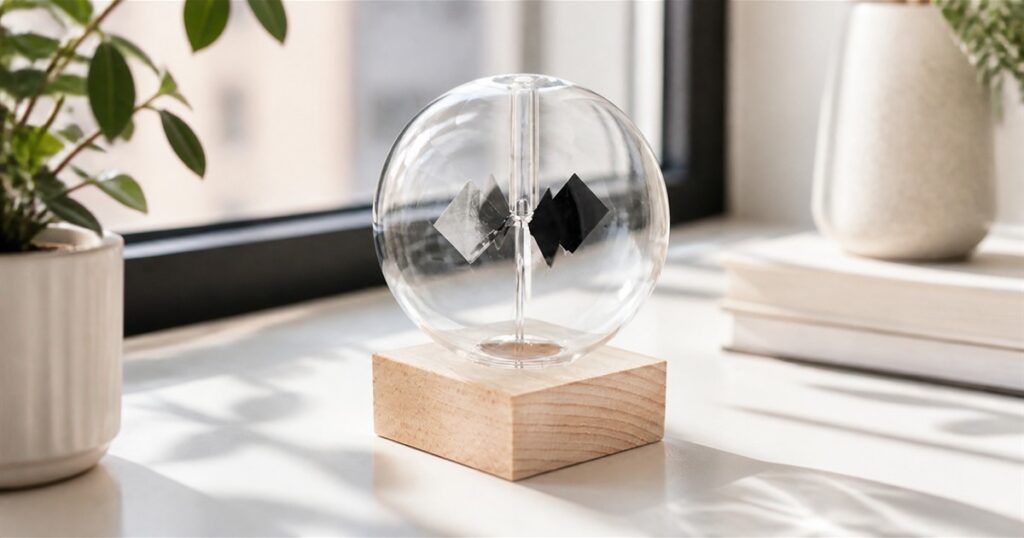
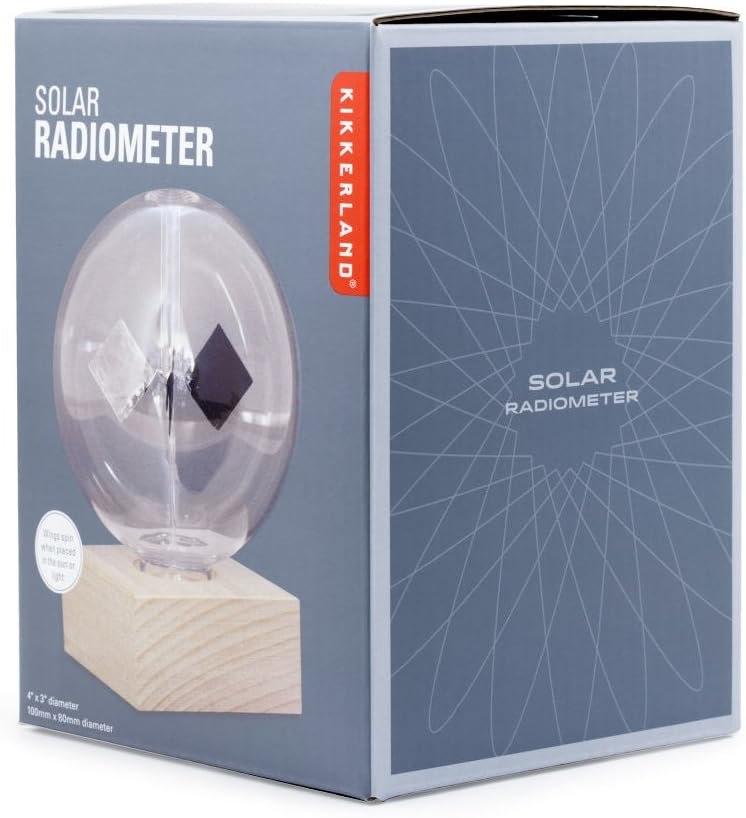
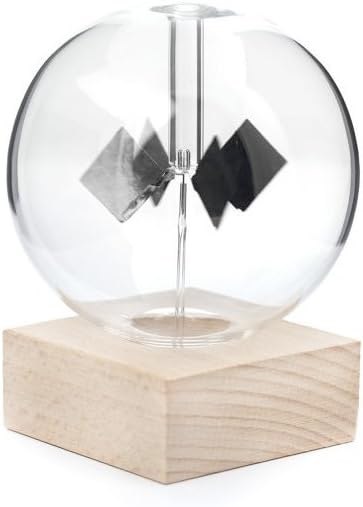
The Kikkerland Solar Radiometer belongs proudly in that last category. It is a small glass light mill that sits on a pale beechwood base, quietly waiting for sunlight or another warm bright source to show up and start the little black-and-silver vanes spinning inside the bulb. No batteries. No USB cable. No app that needs to know your birthday. Just light, heat, a partial vacuum, and the sort of Victorian science drama that makes a windowsill look like it is doing research.
Kikkerland sells it as the Solar Radiometer, SKU ST85, and the company describes it as a science-fiction gadget that spins its pinwheels in sunlight. That is a refreshingly accurate way to put it, because this thing looks like the sort of decorative object a retired time traveler would keep beside a fern.
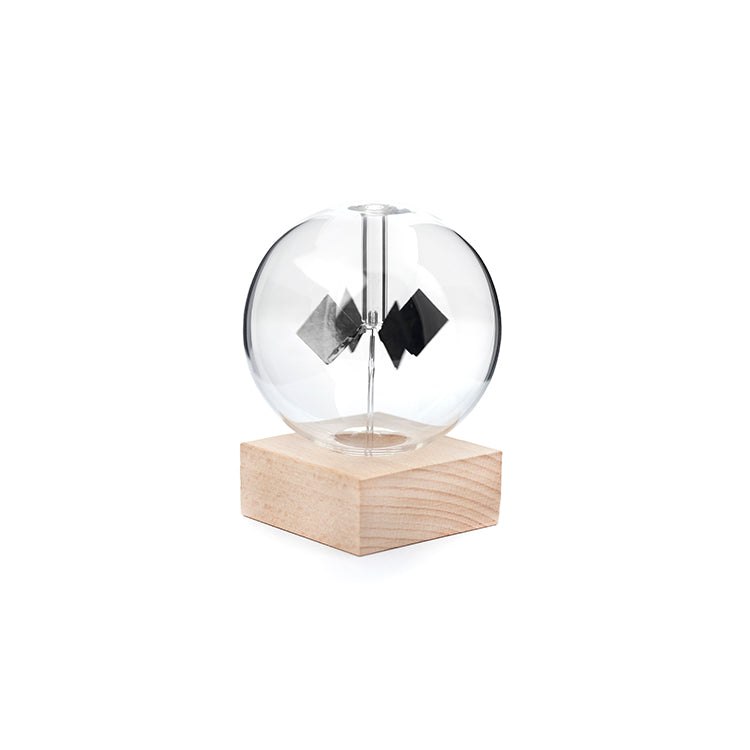
The basic setup is wonderfully simple. A sealed clear glass bulb holds a low-friction rotor with four small vanes. Each vane has a dark side and a light reflective side. Put the bulb in strong light and the vanes begin to rotate, with brighter or warmer light generally making the motion more animated. Move it back into the dim corner where abandoned calendars go to think about their choices, and it calms down again.
That makes it part desk toy, part decor, part science demonstration, and part silent judgment of every room in your house that does not get enough natural light. It does not do chores, charge a phone, or solve the modern crisis of having 47 browser tabs open. Its job is stranger and more charming: make invisible energy feel visible for a minute.
A Tiny Light Mill For People Who Like Their Decor Slightly Smarter Than Them
The Solar Radiometer is based on the classic Crookes radiometer, often called a light mill. The historic version dates back to the 1870s, and it has spent well over a century confusing, delighting, and humbling people who are positive they remember enough school physics to explain it confidently at a dinner party.
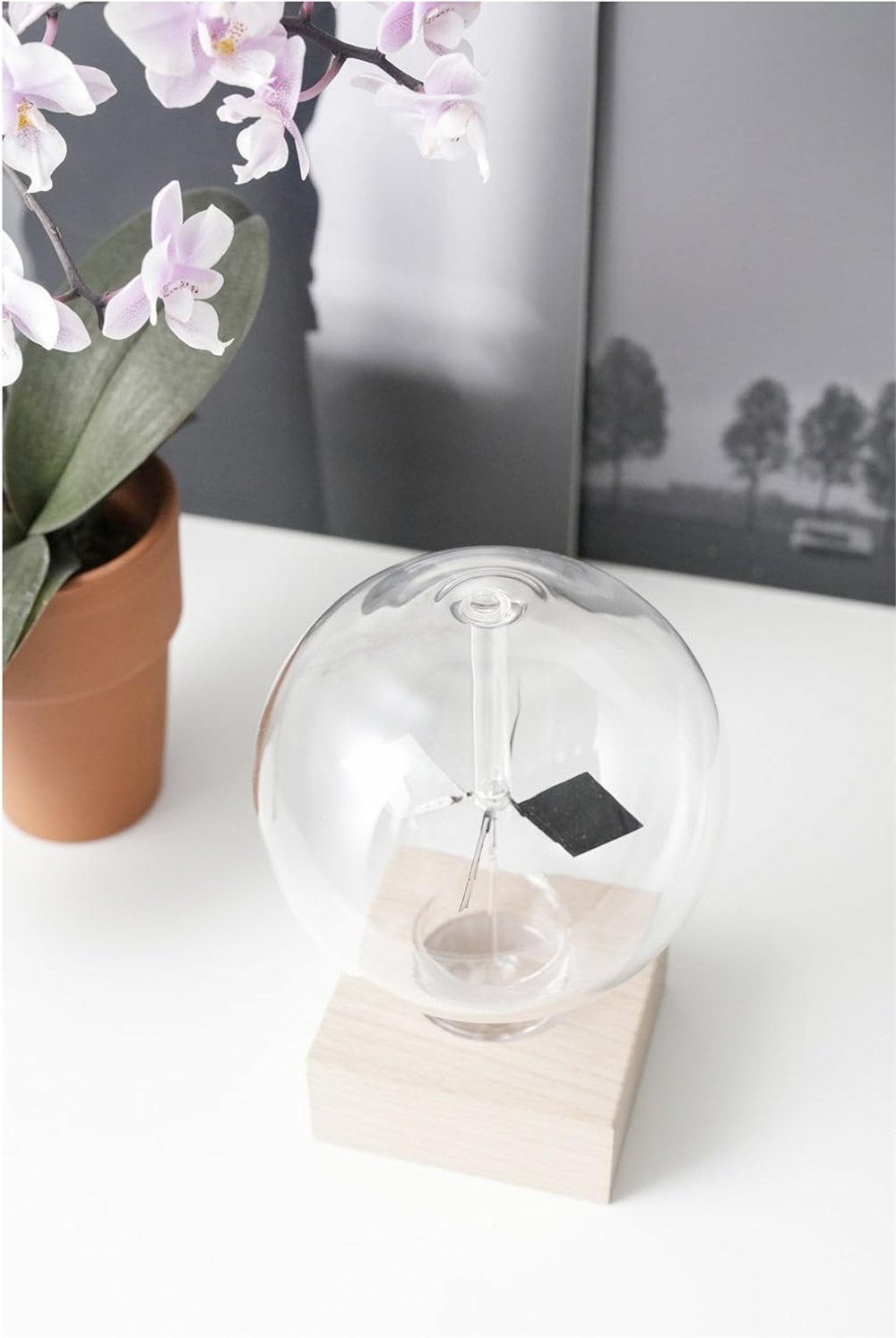
The short version: the vanes do not spin because sunlight is simply pushing them like tiny sails. In a radiometer, the partially evacuated bulb, the black and reflective vane surfaces, and the heating behavior of the remaining gas molecules inside all matter. The dark sides absorb more heat, the lighter sides reflect more, and that temperature difference helps create the motion. It is a little glass argument against oversimplifying science, which is an impressive amount of attitude for something smaller than a cereal bowl.
As a product, though, you do not need to lecture anyone about thermal transpiration to enjoy it. You put it where light can hit it, and the little rotor starts doing its quiet, mesmerizing office ballet. It has the hypnotic appeal of a fidget toy without the clicking, popping, snapping, or general soundscape of someone slowly dismantling a stapler during a meeting.
- It uses light and warmth to spin the vanes, with no batteries required.
- The clear glass bulb keeps the moving parts visible from nearly every angle.
- The pale beechwood base makes it feel more like a design object than a classroom supply closet escapee.
- It works best as a windowsill, shelf, desk, or science-gift conversation piece.
- It gives children, adults, and suspiciously curious houseguests something to stare at that is not a phone.
The Kikkerland version is also compact enough that it does not demand a whole side table or a museum docent. The official product page lists the materials as beechwood, glass, and steel, with dimensions of 10.8 x 8.3 cm. Other retailer listings describe roughly similar tabletop proportions, so the practical takeaway is simple: it is small enough for a desk, wide windowsill, bookshelf, classroom shelf, or that one sunny counter spot currently occupied by a pile of receipts and emotional avoidance.
| Detail | Kikkerland Solar Radiometer |
|---|---|
| Product type | Solar radiometer / Crookes light mill |
| Power | Sunlight or warm bright light; no batteries required |
| Materials listed | Beechwood, glass, and steel |
| Official dimensions | 10.8 x 8.3 cm |
| Packaging | Color box |
| Best placement | Sunny desk, windowsill, shelf, classroom, or home office |
The Science Toy That Makes Sunlight Look Busy
One of the best things about a radiometer is that it turns passive light into visible movement without pretending to be more useful than it is. So many desk gadgets arrive with the desperate energy of a productivity guru who owns too many vests. This one just spins because the light says so. That is its whole philosophy. Honestly, there are worse life plans.
It also occupies a satisfying middle ground between toy and object. If you buy it for a kid, it can open the door to conversations about heat, light, vacuums, and why the first obvious explanation is not always the correct one. If you buy it for an adult, it becomes a socially acceptable way to stare at a spinning thing while pretending you are thinking deeply about quarterly planning.

The design helps. The clear bulb gives the whole mechanism a snow-globe quality, except instead of shaking it violently and filling the room with glitter, you just let light do its tiny physics chore. The wood base keeps it warm and minimal, which means it can sit near plants, books, office gear, or other decor without looking like someone left an experiment unattended during lunch.
It is also refreshingly unplugged. There is no cable trailing behind it like a nervous tail. There is no rechargeable battery to age into disappointment. There are no firmware updates, companion apps, Bluetooth pairing rituals, or privacy policies written by someone who thinks your lamp needs an account. The radiometer simply wants a bright spot and a little patience.
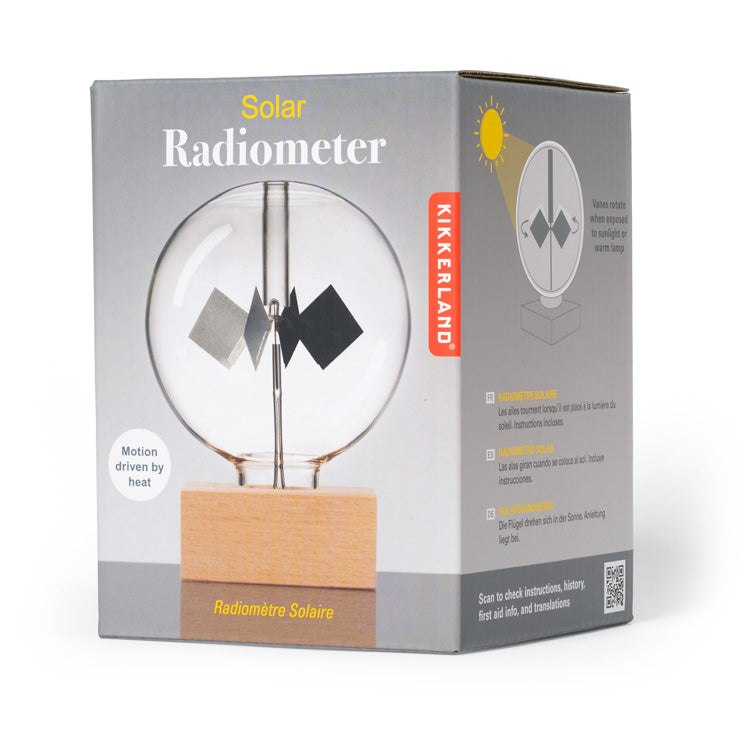
That does mean the experience depends on the room. In strong sunlight, the vanes can spin quickly enough to make the whole thing feel weirdly alive. In weaker indoor light, motion may be slower or inconsistent. In a gloomy room, it may just sit there looking elegant and mildly disappointed. That is not a flaw so much as the product being honest about its diet. It eats brightness.
The packaging also reinforces the gift angle. Kikkerland lists a color box, and the product looks enough like a tiny scientific artifact that it works for a wide range of people: desk-toy collectors, science teachers, curious kids, plant-window people, steampunk-adjacent decor fans, and anyone whose home office could use one object that is not either a webcam or a tax document.
Who This Little Spinning Sun Goblet Is For
Calling it a gadget is technically fair, but it is not the sort of gadget that competes on specs. It is more like a miniature demonstration of patience. Put it in a bright place and it rewards you with motion. Forget about it for a week, then catch it spinning in the afternoon sun, and suddenly your home has a tiny side quest.
It is a strong fit for gift giving because it does not require the recipient to have a hobby so specific that you need a spreadsheet. Science fan? Good. Office person with a sunny window? Good. Person who likes little decorative objects that appear to be powered by old-timey wizard principles? Also good. It feels clever without being precious, educational without being homework, and odd without becoming useless in the sad novelty way.
There are limits, of course. It is made with glass, so it is not a toy for the wildest part of a playroom. It needs light, so it will not perform its little dance in every corner. And while it demonstrates a real physical effect, it is still mostly a conversation piece and decor item, not a laboratory instrument for measuring your living room like NASA got lost on the way to Mars.
For the shopping details, Kikkerland lists the Solar Radiometer at $60.00 on its official store, and Amazon carries the same B071RFB62P product page. Since it is an Amazon product URL, the product link uses the OddityMall Amazon affiliate tag. Kikkerland’s official page lists it as in stock at the time of writing.
- Product: Kikkerland Solar Radiometer, SKU ST85
- Core function: spins its internal vanes in sunlight or warm bright light
- Power needs: no batteries or charging
- Materials: beechwood, glass, and steel
- Size: 10.8 x 8.3 cm on the official Kikkerland listing
- Price noted: $60.00 from Kikkerland; Amazon availability may vary
- Best use: desk decor, windowsill object, classroom curiosity, or science-themed gift
So yes, it is basically a tiny glass object that spins when the sun looks at it. But that is also the appeal. Most of the objects on a desk are either asking for attention, draining a battery, or hiding a cable somewhere deeply inconvenient. This one just catches light and turns it into motion, like a miniature reminder that the universe is doing weird stuff even while your inbox is being a municipal landfill.
| Pros | Cons |
|---|---|
| No batteries, charging, or app required | Needs strong light or warmth to move well |
| Turns a real physics effect into visible motion | Mostly decorative, not a practical measurement tool |
| Beechwood, glass, and steel give it a polished desk look | Glass construction requires careful placement |
| Small enough for desks, shelves, and windowsills | May be underwhelming in dim rooms |
| Good gift for science fans, teachers, and curious adults | Not interactive beyond watching the vanes spin |
| Quiet, low-maintenance, and genuinely conversation-starting | The classic radiometer explanation is less obvious than it first appears |
Where to find This Solar Radiometer Light Mill Spins Its Vanes In Sunlight
OddityMall may earn a commission from qualifying purchases at no extra cost to you.