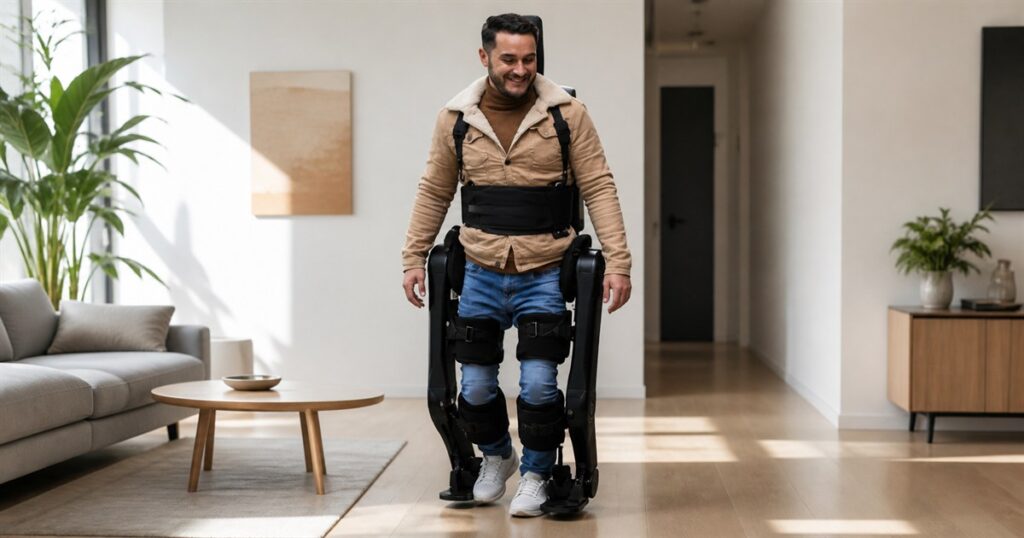
There is a very specific kind of adulthood where standing up from a chair becomes less of a movement and more of a board meeting between your spine, your legs, gravity, and whoever left a throw rug in the hallway. Wandercraft Eve looks at that committee and says, politely but with a lot of motors, meeting adjourned.
Eve is Wandercraft’s self-balancing personal exoskeleton, a hands-free robotic walking system designed to help people with severe walking impairments stand and move around indoors. It is not the usual medical robot that lives in a clinic, waits for a therapist, and makes everyone speak in serious clipboard voices. Wandercraft is positioning Eve as a personal device for home use, which means the robot has to be useful in the brutally normal places where life actually happens: the living room, the kitchen, the front entry, and that suspiciously narrow path between the couch and the coffee table.
The big trick is balance. Traditional walking exoskeletons often rely on crutches, parallel bars, or close physical support to keep the user upright. Eve is built around Wandercraft’s self-balancing robotics work, so the device is meant to support standing and walking without requiring crutches. That matters because hands are not decorative accessories. Hands are for carrying coffee, opening doors, greeting people, holding a phone, and doing the tiny daily tasks that become weirdly enormous when mobility has to be negotiated one motion at a time.
Wandercraft says Eve is designed for indoor settings and initially for people living with severe mobility disabilities, including spinal cord injuries. The company describes it as a personal exoskeleton for standing and walking at home, with the goal of restoring upright mobility and more eye-level interaction in everyday routines. That phrase sounds clinical until you imagine the difference between joining a conversation from a seated position and walking into the room under your own towering robot-leg supervision like the hallway just got promoted.
A Walking Robot That Is Trying To Be Boring In The Best Way
The funniest thing about Eve is that its most ambitious dream is not laser battles or moon mining. It wants to make ordinary rooms less hostile. It wants a person to stand, walk, talk with guests, run small errands, and take walks with loved ones. It wants the kitchen counter to stop being a distant cliff face. This is high-end robotics aimed at deeply normal human moments, which is exactly where the future should be spending more of its time.
Related posts:




Wandercraft’s background helps explain why Eve looks more like serious mobility hardware than a cosplay skeleton from a billionaire’s panic room. The company says its robots inherit engineering from its medical exoskeleton work, including reliability for mobility-impaired users and enough torque for users weighing up to 100 kg. Its Atalante X system is already used in rehabilitation settings, while Eve is the personal exoskeleton meant to move that self-balancing approach closer to daily life.
Good Shepherd Rehabilitation in Pennsylvania is collaborating with Wandercraft on education, patient trials, and training connected to Eve. The collaboration is designed to help clinicians, therapists, engineers, prospective users, and companions understand how this kind of robotic mobility can fit into rehabilitation and home-oriented use. That is the grown-up version of saying everyone needs to figure out what happens when the living room gets a self-balancing robot roommate with extremely specific opinions about posture.
- Hands-free walking support is the headline feature, since Eve is designed to balance without crutches.
- Indoor mobility is the intended environment, making homes and everyday interiors the primary setting.
- Standing and walking are the core functions Wandercraft highlights from clinical testing.
- Everyday activities, including talking at eye level, errands, and walks with loved ones, are part of the stated use vision.
- Regulatory timing matters, because commercial availability is tied to FDA clearance.
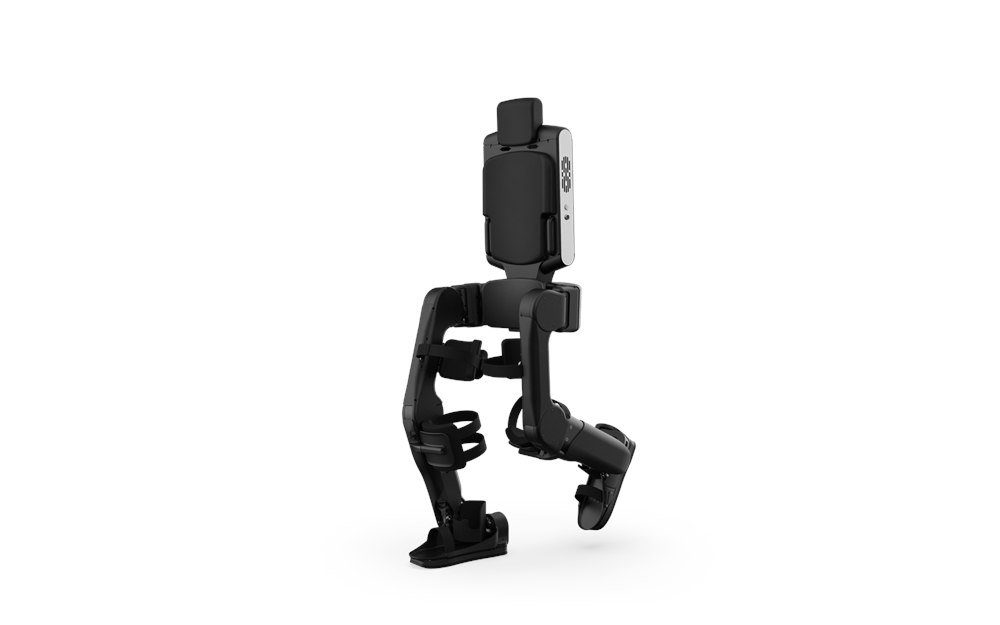
The device has a wonderfully strange visual presence. From the official images, Eve looks like a black robotic lower-body frame with leg structures, foot platforms, knee and hip supports, and a torso support section that helps turn the wearer into a temporary alliance between person and machine. It is not subtle, but subtle was never really the assignment. If a product is going to help someone stand and walk, it is allowed to look like it has been doing squats in a lab.
What Eve Is Built To Do
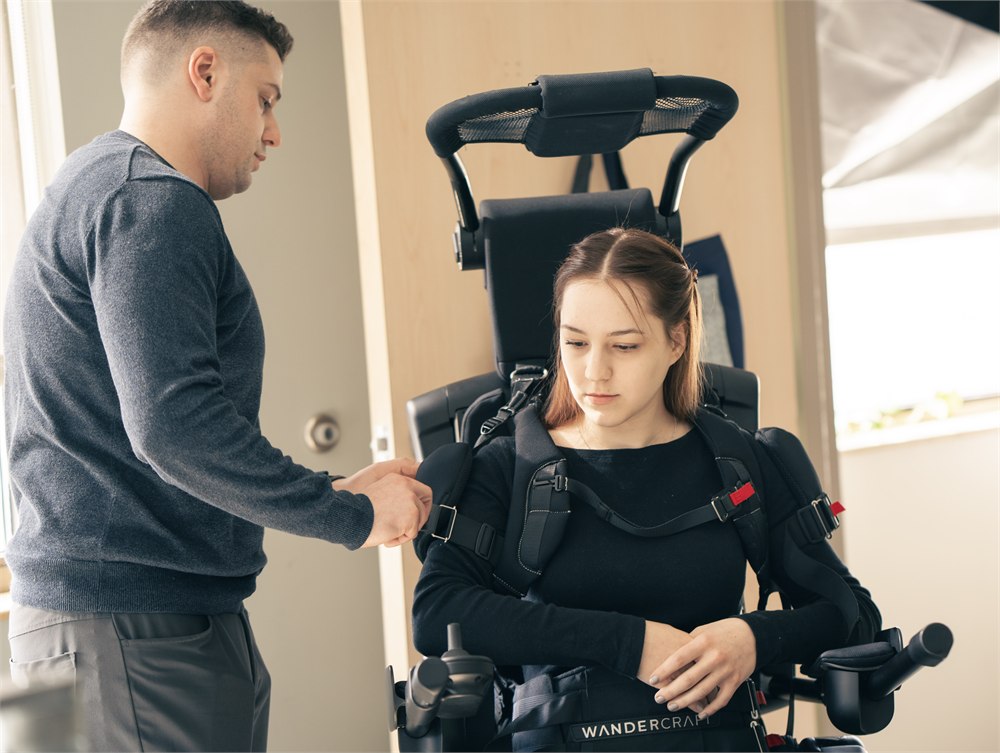
The practical promise is simple to say and incredibly difficult to engineer: help a person stand upright and walk without needing crutches. Wandercraft says Eve has been extensively tested in clinical trials for standing up and walking, as well as for daily-life activities. It is meant for indoor settings rather than rugged outdoor adventure. So no, this is not your invitation to sprint up a mountain while wearing a robot. It is much more grounded than that, and probably much more important.
| Detail | What Wandercraft Says | Why It Matters |
|---|---|---|
| Product type | Self-balancing personal exoskeleton | It aims to bring walking assistance beyond clinic-only robotics. |
| Primary use | Standing and walking in indoor settings | The focus is daily home mobility, not sports or outdoor terrain. |
| Hands | No crutches required in the stated design | Users may keep their hands free for normal tasks and interaction. |
| Initial audience | People with severe mobility disabilities, starting with spinal cord injuries | The product is intended for a specific medical mobility need. |
| Availability | Projected for later summer 2026 following FDA clearance | The timing depends on regulatory clearance, not impulse-cart optimism. |
That regulatory caveat is important. Eve is not a novelty gadget you buy because your knees made a crunchy noise after gardening. It is a serious mobility technology for people with significant walking impairments, and its commercial rollout depends on clearance and training infrastructure. The fun here is not pretending it is casual. The fun is that the future sometimes arrives wearing careful safety notes and a very expensive-looking hip assembly.

There is also a social side that product specs cannot fully capture. Wandercraft specifically talks about eye-level conversation while hosting friends. That may sound small if standing is easy for you. It is not small. Homes are designed around upright bodies, from countertops to cabinets to the height of another person’s face during a conversation. A device that can help someone participate from that vertical world is doing more than moving legs; it is changing the geometry of ordinary life.
Eve also has to live in the awkward middle between medical device and personal technology. It needs the seriousness of medical engineering, the reliability of assistive equipment, and the usability expectations of something that might be used repeatedly at home. That is a brutal design triangle. A robot can look impressive for a demo, but homes are where impressive machines are humbled by door thresholds, furniture corners, impatient schedules, and the fact that humans do not want to feel like they are starting a spaceship every time they need a glass of water.
The Robot Roommate Test
The best way to understand Eve is to picture it being judged by a hallway. A clinic demo is one thing. A real hallway has shoes near the door, a dog bowl in the wrong place, a lamp cord with main-character energy, and a family member asking whether you saw their keys. Wandercraft’s pitch is that self-balancing robotics can eventually make upright movement more practical in those everyday scenes. The company is not promising that Eve turns a home into a frictionless sci-fi palace. It is saying the robot is designed for indoor life, which is already a brave statement because indoor life is mostly furniture ambushes.
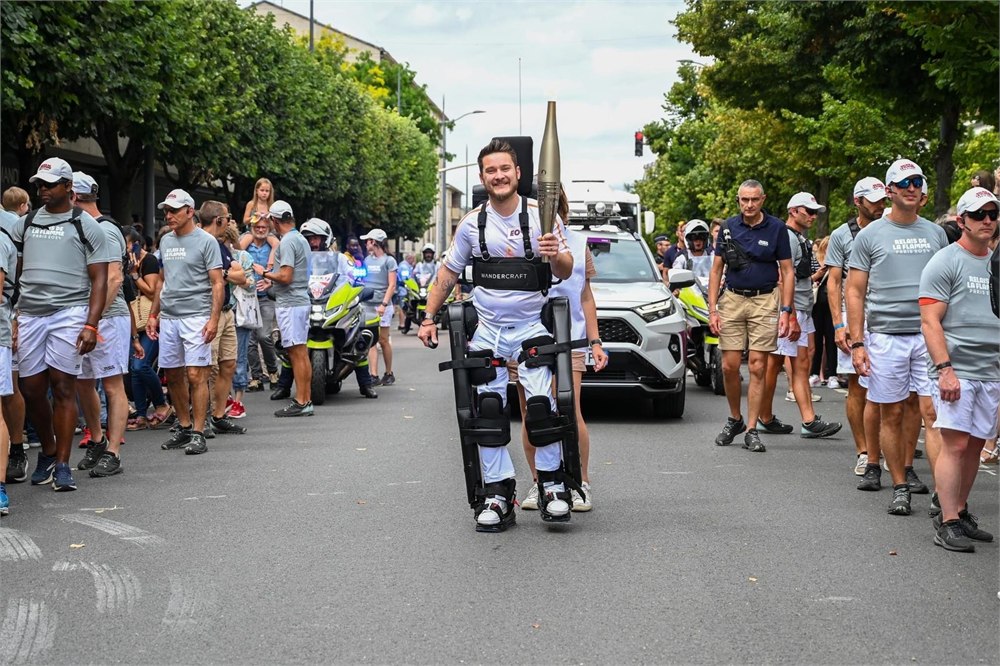
The collaboration with Good Shepherd is useful because this kind of device does not exist in a vacuum. Prospective users and companions need education. Clinicians need training. Families need to understand what the device can and cannot do. The human support system around the robot may be just as important as the hardware, especially for a product tied to mobility, safety, and daily routines. Nobody wants a miracle machine that arrives with the emotional user manual of a toaster.
Wandercraft also says its broader exoskeleton and humanoid line takes more than one million real-world steps every month, building motion data for its next generation of products. That number is a reminder that Eve is not popping out of a garage after a weekend of energy drinks. It comes from a company already deploying exoskeletons in hospitals, rehabilitation centers, and research environments, with more than 150 exoskeletons deployed across four continents according to Wandercraft.

Still, Eve is not magic, and the article would be less useful if it pretended otherwise. It is designed for indoor settings. It is for severe mobility disabilities. It is tied to FDA clearance for commercial availability. It will require proper evaluation, training, and support. It is not a general-purpose robot suit for anyone who wants to look dramatic while retrieving snacks. It is more specific, more regulated, and more consequential than that.
The price has not been publicly announced. Wandercraft says Eve is projected to become commercially available later in summer 2026 following FDA clearance, and the Good Shepherd collaboration is part of preparing the education, trials, and training around that rollout. For now, the most practical path is to follow Wandercraft’s Eve information and contact channels rather than pretending this is a normal shopping cart situation with a coupon code and free shipping over emotional stability.
- Product: Wandercraft Eve self-balancing personal exoskeleton.
- Core function: hands-free standing and walking support for indoor use.
- Intended users: people with severe mobility disabilities, starting with spinal cord injuries.
- Notable detail: designed to balance without crutches.
- Clinical context: developed from Wandercraft’s medical exoskeleton robotics work.
- Availability note: projected for later summer 2026 following FDA clearance.
- Price: not publicly announced.
If Eve reaches homes the way Wandercraft is aiming, it could become one of those rare products that is both deeply futuristic and quietly practical. It looks like a robot because it is one, but the goal is not spectacle. The goal is someone standing up, moving across a room, joining a conversation, and making the furniture reconsider who is in charge.
| Pros | Cons |
|---|---|
| Hands-free self-balancing design could make walking support feel less restrictive. | Commercial availability depends on FDA clearance and rollout timing. |
| Built for indoor home-oriented mobility rather than only clinic sessions. | Not intended as a casual consumer gadget or outdoor adventure suit. |
| Targets practical daily activities like standing, walking, and eye-level interaction. | Price has not been publicly announced. |
| Comes from a company with deployed rehabilitation exoskeleton experience. | Users will likely need proper clinical evaluation, fitting, and training. |
| Strong visual design makes the product easy to understand at a glance. | Indoor environments still bring real-world layout and safety challenges. |
| Good Shepherd collaboration adds a training and education pathway in Pennsylvania. | Initial audience is specific, so it will not fit every mobility situation. |
Where to find This Self-Balancing Personal Exoskeleton Lets People Walk Hands-Free at Home
OddityMall may earn a commission from qualifying purchases at no extra cost to you.