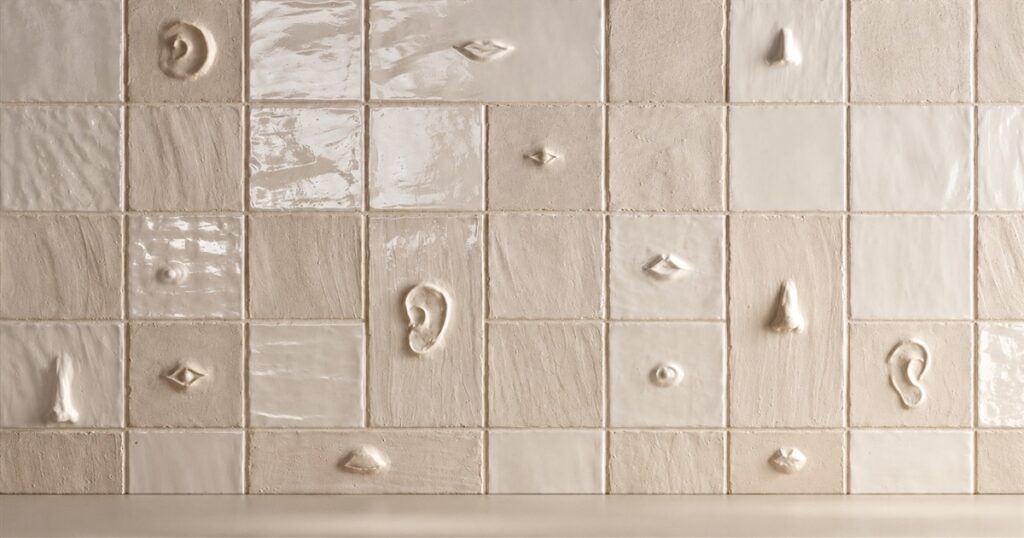
People say the walls have ears, usually when they want you to stop discussing something interesting. Mutina has taken that expression as a decorating brief. Its Faces & Figures collection by Faye Toogood includes sculptural wall tiles with actual raised ears, along with eyes, noses, mouths, and nipples. Your hallway can now look as though it has several opinions about your arrival time.
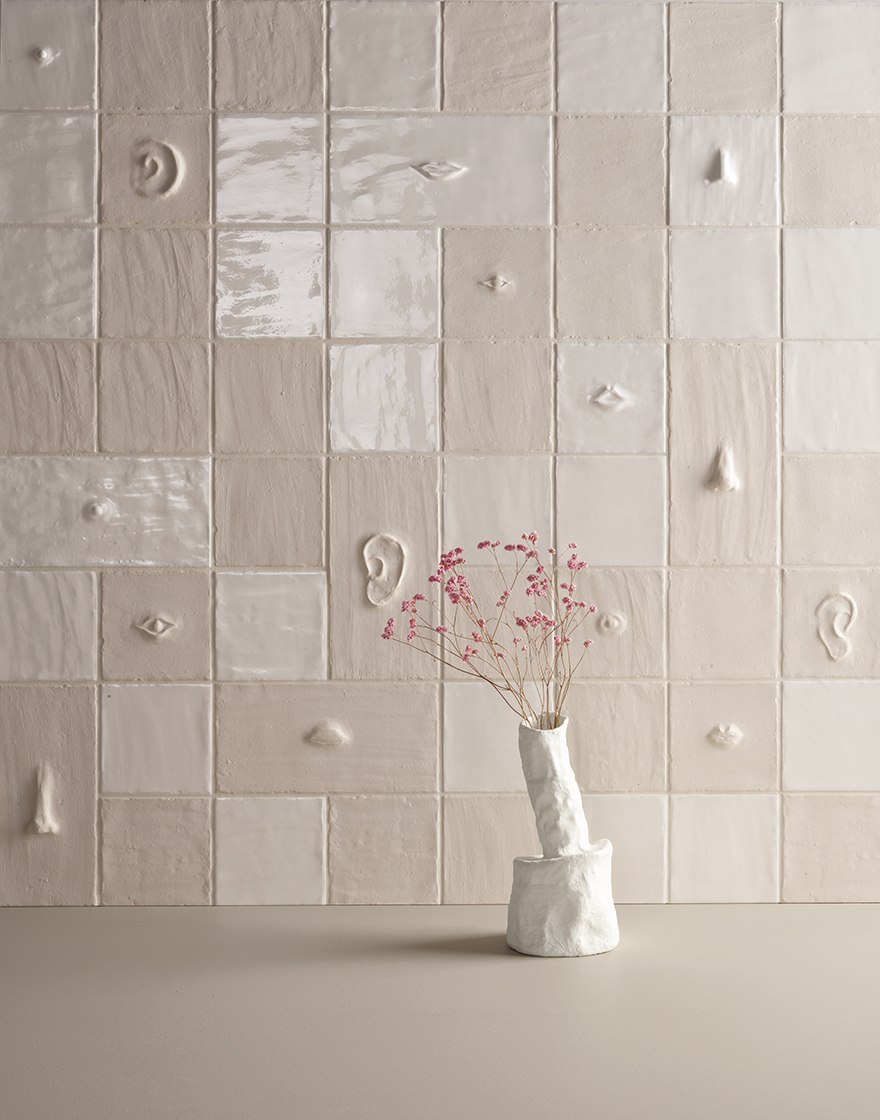
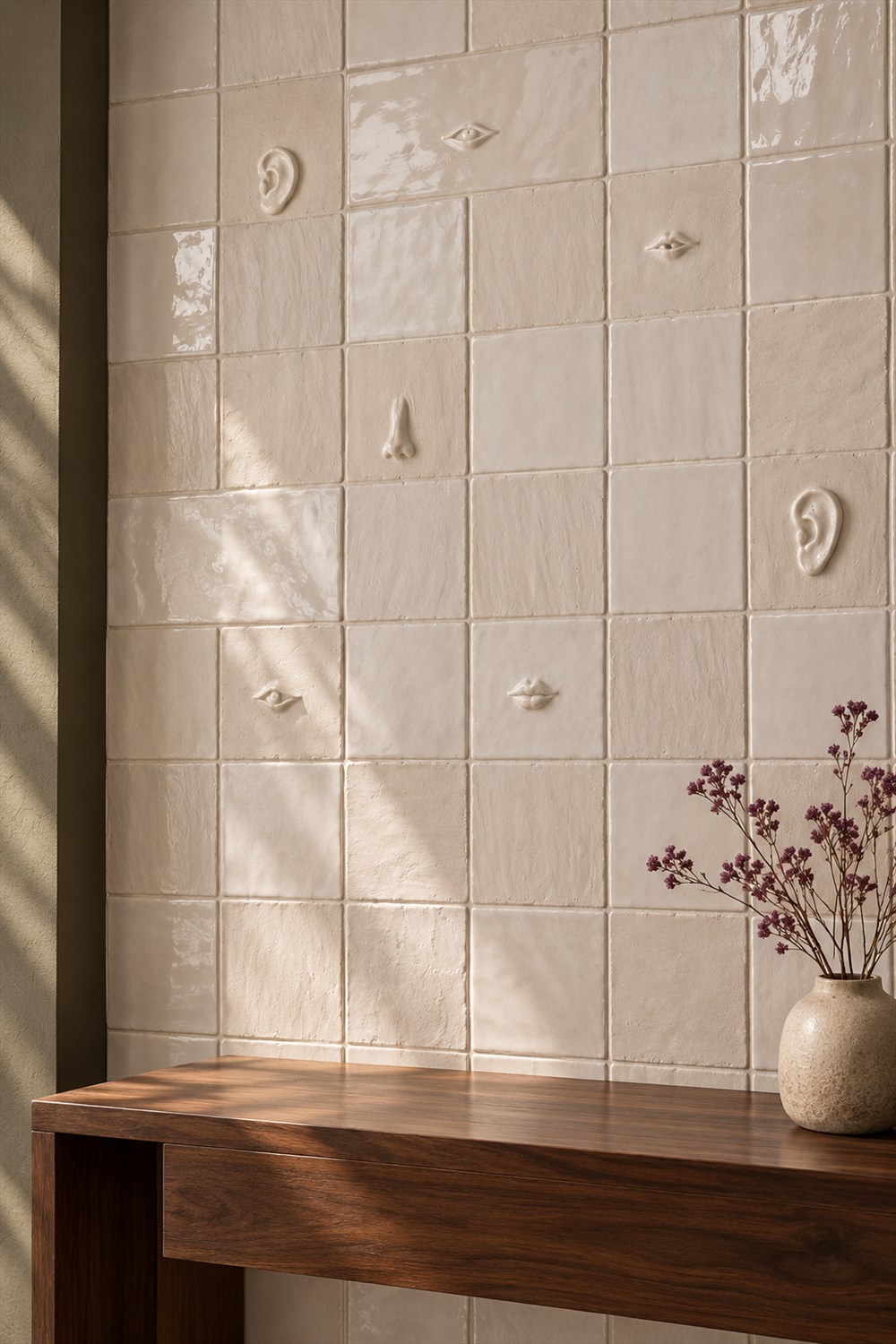
The idea is more subtle than covering a room in giant faces. Small anatomical details emerge from a grid of softly irregular tiles, with stretches of plain surface between them. From a distance, you see a warm, textured wall. Up close, you realize one part of the wall appears to be listening. This is excellent news for anyone who feels their house could use more personality and perhaps slightly fewer boundaries.
Faces & Figures is the first collaboration between British designer Faye Toogood and Italian tile maker Mutina. It brings together plain tiles, organic Figure shapes, raised decorative elements, Face compositions, and a separate terracotta Body Brick. Think of it as a whole family of architectural pieces, some considerably nosier than others.
A wall with character, one ear at a time
The anatomical elements are the obvious conversation starters. There are five types: Eyes, Ears, Mouths, Noses, and Nipples. Each comes in three designs, all in the collection’s Chalk color, with glossy and matt finishes. That restrained palette keeps the effect closer to sculpture than a novelty mural.
It also gives you control over how quickly visitors notice what is happening. A single relief among plain tiles could be a quiet surprise. A larger arrangement could become the room’s main event. Either way, somebody will eventually lean forward, point, and say, “Is that an ear?” Decorating rarely offers such a reliable opening line.


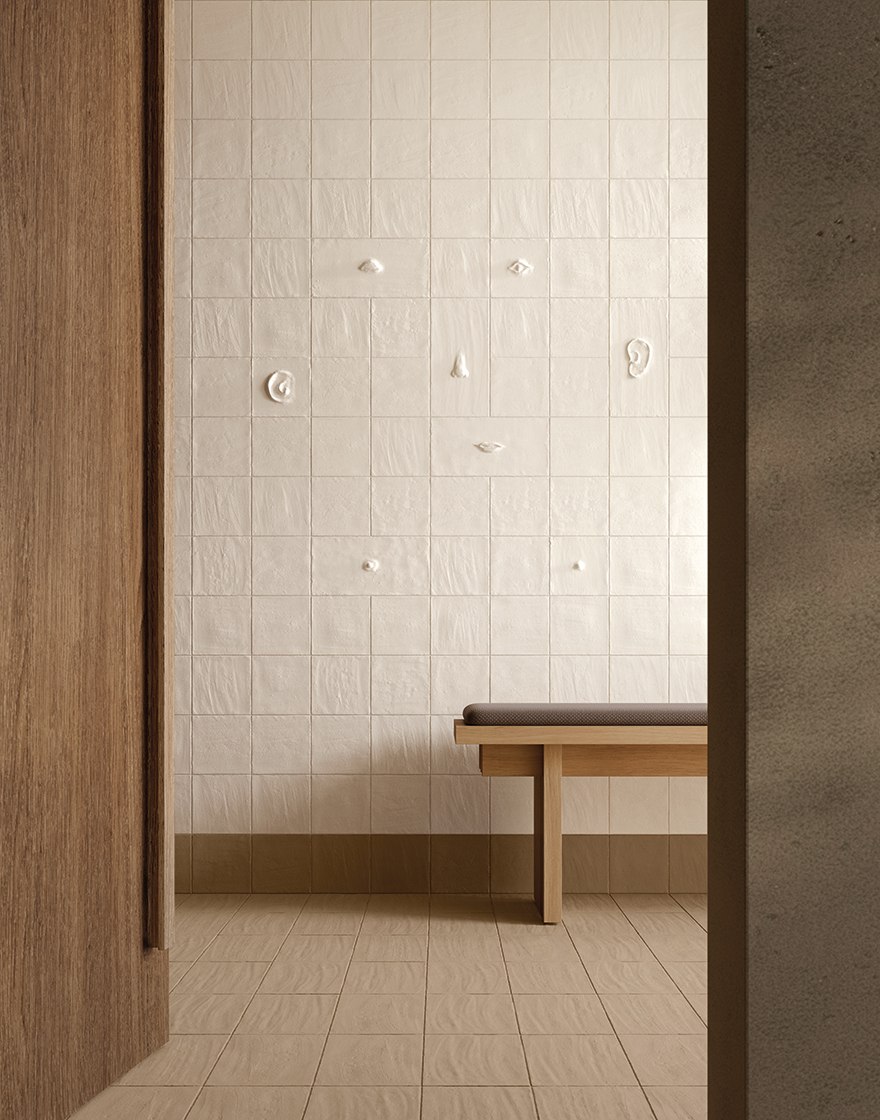
There is also a Face mix containing eight figurative elements. Rather than presenting one literal portrait, it lets individual features suggest faces through their placement. You get the enjoyable visual puzzle of recognizing something familiar without everything lining up like a passport photograph. The wall does not need to pass airport security.
The plain tiles are doing more than background duty
Even the parts without facial features have plenty going on. The surfaces are deliberately uneven, gently rippled, and lightly scratched, while the edges retain an irregular clay-like character. Toogood’s approach started with hands-on models and material experiments, but the finished porcelain tiles come from an industrial production process.
That distinction matters. They have a handmade appearance, rather than being presented as individual handmade tiles. The attraction is the visual softness: a grid that remains a grid, but does not look as though it has spent its entire life being corrected with a ruler.
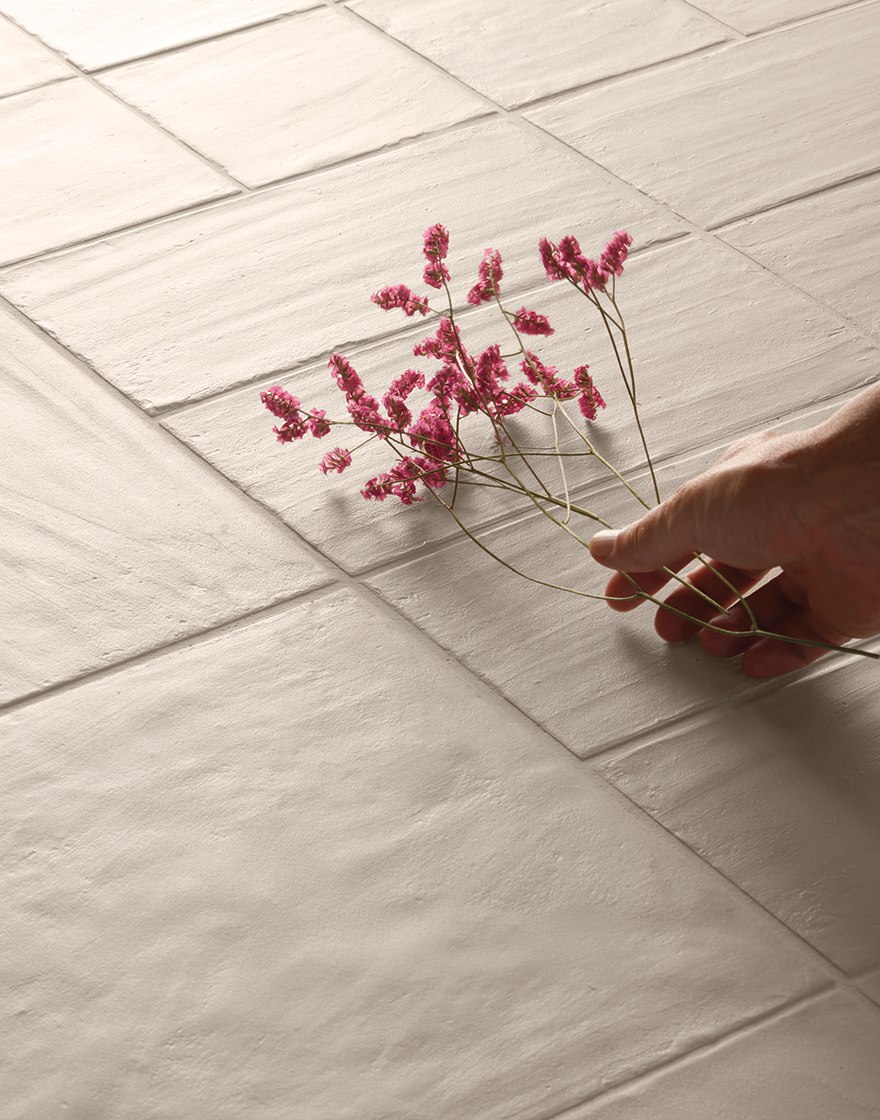
The plain field tiles come in Chalk, Sand, Clay, and Mud. Those names establish the mood fairly efficiently. This is a collection of earthy neutrals, not a competition to see which wall can shout the loudest. Glossy and matt finishes let reflected light become part of the composition, even when the color stays quiet.
Choosing a combination is easier if you separate the collection into its main jobs:
- Plain tiles provide the textured background and a choice of square or rectangular formats.
- Figure shapes introduce a flowing pattern that sits somewhere between anatomy and abstraction.
- Raised body-part tiles add small sculptural interruptions to the surface.
- The Face mix groups eight figurative elements for compositions that suggest faces.
- Body Brick takes the collection into terracotta construction elements with a different shape and material.
Glossy Mud has entered the decorating conversation
There is something entertaining about a sophisticated interior finish called Mud. It sounds like something you should remove from the house, yet the glossy version makes an elegant case for inviting it back in. In Mutina’s imagery, light catches the uneven surface and breaks into broad, shifting reflections.
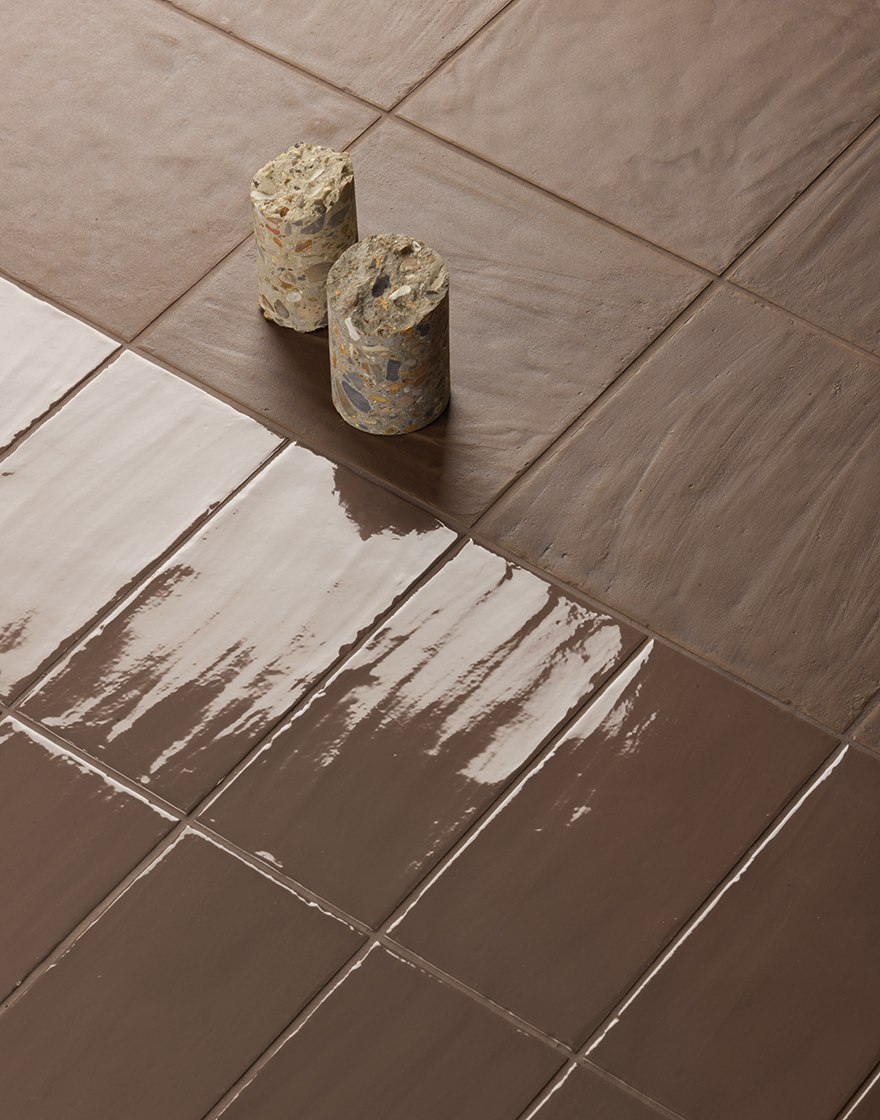
The matt pieces read differently, with a quieter surface that makes the clay-inspired texture easier to notice. Neither approach requires the whole room to become an anatomical exhibit. You can enjoy the earthy material language without introducing an ear to the dining area. The collection is flexible about your household’s preferred level of surrealism.
Here are the main formats and distinctions to keep straight while planning a layout. Measurements below use Mutina’s metric specifications.
| Collection element | Format or material | Design choice |
|---|---|---|
| Plain tiles | 15 × 15, 15 × 30, 30 × 30 cm | Four colors; glossy or matt |
| Figure | 20 × 30 cm format | Two organic shapes |
| Raised anatomical elements | 15 × 15 and 15 × 30 cm formats | Chalk; three designs per feature |
| Face mix | Eight figurative elements | Chalk; glossy or matt |
| Body Brick | 9.5 × 18 × 9 cm terracotta | Chalk or Cotto |
Figure brings curves into the grid
The Figure portion uses two organic shapes that combine into a continuous pattern. Mutina describes them as a way of translating anatomical fragments into floor and wall coverings. In the room imagery, they look almost like soft puzzle pieces, with rounded outlines that make the usual straight tile grid take a little break.
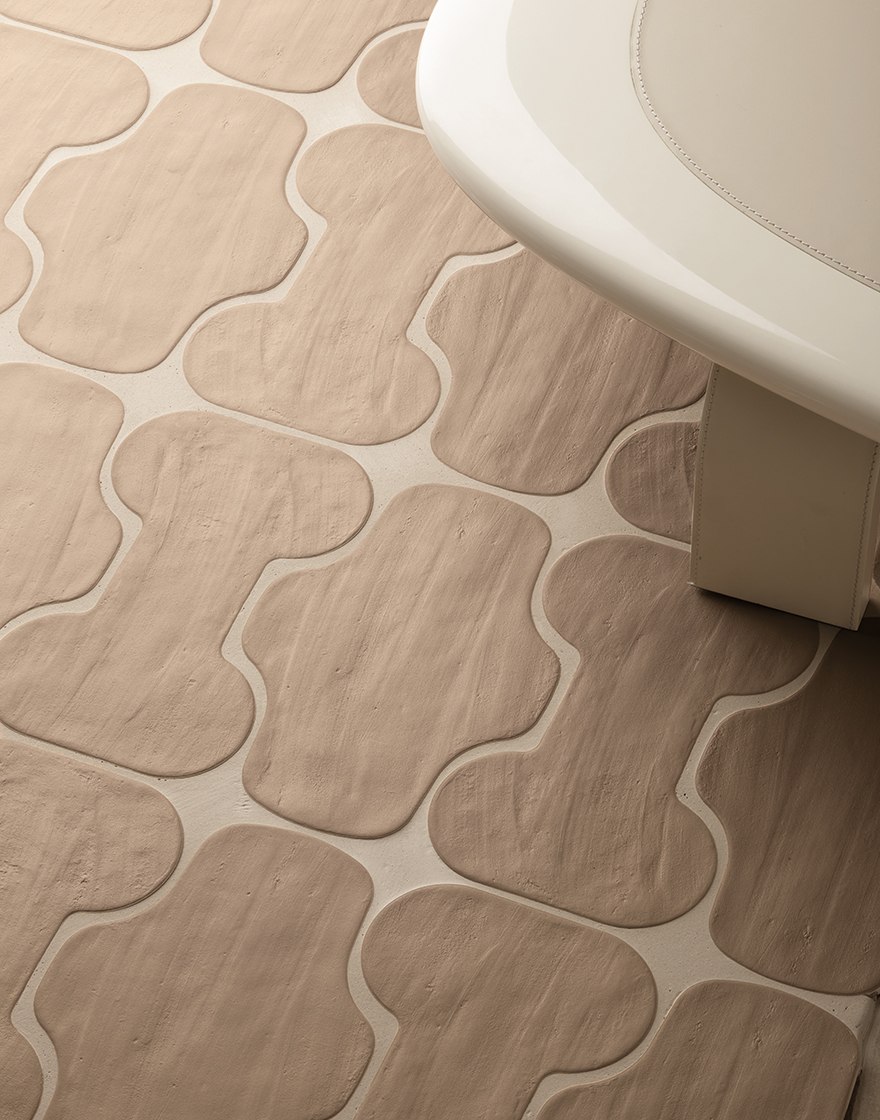
This is a useful option if you like the body’s influence on the collection but would rather not identify individual body parts during breakfast. The reference becomes abstract. Your floor can have curves and movement without appearing to be looking back at you.
When combining these pieces, consider how much visual activity the room already contains. A patterned surface, relief wall, busy furniture arrangement, and dramatic lighting can all be interesting individually. They do not necessarily need to deliver their speeches at the same time. A quieter neighboring surface gives the unusual details somewhere to stand out.
Body Brick is a separate kind of building block
Body Brick carries the same interest in irregularity into terracotta. These pieces come in Chalk and Cotto, with forms inspired by dry-stone walls. Unlike the porcelain tile portion of the collection, this is an unglazed terracotta element made by wet pressing.
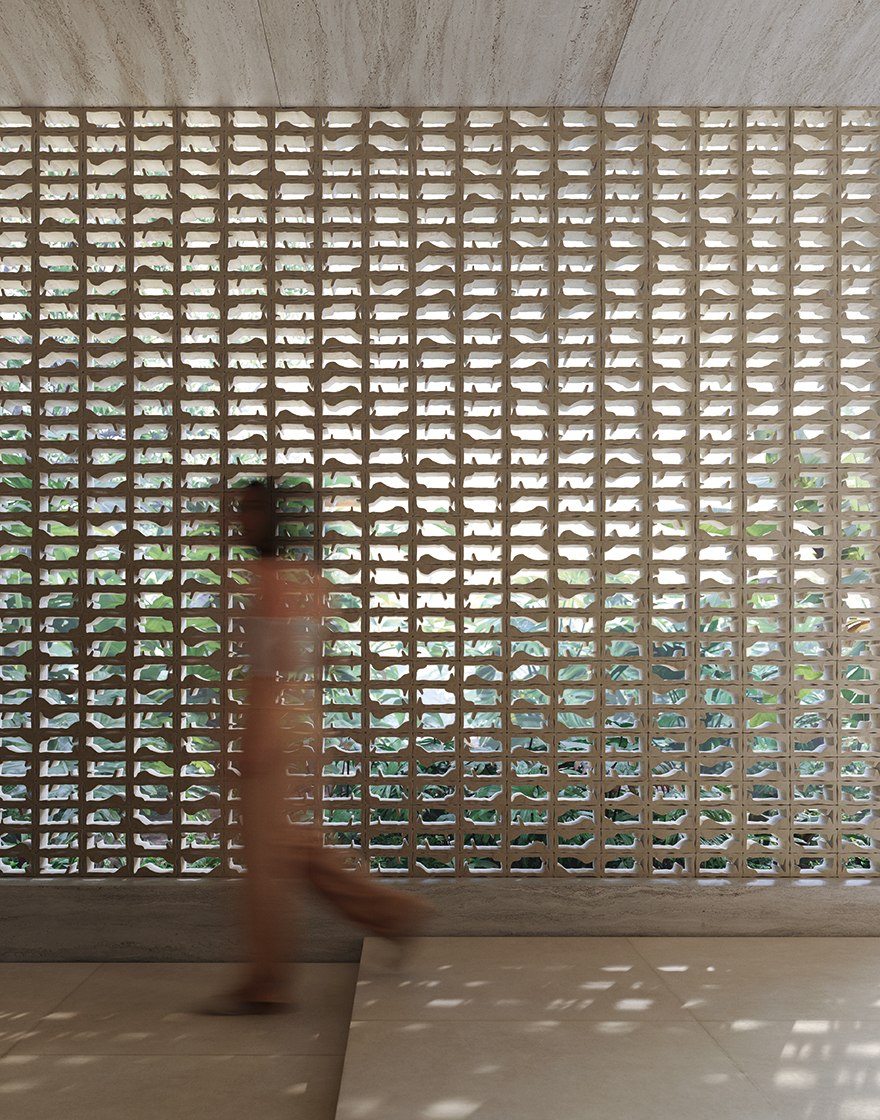
The open brick installation shown by Mutina demonstrates how the pieces can build a patterned architectural screen. Light through the gaps becomes part of the effect. It is a different design decision from choosing a flat wall finish, and one to discuss with the people responsible for your actual installation.
That is true of the collection generally: pick the exact element for the exact location. A decorative relief tile, a floor covering, and an open brick construction have different roles. Confirm suitability, layout, fixing details, and care with the supplier and installer before committing. “The wall needed a nose” is a compelling artistic statement, but it is not an installation specification.
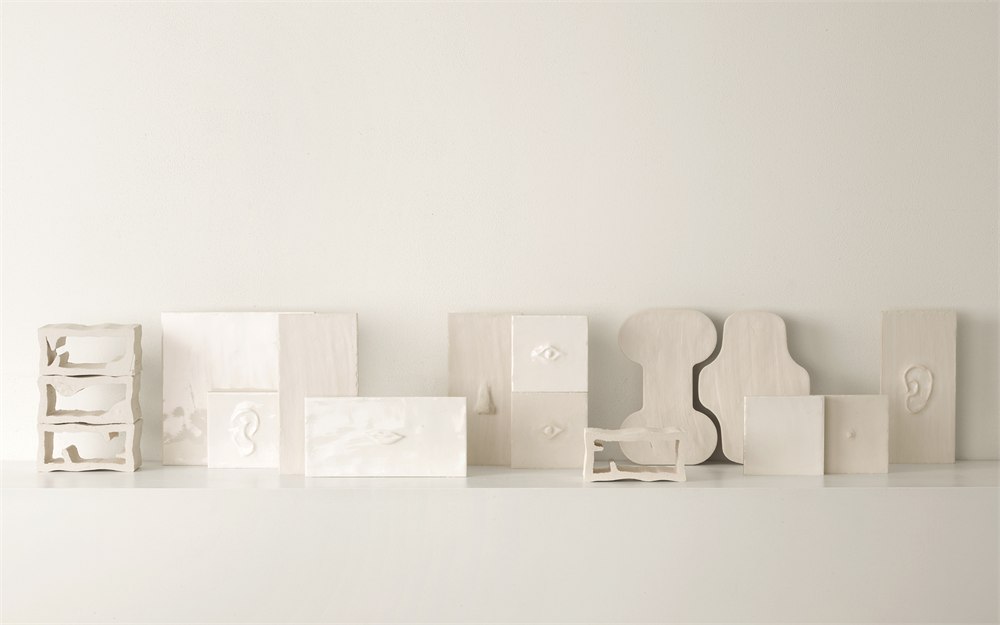
Product images: Mutina.
The details before your walls develop a personality
- Collection: Faces & Figures by Faye Toogood for Mutina.
- Core idea: textured architectural surfaces with optional sculptural anatomical details.
- Plain-tile colors: Chalk, Sand, Clay, and Mud.
- Figurative reliefs: eyes, ears, mouths, noses, and nipples in Chalk.
- Materials: porcelain stoneware for the tile system; terracotta for Body Brick.
- Planning: select the appropriate element and confirm installation requirements for the intended location.
Pricing is on request through Mutina; the collection page does not list a retail price. Ask about the particular pieces, quantities, finish, delivery timing, and installation requirements for your project. This is the sort of purchase where a carefully considered sample makes more sense than deciding at midnight that every room needs ears.
For a design lover who finds ordinary wall tiles a little too well behaved, the appeal is obvious. Faces & Figures makes a surface worth looking at twice. Just remember that once you give your hallway a mouth, you cannot reasonably complain that the house has too much to say.
| Pros | Cons / considerations |
|---|---|
| Distinctive sculptural relief details | The anatomical imagery will not suit every room |
| Plain and figurative pieces can work together | A balanced layout takes planning |
| Earthy colors and textured surfaces | Color and finish choices vary by element |
| Glossy and matt options for plain tiles and Chalk reliefs | Samples help assess the effect in your lighting |
| Figure shapes and Body Brick broaden the design possibilities | Different elements need appropriate specifications |
| Manufacturer inquiry route available | No public retail price on the collection page |
Save this find.
Thank yourself later.
Your next great gift idea. Your someday space. Your collection of wonderfully weird things.
Save to PinterestPick a board. Keep the inspiration.
These Sculptural Wall Tiles Give Your Walls Ears, Eyes, and Noses
Where to find These Sculptural Wall Tiles Give Your Walls Ears, Eyes, and Noses
OddityMall may earn a commission from qualifying purchases at no extra cost to you.