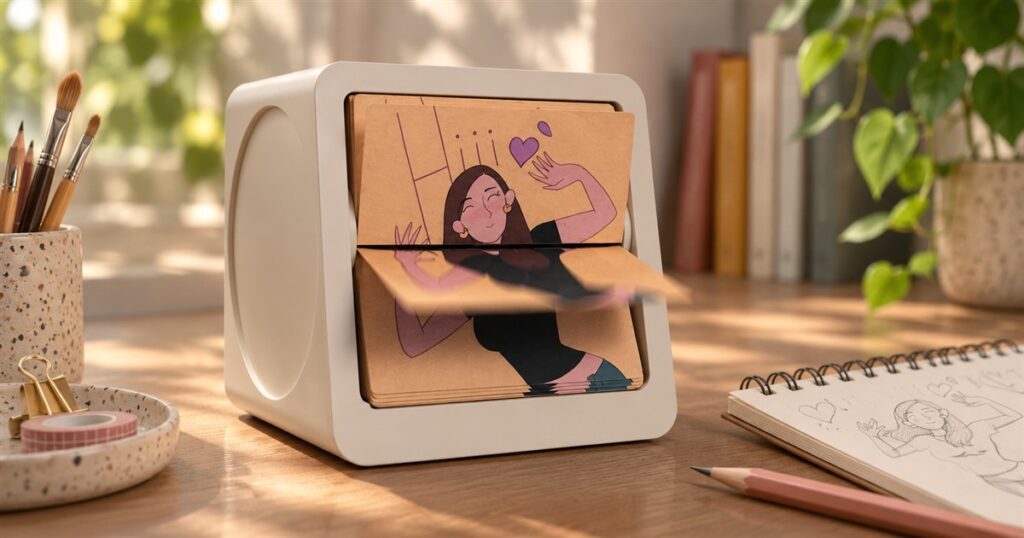
Your desk already has enough screens to qualify as a small airport control tower. The Motion Box proposes a different sort of distraction: actual drawings flipping past your eyeballs inside a little box. No glowing rectangle required. Just a tiny mechanical performance happening beside the paperwork you have been diplomatically ignoring.
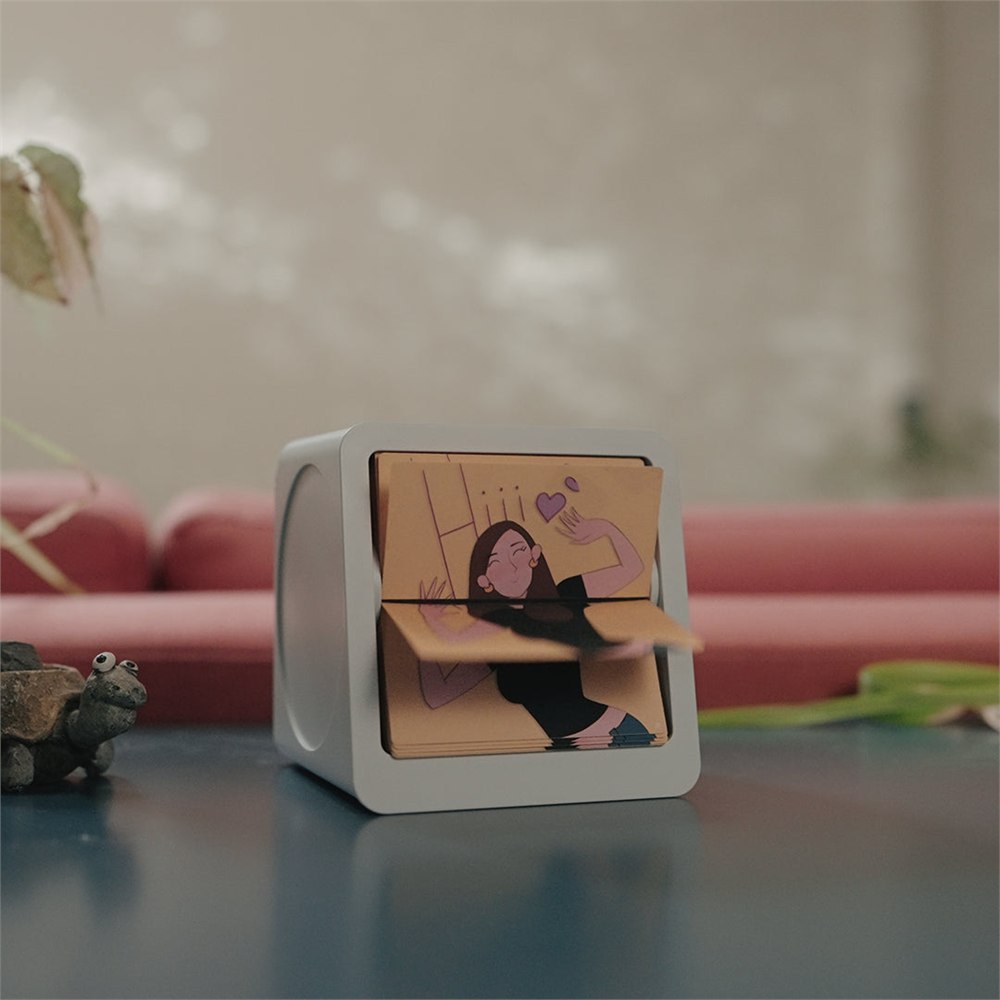
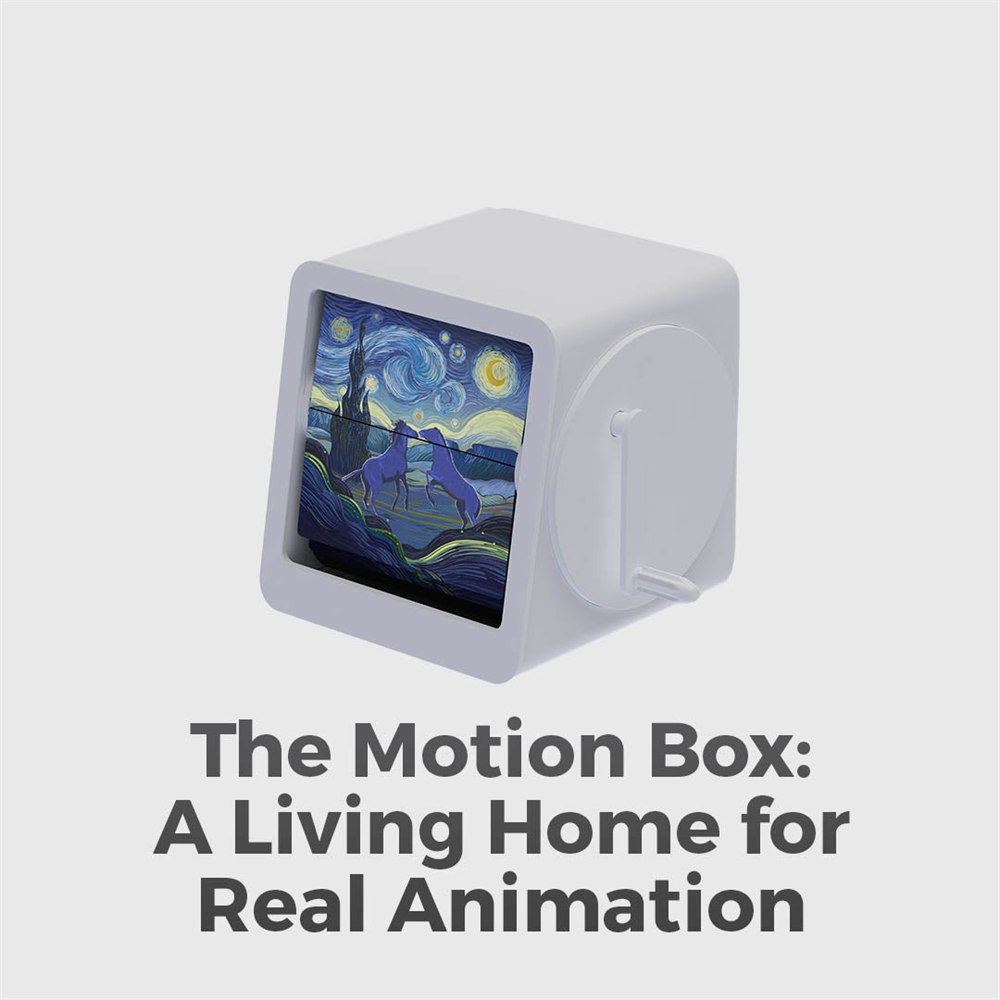
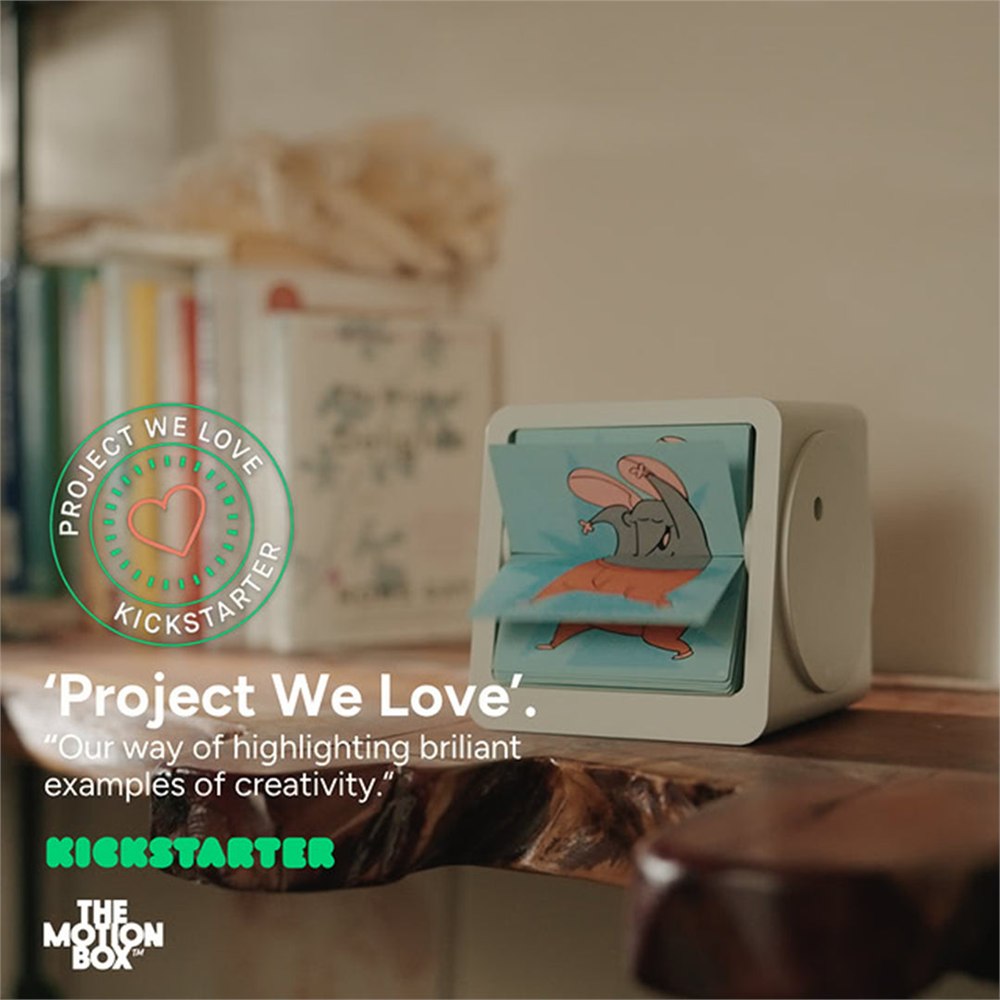
The Motion Box is a palm-sized, screenless animation player built around a physical flipbook mechanism. Instead of playing a video file, it cycles through illustrated cards to create a brief moving scene. The result looks like someone took the doodles from the corner of a school notebook, gave them proper housing, and helped them enter the home-decor market.
That housing matters. The pale, rounded body frames the animation like a miniature television, but the moving cards remain part of the spectacle. You can see the physical bits doing their job. A page flips, the picture changes, and suddenly a little character has somewhere to be. It is the rare desk object whose entire explanation makes you want to lean closer.
A flipbook that gets its own address
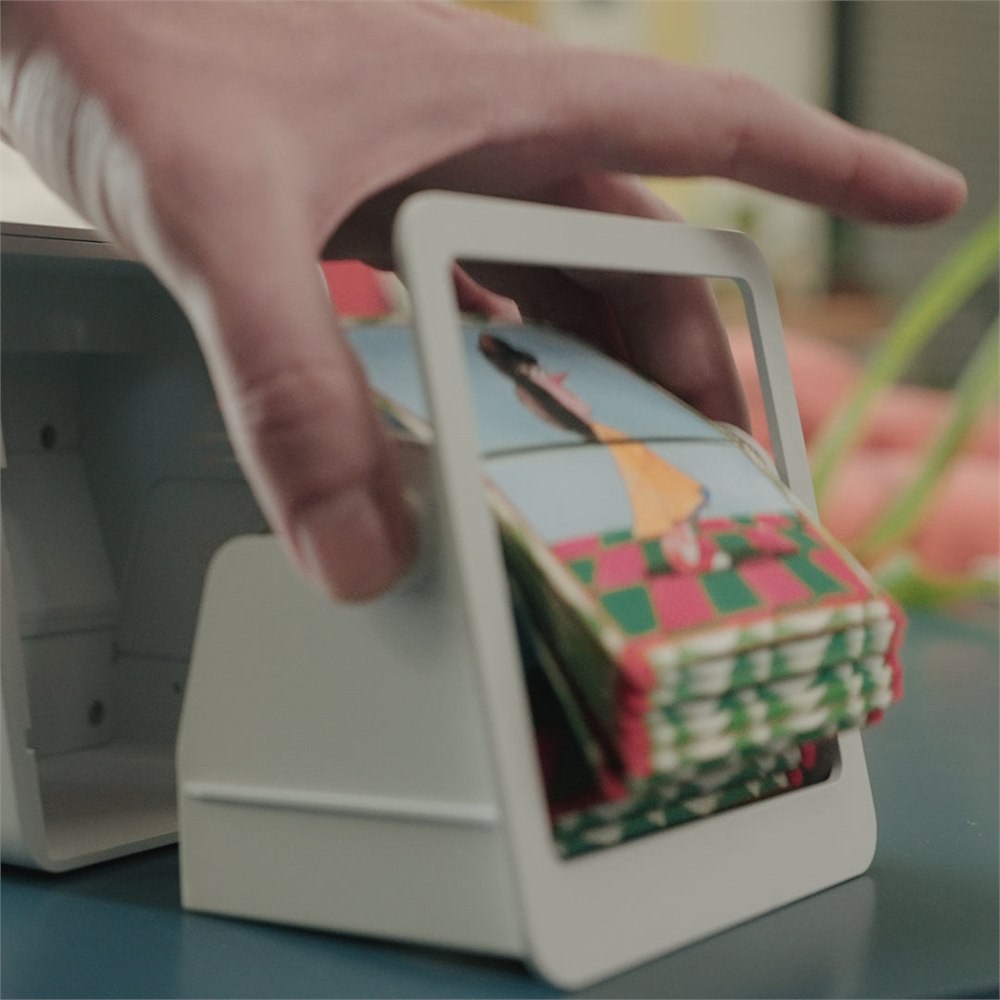
Ordinary flipbooks rely on your thumb, which is an enthusiastic but inconsistent film projectionist. The Motion Box puts the sequence into a mechanism designed for repeated playback. It offers both manual and automatic modes, along with adjustable speed, so the interaction can be as hands-on as you want it to be.
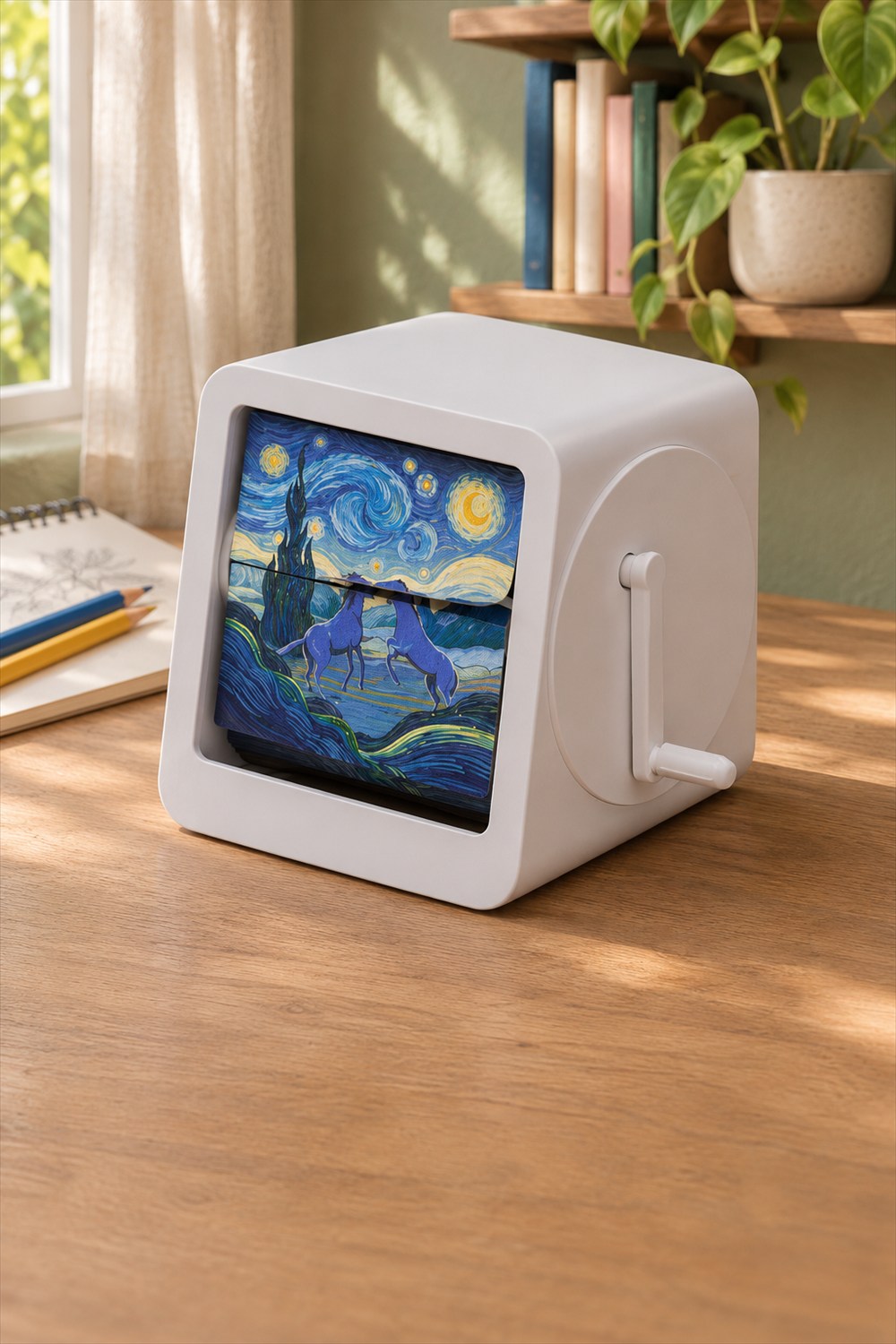
The tactile hand crank is particularly appealing if your idea of relaxing involves making a small mechanism do something satisfying. Turn it and the artwork moves. There is a nice directness to that relationship. The desk plant has been sitting there for six months and still refuses to perform on command.
Related posts:
Automatic playback gives the same object another role: moving art you can leave on display. The animation becomes a small point of interest on a shelf or side table. It does not need to dominate the room. Think of it as a little visual joke that keeps delivering its own punchline.
The art comes in swappable cartridges
The drawings are not permanently married to the box. The Motion Box uses swappable animation cartridges, letting the same player display different loops. That is a useful distinction if you love the idea but do not want to spend the rest of your life watching one tiny character repeat the same decision.
The campaign described a choice of 40 cartridge options, including blank cards. Its reward descriptions directed backers to choose their cartridges through a pledge manager after the campaign. The selection is part of the appeal: you are choosing the art that lives in the object, not merely picking the color of its shell.
The project emphasizes work made by real artists, crafted frame by frame. Different visual styles give each loop its own personality. For someone who enjoys animation, that makes the cartridge feel more like a small collectible artwork than a generic accessory thrown into a box.
Here are the practical reasons this little player is more interesting than a permanently looping novelty:
- Swappable cartridges let you change the animation without replacing the whole player.
- Manual operation makes the movement something you can actively control.
- Automatic mode allows the box to serve as moving display art.
- Adjustable speed changes the pace of the physical animation.
- Blank-card options give aspiring animators somewhere to put their own sequences.
For the person who draws in every margin
The blank cards might be the most dangerous feature for anyone who has ever said, “I could probably make a little cartoon.” That sentence has a way of consuming an entire afternoon. Here, it also has a physical destination: a cartridge of your own animation that can sit on your desk afterward.
The creator’s FAQ says all reward tiers allow a Motion Box with blank cards, with additional blank-card packs offered as add-ons. You do not have to approach it as a finished art collector. You can approach it as a person with a pencil and a deeply ambitious idea involving a bouncing potato.
There is also something helpful about a short physical loop. It makes you think about movement in individual steps. A pose changes, a shape shifts, a small action repeats. That does not magically make animation easy, but it gives the process a tangible form. You can hold the frames instead of losing them inside another folder called Final_Final_ActuallyFinal.
For buyers trying to understand what the system actually offers, these are the useful distinctions:
| Feature | What it means |
|---|---|
| Physical flipbook playback | Printed frames create the moving image rather than an electronic display. |
| Swappable cartridges | Different animation loops fit the same player. |
| Manual and automatic modes | Choose hands-on interaction or powered playback. |
| Adjustable speed | Change how quickly the sequence moves. |
| Blank-card option | Create your own frame-by-frame artwork. |
| USB-C cable in campaign kit | The base reward lists a cable alongside the player and hand crank. |
A small stage for a very specific obsession
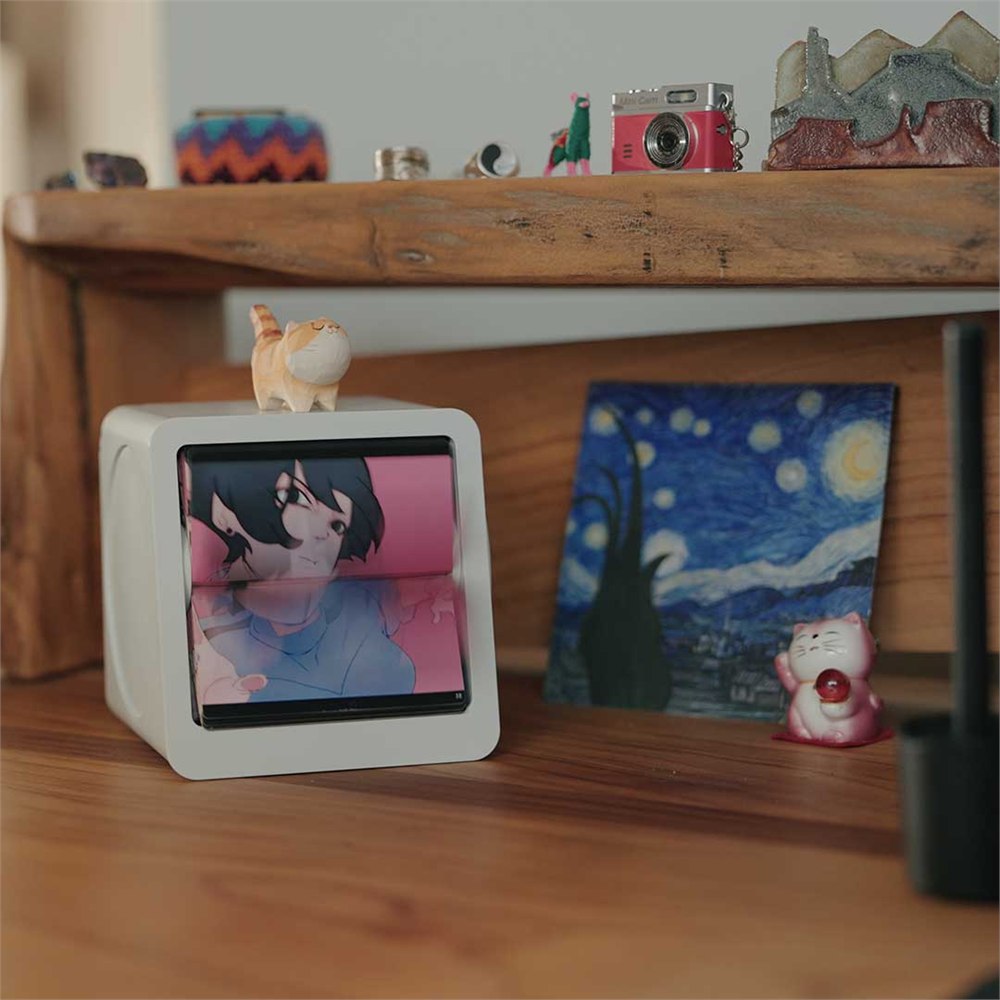
This makes sense on a creative person’s desk, but it also has an obvious place among books, records, models, and other objects collected because they make a room feel personal. A shelf full of things you like is already a tiny museum. The Motion Box simply gives one exhibit permission to wiggle.
The product photographs show it among books and playful collectibles, and that feels appropriate. It is an object you notice twice: first because of the little scene inside, then because you realize how that scene is moving. Visitors may spend longer examining it than the expensive furniture. Please prepare emotionally.
Its appeal is also fairly specific. You need to enjoy short repeating animation and visible mechanics. This is not a substitute for a general-purpose media player, and it is not promising to display your entire digital video library. The cartridge system is the point. Choosing and swapping a physical piece of art is part of the experience.
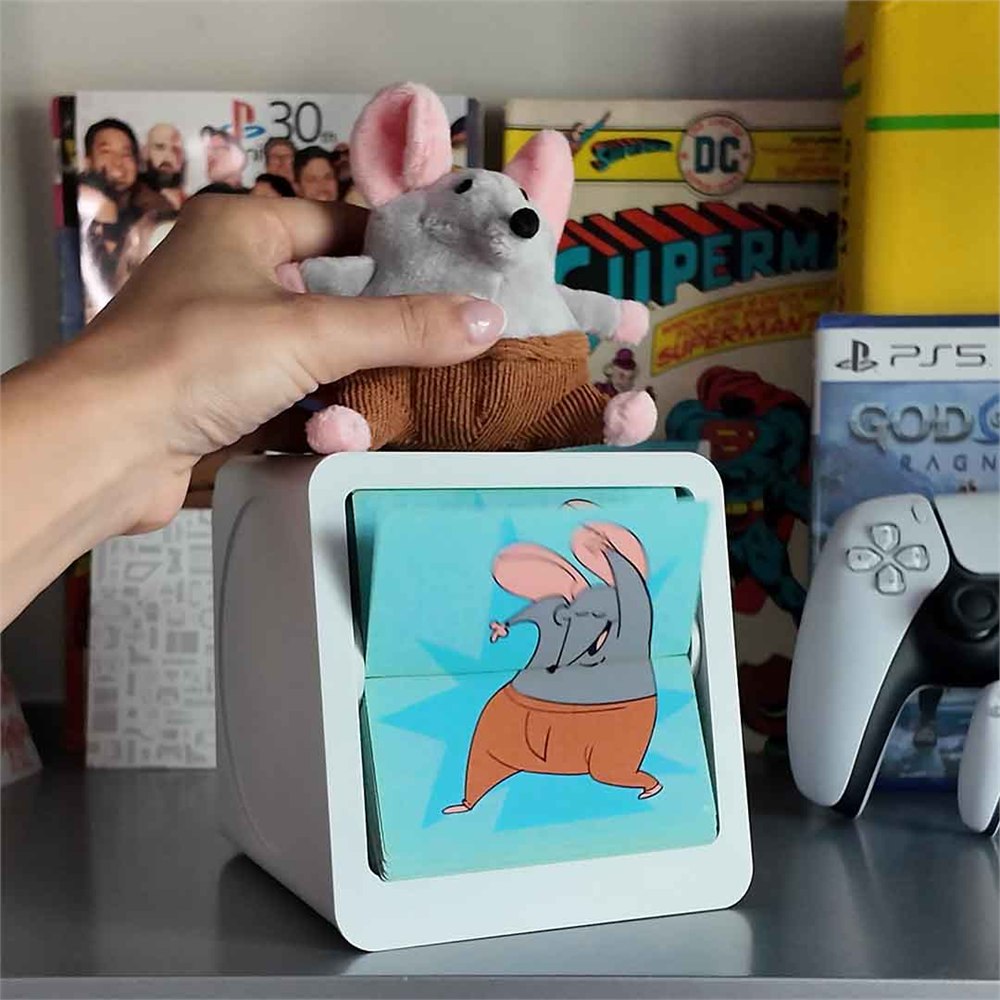
Likewise, the mechanical approach should be appreciated on its own terms. The exposed flipping cards are not a flaw to hide. They are what makes it interesting. Anyone expecting the seamless appearance of a modern screen is shopping for a different kind of object. Anyone who enjoys seeing how a little illusion happens may find the visible mechanism half the fun.
As a gift, it is especially easy to picture for an animator, illustrator, art teacher, or collector of unusual desk objects. The blank-card route makes it more personal still. A tiny custom animation could be a charming thing to give someone, provided you accept that drawing the same character repeatedly is considerably more work than buying a greeting card.
The details before your desk gets a cast
- Product: The Motion Box screenless flipbook animation player.
- Core idea: artist-made physical animation in replaceable cartridges.
- Controls: manual hand-crank operation, automatic mode, and adjustable speed.
- Creative option: blank cards for making your own animations.
- Base campaign kit: player, one chosen cartridge, large edition card, tactile hand crank, and USB-C cable.
- Availability: funded Kickstarter project with late pledges offered; delivery remains an estimate.
The campaign’s early-bird base reward was listed at $49, with shipping charged separately after the campaign. That is a historical campaign price, so check the currently available late-pledge rewards for today’s amount and contents. The project successfully funded on November 13, 2026, and its FAQ gives January 2027 as the estimated start of shipping. Production timelines can change; this is a crowdfunding reward rather than an in-stock retail purchase.
Product details are available through The Motion Box campaign. Product images: The Motion Box, via First Backer. Your desk may still be a mess, but at least one small corner can have excellent animation direction.
| Pros | Cons |
|---|---|
| Physical moving artwork with visible mechanical charm | Short repeating loops have a narrower use than a digital display |
| Swappable artist-made cartridges | Changing the art means changing a physical cartridge |
| Manual and automatic playback options | Powered playback adds a charging consideration |
| Blank cards support personal animation projects | Making an animation takes time and repeated drawings |
| Distinctive gift for animation and design fans | Crowdfunding delivery is estimated, and current reward prices may vary |
Save this find.
Thank yourself later.
Your next great gift idea. Your someday space. Your collection of wonderfully weird things.
Save to PinterestPick a board. Keep the inspiration.
This Screenless Flipbook Player Turns Artist-Made Cards Into Moving Desk Art
At a glance
Product snapshot
- Listed price
- 49 campaign early bird; current late pledge variesPrices and availability can change. Check the seller for current details.
- Where to find it
- Kickstarter
- Category
- Gadgets