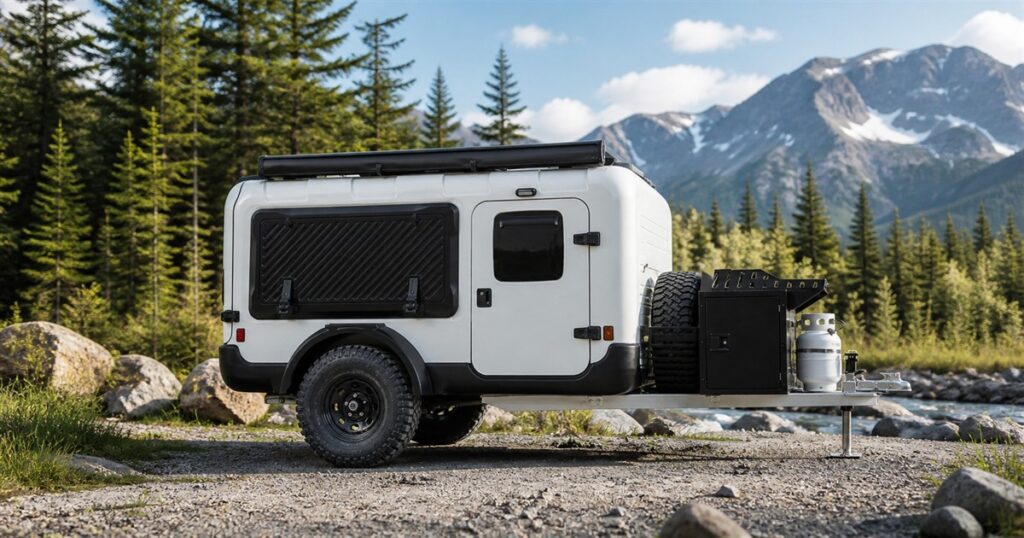
Camping trailers are basically tiny homes for people who looked at a normal vacation and thought, yes, but what if I also brought a tow hitch, a leveling ritual, and exactly one drawer that becomes the center of my entire personality?
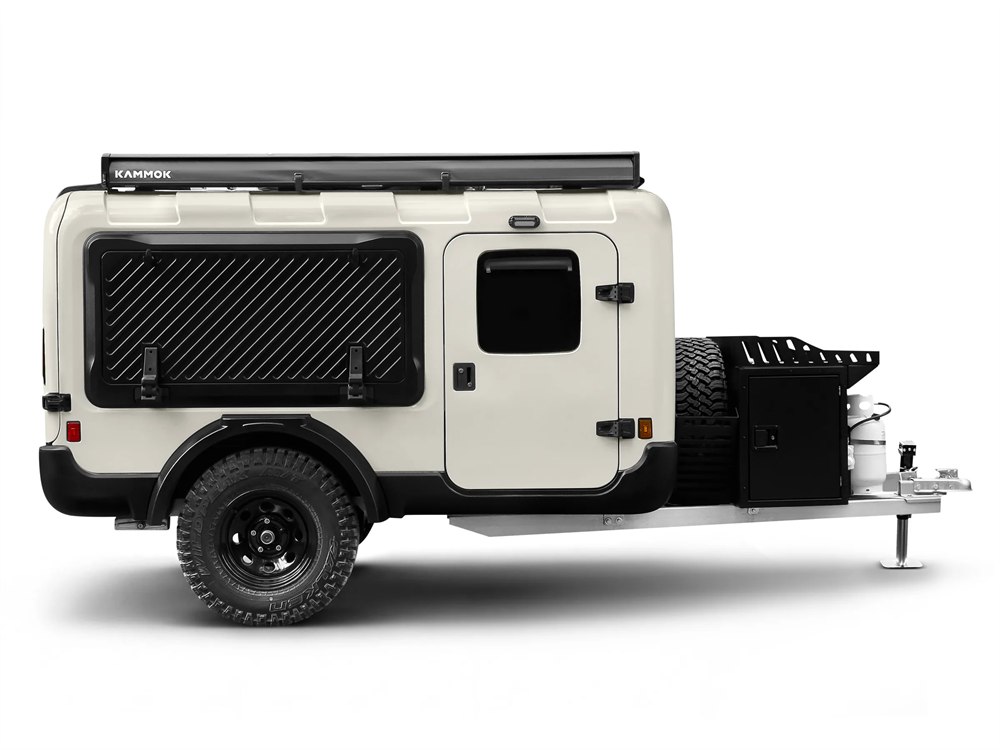
The Motsmann Outranger is a compact off-road micro-camper built for that very specific part of the brain. It has the general footprint of a teardrop trailer, the square little confidence of a utility pod, and the construction philosophy of someone who has personally taken offense at soggy plywood.
Motsmann describes the Outranger as an all-molded fiberglass, off-road-ready interpretation of the classic teardrop camper. The big hook is simple: it is designed without wood in the body and key interior structure. Instead, the company uses molded composites, aluminum, galvanized steel, and durable polymers, which is camper language for please stop letting moisture turn your vacation box into mulch.
That matters because small campers live hard lives. They sit outside. They bounce along forest roads. They get rained on, snowed on, washed, ignored, and occasionally used by people who swear they know how to back up a trailer but absolutely do not. A tiny camping trailer that tries to remove rot-prone materials from the equation is a very practical kind of weird.
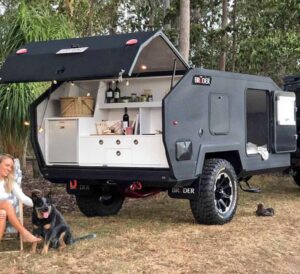
The Outranger is also visually charming in a very OddityMall way. It looks like someone put a rugged off-road tire kit on a clean white marshmallow and then gave it a galley, roof rack, side hatch, cargo box, and enough black hardware to make it feel more trail-tool than lawn ornament.
A Tiny Camper Built Like It Has Trust Issues
The official spec sheet lists the Outranger at 162.3 inches long, 72 inches wide, and 77.8 inches high at its maximum height with roof equipment included. That makes it roughly 13.5 feet long, so it sits in the tiny trailer world rather than the land yacht campground ecosystem where every neighbor has a satellite dish and a dog named after a lake.
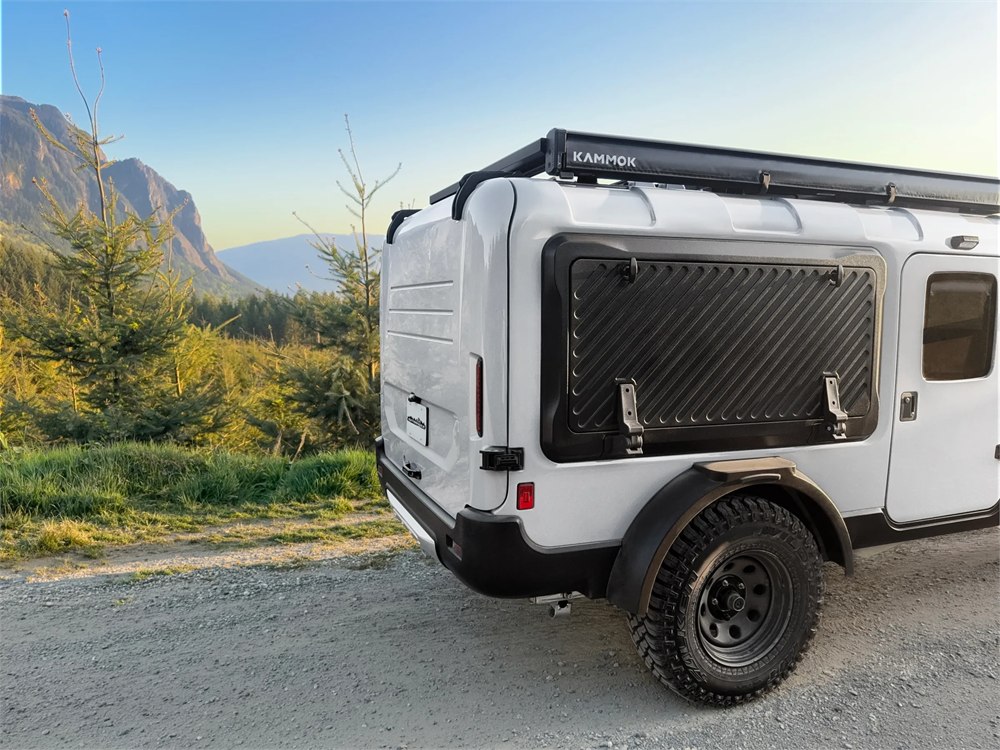
Dry weight is listed at approximately 1,450 pounds in the standard configuration, with a GVWR of 2,300 pounds. The chassis uses galvanized steel, and the suspension setup includes Timbren 2000HD independent trailer suspension with 30-inch tires on 15-inch wheels. In other words, this is not merely a cute fiberglass bubble meant to spend its life next to a manicured KOA shrub. It is at least trying to be the little box that follows you down the meaner gravel road.
The body is where Motsmann makes its strongest case. Instead of a conventional wood-framed or wood-backed build, the Outranger uses molded composite panels, a protective lower Raptor coating, polymer interior parts, and metal components where strength and repairability matter. The company also notes that the bolted chassis is meant to make maintenance, repair, and upgrades easier than if everything were welded into one permanent metal opinion.
Here is the practical shape of the thing, minus the campfire poetry:
- Wood-free body and interior construction built around molded composites, aluminum, galvanized steel, and polymers.
- Compact 13.5-foot overall length for two-person camping without dragging a full-size RV into the woods.
- 1,450-pound listed dry weight in base form, before options, cargo, water, propane, and supplies.
- Two large side doors with opening windows, so getting in and out does not require a gymnastic resignation letter.
- Rear galley layout that can stay simple or be optioned with cooking, refrigeration, sink, and water systems.
- Standard 12V system with a 200Ah LiFePO4 battery, plus available solar, inverter, and larger battery bank options.
The Cabin Is Small, But Not Coffin Small
Inside, the Outranger is focused on sleeping and shelter rather than pretending to be a suburban apartment with a sink that has feelings. The official page lists 50 inches of interior height, which is enough sitting room for many campers to read, change clothes with some dignity, or sit upright and question why they packed four jackets for one weekend.
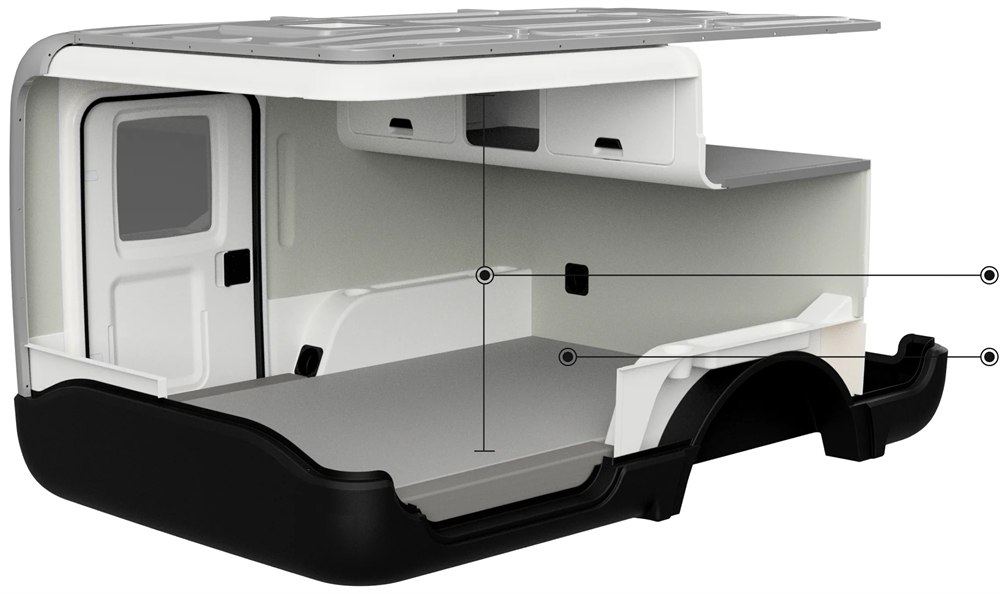
The sleeping setup uses an 82-inch mattress. Motsmann says the upper shoulder area is 57 inches wide, while the lower section between the wheel wells is 50 inches wide. That tapered bed layout is very tiny-camper: spacious enough to be useful, compact enough to remind you that every inch has been negotiated by a committee of tires, doors, and physics.
| Outranger detail | Verified figure or feature | Why it matters |
|---|---|---|
| Overall length | 162.3 in, about 13.5 ft | Compact enough for micro-camper towing and storage |
| Dry weight | Approx. 1,450 lb standard configuration | Leaves room for options, cargo, and supplies within GVWR |
| Interior height | 50 in floor to ceiling | Designed for sitting and sleeping, not indoor square dancing |
| Mattress | 82 in long, 57 in shoulders, 50 in lower section | A real two-person sleeping surface in a tiny shell |
| Roof rack | 150 lb dynamic / 550 lb static capacity | Useful for camp gear when properly loaded |
| Battery options | 200Ah standard, up to 600Ah available | Supports lighting, charging, and expanded off-grid setups |
The base spec keeps things relatively simple, which is not necessarily a bad thing. A lot of small trailer buyers already own camp stoves, water jugs, bins, lanterns, and the mysterious tote full of cables that appears in every household after age thirty. The Outranger gives those people a durable sleeping shell and lets them build the rest of the camp kitchen around how they actually travel.
The Galley Can Go From Empty Counter To Camp Kitchen
The rear galley is where the Outranger becomes less bedroom pod and more tiny outdoor kitchen with a tailgate complex. The standard layout offers countertop and storage space, while Motsmann lists available cooking, refrigeration, and water systems for buyers who want the camper to show up with more of the chores already solved.
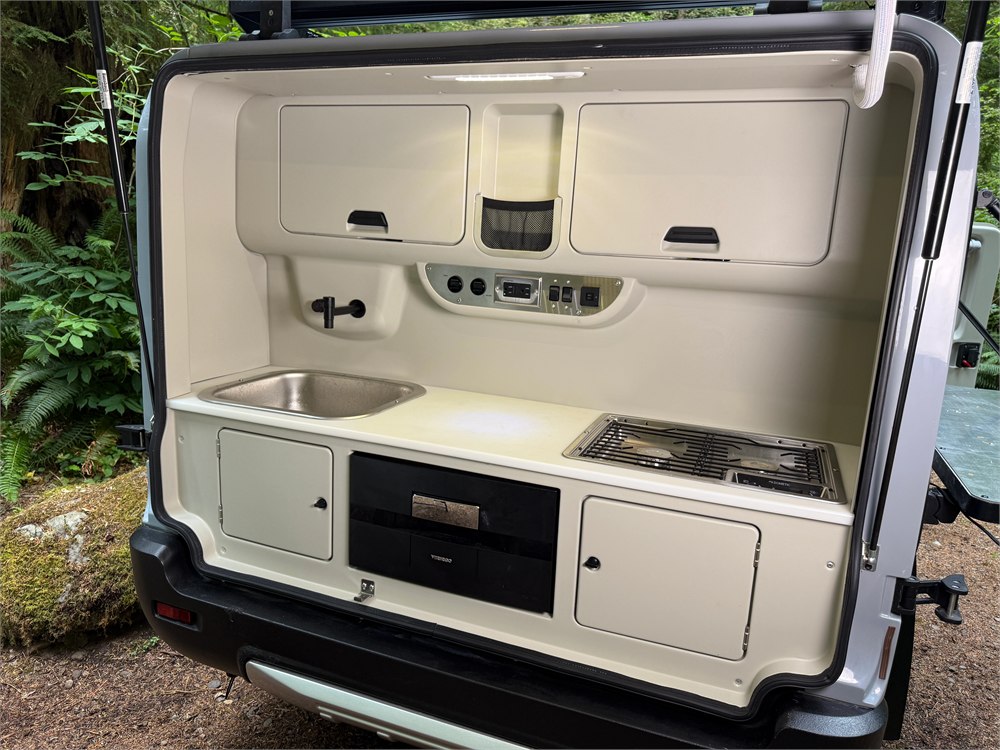
The official page describes an available gravity-fed water system that uses no pumps and no electricity. It includes a 14-gallon fresh water tank, an 8-gallon holding tank, a Dometic propane cooktop, a 5-gallon drawer refrigerator/freezer, and a standard dump connection compatible with portable waste tanks. New Atlas also notes a fully equipped galley package with sink, gravity faucet, dual-burner stove, fresh and waste water tanks, and a drawer fridge.
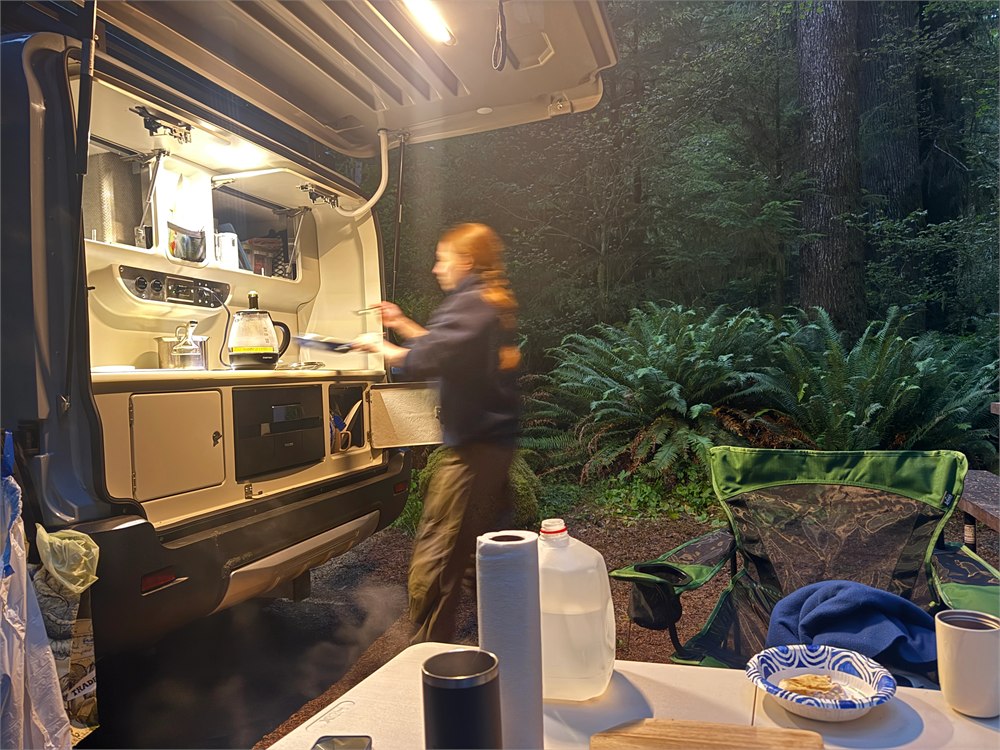
That is the sort of setup that makes a tiny camper feel much larger at camp. You sleep inside the box, cook out of the back, eat under the awning, and slowly become the person who says things like, actually, the fold-down side table is the real MVP of this whole build.
Power is similarly modular. The standard 12V system includes a 200Ah battery according to Motsmann, and available options include battery capacity up to 600Ah, 120V equipment, tow vehicle charging, and a 200W solar charging system. It is not trying to be a luxury apartment on wheels, but it can be configured into a fairly serious little off-grid base camp.
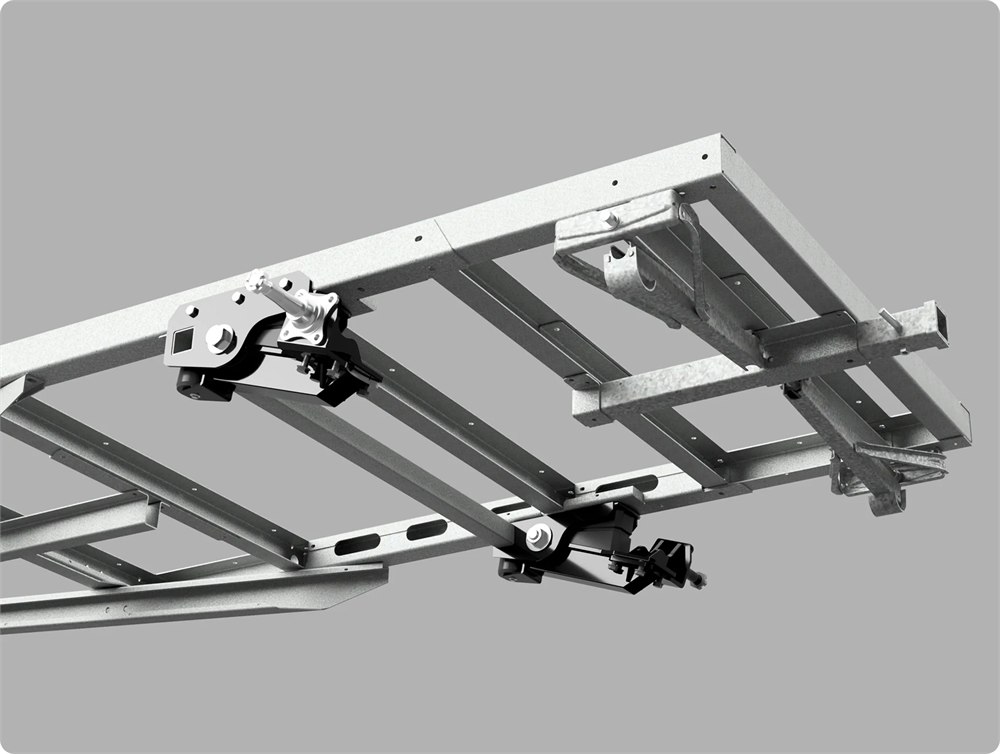
The chassis and suspension details also help explain why the Outranger is more interesting than another smooth trailer capsule with a mattress. Motsmann specifies galvanized steel frame construction, reinforced areas, Timbren 2000HD suspension, electric brakes, 30-inch tires, a standard ball coupler, and an optional Max Coupler articulating hitch. The rear hitch receiver is rated for a 200-pound maximum accessory load, while the roof rack is rated at 150 pounds dynamic and 550 pounds static.
For Campers Who Want Less Rot And More Road
The Outranger seems aimed at people who like the compactness of teardrop camping but want a more squared-off, rugged, hose-it-down personality. It is not a stand-up camper. It is not a full bathroom-on-wheels situation. It is not trying to host Thanksgiving. It is a small, two-person sleeping shell with a serious material story, a useful outdoor kitchen, and enough options to become either simple or surprisingly equipped.
That is also why the wood-free construction angle matters. Tiny campers can be adorable right up until water intrusion turns them into a long-term science fair project. By leaning on fiberglass composites, polymers, aluminum, and galvanized steel, the Outranger is pitching itself as a more durable tiny trailer for people who camp in damp, dusty, rocky, and generally disrespectful places.
Key product details include:
- Product: Motsmann Outranger wood-free off-road micro-camper.
- Construction: molded composites, aluminum, galvanized steel, and durable polymers.
- Size: 162.3 in L x 72.0 in W x 77.8 in H with roof equipment included.
- Weight: approximately 1,450 lb dry in standard configuration, 2,300 lb GVWR.
- Sleeping area: 82-inch mattress with 57-inch shoulder width and 50-inch lower width.
- Systems: 12V standard, 200Ah battery standard, up to 600Ah available, optional 200W solar.
- Availability: Motsmann says preorders open September 1, 2026.
- Price: starts at $25,950 for the base version, with options available individually.
The Motsmann Outranger is listed through Motsmann, with the base version starting at $25,950 and preorders scheduled to open September 1, 2026. Options can add a more complete galley, more power equipment, solar charging, a propane heater, an air conditioner prep or install, an awning, stabilizing jacks, hitch upgrades, and other camp-life luxuries that help turn the little cube into a very deliberate weekend escape plan.
| Pros | Cons |
|---|---|
| Wood-free construction targets rot, swelling, and moisture worries. | Base version is intentionally sparse compared with fully loaded campers. |
| Compact 13.5-foot length keeps it firmly in micro-camper territory. | No stand-up interior, so indoor movement is limited. |
| Off-road hardware includes rugged tires and independent suspension. | Options can raise the final price well beyond the base figure. |
| Rear galley can be configured with real cooking, water, and fridge systems. | No built-in bathroom setup is listed. |
| Standard battery and available solar support off-grid weekends. | Preorder timing means buyers may need to wait for availability. |
| Distinct boxy fiberglass look gives it strong campsite personality. | The compact cabin requires minimalist packing habits. |
Where to find This Wood-Free Off-Road Micro-Camper Is Built To Dodge Rot
OddityMall may earn a commission from qualifying purchases at no extra cost to you.