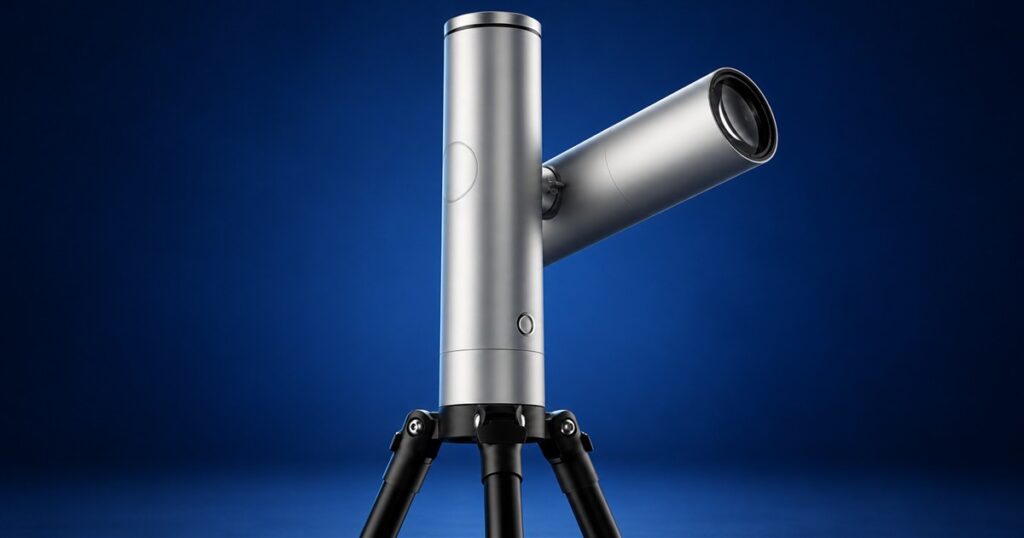
Stargazing sounds wonderfully relaxing until someone asks you to find something smaller than the entire sky. Suddenly you are outside in slippers, pointing at three unrelated dots and confidently identifying an airplane as ancient cosmic history. The Vaonis Atlas modular smart telescope offers a more organized approach: choose a target on a live sky view, let the instrument point itself, and watch an astronomical image develop on your screen.
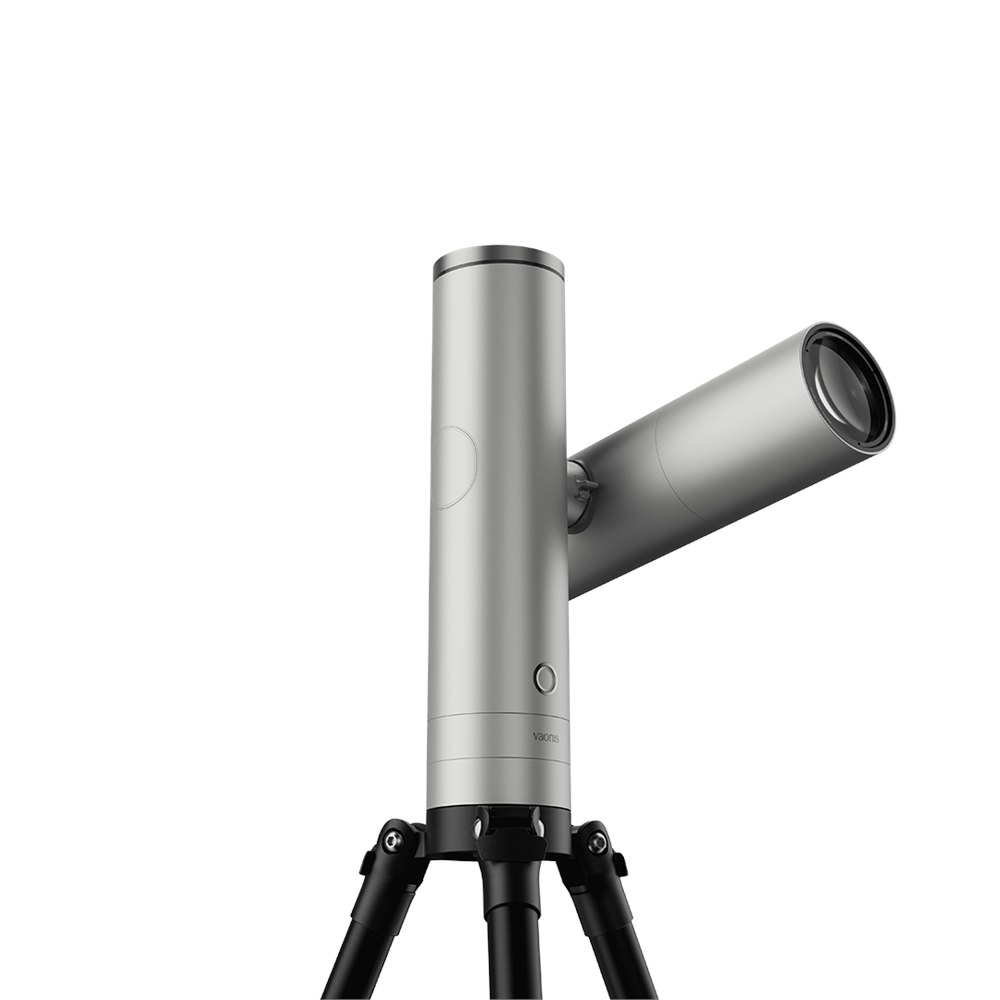
Atlas is a camera-based telescope system built around a shared mount and detachable imaging modules. You can begin with one module or choose a pair that work together. The unusual part is that the mount stays with you when you add the second module. Your new astronomy hobby can expand without requiring the first telescope to become a very expensive coat rack.
This is currently a preorder product, so its specifications and performance promises describe what Vaonis plans to deliver. It is not a hands-on review, and the attractive silver hardware should not be mistaken for something that is already sitting in a warehouse waiting to join your weekend camping trip. That distinction matters, particularly when your enthusiasm has already started shopping for a better lawn chair.
One Telescope, With Room for a Second Set of Optics
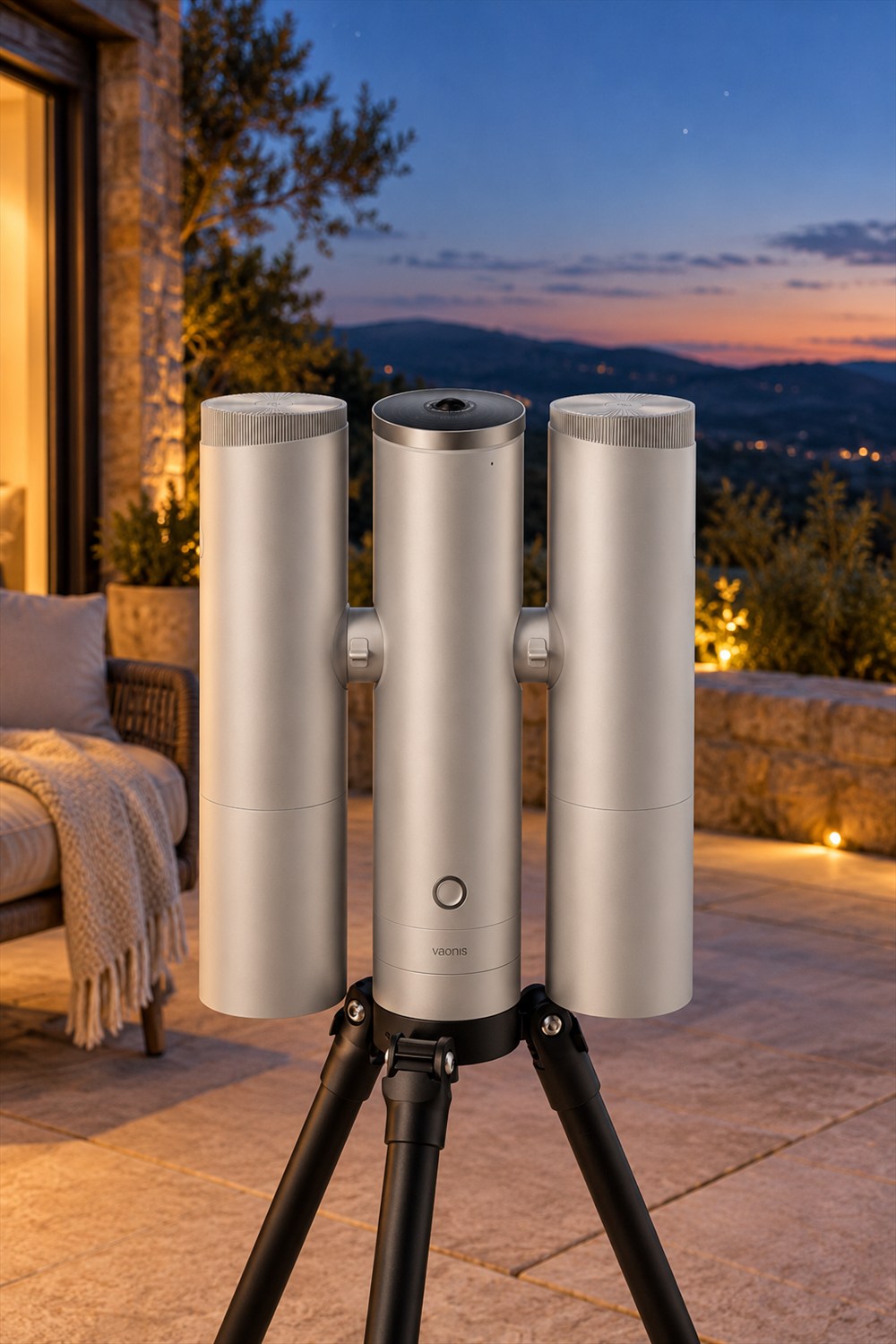
The Single configuration combines the mount with one 80 mm imaging module. That module contains both the optics and its own color sensor. The Twin configuration uses two matching modules aimed at the same object, with software combining their captures into one image. Think two colleagues working on the same assignment, except neither one disappears when it is time to finish the slides.
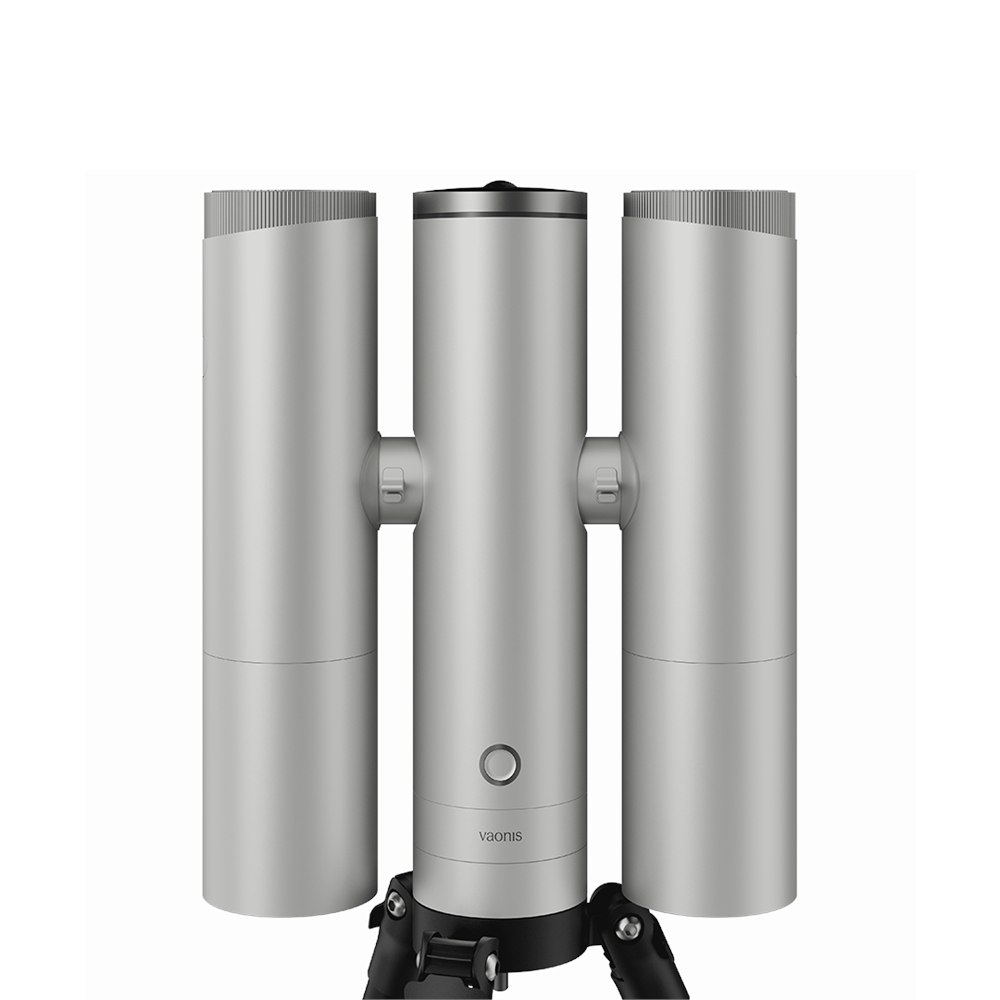
There is an important catch hiding inside that very appealing double-barrel silhouette: Twin does not mean two independent telescopes pursuing separate targets. Both modules observe the same thing. You cannot assign one to a galaxy and send the other off to investigate whatever your neighbor insists is a UFO. The benefit is additional light for one picture, rather than a split-screen tour of unrelated celestial attractions.
Related posts:

Vaonis describes Twin as collecting twice the light and offering an equivalent imaging speed of f/3.2. That does not turn each individual 80 mm module into a physically larger telescope, and it does not double the field of view. The practical attraction is building a cleaner image of the same target during a session. Actual results will still depend on the sky, the target, and how long you spend observing it.
A Camera That Helps You Find the Sky
The mount also carries Sky Guard, a wide-angle camera looking upward. Its live view gives the software a picture of the sky above the telescope, with a sky map overlaid at night. Instead of choosing a mysterious catalog entry and hoping the machine is looking in roughly the right direction, you can tap a target in that view. It is a rather satisfying answer to the traditional astronomy instruction of “look over there.”
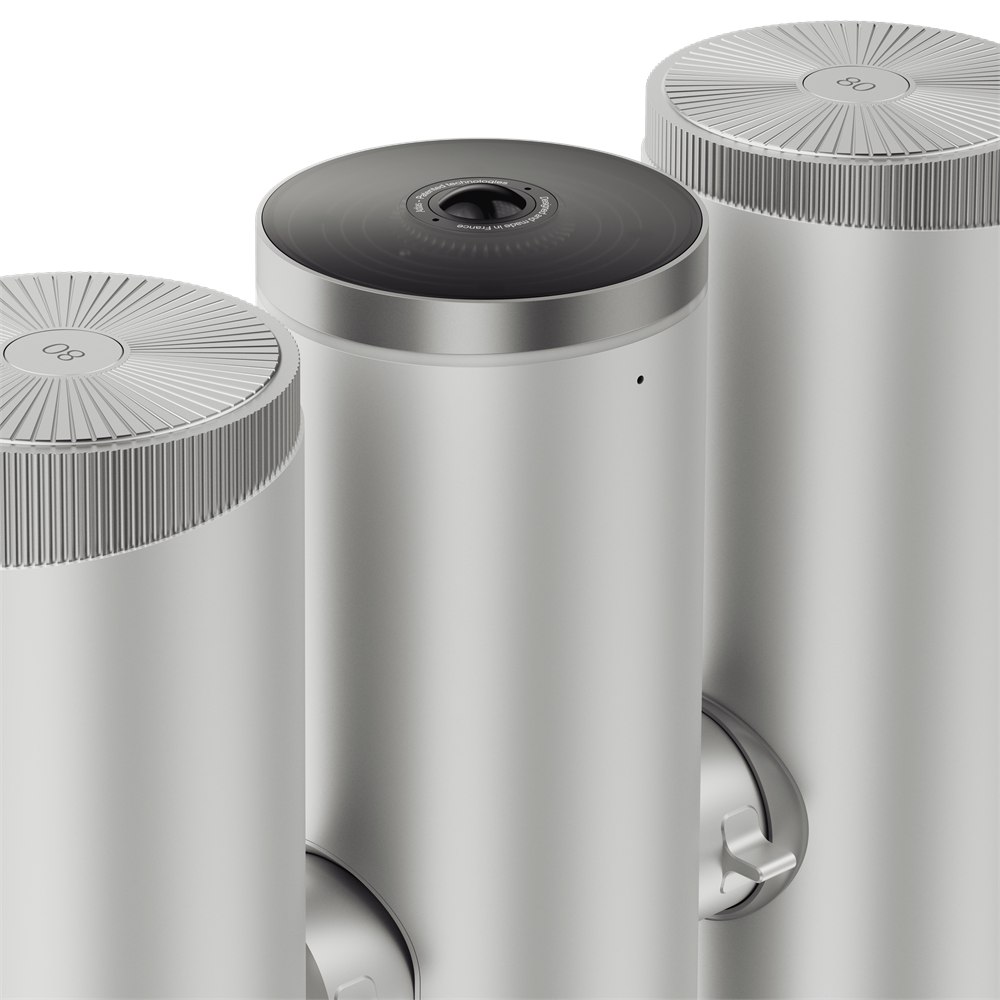
Sky Guard and the main imaging module have different jobs. One shows the wider surroundings; the other concentrates on the selected object. The Gaia app can display both views together. That makes the process easier to follow when you are sharing a session with someone who enjoys space but has not agreed to memorize every patch of it. Nobody needs to pass a constellation exam before being allowed near the tablet.
- Choose Single for one complete imaging setup, with the option to add a second matching module later.
- Choose Twin when your priority is collecting more light from the same target.
- Use the wider Sky Guard view to connect the app’s map with the actual sky overhead.
- Plan targets in advance with the Gaia app’s Plan My Night feature.
- Keep expectations tied to the announced hardware and accessories, rather than assuming every future module is already available.
The detachable connection is called Sky Dock. Vaonis says it couples a module to the mount in under five seconds. The appeal is easy to understand: the modular part of your telescope should not require turning the patio into a repair shop. Still, swapping modules is only one part of getting ready for a session; choosing a suitable observing spot and deciding what to photograph remain part of the evening.
What the Imaging Hardware Actually Includes

Inside each initial 80 mm module is an apochromatic refractor with a 360 mm focal length and a Sony IMX585 color sensor. That is a more useful description than simply calling it a “space camera,” although space camera will probably win at family gatherings. The system is intended for imaging subjects such as nebulae, galaxies, and star clusters, with the picture viewed on a screen rather than through a traditional eyepiece.
| Detail | Announced specification | What to keep in mind |
|---|---|---|
| Single optics | 80 mm aperture, 360 mm focal length, f/4.5 | One self-contained imaging module |
| Color sensor | Sony IMX585, 8.3 MP | Included in each imaging module |
| Twin arrangement | Two matching 80 mm modules | Both work on one target |
| Sky Guard | 12 MP sensor, 185-degree fisheye | A separate wide sky view |
| Included travel equipment | Aluminum tripod and module transport bag | Part of both configurations |
Those details also help explain who this is for. Atlas makes sense for somebody attracted to photographing the night sky who likes the idea of an integrated system. If your favorite part of astronomy is collecting adapters and debating them at great length, you may already have a different evening planned. Here, the distinctive proposition is that optics, camera, mount, and app have been designed to work together.
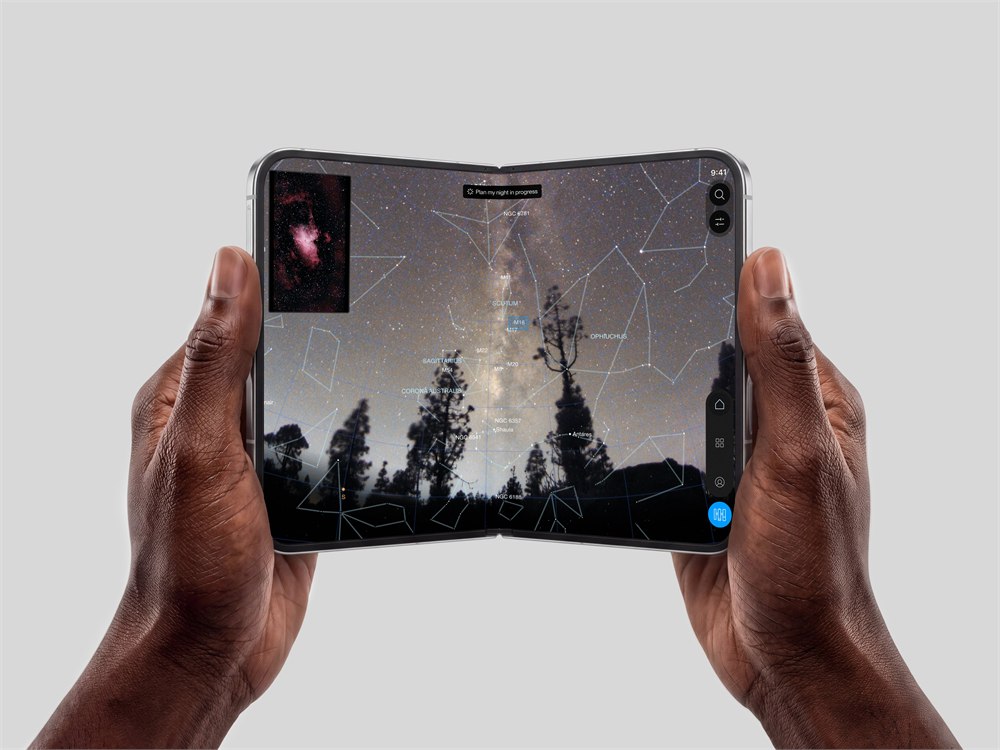
A shared screen changes the social side, too. Instead of everyone taking turns bending toward an eyepiece, a group can follow the image together. It is easy to imagine the first ten minutes being devoted to a galaxy and the next twenty being devoted to explaining why the galaxy cannot be made to hurry. Smart controls can simplify the equipment; it cannot give the universe a customer-service deadline.
Buy the Announced System, Not an Imaginary Future One
Modularity is useful when it gives you a concrete upgrade path, and adding a matching second module is the straightforward example here. It is less useful if you mentally count every planned accessory as something included today. Vaonis lists an equatorial table accessory for the second half of 2027. Anyone who specifically needs that arrangement should account for that separate timetable before ordering.
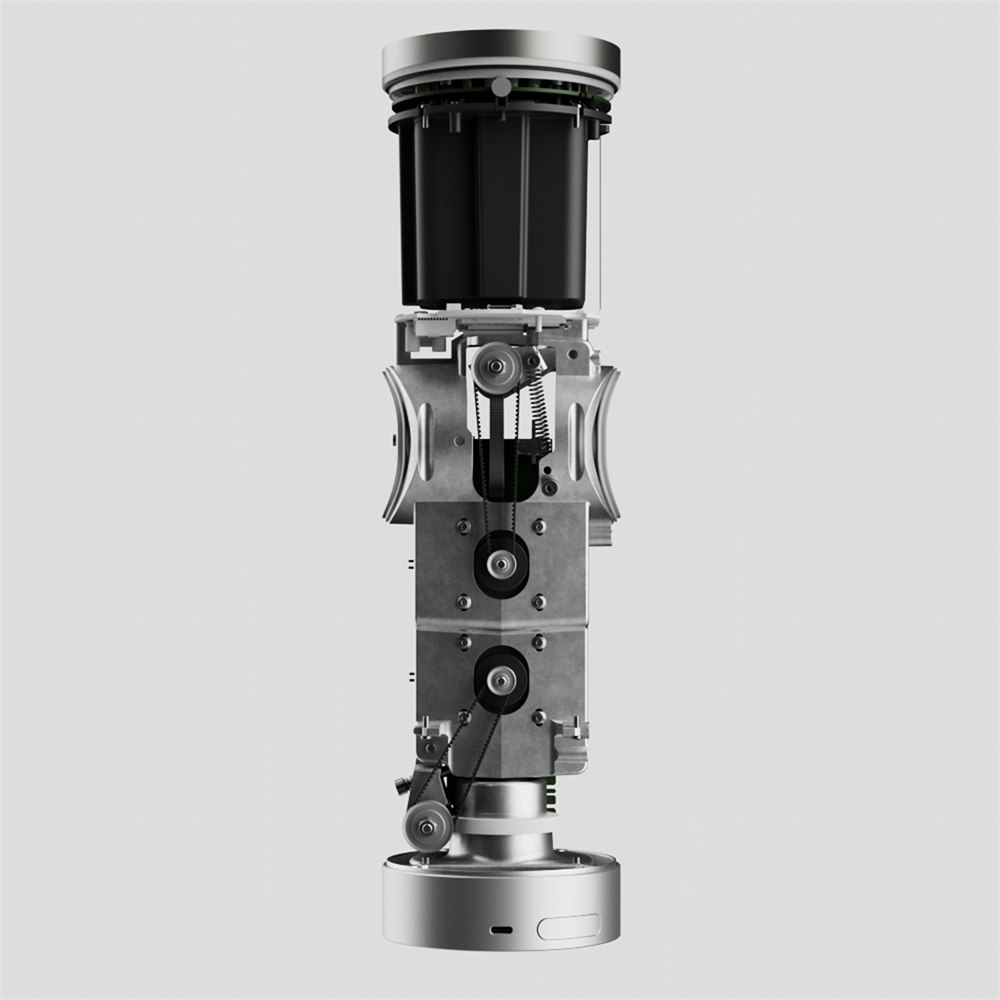
The manufacturer also includes a tripod and a bag for the imaging modules, which are welcome details for an instrument you may want to take away from home. A transport bag does not magically turn astronomy into a pocket hobby, though. You still need to make room in the car, choose your spot, and remember the things that make standing outside enjoyable. The telescope may know where the stars are; it will not remember your jacket.
Official product images: Vaonis. The cutaway above illustrates the internal construction; it is not an exposed assembly you receive for everyday use.
Key Details Before You Reserve One
- Product: Vaonis Atlas modular smart telescope.
- Configurations: Single with one 80 mm module, or Twin with two matching modules.
- Core idea: app-controlled imaging with a live wide-angle sky view.
- Upgrade path: add a second module while retaining the same mount.
- Included equipment: aluminum tripod and protective bag for the modules.
- Status: preorder, with shipping scheduled for March 2027.
- Published warranty: ten years for the mount and five years for each imaging module.
Vaonis currently lists early-adopter pricing of €3,990 for Single and €5,490 for Twin, with that offer stated to run through November 15, 2026. The corresponding displayed regular prices are €4,990 and €6,990. Preorders are paid at checkout, and the company says cancellation for a full refund is available up to 30 days after delivery. Confirm the terms and currency for your location with Vaonis before buying. For the right astronomy enthusiast, Atlas is a fascinating way to put more of the evening into looking at space—and less of it into arguing with a tripod in the dark.
| Pros | Cons |
|---|---|
| Same mount supports Single and Twin setups. | Adding a second module is an additional purchase. |
| Wide sky camera helps connect the app to the sky. | The experience centers on a screen and app. |
| Twin combines light from two imaging modules. | It cannot observe two separate targets at once. |
| Tripod and module bag are included. | It still requires transport and setup space. |
| Long published mount and module warranties. | Preorder delivery is scheduled for March 2027. |
| Expandable design offers a defined second-module upgrade. | Some accessories have later availability dates. |
Save this find.
Thank yourself later.
Your next great gift idea. Your someday space. Your collection of wonderfully weird things.
Pick a board. Keep the inspiration.
This Modular Smart Telescope Can Use Two Imaging Modules on One Target
Where to find This Modular Smart Telescope Can Use Two Imaging Modules on One Target
OddityMall may earn a commission from qualifying purchases at no extra cost to you.