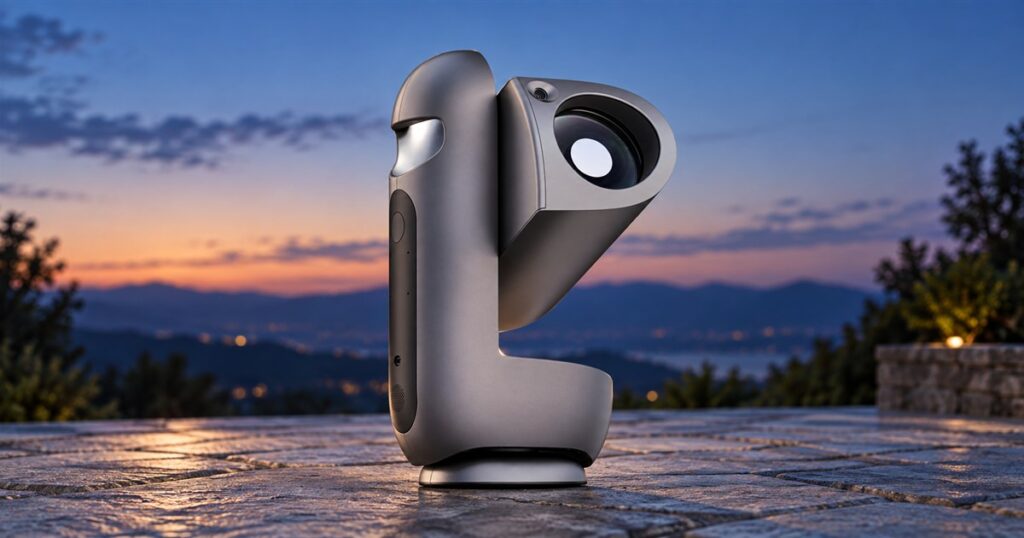
Space is a spectacular hobby until it starts assigning homework. You wanted a picture of a nebula. Suddenly you are outside in slippers, negotiating with a tripod and wondering whether the bright object overhead is a planet or an airplane with excellent timing. The DWARFLAB Draco smart telescope tries to keep the celestial spectacle while taking several of those setup chores off your hands.
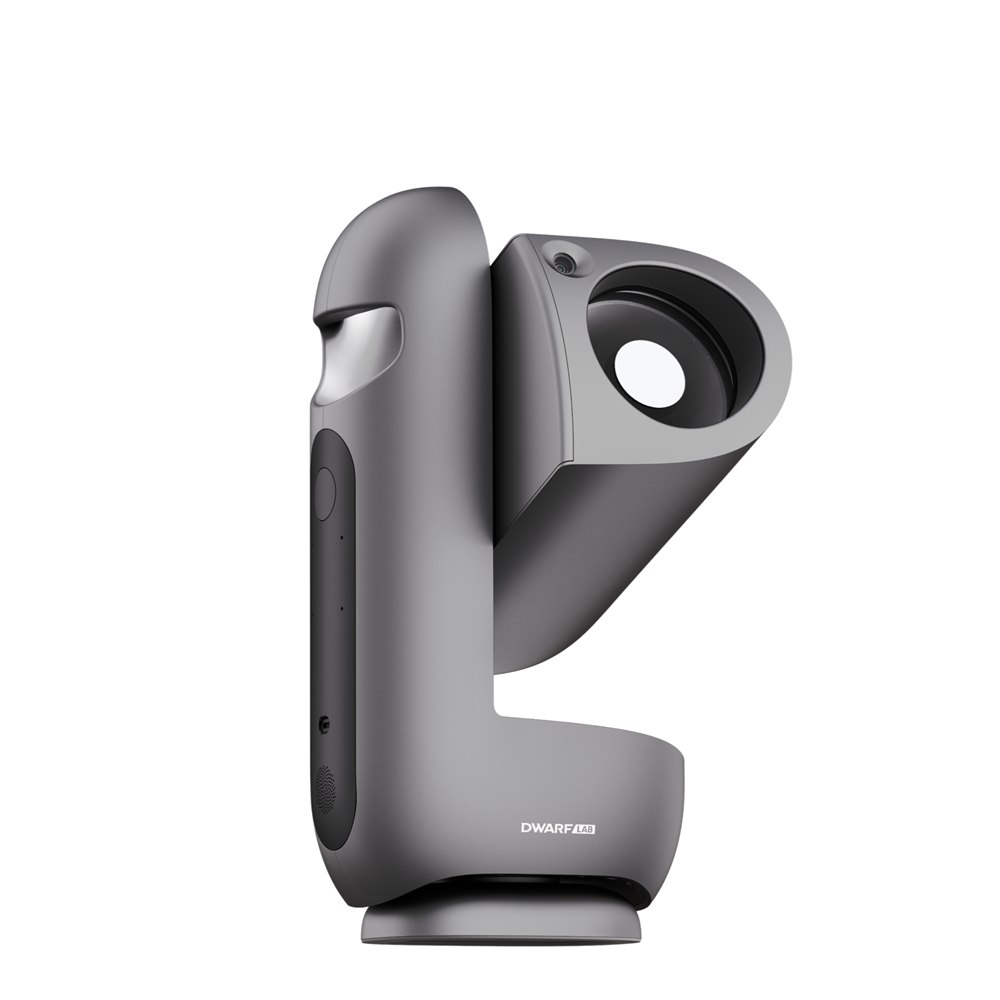
Draco is a camera-based telescope with a 90mm aperture, two imaging cameras, and app-controlled operation. Choose a target and its automated workflow handles focusing, calibration, finding the object, tracking it, and stacking the images. Your phone becomes the place where the night’s work comes together. The telescope does the patient staring.
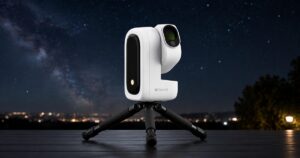
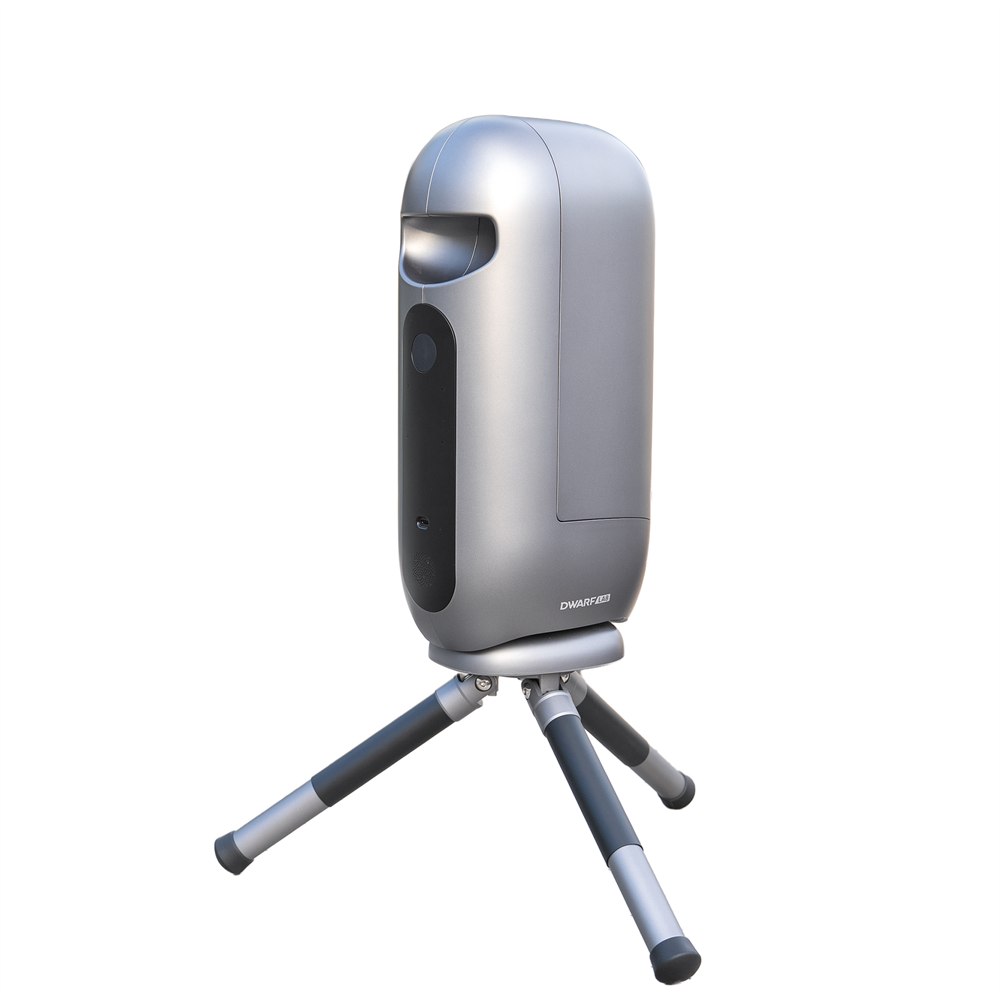
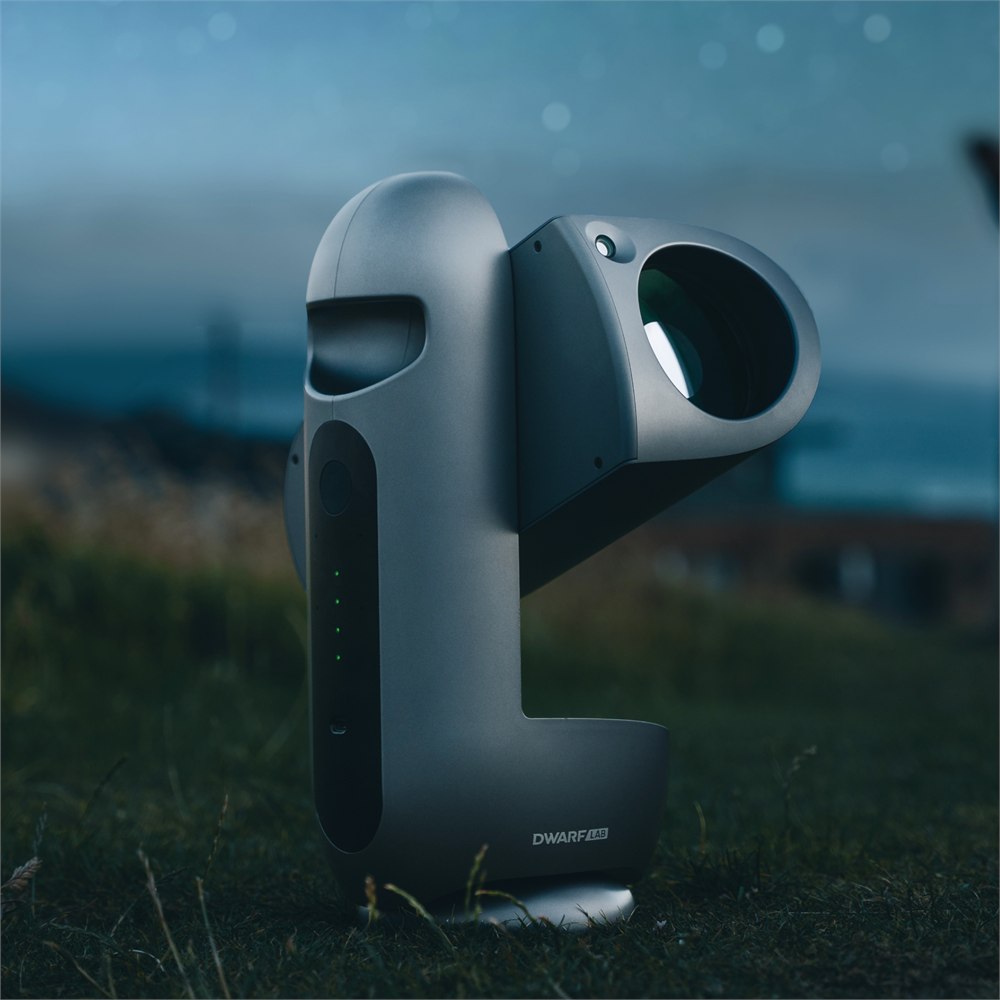
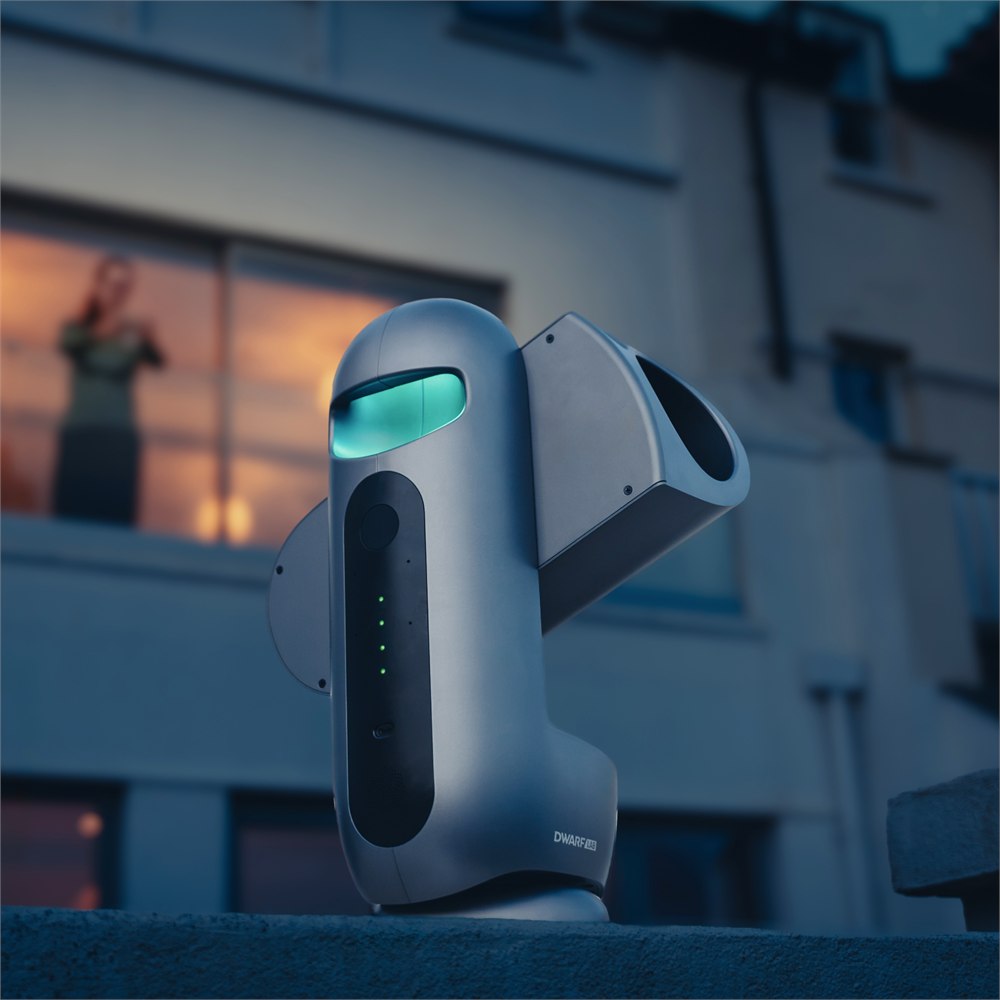
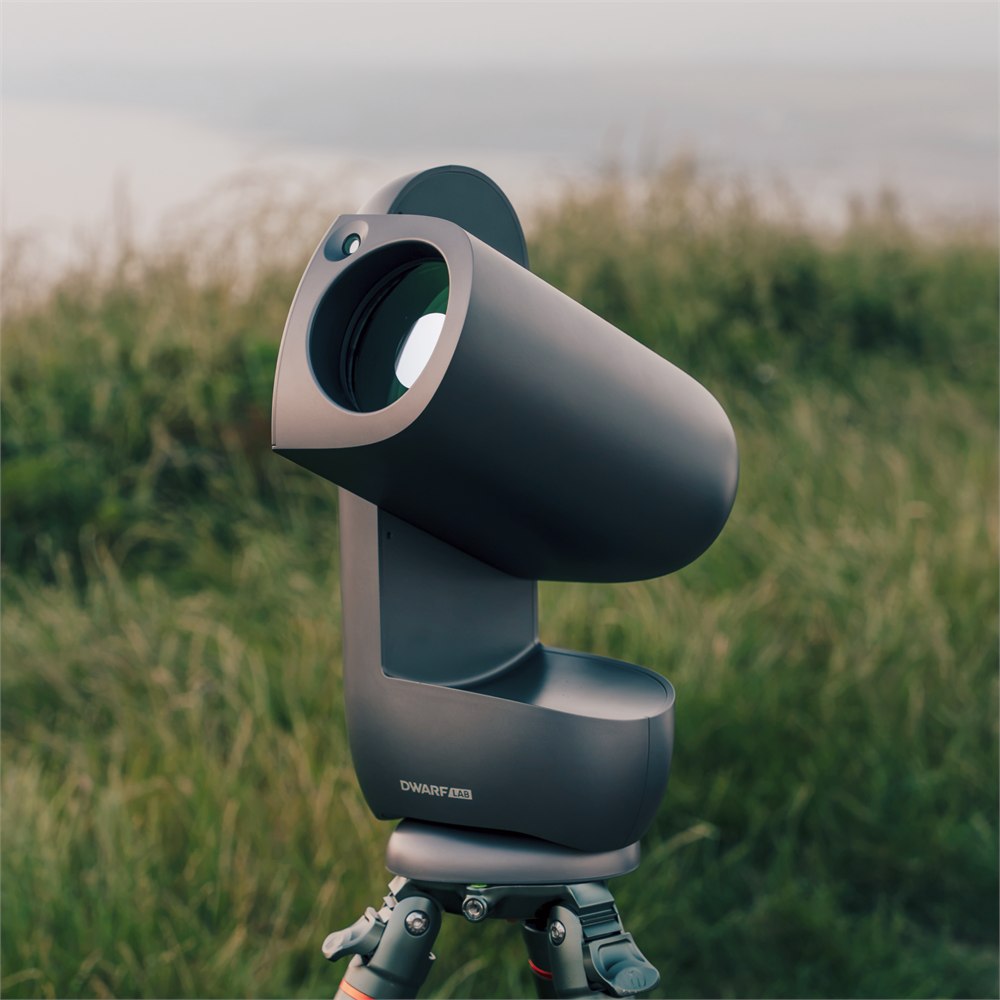
It also looks delightfully unlike the long tube on a spindly stand that usually appears when someone says telescope. The rounded body folds its optics into a compact, sculptural shape. Sitting on a table, it could pass for a very serious little robot waiting for permission to investigate Saturn.
Two cameras for two different kinds of sky
The telephoto camera is where Draco concentrates on distant targets. Its 1/1.3-inch sensor offers 50MP native resolution, while a separate wide-angle camera takes in a much broader scene. Having both means a close view of a celestial object does not have to be the entire record of your evening.
Think of it as the difference between photographing the lead singer and photographing the whole concert. The close view answers what you were looking at. The wide view remembers the setting. Only this concert starts after dark, lasts as long as the clouds allow, and has an unusually strict policy against flash photography.
DWARFLAB describes the wide-angle camera as using a 1/1.55-inch sensor and a 23.3mm equivalent focal length. It is intended for scenes such as the Milky Way, star trails, and landscapes. The telephoto side supplies the narrower view for targets that would otherwise be tiny bright dots in an ambitious photograph of mostly darkness.
Long exposures without a long setup ritual
Draco supports individual exposures up to 300 seconds. That is five minutes of collecting light for one frame, rather than treating a faint object as something that should politely become brighter because you tapped the shutter. DWARFLAB says built-in guiding keeps those longer exposures steady.
The app’s GoTo workflow is designed to handle the steps between choosing an object and imaging it. Autofocus and tracking are part of that process, along with live stacking. Stacking combines multiple captures so faint structures can become easier to see as the session progresses. Astronomy remains a waiting game, but at least the waiting has a purpose.
- Use the telephoto camera for a closer look at selected celestial targets.
- Use the wide-angle camera for broader sky scenes and surrounding landscapes.
- Let Auto Mode choose settings, or use Pro Mode to adjust exposure, gain, and filters.
- Use live stacking to build an image over successive captures.
- Export the results for sharing or further processing after the session.
A telescope does not put the weather on your payroll. Clouds, obstructions, and the quality of the observing location still matter. A telescope can help find a target; it cannot relocate the neighbor’s roof. Choosing a useful patch of open sky remains a job for the person carrying it.
The practical numbers behind the little observatory
The 90mm aperture is a major part of Draco’s appeal, but it comes with a body weighing approximately 5.5kg. That is about 12.1 pounds before the rest of your evening’s equipment joins the party. Portable is a fair description. Something you will forget is in your bag is a much more optimistic one.
| Detail | What DWARFLAB lists |
|---|---|
| Telephoto aperture | 90mm |
| Main imaging sensor | 1/1.3-inch, 50MP native resolution |
| Wide-angle sensor | 1/1.55-inch |
| Exposure control | 1/10,000 second to 300 seconds |
| Telescope weight | Approximately 5.5kg |
| Advertised battery life | Up to five hours |
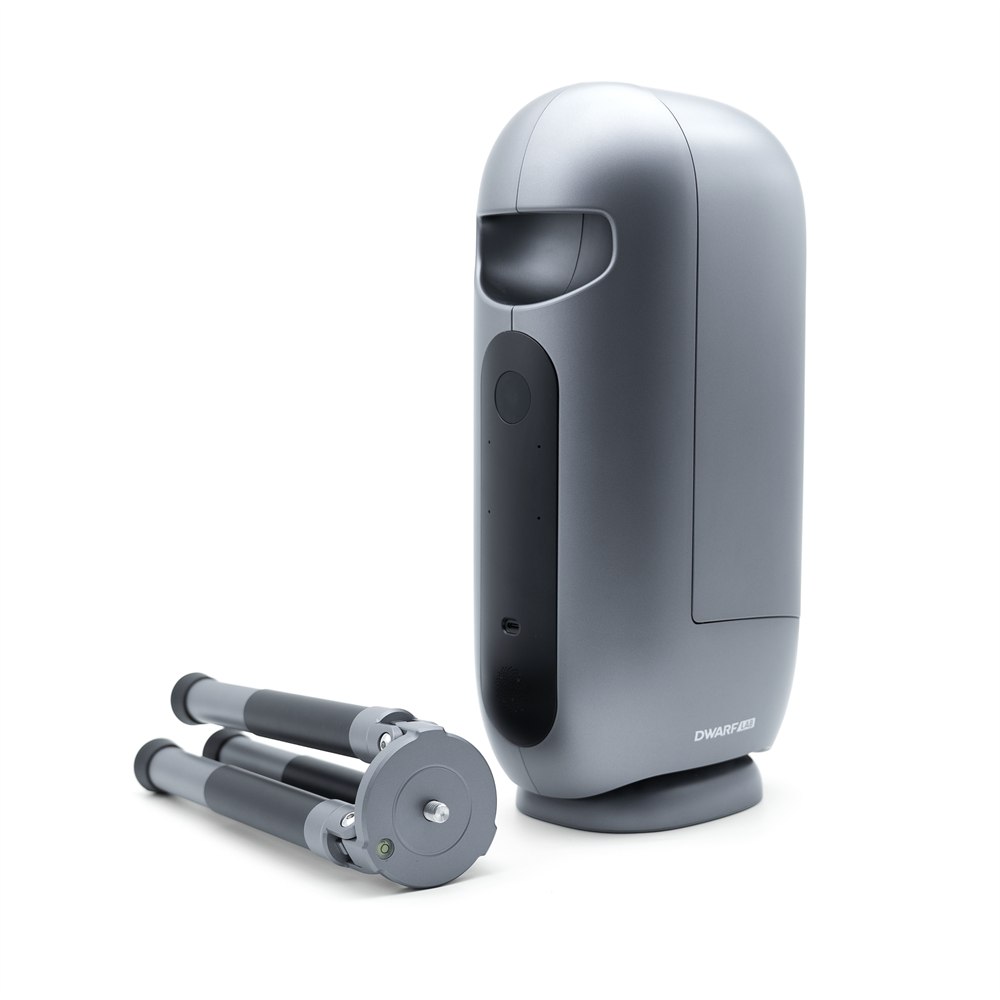
A compact aluminum-alloy tripod is included. DWARFLAB lists it at roughly 480g, with fixed-length legs and a deployed height of 175mm. This is a low support, so plan the location accordingly rather than imagining an eye-level viewing station. Draco is doing camera work, and the viewing happens through its app.
The included carrying case is welcome for a machine intended to travel beyond the backyard. Even a short trip feels longer when one hand is occupied by expensive optics and the other is trying to keep a door from closing. A case is not the glamorous part of astrophotography. It is the part you appreciate before astrophotography starts.
Different imaging modes, different priorities
For deep-sky imaging, Draco uses 2-by-2 pixel binning, combining groups of four sensor pixels into an effective larger pixel. The resulting images are approximately 12MP. That trades some resolution for improved collection of faint signals, which makes sense when the subject has traveled an absurd distance to arrive looking dim.
For the Moon and planets, the system can use its native pixel readout and crop around the target. It is a useful distinction: faint structures and small bright details do not ask the camera to do exactly the same job. A headline megapixel figure only tells part of the story.
There are also two editions with different filter arrangements. Both include an astronomy filter and an H-alpha plus O III dual-narrowband filter. The SHO edition adds a built-in S II plus O III filter for capturing additional emission data and producing Hubble Palette color combinations through the app.
The Standard edition instead includes a built-in ND filter for solar imaging. The SHO version includes an external ND filter for that purpose. Those are meaningful equipment differences, especially for someone who wants a particular imaging workflow. Follow DWARFLAB’s instructions for the correct filter and setup whenever imaging the Sun.
Your phone gets the editing desk
After capture, the app’s Stellar Studio offers tools including noise reduction, star reduction, star removal, and other image adjustments. The appeal is having a path from target selection to a finished picture without immediately needing to learn an entire desktop processing workflow.
There is still room to grow beyond the automatic settings. Draco supports exports in JPG, PNG, FITS, and TIFF, so a convenient first session does not have to lock you into one editing approach forever. You can start with an image to send a friend and later become the person with extremely specific opinions about image processing. Every hobby has a gateway.
This makes Draco especially interesting for someone who wants to make astronomy photographs and enjoys the idea of guided operation. It is a less obvious fit for someone who simply wants to look through an eyepiece for a few minutes. The experience here is built around cameras, an app, and watching an image develop.
Before you give it a spot on the patio
- DWARFLAB Draco is a dual-camera smart telescope with a 90mm telephoto aperture.
- Its app automates focusing, target acquisition, tracking, calibration, and stacking.
- Single-frame exposures extend to 300 seconds, with manual controls available in Pro Mode.
- The body weighs approximately 5.5kg, and advertised battery life reaches five hours.
- Standard and SHO editions have different filter configurations.
- The listed SHO package includes an external ND filter, carrying case, tripod, USB-C cable, and wipe cloth.
At the time of writing, DWARFLAB lists the Standard edition at $1,399 and marks it sold out. The SHO edition is listed at $1,599 for preorder, with estimated shipment within three months of the order date. Those are the current displayed US prices, and the delivery timing is an estimate rather than a promise to have it ready for your next clear night.
Product details and article images: DWARFLAB. Draco offers a tempting arrangement: you bring the curiosity and a decent observing spot, and the telescope takes on much of the technical routine. Packing a warmer jacket is still your department.
| Pros | Cons |
|---|---|
| 90mm aperture and two cameras support different views of the sky. | Approximately 5.5kg is a substantial carry. |
| Automated setup and tracking reduce hands-on steps. | The experience depends on app-based operation. |
| Long exposures and live stacking support faint-target imaging. | Clouds, obstructions, and observing conditions still limit results. |
| Two filter configurations offer different imaging options. | Choosing an edition requires attention to those differences. |
| Included case and compact tripod help with transport and setup. | The supplied tripod is low rather than full height. |
| Manual controls and multiple export formats leave room to progress. | SHO is a preorder; Standard is currently marked sold out. |
Where to find This Dual-Camera Smart Telescope Tracks the Sky and Builds Photos in Its App
OddityMall may earn a commission from qualifying purchases at no extra cost to you.