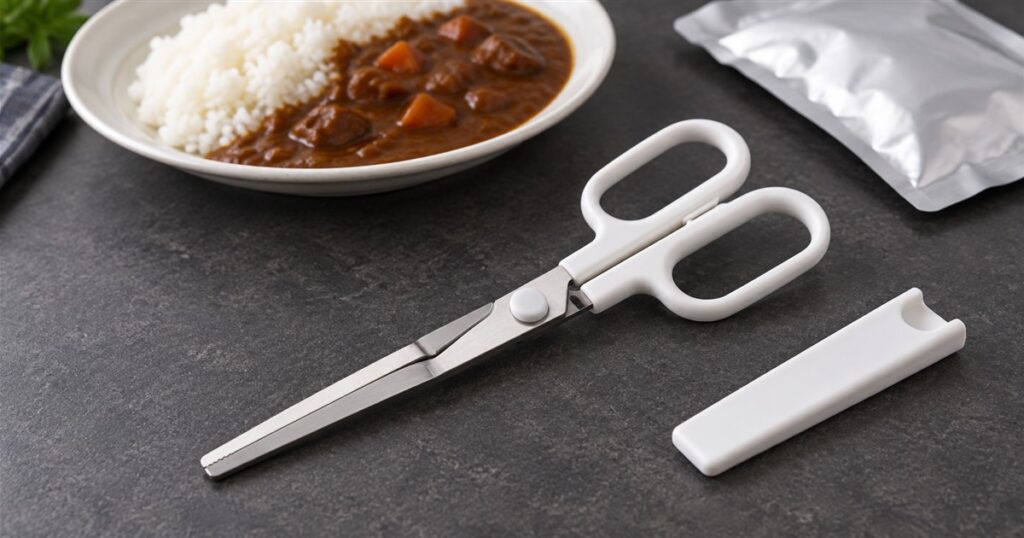
A packet of curry can turn a perfectly reasonable adult into someone wrestling a tiny, scalding sleeping bag over a plate of rice. First comes the fishing expedition, then the awkward opening, then the squeeze that sends dinner somewhere dinner was never meant to go. Yaxell’s food pouch scissors give that entire routine a dedicated tool. Apparently, the sauce has had management problems.
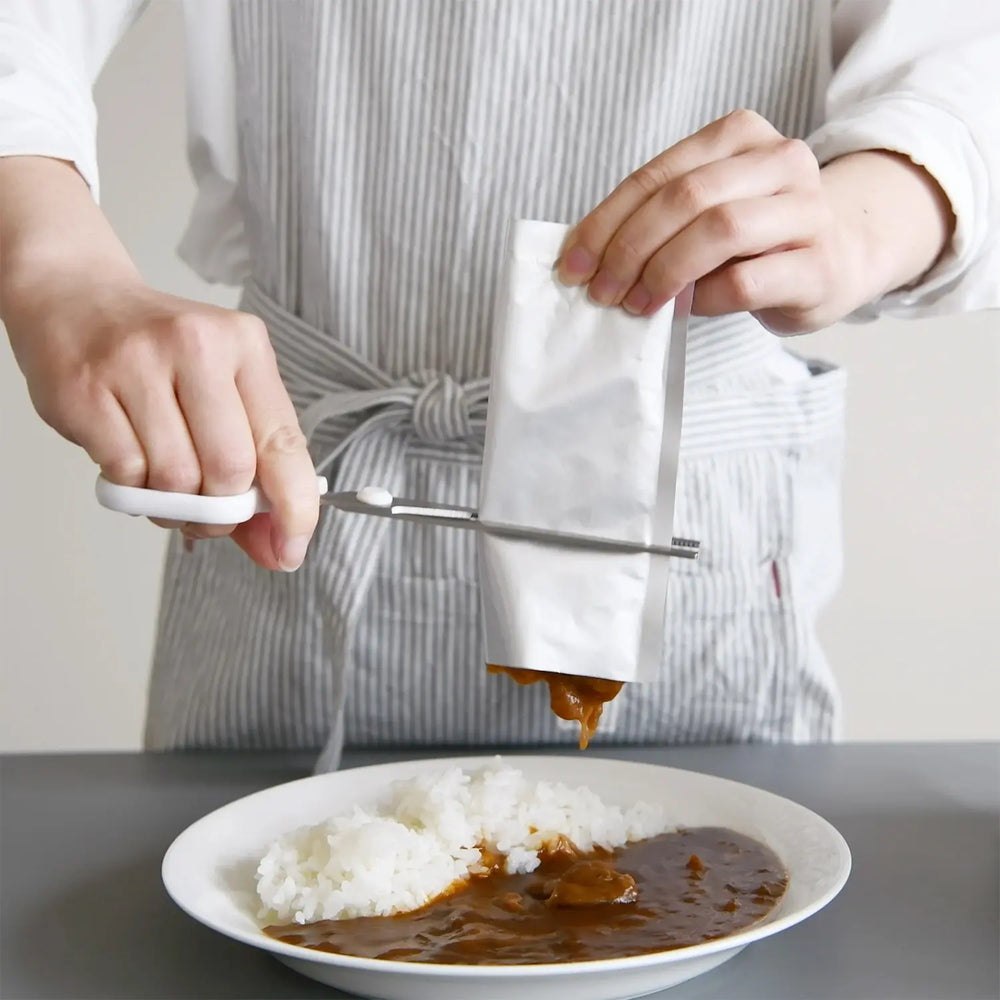
These white-handled kitchen scissors have three jobs: grip the pouch, cut it open, and help press its contents out. The clever part is how those jobs fit along one pair of blades. You do not unfold a miniature toolbox or swap attachments while your rice goes cold. You change which part of the scissors meets the packet.
That is an unusually satisfying assignment for something destined to live in the kitchen drawer. Most objects in that drawer are either indispensable or mysterious. There is always one attachment nobody recognizes, possibly from an appliance that left the household during the previous administration. At least these scissors can explain themselves before lunch.
Three jobs along one pair of blades
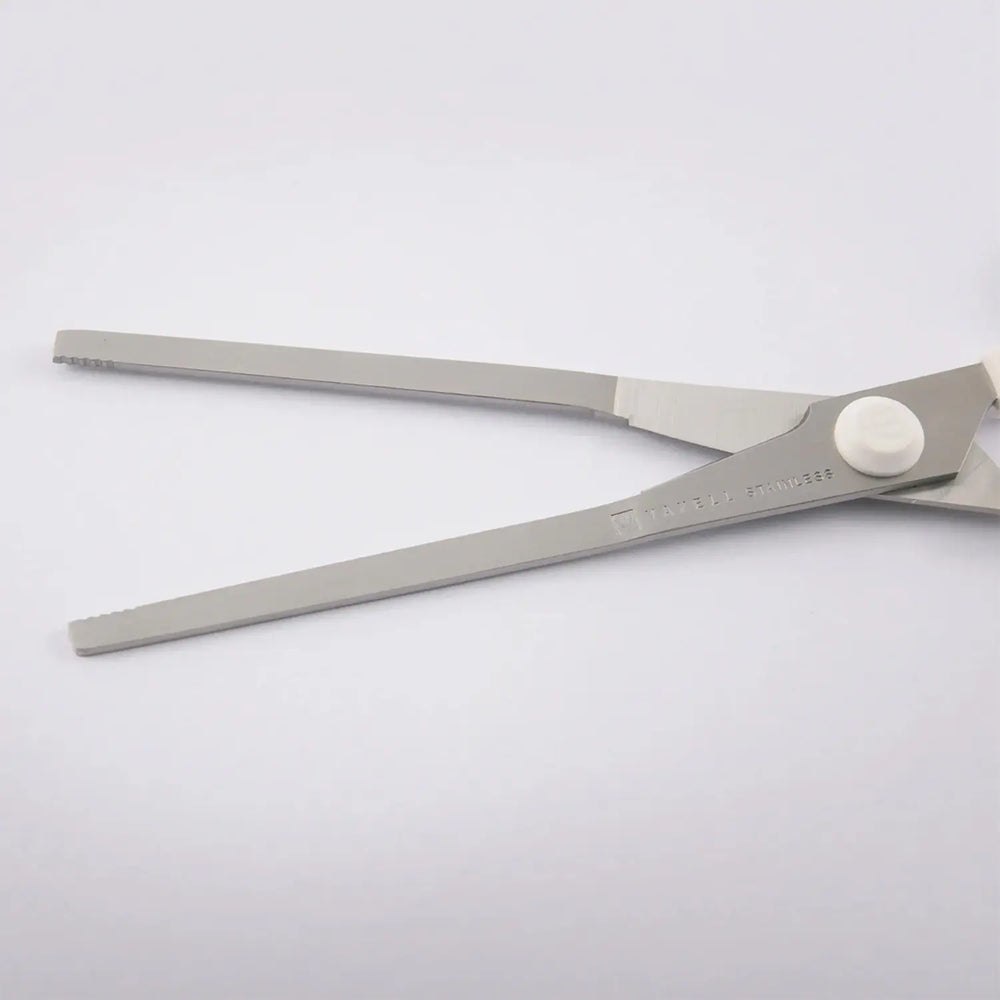
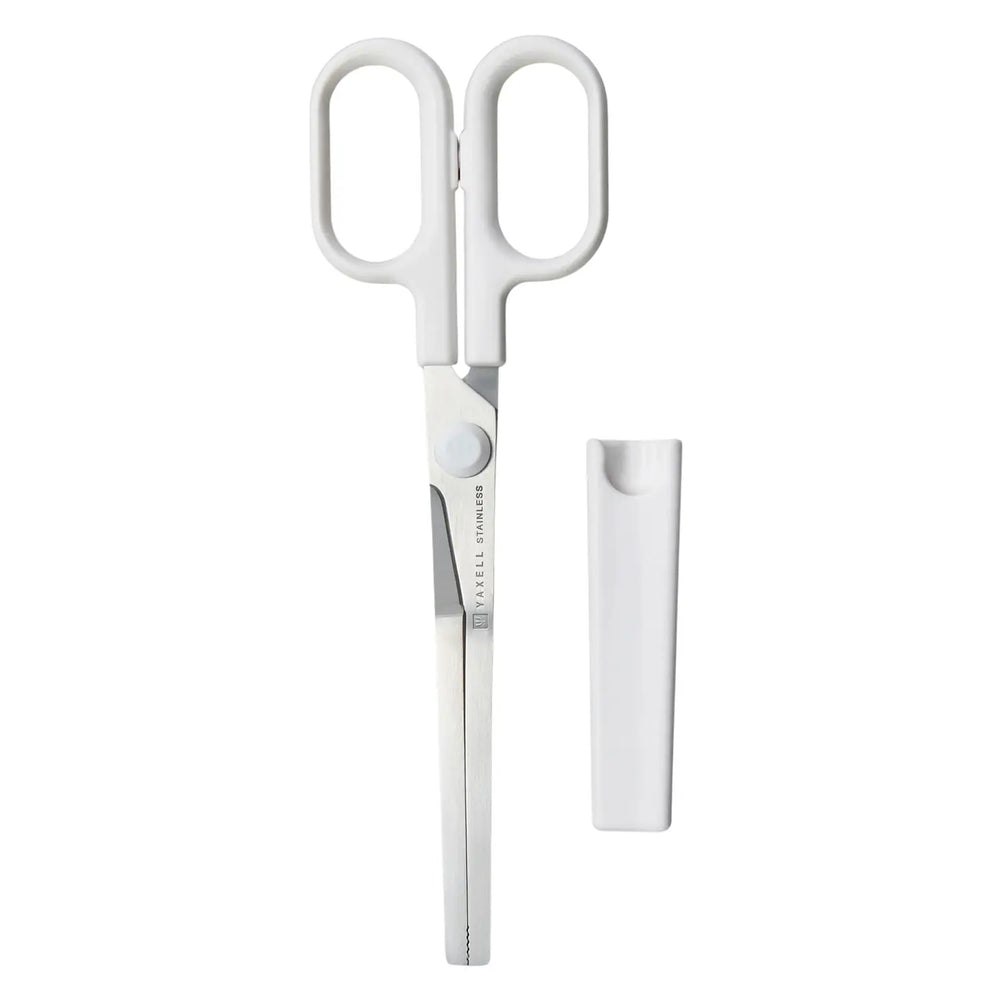
The serrated tips handle gripping. Farther back, the cutting section opens the package. The middle section presses along the pouch, helping move the food toward the opening. Global Kitchen Japan shows the tool both lifting a packet above a saucepan and squeezing curry onto rice, which makes the intended sequence easy to understand.
Anyone who eats pouch meals will recognize the appeal. The food is already made, yet serving it somehow involves several small negotiations. You have to get hold of the packet, find the opening, control the pour, and decide how much effort the remaining sauce deserves. Dinner was supposed to be the easy part of the evening.
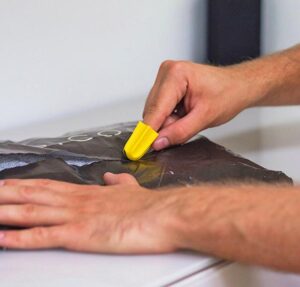

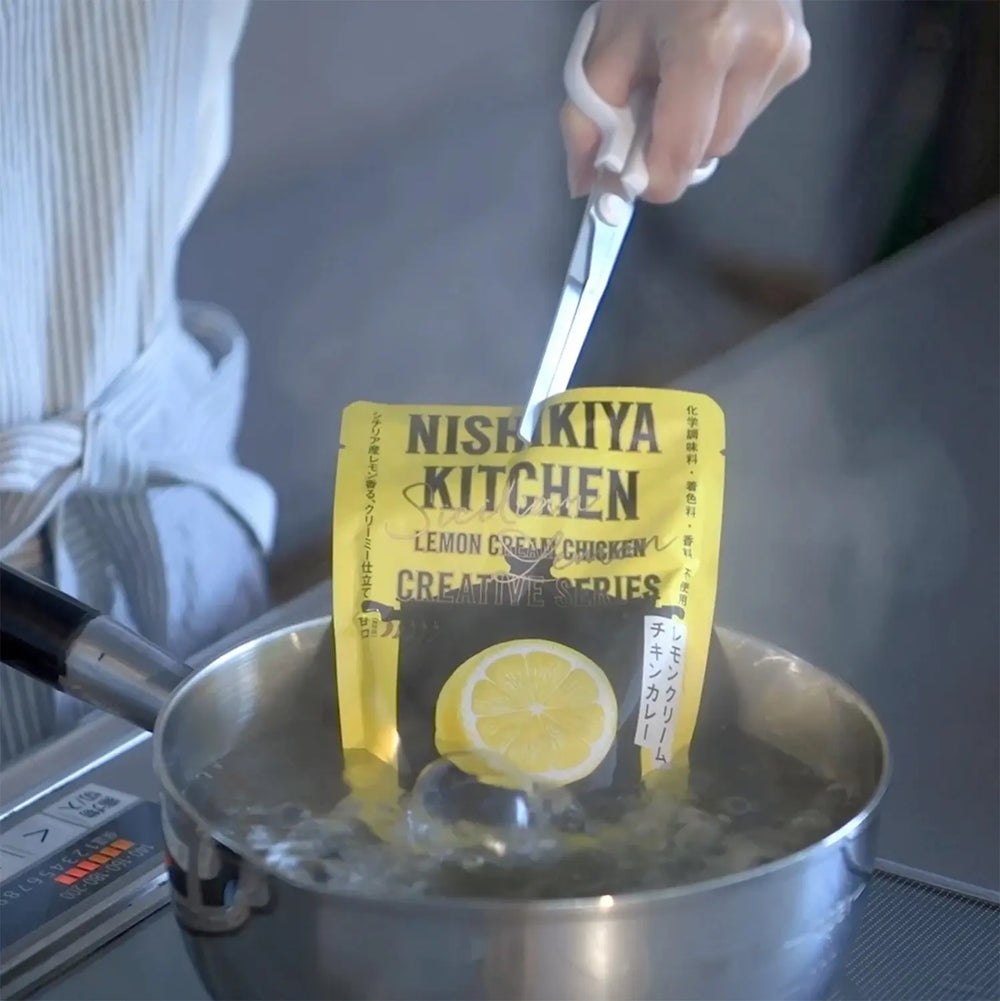
The important distinction is that this is a pouch-handling tool. It does not cook the contents or change the heating instructions printed on the package. A hot packet still needs sensible handling. Treat the gripping feature as another kitchen implement, with the same attention you would give tongs around a steaming saucepan.
The pressing action is probably the most relatable feature. Everybody has held a nearly empty packet up to the light and wondered whether the final spoonful justified another round of finger gymnastics. Sometimes it is curry. Sometimes it is pasta sauce. Sometimes it is mostly the principle of the thing. You paid for the sauce, including its stubborn little retirement fund in the corners.
A small tool with a very specific territory
These scissors make the most sense where packaged meals are already part of the routine. Think quick lunches, cupboards stocked with shelf-stable dinners, or a camping food box that sees plenty of pouches. If you rarely open one, the problem may sound oddly specific. If you open them constantly, you may already be looking at your ordinary scissors with mild disappointment.
- For the quick-lunch cook: keep the packet-opening routine near the place where you actually prepare lunch.
- For the camping organizer: consider whether one dedicated pouch tool belongs with the food kit.
- For the sauce enthusiast: the pressing section is the feature to inspect closely.
- For a practical gift: pair the idea with the recipient’s actual cooking habits, rather than guessing that everybody needs another utensil.
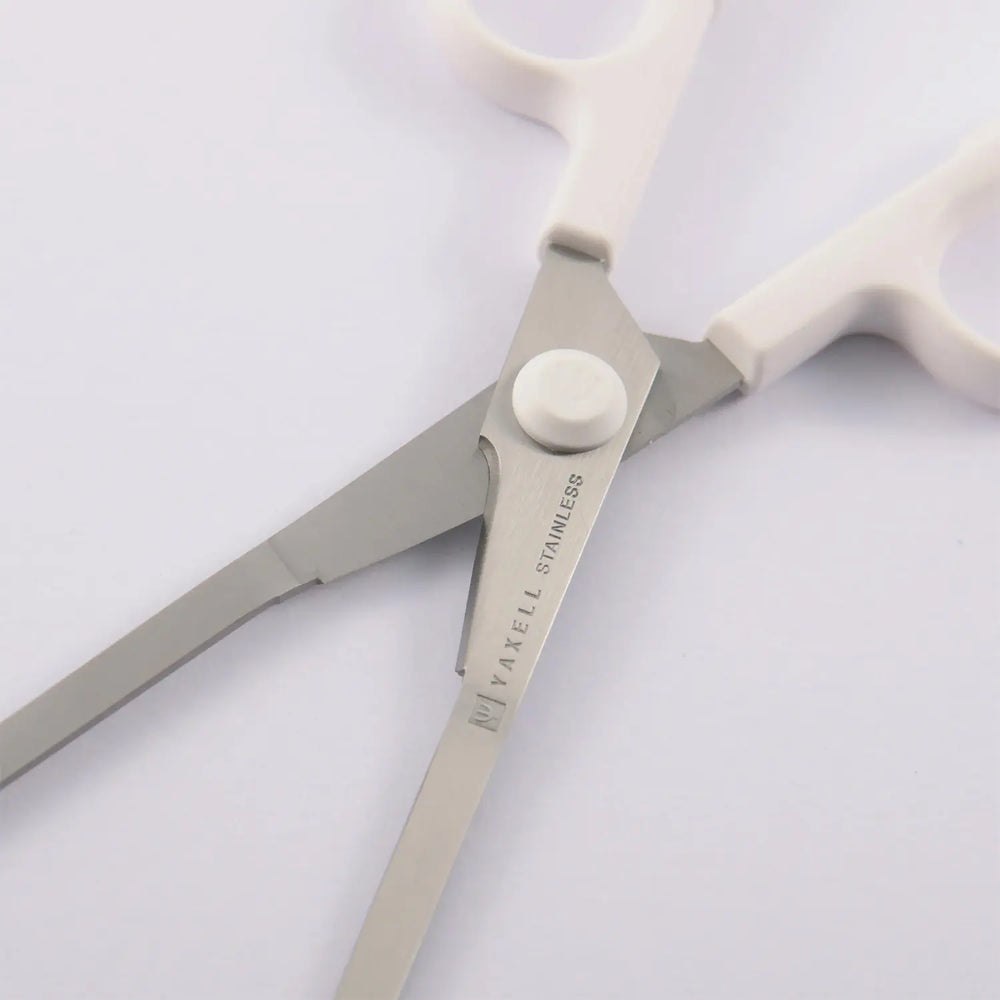
The shape looks restrained enough to blend into an ordinary kitchen. There are white oval handles, a white pivot cap, and slim metal blades. The product photo also shows a matching protective cover. It is a pleasantly quiet appearance for an object whose entire career involves persuading reluctant curry to leave a bag.
That understated design is part of the charm. You could leave these beside a chopping board without making the counter look like a late-night infomercial demonstration. Someone might assume they are regular scissors until you explain the squeezing section. This is the rare kitchen conversation that can become more interesting without anybody mentioning a sourdough starter.
The useful measurements
| Detail | Seller’s specification |
|---|---|
| Overall length | Approximately 190 mm, or 7.5 inches |
| Item weight | Approximately 80 g, or 2.8 ounces |
| Blade material | Stainless cutlery steel |
| Handle and cover | ABS resin |
| Country of origin | China |
The distinction between the brand and manufacturing origin matters here. These are Yaxell scissors sold by a Japanese kitchenware retailer; the seller identifies this particular item’s country of origin as China. Calling every product from a Japanese brand Japanese-made would be a neat shortcut, but it would also be the wrong one.
There is also a reasonable limit to the enthusiasm. A specialized utensil earns its space through use. A household that cooks everything from fresh ingredients might reach for these far less often than someone who regularly serves pouch meals. Neither kitchen is doing dinner incorrectly. They simply have different levels of ongoing diplomatic tension with packaging.
And a feature designed to press out a pouch is not a promise that every packet shape or food texture will behave identically. Thick contents, awkward corners, and different packaging all make their own demands. The appeal is having a tool built around the task, rather than expecting a flawless final drop from every possible dinner.
What to know before making drawer space
Global Kitchen Japan advises washing the scissors after use and drying them completely before storage. That is a straightforward routine, especially for a tool likely to meet sauces. Give them a proper cleaning before they disappear among the spatulas. Nobody wants tomorrow’s lunch to begin with archaeological evidence of tonight’s curry.
As a gift, this belongs in the useful little surprise category. It would make sense for the person who brings pouch lunches to work, packs organized camping meals, or enjoys a kitchen tool with an immediately understandable purpose. It is probably less compelling for someone whose utensil drawer is already one purchase away from requiring planning permission.
Product images: Global Kitchen Japan.
- Yaxell kitchen scissors designed around handling food pouches.
- Separate gripping, cutting, and pressing areas along the blades.
- White handles and a matching protective cover.
- A compact option to consider for regular pouch-meal routines.
- Wash after use and dry fully before putting away.
At the time of writing, Global Kitchen Japan lists the scissors for ¥990 and offers an active add-to-cart option. Shipping is calculated separately at checkout, so check the delivered total before building your entire shopping strategy around one small utensil. The packet may finally surrender its sauce; international postage still gets a vote.
| Pros | Cons |
|---|---|
| Combines three pouch-handling tasks | Most useful when you eat pouch meals regularly |
| Pressing section gives the tool a distinct purpose | Results depend on the packet and its contents |
| Compact size and protective cover | Still needs washing and thorough drying |
| Simple manual operation | Does not remove the need for care around hot food |
| Low listed item price | Shipping adds to the delivered cost |
Where to find These Food Pouch Scissors Grip Hot Packets, Cut Them Open, and Squeeze Out the Sauce
OddityMall may earn a commission from qualifying purchases at no extra cost to you.