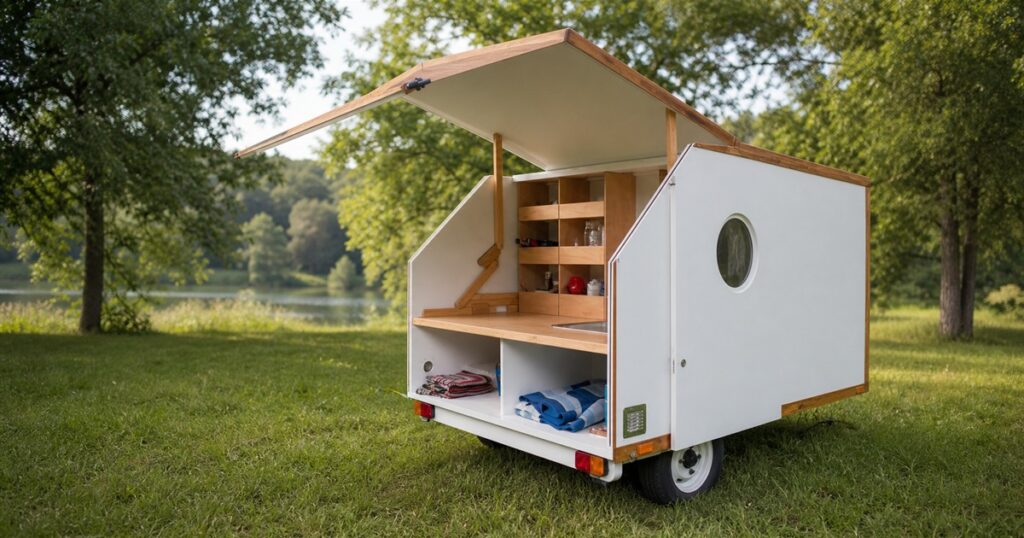
There are two kinds of people at a campsite: the ones who unpack one sensible tote bag, and the ones who appear to be moving a small regional hardware store into the woods. The Woodenwidget Slidabox is for the secret third group: people who want a tiny towable box that opens up like it has been hiding a miniature domestic agenda.
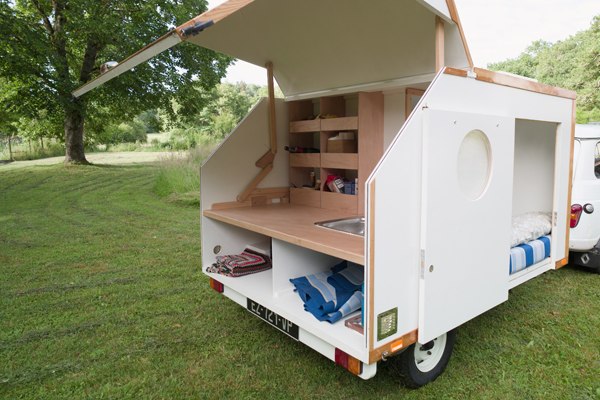
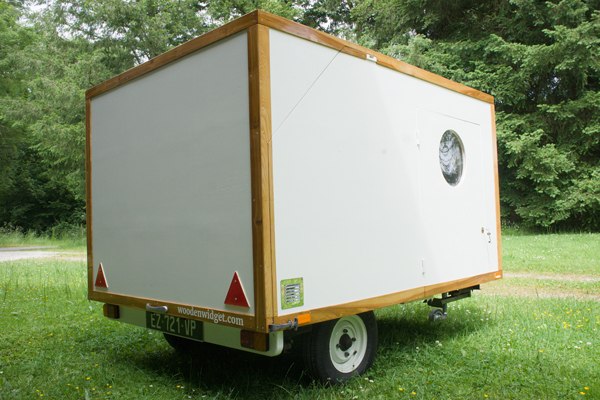
The Slidabox is an expanding DIY caravan plan from Woodenwidget, the long-running small-space design shop from designer Robin Benjamin. At first glance it looks almost suspiciously modest: a clean white box on a small trailer, edged in warm wood trim, with a circular side window that gives it the energy of a polite robot shed. Then the rear hatch opens, the sleeping drawer slides out, and suddenly the little box is behaving like it has watched every van-life video and decided to do the same thing with fewer pounds, fewer meters, and far less smugness.
This is not a finished camper you order and park in the driveway while your neighbors quietly reassess your impulse control. Woodenwidget sells illustrated plans for building one yourself. That matters because the Slidabox is less a luxury purchase than a compact camping scheme for people who are not afraid of plywood, clamps, metric measurements, and the occasional deeply meaningful cup of tea made under a rear hatch while the weather is being dramatic.
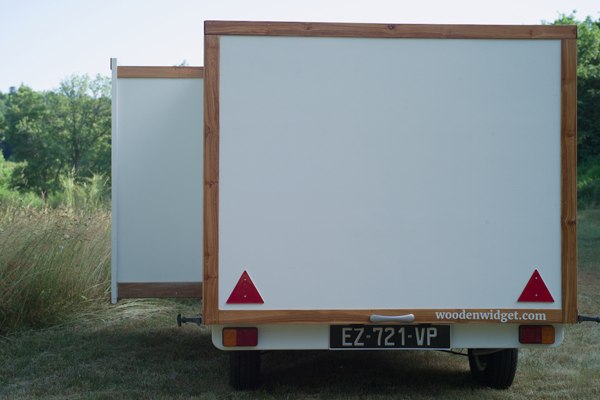
In road mode, the Slidabox is designed to tuck behind a small tow car rather than stomping around like a full-size caravan with opinions. Woodenwidget says the unladen build comes in under 300 kilos including the trailer, with a simpler no-drawer version around 220 kilos. In Europe, the company notes that this keeps it in trailer territory rather than traditional caravan territory, though anyone building one should check local rules before announcing to the highway patrol that a website said it was fine.
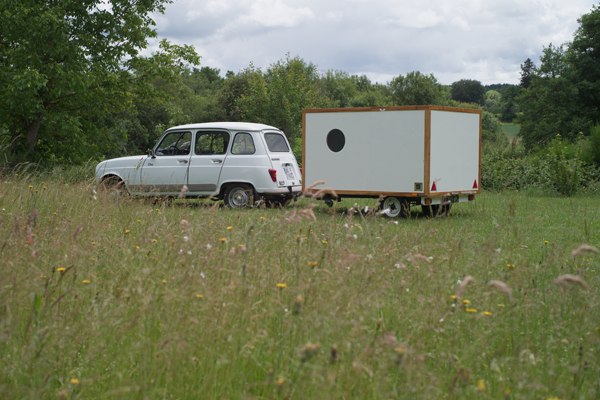
A Tiny Trailer That Becomes a Campsite Room
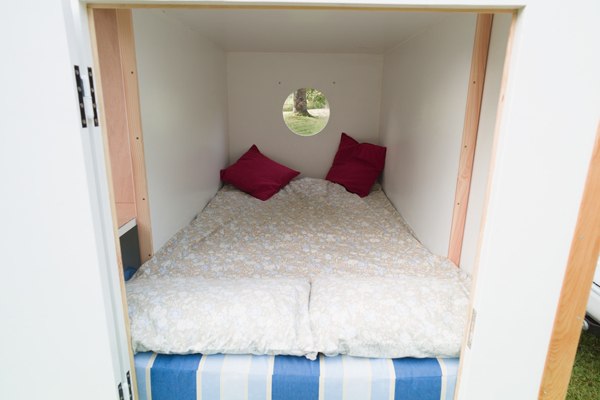
The big trick is the sliding drawer. Once you arrive, the drawer pulls out to create a two-meter-long insulated bed, which is generous for a camper that otherwise looks like it could be mistaken for an ambitious delivery crate. The body grows from about 155 cm wide in road mode to roughly 205 cm wide in camping mode, giving it enough internal length for actual sleeping instead of the curled-up shrimp position that turns a weekend getaway into a chiropractor origin story.
Related posts:
 The Bailey Discovery D4-2 Camper Trailer Has an Inflatable Enclosed Awning
 The Self-Inflating Air-Opus Camper Auto Expands To 121 Square Feet of Camping Space
 These Retro Campers Are Made With a Functioning Row Boat That Doubles as The Roof
 You Can Now Get a Mini Camper Trailer That’s Towed With Your Bicycle
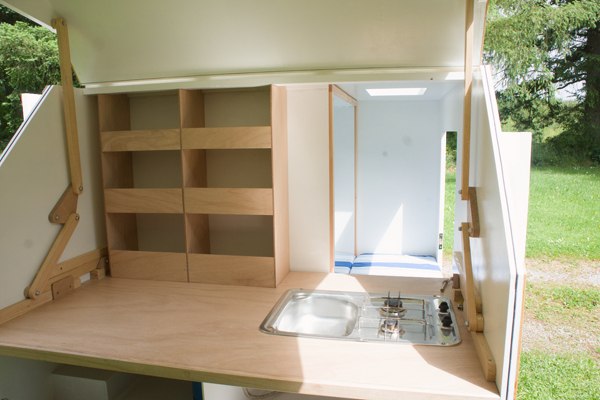
The rear area is the other half of the magic act. Under the lifting hatch is a galley with a work surface, storage above and below, and enough headroom that the space can double as a changing area. Add a curtain and Woodenwidget says it can even become a private shower spot. This is exactly the sort of detail that sounds minor until it is raining sideways and you realize your entire camping dignity depends on whether you can make tea without leaving the shelter.
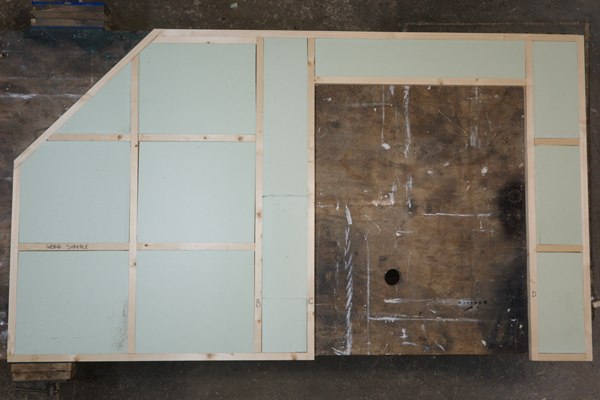
The build uses insulated composite panels, with the insulation acting as part of the structure between thin plywood layers. That keeps the Slidabox light while still creating a fully insulated shell. The design also keeps materials intentionally approachable: Woodenwidget says no special materials or advanced skills are required, though it does recommend a willingness to follow instructions and own more clamps than a normal person can explain at dinner.
Here is the practical camping brain of the thing, stripped of romance and snack crumbs:
- It is a two-berth expanding micro-camper plan built around a small single-axle trailer.
- The slide-out drawer creates a two-meter insulated sleeping area once parked.
- The rear hatch covers the galley and can shelter cooking or changing space.
- The galley remains accessible from inside when the drawer is open, so bad weather does not immediately win.
- The design can be modified, including a simpler lighter version without the drawer.
- The plans are metric but include guidance for using Imperial materials.
Specs For People Who Measure Before They Dream
Small campers live or die by numbers. A cute trailer is charming until it does not fit through a gate, cannot carry your gear, or requires you to sleep with your knees in a legally binding agreement with your chin. Woodenwidget publishes enough Slidabox dimensions to show what kind of tiny-camper compromises are being made.
| Slidabox Detail | Listed Figure | Why It Matters |
|---|---|---|
| Overall length with trailer | About 280 cm | Short enough to stay small-car friendly |
| Road-mode width | 155 cm | Keeps the body tucked neatly behind many tow cars |
| Camping-mode width | About 205 cm | Creates room for the slide-out sleeping setup |
| Unladen weight | About 280 kilos | Designed to stay extremely light for a camper |
| Bunk length | 200 cm | Long enough for taller campers to avoid foot negotiations |
| Build time | About 150 hours | A serious project, not a Saturday afternoon shelf tantrum |
The height on the trailer is listed around 170 cm, and the sleeping area has sitting headroom rather than standing headroom. That is the price of tiny-box physics. This is not pretending to be a rolling apartment with marble counters and a television that rises from a cabinet like it has a stage contract. It is a compact, towable camping pod designed around shelter, sleep, storage, and a galley that does not require you to put on shoes just to boil water.
There is a clever restraint to that. A lot of small campers try to act bigger than they are, then punish you with fragile gimmicks, awkward layouts, or the feeling that every object inside has to apply for planning permission. The Slidabox goes the opposite way. It starts with a basic box because boxes are efficient, then uses one moving section to solve the most important problem: where a human body goes at night.
For DIY Campers, Not Push-Button Glampers
The important buyer reality is that you are buying plans, not a completed caravan or a flat-pack kit. That means the Slidabox is best suited to the kind of person who sees a stack of plywood and thinks, “This could be a holiday home,” rather than “Why is the holiday home still a stack of plywood?” Woodenwidget says the plans run over 100 pages with nearly 200 photos, and they walk through the build process, material choices, and trailer modifications.
The design can fit on many small trailers, depending on width and layout. Builders can construct it between the wheels or over them, and the drawer version may require moving the axle back to make room and improve the balance. That is a sentence that will either make you excited or immediately send you back to hotel booking sites, and both reactions are valid forms of self-knowledge.
There is also a simpler version without the drawer. That removes the signature slide-out bed trick, but Woodenwidget says it can make the build lighter, cheaper, and more straightforward. The tradeoff is less storage and a bed layout affected by the wheel arches. In other words, you can simplify the build, but the camper will begin asking for tiny compromises like a very polite landlord.
What makes the Slidabox especially OddityMall-worthy is that it is not merely small. Small is easy. Make anything tiny enough and someone on the internet will call it clever before discovering it cannot hold a sandwich. The Slidabox has a real layout argument: road compactness, campsite expansion, a sheltered galley, an insulated sleeping space, and a build process that leaves room for personalization.
It is also very funny in profile. Closed up, it looks like a small mysterious box being escorted through the countryside by an elderly car. Opened up, it becomes a camper kitchen, changing room, and bedroom with the quiet confidence of a shoebox that got a graduate degree in hospitality. That transformation is the whole appeal. It gives you the romance of micro-camping without pretending you need to remortgage your life for a giant towable living room.
Price, Plans, And The Fine Print
Woodenwidget lists the Slidabox plans at 50 euros as a downloadable PDF. That price is for the plans only; the trailer, plywood, insulation, hardware, windows, lights, mattress, galley pieces, and the many little parts that turn a plan into an actual camper are separate. In the FAQ, Woodenwidget says a build using only new parts might cost about 3,000 euros, though second-hand parts could reduce that substantially.
So the Slidabox is not a bargain camper in the sense that you click once and a finished travel trailer appears. It is a bargain in the more dangerous and rewarding DIY sense: if you have the tools, patience, workspace, and emotional constitution to build one, you can end up with a wildly unusual lightweight camper that looks like almost nothing else at the campground.
Images courtesy of Woodenwidget.
Key details for the Slidabox:
- Expanding DIY micro-caravan plans from Woodenwidget.
- Designed by Robin Benjamin as a compact two-berth camper.
- Slide-out drawer creates a two-meter insulated bed.
- Rear hatch covers a galley with work surface and storage.
- Listed unladen weight is about 280 kilos including the trailer.
- Downloadable plans are listed at 50 euros; materials and trailer are extra.
- Estimated build time is about 150 hours for the standard drawer version.
| Pros | Cons |
|---|---|
| Extremely light for a towable camper | Requires a full DIY build, not just assembly |
| Slide-out bed makes the tiny footprint more usable | Sitting headroom only inside the main sleeping area |
| Rear galley is sheltered by the hatch | Trailer and materials are separate from the plans |
| Insulated composite construction keeps weight down | Axle/trailer setup may require careful modification |
| Plans include extensive photos and guidance | About 150 hours is still a real project |
| Compact road mode suits small tow cars | Local trailer and towing laws still need checking |
Where to find This Expanding DIY Caravan Slides Open Into a Tiny Camp Kitchen
OddityMall may earn a commission from qualifying purchases at no extra cost to you.
Related posts:
The Bailey Discovery D4-2 Camper Trailer Has an Inflatable Enclosed Awning
The Self-Inflating Air-Opus Camper Auto Expands To 121 Square Feet of Camping Space
These Retro Campers Are Made With a Functioning Row Boat That Doubles as The Roof
You Can Now Get a Mini Camper Trailer That’s Towed With Your Bicycle