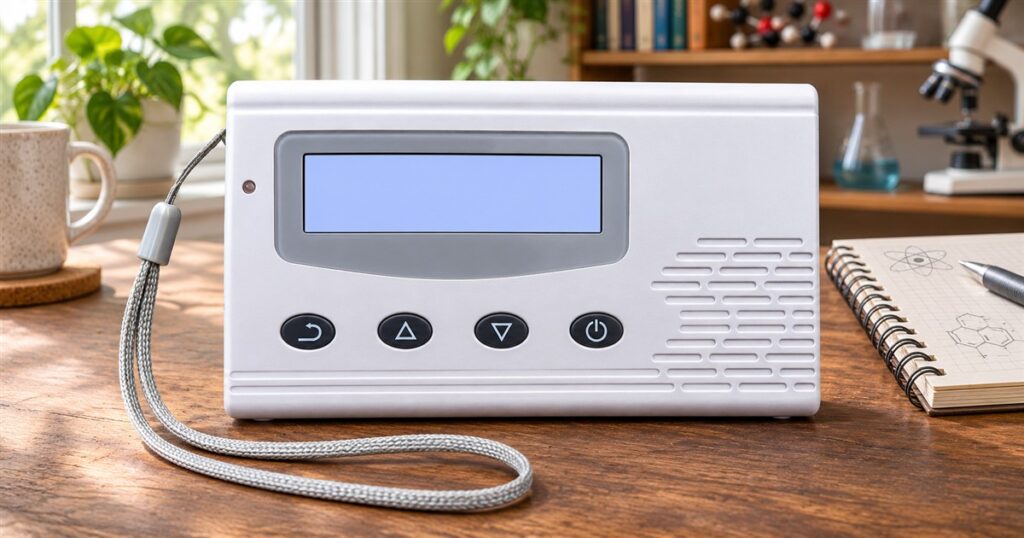
Some people relax by watching a fireplace. Others would apparently prefer a small white box that counts invisible events and saves them for later. The GQ GMC-300S digital Geiger counter belongs firmly to the second household: the one where a perfectly normal afternoon can turn into a spreadsheet with sound effects.
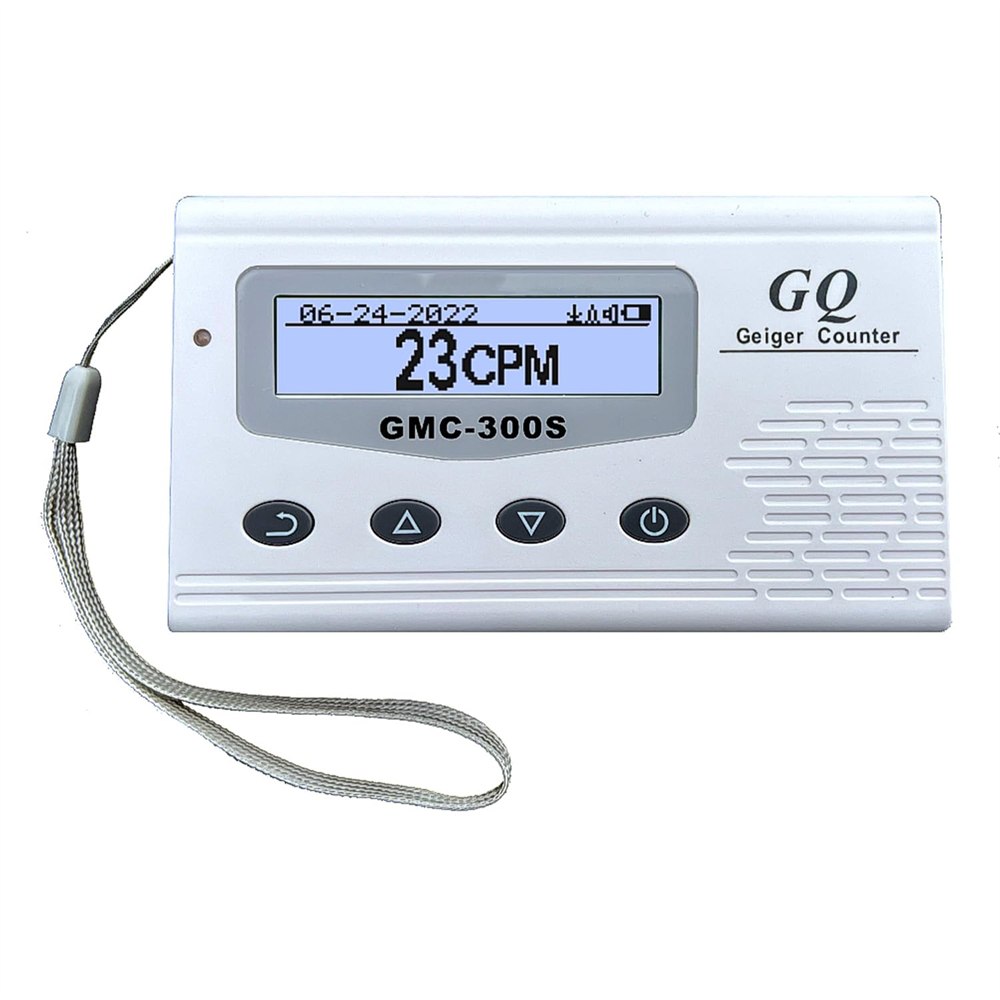
This handheld radiation detector comes from GQ Electronics, and its appeal is refreshingly specific. It measures ionizing radiation, displays readings, and records a history you can download to a computer. It is an instrument for curious people who would like an actual number to go with their curiosity.
The white rectangular body, little screen, and row of four buttons look more like a piece of classroom equipment than a glossy lifestyle accessory. That is part of the charm. Nobody is going to mistake this for another Bluetooth speaker, although explaining your new desk purchase might take slightly longer.
A digital Geiger counter with several ways to show its work
GQ lists beta, gamma, and X-ray radiation among the types the GMC-300S detects. Its display options include a CPM count mode, a dosimeter mode, and a graph mode. Instead of forcing every bit of information into one presentation, it gives you different ways to look at what it records.
CPM means counts per minute. For a reader who enjoys watching a number change, that is a wonderfully direct starting point. Graph mode provides another perspective, putting changes into a visual format rather than asking you to memorize a parade of individual readings. Your brain can take the afternoon off from being a tiny clipboard.


The instrument also has audible and visual signals. GQ lists a front LED indicator and a speaker that can be switched on or off. That last detail matters in any household where one person’s fascinating experiment is another person’s mysterious clicking during a movie.

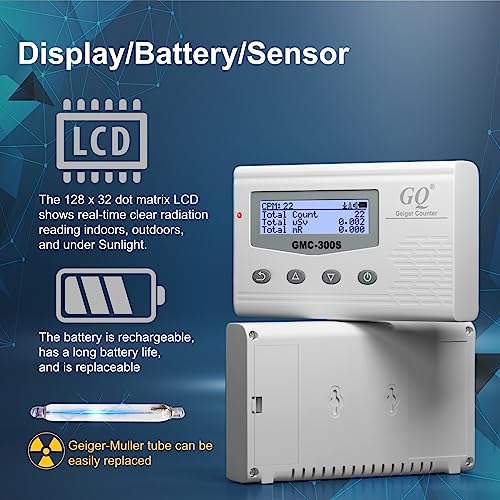
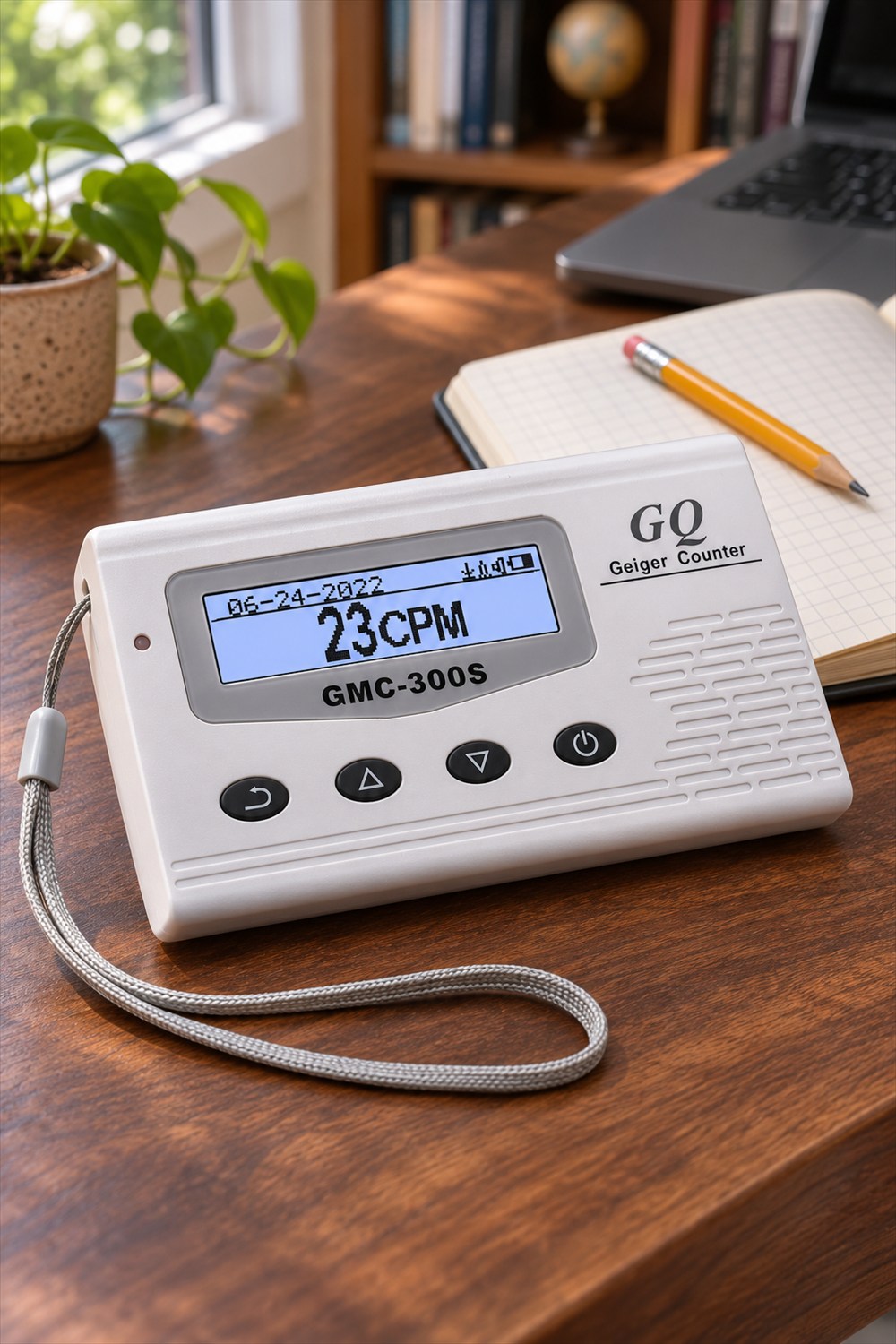
Its gray-framed LCD sits above the controls, with the speaker grille to the right. A wrist strap attaches at the side. The product has the appealing bluntness of something built around its job: a screen you can read, buttons you can press, and no decorative touchscreen pretending to be the future of everything.
The history is a big part of the point
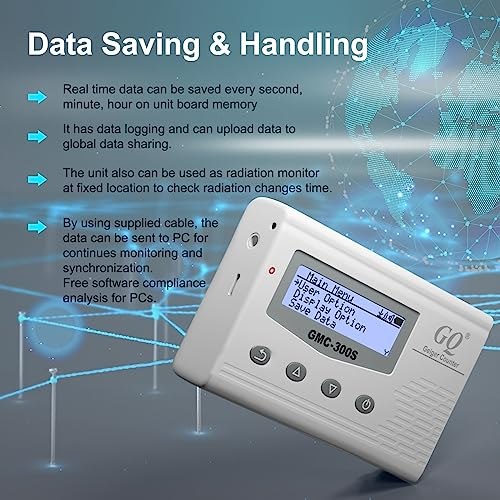
A quick reading is interesting. A record you can revisit is more useful for someone who wants to study changes over time. The GMC-300S can log readings into internal memory, and GQ supplies free PC data-viewer software for downloading that history to a computer.
That changes the experience from staring at a display to keeping a record. You can review what the instrument captured later, instead of trusting your memory of what the number looked like before someone called you into the kitchen. Human memory has never been an especially dependable export format.
The manufacturer describes recording options at different intervals. Each-second CPS logging covers 24 hours, each-minute CPM logging covers seven days, and hourly average CPM logging covers two years. Those figures describe different recording schedules, so the interval you choose affects the kind of history you keep.
- Use the count display when you want a straightforward numerical view.
- Switch to graph mode to look at changes visually.
- Record readings in internal memory for later review.
- Download the history to a PC with GQ’s free software.
- Turn the speaker off when the rest of the room has heard enough.
History playback is another listed feature. That is a pleasingly nerdy addition to a small handheld instrument: it can preserve something you would otherwise only have watched happen. There is a particular sort of person who finds this more exciting than a streaming subscription. They probably already own a label maker.
Small enough to put away without reorganizing a room
The Amazon listing gives the GMC-300S dimensions as 4.75 by 2.75 by 0.75 inches, with a listed weight of 7.7 ounces. It is a compact rectangular device rather than a large piece of bench equipment. Finding it a home does not require evicting the toaster.
A rechargeable, replaceable lithium-ion battery supplies portable power. USB handles both communication and power, so the connection has a job beyond merely filling the battery. GQ also lists an analog data output port and an open communication protocol for application integration.
That protocol detail will matter most to technically inclined buyers who want to do something with the readings. Everyone else can use the supplied viewing software without turning the purchase into a programming project. Both kinds of owner are valid; only one is likely to describe their weekend as an integration exercise.
| Detail | GMC-300S listing |
|---|---|
| Detection types | Beta, gamma, and X-ray |
| Display modes | CPM, dosimeter, and graph |
| Power | Rechargeable, replaceable battery or USB |
| History transfer | Computer download with free PC software |
| Dimensions | 4.75 x 2.75 x 0.75 inches |
| Listed weight | 7.7 ounces |

Buttons, contrast, and the option to be quiet
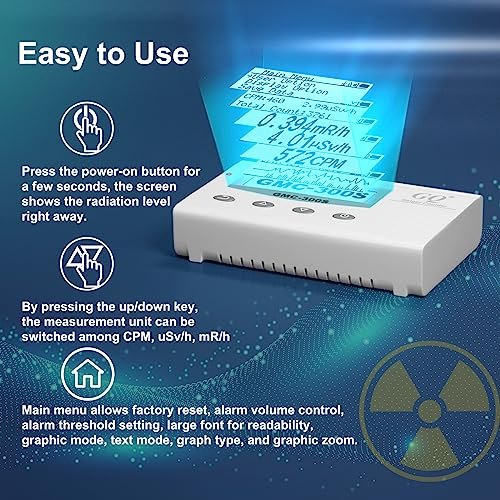
GQ includes LCD contrast control, giving you an adjustment for the screen rather than leaving every viewing situation to chance. The physical controls sit directly under the display, where they belong. There is something comforting about a dedicated instrument whose interface does not also want to show you yesterday’s vacation photos.
The seller’s feature illustrations describe choices such as large-font display, text or graphic views, graph type, graph zoom, alarm volume, and alarm threshold settings. These are useful distinctions for someone comparing a basic count display with a device that offers more control over how information appears.
It is still worth approaching the GMC-300S as a measurement tool with a particular job. Its listing names the radiation types it detects; that does not make it a universal sensor for every invisible thing in your home. Buying a specialized instrument works best when the question you want to explore matches what the instrument measures.
The USB power requirement deserves attention before charging. GQ specifically says to use a 5-volt adapter and warns against higher-voltage adapters. This is a pleasantly unglamorous detail to check first, before the exciting business of exploring menus and giving your computer another folder of data.
The strongest reason to choose this particular format is the combination of portability, multiple displays, and saved history. If all you want is an object that looks scientific on a shelf, it is overqualified. If you enjoy taking observations and coming back to them later, the logging features are much more interesting than the white plastic case suggests.
The practical details before you bring one home
This is an especially unusual gift idea for the person who prefers an instrument to another novelty mug. The appeal is hands-on curiosity and recorded data. The recipient may spend the first evening exploring every menu, then insist on telling you which recording interval they picked. You did, technically, encourage this.
Keep the distinction between observation and interpretation in mind. The counter supplies readings and history; understanding those readings is part of using the instrument. Its different views are tools for looking at information, rather than a substitute for learning what the controls and units mean.
Images: GQ Electronics via Amazon.
- Product: GQ GMC-300S digital Geiger counter.
- Detects the listed beta, gamma, and X-ray radiation types.
- Offers CPM, dosimeter, and graph display modes.
- Records history internally and supports downloading it to a PC.
- Includes a rechargeable, replaceable battery and USB connection.
- Has a switchable speaker, front LED, and wrist strap.
At the time of writing, the new GMC-300S was listed on Amazon for $55.98, sold by GQ Electronics LLC and marked in stock. Select the GQ 300S option when comparing configurations. Other models and condition options appear on the same shopping page, so the lowest displayed offer is not necessarily the new instrument described here.
For the right sort of curious person, this is a small box with a very large capacity to derail an afternoon. At least this time, when somebody asks what you spent all that time doing, you can offer a graph.
| Pros | Cons and considerations |
|---|---|
| Compact handheld format | Readings still require informed interpretation |
| Several display and recording modes | Settings take time to learn |
| Downloadable history and free PC software | Computer analysis adds a separate step |
| Rechargeable, replaceable battery | Requires an appropriate 5V power source |
| Speaker can be switched off | Detection is limited to its specified capabilities |
Save this find.
Thank yourself later.
Your next great gift idea. Your someday space. Your collection of wonderfully weird things.
Save to PinterestPick a board. Keep the inspiration.
This Digital Geiger Counter Records Radiation Readings for Later
At a glance
Product snapshot
- Listed price
- $55.98Prices and availability can change. Check the seller for current details.
- Where to find it
- Amazon.com
- Category
- Gadgets