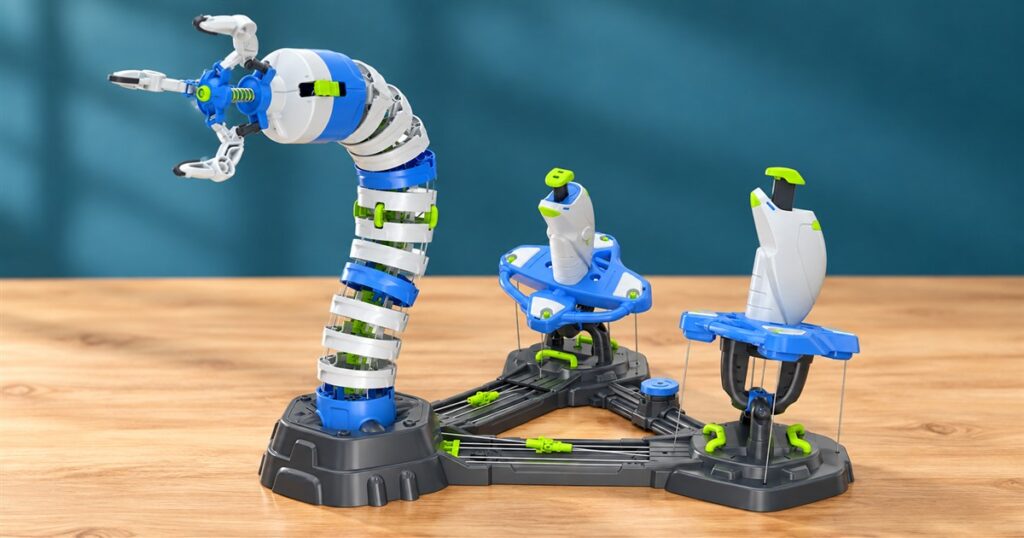
Moving a tiny object six inches across a table is easy. Building a 297-piece mechanical arm to do it for you is how that tiny object becomes an important shipment at your newly established living-room research facility. Please respect the operator. They have two joysticks and absolutely nowhere else to be.
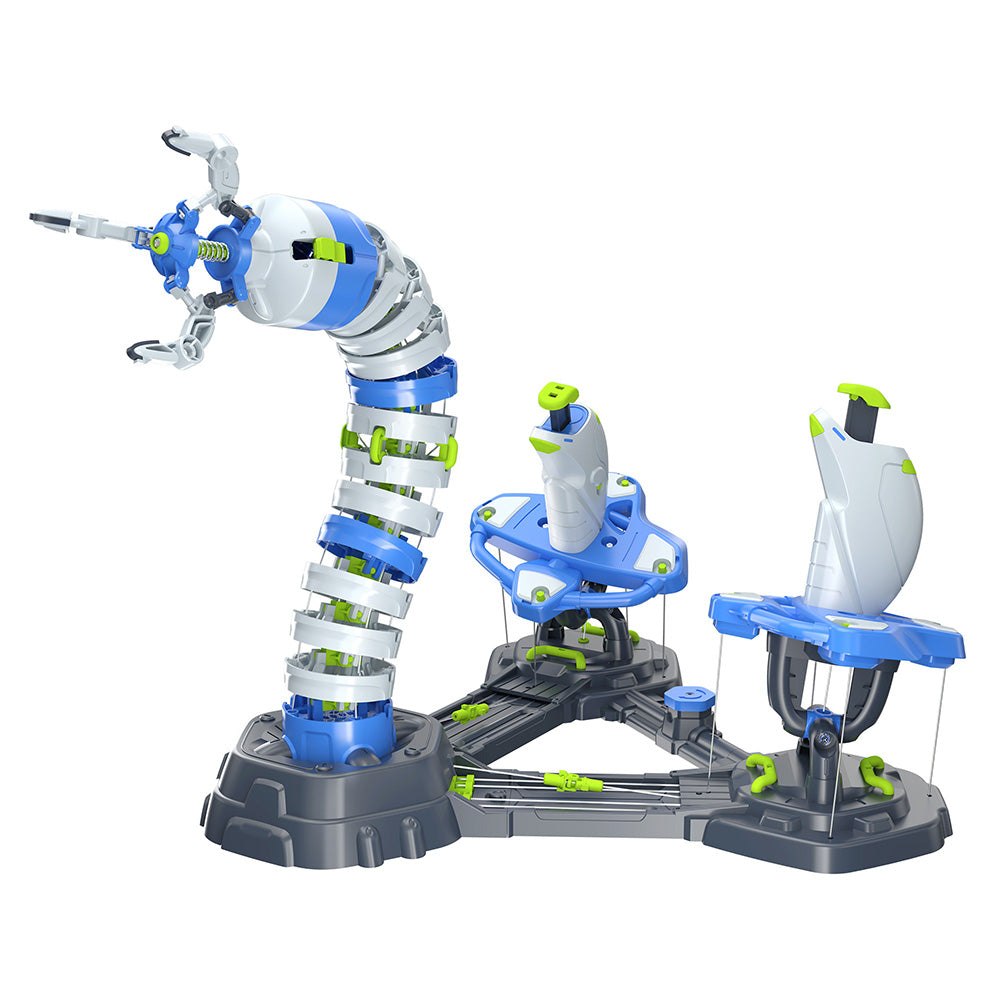
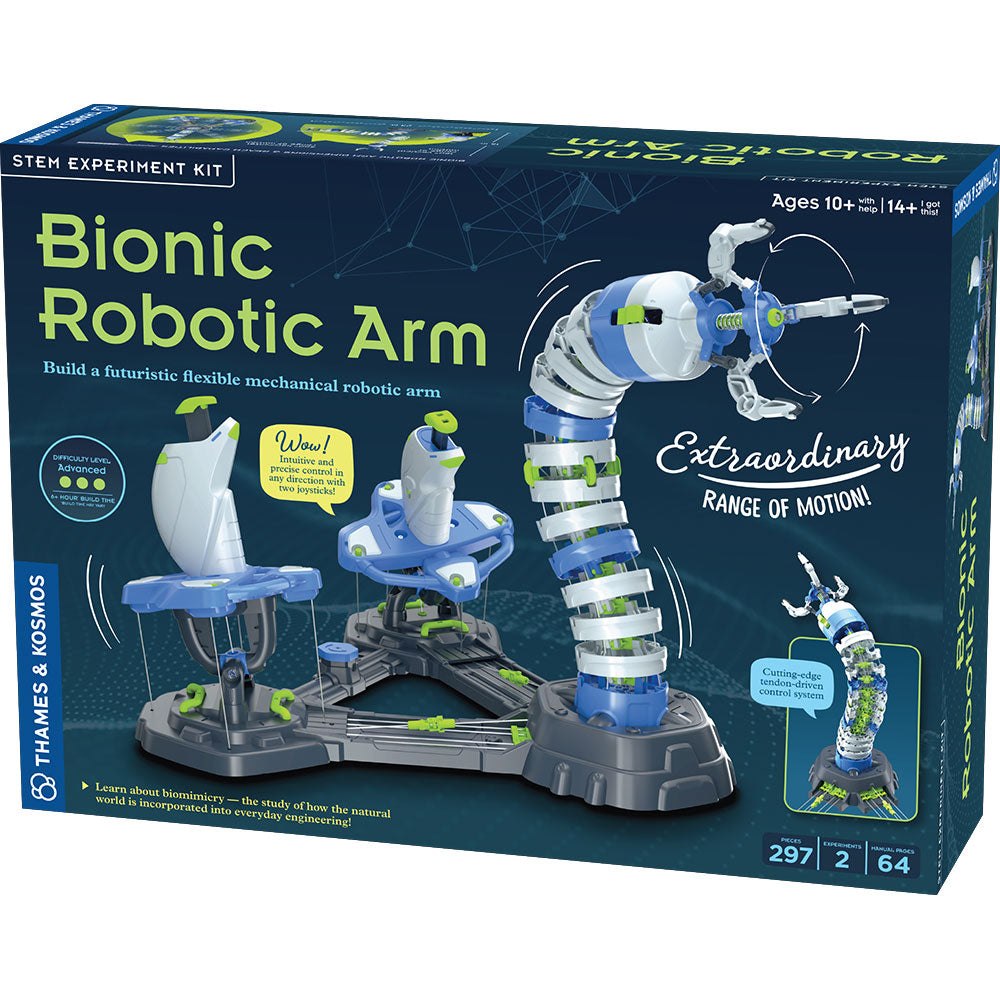
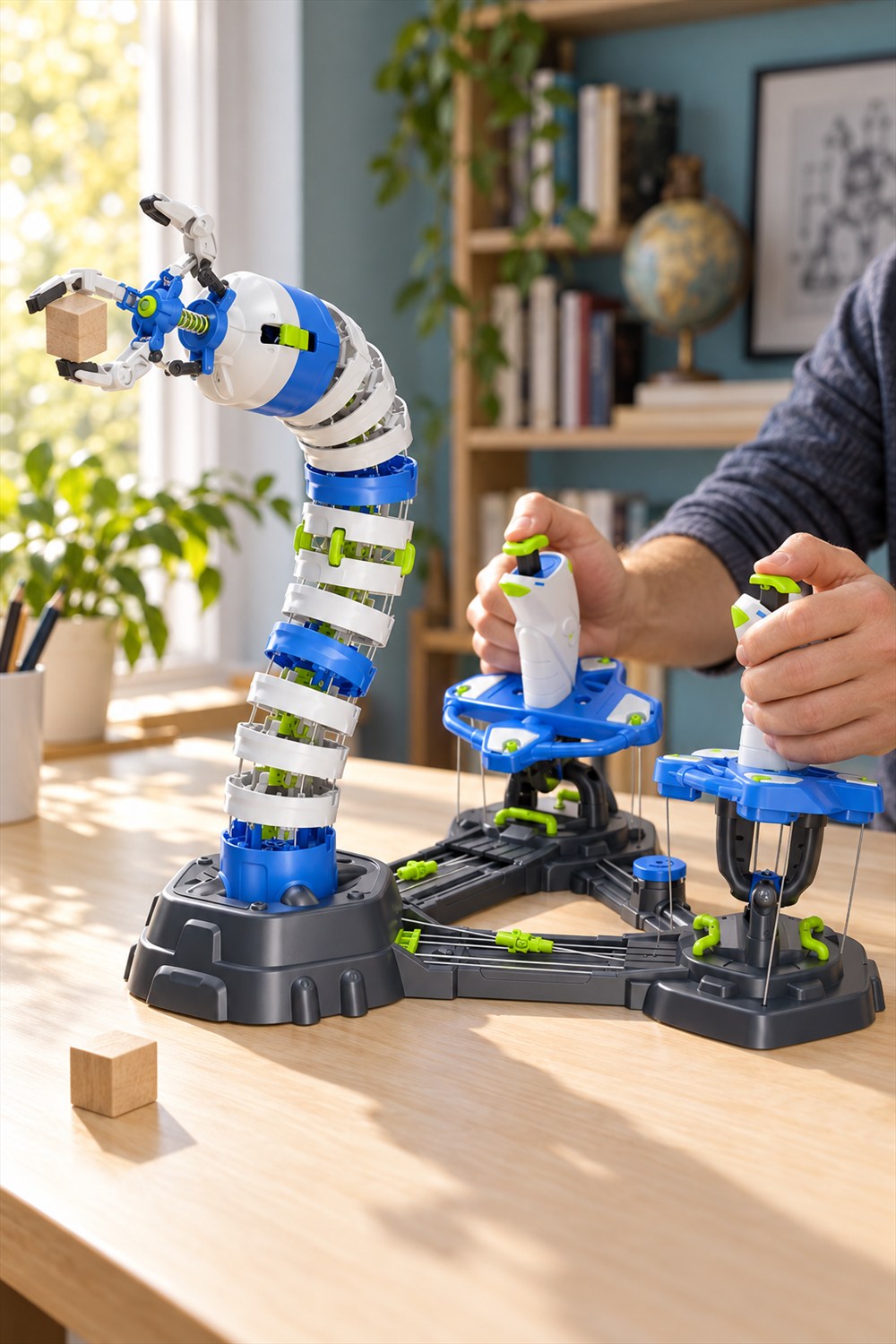
The Thames & Kosmos Bionic Robotic Arm is a build-it-yourself robotics kit that turns hand movements into the curling, reaching motion of a segmented arm. It looks like a friendly laboratory tentacle, complete with a gripper at one end and a pair of substantial controls at the other. The surprise is what powers it: you.
No motor hides inside the base. No battery compartment waits to ruin a birthday morning. Instead, nylon cables run through the structure, and moving the joysticks pulls or releases those cables to move the arm. You can see a mechanical idea travel from your hands to the claw, which is considerably more satisfying than watching another loading spinner.
A robotic arm powered by your own hands
The cable system takes inspiration from the way tendons transmit movement in living bodies. Here, a chain of plastic segments bends as the controls change the tension in the cables threaded through it. The resulting shape has more of a curling creature quality than the rigid elbow you might picture on a factory robot.
That visible movement is the attraction. Turn a control, watch the segments respond, and the relationship between input and motion becomes something you can actually inspect. This is a mechanical engineering project with a wonderfully theatrical delivery system. A diagram can explain motion. A plastic tentacle can make somebody wander over from the other side of the room.


The right joystick operates the upper portion of the arm, while the left handles the lower portion. Buttons add the claw functions: the right button rotates the claw through up to 180 degrees, and the left opens and closes it. Getting a useful grip means coordinating those movements, rather than simply pushing one button labeled “be helpful.”
There is no programming step between assembly and operation. The learning lives in the mechanism itself and in figuring out how to steer it. That makes it a particularly interesting option for somebody who likes building things but would rather handle actual parts than start another project on a screen.
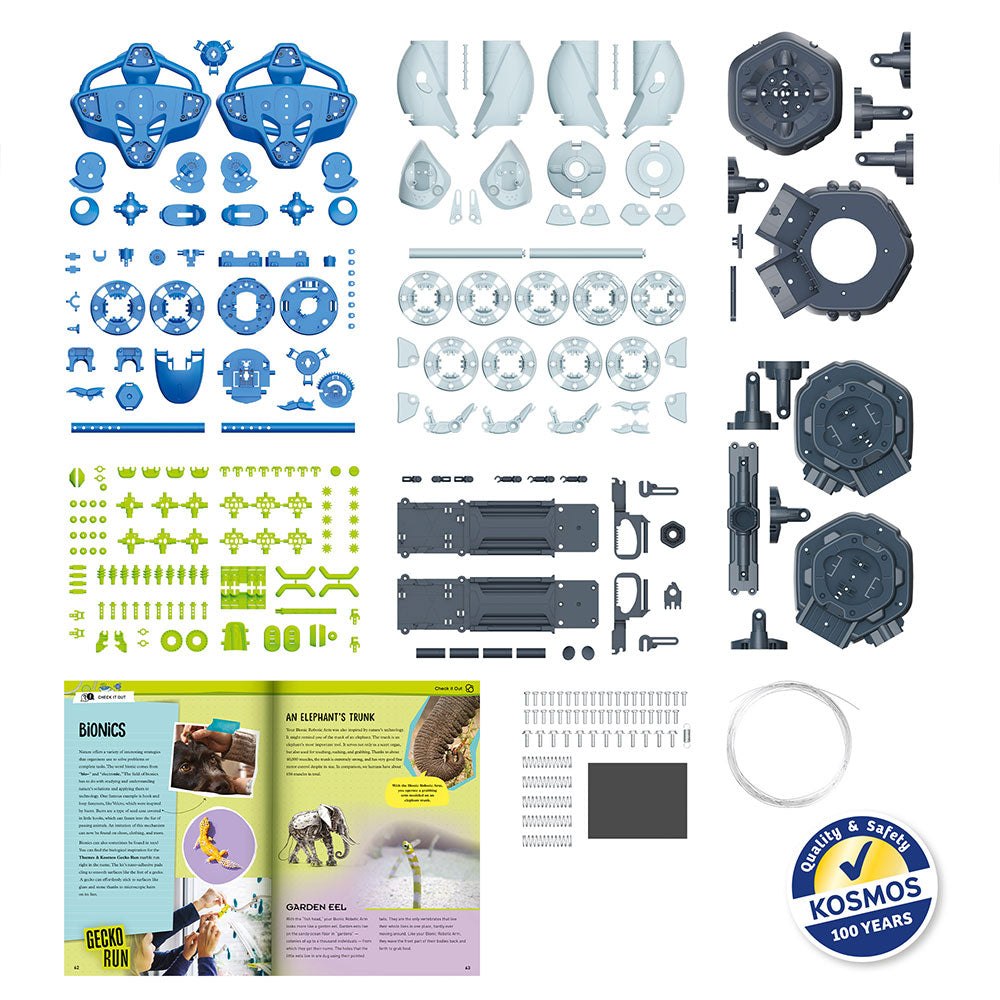
First you build the machine
This is a construction kit, so the assembled arm is the reward for putting its 297 pieces together. Thames & Kosmos includes a full-color, 56-page manual covering construction, experiments, and the science behind the design. The cables are part of that build, too; they are not decorative strings added after the interesting work is done.
The maker recommends the kit for ages 10 and up with help, or 14 and up for independent building. That distinction is useful when choosing it as a gift. A younger builder gets a shared project, while an older teen can take on more of the assembly. Either way, the box promises a build, not an instant desk companion.
Give the parts some table space and let the instructions set the pace. Nearly 300 pieces are a good reason to keep the family’s snack bowls in a separate jurisdiction. There is a particular kind of household panic reserved for realizing the thing you thought was a crumb had a job in the claw assembly.
Once it is together, the payoff is being able to operate a mechanism you understand from the inside. You have handled the pieces that guide the movement. A bend or a twist is no longer just a neat trick; it is the result of the structure you assembled.
- Build the mechanism: assemble the plastic components and route the nylon cables using the illustrated manual.
- Coordinate both hands: use the two joysticks to steer different sections of the arm.
- Work the gripper: open, close, and rotate the claw to practice picking up and placing small objects.
- Try the second attachment: swap the claw for the included model eel head and attempt to collect the little shrimp models.
A surprisingly expressive reach
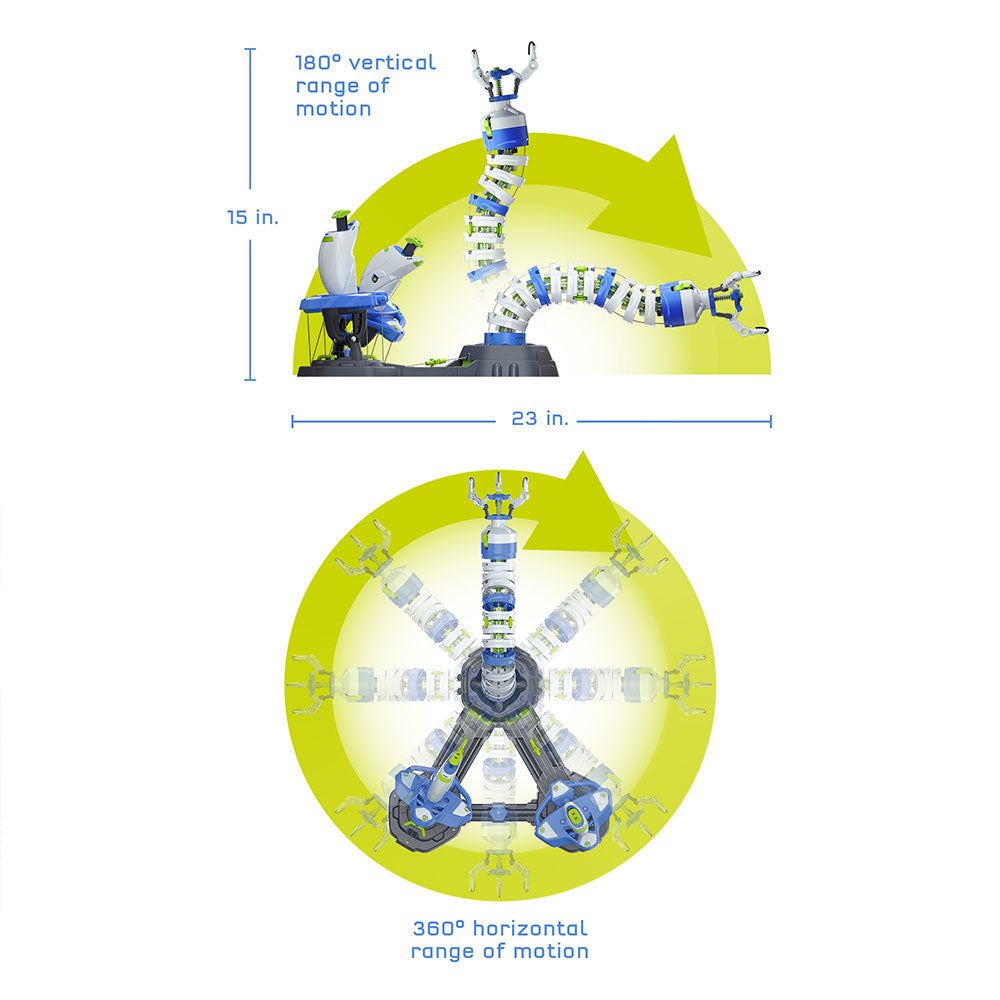
The manufacturer describes a 360-degree horizontal working area spanning 23 inches, plus a 180-degree vertical working area spanning 15 inches. Those are working-area figures, not a promise that it can lift anything sitting within them. The claw’s stated maximum grip opening is 2.5 inches, so choose appropriately sized objects for your experiments.
For a tabletop challenge, the interesting part is positioning. Getting the claw next to an object is one task. Lining it up, closing it, moving the arm, and releasing in the right place makes that task a sequence. Suddenly, the unremarkable act of relocating something has acquired suspense and a very small audience.
Keep expectations at science-kit scale. This is a manually operated toy arm, not a powered workshop tool or a machine that independently tidies your desk. You are still doing the work. You have simply made the work much more entertaining to watch.
| Detail | What the kit provides |
|---|---|
| Construction | 297 pieces, with plastic components and nylon cables |
| Power and controls | Hand-operated; two joysticks and two buttons |
| Claw movement | Up to 180-degree rotation and a 2.5-inch maximum grip opening |
| Working area | Manufacturer lists 23 inches horizontally and 15 inches vertically |
| Attachments | Gripper claw and model eel head |
| Building guidance | 56-page full-color manual; ages 10+ with help or 14+ independently |
Then it becomes an eel, naturally
The interchangeable eel head might be the detail that best explains this kit’s personality. After building a rather serious-looking cable-driven mechanism, you can remove its gripper and give it the face of a small aquatic creature. The engineering remains visible, but the assignment changes from object handling to an extremely specific form of pretend feeding time.
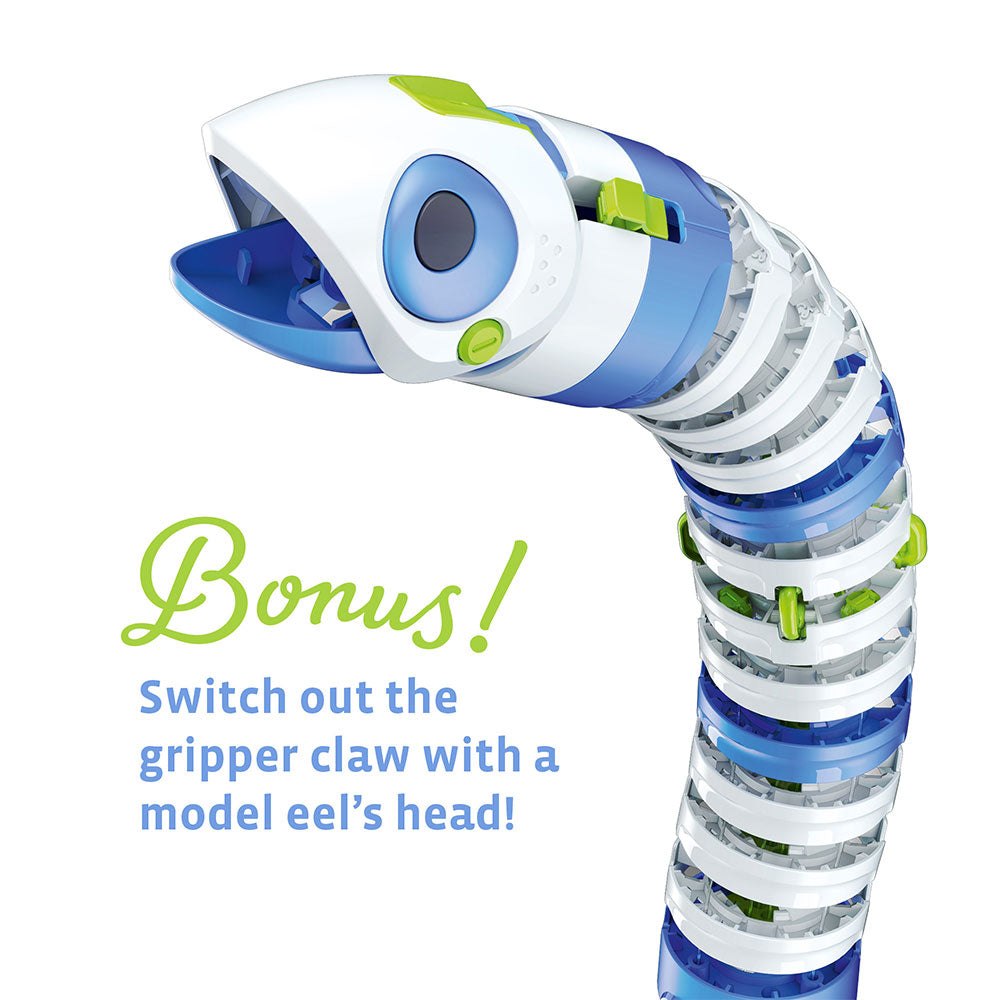
Small shrimp models come with the kit for the eel-mouth challenge. They give the alternate attachment something appropriate to pick up, without requiring anybody to invent a backstory. Although, for the record, the eel has had a long day and would appreciate everyone keeping their voices down during lunch.
The swap also makes the purpose of an end attachment easy to grasp. Keep the arm and its controls, change the business end, and you change how it interacts with an object. It is a playful way to explore a practical design question: what shape should the tool have for the job you want it to do?
Visually, the kit earns its desk space. White segments, blue structural pieces, lime accents, and a dark base make the moving parts easy to notice. The two upright joysticks look suitably important. Nobody needs a control station this elaborate to move a miniature shrimp, which is precisely why having one is funny.
Who will enjoy building it?
This is a good match for patient builders, curious teens, and adults who see exposed mechanical parts and immediately lean closer. It can also work as a parent-and-child project when the adult expects to participate. The recommended age split is a better guide than assuming every child who likes robots wants to assemble one from hundreds of pieces.
It is less suited to someone looking for a finished remote-control toy to use straight out of the box. Assembly and manual coordination are central to the experience. That is the appeal for the right person, and useful information for the person buying the gift.
There are small parts and long cables, so this belongs in the age-appropriate building space described by the instructions. Once built, it offers a satisfying loop: try a movement, see what happened, and adjust the next attempt. The stakes are low, the mechanism is visible, and the shrimp is remarkably patient.
- Thames & Kosmos Bionic Robotic Arm, a 297-piece mechanical STEM building kit.
- Cable-driven motion controlled entirely by hand, without motors or batteries.
- Two joysticks control the arm, with buttons for claw rotation and opening or closing.
- Includes both the gripper claw and an interchangeable eel-head attachment.
- Full-color, 56-page manual explains the build and provides scientific context.
- Recommended for ages 10+ with help, or 14+ for independent building.
At the time of writing, the kit is listed on Amazon for $27.43, in stock and sold and shipped by Amazon.com. Prices and availability can change. It is a modestly sized commitment to a very grand household ambition: operating your own tiny robotic handling department.
Product details and images: Thames & Kosmos.
| Pros | Cons |
|---|---|
| Visible cable-driven mechanism makes movement easy to explore. | The full 297-piece build requires patience and attention. |
| No motors or batteries needed. | Every movement needs hands-on operation. |
| Two joysticks and claw controls offer a coordination challenge. | It is a toy-scale arm, not an independent desk helper. |
| Interchangeable claw and eel head add different play options. | Younger builders need help under the maker’s age guidance. |
| Illustrated manual combines construction with science. | Small parts and long cables require an appropriate building space. |
Save this find.
Thank yourself later.
Your next great gift idea. Your someday space. Your collection of wonderfully weird things.
Save to PinterestPick a board. Keep the inspiration.
This Robotic Arm Kit Uses Cables and Joysticks to Grab Things Without Batteries
Where to find This Robotic Arm Kit Uses Cables and Joysticks to Grab Things Without Batteries
OddityMall may earn a commission from qualifying purchases at no extra cost to you.