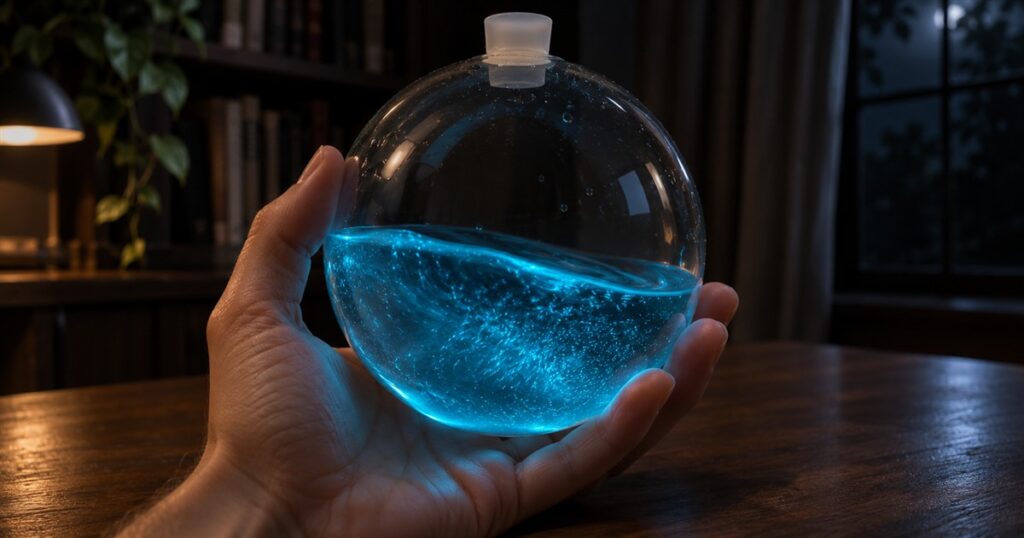
Most desk decorations sit there collecting dust and silently judging your cable management. This one contains a tiny ocean population that puts on a blue light show after dark. The PyroFarms Bio-Orb is a glass sphere filled with living bioluminescent plankton, which means your next conversation piece has a bedtime, a feeding routine, and considerably better party tricks than your paperweight.
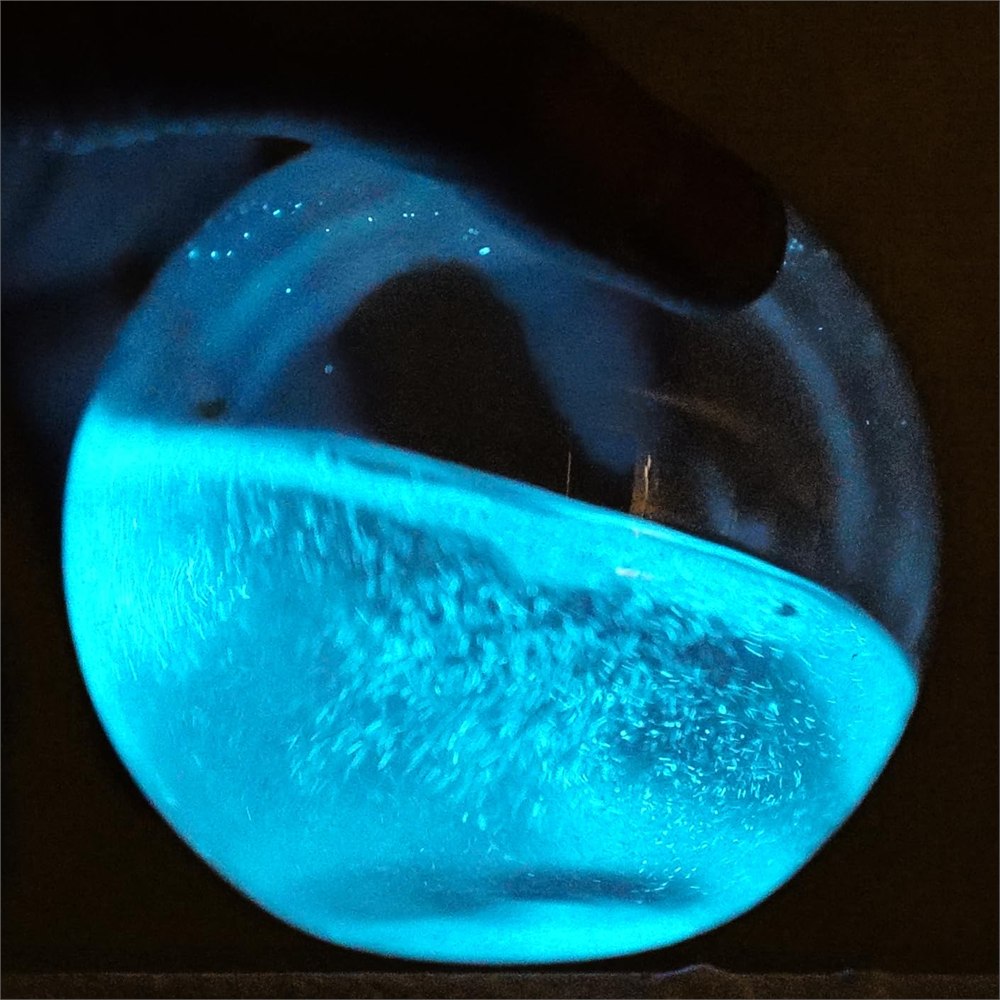
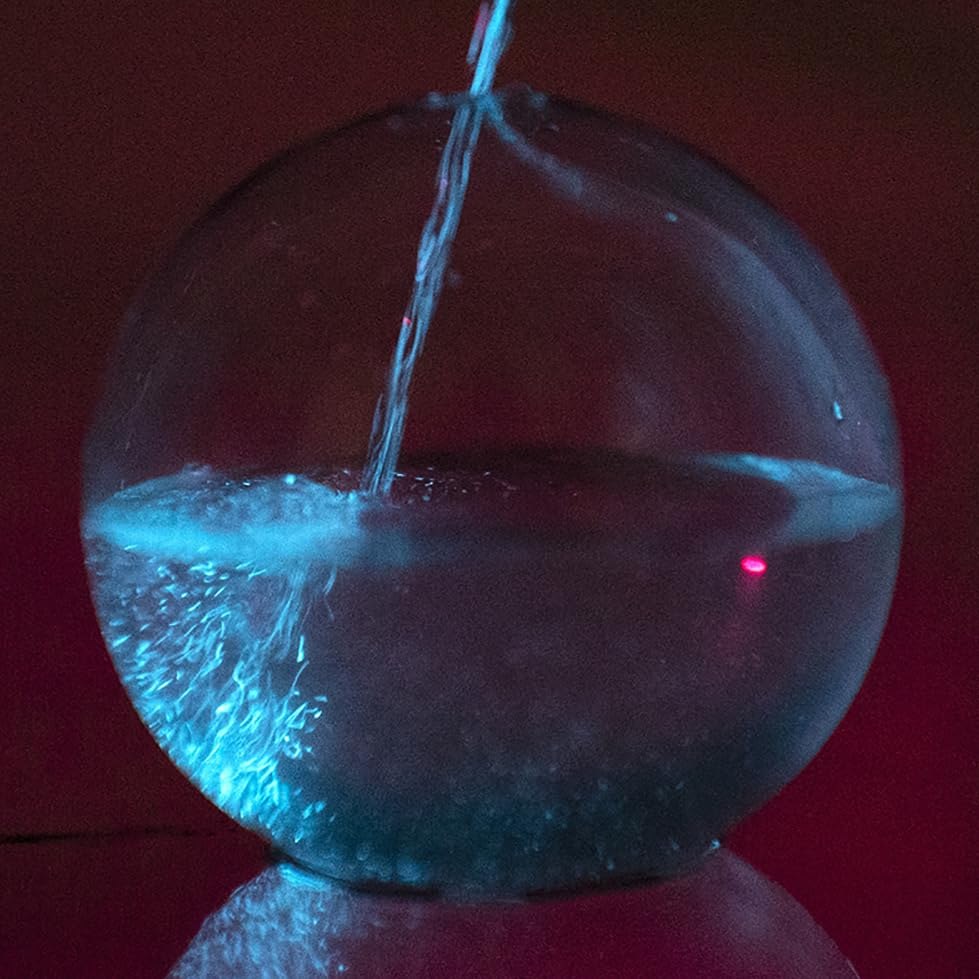
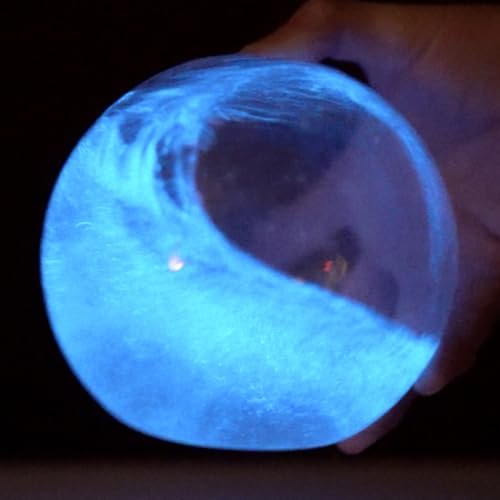
Give the water a gentle swirl during the organisms’ nighttime cycle and the movement triggers their natural glow. No battery compartment. No charging cable snaking behind the bookshelf. Just seawater, glass, and little living things doing something that looks suspiciously like a special effect.
The important word here is living. This is a small marine culture you care for, rather than a blue lamp you switch on whenever you want. That difference is both its charm and the part worth understanding before you clear a spot beside your monitor.
A glass sphere with actual ocean plankton inside
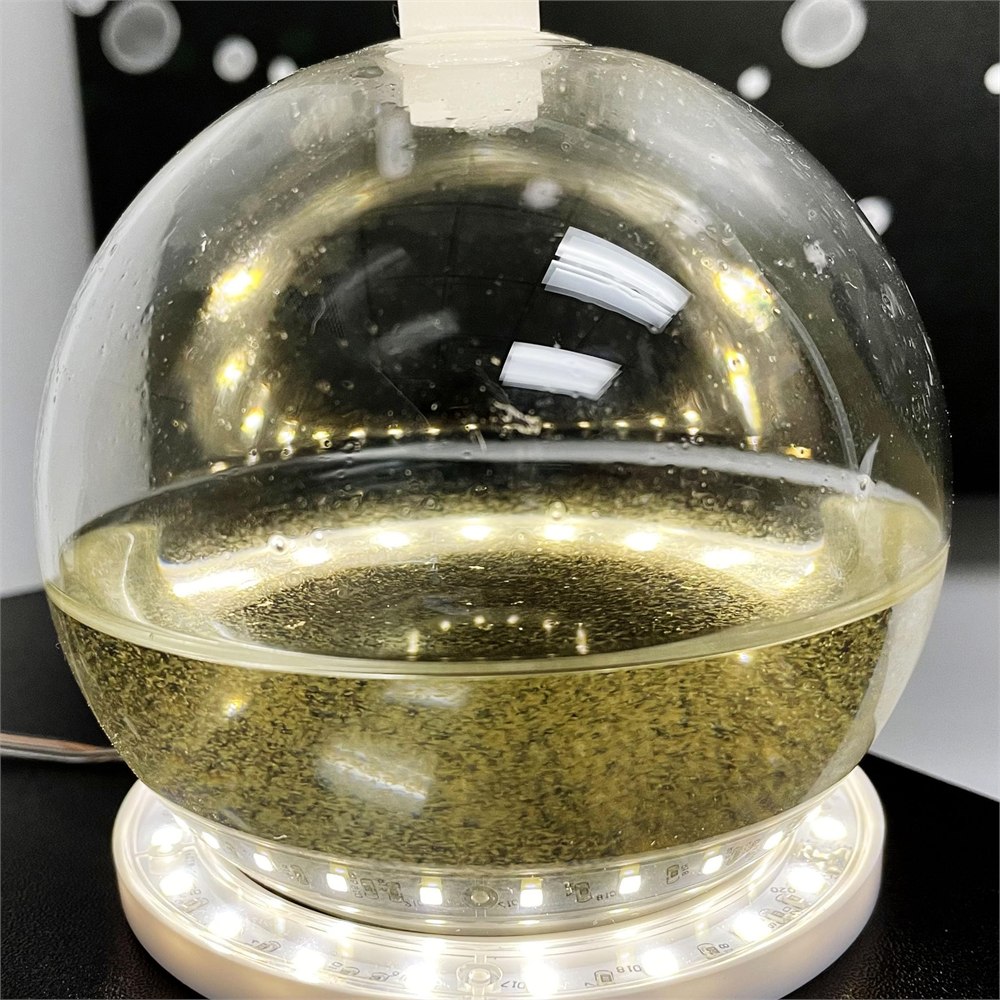
PyroFarms calls its dinoflagellates PyroDinos. They’re tiny planktonic algae, housed in a hand-blown glass vessel with an opening at the top and a silicone stopper. The standard Amazon listing describes a sphere measuring roughly 3.94 inches across, so this is a palm-sized curiosity rather than an aquarium that needs its own furniture.
During the day, the organisms use light for photosynthesis. At night, physical movement can stimulate bioluminescence. You get to observe two very different sides of the same little culture without acquiring a scuba certification or explaining a suspiciously large marine-science expense to your household.
Related posts:
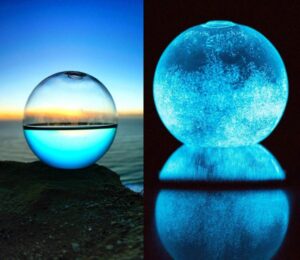
The clear globe also makes the water itself part of the display. There are no plastic castles, bubbling treasure chests, or tiny decorative divers involved. Its appeal is wonderfully direct: look closely, gently move it at the right time, and watch what the organisms do.
The glow follows a schedule
Here is where expectations matter. The Bio-Orb doesn’t stay brilliantly blue all evening, and putting it in a dark cupboard at lunchtime doesn’t turn nighttime on. PyroFarms explains that the organisms follow a daily cycle; daytime darkness alone won’t make them perform their nighttime trick.
Think of the glow as an interaction, not permanent room lighting. You gently swirl, observe the response, and let the culture settle. Someone hoping to replace a bedside reading lamp will be disappointed. Someone who likes watching a small piece of nature do something extraordinary may find that distinction much more interesting.
A dark viewing area helps you see the effect. Bright room lighting can overwhelm the light the organisms produce, so the setting matters as much as the clock. This is a reasonable excuse to stop staring at a screen for a moment, although telling everyone you’re conducting marine observations makes it sound more official.
- Watch during the nighttime cycle in a darkened space.
- Use gentle movement to stimulate the blue glow.
- Give the culture appropriate light during the day.
- Treat the globe as a living display with ongoing care needs.
- Keep the distinction between a natural glow and electric room lighting firmly in mind.
What comes with the little ocean
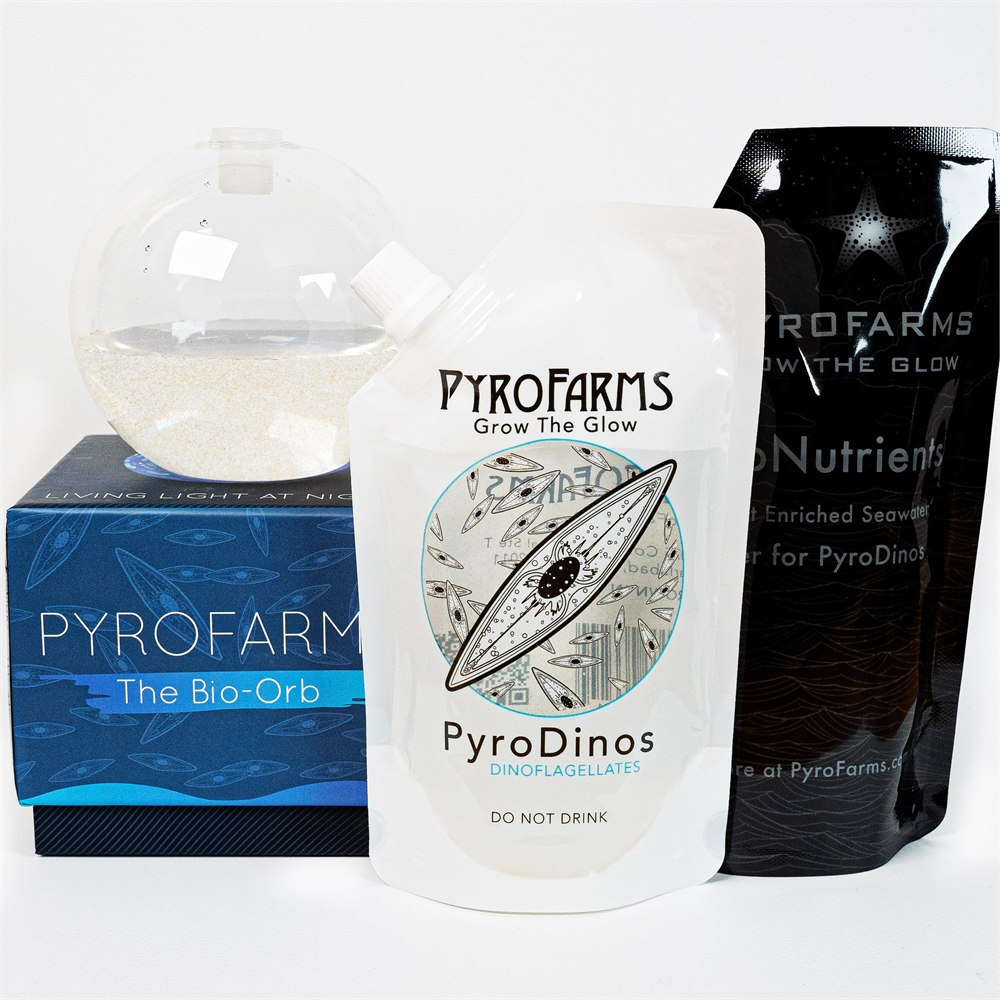
The seller’s kit photographs show the glass Bio-Orb, a pouch of PyroDinos, and nutrient seawater. Those pouches are part of getting and maintaining a living culture, not mysterious decorative refill bags. Follow the supplied setup instructions when transferring the contents into the sphere.
Some product photos show the globe sitting on a lit base. The Amazon listing explicitly says no stand is included, so don’t mistake a photographed display accessory for part of this offer. The organisms’ own nighttime light does not require an electric stand.
| Detail | What to expect |
|---|---|
| Vessel | Hand-blown glass sphere with silicone stopper |
| Standard size | Approximately 3.94 inches across |
| Living contents | PyroDinos, bioluminescent marine dinoflagellates |
| Glow trigger | Gentle movement during the nighttime cycle |
| Daily needs | Suitable light, moderate temperatures, and ongoing care |
| Display stand | Not included in the Amazon offer |
The small footprint makes it an appealing object for a home study or another stable indoor spot. Choose somewhere you can actually maintain the conditions it needs, rather than wherever a blue globe would look best in a photograph. Your plankton are indifferent to your interior-design mood board.
Care is part of the bargain
PyroFarms recommends low to moderate daytime lighting, with indirect sunlight rather than direct sun. Its Bio-Orb instructions give an ideal temperature range of 63 to 79 degrees Fahrenheit and recommend minimizing temperature swings. A hot windowsill or a drafty winter ledge is therefore a poor substitute for a sensible indoor home.
For feeding, follow the maker’s current instructions and the condition of your culture. The guidance advises waiting five to seven days after setup before adding nutrients, and warns that overfeeding and excessive dilution can be detrimental. More is not automatically better, even when your instinct is to become an extremely enthusiastic plankton parent.
The care routine is closer to tending a houseplant than maintaining an electronic gadget. That doesn’t mean survival is guaranteed or that you can ignore it indefinitely. You’re responsible for giving living organisms suitable conditions; there is no factory reset for forgetting that fact.
For a classroom, it offers a concrete way to talk about daily cycles and living light. For a grown-up science enthusiast, it provides a miniature observation ritual. For someone who wants entirely maintenance-free decoration, it adds a responsibility they may not appreciate. Choose the recipient with the same care you would use when giving someone a plant.
A gift that should be opened promptly
A living culture is not the sort of present to stash in a dark closet for weeks. PyroFarms’ gifting guidance emphasizes that PyroDinos need daytime light and should not remain without it for more than a few consecutive days. Plan around the living contents, not just the moment when the wrapping paper comes out.
That makes this a particularly good gift to explain. Tell the recipient what it is, how to set it up, and why it won’t obligingly glow during an afternoon unboxing. The surprise should be the biology, not the discovery that their new ornament has a care schedule.
The globe is also glass, so choose a secure location and handle it accordingly. It belongs in the category of things you observe and look after, rather than things you toss between friends to demonstrate how cool they are. The ocean already has waves; it does not need your juggling phase.
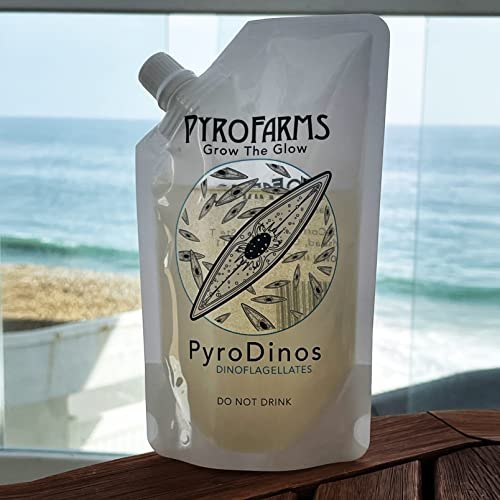
Product photos: PyroFarms on Amazon. For setup and maintenance, consult PyroFarms’ Bio-Orb instructions.
- Living marine plankton in a small hand-blown glass sphere.
- Blue bioluminescence stimulated by gentle movement at night.
- No batteries needed for the organisms’ natural glow.
- Daily light, moderate temperatures, and appropriate nutrient care required.
- Standard sphere measures approximately 3.94 inches across.
- The listed offer does not include a display stand.
The PyroFarms Living Bioluminescent Bio-Orb is listed on Amazon for $69.00, with PyroFarms shown as the seller and shipper at the time of writing. Price and availability can change. It’s an unusual purchase for someone who would happily spend a quiet evening watching a glassful of plankton, then insist they had excellent plans.
| Pros | Cons |
|---|---|
| Real living bioluminescence | Glow depends on nighttime cycle and movement |
| Compact glass display | Glass needs careful handling |
| No batteries for the natural glow | Not a replacement for continuous lighting |
| Interesting science and gift appeal | Living culture requires ongoing care |
| Simple, uncluttered presentation | Display stand is not included |
At a glance
Product snapshot
- Listed price
- $69.00Prices and availability can change. Check the seller for current details.
- Where to find it
- Amazon.com
- Category
- Geeky Stuff