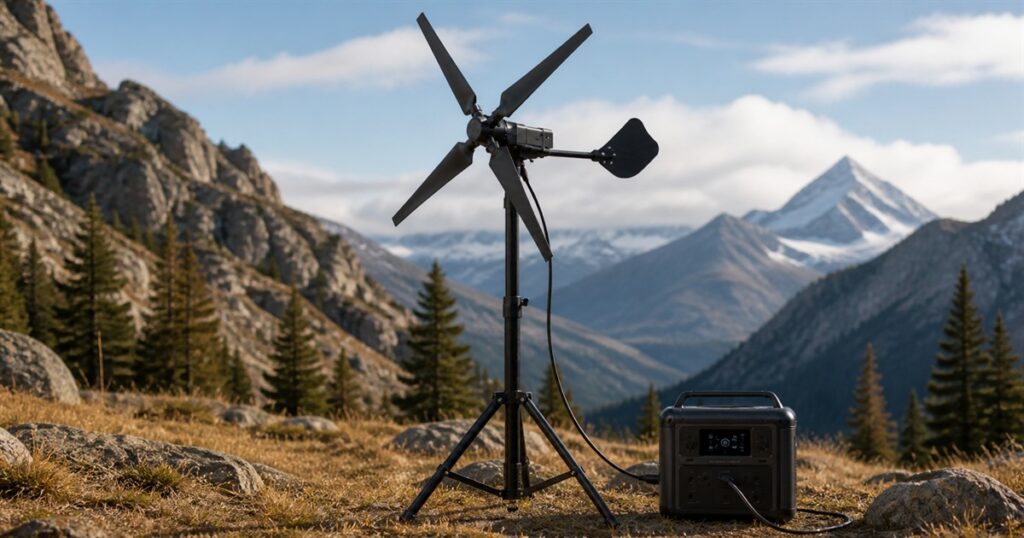
There comes a point in every camping trip when the phone battery starts acting like it has seen the truth about society and would prefer to leave. Solar panels are great until the sky turns into wet cardboard, your campsite is shaded, or night arrives with the quiet confidence of a utility company shutting off your personality.
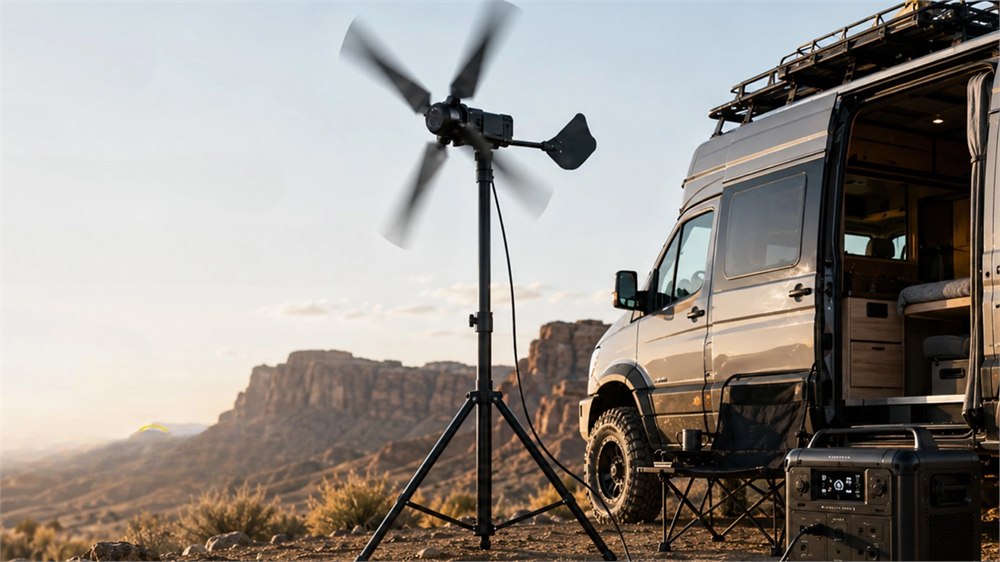
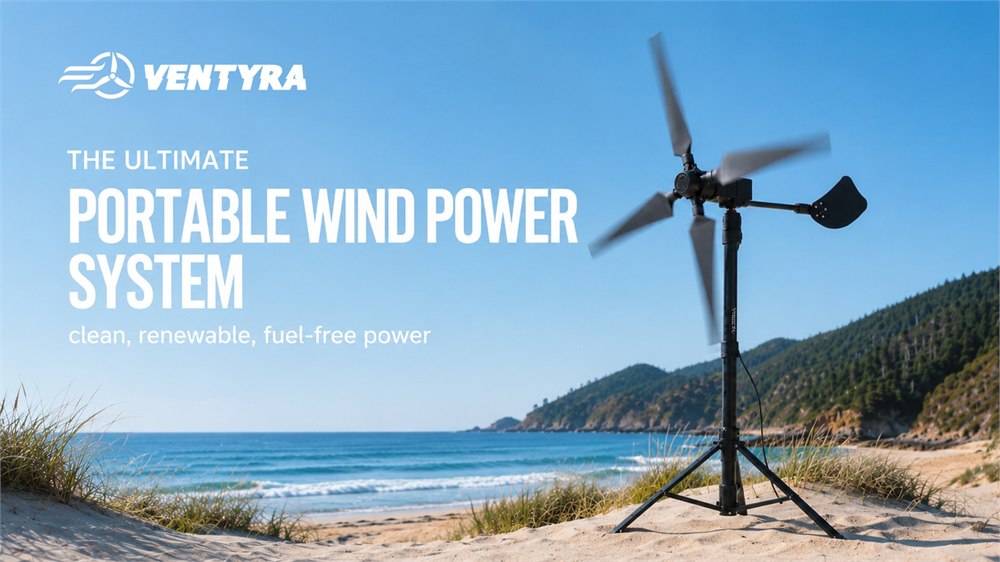
The VENTYRA R1 is a backpack-portable wind turbine for those moments when the sun clocks out but the breeze is still on payroll. It is a foldable off-grid power system built around a four-blade turbine, a collapsible tripod, and a tail vane that helps the unit face into shifting wind instead of requiring you to stand nearby like a human weather intern.
That is the basic promise here: set up a little black turbine at camp, by the beach, near a cabin, on a balcony, or during a home outage, then let moving air help charge the devices that modern life has convinced us are “optional” right up until the map app dies.
According to the campaign page, the R1 is rated for 50W output, with a 75W peak load and 12V DC support. That does not make it a whole-house wind farm, unless your house is one flashlight and a USB-C cable, but it does put it in a very interesting category: small enough to pack, weird enough to make nearby campers ask questions, and potentially useful when solar is having a dramatic weather-related episode.
A Tiny Wind Turbine For People Who Pack Like Civilization Might Collapse By Tuesday
The full kit is listed at about 2.2 pounds, or roughly 1 kilogram, which is the kind of spec that makes the idea feel less like “dragging a science fair project into the woods” and more like an actual camp accessory. The turbine folds down, the tripod collapses, and the blades tuck alongside the main generator housing instead of demanding a field-service ceremony with loose screws and tiny parts that immediately disappear into pine needles.
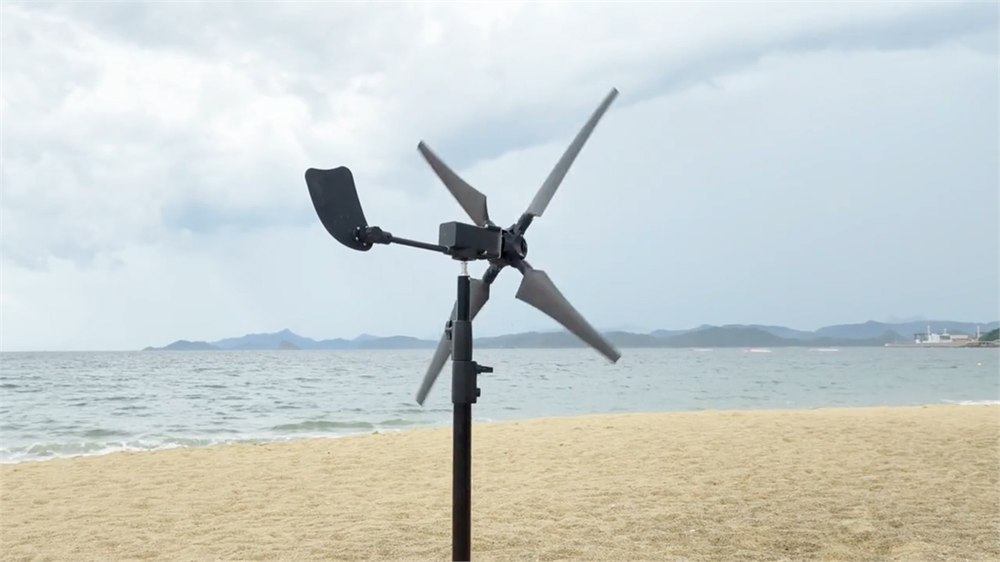
Once deployed, the R1 stands on its tripod and uses its tail vane to align itself with the wind. That automatic wind alignment is a small detail with a large emotional payoff, because nobody wants to spend a peaceful outdoor weekend slowly rotating a mini turbine like they are tuning an antenna for a 1987 television.
The system is designed to feed generated power through a cable into compatible gear such as battery banks, portable power stations, lights, and other small 12V-friendly setups. TechRadar also noted the product’s phone-charging promise under optimal conditions, with the obvious fine print that real wind is not a wall outlet wearing hiking boots.
In other words, this is not magic. It is wind. Wind is generous, moody, invisible, and occasionally arrives from the exact direction that makes your tent flap sound like a haunted grocery bag. But when the conditions cooperate, the VENTYRA R1 gives off-grid users a second renewable option that is not dependent on bright sun.
What The VENTYRA R1 Is Trying To Do
The most charming part of this thing is not just that it makes electricity from wind. It is that the whole product seems designed around the awkward reality of using renewable power outside. Big wind turbines belong on towers, boats, cabins, and places where “portable” means “two people and a trailer.” The R1 shrinks the idea down into something that can plausibly join a camping kit without taking over the entire trip like a needy roommate.
- It folds down for backpack or vehicle storage.
- It uses a four-blade turbine design on a collapsible tripod.
- Its tail vane helps the turbine face changing wind direction automatically.
- It is rated at 50W output with a 75W peak load.
- It supports 12V DC power for compatible off-grid charging setups.
- It can be used alongside solar gear when you want more than one way to keep small electronics alive.
That last point is probably where the product makes the most sense. A portable wind turbine is not replacing a proper home power system, and it is not going to turn a still forest into a charging station. But paired with a portable power station or solar panel, it gives campers, van-lifers, emergency-prep folks, and backyard tinkerers another way to collect energy when the weather decides to participate.
Useful Specs Without The Renewable Energy Sermon
The R1 is being pitched as a practical outdoor charger, so the useful details are mostly about size, power, wind behavior, and what not to expect. The campaign and coverage put the turbine body at about 20.5 inches long, with individual rotors measuring about 15 inches. The tripod height is not clearly published, but the setup images show a compact, raised turbine rather than a towering backyard mast.
| Detail | VENTYRA R1 Listing |
|---|---|
| Product type | Foldable portable wind power system |
| Rated output | 50W |
| Peak load | 75W |
| Power support | 12V DC |
| Kit weight | About 2.2 lb / 1 kg |
| Startup wind speed | About 6.7 mph / 3 m/s |
| Estimated shipping | December 2026, if the campaign proceeds as planned |
The startup wind speed is one of the more attention-grabbing specs. A claimed 6.7 mph cut-in speed means the turbine is meant to begin generating in a gentle breeze, not only in the kind of wind that makes folding chairs migrate across a campsite. Still, steady useful output is a different beast than “the blades are spinning,” and small ground-level wind can be turbulent.
That matters because the R1 is tiny by wind-power standards. It is clever, portable, and visually delightful, but it still has to obey physics, which remains annoyingly committed to ruining marketing copy. If you are using it in inconsistent wind, you should expect inconsistent charging. If you are using it in a steady open area, it starts to make much more sense.
The Part Where The Weather Gets A Vote
The biggest caveat is weather resistance. The campaign and coverage do not present this as a heavy-rain-hardened outdoor appliance, and New Atlas noted that the creators recommend keeping the power hub dry and taking the unit down in heavy downpours. That is not automatically a deal-breaker, but it does mean this should be treated more like portable camp electronics than a “leave it outside and forget it exists” backyard turbine.
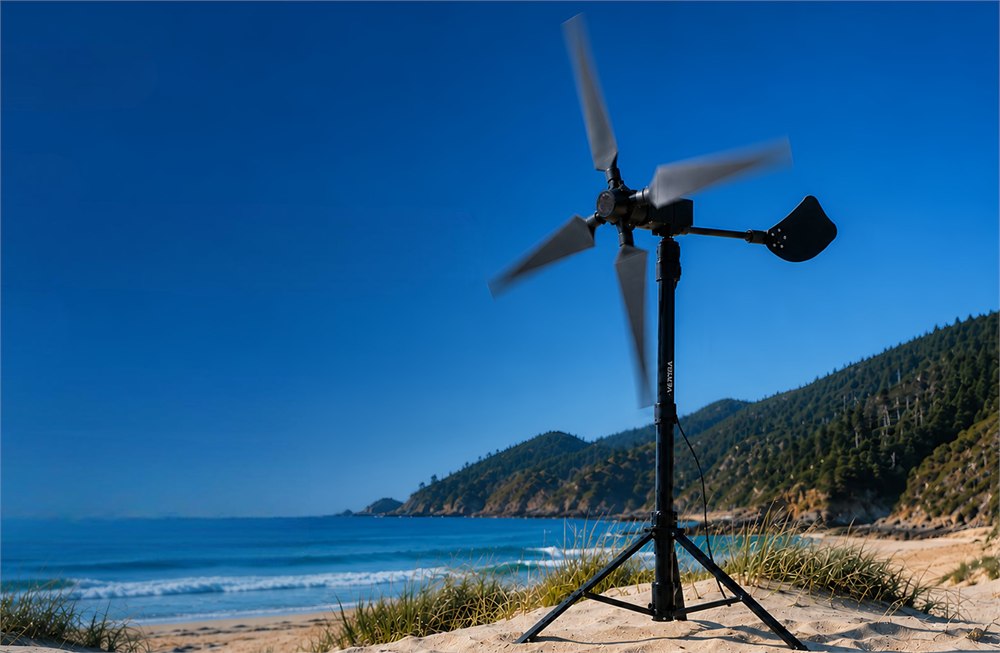
Strong wind is also a practical concern. The whole appeal is that the R1 is light enough to carry, but lightweight gear has a sacred contract with gusts: it will eventually attempt a personal journey. The included ground-stake style setup and stable placement will matter a lot, especially anywhere exposed.
For the right person, though, those caveats are part of the appeal rather than a scandal. This is for people who already understand that outdoor gear is a negotiation with dirt, wind, batteries, and a suspiciously wet backpack pocket. It is a compact renewable-energy gadget, not a municipal utility in cosplay.
The R1 also has a nice “show and tell” quality. Set this up at camp and you instantly become the person with the tiny wind turbine, which is either a compliment or a warning depending on how many pocket knives you also brought. It is the kind of gear that invites questions, arguments, and at least one person saying, “Couldn’t you just bring a power bank?” Yes, Greg. But where is the theater in that?
Who This Makes Sense For
The VENTYRA R1 seems most compelling for car campers, overlanders, van campers, emergency-prep households, balcony energy experimenters, and gadget-loving backpackers who are willing to trade a little pack weight for renewable redundancy. It is less compelling for ultralight hikers who cut their toothbrush in half and consider clouds a personal insult.
It could be especially useful as a companion to solar. Solar covers bright days. Wind can help at night, during overcast weather, or in exposed areas where air movement is more reliable than sunlight. The more realistic expectation is not “free unlimited power,” but “another small charging source when conditions are right.” That is still useful, especially if you are trying to keep lights, phones, radios, or a power bank from becoming decorative bricks.
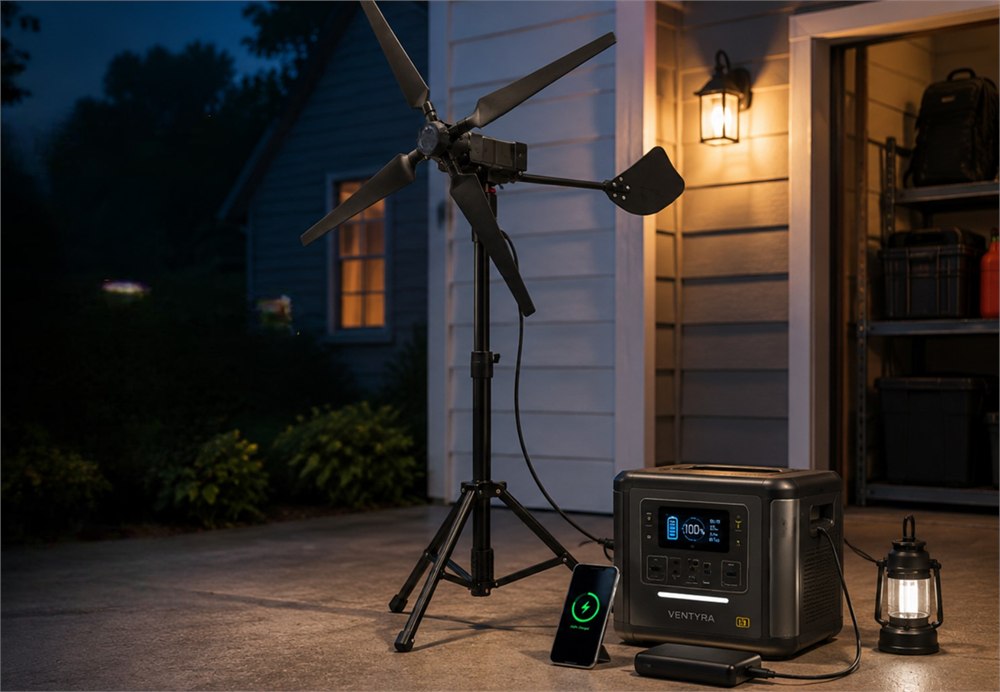
Here is the short version before you start measuring your backpack and making a spreadsheet that says “wind lifestyle”:
- The VENTYRA R1 is a foldable portable wind turbine made for off-grid charging.
- It weighs about 2.2 pounds and folds down for easier packing.
- It uses a four-blade turbine, collapsible tripod, and automatic wind alignment.
- It is rated for 50W output and 75W peak load.
- It supports 12V DC-compatible charging setups.
- It is best treated as a supplemental power source, especially alongside solar or a power station.
- It is not positioned as a heavy-rain or severe-weather appliance.
The VENTYRA R1 was funded on Kickstarter, where the campaign lists early-bird rewards starting at $179 and estimated delivery beginning in December 2026. As with any crowdfunded hardware project, timelines and final production details can change, so this is a better fit for patient gadget people than shoppers who need a finished retail box on the porch by Friday.
If your camping style already involves portable batteries, fold-out solar panels, emergency lights, and a deep emotional relationship with USB-C cables, this little turbine slides into the same ecosystem with far more visible drama. It turns the invisible breeze into a campsite conversation piece, and possibly into enough power to keep your phone from entering its final 3 percent panic spiral.
| Pros | Cons |
|---|---|
| Backpack-portable wind power in a compact folding design | Output depends heavily on real wind conditions |
| Rated 50W output and 75W peak load for small-device charging setups | Not a replacement for a larger power station or home system |
| Automatic wind alignment reduces constant manual repositioning | Weatherproofing details are limited, especially for heavy rain |
| Pairs naturally with solar panels and camp batteries | Crowdfunded hardware carries production and delivery risk |
| Lightweight 2.2-pound kit is unusually packable for a turbine | Tripod stability will matter in gusty exposed areas |
Where to find This Backpack-Portable Wind Turbine Charges Gear From A Breeze
OddityMall may earn a commission from qualifying purchases at no extra cost to you.