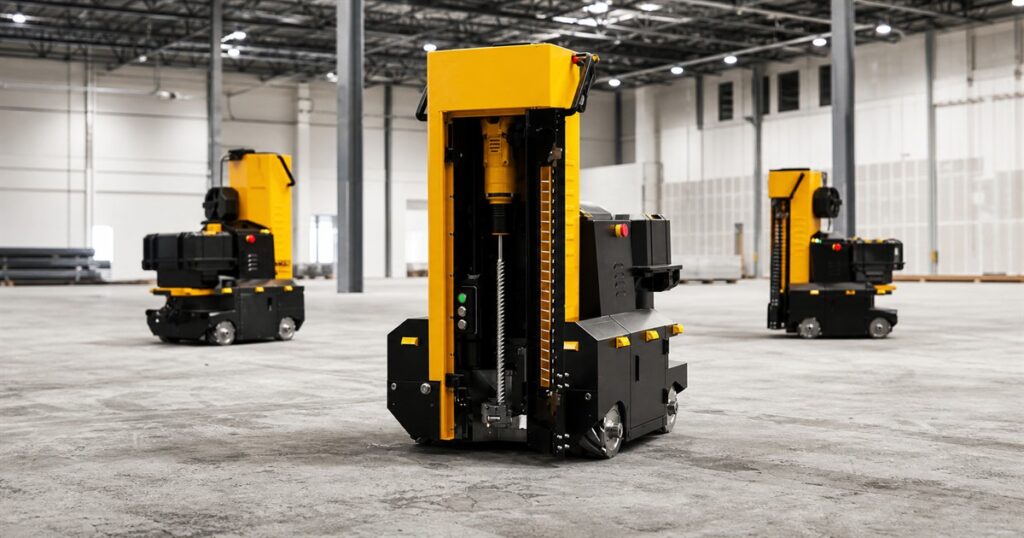
Concrete floors are usually where ambitious ideas go to become somebody else’s knee problem. You lay out the plan, mark a galaxy of tiny holes, hand a human a rotary hammer, and then politely ask them to spend the next several days vibrating their skeleton into soup.
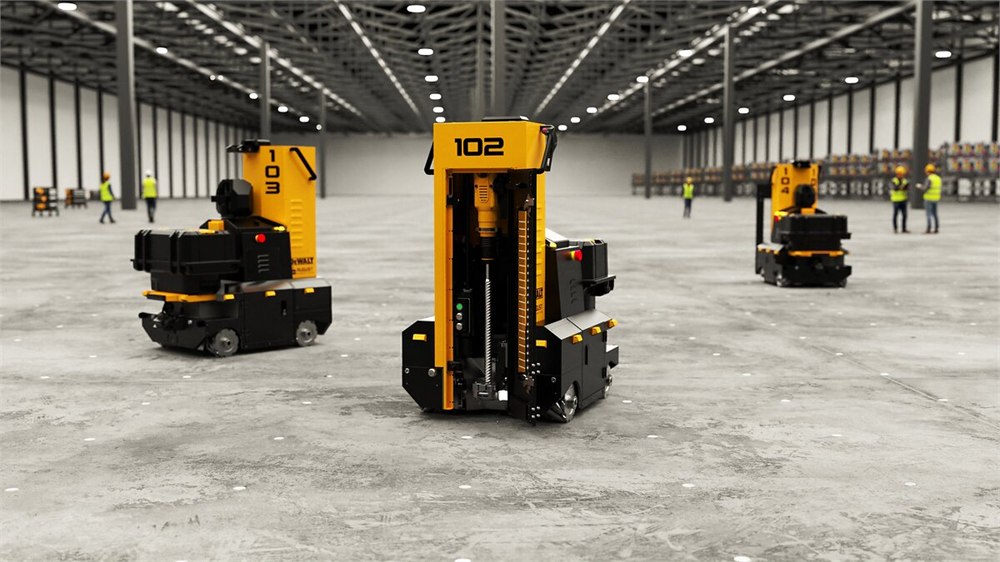
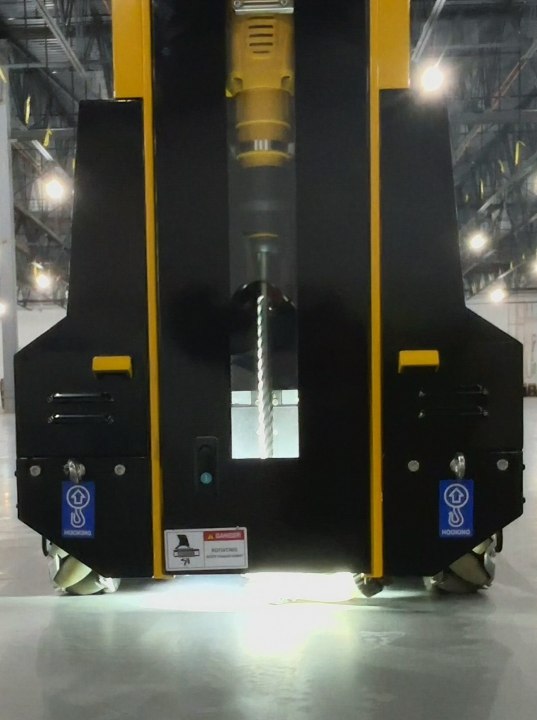
The DALE autonomous downward drilling robot is the construction-site answer to that deeply glamorous ritual. Built by DEWALT in collaboration with August Robotics, DALE is a yellow-and-black floor robot that rolls across concrete, reads the drilling plan, and makes precise downward holes without needing a person to manually wrestle every single one into existence.
It is not the kind of robot that brings you a soda, folds laundry, or pretends to have feelings in a demo video. It is a jobsite machine with a very specific life purpose: drill lots of holes in concrete, do it accurately, keep dust under control, and scale up when one robot is not enough. Honestly, that’s healthier than most career plans.
DEWALT announced DALE’s commercial launch on July 9, 2026, calling it the world’s first fleet-capable downward drilling robot. August Robotics’ own product page positions it for mission-critical construction, especially big data center and MEP installation workflows where thousands of holes need to land exactly where the drawings say they should.
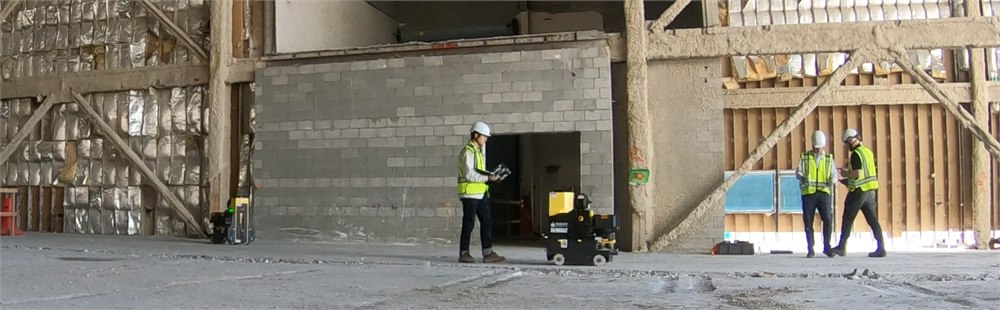
A Robot Built For The Least Romantic Part Of Mega Construction
Downward drilling sounds simple until you imagine doing it thousands of times across a huge concrete slab while the rest of the project is tapping its foot. Server rack stops, anchors, supports, and MEP hardware all depend on holes landing where the plan says they land. Miss enough of them and the building starts developing the personality of a group project.
Related posts:
 The Yarbo Yard Robot Will Mow Your Grass, Snowblow, and Even Blow Your Leaves
 This Fork Drill Bit Might Be The Manliest Way To Beat Eggs and Eat Spaghetti
 Drill Buddy: Drilling Dust Collector, Laser Level, and Bubble Level
 These Concrete Molds Let You Create Incredible Walkways That Look To Be Made From Stones
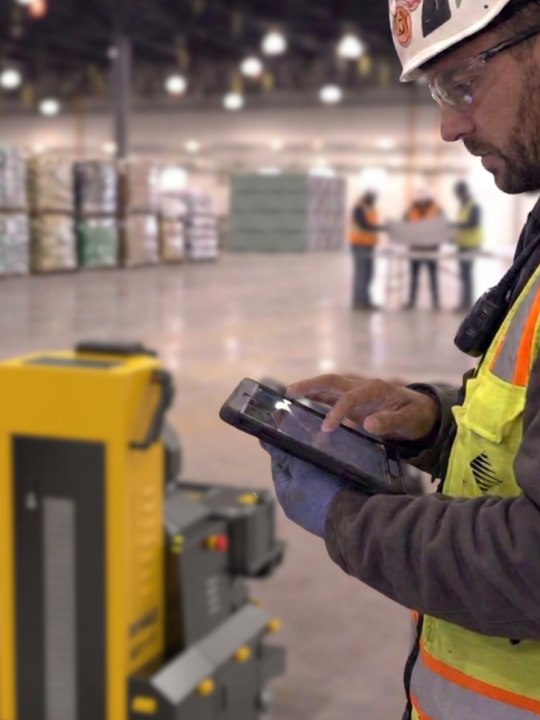
DALE is designed to turn that work into a repeatable robotic workflow. The operator uploads drilling points from CAD or CSV files to a Windows tablet interface, and the robot handles the planned hole sequence autonomously. Multiple DALE robots can be deployed in parallel, which is where the fleet-capable part starts sounding less like a spec sheet and more like a tiny yellow construction parade with a productivity problem.
The official August Robotics page lists 10x faster drilling than hand-drilling, with jobs measured in days instead of weeks. It also lists more than 50 holes per hour for 3/4-inch diameter by 2-inch-deep rack stop holes, which is a very specific way of saying this robot has found its one weird passion and has committed fully.
The robot is powered by DEWALT rotary drilling technology and supports a wide drilling range. August Robotics lists hole diameters up to 1-1/2 inches and depths up to 14 inches, with support for masonry and rebar-cutting drill bits. It also includes automated drill bit identification, obstacle detection, cliff/drop sensing, AI-assisted dust monitoring, and vacuum extraction for silica dust control.
What DALE Actually Does On The Floor
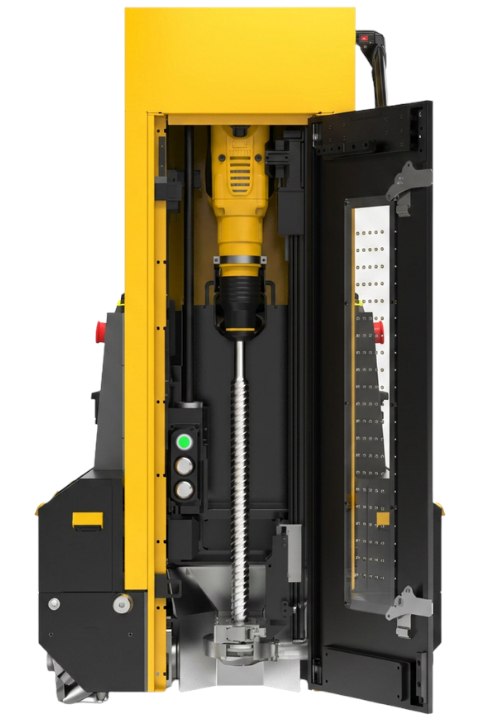
The magic here is less about one flashy robot trick and more about removing a slow, repetitive bottleneck from enormous construction projects. DALE uses the uploaded layout, navigates across the slab, positions itself over each point, drills downward, manages dust extraction, and moves on to the next hole. It is basically a Roomba if the Roomba had construction credentials and a more intimidating vertical drill tower.
- It accepts CAD or CSV drilling layouts through a tablet interface.
- It can drill concrete holes up to 1-1/2 inches in diameter and up to 14 inches deep.
- It is rated for 1/8-inch localization accuracy per hole and a maximum 1-degree hole drift.
- It can detect and cut rebar with supported SDS Max carbide drill bits.
- It uses automated dust monitoring and vacuum extraction to reduce silica dust around drilled holes.
- It can work as part of a multi-robot fleet so larger jobs can scale without simply throwing more elbows at the floor.
That last point is the real OddityMall-grade part. One drilling robot is interesting. A coordinated fleet of them roaming a data center slab and punching holes with mechanical patience is the kind of industrial spectacle that makes a regular cordless drill look like it should sit down and have some water.
The Specs That Matter
For a product like this, the useful details are not cup-holder count or whether it comes in rose gold. The whole point is whether it can drill accurately, repeatedly, and in a way that makes sense for large commercial sites. Here are the official figures worth knowing.
| Feature | Official Detail |
|---|---|
| Primary job | Autonomous downward concrete drilling for construction sites |
| Hole location accuracy | 1/8 inch localization accuracy per hole |
| Hole drift | Maximum 1 degree |
| Hole diameter range | Up to 1-1/2 inches |
| Hole depth | Up to 14 inches |
| Example output | 50+ holes per hour for 3/4-inch by 2-inch rack stop holes |
| Interface | Windows tablet app with CAD/CSV upload |
DEWALT’s launch announcement adds a broader performance claim from pilot use: the robot drilled up to 10 times faster than traditional methods, reduced project timelines by a total of 190 weeks across 26 data center construction phases, and achieved 99.97% accuracy across more than 230,000 holes. Those are not backyard-shed numbers. Those are numbers from the land of fluorescent vests, giant schedules, and meetings where the phrase “critical path” gets used with a straight face.
DALE also includes practical jobsite touches that make sense once you remember this thing is meant to work all day on concrete. The press announcement mentions fast-swap batteries and remote monitoring for extended on-site operation, while the August Robotics page lists a package that includes the robot, a guiding station, and a tablet. August Robotics also says purchases include in-person training by a field engineer, online training videos, and 24/5 technical support.
Why This Is Weirdly Delightful
The delightful part is that DALE solves a brutally unglamorous problem with the energy of a tiny construction appliance that has been waiting its whole life to be given a spreadsheet. It is not trying to be cute. It is not trying to be your friend. It is here to take a file full of coordinates and turn them into holes with very little emotional negotiation.
That matters because large construction projects can lose time in very boring ways. A hole in the wrong place is not funny when it blocks the next trade, requires rework, or slows a schedule that already has 14 different teams breathing into its neck. DALE’s pitch is that better accuracy and repeatability can make downstream work smoother, especially when the holes are for racks, supports, or MEP systems that need to line up cleanly.
It also changes the human role. Instead of spending the day hunched over a hammer drill, operators can manage the layout, oversee the robot, swap batteries, handle exceptions, and deploy more robots when the job calls for it. That does not make construction magically effortless, because concrete remains concrete and deadlines remain deadlines, but it does move one rough repetitive task toward a more robotic workflow.
Who DALE Is For
This is very clearly not a household gadget unless your household is currently building a hyperscale data center in the living room, in which case please invite fewer people over. DALE is aimed at construction leaders, general contractors, MEP trade teams, and hyperscale projects where drilling accuracy, speed, and repeatability can move the schedule in a meaningful way.
The robot makes the most sense on large concrete-floor jobs with enough repeated drilling to justify a robotic workflow. A few holes in a garage slab are not its natural habitat. Thousands of carefully placed holes across a data center floor, with multiple robots working in parallel and a tablet managing the plan? That is where DALE starts looking less like a novelty and more like the future arriving in steel-toed boots.
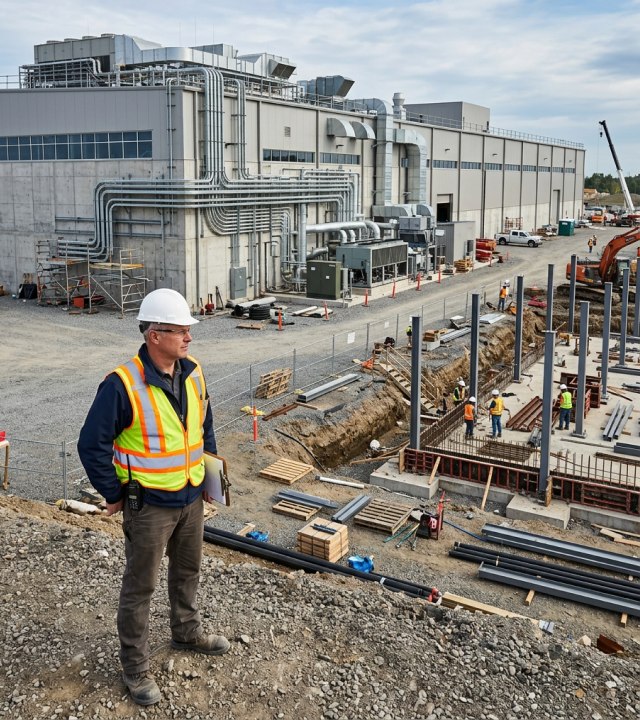
The aesthetic also helps. DALE looks like a piece of serious industrial equipment: yellow tower, black base, vertical drill assembly, small wheels, and the unmistakable vibe of a machine that would absolutely ignore your feelings if your feelings were not in the CAD file. It is visually strange enough for OddityMall, but practical enough that it belongs on a real jobsite instead of a concept render folder.
Key Details Before You Start Naming The Fleet
DALE is commercially available through August Robotics and DEWALT’s construction ecosystem, with pricing handled as a commercial quote rather than a standard online checkout price. That is construction-equipment language for “this is not an impulse buy between paper towels and novelty socks.” The official product page points interested buyers toward August Robotics contact and trial options.
- Product: DEWALT and August Robotics DALE autonomous downward drilling robot.
- Purpose: robotic concrete floor drilling for data centers and large construction projects.
- Official availability: commercially available for order as of the July 9, 2026 launch announcement.
- Price: contact August Robotics for a commercial quote.
- Best use case: high-volume, layout-driven drilling where speed and accuracy matter.
- Not for: casual home drilling, small DIY jobs, or anyone who thinks a hammer drill already counts as a personality.
For the right project, DALE is the kind of machine that makes a boring bottleneck look suddenly futuristic. It does not make construction cute, exactly, but it does make one of its most repetitive floor-level chores feel like it has entered the robot era with a hard hat and a grudge against misplaced holes.
| Pros | Cons |
|---|---|
| Automates repetitive downward concrete drilling | Built for commercial construction, not home use |
| Supports fleet deployment for large jobs | Pricing requires a commercial quote |
| Official specs list 1/8-inch localization accuracy | Needs appropriate layouts, training, and jobsite setup |
| Handles larger holes and depths than many simple robotic concepts | Best value appears on high-volume drilling work |
| Includes dust monitoring and vacuum extraction | Large industrial workflow may be overkill for smaller contractors |
| Uses DEWALT drilling technology in an August Robotics platform | Real-world performance depends on site conditions and drilling tasks |
Where to find This Autonomous Concrete Drilling Robot Drills Jobsite Floors In Fleets
OddityMall may earn a commission from qualifying purchases at no extra cost to you.
Related posts:
The Yarbo Yard Robot Will Mow Your Grass, Snowblow, and Even Blow Your Leaves
This Fork Drill Bit Might Be The Manliest Way To Beat Eggs and Eat Spaghetti
Drill Buddy: Drilling Dust Collector, Laser Level, and Bubble Level
These Concrete Molds Let You Create Incredible Walkways That Look To Be Made From Stones