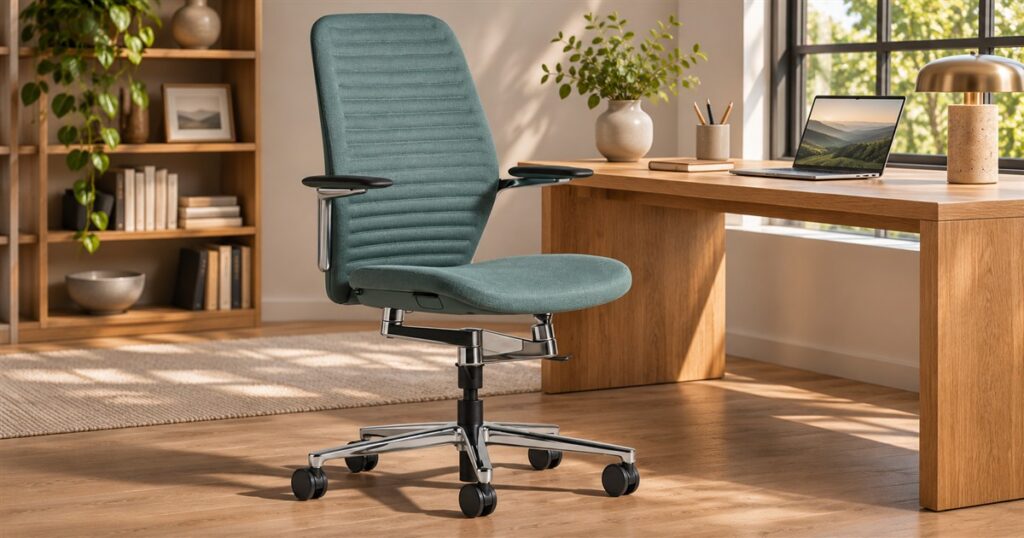
Some office chairs seem to believe the ideal employee is a statue with a password. Sit down, face forward, and try not to have a body until lunch. The Kiaura Collection task chair from KI takes a more forgiving approach: its seat can follow subtle movement in three dimensions, giving your daily desk fidgeting a surprisingly polished piece of engineering to work with.
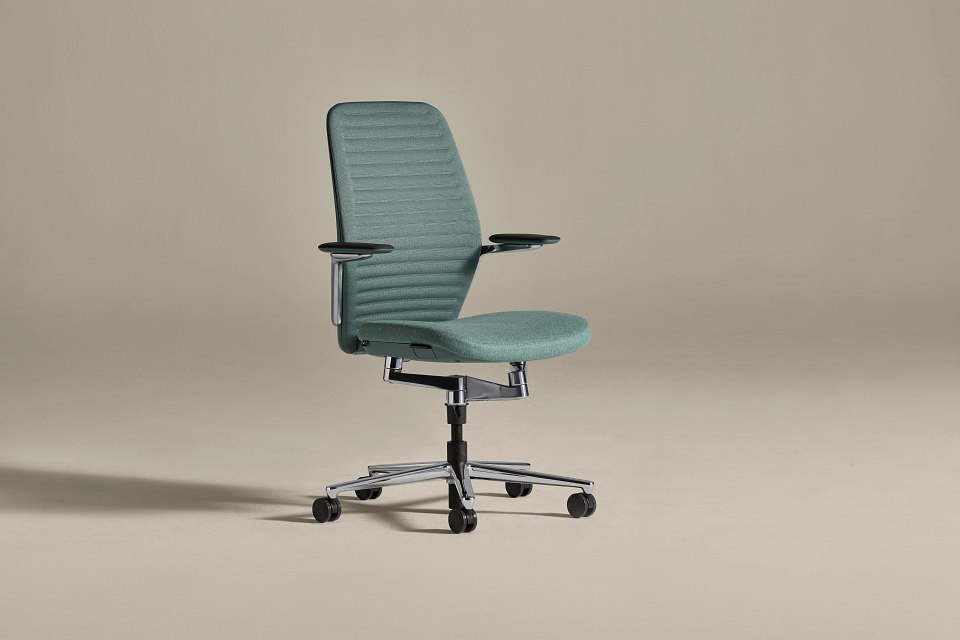
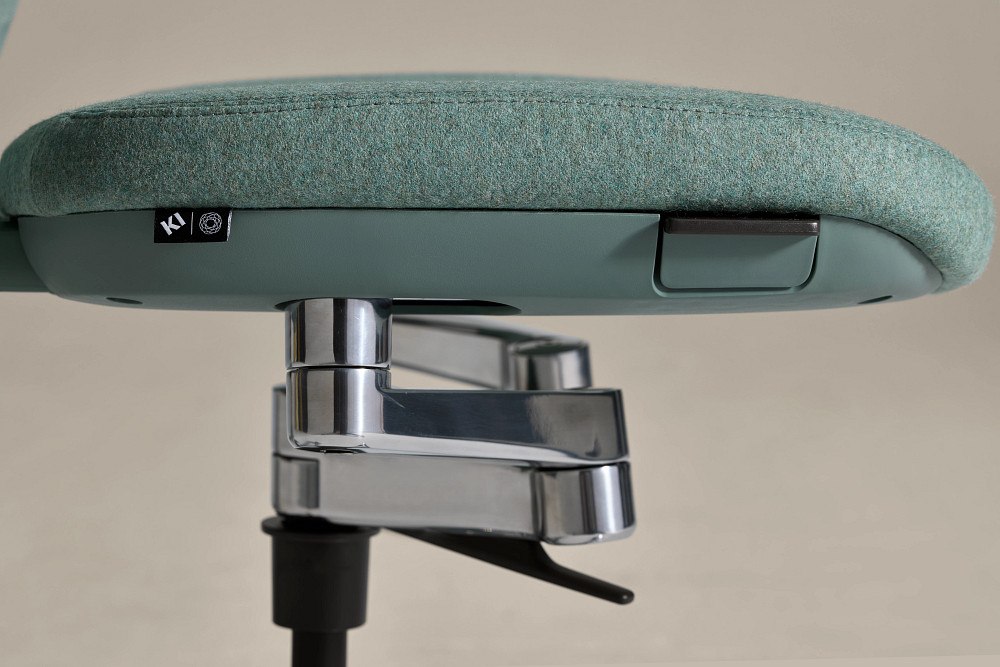
The unusual part lives underneath the cushion. Cognetic Technology, designed and invented by Aaron DeJule, uses a gravity-responsive, multi-axis mechanism to respond to the sitter’s changing center of gravity. In ordinary language, the chair is designed to move with you instead of treating every little shift as a breach of office protocol.
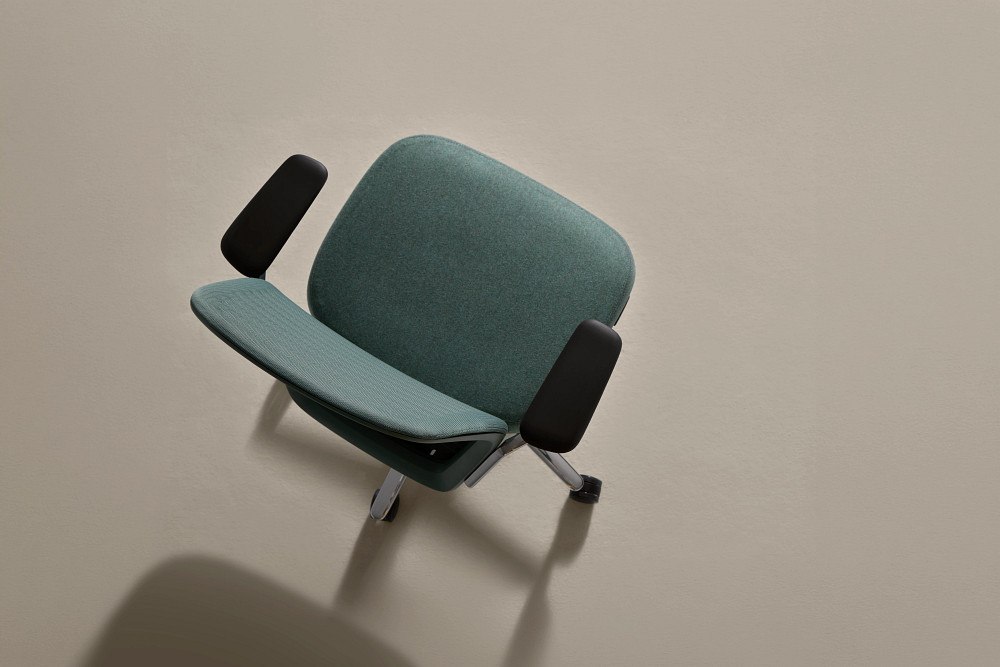
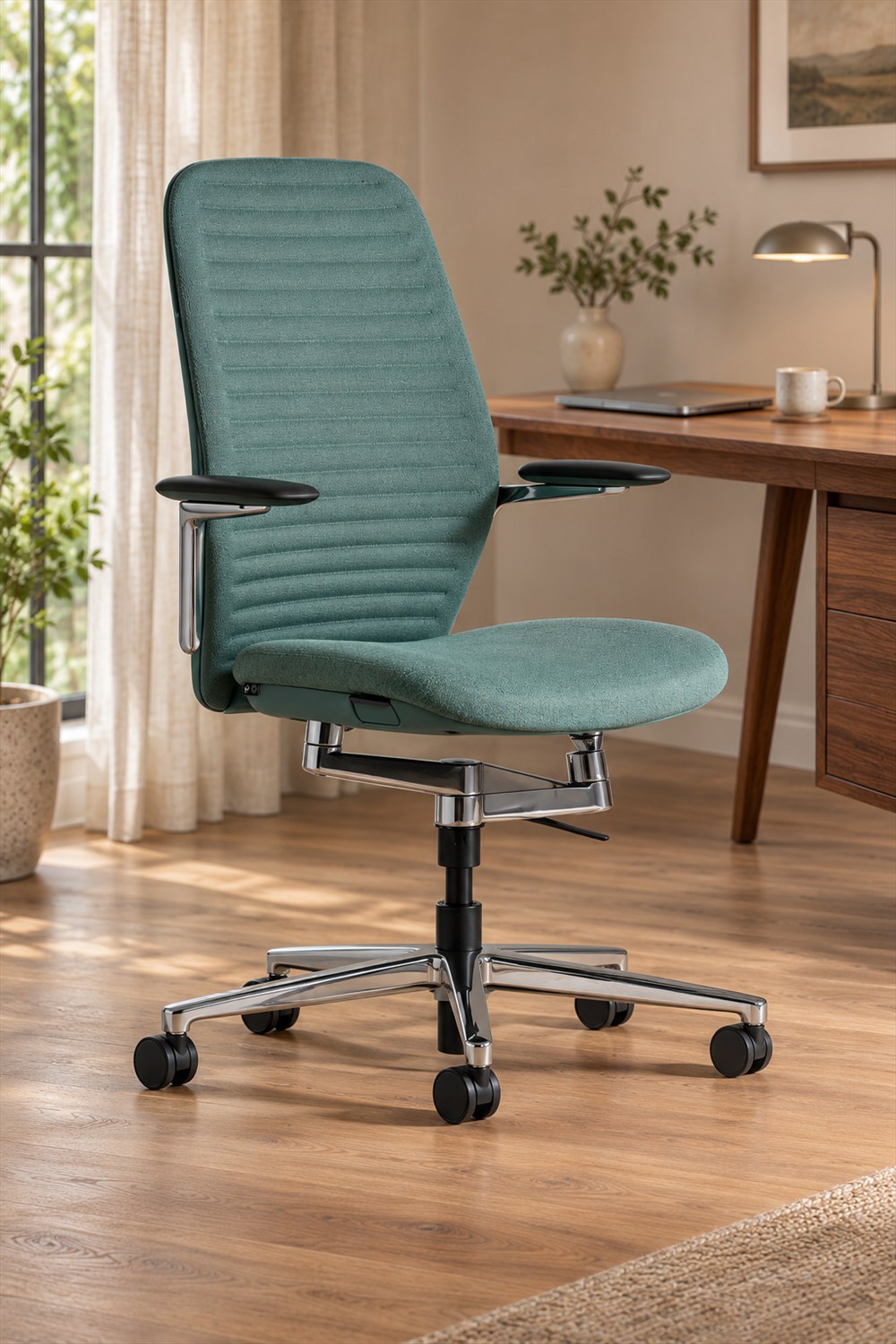
From across the room, it still looks like a proper task chair. There is a tall knit back, an upholstered seat, arm options, and a wheeled base. Get closer, however, and the shiny articulated hardware beneath the seat looks considerably more interesting than the usual plastic housing where mysterious chair levers go to hide.
A task chair that makes room for fidgeting
The point of Kiaura is subtle, responsive movement while seated. This is not a ride, an exercise machine, or an invitation to perform desk-based gymnastics. Think of the small changes that happen when you turn toward a colleague, settle into a different position, or briefly reconsider every decision that led to the spreadsheet in front of you.
KI describes the mechanism as gravity-driven. That detail matters because the central idea is a mechanical response to the person occupying the chair, rather than a motorized routine that decides when you should wiggle. Your body supplies the movement; the chair is designed to accommodate it.
There is also a pressure pad inside the seat cushion. According to KI, it allows the Cognetic motion to unlock while the chair is occupied and automatically locks that motion when the chair is empty. It is an occupancy-related feature of the movement mechanism, not a claim that the rolling casters suddenly become parking brakes.

That distinction is useful. A chair can have a clever seat mechanism and still be a chair on wheels. Knowing which part moves, and which part locks, is much more valuable than imagining a piece of furniture that magically anticipates every clumsy thing a person might do before coffee.
The familiar adjustments still matter
A fancy movement system does not make everyone the same height. Kiaura keeps several conventional fit adjustments in the picture, including seat depth, cylinder height choices, and an optional lumbar support mechanism. The interesting engineering is underneath you, but the everyday fit still deserves attention.
The seat depth offers two inches of travel, covering a listed range of 17 to 19 inches. KI also lists two cylinder choices with different seat-height ranges. Those are details to compare with your desk and your own proportions before choosing a configuration, particularly if your current office setup was assembled from whatever furniture happened to be nearby.
Arm choices range from no arms at all to fixed, height-adjustable, or 4D versions. An armless version could appeal to someone who prefers an unobstructed seat, while adjustable arms give buyers more ways to arrange the support around their work. None of that means every option arrives on every chair.
- Choose armless, fixed-arm, height-adjustable-arm, or 4D-arm configurations.
- Set seat depth within the stated 17-to-19-inch range.
- Select a low-height or standard-height cylinder to suit the intended setup.
- Add optional lumbar support with 2.25 inches of vertical adjustment.
- Compare knit and trim packages before settling on the final appearance.
The 4D arms offer more than a simple up-and-down adjustment. KI lists side-to-side pad movement, forward-and-back travel, and inward or outward pivoting. If you have ever negotiated with an armrest that seems determined to occupy the exact space your elbow needs, that menu has an obvious appeal.
It also makes configuration worth slowing down for. The best-looking chair in the room can still be the wrong match for a particular desk height or working position. Kiaura’s options create choices, and choices work best when you know which problem you actually want to solve.
| Detail | KI’s listed specification |
|---|---|
| Seat movement | Gravity-responsive, multi-axis Cognetic mechanism |
| Seat depth | 17–19 inches, with 2 inches of travel |
| Low cylinder seat height | 15.75–17.75 inches |
| Standard cylinder seat height | 17.375–20.75 inches |
| Optional lumbar adjustment | 2.25 inches vertically |
| Casters | 60 mm double-wheel design |
Office furniture with a little visual personality
The pictured teal version has a restrained, almost living-room-friendly appearance. The knit back adds texture, the upholstered seat softens the silhouette, and the polished mechanism makes the engineering visible without turning the entire chair into a science exhibit. It would not look especially alarmed to find itself beside a nice wooden desk.
KI offers Camira knit options in three grades: Standard, Zoned, and Lofted. The descriptions distinguish an open knit structure, a knit with variable structures, and a three-dimensional knit structure. These are material choices to review when specifying the chair, rather than three separate movement technologies hiding under different fabric names.
Trim packages bring additional differences. KI lists a standard Flannel package, a colored package, and a polished aluminum package, with the included components depending on the selection. The colored package includes a painted aluminum five-star base; the standard package lists a plastic five-star base. That is a good reminder that the configuration in a photograph is not automatically the configuration on a quote.
The listed 60 mm double-wheel casters are designed for commercial carpet and hard-floor applications. The broader Kiaura collection also includes conference and lounge seating with coordinating occasional tables, but this particular product is the task chair. Buying one does not summon an entire matching office around it, although that would certainly simplify decorating.
What the movement idea does, and does not, promise
KI positions Kiaura around comfort, focus, engagement, and what it calls human performance seating. The compelling product detail is the responsive movement mechanism itself. Personal comfort remains personal, and a chair should not be treated as a guaranteed fix for discomfort or a substitute for changing position and taking breaks.
The practical question is whether this type of moving seat feels good to you during the tasks you actually do. Someone who enjoys small shifts may find the concept appealing; someone who strongly prefers a more stationary feel may want to try it before committing. A product demonstration can answer that question more directly than any amount of admiring polished metal online.

There is something refreshingly sensible about furniture that acknowledges people move. The desk day already contains enough attempts to keep everything rigidly organized. Letting a chair respond to small bodily adjustments is an interesting way to make the sitting part a little less formal, even if the meeting still insists on having an agenda.
Key details before you request a quote
- Product: KI Kiaura Collection task chair, designed by Aaron DeJule.
- Main feature: Cognetic Technology for gravity-responsive, three-dimensional seated movement.
- Occupancy feature: a seat pressure pad allows motion while occupied and locks it when unoccupied.
- Fit choices: seat depth adjustment, two cylinder height ranges, several arm styles, and optional lumbar support.
- Appearance choices: Camira knit grades and multiple trim packages.
- Buying route: preorder through KI’s quote-based product offering.
KI currently lists the task chair as available for preorder, with a starting list price of $2,000. The final configuration and quote matter, so treat that figure as the beginning of the conversation rather than the price of every pictured version. The product page lists a lifetime warranty with terms and conditions available from KI.
Product details and official article photography: KI Kiaura Collection task chair. If your current chair regards a tiny sideways shift as an act of rebellion, this one at least has a more interesting response prepared.
| Pros | Cons and considerations |
|---|---|
| Responsive multi-axis seat movement | The moving-seat feel may not suit every sitter |
| Motion locks automatically when unoccupied | This does not mean the casters lock |
| Multiple arm, height, and material choices | Options must be checked against the actual quote |
| Distinctive exposed mechanism and knit styling | Premium starting list price |
| Preorder and quote route through KI | Delivery timing should be confirmed with the seller |
Save this find.
Thank yourself later.
Your next great gift idea. Your someday space. Your collection of wonderfully weird things.
Save to PinterestPick a board. Keep the inspiration.
This Multi-Axis Task Chair Moves With Your Seated Fidgeting
At a glance
Product snapshot
- Listed price
- Starting at $2,000Prices and availability can change. Check the seller for current details.
- Where to find it
- KI
- Category
- Furniture Design